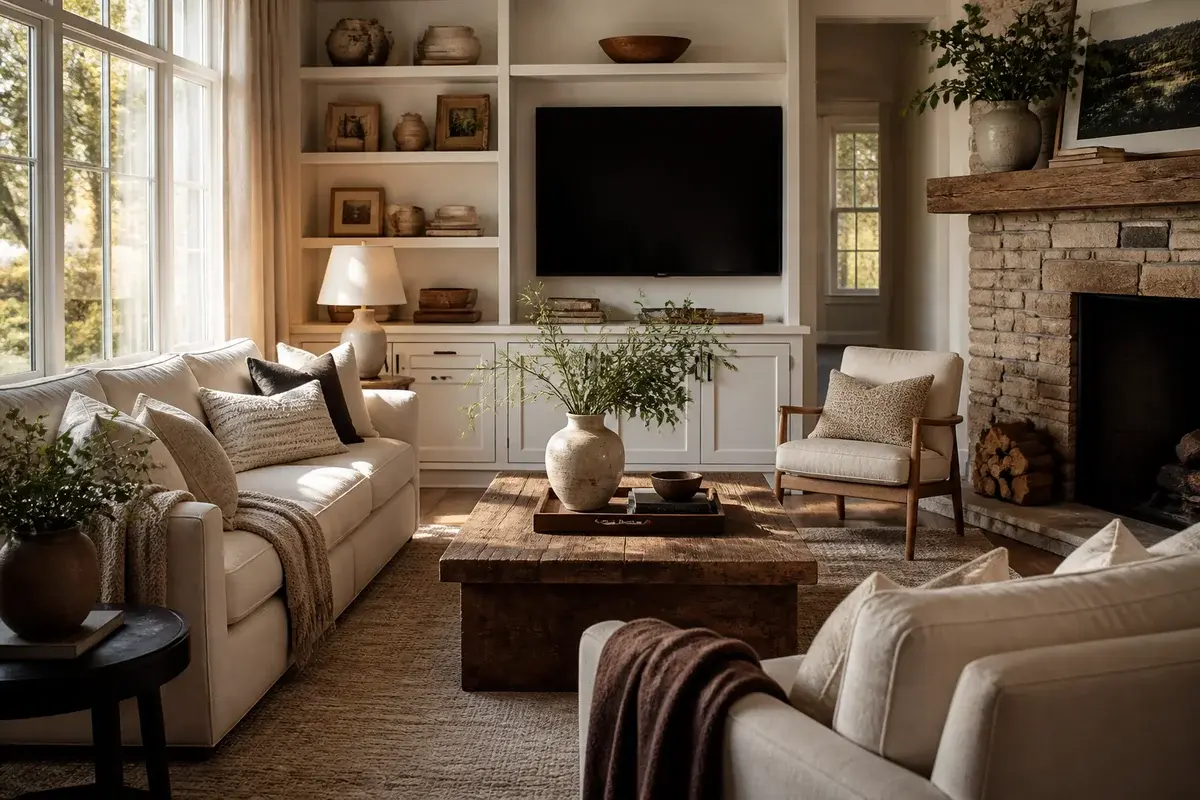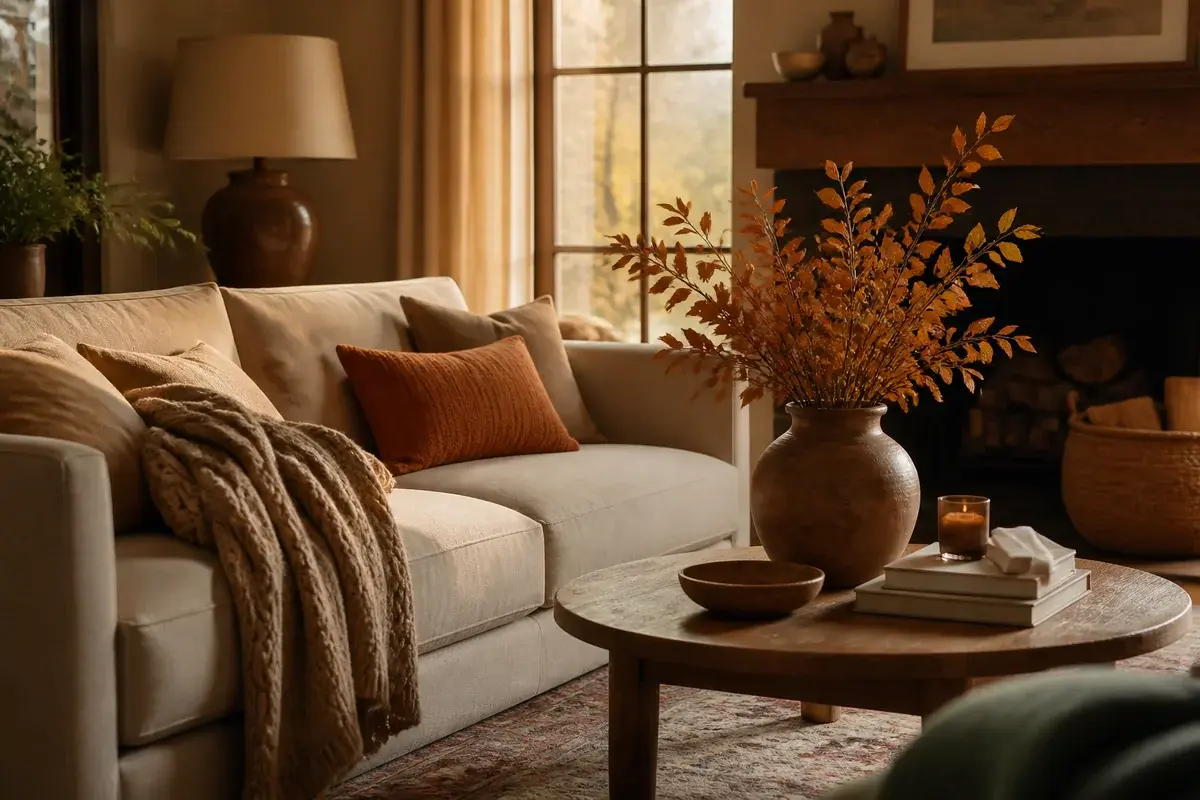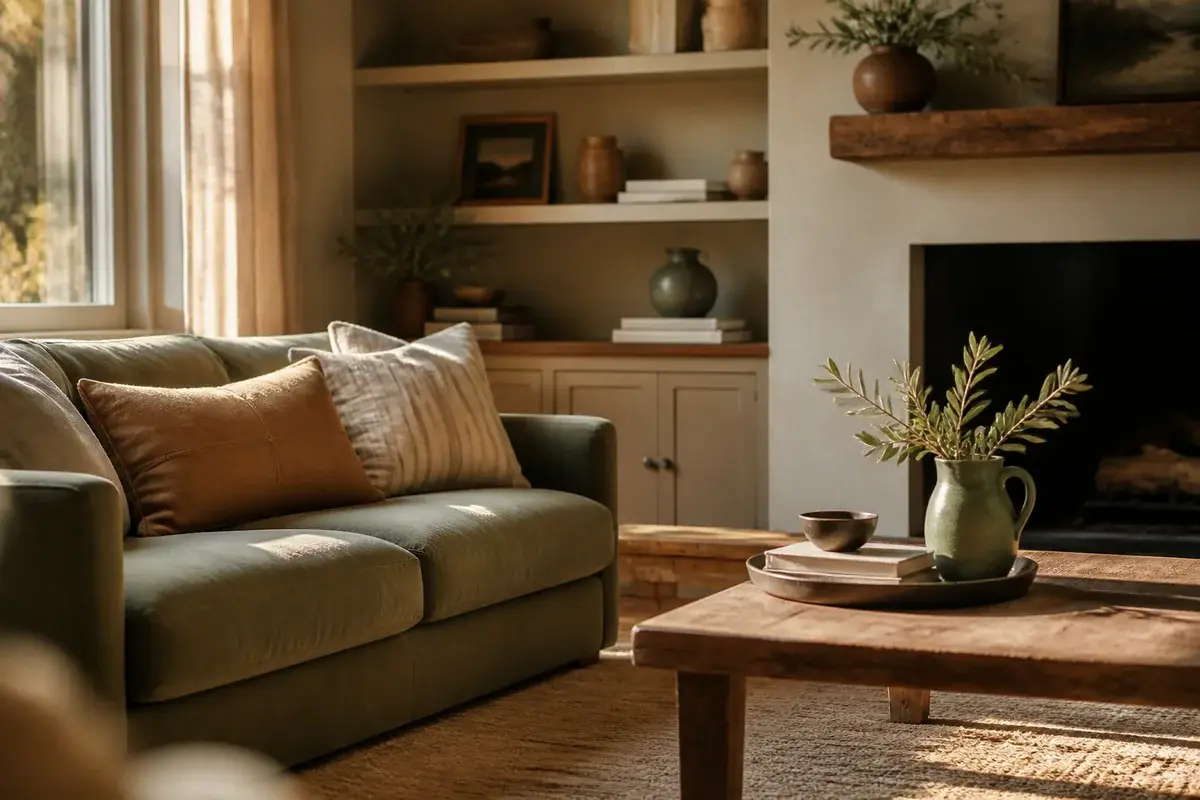
11 Inviting Mediterranean Living Room Decor Ideas With Warm Textiles
Warm up your space with mediterranean living room decor using layered textiles, earthy tones, and natural materials that feel inviting and lived-in.
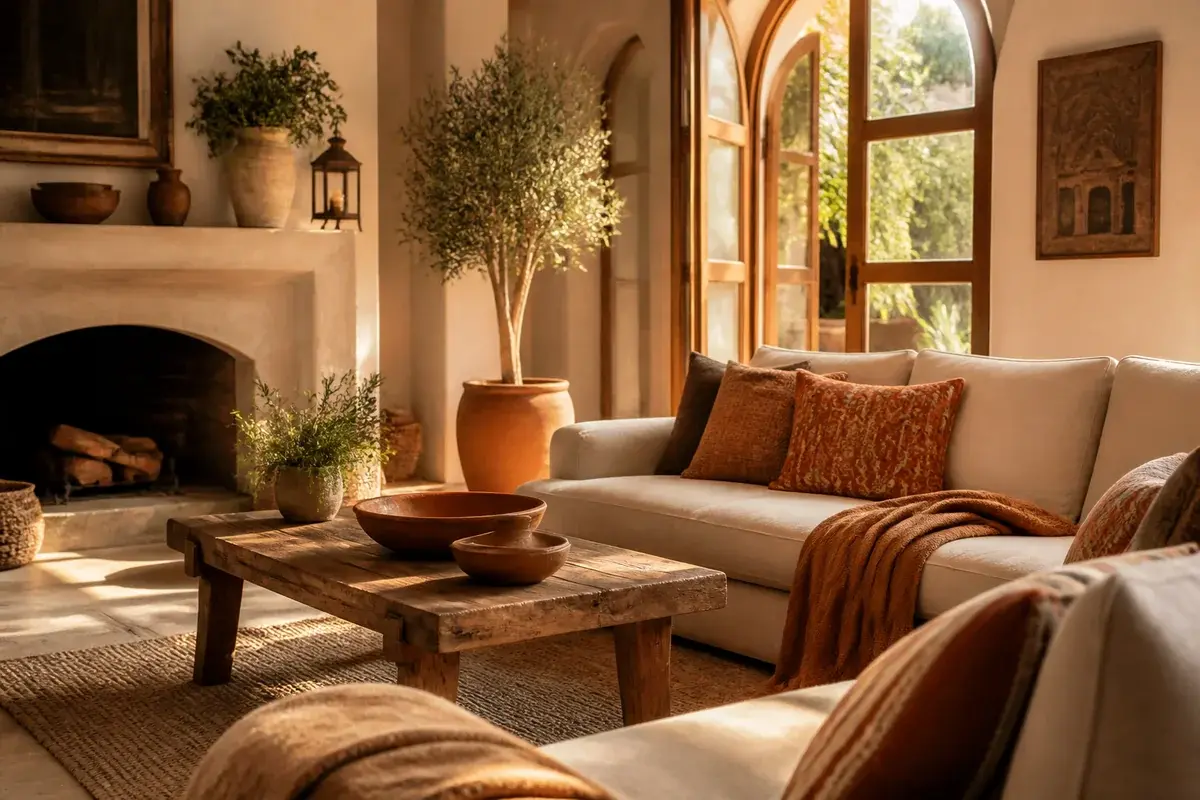
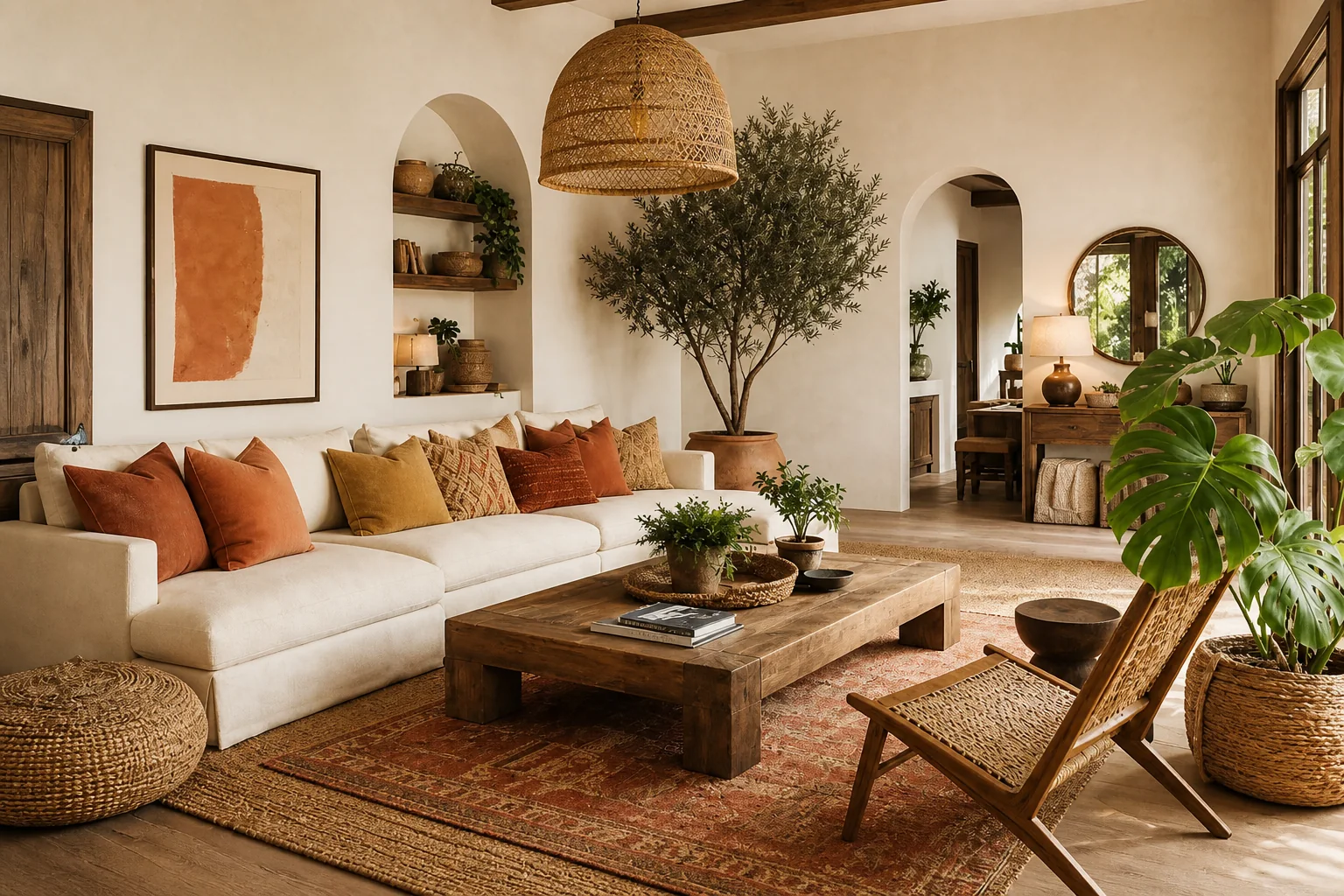
A Mediterranean living room wraps you in warmth the moment you walk in: terracotta, cream, deep blues, and layered fabrics that feel lived-in and generous. But most people stop short because they're not sure how to layer textiles without the room reading cluttered, or they pick the wrong textures and end up with something that feels like a vacation rental rather than a room where you actually want to sit.
The fix is knowing which textiles anchor the scheme and which ones add richness without weight. Here's how to do Mediterranean living room decor the way that holds up in real rooms.
1. Start with a heavy linen curtain in cream or soft taupe
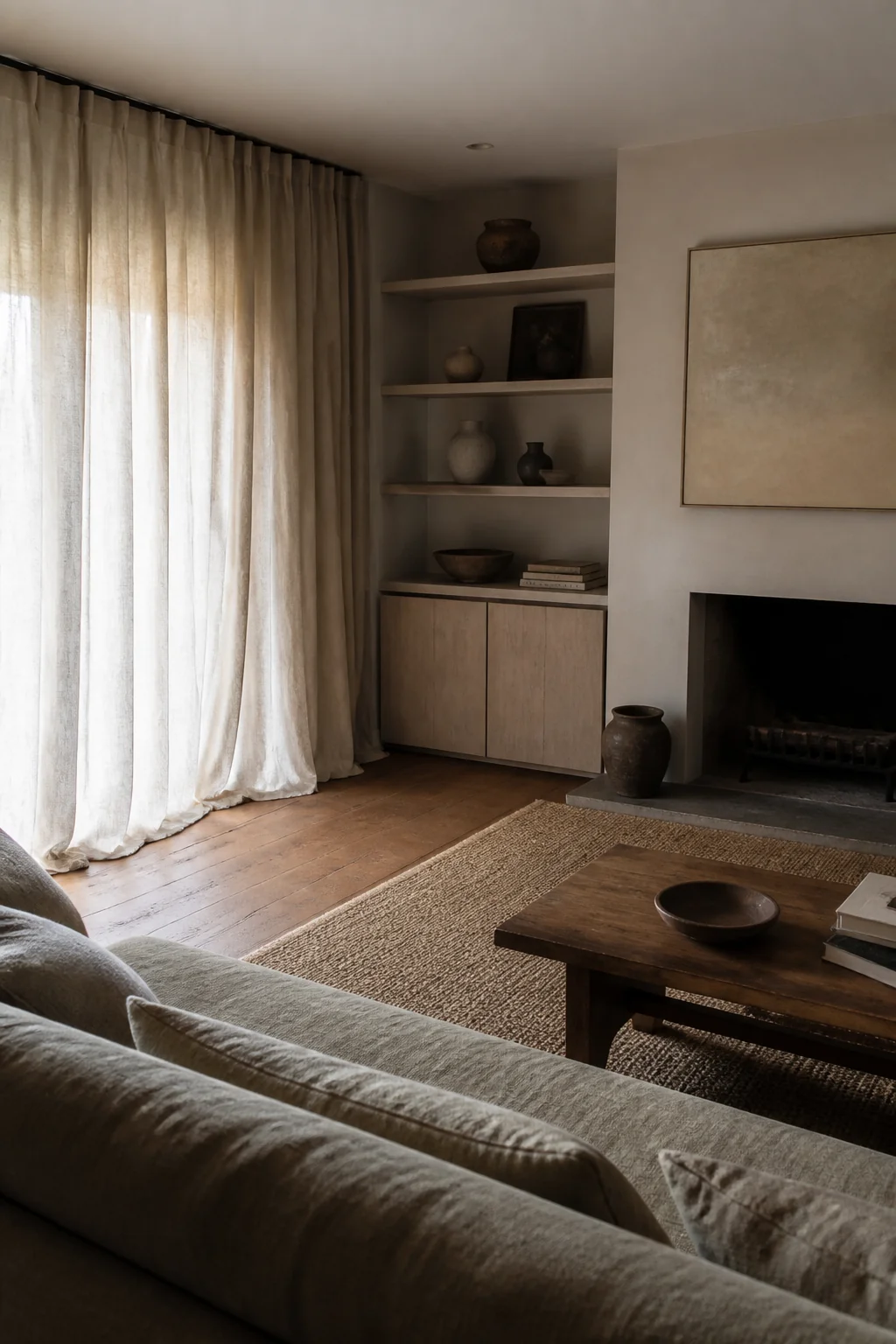
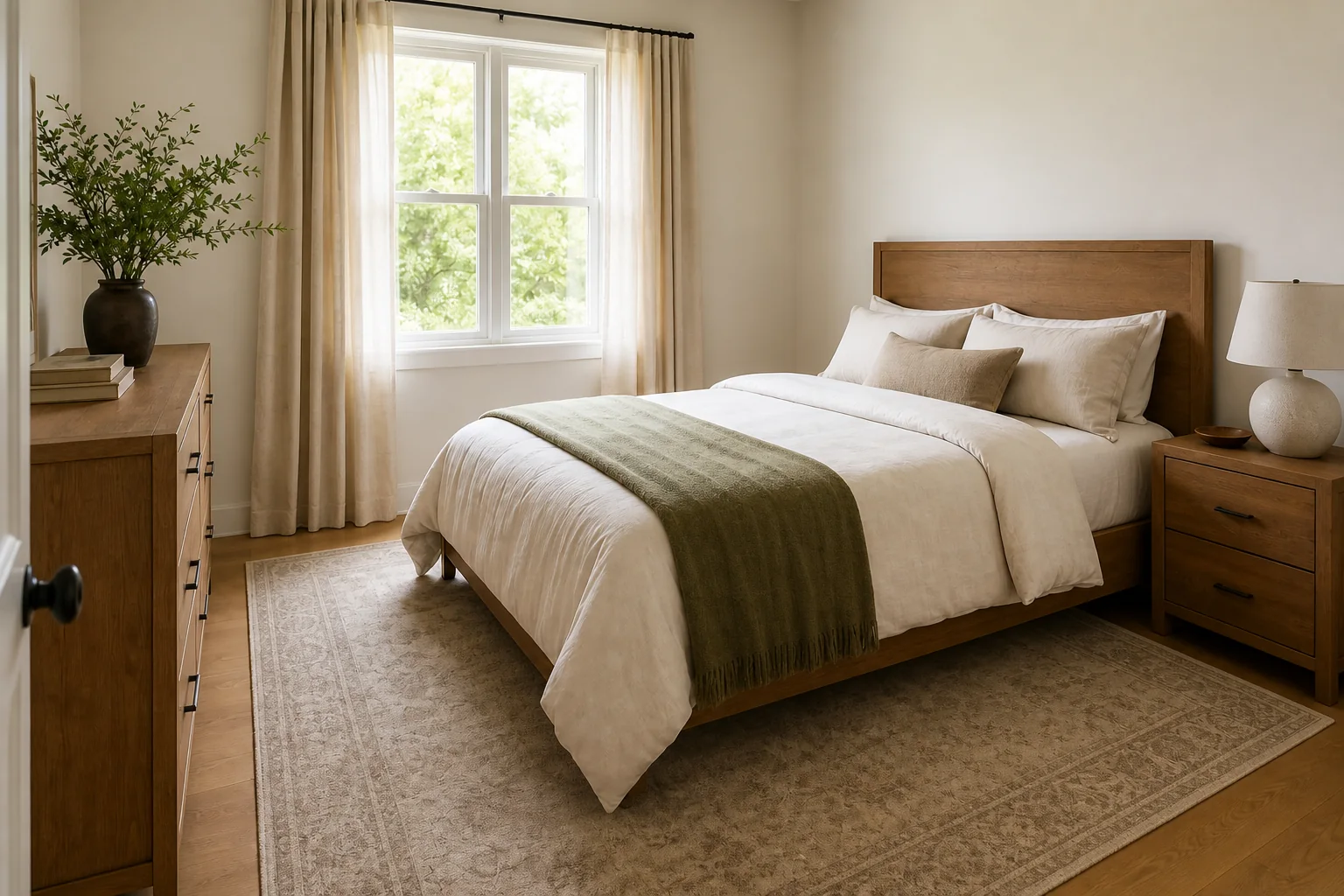
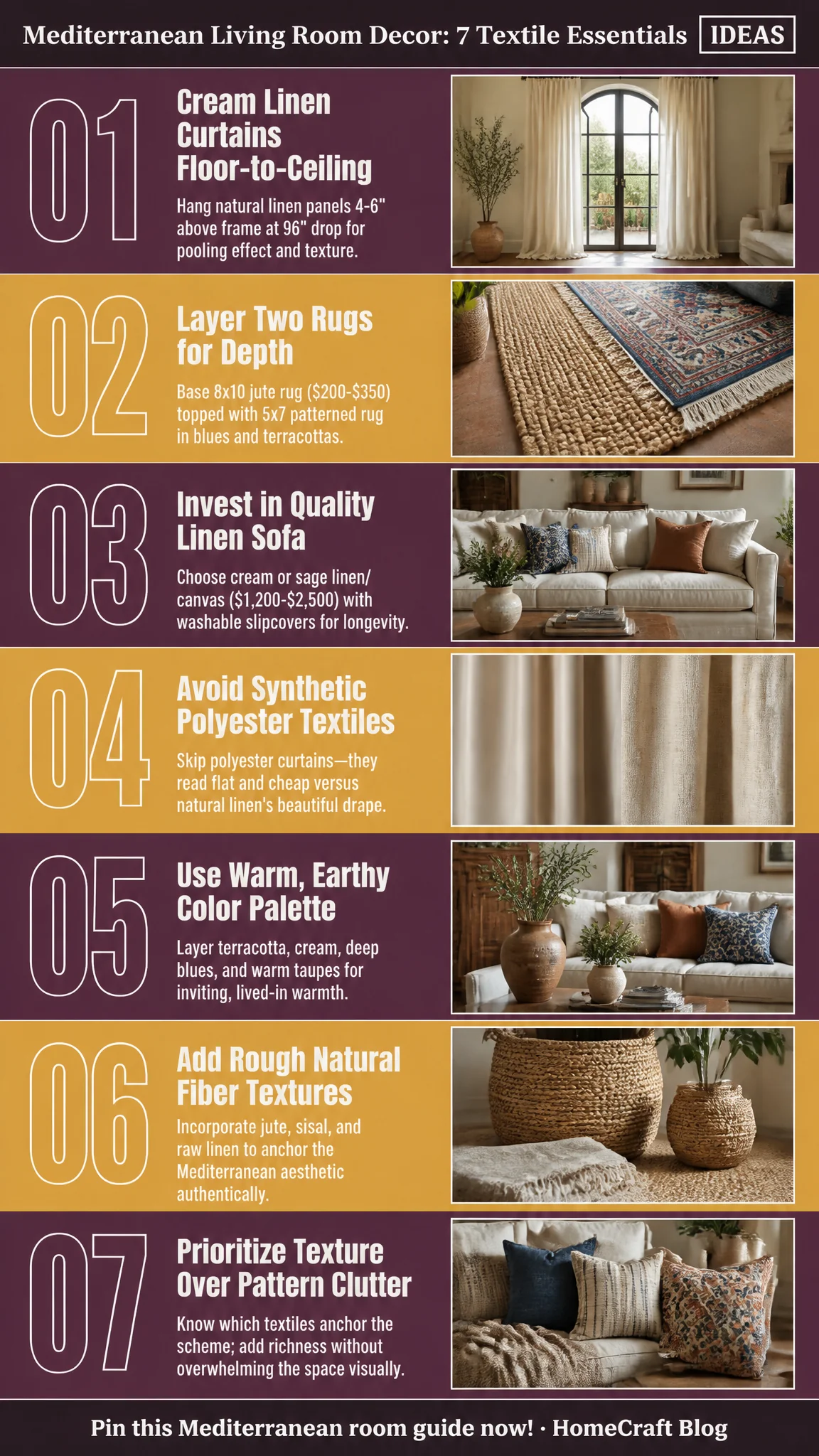
Floor-to-ceiling curtains in natural linen set the tone for everything else in the room. Go for a plain weave in cream, warm white, or pale taupe - something that lets light filter through without feeling fragile. A pair of lined linen panels in a standard 96-inch drop runs about $180 to $280 from a fabric store, and that investment pays back every time you open them. The weight of linen hangs beautifully and adds texture without pattern clutter. What ruins this: polyester that reads as synthetic and doesn't drape the same way. Hang the rod high (ideally 4-6 inches above the window frame) so the curtains pool slightly on the floor or just kiss it. That detail alone changes how the whole room reads.
2. Layer a jute or sisal rug under a smaller patterned rug
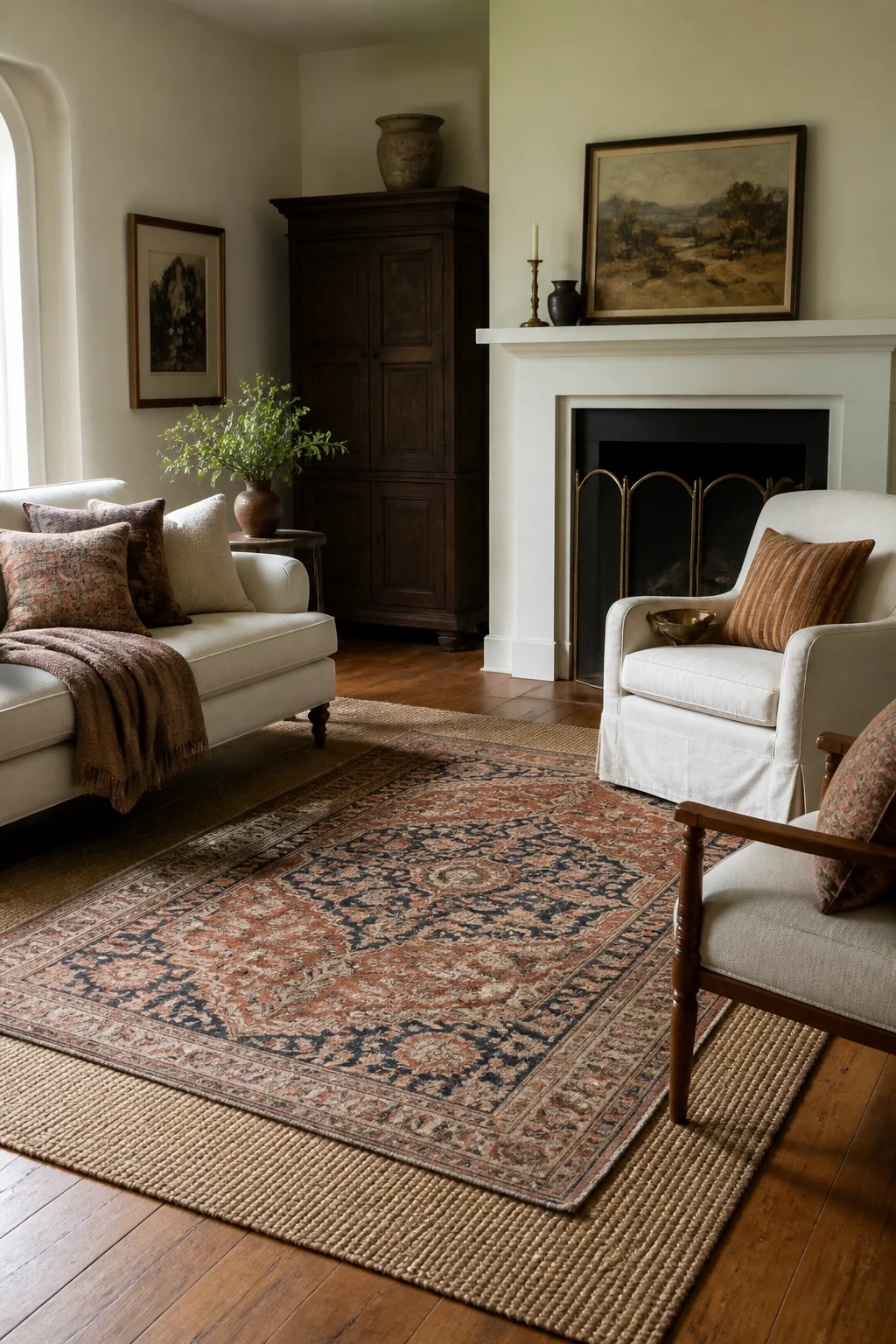
Mediterranean rooms need texture underfoot, and the common mistake is choosing one rug when two create the real depth. Start with a natural jute or sisal base in cream or warm tan - about 8 by 10 feet, which costs roughly $200 to $350. Then layer a smaller tribal or geometric pattern on top in blues, terracottas, and creams, maybe 5 by 7 feet. That second rug anchors the seating area and adds pattern without overwhelming the space. Jute by itself shows footprints and flattens, but under a decorative layer it protects your good rug and adds the rough, natural look Mediterranean design asks for. Make sure the bottom rug extends beyond the seating group on all sides so chairs sit on natural fiber, not hardwood.
3. Choose a sofa in sturdy linen or canvas
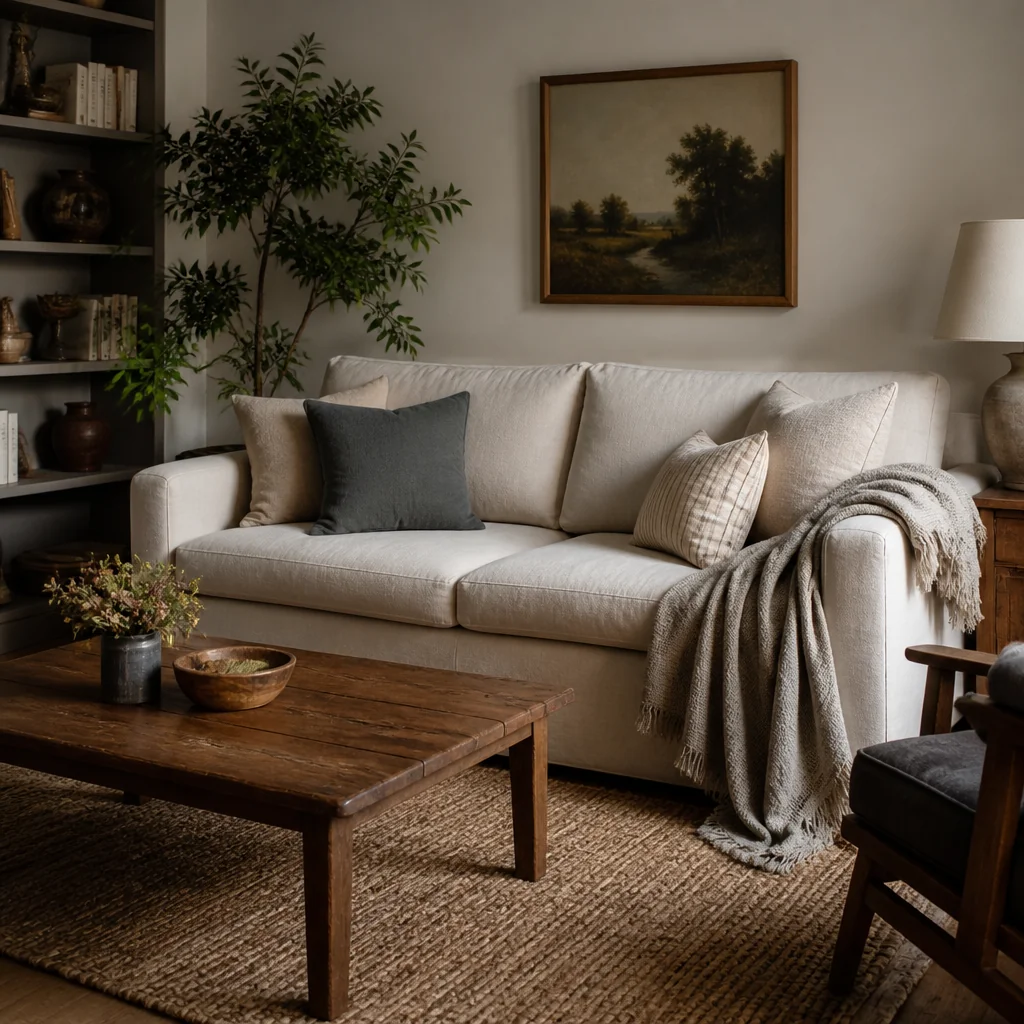
Your sofa is the biggest textile investment, so it has to be something you'll actually live on for years. Linen or canvas in cream, warm white, or a soft sage works better than anything trendy or precious. Expect to spend $1,200 to $2,500 for a solid, well-built piece in a natural fabric. Linen will soften and wrinkle - that's the point - but it won't pill or look cheap. Slipcovers are worth the extra $300 to $500 because you can wash and refresh them as they age. Skip anything with a glossy finish or tight weave; Mediterranean softness comes from fabric you want to touch. (Linen does stain if you ignore spills, so keep a damp cloth nearby, especially with wine or olive oil.) A sofa in natural fiber makes every pillow and throw you add afterward feel cohesive instead of random.
4. Add throw pillows in linen, wool, and cotton in varying scales
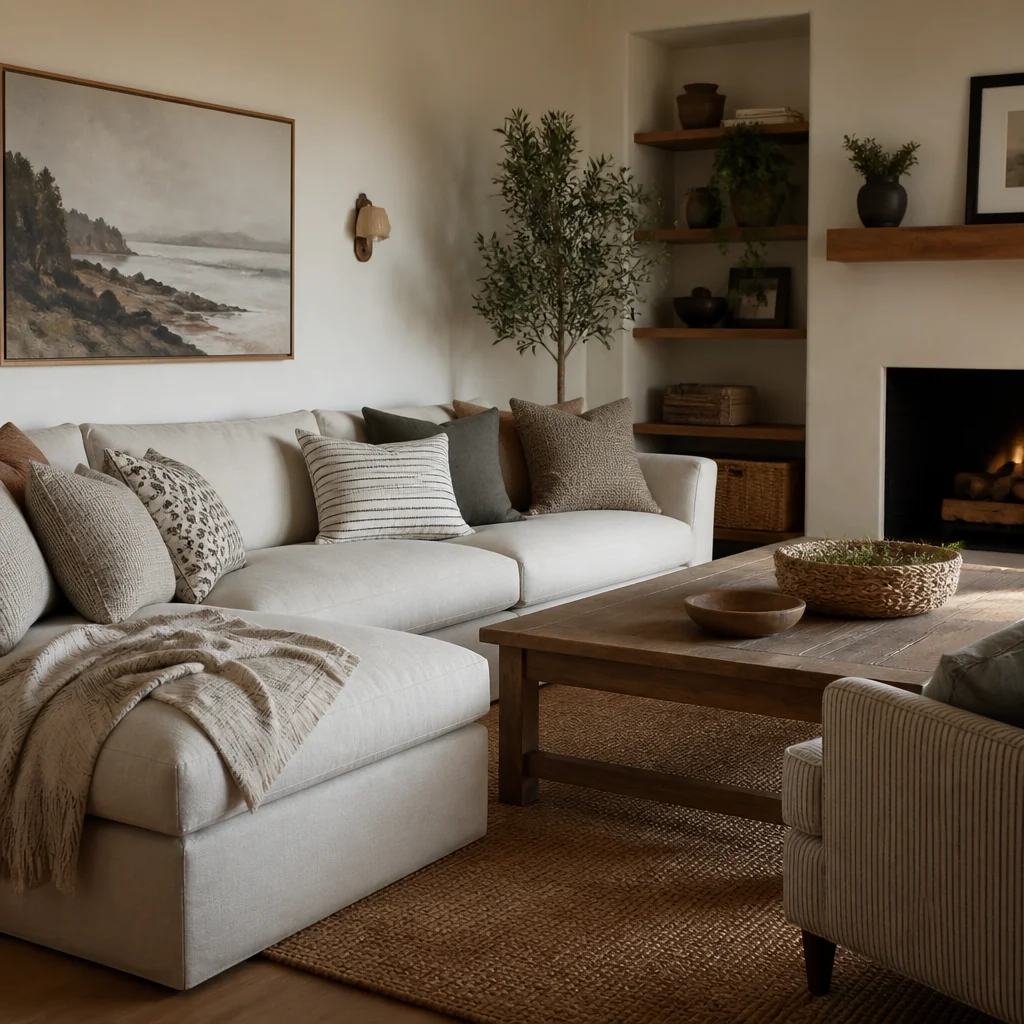
Pillows are where you build the textile story - not by matching them, but by mixing weights and weaves that feel intentional. Combine a chunky wool pillow in rust or deep blue with a fine linen pillow in cream, then add a smaller kilim or cotton print. Most pillows run $40 to $100 each, so a group of four to six across your sofa costs $240 to $600 total. The point isn't symmetry; it's layering textures so the eye has something real to move through. Mix solid colors with one or two small-scale prints to keep the scheme grounded. Avoid tiny accent pillows - they read fussy instead of Mediterranean. Go for 20-inch and 18-inch squares mostly, with maybe one 12-inch lumbar pillow for proportion.
5. Drape a heavy woven throw over the sofa arm
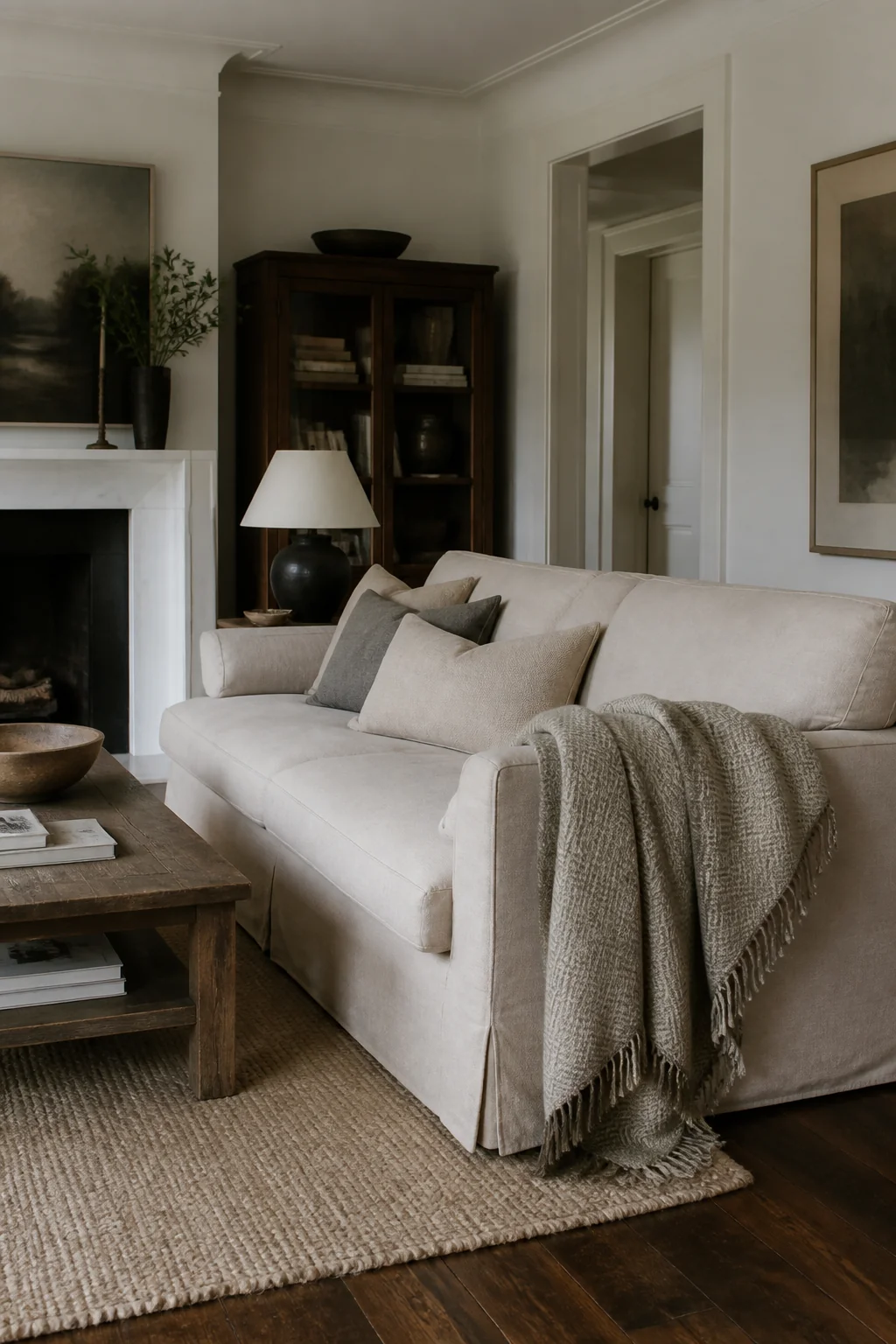
A throw isn't just for warmth; it's a textile you can actually see and touch, which matters in Mediterranean design. Choose a chunky wool weave, a handwoven cotton, or a linen blend in cream, soft blue, or rust - something with real heft that costs $80 to $150. Drape it casually over one arm of the sofa rather than folding it neatly. The wrinkles and folds are part of the point; they show the fabric has body. A throw that's 50 by 70 inches works on most sofas and reads substantial without swallowing the piece. This detail alone shifts a room from formal to genuinely livable, and it's one of the few Mediterranean elements that actually gets used every day.
6. Hang a tapestry or woven wall hanging above seating
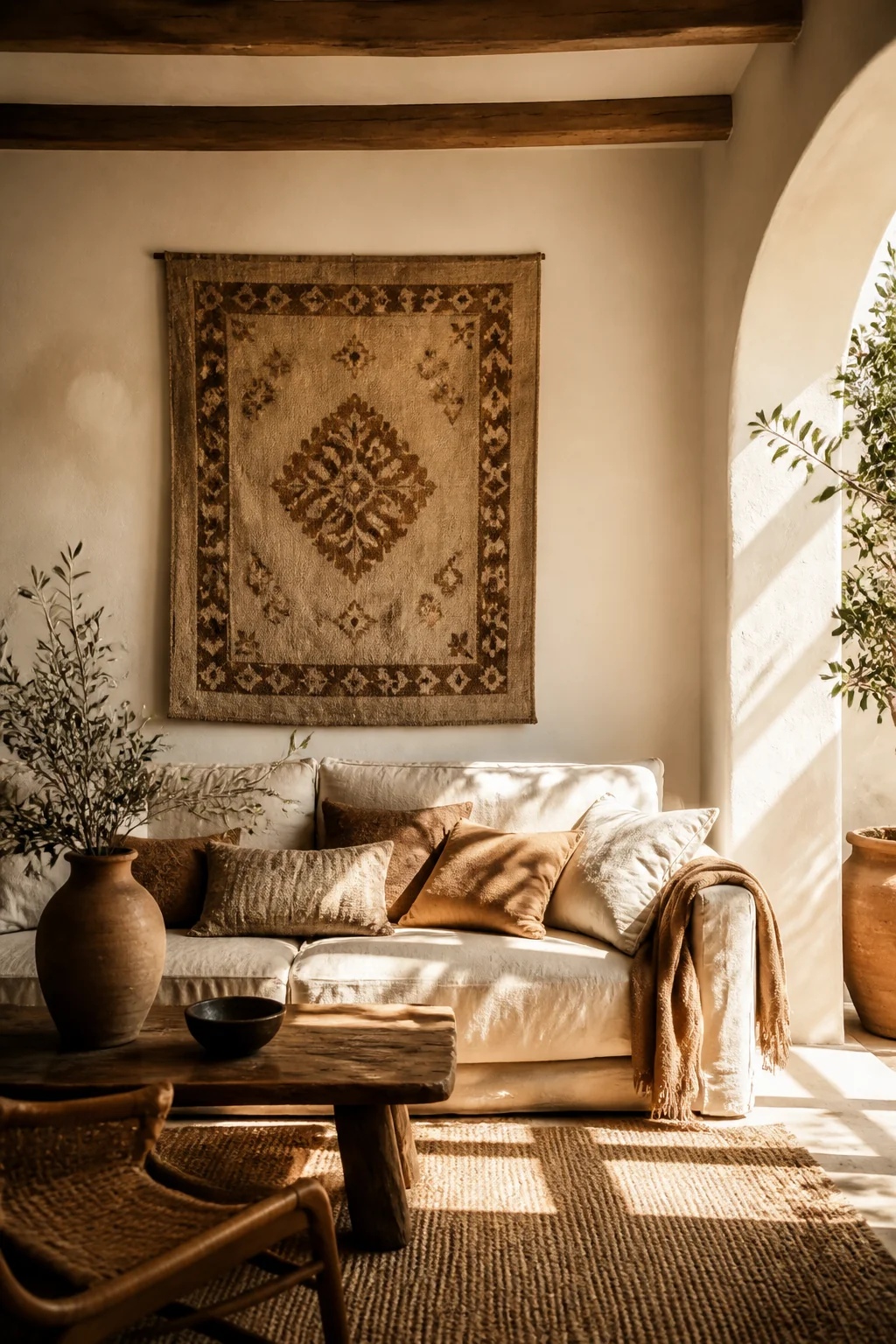
Mediterranean walls need something besides paint, and a woven wall hanging does that job without being too loud. Look for a kilim, a hand-loomed textile, or a simple geometric weave in cream, blue, rust, or a warm multi-color blend - roughly 4 by 6 feet runs $150 to $400. Hang it high, centered above the sofa or anchoring the main conversation area. The weave adds warmth and texture and breaks up a plain wall without the commitment of wallpaper. A natural fiber hanging ages beautifully and says you've invested in the room's depth rather than covering walls with prints. Skip anything synthetic or thin; look for something heavy enough that it wants to stay in place without fidgeting.
7. Use textured throw blankets on accent chairs
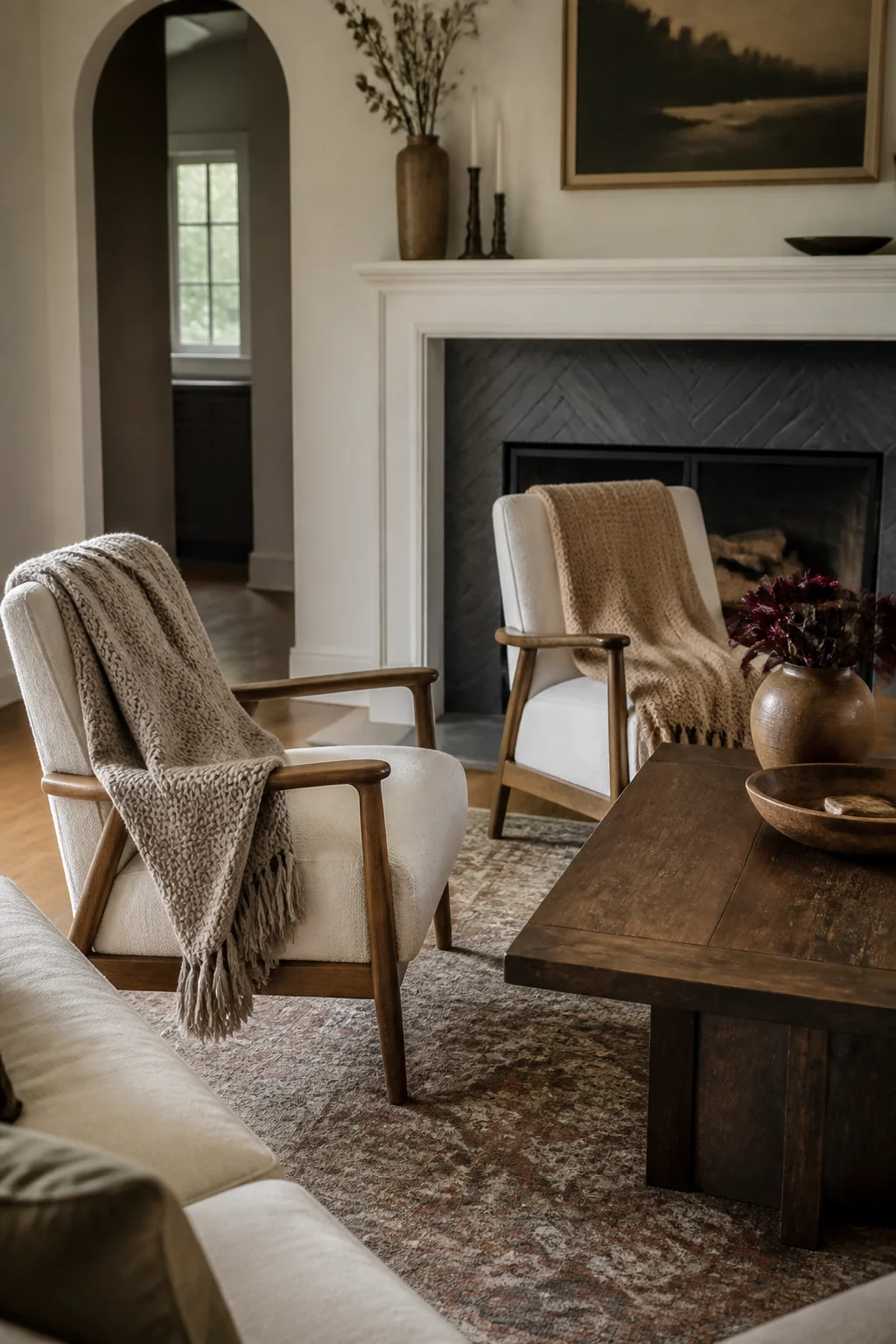
Accent chairs around a coffee table or by a window are the perfect place to pile on textile warmth. Drape two or three blankets - a linen in cream, a chunky knit in oatmeal, a wool in blue - over the arm or back of the chair so they're visible and reachable. Each blanket costs $60 to $120, so three pieces run $180 to $360 per chair. The real point is that Mediterranean living rooms look generous, and blankets piled casually signal you can actually use them instead of guarding them. Vary the weaves so each one has a different story: tight linen next to loose cable knit next to flat wool. This combination of textures is what makes a room feel substantive instead of like a showroom.
8. Add a large ceramic or terracotta side table with a linen runner
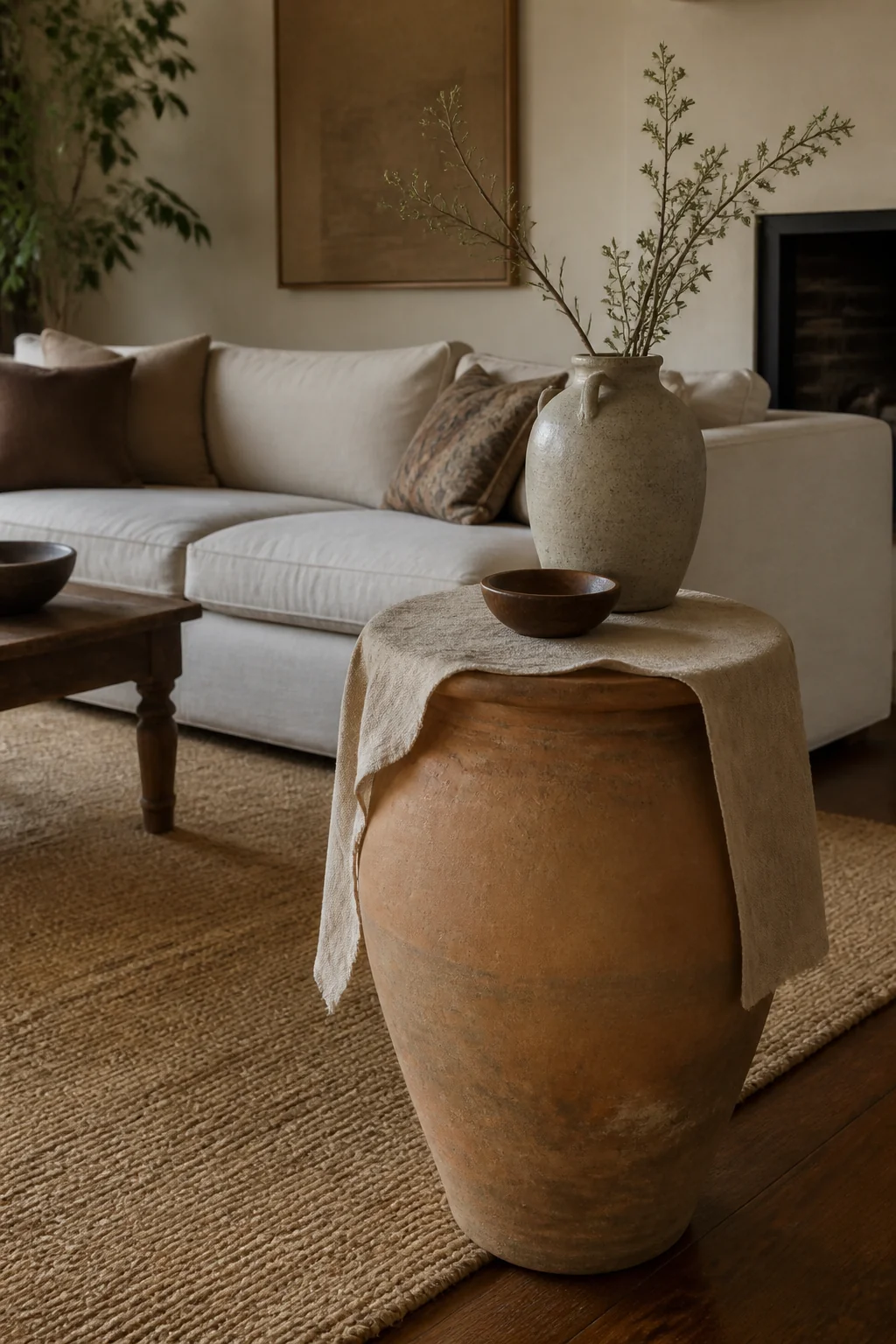
A side table in ceramic, terracotta, or painted wood gives the room a functional anchor and a place to layer more texture. Top it with a narrow linen runner in cream or warm white - roughly 18 inches wide and 36 inches long for about $30 to $60. The runner protects the surface and adds another textile element without cluttering. Terracotta or warm-toned ceramic tables run $200 to $500 depending on size and detail. Pair it with a stack of books, a glass of water, and a small ceramic vessel for coziness without overcrowding. The runner treatment works especially well on a dark wood table because it lightens the visual weight and introduces the pale, natural palette Mediterranean design loves.
9. Choose linen or cotton curtain sheers in a second layer
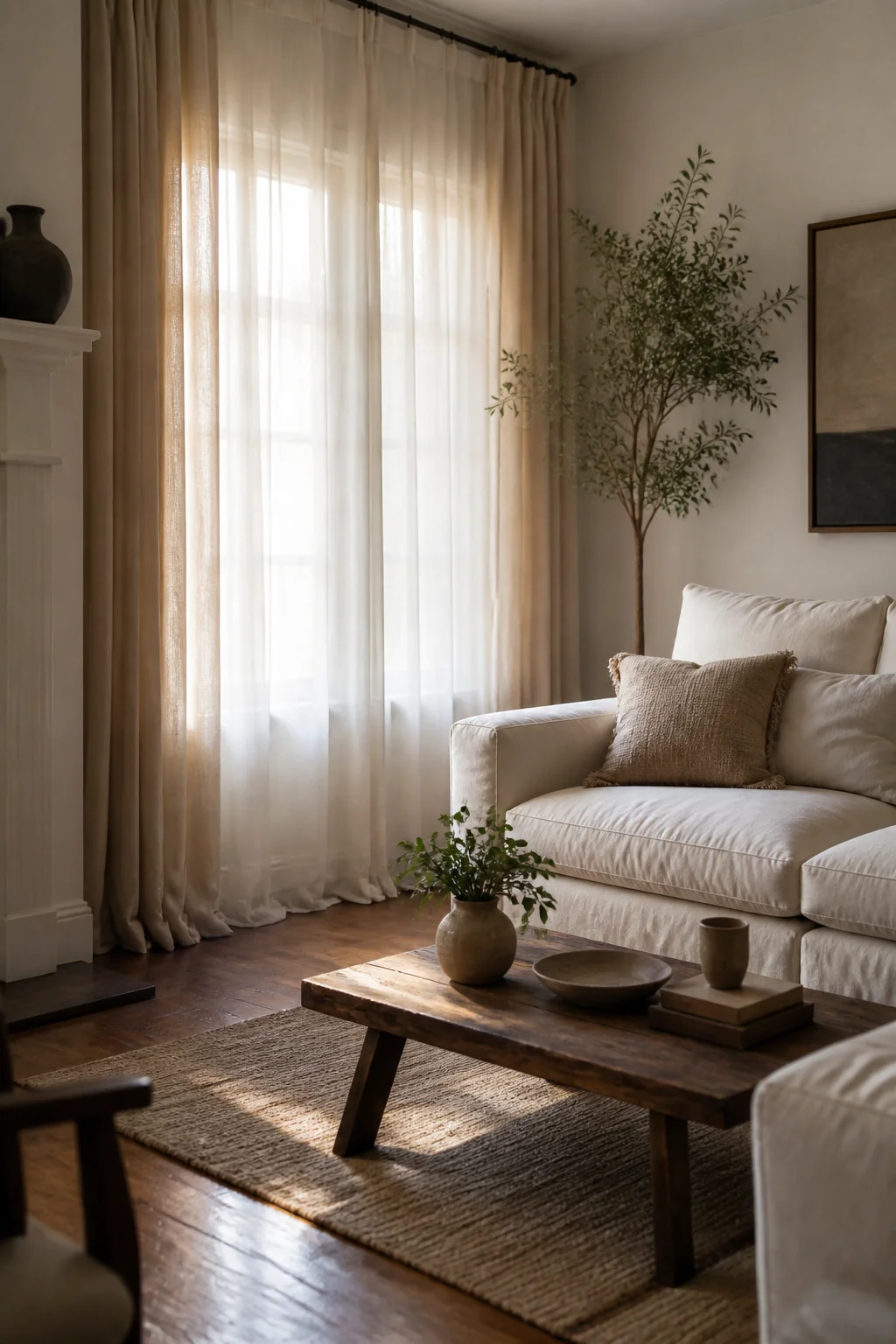
If you want diffused light without complete privacy, add a sheer linen or cotton layer under your solid linen curtains. Sheers in cream or natural white run about $40 to $80 per panel and hang inside the solid curtains. They soften incoming light beautifully while the heavier linen provides weight and the real privacy when you need it. This layering is what Mediterranean rooms do well - they don't ask you to choose between warmth and function. The sheer fabric moves gently when the window's open, which adds life to the room. Avoid polyester sheers; linen or cotton sheers have a presence instead of disappearing.
10. Layer smaller woven poufs or ottomans in natural fiber
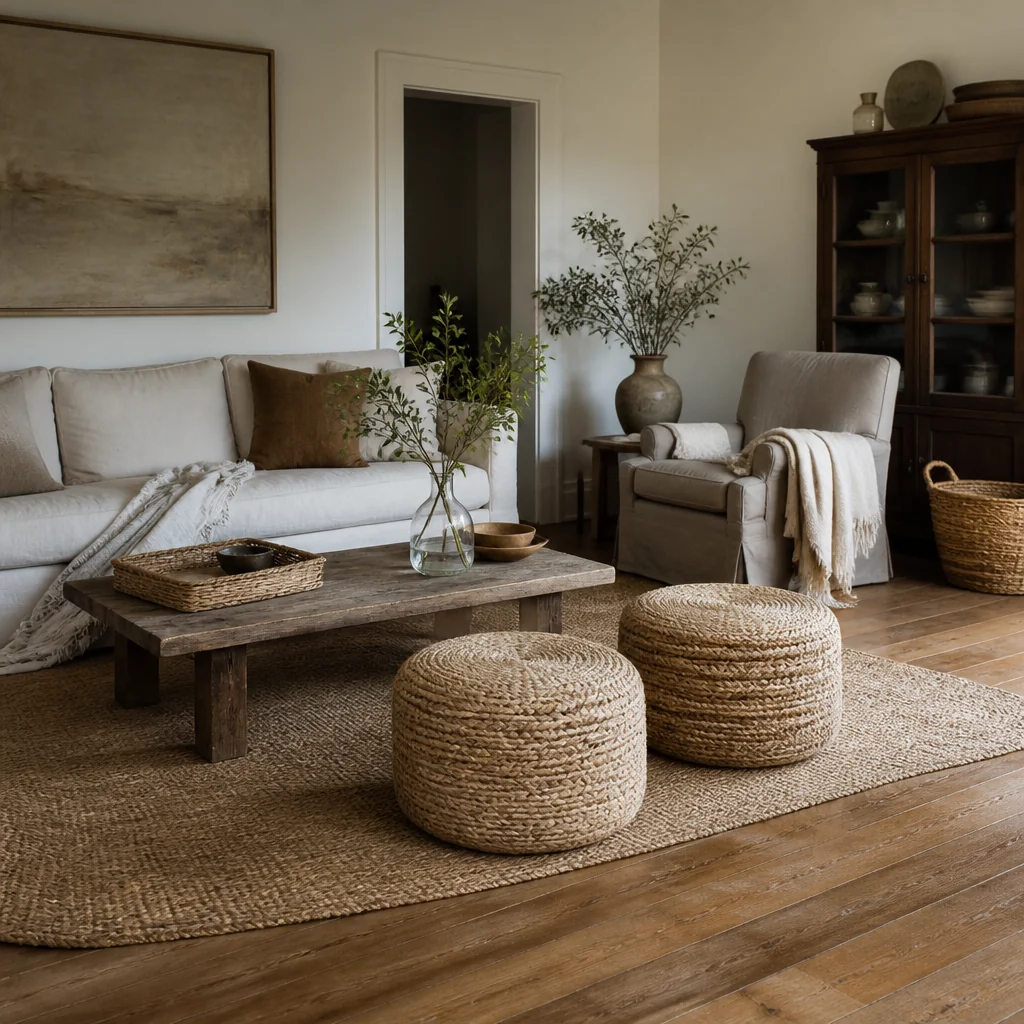
Poufs in jute, seagrass, or woven cotton are functional and textile-heavy without taking up floor space the way furniture does. They cost $40 to $120 each and work as footrests, extra seating, or surfaces to pile blankets on. Place two or three around a coffee table in varying sizes so the eye has something to catch. They're especially useful in Mediterranean rooms because they reinforce that natural fiber, woven-by-hand aesthetic without requiring you to commit to another piece of real furniture. Tuck throws into the creases and pile small baskets nearby for a generous, lived-in feel. The rough texture of natural weave also shows age beautifully instead of looking shabby.
11. Introduce cushions on dining chairs in coordinating fabrics
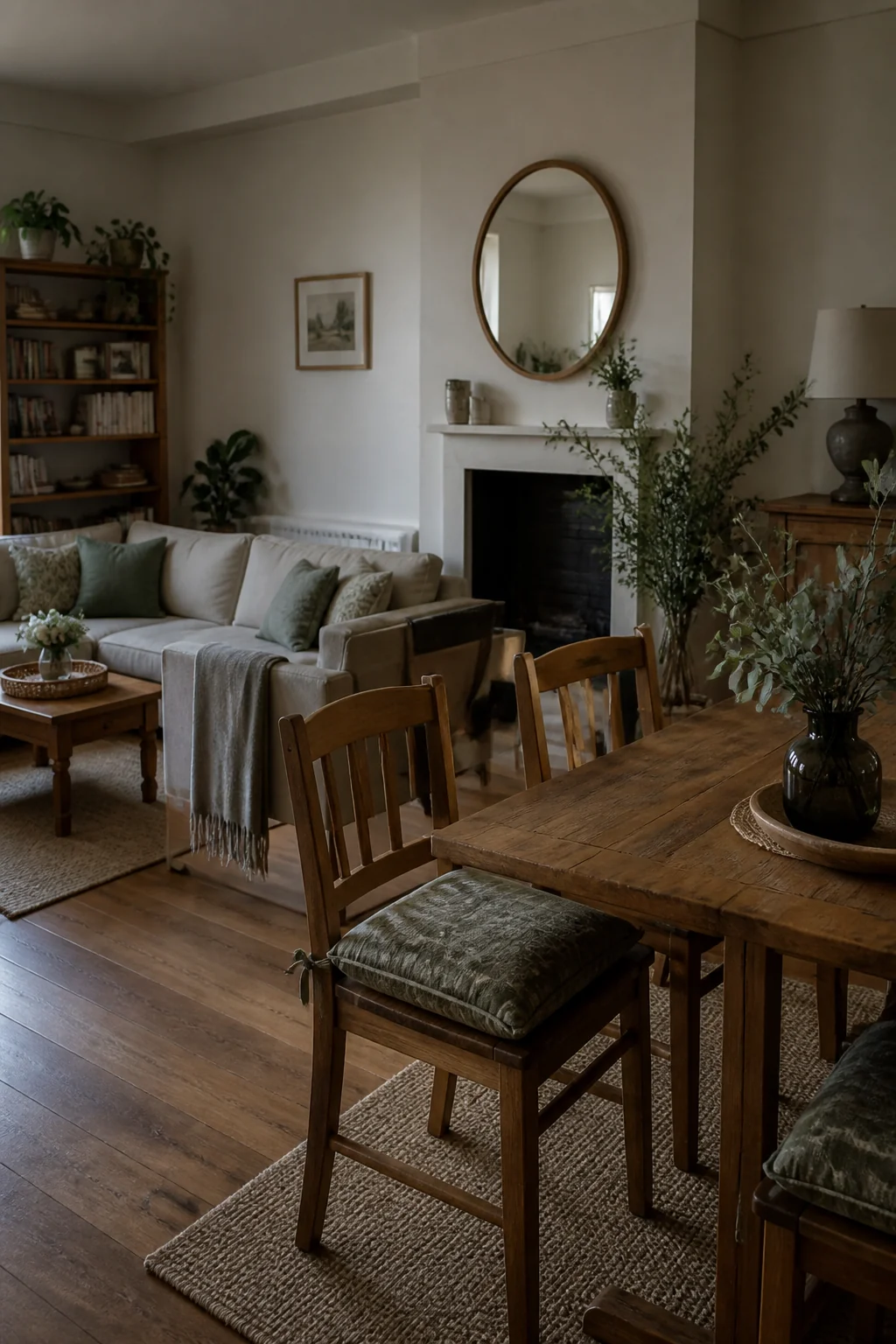
If your Mediterranean living room opens to a dining area, extend the textile scheme by adding cushions to dining chairs. Choose seat cushions in linen, canvas, or cotton in colors that echo your sofa and throws - creams, soft blues, terracottas. A set of four to six cushions costs $80 to $200 total. The cushions soften hard chairs and tie the two spaces together without the effort of reupholstering. Skip the back cushions on dining chairs; they get in the way of actually using the chairs. Seat cushions alone do the work of warming up a space and reminding anyone sitting down that this room is about comfort first.
Keep this guide handy
The real call here is whether you're willing to embrace natural fabrics that show age and wrinkles instead of staying pristine. Mediterranean design isn't about perfection - it's about rich texture, generous layers, and the kind of room where everything looks better because it's been used. If that appeals to you, commit to the good linen and the heavy weaves. If you need everything to hide dirt and stay neat, this style won't actually relax you, and that's the point of Mediterranean living.
Ideas fade by Friday. A plan finishes the room.
You just read a full guide to your living room. Saving ideas will not change it; a plan will. The Home Decor Collection is every planning tool we make, for every room in the house, in one download, so the after photos below stop being other people's rooms.
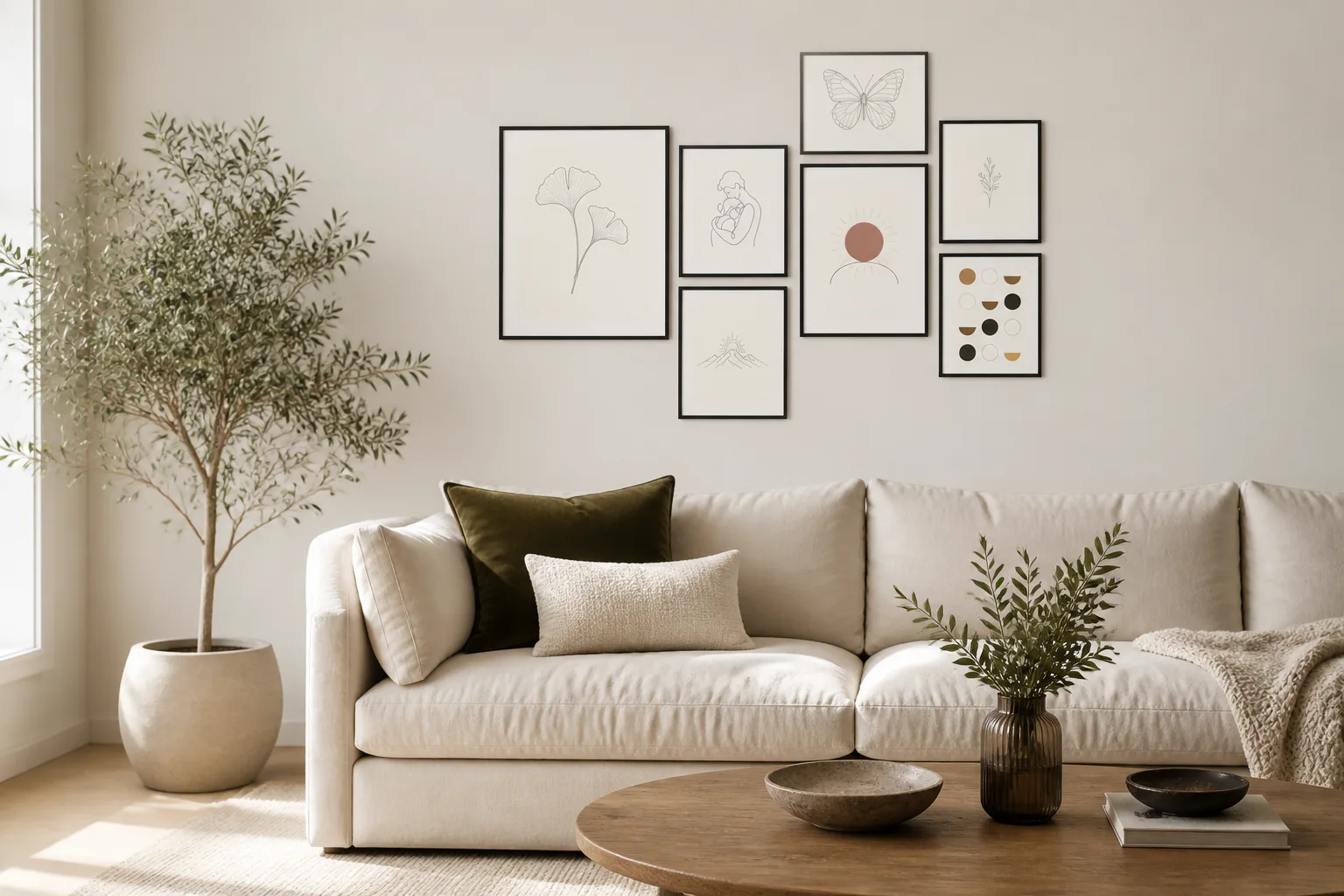
- Six room Style Kits, each with layout, palette and shopping list$114
- The Gallery Wall Studio: 200 prints + 15 measured layouts$29
- The Room Makeover System: 40 solved room layouts + workbook$29
- The Color Palette Handbook: 60 palettes shown in real rooms$19
- The Whole-Home Reset: 40 printable organizing checklists$19
- The Decorator's Cheat Sheets: the 40 measurements that matter$9
- All eleven products, bought separately
$219$97
A single hour with an interior designer costs more than the entire Collection, and this one keeps answering for every room you will ever decorate. Free updates included as the products grow. And if it is not for you, the 14 day money back promise means you simply get a refund.