17 Boho Kitchen Decor Ideas That Feel Warm, Not Cluttered
Boho kitchen decor ideas with the measurements and rough costs behind each one: open shelving, herbs by the sink, warm earth-tone cabinets, thrifted dishware.
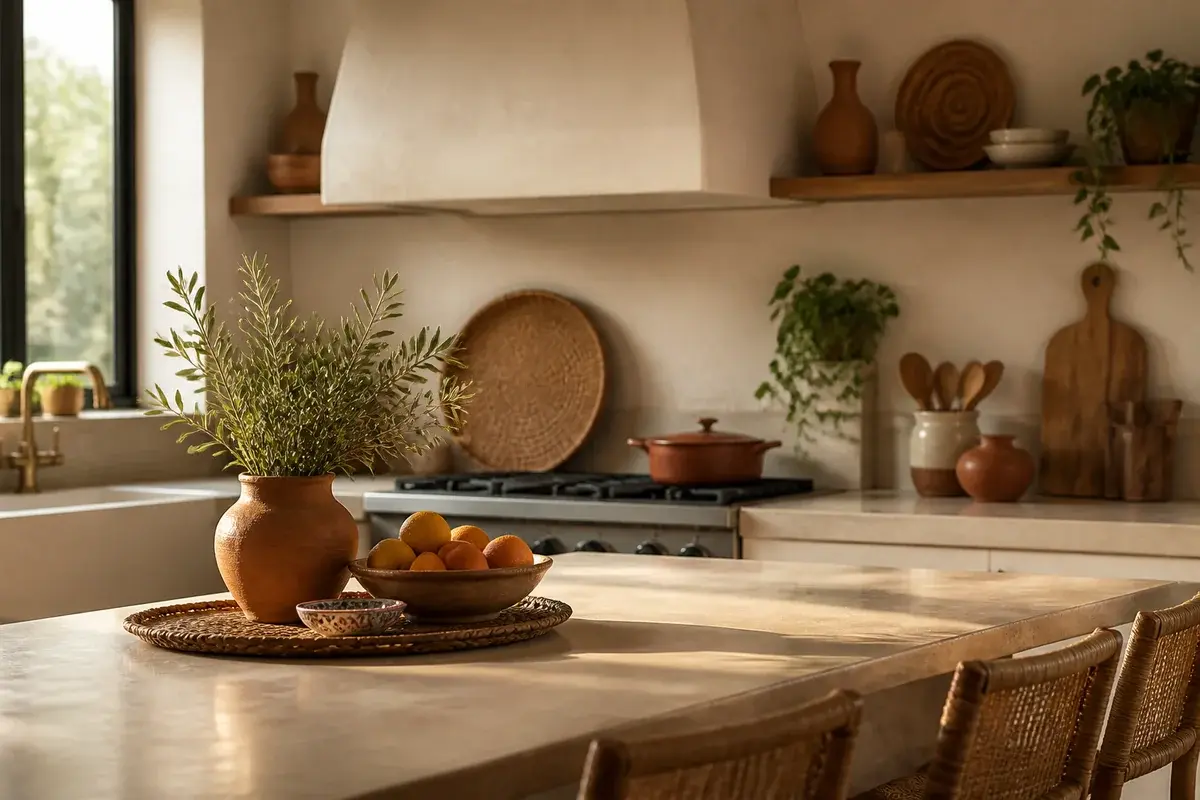
Warm but not cluttered. That's the whole boho kitchen brief, and it's a harder balance than it sounds, because the same textures that make a room feel collected will tip into visual noise the moment they outgrow the surfaces. The good news is that boho is one of the few looks that gets better as it gets cheaper: thrifted plates, a $6 pot of basil, dried stems you hung yourself. No renovation, and nothing has to match. What follows is 17 ideas sized for real kitchens, each with the measurements, rough costs, and honest drawbacks you need to judge whether it belongs in yours.
1. Swap cabinet doors for open shelving on one wall
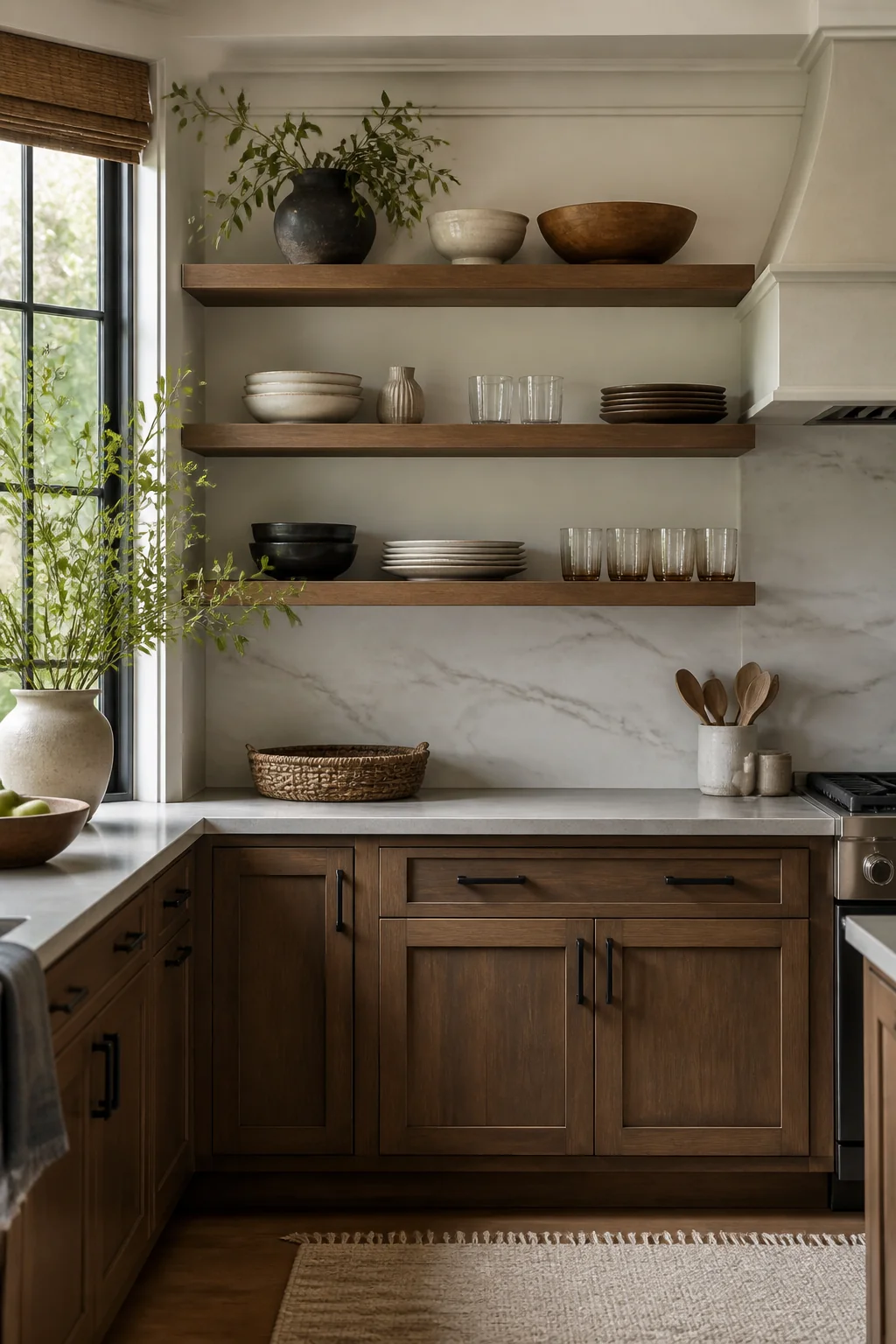
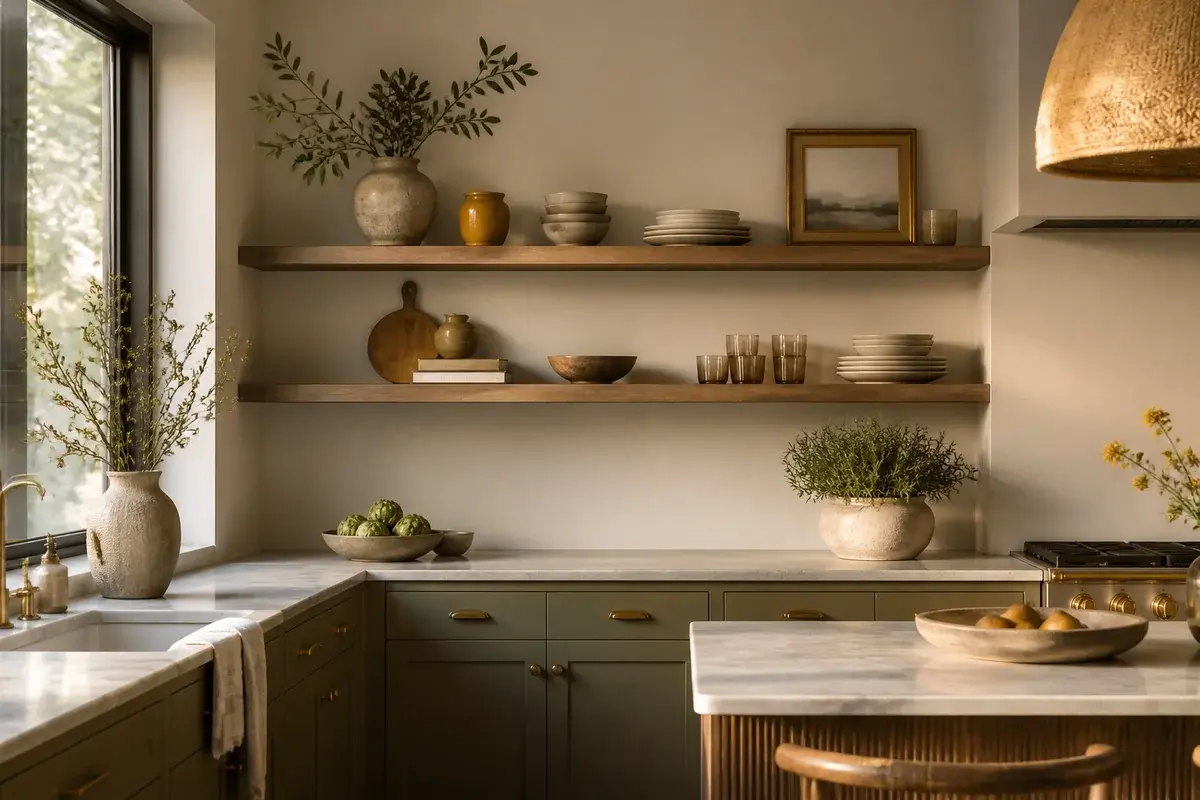
Take the doors off two or three upper cabinets, or mount floating shelves along a 4-foot run. If you're removing doors, unscrew the hinges, fill the cup holes with wood filler, sand them flush, and paint the cabinet interior a shade lighter than the walls so the shelf doesn't read like a cave. New shelves work best at 10 to 12 inches deep, which holds a dinner plate with room to spare, hung 16 to 18 inches above the countertop so a stand mixer still fits underneath. Boards and brackets run about $25 to $60 per shelf. Hit studs, or use toggle bolts rated for 50 pounds, because stacked stoneware is heavier than it looks. One caution worth taking seriously: skip open shelving right beside the range. Airborne grease settles on everything within a few feet of a burner, and anything you don't use weekly will need rinsing before guests see it. One styled section reads boho. A whole wall of it usually reads unfinished.
2. Hang woven baskets above the counter
Mount 2 or 3 flat-woven baskets on the wall above your prep zone using D-ring hangers or plain picture brackets. Seagrass and water hyacinth trays in the 12 to 16 inch range cost roughly $15 to $40 each, and shallow ones, under about 4 inches deep, sit flatter against the wall. Hang the largest slightly off-center and cluster the smaller ones below it rather than lining all three up in a row. If you want them working instead of purely decorative, a deeper basket on a shelf takes cooking linens, onions and garlic, or the overflow snacks that never had a home. Counters stay clear, and that's the real win here, because the boho look collapses the second your horizontal surfaces fill up. Two things to watch: woven fiber absorbs steam, so keep it out of the plume from a kettle or a dishwasher vent, and line any basket holding produce with a cloth napkin so grit doesn't work down into the weave.
3. Paint lower cabinets a warm earth tone
Soft sage, warm terracotta, and creamy mustard all sit comfortably below eye level. Keep the uppers white or bare wood so the room doesn't close in on you. A gallon of cabinet-grade enamel runs about $40 to $70 and covers roughly 10 to 12 doors, plus $20 to $30 for a quart of bonding primer. The prep matters more than the paint does. Degrease every surface with a strong cleaner, scuff-sand with 220-grit, wipe the dust off with a tack cloth, then prime. Two thin coats beat one thick one every time, and pulls should come off rather than get taped around. The failure mode here is impatience: water-based enamel feels dry in two hours but stays soft for two to three weeks, so doors rehung and slammed on day three will show dents and print marks along the edges. Leave them flat on sawhorses as long as you can stand it.
4. Fill the sink wall with potted herbs
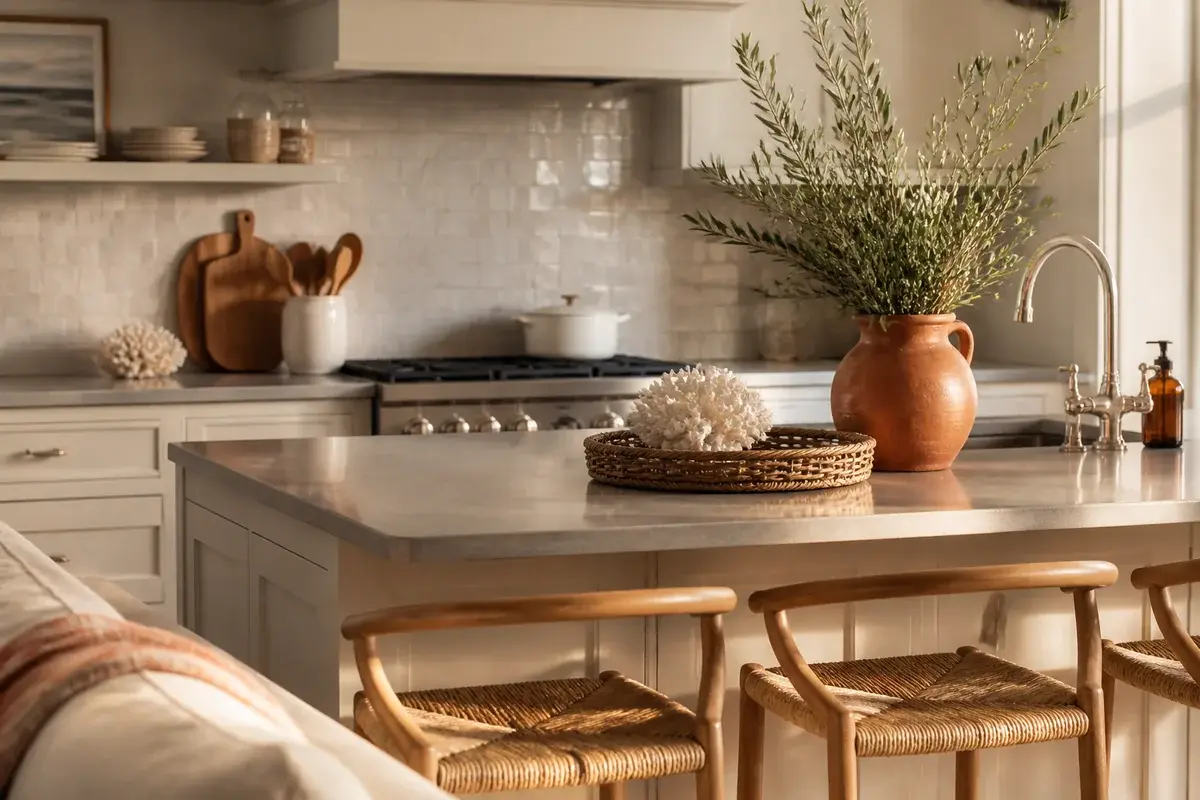
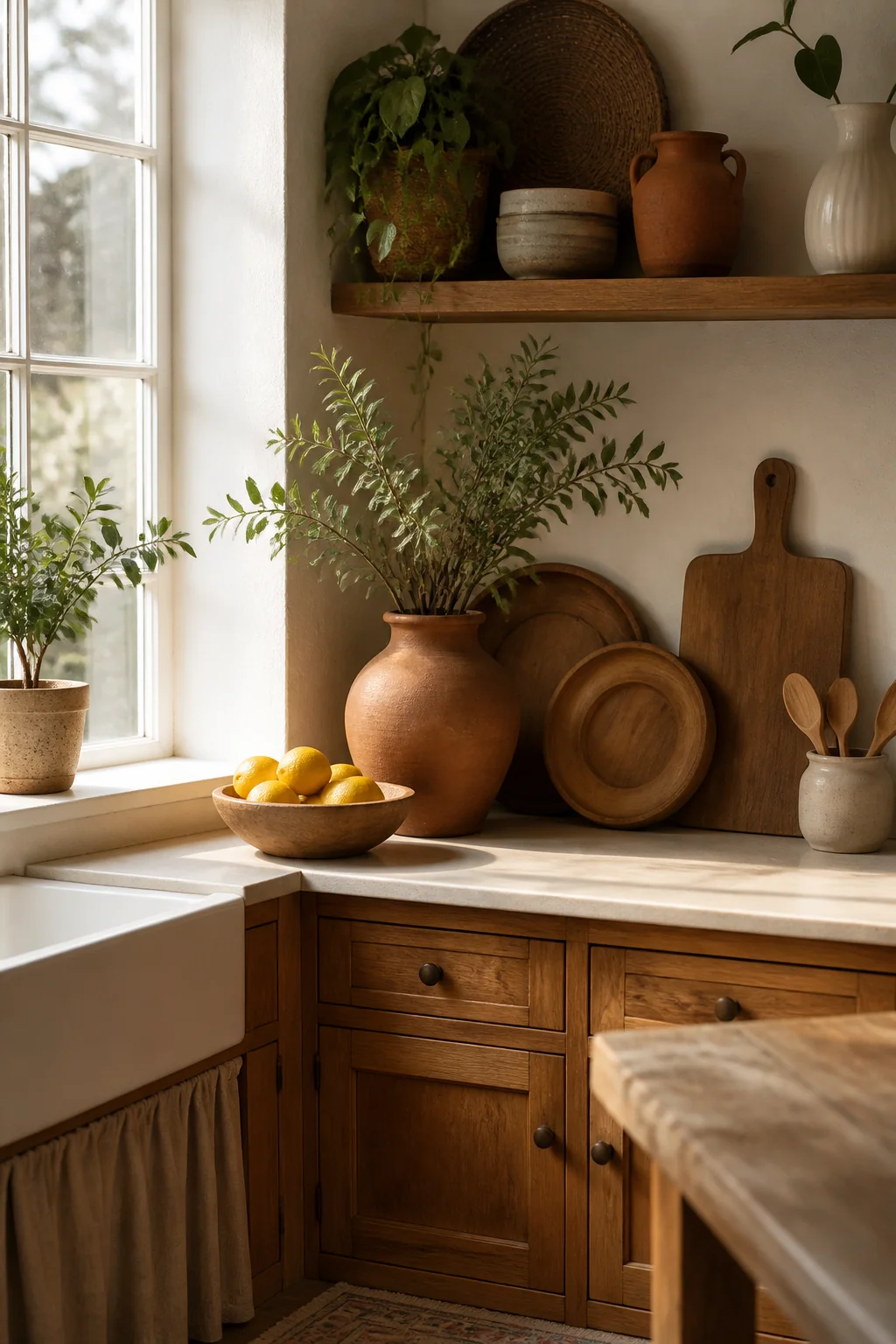
Line 5 to 8 small pots along the windowsill or a narrow ledge above the sink. Basil, mint, and chives are the forgiving ones; rosemary and thyme want more sun than most kitchen windows can give them. Grocery-store herbs cost $3 to $8 and 4-inch terracotta pots are around $2 each, which puts the whole wall under $50. Terracotta earns its place here because it breathes, so roots are far less likely to rot, and the pale clay ages into exactly the chalky tone this look wants. Check your light before committing: a north-facing sill will stretch basil into a pale, leggy stem inside a month, and no amount of watering fixes it. Use a saucer or a shallow zinc tray too, since pots watered straight on a painted sill leave rings that scrubbing won't lift. If the light really is poor, a pot of pothos on the same shelf survives conditions no herb will.
5. Layer vintage and thrifted dishware
A perfectly matched set reads catalog. A shelf of near-misses reads collected. What keeps the second one from looking like a jumble is a single shared thread: same color family across different patterns, or the same pattern across different shapes. Cream, terracotta, and soft blue sit together easily and photograph warm. Thrift stores price individual plates at $1 to $4, so a mixed service for six lands near $30 against the $120 or more a coordinated set costs new. Turn each piece over before you buy and look for crazing, the fine web of glaze cracks that traps water and stains. One real caution with older finds: bright orange, red, and some hand-painted imports made before the 1970s can carry lead in the glaze, so keep those for display or dry goods rather than daily plates. Stack by size on open shelves, or stand the best pattern face-out behind glass where it does some work.
6. Add a patterned kitchen runner rug
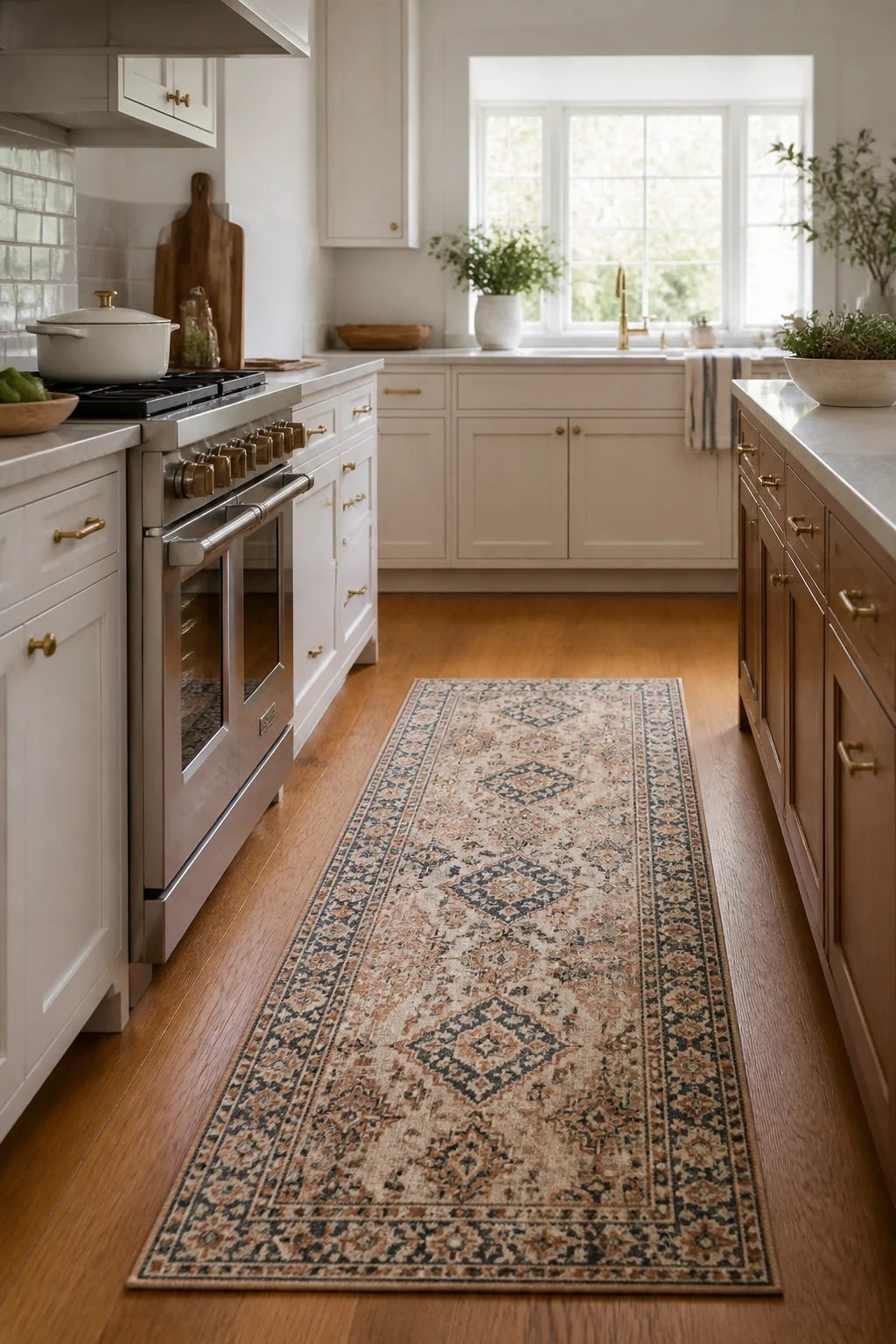
A 2-by-6 or 2.5-by-8 foot runner in front of the sink covers the patch of floor you actually stand on. Measure the galley first and aim to leave 3 to 4 inches of bare floor along each side; a runner that touches the toe kicks makes a narrow kitchen feel narrower still. Geometric and tribal patterns in warm neutrals hide crumbs and the inevitable splash far better than flat cream does. Budget $30 to $70 for a machine-washable cotton flatweave, which is the right fiber this close to a sink. Jute and sisal look the part, but they drink water, hold the smell for weeks, and go stiff and gray wherever you drip. Add a thin rubber pad, about $12, or the rug will creep every time you pivot between sink and stove, and a curled edge on tile is a genuine trip hazard rather than a styling problem.
7. Hang dried flowers and herbs from the ceiling
Bundle eucalyptus, lavender, or statice with twine and hang the bunches from a ceiling hook, a curtain rod, or a length of dowel above the window. Drying your own costs close to nothing: strip the lower leaves, tie 8 to 10 stems at the base, and hang them upside down somewhere dark and dry for two to three weeks so the color holds instead of bleaching out. A ready-made bunch from a florist is $15 to $25 and lasts several months before it looks tired. Pampas grass is the exception worth naming, because it sheds constantly, and above a prep counter that means fluff in the food; a light mist of cheap hairspray slows it but never stops it. Keep every dried arrangement well clear of the range as well. Brittle stems and an open flame are a bad pairing, and cooking grease turns dried foliage tacky and gray within weeks.
8. Install open shelving on a kitchen island or cart
If you already own a rolling cart or a freestanding island, the empty cavity underneath is the cheapest storage in the room. Cut a shelf board to fit and rest it on cleats screwed into the legs, or slide two matching baskets into the gap and leave it at that. A 1-by-12 pine board is about $15 at any hardware store, and a pair of cleats adds a few dollars more. Leave 12 to 14 inches of clearance above the shelf so a stack of cookbooks or a bread box actually fits. Load the heavy things low, since a cart with its weight down near the casters rolls steadily while a top-heavy one wobbles the moment you knead on it. Lock the casters before you chop. This is the move that turns a plain kitchen island into something that looks gathered over years instead of bought in one afternoon.
9. Switch to natural wood cutting boards as decor
Lean 3 or 4 boards of different sizes against the backsplash, or hang them from a rail on S-hooks. Vary the shape as well as the size, since a round paddle beside two rectangles gives the grouping some rhythm. Acacia and olive wood carry the loud, wandering grain that suits this look and run about $15 to $40; walnut is calmer and closer to $60. Keep them useful rather than ornamental by rubbing in food-grade mineral oil once a month, roughly $8 a bottle, until the surface stops drinking it in. Water is what ruins them: a board that goes through the dishwasher or sits damp against a wall will cup, then split along the glue lines, usually within a year. Dry both faces and stand it on edge so air reaches each side. Bamboo is the cheap option, but it dulls knives noticeably faster than hardwood does.
10. Use macrame or woven wall hangings as a backsplash accent
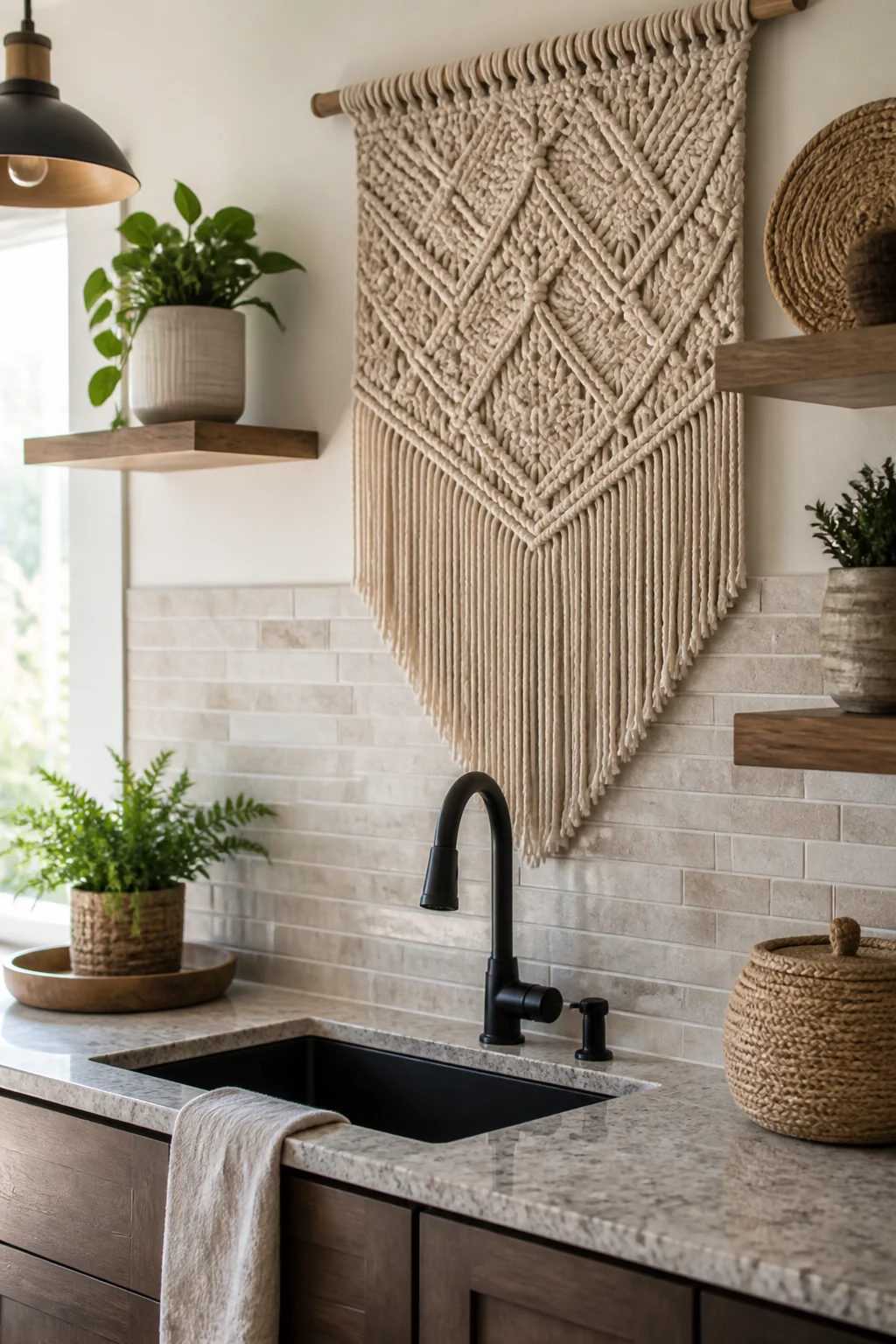
One large piece behind the sink, or on the open wall opposite the range, does more than three small ones spread across the same space. Scale it deliberately, because the wall section between two cabinet runs works like a frame, and a small piece hung inside it reads as something left over rather than something chosen. Fill roughly two thirds of the run and the hanging starts to look placed. Handmade cotton macrame on Etsy runs $25 to $60 for a 24 to 30 inch panel, and a dowel-hung piece needs nothing but two small hooks and a level. Where it goes matters more than which one you buy. Cotton rope is flammable and it absorbs cooking odors, so it should never hang behind a gas range or within arm's reach of a burner. Behind a sink it will take splash-back, so choose undyed natural cotton you can spot-clean with cool water. Shake the dust out every couple of months, before it settles down into the knots for good.
11. Swap out hardware for brass or copper knobs and pulls
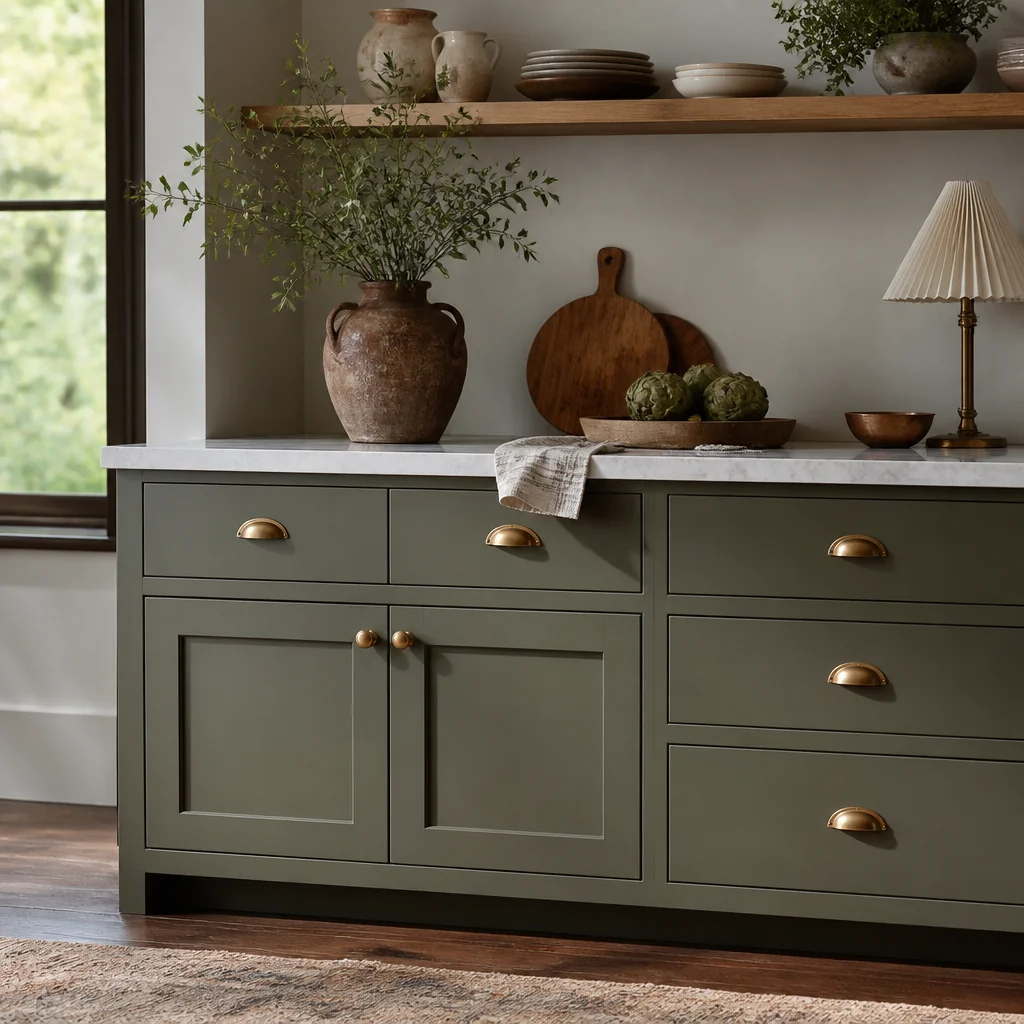
Measure before you buy a single piece. Pulls are sold by center-to-center spacing, and the two common sizes, 3 inch and 96 millimeter, look identical in a product photo and sit far enough apart in reality to leave you with holes that won't line up. Count doors and drawers as well: an average kitchen needs 10 to 20 pieces at $3 to $8 each, so $50 to $150 covers the room. Unlacquered brass is the finish worth knowing about, because it arrives bright and then darkens unevenly wherever hands touch it, which is precisely the aged quality this style wants; lacquered brass stays uniform indefinitely. If your new pulls do have different spacing, a $10 installation jig lets you drill fresh holes straight, and wood filler with touch-up paint hides the old ones. Warm metals read better against clay tones and bare wood than cold stainless does.
12. Display cookbooks spine-out and spine-in on open shelves
Mix upright rows with short horizontal stacks, and let a stack of three or four books act as a riser for a small bowl or a plant. Roughly two-thirds upright to one-third stacked keeps a shelf from looking either like a library or like a pile. Thrift stores sell hardbacks for $1 to $3, and older cookbooks tend to have the cloth spines and faded typography that suit an earthy palette, so a shelf's worth comes together for under $20. Anchor the end of a leaning row with something heavy you'd use anyway: a marble mortar, a stoneware crock of spoons. Humidity is what wrecks cookbooks in a kitchen, since pages swell and cover boards warp on any shelf sitting directly above a dishwasher vent or a kettle. Keep the ones you cook from within reach of the counter and put the pretty, rarely opened ones up high.
13. Add a vintage-style glass cloche or cake stand
A footed cake stand or a glass dome gives one small thing on the counter a bit of ceremony. A 10 to 12 inch stand suits most counters, and anything wider starts eating the working area you need for a chopping board. Thrift shops and estate sales price vintage pressed glass around $15 to $35, comfortably under the $50 or more a new one costs. Fill it with lemons, a few pears, a wrapped loaf, or the wooden spoons you reach for daily. Know what a dome does before you trap fruit under one, though: ripening fruit gives off ethylene gas, and a sealed cloche concentrates it, so pears and bananas turn soft in days rather than a week. Leave a small gap at the base, or reserve the dome for bread and baked goods and let citrus, which holds up far better in the open, sit out on the stand.
14. Hang a woven plate rack above the counter
Fix a wooden or rattan rack to the wall and lean plates, small boards, and platters against the slats. Vertical storage is the small-kitchen answer, and a rack of roughly 24 by 20 inches takes a dozen dinner plates off your shelves while using wall space that was doing nothing. Rattan versions cost about $30 to $60; solid oak or ash is nearer $80 but holds more weight without bowing across the middle. Anchor it to a stud or use heavy-duty drywall anchors, because a dozen stoneware plates comes to 15 or 20 pounds hanging off a couple of screws. Site it above counter height and outside the splash zone so nothing gets knocked while you work. The trade-off is worth stating plainly: plates on open display collect dust and airborne grease, so this suits the everyday set that cycles through the dishwasher weekly, not the good china.
15. Use glass jars for bulk dry goods instead of plastic
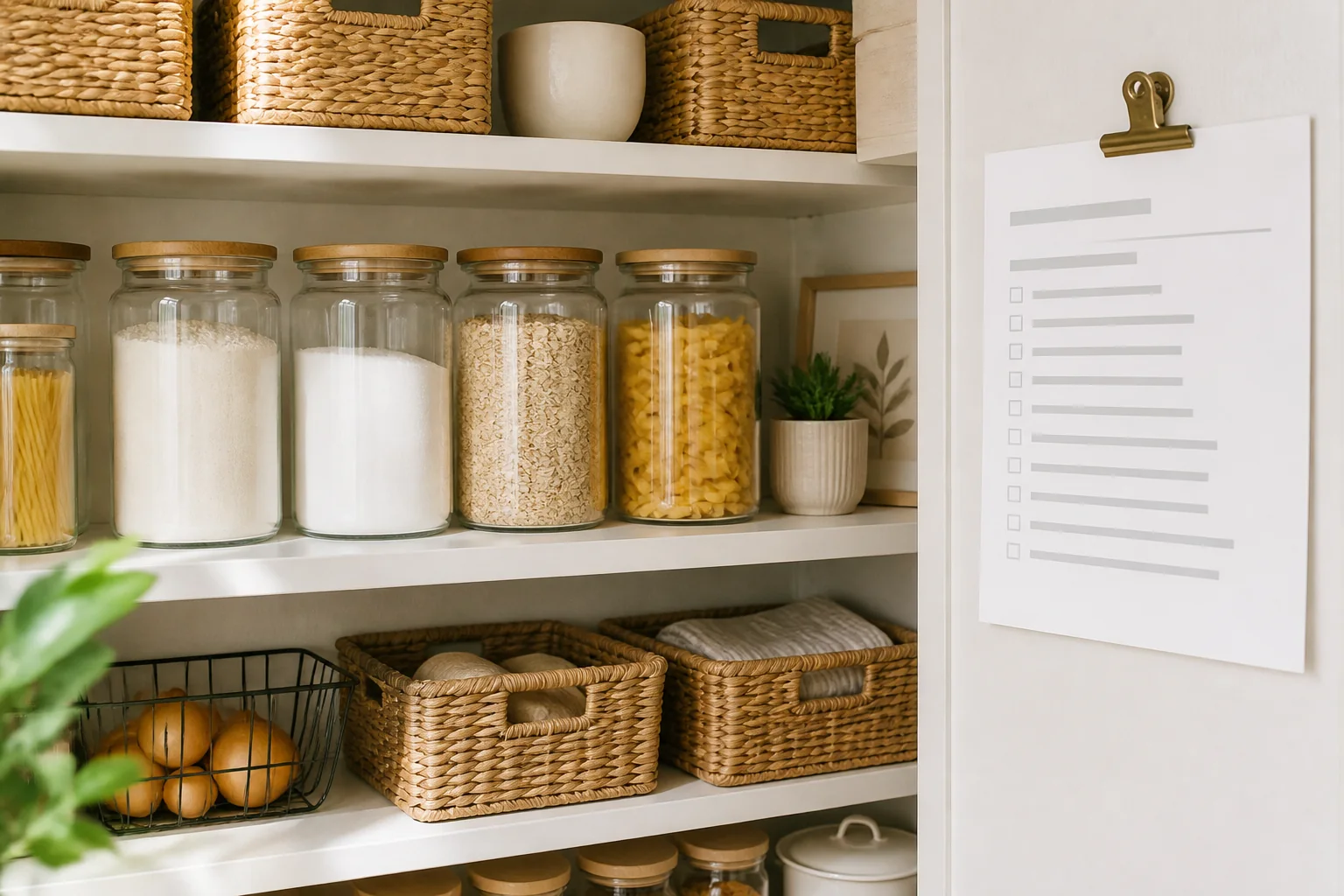
Decant pasta, rice, flour, and beans into glass. A 1-quart jar holds about a pound of dried beans, and a 2-quart swallows a standard 5-pound flour bag with room left over, so buy a mix of sizes rather than six of the same. A set of six with clamp lids and rubber gaskets costs $20 to $35, and the gasket is the part that matters: a plain screw-top without a seal won't keep pantry moths out, and once they reach a bag of flour they spread through everything else on the shelf. Write on kraft tags tied with twine, or use a chalk pen straight on the glass so relabeling is easy. Plan around light as well, since whole spices, brown rice, and nuts go stale faster on a sunny open shelf. Keep those in a closed cupboard and let the pasta and beans do the decorating.
16. Hang pendant lights with warm, natural materials
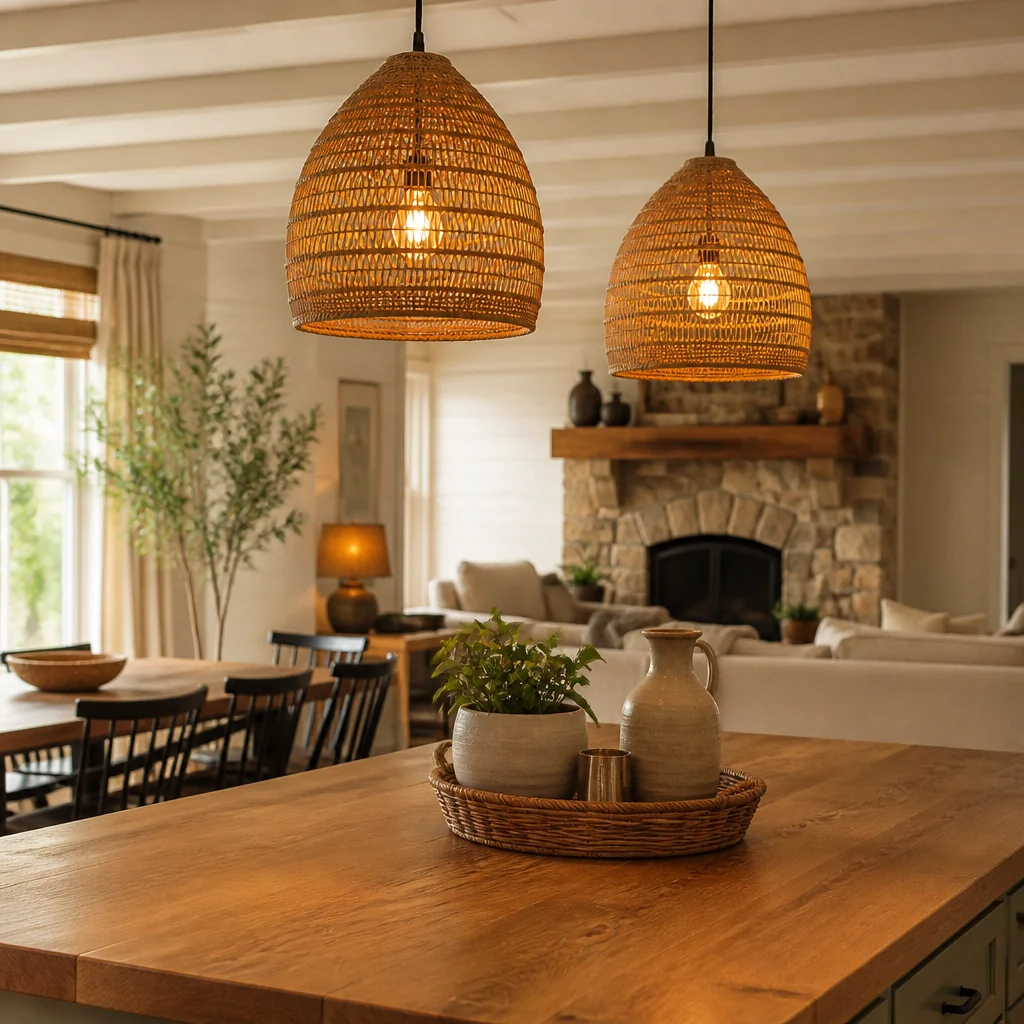
Hang 1 to 3 rattan, seagrass, or turned-wood pendants over the island or the stretch of counter you work at. The height that works is 30 to 36 inches from the countertop to the bottom of the shade, which clears your sightline across the room without parking a bulb at eye level. Space multiples 24 to 30 inches apart and keep the outer two about 6 inches inside the ends of the island. Fixtures cost $40 to $100 each, and an electrician swapping an existing ceiling box is usually $75 to $150 unless new wiring is involved. Choose 2700K bulbs, because anything cooler drains the natural fiber to a flat gray. Woven shades do have one honest drawback: an open weave throws lovely patterns across the ceiling but very little usable light down onto the counter, so keep undercabinet strips for chopping and let the pendants handle atmosphere.
17. Create a beverage station with a vintage pitcher and glasses
Give the station a defined edge or it becomes clutter with a story. A tray of about 18 by 12 inches, or a single dedicated shelf, tells the eye where this zone starts and stops. A large ceramic or glass pitcher, six glasses, and a small vase or trailing plant is the entire kit, and thrifted it lands under $50. Set it near an outlet if a kettle or grinder is going to live there too, and out of the main cooking path, so pouring a drink never means reaching across a hot pan. A pitcher of water with citrus in it needs emptying and rinsing daily; if that's not realistic in your house, keep the station dry instead: beans in a jar, mugs on hooks, a stack of linen napkins. Unglazed ceramic sweats and will ring a wood counter, which is where the tray earns its keep.
Take the guide with you
Seventeen ideas is not a checklist. Boho reads as collected because it genuinely was collected, and a kitchen that acquires every element in one weekend tends to look like a set. If there's one place to put your attention, make it the things your hands meet: the hardware, the runner underfoot, the one shelf holding what you reach for every morning. Get those right and the room already feels different. The rest tends to arrive on its own schedule, usually from a thrift shelf you had no plans to visit.
Ideas fade by Friday. A plan finishes the room.
You just read a full guide to your kitchen. Saving ideas will not change it; a plan will. The Home Decor Collection is every planning tool we make, for every room in the house, in one download, so the after photos below stop being other people's rooms.
- Six room Style Kits, each with layout, palette and shopping list$114
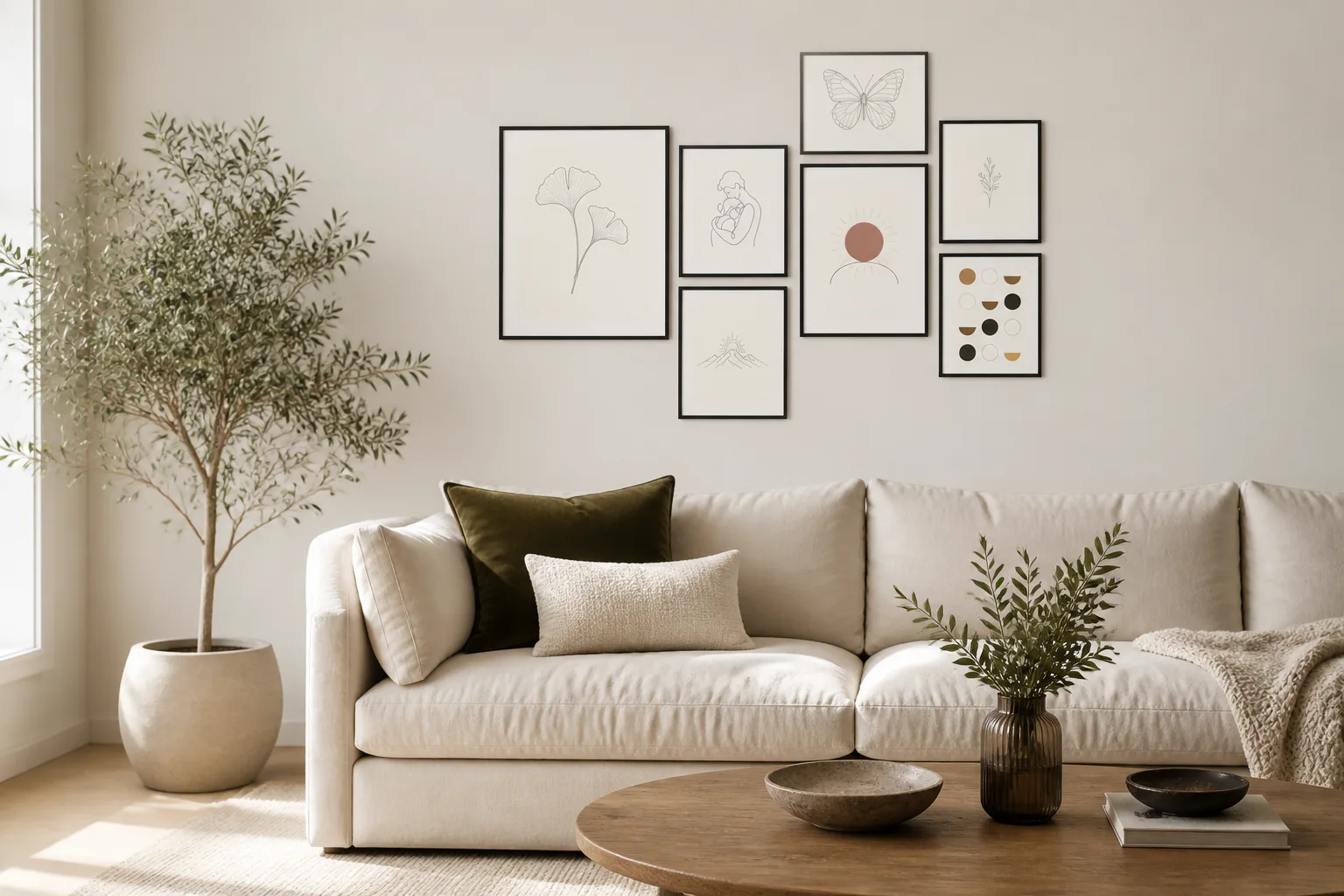
- The Gallery Wall Studio: 200 prints + 15 measured layouts$29
- The Room Makeover System: 40 solved room layouts + workbook$29
- The Color Palette Handbook: 60 palettes shown in real rooms$19
- The Whole-Home Reset: 40 printable organizing checklists$19
- The Decorator's Cheat Sheets: the 40 measurements that matter$9
- All eleven products, bought separately
$219$97
A single hour with an interior designer costs more than the entire Collection, and this one keeps answering for every room you will ever decorate. Free updates included as the products grow. And if it is not for you, the 14 day money back promise means you simply get a refund.