Create a Minimalist Dining Room That Feels Warm, Not Cold
Minimalist dining room ideas don't have to feel cold. Add warmth with natural materials, soft textures, and intentional color choices.
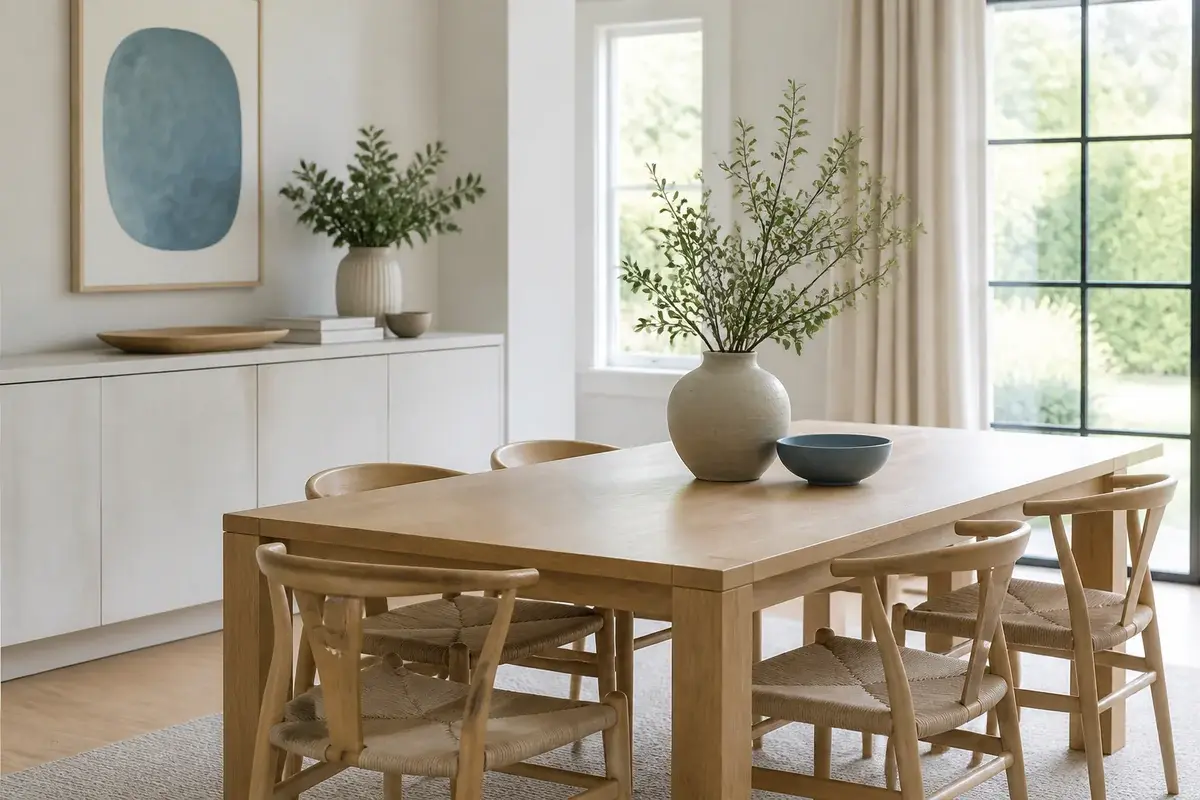
A minimalist dining room can feel like a showroom nobody wants to eat in. You've stripped away the clutter, the busy patterns, the excess furniture, and what's left is a room so empty and stark that it reads cold. The walls are bare and bright. The table sits alone on a hard floor. Light bounces off every surface with nothing to catch it. The room looks clean, yes, but it doesn't feel like somewhere you'd want to linger over a meal with someone you care about. The problem isn't that you've gone minimal; it's that minimal doesn't have to mean hollow. Warmth and restraint are not opposites. You can keep the clarity and simplicity of minimalism while building a space that feels intentional and lived-in, not abandoned.
Start with a table that anchors the room
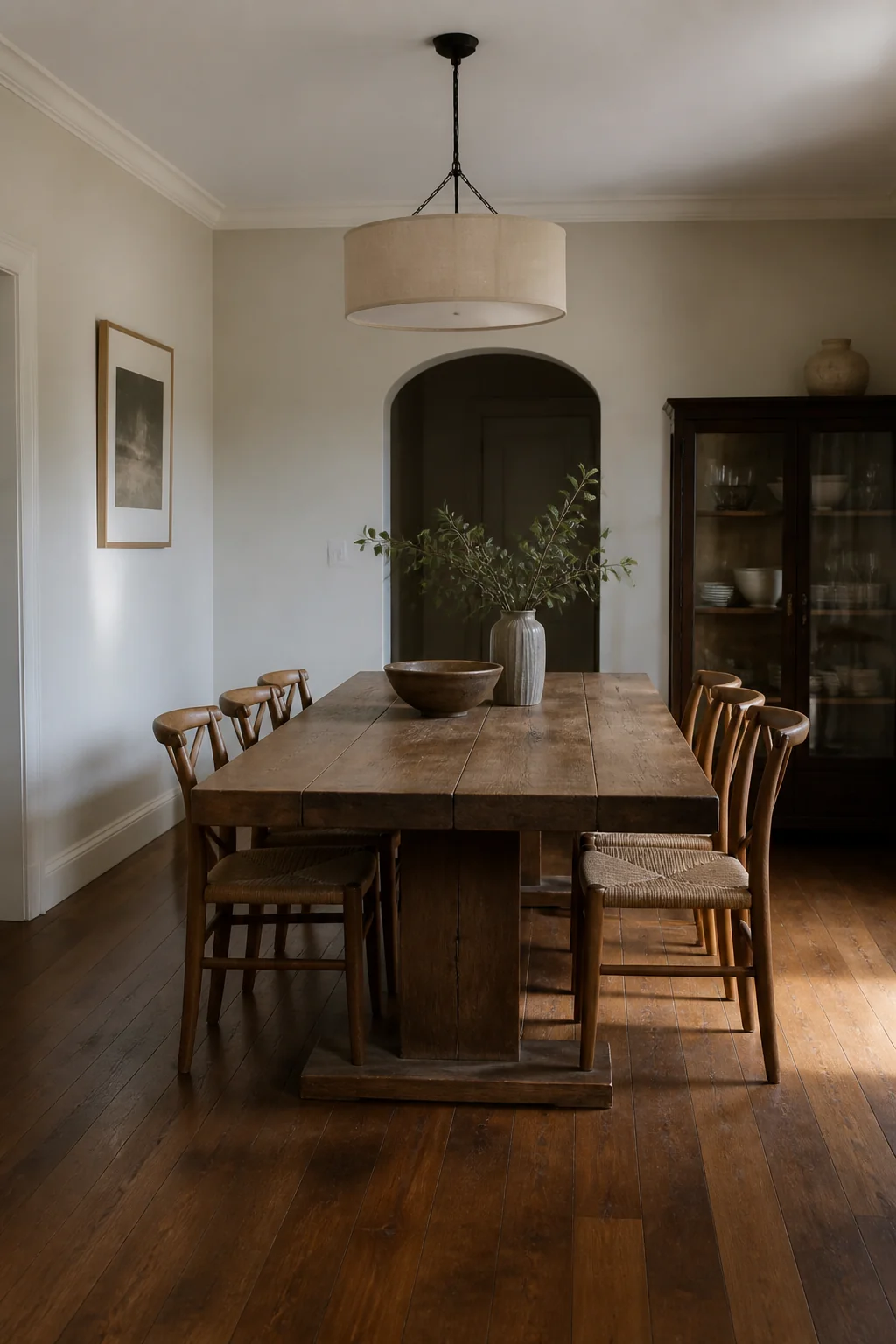
Your dining table is the entire point of the room, so choose one that matters. You need solid wood, not veneer or glass - something with grain and color variation that changes with the light throughout the day (a walnut table runs about $800 to $1,500 for a good 48-inch round, depending on finish quality). The wood itself provides warmth that glass or metal can't touch.
Scale it to your space without undersizing. A common mistake is choosing a table that's too small because you're worried about the minimalist look. This backfires; a tiny table in a medium room just looks lonely. A 48-inch round or a 36-by-60-inch rectangle works for most dining areas. The table should feel substantial enough to hold the room's weight.
Keep seating simple but textured
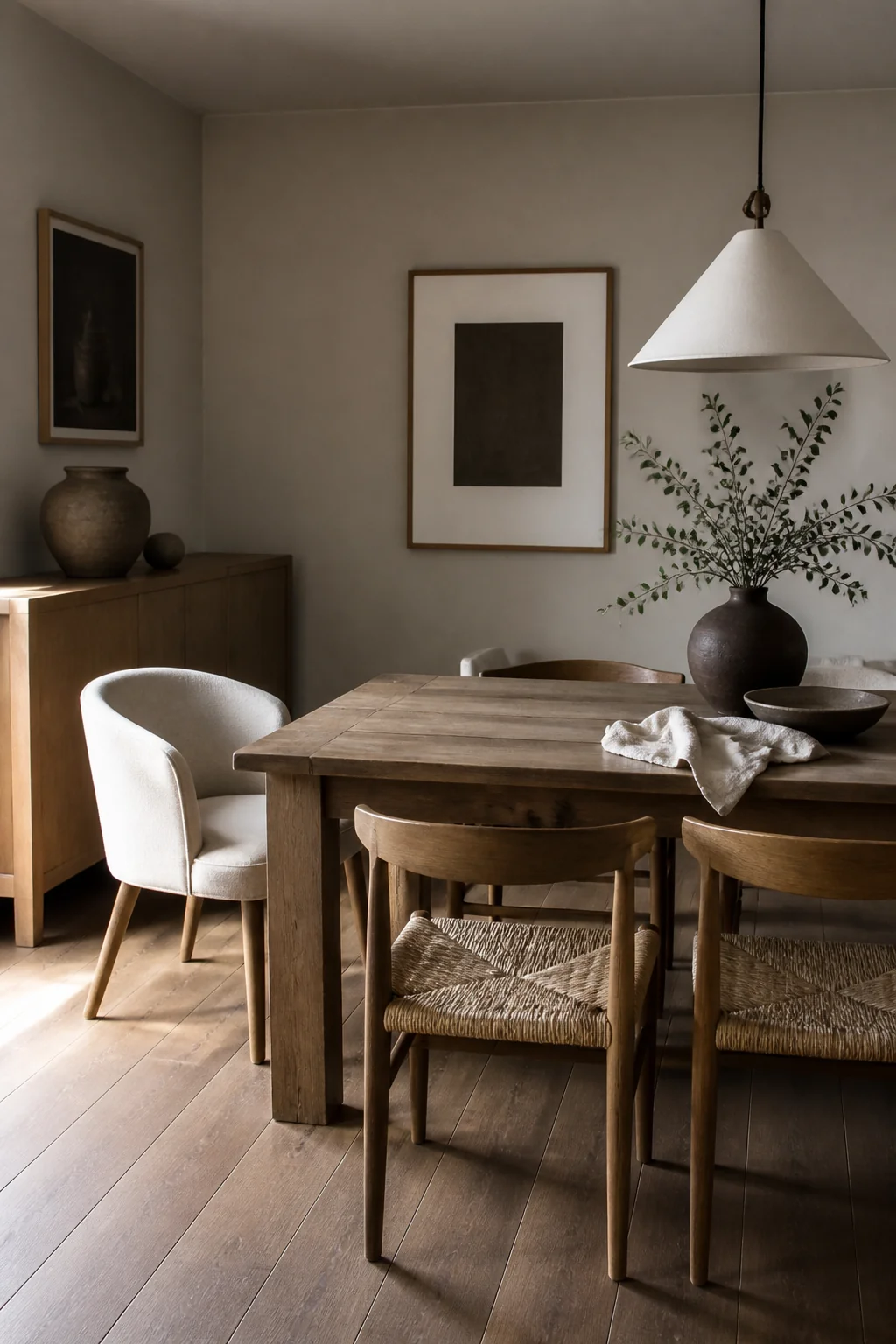
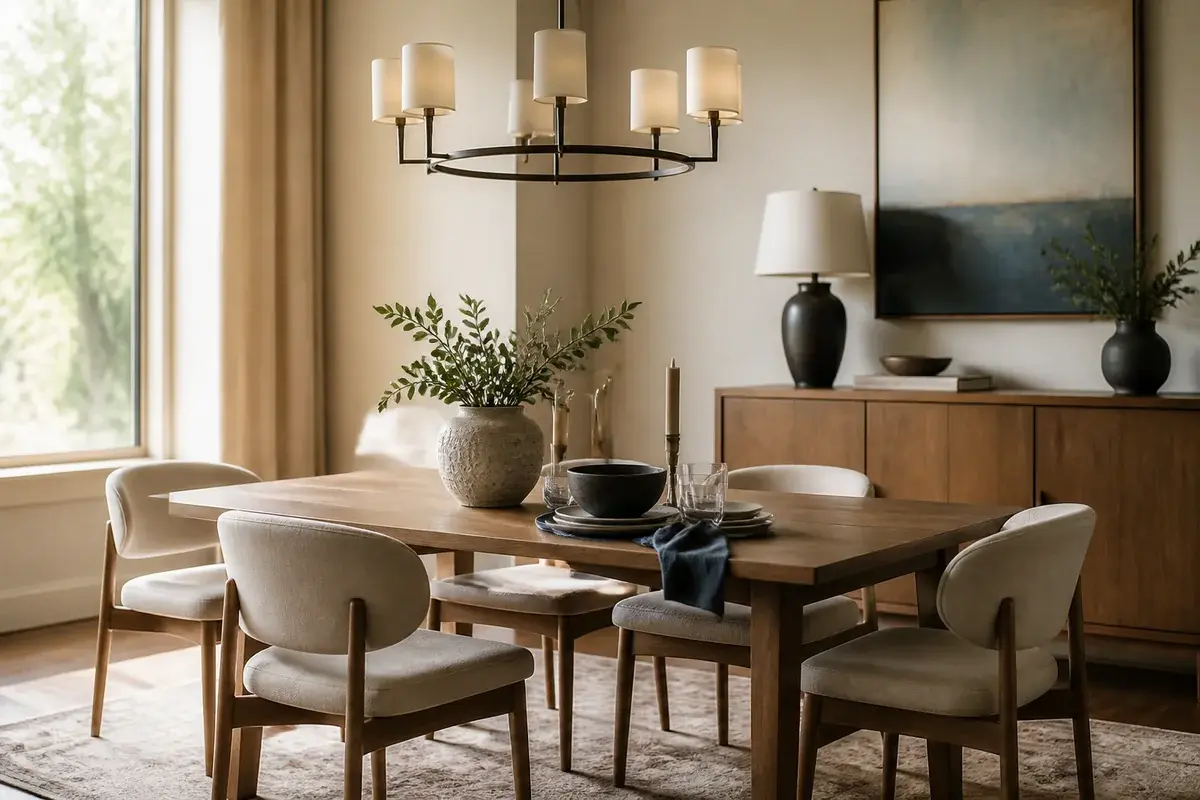
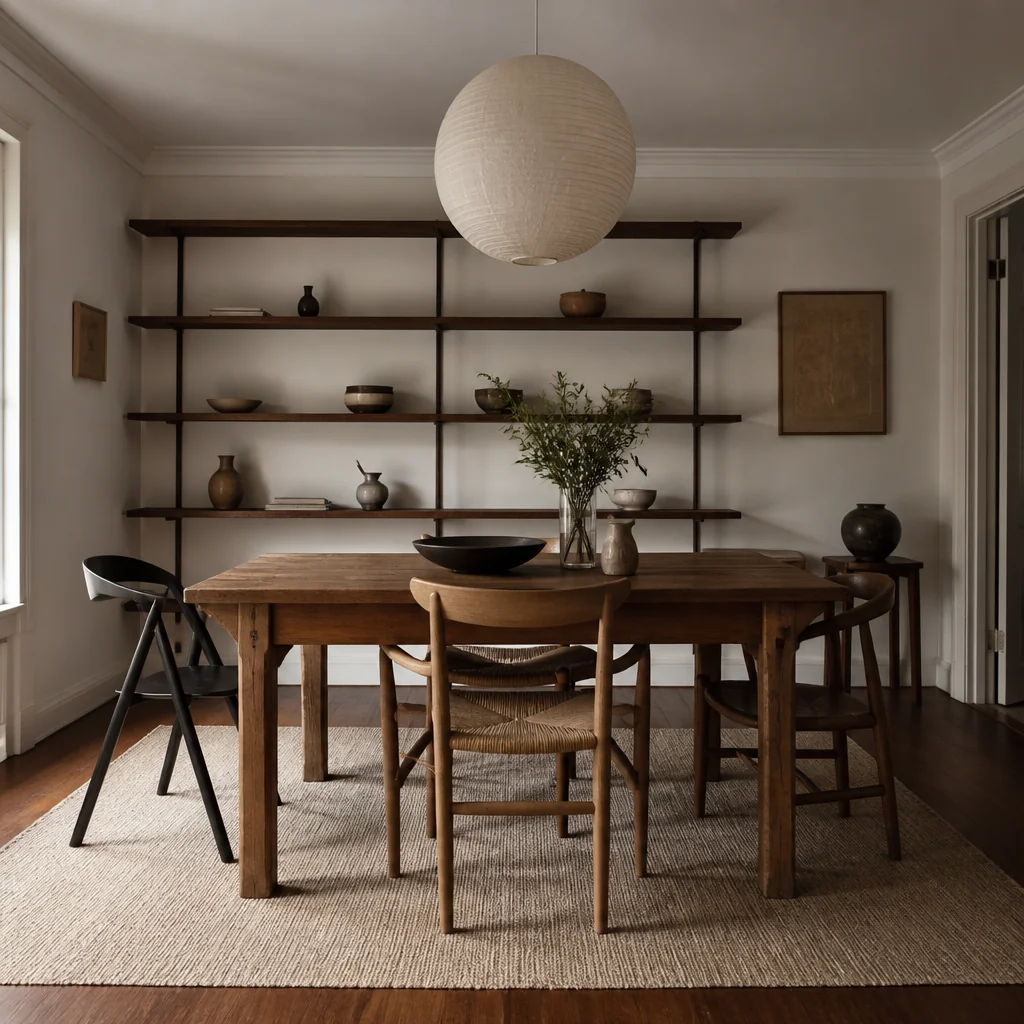
Four chairs in one wood finish is the obvious move, but don't make them match the table exactly. (Matching everything reads lifeless.) A slightly different wood tone - or mixing wood with painted frames - adds quiet visual interest. A walnut table with two natural oak chairs and two charcoal-painted oak chairs works beautifully because it's still restrained, but it has some movement.
Upholstered seats matter. Bare wood on a dining chair gets uncomfortable after 15 minutes. Choose a natural linen blend or a muted wool in cream, greige, or a soft gray - something that shows wear gracefully and invites you to actually use the chair (about $200 to $350 per upholstered chair). Leather is an alternative, but we'd skip it in a minimal room; it reads too formal.
Let the walls be a quiet color, not white
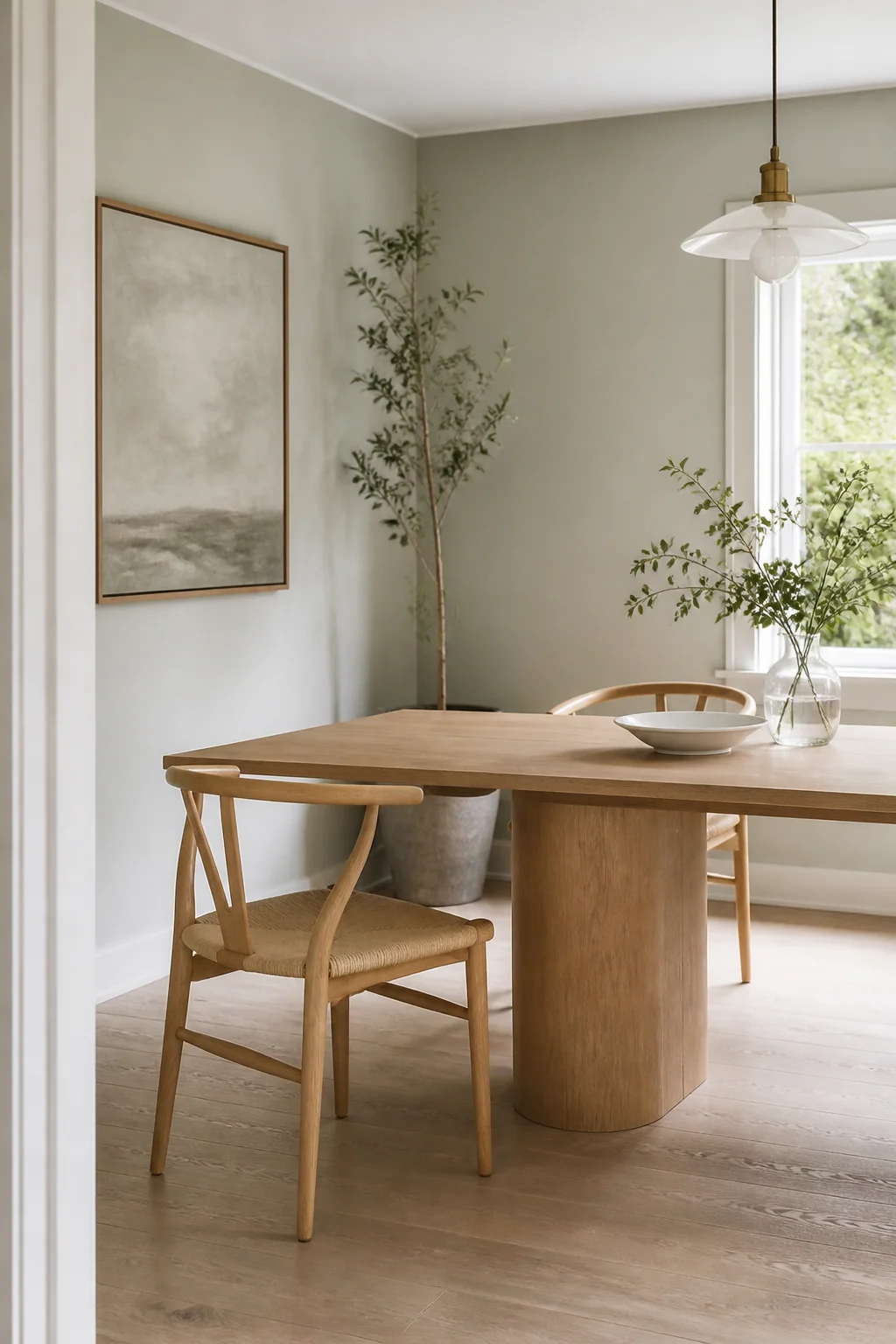
Pure white walls in a minimal dining room is a trap. They make the space feel like a waiting room. Instead, reach for warm off-whites or very soft neutrals: a warm greige (like Benjamin Moore HC-84 Mystic Gray), a barely-there cream, or even a soft warm gray with a hint of brown in it.
The point is that the wall color should shift subtly with the time of day. When morning light comes through, it shouldn't look blinding. This single choice transforms the feeling from sterile to serene.
Paint all four walls the same color. The minimalist discipline means trusting that one color, one finish, one tone is enough.
Lighting should be warm and layered
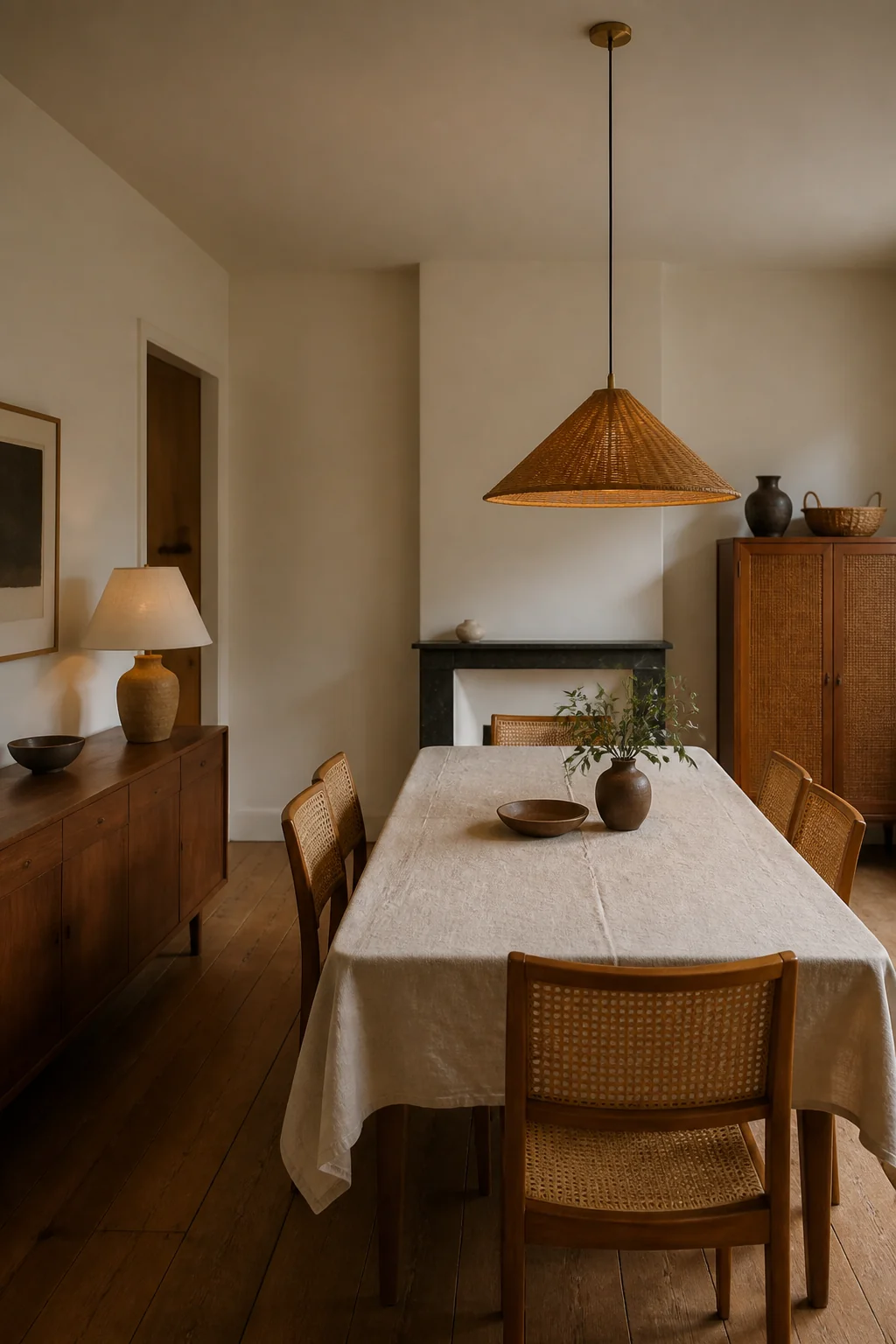
Overhead is not optional. You need light to eat by. But skip the modern pendant that hangs too low over the table - you'll hit your head, and it reads more "design statement" than "warm room." Instead, hang a fixture 30 to 36 inches above the table surface (standard height for a 30-inch table), in something with dimension: a simple linen shade, a woven rattan drum, or a subtle ceramic base.
Add a dimmer switch, or choose a bulb in warm white (2700K color temperature) rather than cool or daylight. The warmth in the light is what makes a minimal room feel like it belongs to a real person.
Consider a low-level wall sconce or two flanking a window or artwork, set 60 inches from the floor. This creates softer secondary light that prevents the room from feeling spotlight-bright.
Introduce texture through one good rug
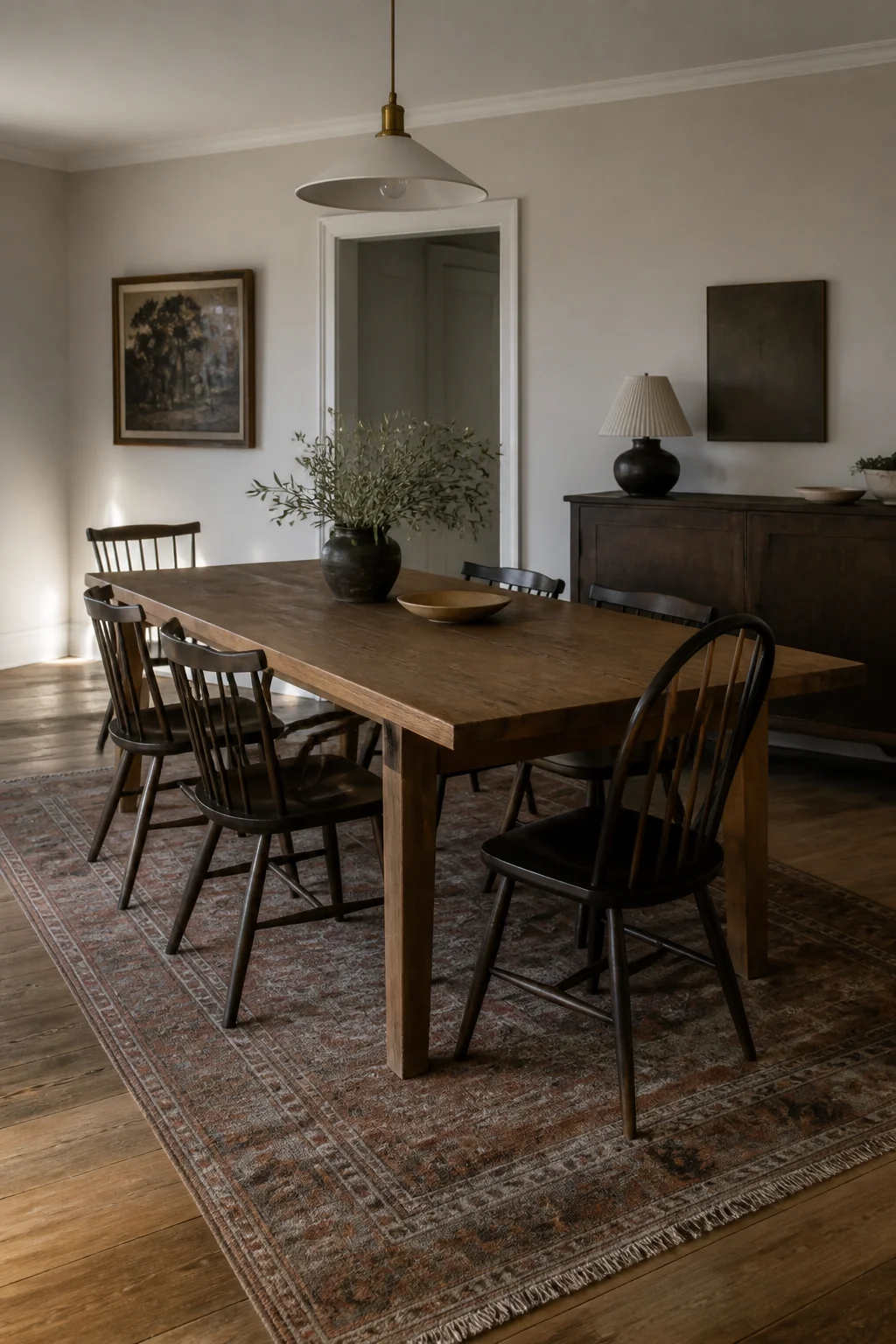
A rug under the dining table isn't minimal minimalism, but it's the right choice anyway. A 6-by-9-foot natural jute or sisal rug (about $250 to $500) anchors the table and adds warmth underfoot. It also deadens sound, which makes the room feel less echoing and empty. Choose a neutral tone - tan, warm gray, or soft cream - so it doesn't compete visually.
(Jute shows dirt faster than wool, so this matters if you have kids or pets running through. Wool blends hide traffic better.)
If a solid color feels too plain, a subtle texture - a chunky weave, a flatweave pattern, anything with visual interest - keeps the rug from disappearing. You want to see it, not have it vanish into the background.
Add one art piece or sculptural object
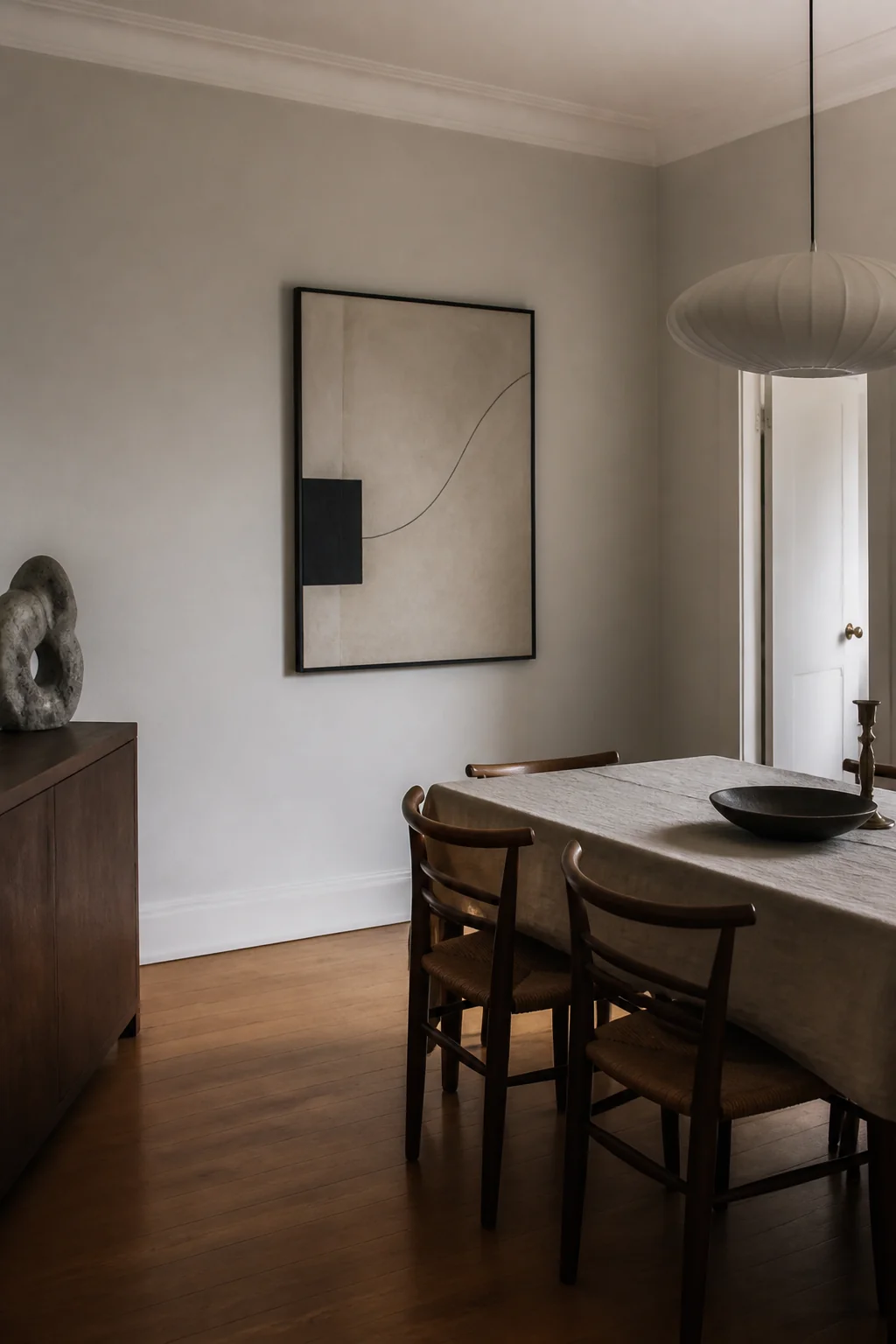
Empty walls feel intentional only when they're a choice, not a default. Choose one piece - a painting, a large photograph, a simple wooden sculpture - and place it at eye level on a wall perpendicular to where you sit. About 60 inches from the floor to the center of the piece is the standard.
Pick something with depth or texture, not just a flat print. A framed piece with a mat gives it breathing room. A canvas with visible brushwork adds life. The color doesn't have to match your scheme perfectly; it can be slightly warmer or slightly deeper, as long as it feels intentional.
One piece is all you need. Don't hang a gallery wall. One good choice is the minimalist way.
Natural materials in accessories
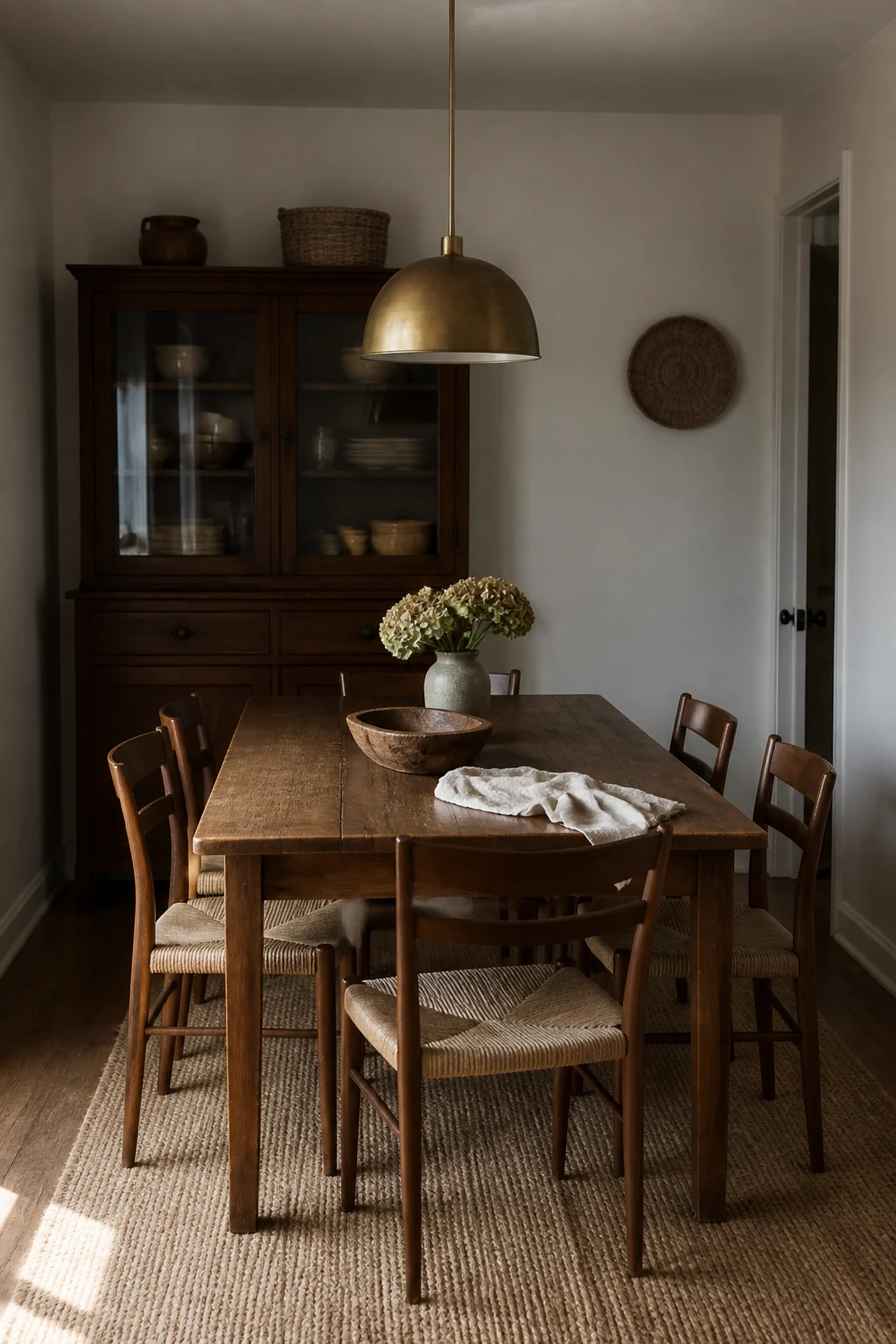
Your glassware, dinnerware, and serving pieces don't have to match. But they should all feel honest - real ceramic, real glass, real wood, real metal - never plastic or fake finishes.
Keep the count low. A simple wooden salad bowl, a ceramic serving plate, linen napkins, a wooden bread board. These objects sit on the table or in view, and they're what make the room feel warm and intentional instead of bare. The materials are doing the work, not the quantity.
Choose warm metallics if you need hardware or accents: brushed brass, warm copper, or matte gold feel more organic than polished chrome or silver.
The trade-off you're making
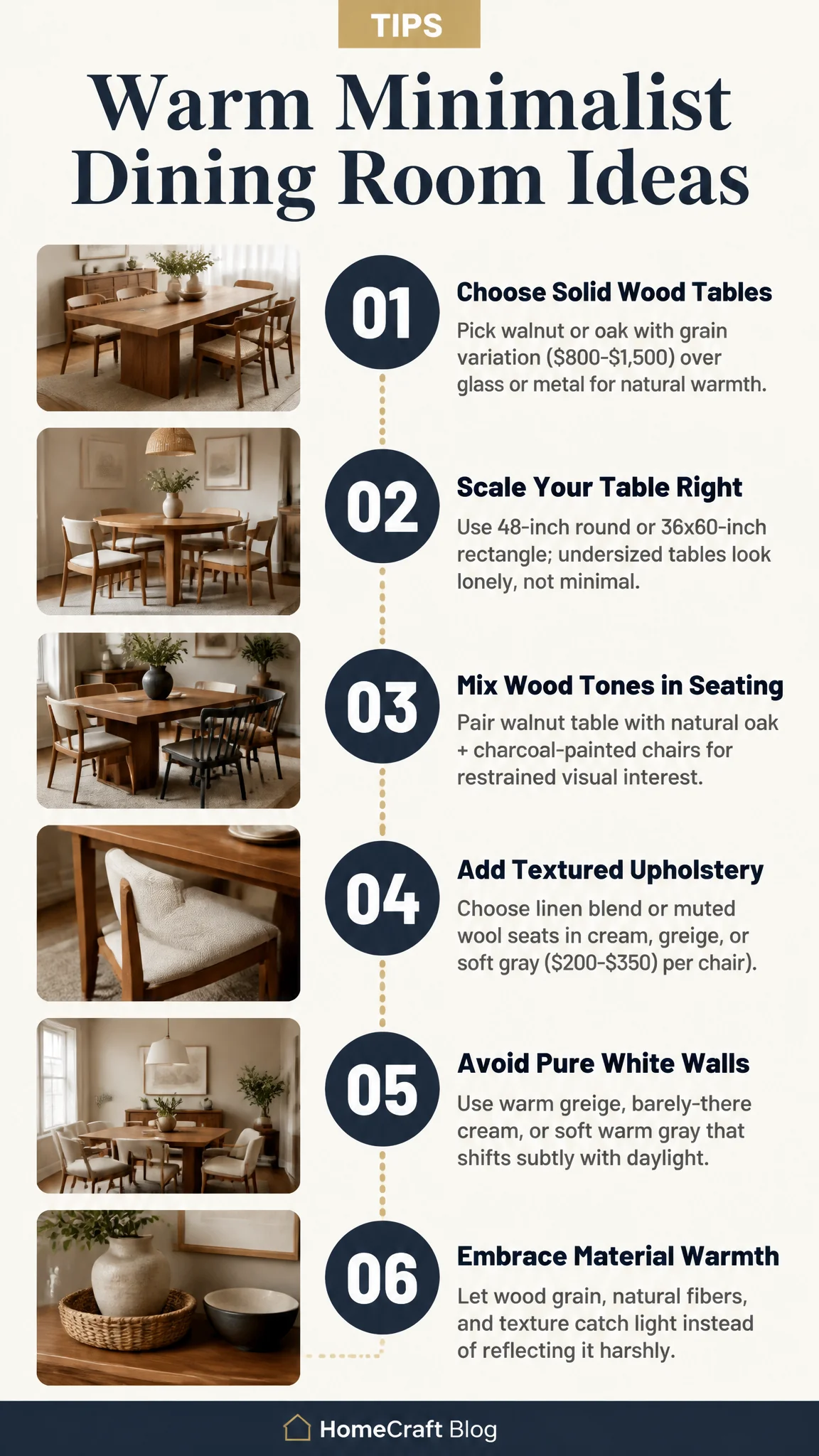
The whole guide in one image
A minimal dining room asks you to accept quietness in exchange for clarity. You won't have a lot of visual interest to distract from the conversation. The room won't photograph dramatically. There's no color story unfolding around you, no pattern play, no small treasures gathered on shelves. What you get instead is a space where the focus lands naturally on the people at the table and the meal in front of you. The room serves the purpose it was built for, nothing more. That simplicity - that refusal to compete for attention - is what makes it warm.
Ideas fade by Friday. A plan finishes the room.
You just read a full guide to your kitchen. Saving ideas will not change it; a plan will. The Home Decor Collection is every planning tool we make, for every room in the house, in one download, so the after photos below stop being other people's rooms.
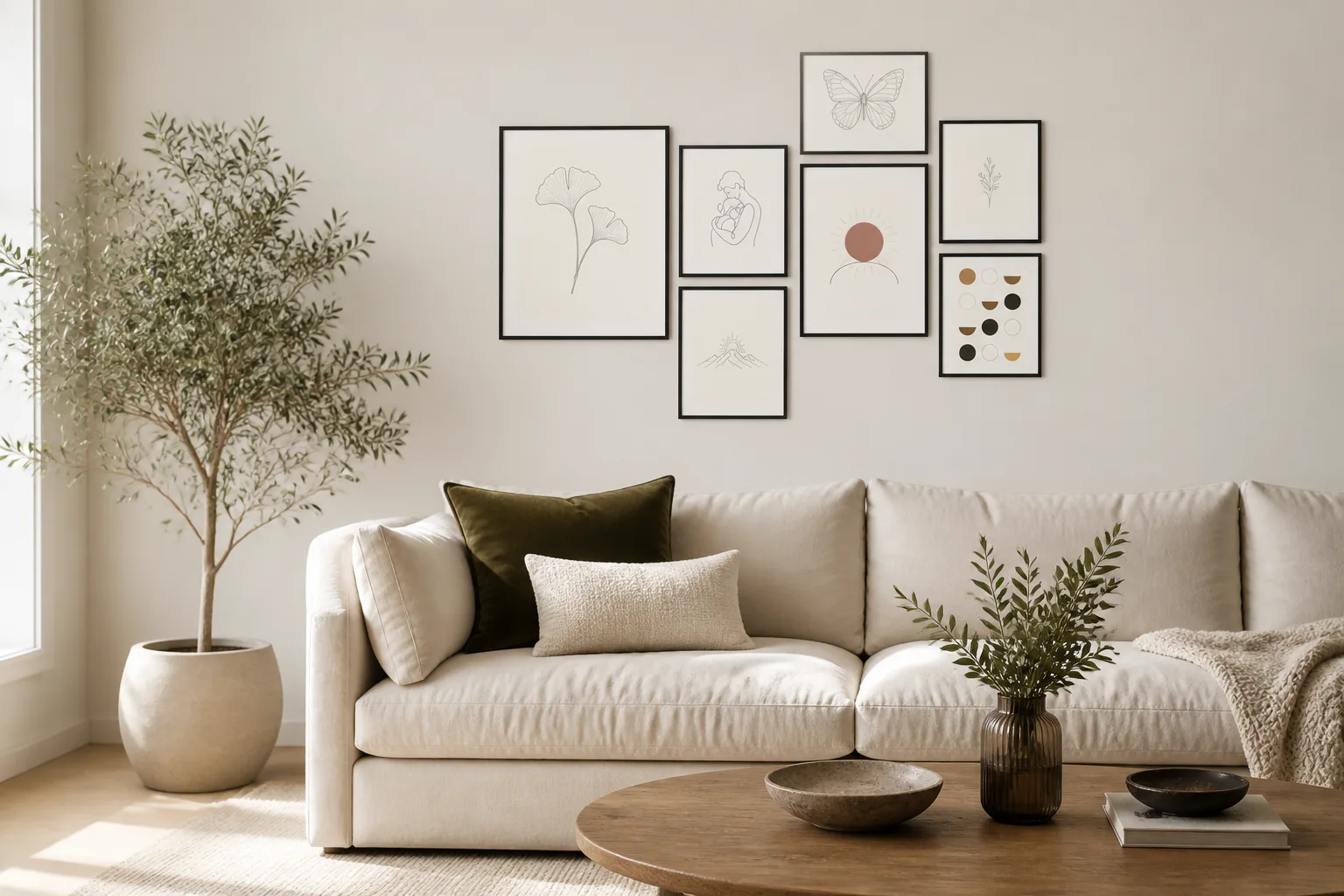
- Six room Style Kits, each with layout, palette and shopping list$114
- The Gallery Wall Studio: 200 prints + 15 measured layouts$29
- The Room Makeover System: 40 solved room layouts + workbook$29
- The Color Palette Handbook: 60 palettes shown in real rooms$19
- The Whole-Home Reset: 40 printable organizing checklists$19
- The Decorator's Cheat Sheets: the 40 measurements that matter$9
- All eleven products, bought separately
$219$97
A single hour with an interior designer costs more than the entire Collection, and this one keeps answering for every room you will ever decorate. Free updates included as the products grow. And if it is not for you, the 14 day money back promise means you simply get a refund.