Brighten a Dim Dining Room With Art Deco Lighting, Layer by Layer
Skip the lone ceiling fixture. Layered art deco dining room lighting, with sconces and a pendant, makes the chrome, brass and fluted glass glow after dark.
This post contains affiliate links. As an Amazon Associate I earn from qualifying purchases. If you buy through our links, we may earn a commission at no extra cost to you.
Your dining room looks fine at noon and feels like a cave at eight at night. Usually the choice in front of you is one of two things: a single bright fixture in the middle of the ceiling, or several smaller lights placed at different heights around the room. The single fixture is quicker to buy and easier to wire. Layered lighting is what gives an art deco room its glow, because the chrome, brass, mirror and fluted glass need light coming from the side to show what they're made of. We're going to settle it in favor of layers, and walk through where each light goes so the room looks deliberate instead of dim.
 13-page PDF
Free printable kit
Bare kitchen and bath walls? Fixed this weekend.
Six watercolor prints and two layouts measured for the counter and the tub. Free and ready to print.
- 6 watercolors: 3 kitchen, 3 bath
- Measured layouts: counter and tub
- Hanging tips for steamy rooms
Free. Arrives by email in a minute or two, plus our ideas and occasional shop offers. Unsubscribe anytime. Privacy
Why One Ceiling Light Leaves an Art Deco Room Flat
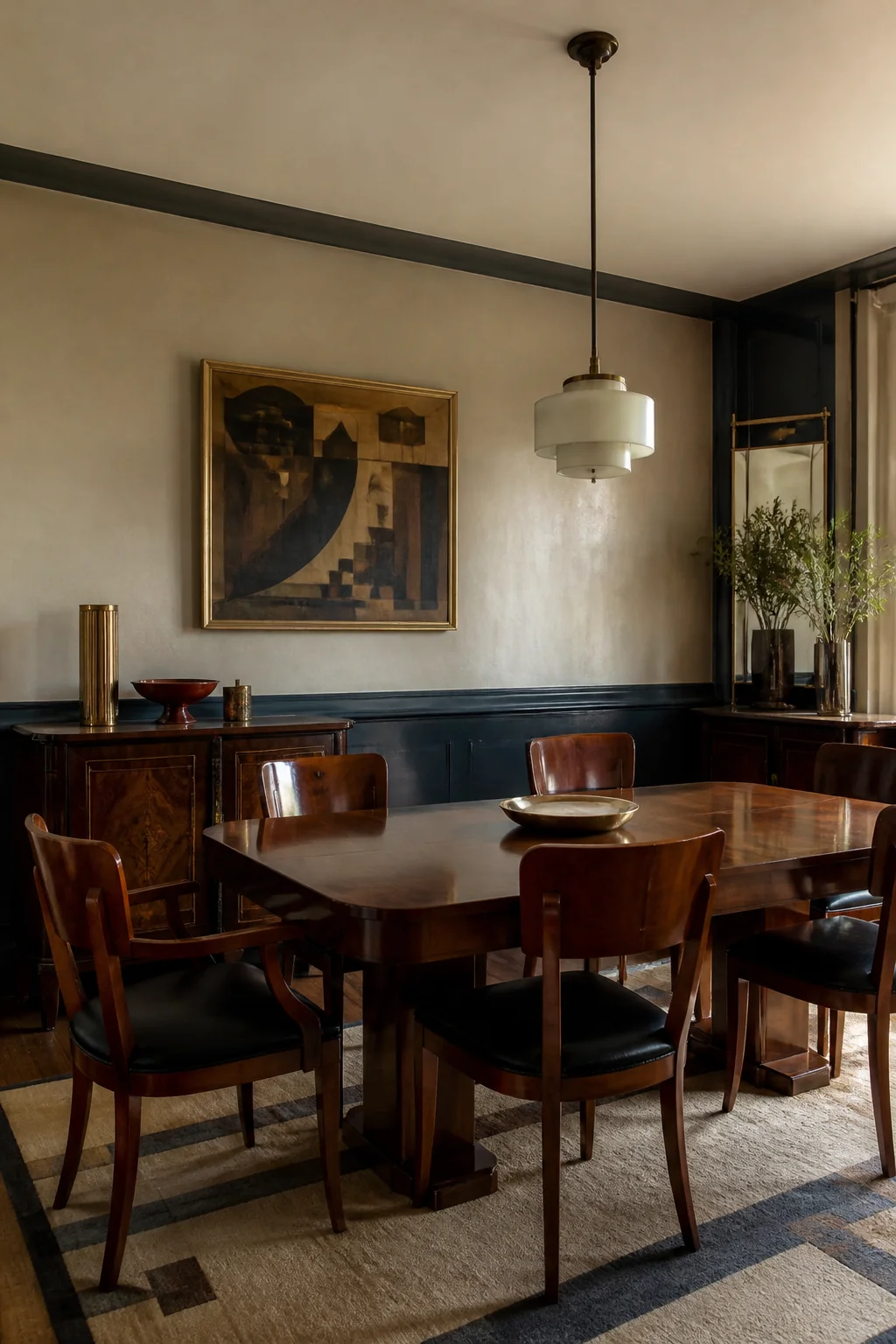
A single flush mount throws its light straight down. The tabletop gets bright, but the walls, the sideboard and the metal details stay in shadow. Art deco dining room lighting depends on reflective finishes, so that flat, downward light wastes most of the design. The common reaction is to swap in a brighter bulb. That adds glare over the table and leaves the corners just as dark. Add a second source instead of pushing more light from one spot.
How High Should a Dining Room Chandelier Hang?
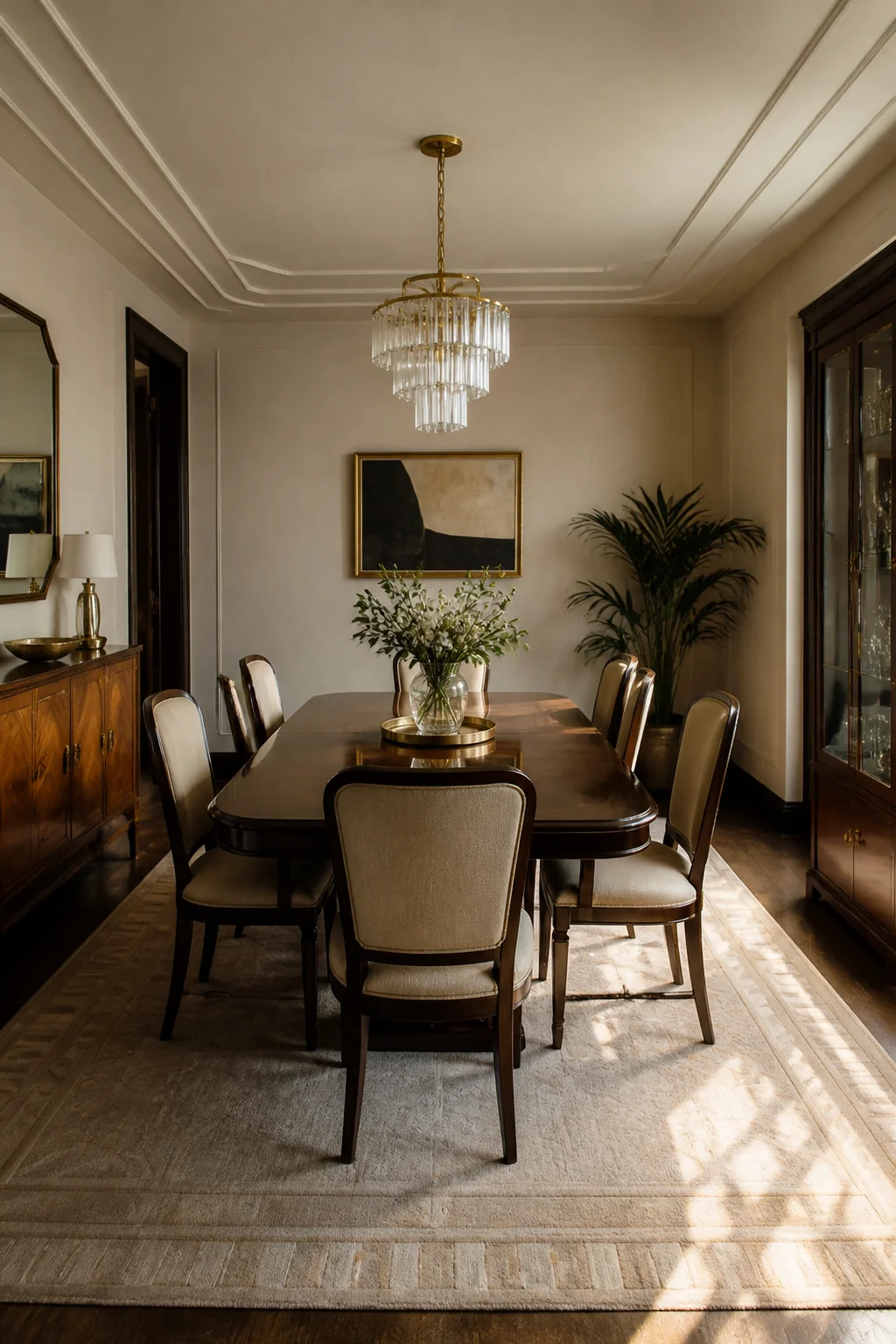
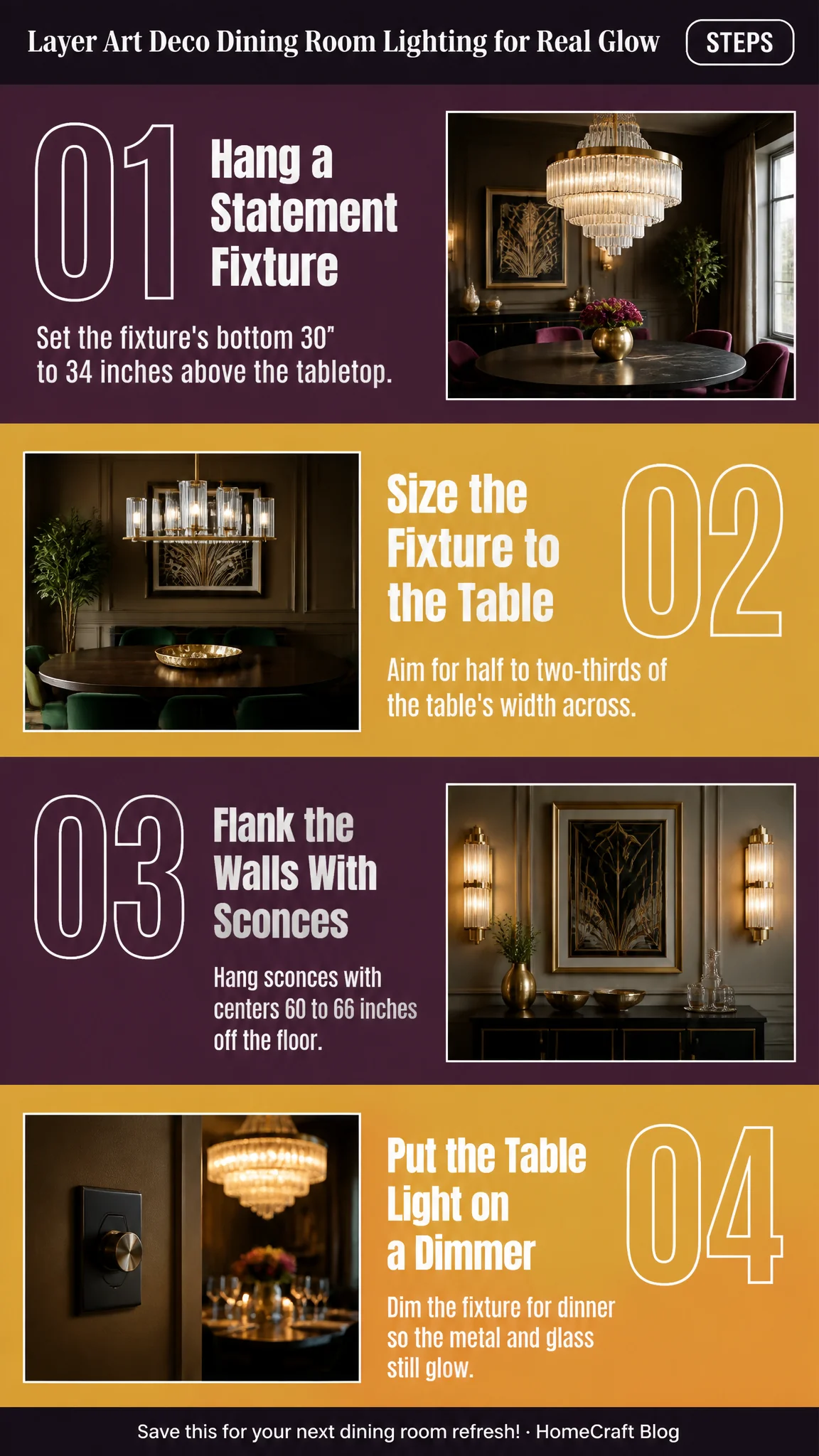
For most dining tables, the bottom of the fixture should sit 30 to 34 inches above the tabletop. A standard dining table is about 30 inches tall, so in a room with a 9-foot ceiling that usually lands the fixture around 60 to 64 inches from the floor. That keeps it out of sight lines across the table without disappearing into the ceiling. Measure from the table surface, not the floor, and check it with the table pulled out, because chairs sit lower than the tabletop.
Size matters as much as height. A rule of thumb is a fixture about half to two-thirds of the table's width. For a 40-inch round table, that means something around 20 to 27 inches across. Go smaller and the light looks lost. Go bigger and the fixture crowds the people seated underneath it.
Choose a shape that repeats the look you want. Fluted or ribbed glass, tiered brass, and stepped geometric shades all read as art deco from across the room. A fixture like that is the anchor, so buy it first and build the other layers around it.
This is hardwired work. Turn the breaker off before you touch the wires, or hire a licensed electrician to swap the fixture. Put the table fixture on a dimmer so you can drop it low for dinner.
Sconces Light the Walls the Ceiling Can't Reach
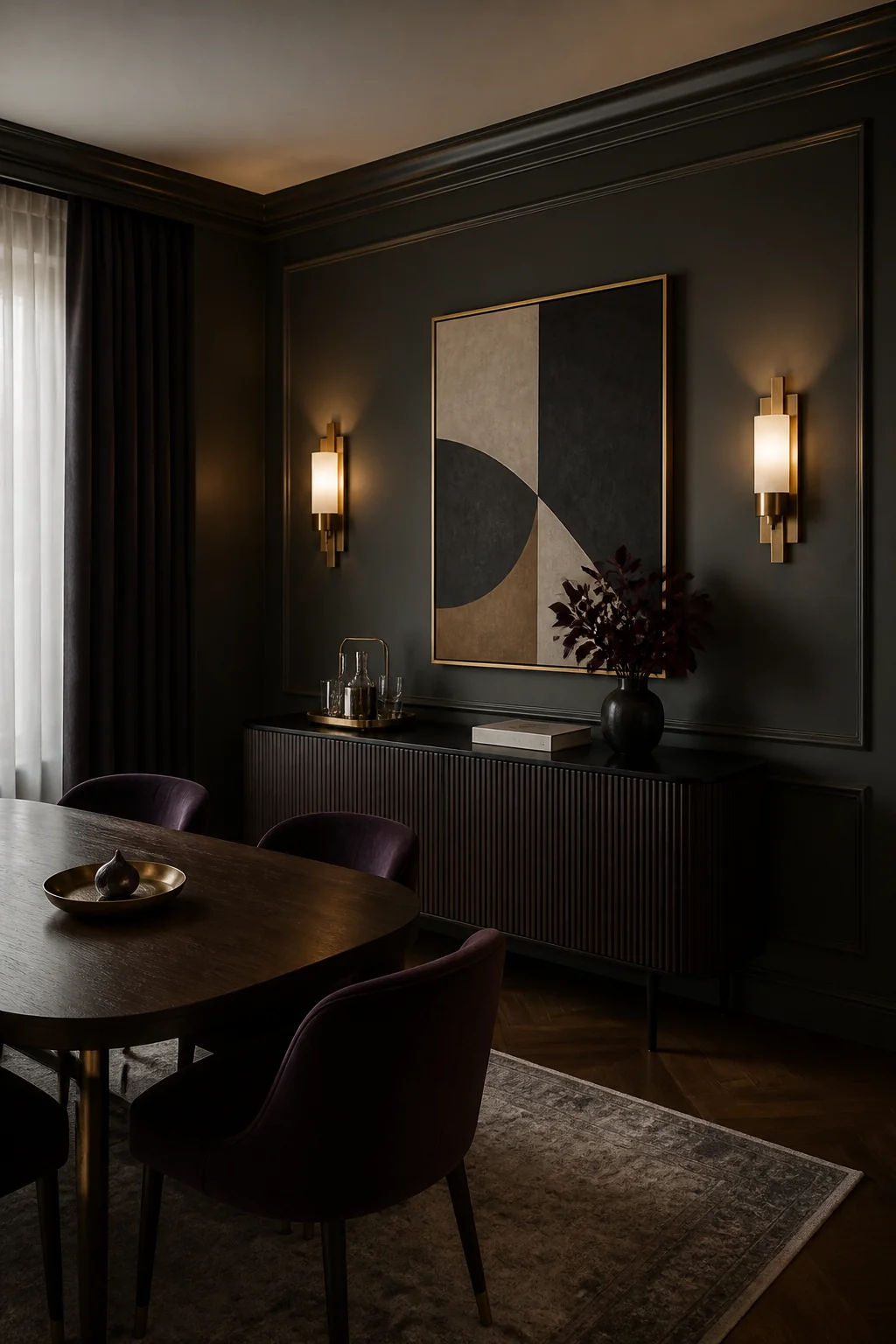
Wall sconces are where the art deco look shows most. Their light raked across the walls and bounced off metal and glass, which gives the room depth. Mount them on either side of a mirror or a buffet. Keep the center of each fixture roughly 60 to 66 inches off the floor, about eye level for a standing adult. Seated diners won't catch the bulb that way.
On a sideboard around 60 inches wide, two sconces spaced 24 to 30 inches apart balance the piece. Set them any closer and the wall starts to look busy. If your room has no mirror or buffet, put the sconces on the wall the dining table faces, so the light lands where people look during a meal.
Wiring follows the same rules as any hardwired fixture: breaker off, or call a licensed electrician. Renters can use plug-in sconces, which is honestly the easiest route. Just run the cord along the wall, not across a doorway.
Sconces that point both up and down lift the walls. Downward-only ones look nice, but they leave the top of the wall dark, and a 9-foot ceiling then feels lower than it is.
A Table Lamp Fills the Dark Corners
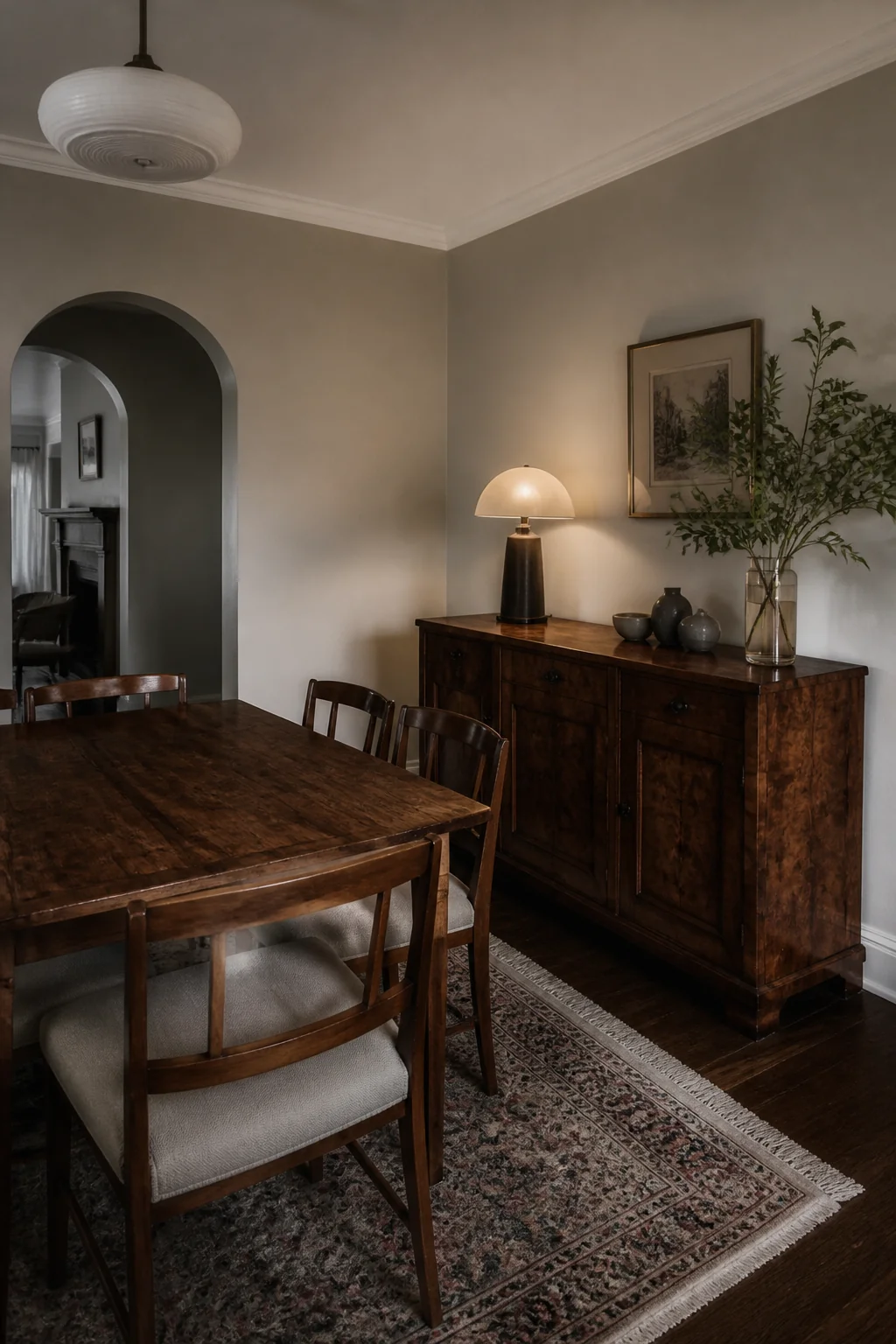
A table lamp on the sideboard or console does what no ceiling fixture can. It sits low, throws warm light, and sits close to the eye. A lamp 24 to 28 inches tall, with a shade 14 to 16 inches wide, suits a standard 36-inch-high sideboard. Add the two heights together and the total should land near 60 to 64 inches. That keeps the shade from blocking the light you're trying to throw.
Clear the top first. A lamp needs about a foot of open surface around its base, or it looks like it's fighting for space. Our declutter your home checklist covers the sideboard top if you need a starting point, and a small tray or a single vase helps keep the surface calm.
If you light a candle on that sideboard, keep it at least 12 inches from the lamp shade, any curtain and any paper. Blow it out when you leave the room, or use a flameless candle.
Put a Second Source Where the Metal Catches Light
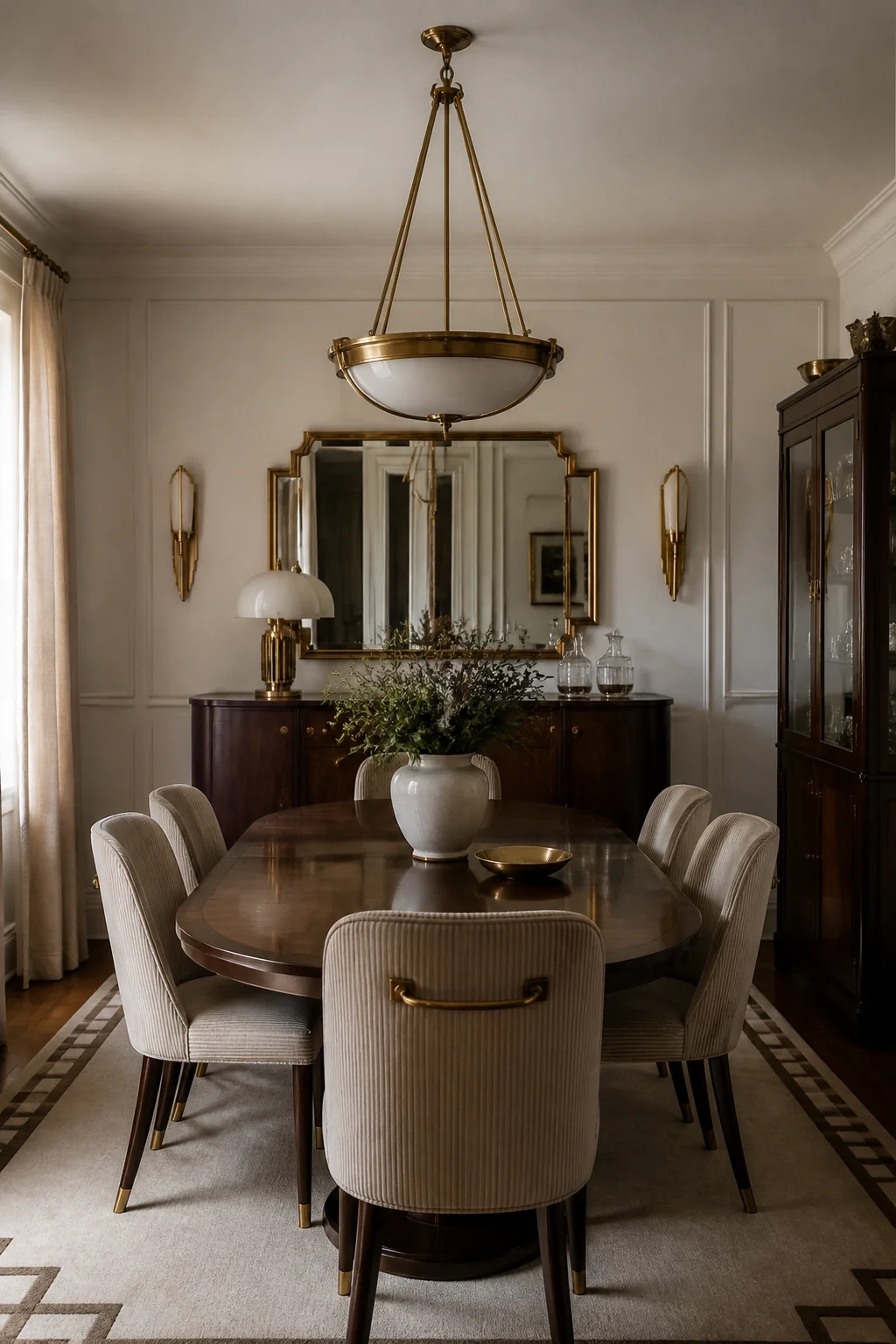
Look at the finishes in the room and find where the light will hit them. A brass pendant, a chrome sconce and a mirrored panel all reflect differently. A small uplight in a corner, aimed at a fluted glass shade or a metal cabinet, makes that finish glow from below. Think of it as the light that turns the decor from background into a feature.
This works best when the uplight sits on the floor or a low table in a corner, about 12 to 18 inches from the wall. Aim it at the wall, not at a seat. You'll get a soft wash of light that makes the corner look intentional.
Skip the recessed ceiling grid. Rows of small cans spread light evenly and kill the drama art deco depends on. One or two warm accent sources do more for the room than a dozen downlights.
Bulb Color and Dimmers Make or Break the Finish
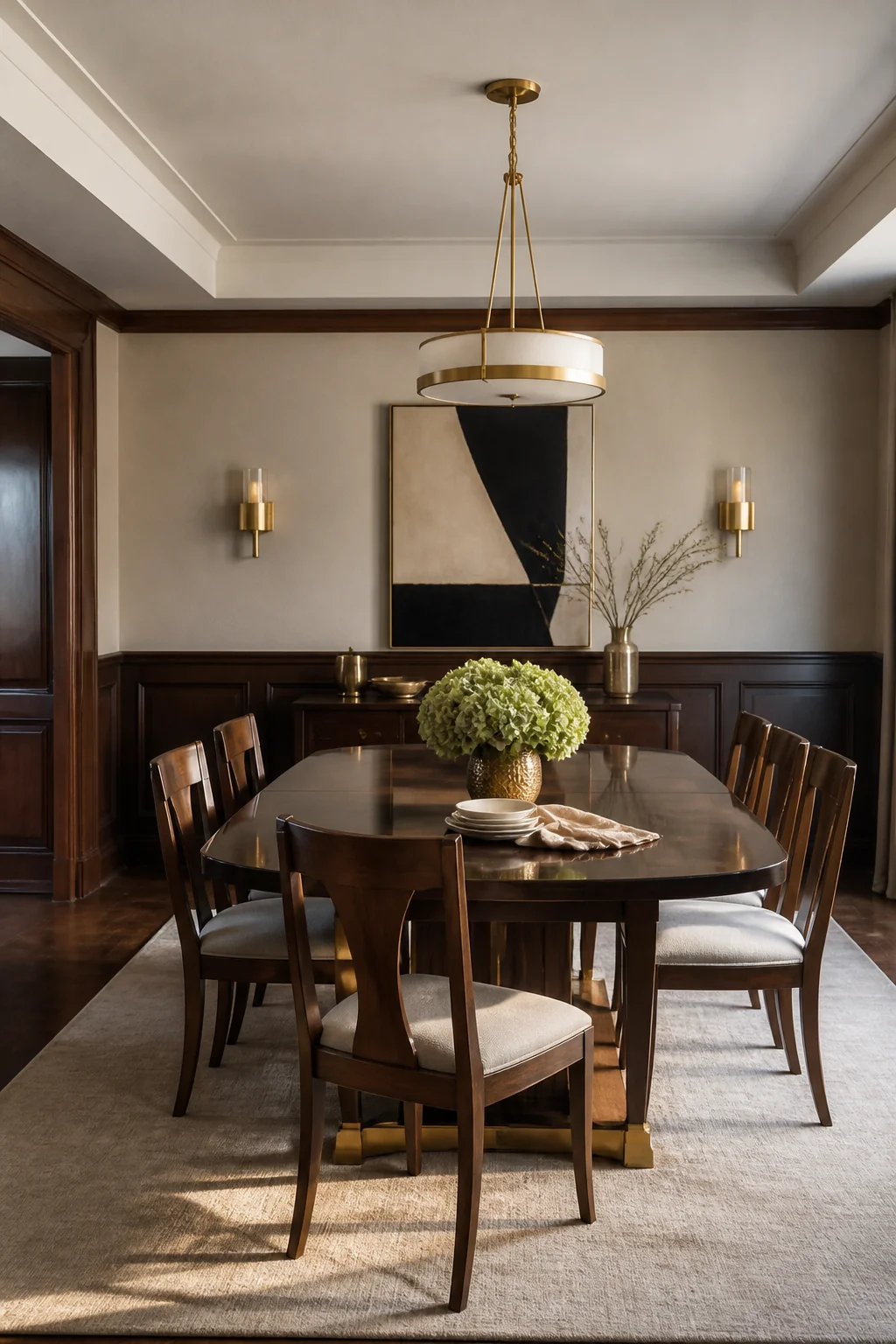
Use warm white bulbs, around 2700K on the packaging. Yes, that number is the one worth reading. Cooler bulbs turn brass gray and make glass look cold. Stick to the same color temperature in every fixture, because a yellow-warm pendant next to a blue-white sconce makes the room look mismatched even when the furniture is right.
Put every light on a dimmer if you can. A dimmer is the cheapest way to change the room from a work-lit space to an evening one, and it lets the fixtures do their job at a lower level. Dimmable LED bulbs need to be labeled as dimmable, and some dimmers need a matching bulb to avoid flicker. Check the box before you buy in bulk.
Color rendering matters more than most people expect. Look for bulbs rated 90 or higher on the color rendering index, so food and skin look like themselves at the table.
How the Layers Add Up Across One Room
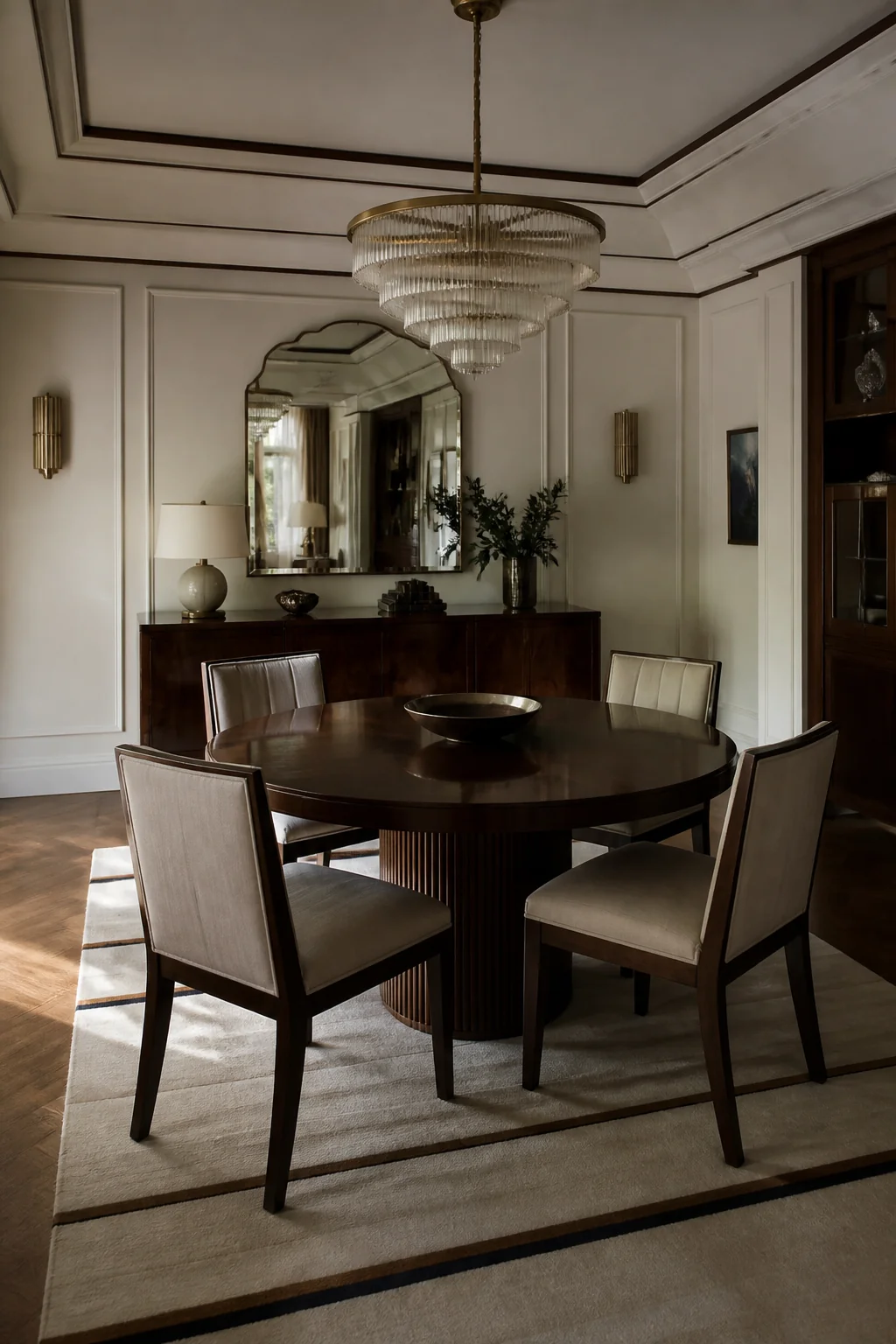
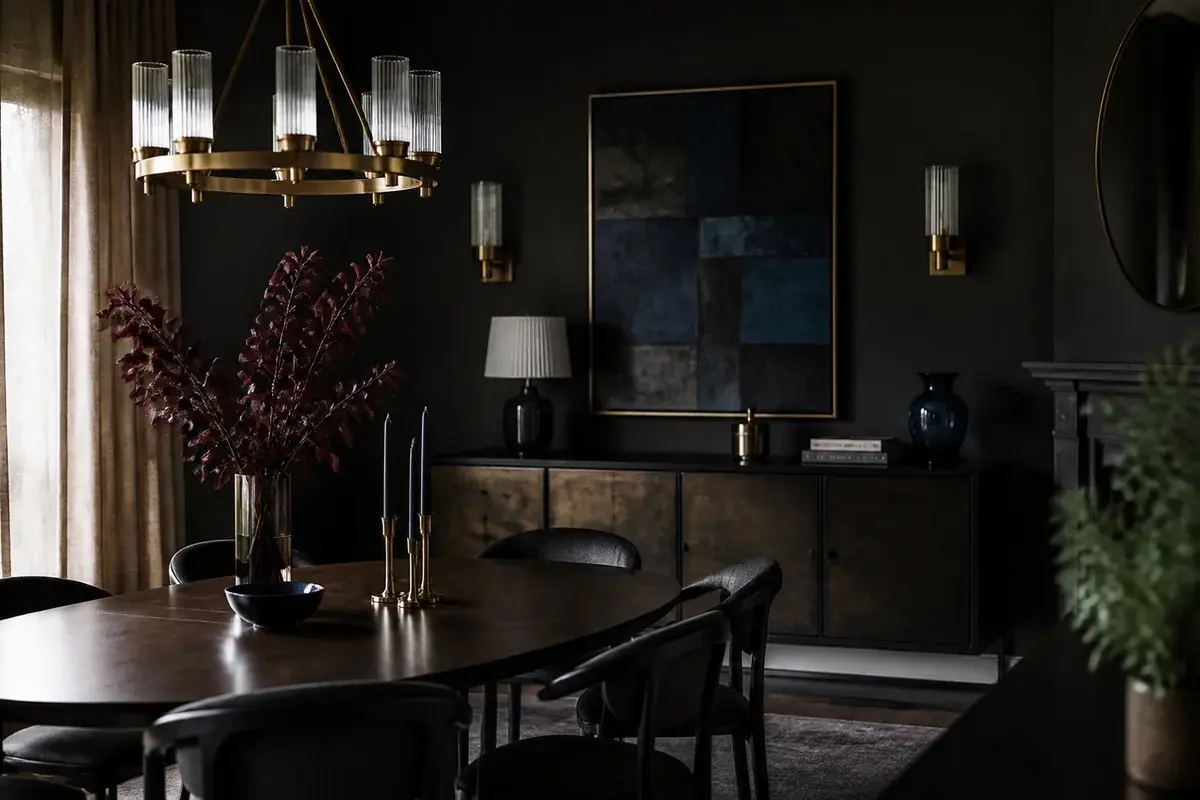
Picture the room at 8 p.m. The pendant or chandelier sits over the table and throws a pool of warm light down onto the cloth and the plates. The sconces on either side of the mirror catch the fluted glass and send a soft glow up the wall. The lamp on the sideboard lights the corner where the serving dishes sit, and a low uplight picks out the brass edge of a cabinet near the door.
Pin this for later
Nothing in that room is bright on its own. Together, the light moves from the table outward, so the walls and corners read as part of the room instead of dark gaps between furniture. That's the whole point of art deco dining room lighting: each light covers a job the others can't, and the dimmers let you choose how much of the room you want to see.
The room images in this post are illustrations made with AI.