31 Kitchen Backsplash Ideas, From Subway Tile to Hand-Painted Zellige
31 kitchen backsplash ideas with real tile sizes, installed costs per square foot, grout and edge details, and where each material gives you trouble.
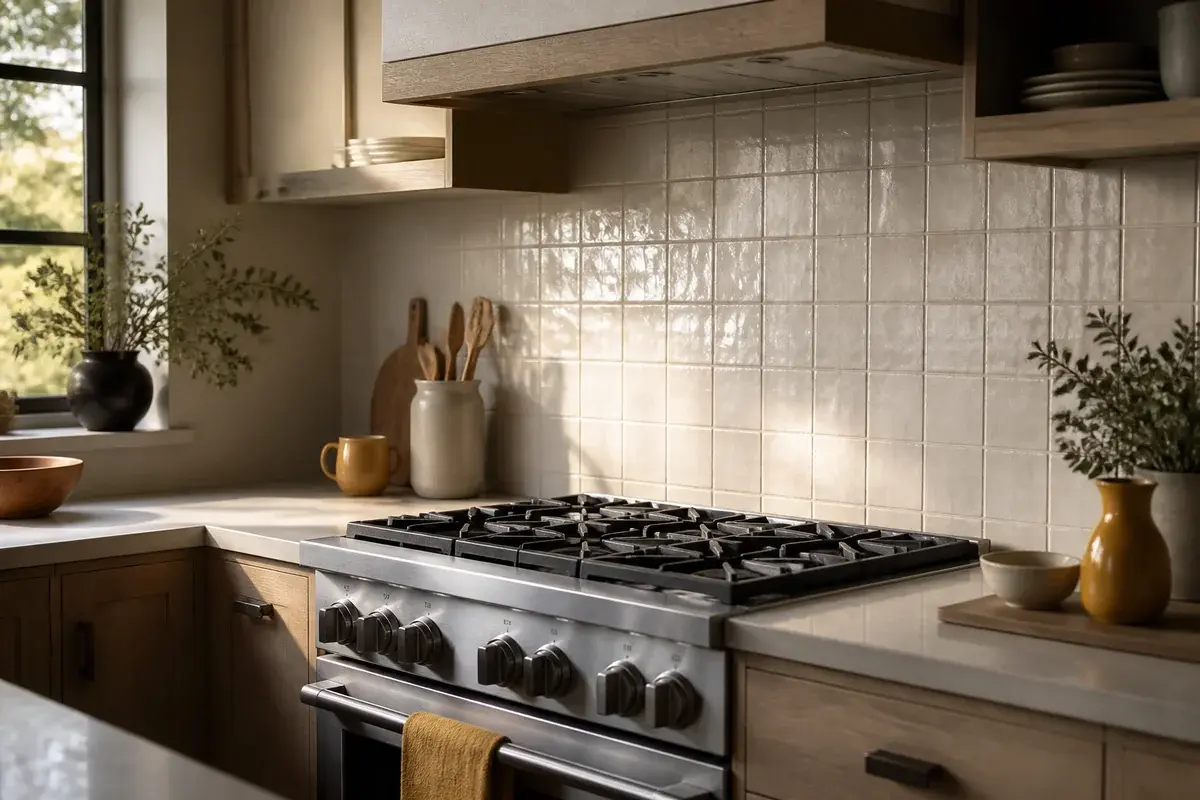
A backsplash is the smallest expensive decision in a kitchen. The standard run is 18 inches from the countertop to the underside of the upper cabinets, with a taller stretch of about 30 inches behind the cooktop, and in most kitchens that adds up to 25 to 35 square feet. Small enough that a $30 per square foot tile you love costs less than a new dishwasher. Below you'll find 31 directions to take that wall, each with the tile size it usually comes in, a realistic installed price, the grout that suits it, and the situation where it gives you grief. Prices assume a professional install on flat drywall; doing it yourself typically cuts the number in half.
1. Classic white subway tile with gray grout
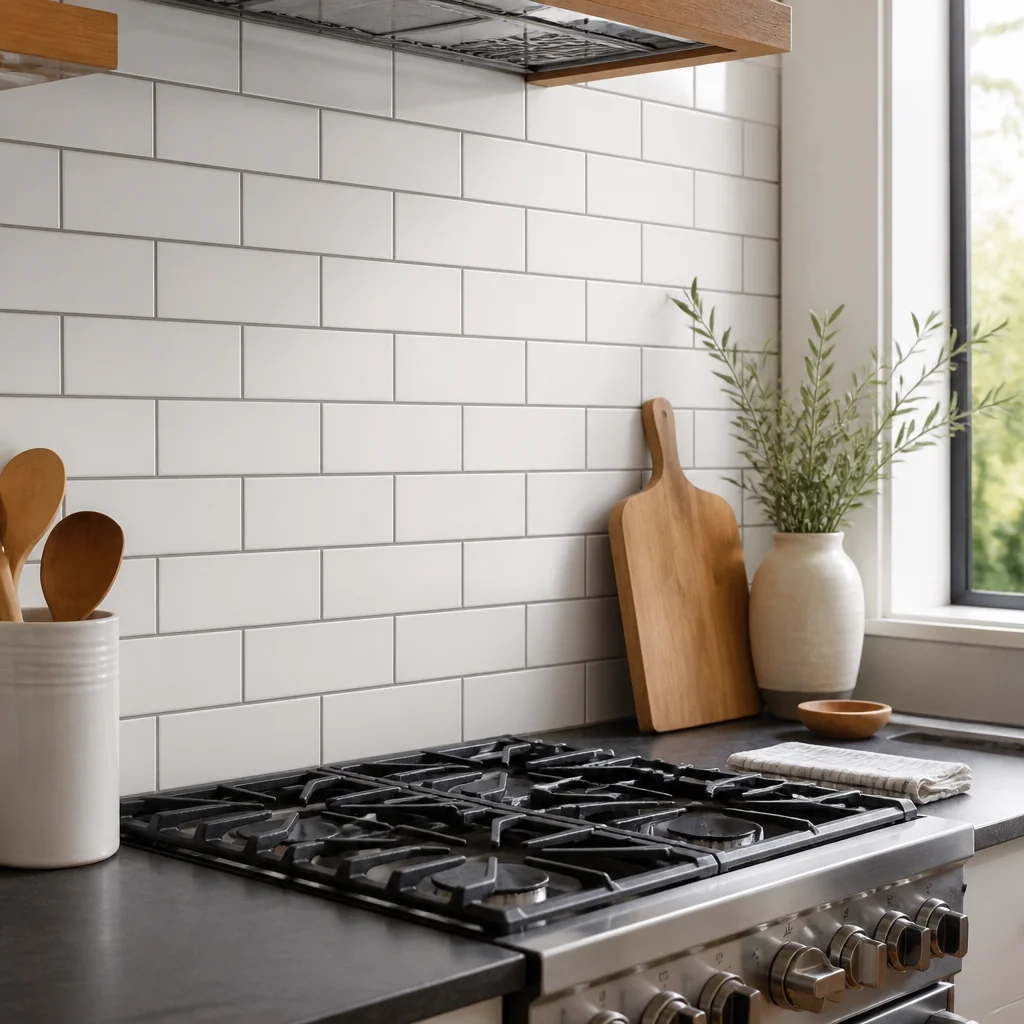
The workhorse. Standard field tile is 3x6 glazed ceramic, and the mass-market versions from Daltile or Florida Tile sit around $2 to $5 per square foot, or $8 to $15 installed. Set it in a running bond with a 50 percent offset for the traditional look, or a 1/3 offset if you want the joints to feel less repetitive. Use 1/8-inch spacers and unsanded grout in a mid gray such as Polyblend Delorean Gray; anything darker turns each tile into an outlined rectangle rather than part of a field.
The trap with contrasting grout is that it audits your wall. Every bit of lippage, every cabinet that hangs a sixteenth low, gets drawn in pencil. Check the wall with a 4-foot level first and shim the tile if the drywall bows. Seal cement grout after 72 hours, or skip that step by using an epoxy grout like Laticrete Spectralock, which costs roughly three times as much and never needs sealing.
2. Hexagon ceramic in soft gray
Hex comes two ways, and they behave differently. The 2-inch size arrives mesh-mounted on 12x12 sheets, quick to set but prone to a visible seam wherever two sheets meet; the fix is to trim the mesh and hand-nudge the edge tiles so the joint spacing matches the field. The 4-inch and 6-inch sizes are laid individually, slower but cleaner. Budget $10 to $18 per square foot installed, with the small mesh version at the higher end because of the extra grouting.
Where hex gets awkward is the bottom edge. A hexagon meeting a flat countertop leaves a zigzag of half tiles, and cutting those points cleanly on a wet saw takes patience. Plan the layout so the cut row lands at the counter, not at eye level, or finish the top edge with a Schluter Jolly profile so you never have to cut a hex point at all. Soft gray reads warmer with a matched gray grout than with white.
3. Marble mix with brass accents
Small marble mosaics in cream and soft gray with a brushed brass insert give you the look of a stone slab for a fraction of the cost. Carrara mosaic runs $12 to $20 per square foot for material; Calacatta with its heavier veining is closer to $25 to $40. Installed, expect $22 to $45.
Two details decide whether this ages well. First, finish: polished marble has a tighter surface and sheds oil better, while honed absorbs more but hides the dull etch marks that lemon juice and vinegar leave behind. Marble is calcium carbonate, so acid dissolves the surface no matter what you paid. Seal with an impregnating sealer such as Miracle 511 before you grout, or the pigment will stain the stone permanently. Second, grout: use unsanded only. Sanded grout will scratch a polished marble face while you are wiping it in. Unlacquered brass accents darken over a year or two, which is either the point or a problem depending on your taste.
4. Bold geometric patterned cement tiles
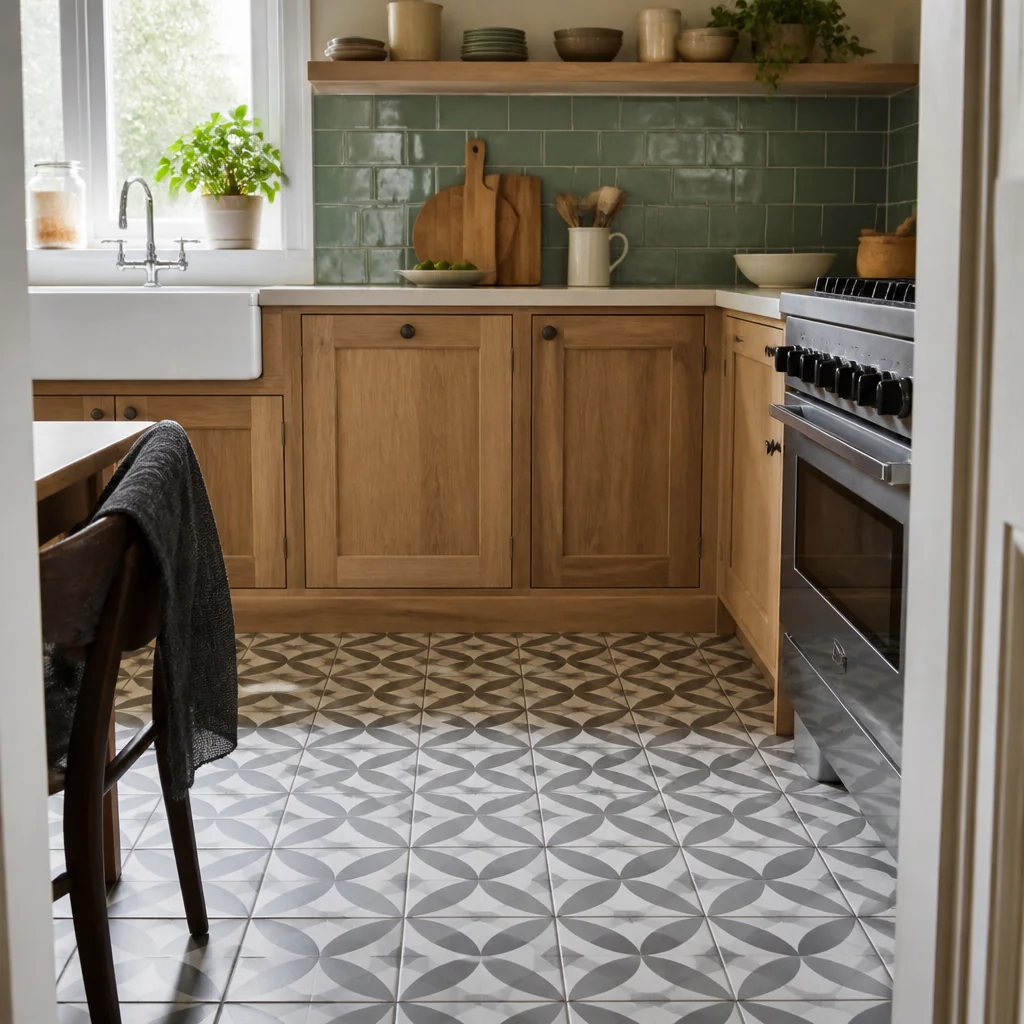
Encaustic cement tile is the real thing behind most bold geometric backsplashes. The pattern is pigment pressed a good 1/8 inch into the body, so it never wears off. Typical size is 8x8, and the tiles are thick, around 5/8 inch, and heavy, so they need thinset over a flat substrate rather than mastic. Material runs $12 to $25 per square foot from makers like Granada Tile or Cement Tile Shop, and installed work usually lands at $20 to $35.
Cement is porous and unglazed, which is the whole story of living with it. Seal it with two coats before grouting or the grout pigment sinks into the face and you cannot get it out. Behind a gas range it will absorb oil splatter and darken in patches, and acidic cleaners will etch it. If that worries you, keep it on the sink wall and put something glazed behind the burners. Stick to patterns with two or three colors that pick up your cabinet tone.
5. Shiny white subway with thin grout lines
Same tile as the first idea, opposite effect. Drop the joint to 1/16 inch and match the grout to the glaze in a bright white, and the wall stops reading as a grid of rectangles and starts reading as one glossy plane. That is what makes a galley kitchen feel less measured.
Two requirements make it possible. The tile has to be rectified, meaning the edges are cut after firing so every piece is the same size to within a hair; handmade or standard-tolerance ceramic will not close up that tight. And the joint has to take unsanded grout, since sand grains will not fit into 1/16 inch. Cost is similar to any subway install, roughly $9 to $16 per square foot.
The catch is that a glossy surface at 1/16 inch shows every imperfection in the wall behind it. Check flatness with a straightedge and expect no more than 1/8 inch of deviation over 10 feet, or skim-coat the drywall first.
6. Stacked stone in warm gray
Stacked stone usually arrives as ledger panels, strips of split quartzite or slate glued to a 6x24 backer so you set a whole section at once. Each strip differs slightly in depth, which is what gives the wall its shadow. Budget $12 to $25 per square foot for material and labor.
It is heavy, roughly 5 to 8 pounds per square foot, so it needs a polymer-modified thinset rather than mastic, and you should hit studs where you can. Most versions are dry-stacked with no grout at all, so the joints between panels have to be staggered and hand-blended or you will see the panel rectangle from across the room.
Where it fails is directly behind a cooktop. Those shadow gaps catch grease, and there is no smooth surface to wipe. If you love the texture, run it on the sink wall or a coffee station and put a wipeable tile behind the burners. Seal it with a penetrating stone sealer either way.
7. Large format porcelain in light oak wood look
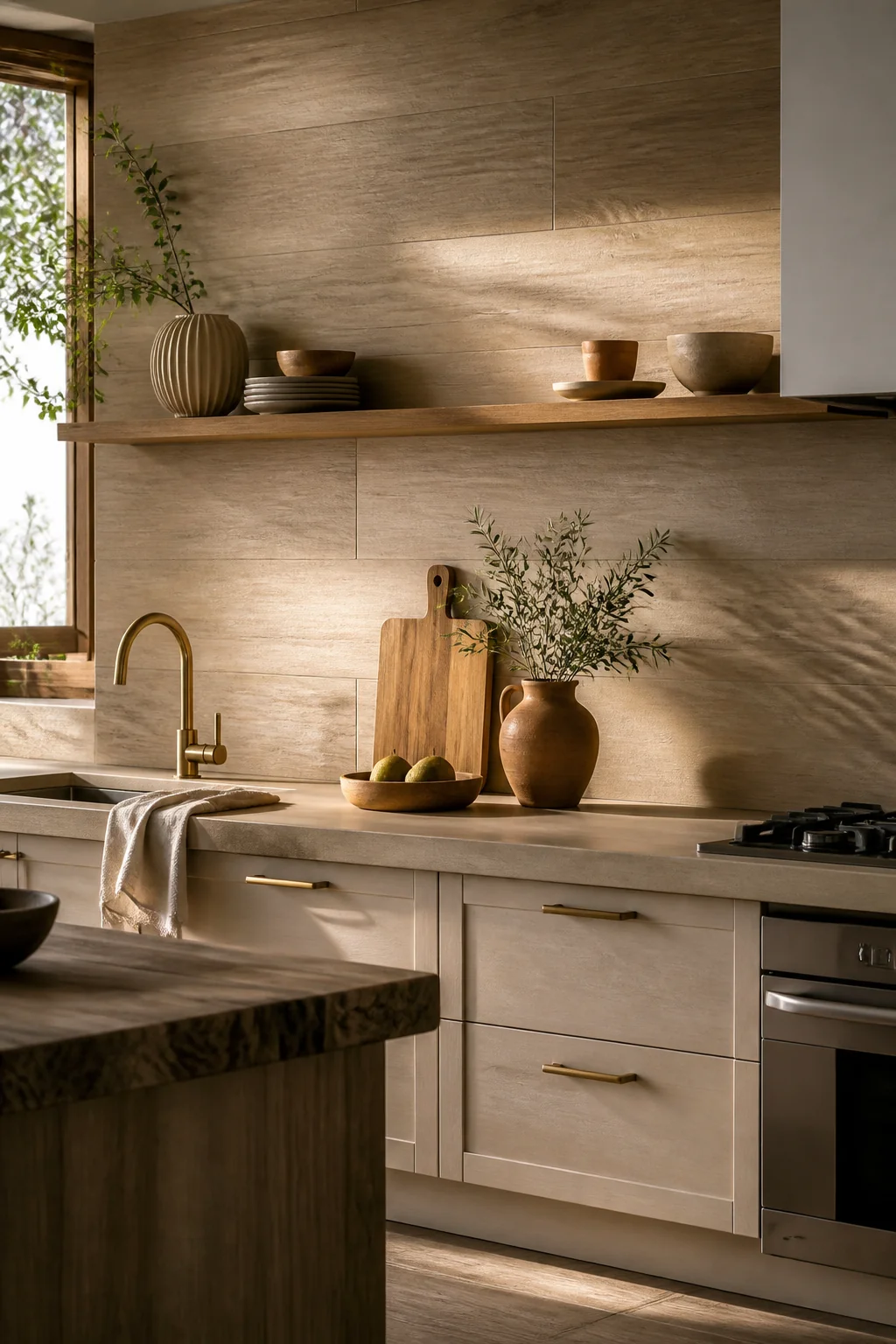
Wood-look porcelain planks give you oak warmth on a wall that gets splashed daily, without the swelling and splintering real wood would do 18 inches above a sink. Common sizes are 6x24 and 8x36, and the price is friendly: $3 to $6 per square foot for the tile, $8 to $14 installed.
Long planks on a wall need attention to two things. Keep the offset to a third of the plank or less, because a 50 percent offset on a 24-inch tile puts the middle of one plank against the high point of the next and creates lippage you can feel with your hand. Leveling clips solve it if you are doing this yourself.
The other thing to check is the shading rating on the box. A V3 or V4 tile has enough variation that the print repeat disappears; a V1 or V2 will show the same knot four times across a short wall. Open several boxes and shuffle before setting.
8. Black and white checkered pattern
Checkerboard reads retro in a diner way or graphic in a modern way depending entirely on scale. A 4x4 checker is period-correct and busy; a 2x2 mosaic reads almost like texture from across the room; a 6x6 or 8x8 checker feels contemporary and calm. Figure $10 to $18 per square foot installed for glazed ceramic.
The whole thing lives or dies on layout, so dry-lay the run on the counter before any thinset comes out. Center the pattern on the range or the window rather than starting from a corner, so the partial squares at each end are the same width. A 2-inch sliver on one side and a full tile on the other is the mistake people notice without knowing why.
Grout white or a very pale gray. A mid or dark gray blurs the boundary between the black and white squares and the pattern goes muddy at a distance.
9. Turquoise hand-painted tiles
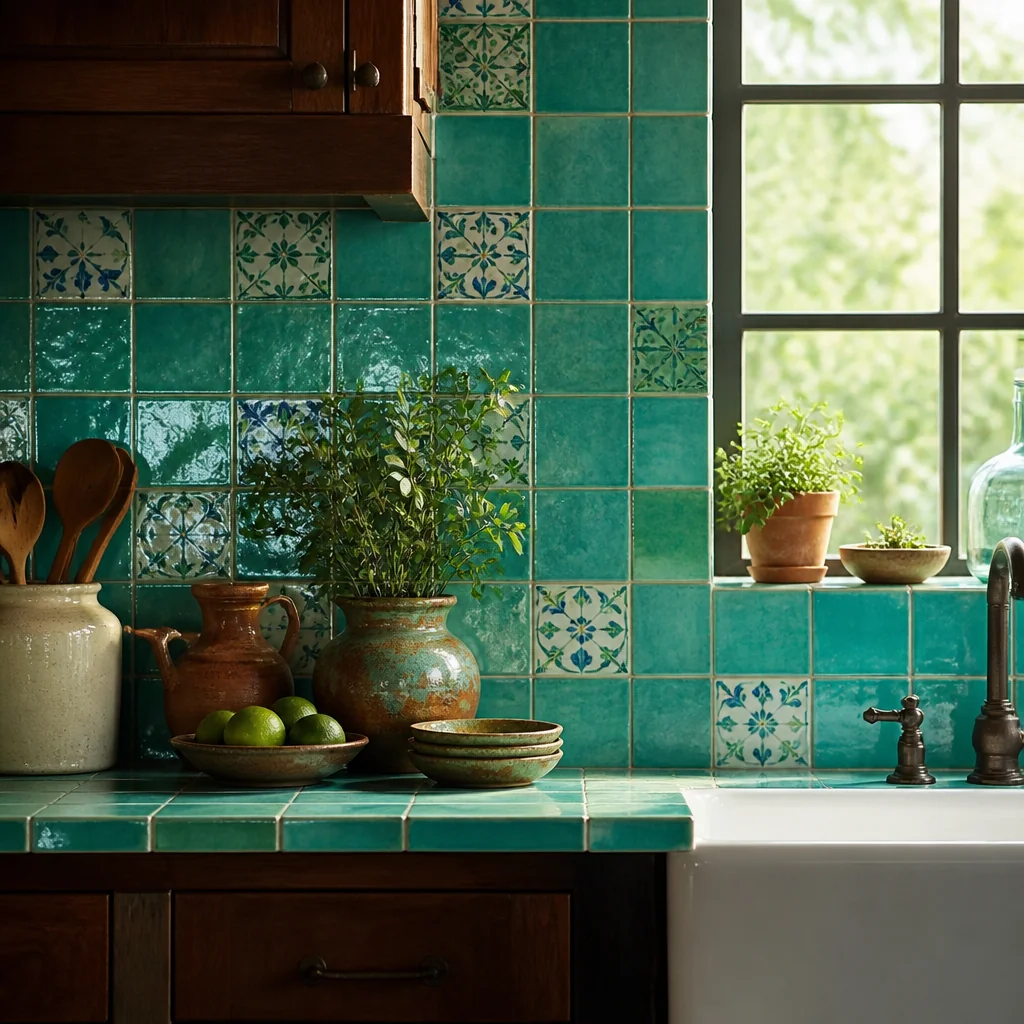
This is zellige territory: 4x4 hand-cut clay tiles, glazed and fired so the color pools thick in some spots and thins to nearly clear at the edges. Turquoise is the classic. Suppliers like Zia Tile and Clé sell it at roughly $18 to $40 per square foot, and installed cost usually lands between $30 and $55 because the setting is slow.
Nothing about it is uniform. Thickness varies by a sixteenth, edges are not square, and a few pieces in every box arrive cracked. Order 20 percent extra, all from one production run, because the next lot of turquoise will not match. Set the tiles nearly butted with a 1/16-inch joint and let the irregularity do the work.
Two practical notes: the glaze crazes into fine hairlines over time, which is normal rather than a defect, and a wet saw with a fresh blade is the only way to cut it without shattering the glaze.
10. Polished black granite subway
Absolute Black granite cut into 3x6 or 4x12 subway gives you a dark, dense wall that grounds white or light oak cabinetry. Granite is far harder than marble and shrugs off acid, so it is the one natural stone that genuinely belongs behind a range. Figure $14 to $22 per square foot installed.
Polish is the decision point. A polished face is easy to wipe but shows every water spot, and in hard-water areas the mineral deposits dry white against the black. A honed or leathered finish hides that at the cost of some depth. Either way, seal it; even granite has some porosity and oil will darken an unsealed patch.
The real risk is light. Black absorbs most of what hits it, so a north-facing kitchen with no under-cabinet lighting turns that wall into a void. Run a 2700K to 3000K LED strip along the front edge of the upper cabinets before you commit.
11. Iridescent glass tile in soft blue
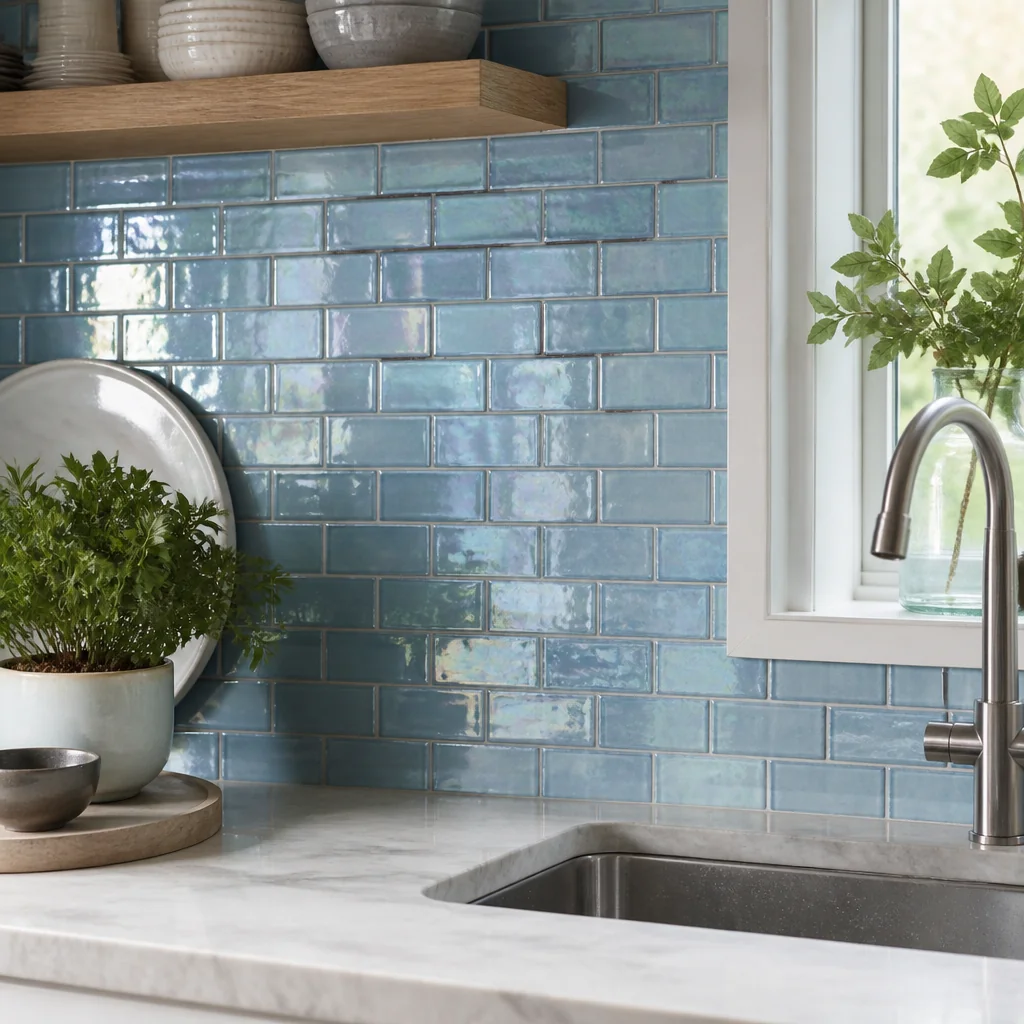
Iridescent glass shifts from pale blue to green to lavender as you move past it, which is the reason to choose it over flat clear glass. Most of it comes mesh-mounted in 12x12 sheets of 1x2 or 1x4 pieces, at $10 to $20 per square foot for material and $20 to $32 installed.
Glass is translucent, and that changes the installation. Whatever sits behind it shows through, so it must be set in white thinset, not the standard gray, or the wall goes muddy. The mesh backing also has to be fully covered: use a 3/16-inch V-notch trowel, flatten the ridges, and back-butter, or you will see the grid of the mesh and the shadow of every trowel line through the tile.
Cutting is the other hurdle. Glass chips on a standard blade. A glass-rated diamond blade run slowly, or mosaic nippers for small adjustments, keeps the edges clean. Unsanded grout only, since sand scratches the surface.
12. Brick-look porcelain in cream
Porcelain printed and textured to look like cream brick gives you the farmhouse look without the porosity. Compare the two honestly: real thin brick veneer is 1/2 to 5/8 inch thick, weighs a good deal more, drinks in grease, and needs sealing. Brick-look porcelain is about 3/8 inch, non-absorbent, and wipes clean. Porcelain runs $8 to $12 per square foot installed, real thin brick closer to $18 to $28.
The tiles usually come as 2.5x8 or 3x12 planks, set in a running bond with 1/4-inch joints and sanded grout in mortar gray. Wide joints are part of the look here, so this is not the place for a tight modern line.
Worth knowing: the heavily textured faces hold cooking film. A soft nylon brush and a degreaser once a season keeps it looking right. This suits farmhouse and modern farmhouse kitchen backsplash ideas (check out modern farmhouse kitchen ideas for more).
13. Terrazzo-style porcelain
Real terrazzo is marble chips in a cement or epoxy matrix, poured and ground flat, and it wants sealing. The porcelain version prints the same speckle on a glazed body that needs nothing. Budget $10 to $18 per square foot installed.
Size matters more here than with almost any other tile. Terrazzo is a pattern of scattered chips, and the pattern only reads correctly at scale, so use 12x24 or 24x48 sheets. Chop it into 3x6 subway and the chips get cut off at every edge, which looks like confetti stuck to a wall. Large format also means rectified edges and 1/16-inch joints, with grout matched to the base color so the aggregate stays the star.
The failure mode is competition. A speckled backsplash against a busy granite or a heavily veined quartz counter gives the eye nowhere to rest. Pair terrazzo with a solid counter in one of the chip colors and it settles right down.
14. Cream limestone beveled subway
A bevel is a chamfer of about 1/8 inch around the face of each tile, and it does one specific thing: it catches raking light from an under-cabinet fixture and draws a soft shadow along every edge. On cream limestone that shadow is warm rather than sharp, which is why it sits so comfortably next to oak or honey-toned cabinets. Plan on $12 to $20 per square foot installed.
Limestone is soft, around 3 to 4 on the Mohs scale, so it scratches with a dropped pan and etches with vinegar. Seal it before grouting and once a year after. The bevel adds a second consideration: those chamfers widen the visible joint and give grease a place to sit, so pick a grout close to the stone color rather than a contrast that will show every smudge.
For a heavy-use range wall, glazed ceramic in the same cream is the more forgiving choice.
15. Deep forest green handmade tile
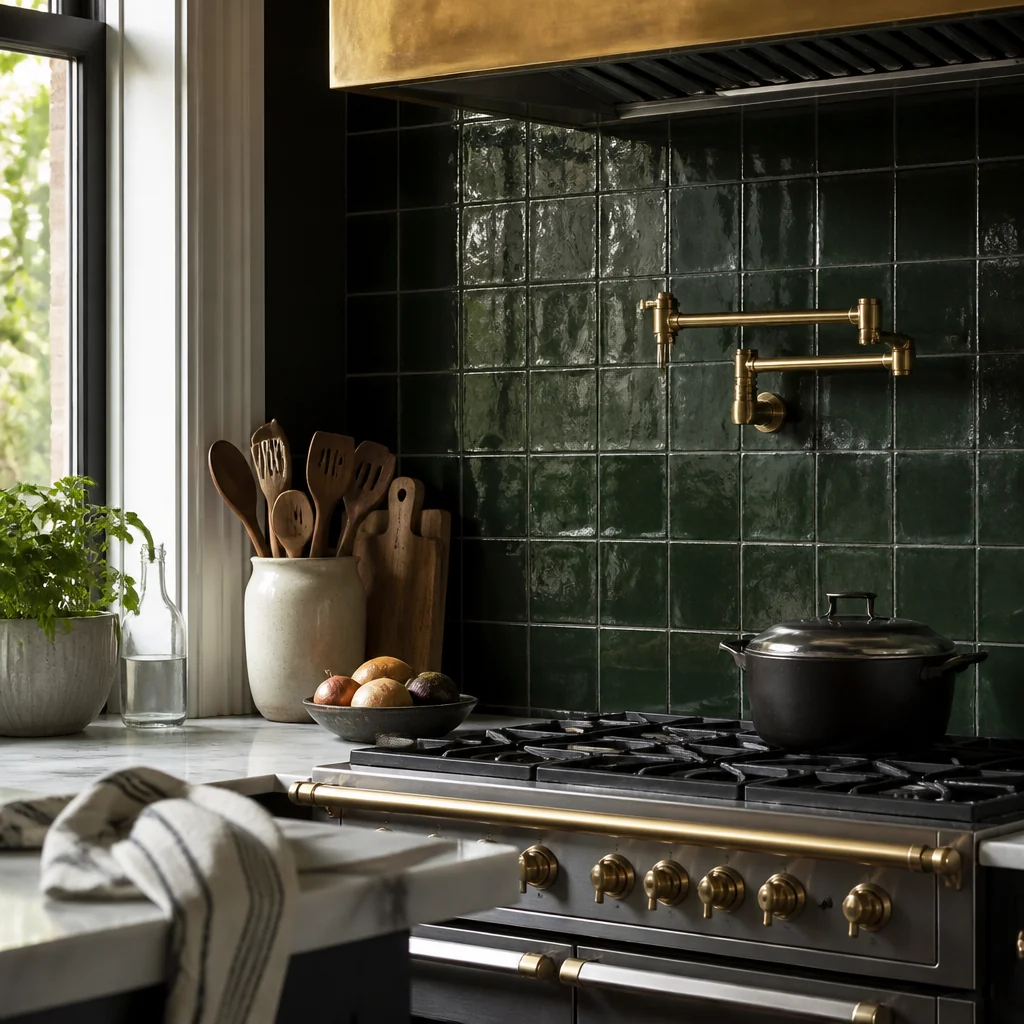
Deep forest green in a handmade glaze is one of the few strong colors that stays calm, because the glaze varies from bottle green to almost black across a single wall and never sits flat. Handmade tile from makers like Fireclay runs $28 to $45 per square foot for material, which is why most people use it on one 18-inch run rather than the whole kitchen.
It hides tomato sauce and coffee splatter far better than white. What it does show is dust and hard-water spray, so a matte version near a sink will need wiping more often than you expect.
The pairing changes the whole reading of the room. Green with brass and warm oak goes traditional and English; the same green with a concrete or pale gray counter and black hardware turns industrial. Order 20 percent extra, since handmade tile varies between production runs and a patch later will not match.
16. Penny round tile in glossy white
Penny round is a 3/4-inch or 1-inch circle, mesh-mounted on 12x12 sheets, and it softens a kitchen full of straight lines. Material is cheap at $10 to $16 per square foot, but installed cost climbs to $22 to $35 because of what happens after the tile goes up.
Circles do not tessellate, so a penny wall is roughly a third grout by surface area. That means the grout color is the color of your backsplash, not the tile, and it means grouting takes hours rather than one. Use unsanded grout, and consider epoxy: with that much joint exposed to cooking splatter, cement grout in a light color will discolor within a couple of years.
Grout haze is the usual complaint. Wipe in tight circles with a barely damp sponge, rinse the sponge constantly, and come back for a second pass with clean water before it cures hard.
17. Mother-of-pearl subway tile
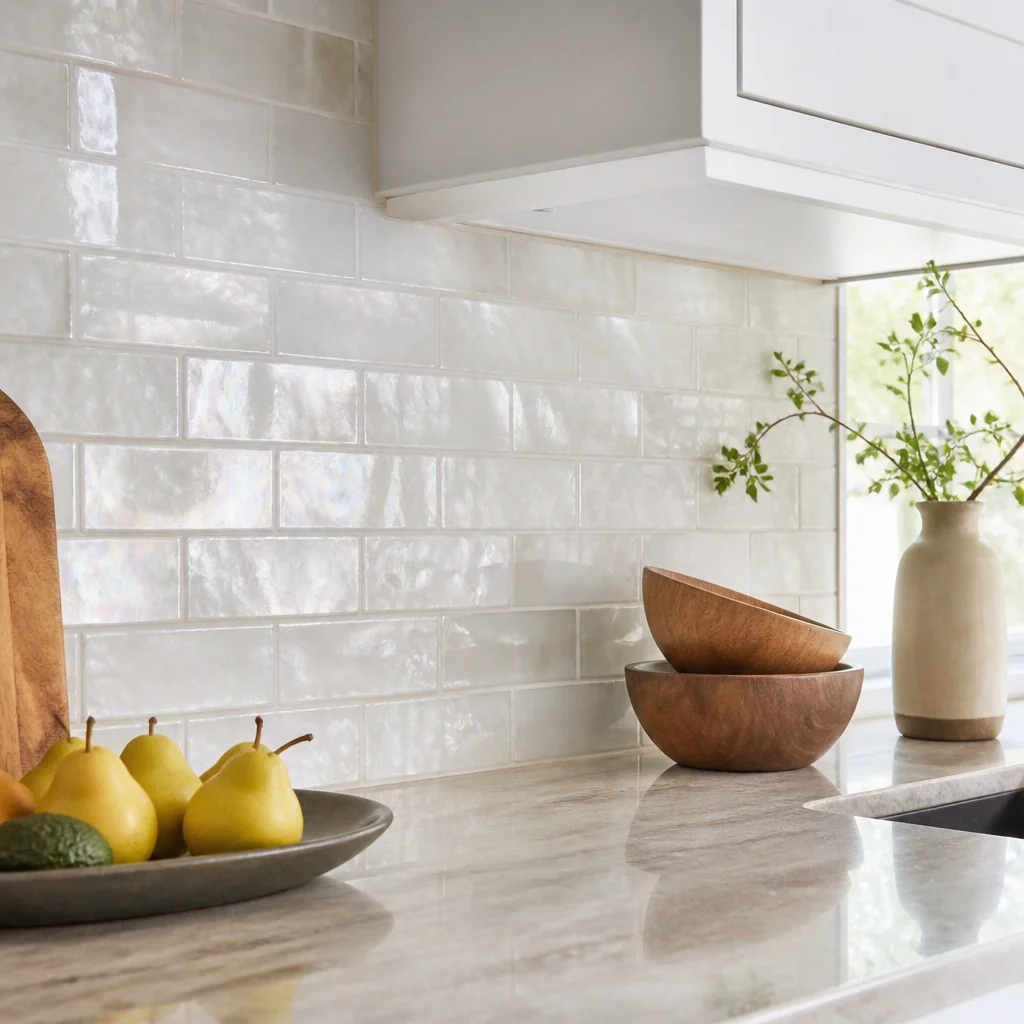
Mother-of-pearl is real shell, sliced thin and mounted on mesh, usually in 2x4 or 1x2 pieces that read as a shimmering subway pattern. It costs what it looks like it costs: $25 to $45 per square foot for material, $40 to $65 installed. Ann Sacks and Bedrosians both carry versions.
The shell is only 1.5 to 3 millimeters thick and slightly translucent, so it goes up in white thinset with the trowel ridges flattened, exactly like glass. It is also calcium carbonate, which means acid destroys it. No vinegar, no lemon, no bleach, no abrasive pads. A damp cloth and mild dish soap is the entire maintenance routine, and that is not negotiable.
Given the price and the fragility, the sink wall or a bar niche makes more sense than the stretch behind a gas burner, where heat and heavy grease will dull the surface faster than you would like.
18. Natural slate with uneven edges
Slate splits along natural planes, which is where the cleft face and the ragged edges come from. In charcoal or warm brown it gives a wall genuine depth that no printed tile matches. Expect $15 to $28 per square foot installed.
Ask for gauged slate, meaning the back has been machined flat to a consistent thickness. Ungauged slate varies enough that setting it on a wall becomes a shimming exercise. Even gauged, the face is uneven, so plan on 3/16-inch joints and sanded grout rather than a tight modern line.
Slate's weakness is spalling: thin surface layers flake off, and the cheapest imported material is the worst for it. Rub a sample hard with your thumb before ordering a pallet, and if black dust comes off, keep looking. An enhancing sealer deepens the browns and greens and helps bind the surface. The cleft texture holds grease, so this is another one that prefers the sink wall.
19. Sage green metro tile in matte finish
Metro is the slimmer, longer cousin of subway: 2.5x8 or 3x12 rather than 3x6, which gives you fewer joints and a more horizontal wall. Sage in a matte glaze from a line like Bedrosians Cloé runs $6 to $12 per square foot for material and $12 to $20 installed.
Matte does hide water spots and fingerprints, because a scattered surface does not show a mineral ring the way a mirror does. The trade is that a matte glaze has microscopic texture, so cooking oil sits in it and builds a faint film over months. A degreasing spray rather than glass cleaner fixes it in seconds; plain water will not.
Sage shifts noticeably under different bulbs, going gray under 4000K and greener under 2700K. Tape a sample to the wall and look at it at night under your actual under-cabinet lights before you order the full 30 square feet.
20. Straight-stack brick in warm tan
Take the same warm tan brick and stack it in a grid instead of offsetting it, and the wall turns quiet and modern while keeping the texture. It is a good compromise for a kitchen that wants warmth without a farmhouse accent.
Stack bond is unforgiving in a way running bond is not. Every vertical joint lines up over the full 18 inches, so a tile that is a millimeter narrow, or a wall that leans, telegraphs straight up the run. Use rectified tile with consistent sizing, snap a plumb laser line at the center of the wall, and work outward from it rather than from a cabinet edge that may not be square.
Real brick weighs 5 pounds per square foot or more and needs thinset with mechanical backing; porcelain at 3/8 inch does not. Installed, figure $10 to $16 for porcelain and $20 to $30 for genuine thin brick.
21. Jewel-tone mix: emerald, sapphire, and teal
A blend of emerald, sapphire, and teal in small glass or ceramic pieces behaves like a mosaic rather than a tile field: no single color dominates, and the wall shimmers as light moves. Blended mosaic sheets run $18 to $30 per square foot for material, $30 to $45 installed.
Buy it as a pre-blended sheet rather than three separate colors you mix yourself, and even then shuffle pieces between sheets so the same emerald does not land in a diagonal line. Manufacturers blend within a sheet but not across a box.
Restraint is what saves this. Three saturated colors across a full 30 square feet with patterned cabinets or a veined counter goes carnival fast. Keep the cabinets flat and single-colored, the counter plain, and consider limiting the jewel mix to the stretch behind the range with a plain tile elsewhere. White thinset again, since glass shows what is behind it.
22. Blush pink metro tile
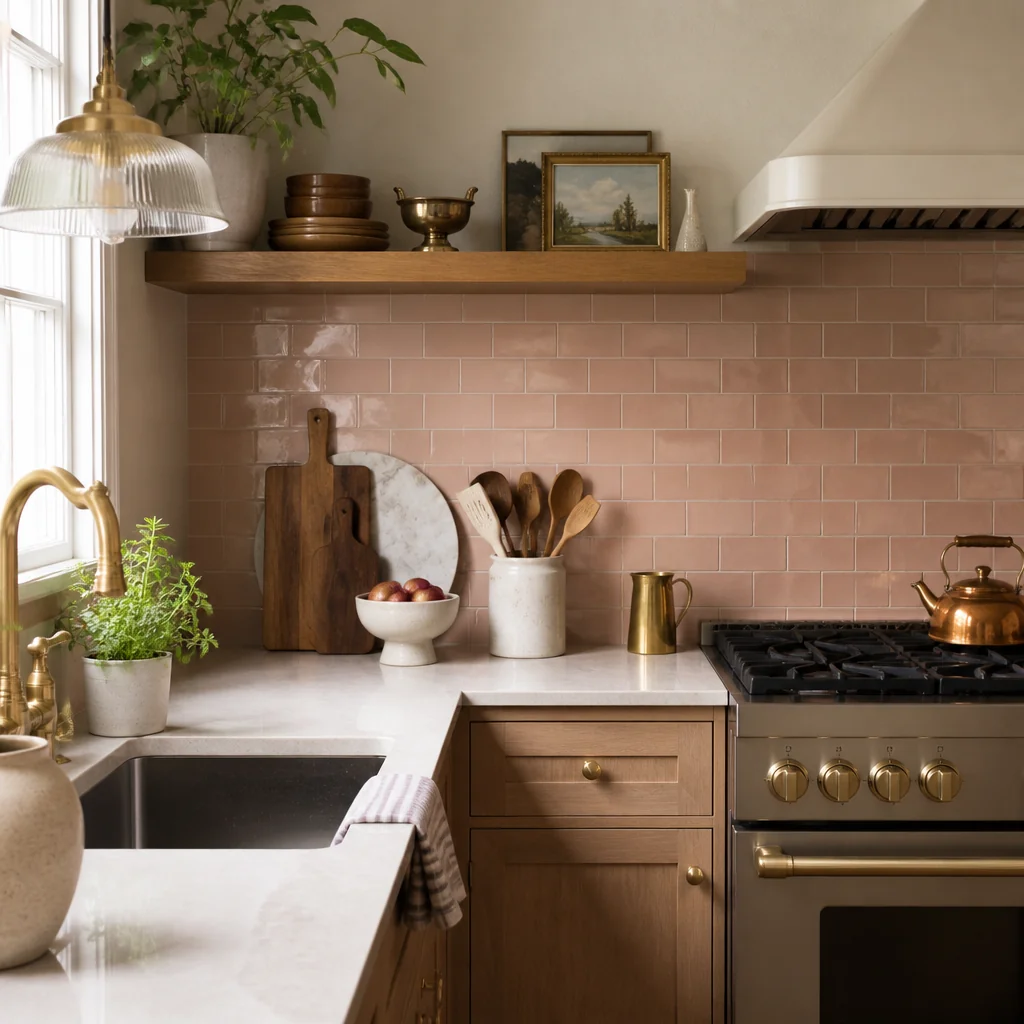
Blush reads far quieter on a wall than it does on a sample chip, especially in a 2.5x8 metro format where the horizontal line carries more weight than the color. It sits well with brass fixtures, white oak, and warm white cabinets. Material is ordinary glazed ceramic pricing, $6 to $12 per square foot, or $12 to $20 installed.
Lighting is the thing to test. Blush is a low-saturation warm color, which makes it unusually sensitive to bulb temperature: at 2700K it pushes peach, at 3000K it stays pink, and at 4000K it drains toward beige-gray. Buy one box, tape four tiles to the wall, and look at them at 9 in the morning and again at 9 at night.
For grout, match the tile or go one shade lighter. A gray grout against blush pulls the pink toward mauve, which is a different look and not always the one you wanted.
23. Limestone with light honed finish
Honed means ground flat and stopped short of a shine. On limestone that leaves a soft chalky surface with a faint tooth to it, and it takes light in a way polished stone cannot: no glare, just a gentle glow along the wall. Budget $12 to $22 per square foot installed, usually in 4x12 or 6x12 pieces.
Here is the trade-off worth understanding. Honed stone hides acid etching, because an etch mark is a dull spot and the surface is already dull. What it does not hide is staining, since the open surface pulls in olive oil and red wine faster than a polished face would. Two coats of an impregnating sealer before grouting, a re-seal every 12 months, and a habit of wiping splatter the same evening is what keeps it cream instead of blotchy.
Pair it with unlacquered brass or aged bronze; chrome fights the softness.
24. Tiny glass mix in cream and taupe
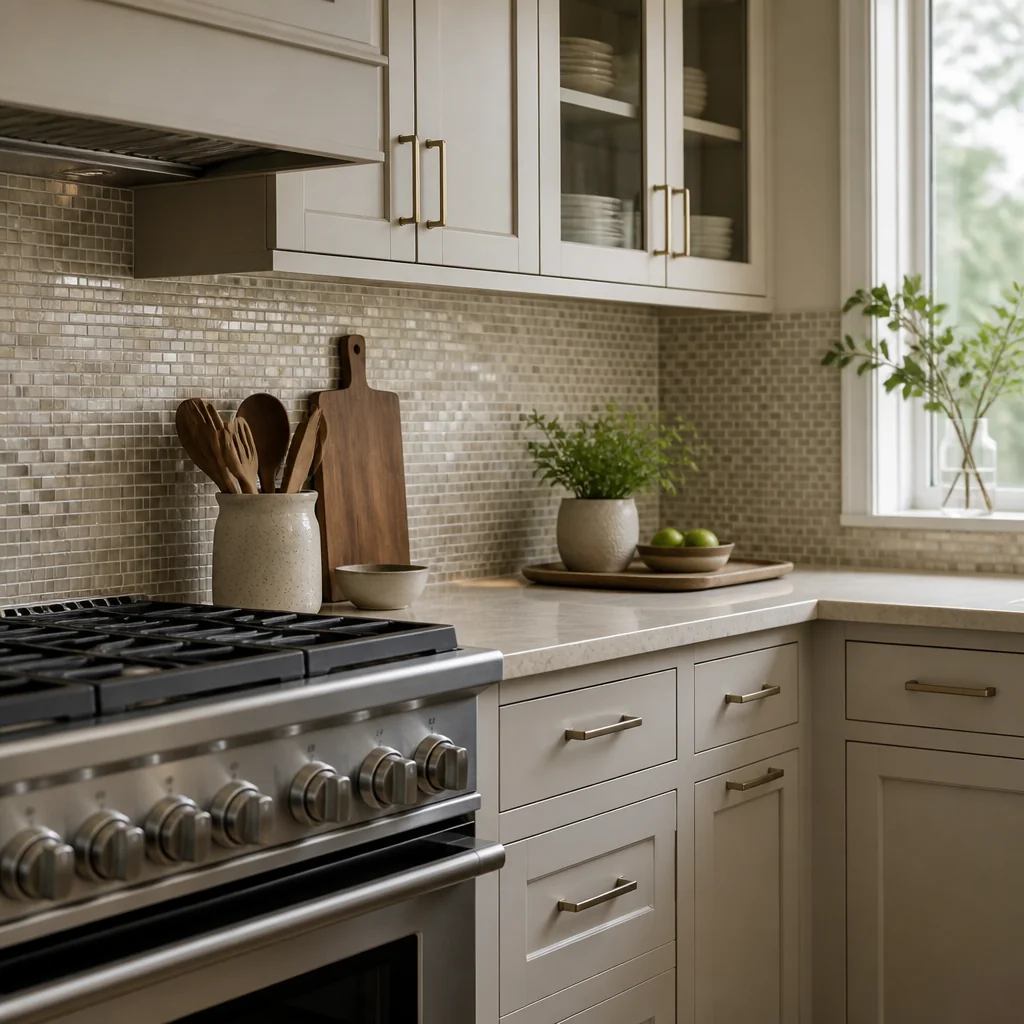
Micro mosaics in cream and taupe, pieces around 3/8 to 5/8 inch, give a wall a woven, almost textile quality. Material is modest at $12 to $22 per square foot, but labor is where the money goes: setting and grouting mosaic runs $18 to $28 per square foot against $10 to $12 for plain subway, so the installed total often doubles.
The reason is grout. At that piece size, nearly half the wall is joint. Epoxy grout is worth the extra cost here, because cement grout across that much exposed surface in a cooking zone will stain within two years and cannot be bleached back.
Watch the sheet seams. Mesh-mounted micro mosaic ships on 12x12 sheets, and if the seam spacing does not match the internal spacing you get a faint grid every foot. Set a sheet, then adjust the outer row of pieces by hand with a grout float before the thinset grabs.
25. Concrete look-alike porcelain in light gray
Poured concrete on a wall is porous, needs sealing twice a year, and develops hairline cracks as it cures. Porcelain printed to look like it does none of that, and it costs less: $8 to $14 per square foot installed, usually in 12x24 rectified sheets with 1/16-inch joints and a grout matched to the gray.
Large format is the right call here because concrete has no repeating unit in real life. The fewer joints you show, the more convincing the effect. Check the shading rating and pull tiles from at least four boxes so the printed mottling does not repeat in an obvious rhythm.
The risk with light gray concrete look is a cold room. Gray tile, gray quartz, and white cabinets together can feel like an office. Bring in warmth deliberately: white oak open shelving, a warm brass faucet, or 2700K under-cabinet lighting rather than the 4000K strips that often come standard.
26. Handmade Spanish tile with bright patterns
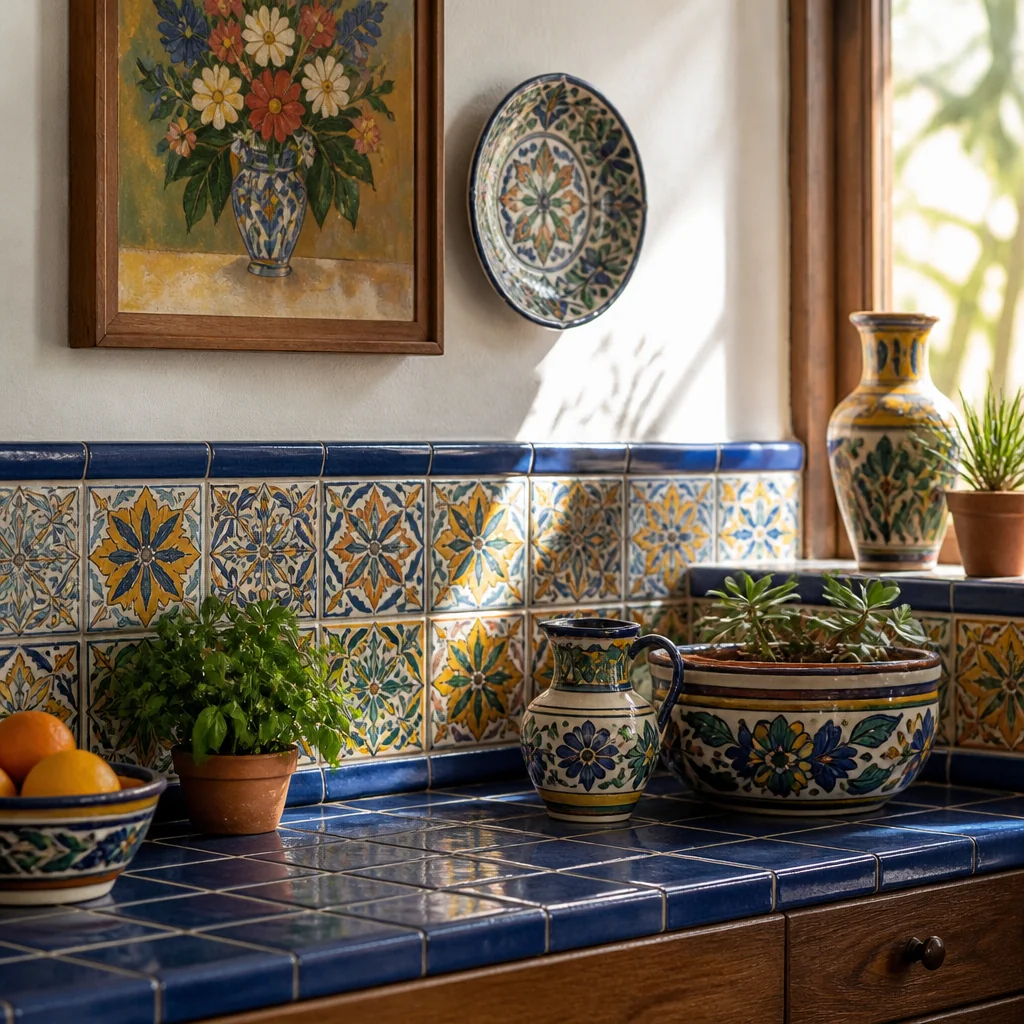
Hand-painted Spanish and Talavera-style tiles are typically 4x4, with the pattern brushed on by hand before the second firing, so no two are identical and the brushwork sits slightly proud of the glaze. Expect $15 to $35 per square foot for material and $28 to $50 installed, plus 15 percent extra for waste and breakage.
Ask the supplier one thing before you order: is the glaze lead-free and certified for food-contact areas? Traditional Talavera glazes sometimes are not, and a backsplash sits directly behind where you prep.
For layout, decide between a full patterned field and a single framed panel behind the range with plain tile around it. The panel version costs a third as much and gives the pattern somewhere to breathe. If you go full field, open every box and shuffle before setting, since hand-painted lots vary in color intensity and an unshuffled wall shows the boxes as bands. Keep open shelving above it sparse.
27. Chevron pattern in two neutral tones
Worth knowing before you order: chevron and herringbone are not the same pattern. Herringbone uses ordinary rectangles laid at 90 degrees to each other, so the ends step. True chevron uses tiles cut at 45 degrees on each end so the two arms meet in a continuous point. If you want that clean V, buy tile sold as chevron; mitering standard subway yourself burns 15 to 20 percent in waste and every cut has to be exact.
Installed cost runs $12 to $20 per square foot for factory chevron, higher if the installer is cutting angles on site.
Set out from a plumb line at the visual center of the wall, usually the range or the window, so the points march symmetrically to both ends. Two soft neutrals, say greige against warm white, keep the movement readable without shouting. High contrast turns the same pattern into a zigzag that fights everything else in the room.
28. Shimmering silver-gray glass subway
Silver-gray glass subway, usually 3x6 or 3x12, throws light back into a room without the mirror effect of a true metallic. Material sits at $12 to $18 per square foot, installed around $24 to $34.
Ask whether the glass is back-painted or through-body colored, because it determines how the cuts look. Back-painted glass carries its color as a coating on the rear face, so a cut edge exposes clear glass and reads as a pale line. Through-body glass cuts the same color all the way through. If you are using back-painted tile, plan for a metal edge profile such as Schluter Rondec at the outside corners and window returns so no raw cut edge is ever visible.
Everything else follows the glass rules: white thinset, full coverage under each tile, unsanded grout, and a glass blade run slowly. Fingerprints show on the gloss, so keep a microfiber cloth in the drawer below.
29. Cream watercolor-effect ceramic
Watercolor-effect ceramic is glazed so the cream washes and pools differently on every piece, giving a wall that looks painted rather than printed. Common formats are 4x4 and 5x5. Figure $12 to $20 per square foot installed for a digitally printed version, $30 and up for genuinely hand-glazed tile.
With any high-variation tile, the enemy is the repeat. Digital printing typically cycles through a limited number of faces, so if you set straight from one box you may see the same wash four times in a 3-foot run. Lay the whole wall out on the floor or the counter first, in the order it will go up, and swap pieces until nothing similar sits within two tiles of its twin. That dry-lay adds an hour and is the difference between artisan and wallpaper.
Grout in the palest tone of the tile. Anything darker outlines each square and undoes the flowing effect entirely.
30. Textured white ceramic with subtle relief
Relief tile is white ceramic with a raised pattern pressed into the face, usually a shallow ripple, fluting, or a scalloped wave standing 1/8 to 1/4 inch proud. All the interest comes from shadow, so it needs a light source above it. Under-cabinet LEDs mounted at the front edge of the cabinet rake light down the wall and make the pattern appear; a ceiling fixture straight overhead flattens it into plain white tile. Figure $10 to $15 per square foot for material, $20 to $30 installed.
Two installation points. The relief is directional, so mark the back of every tile and check orientation as you go; one flipped tile in the middle of a run is glaringly obvious. And grouting is slower, since grout catches in the recesses. Use a grout release or wipe faster than you think you need to.
Those same recesses collect cooking film behind a range. A soft brush handles it.
31. Mixed metal and white porcelain blend
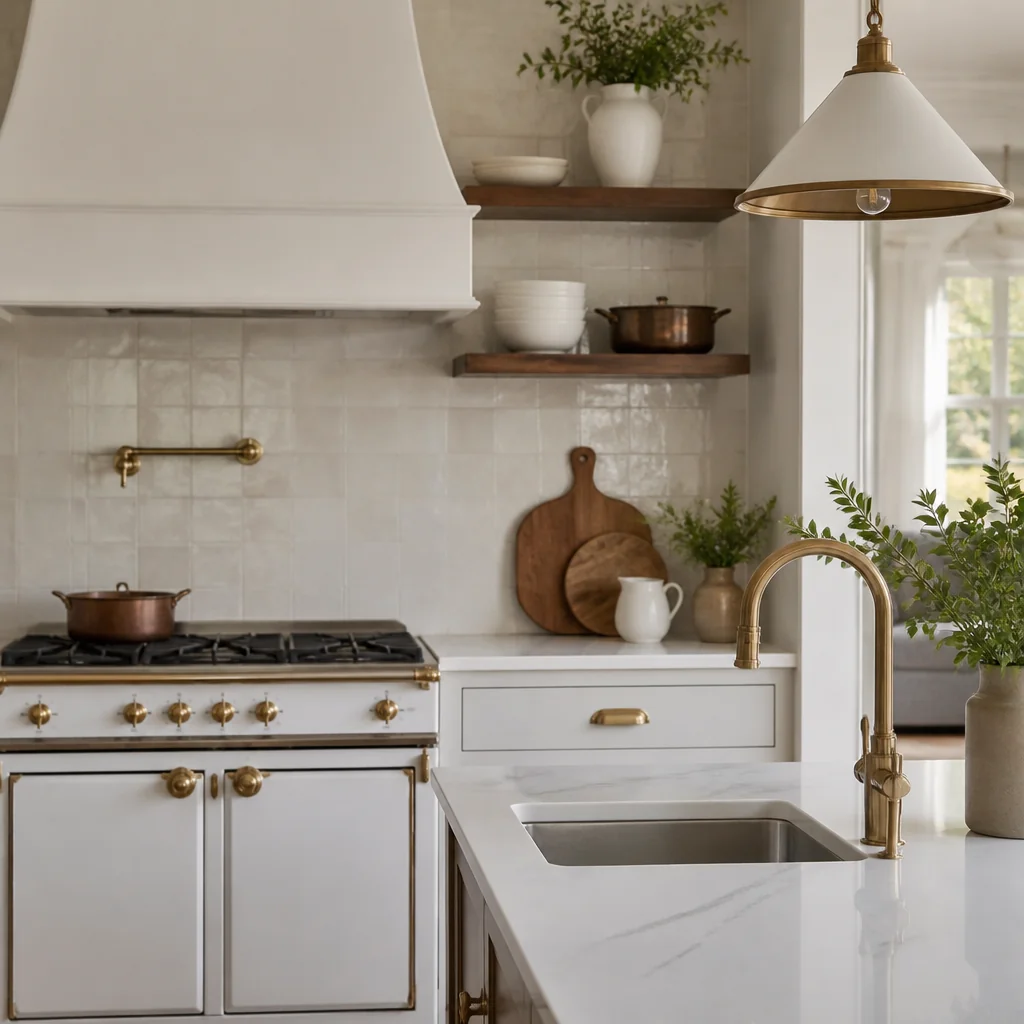
Scattering brushed gold, copper, or stainless pieces through a field of small white porcelain gives you glint without a whole metal wall. Most of these come pre-blended on mesh sheets at $15 to $30 per square foot, $28 to $45 installed.
Metal tile is usually a thin metal face on a resin or ceramic body, and it has its own handling rules. A standard diamond blade will burr the edge, so cuts want a fine-tooth carbide blade and a pass with a file afterward. Never use sanded grout: the grit scratches a brushed finish permanently. Unsanded or epoxy only.
Copper and unlacquered brass will patina, unevenly and fastest in the humid stretch above a dishwasher or behind a kettle. Stainless and lacquered brass hold their color. Decide which of those two futures you want before ordering, because there is no reversing it later.
The whole guide in one image
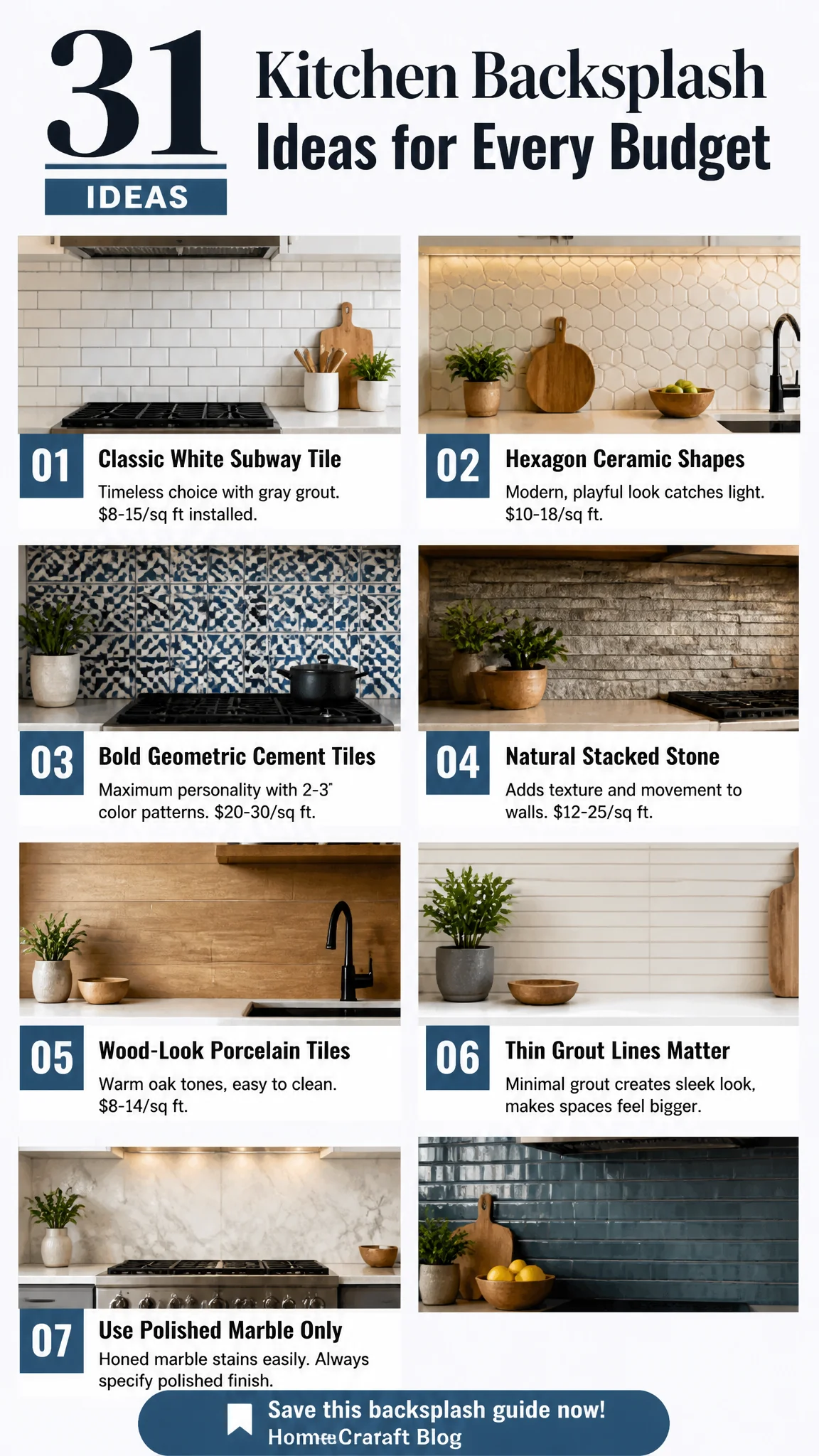
One last thing, and it matters more than which tile you choose: the details at the edges. Order 15 percent extra so a repair years from now still matches. Where the tile meets the countertop and at inside corners, use color-matched silicone rather than grout, because that joint moves with the seasons and grout will crack along it. And add a box extender to every outlet you tile around so the receptacle sits flush with the finished surface instead of sunk behind it. Those three details are what separate a backsplash that looks professionally done from one that looks close.
Ideas fade by Friday. A plan finishes the room.
You just read a full guide to your kitchen. Saving ideas will not change it; a plan will. The Home Decor Collection is every planning tool we make, for every room in the house, in one download, so the after photos below stop being other people's rooms.
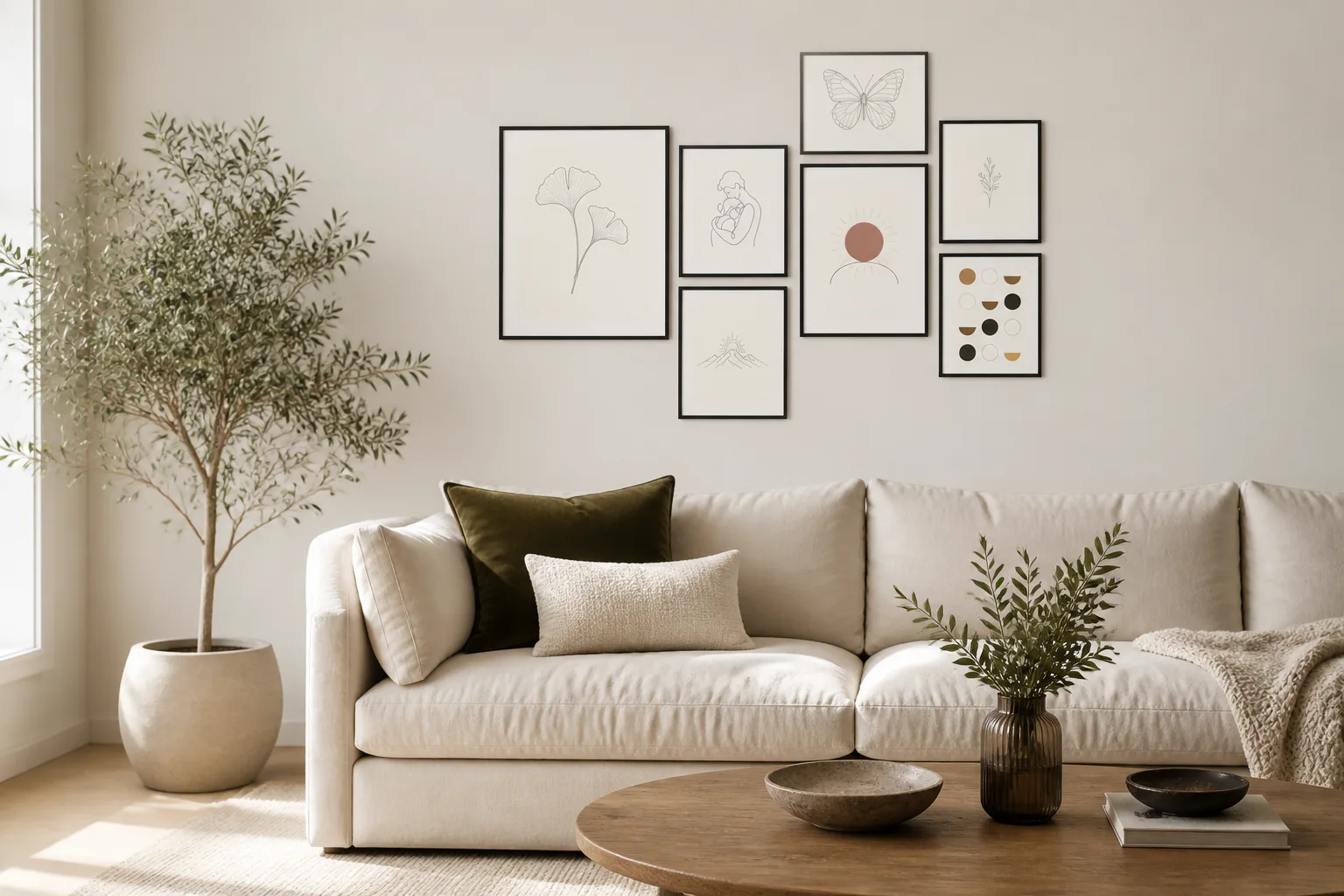
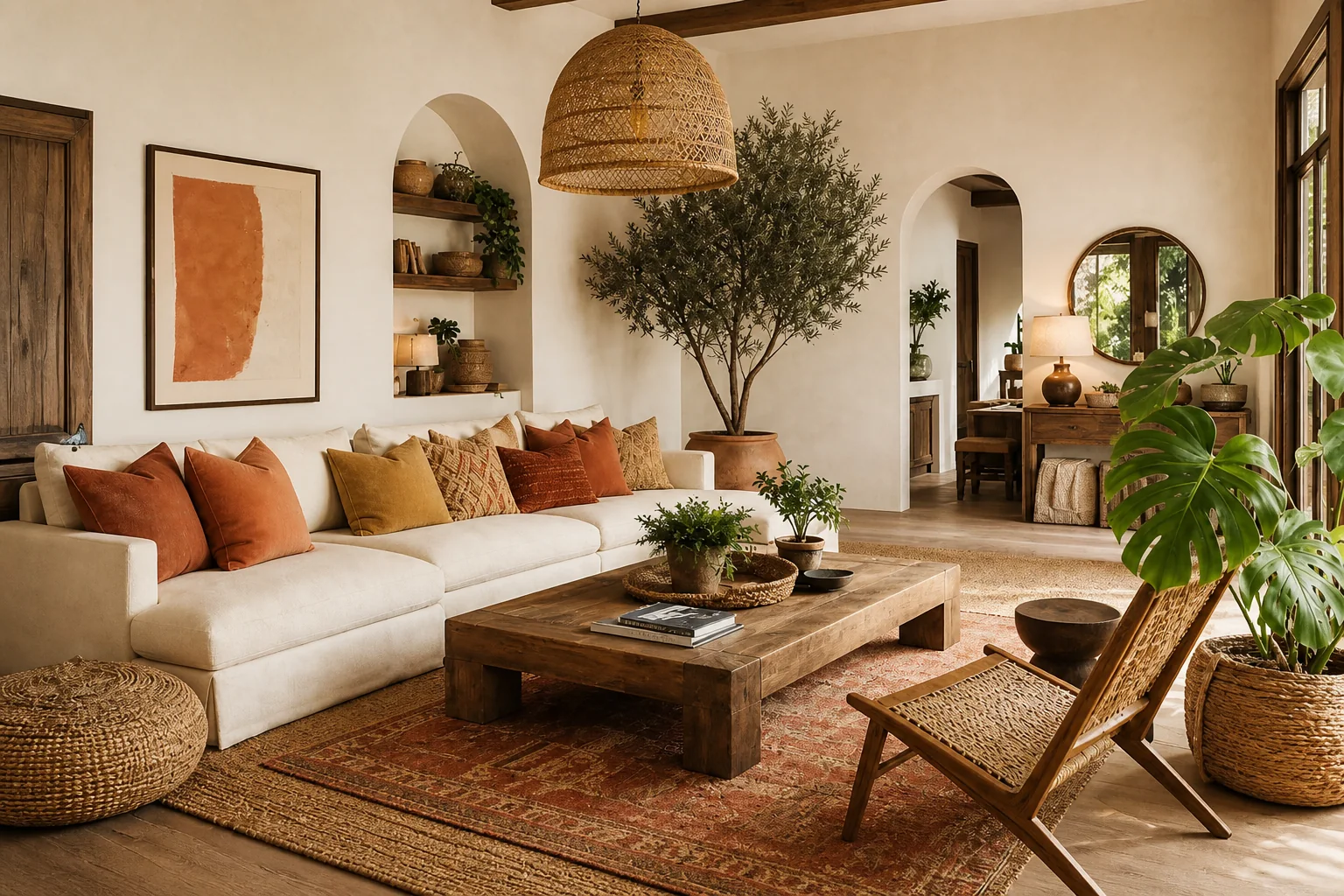
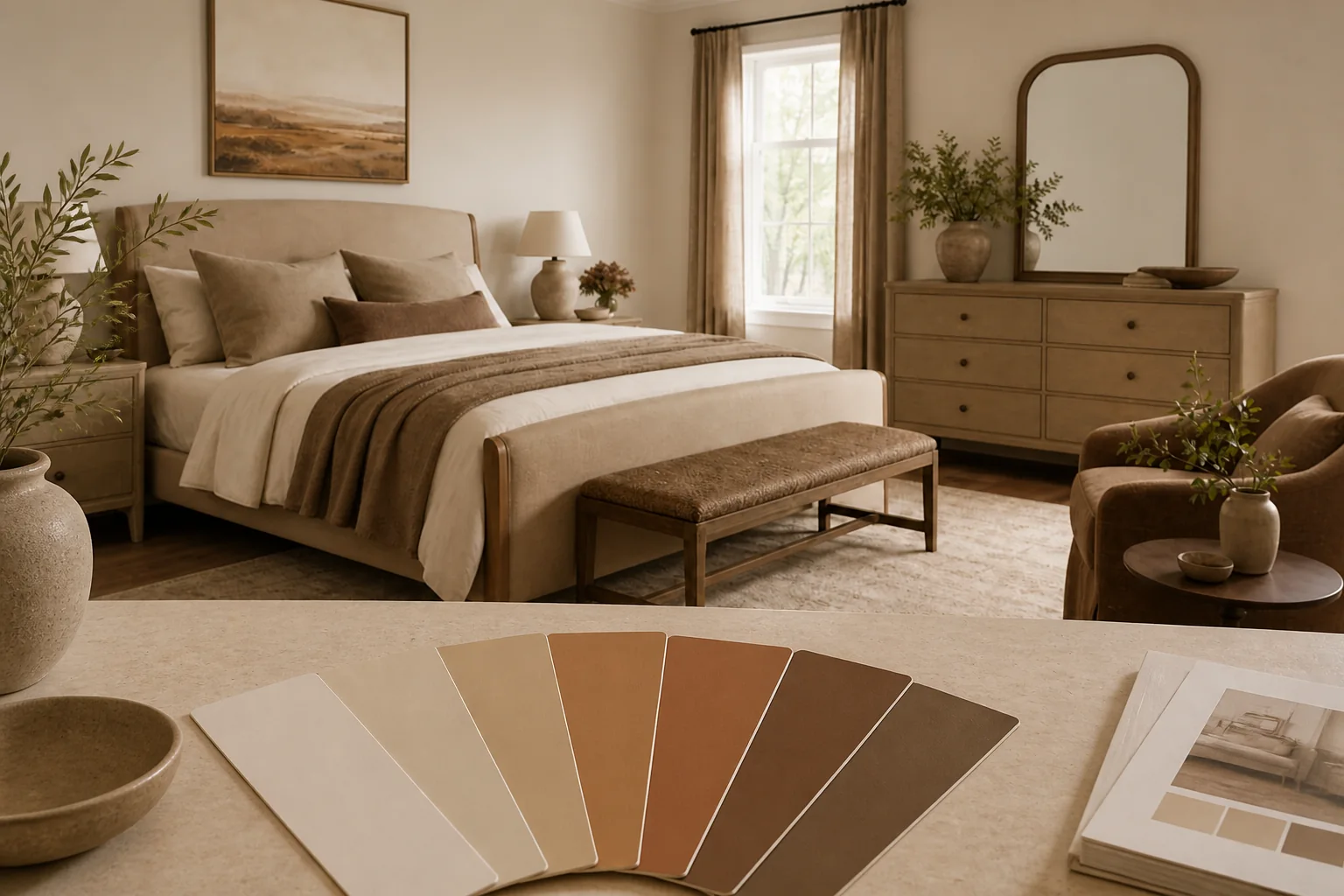
- Six room Style Kits, each with layout, palette and shopping list$114
- The Gallery Wall Studio: 200 prints + 15 measured layouts$29
- The Room Makeover System: 40 solved room layouts + workbook$29
- The Color Palette Handbook: 60 palettes shown in real rooms$19
- The Whole-Home Reset: 40 printable organizing checklists$19
- The Decorator's Cheat Sheets: the 40 measurements that matter$9
- All eleven products, bought separately
$219$97
A single hour with an interior designer costs more than the entire Collection, and this one keeps answering for every room you will ever decorate. Free updates included as the products grow. And if it is not for you, the 14 day money back promise means you simply get a refund.