
11 Airy DIY Fabric Ceiling Ideas for Bedrooms, Nurseries and Reading Nooks
Eleven diy fabric ceiling ideas for bedrooms, nurseries and reading nooks. You'll see which rod, ring and fabric combos hold their shape and which droop, with sizes.

This post contains affiliate links. As an Amazon Associate I earn from qualifying purchases. If you buy through our links, we may earn a commission at no extra cost to you.
Hang the fabric from the ceiling itself, not from the walls, and the room looks taller and softer in one move. Most of the ideas below do exactly that. They suit bedrooms, nurseries and reading nooks, the rooms where you want a canopy feeling without a full four-poster. Each one is a look you can picture and rebuild with rods, rings and fabric from an ordinary fabric store. We sorted the versions that keep showing up into the ones that hold their shape and the ones that droop. Measurements appear wherever they decide whether the look fits.
 8-page guide
Free style guide
Stop buying things that don’t go together.
Print the 2-minute quiz, circle the words you love, and find your style. Then see what makes a room look like it.
- A print-and-circle quiz, 5 styles
- Each style shown as a finished room
- Palette, 4 key pieces, one rule
Free. Arrives by email in a minute or two, plus our ideas and occasional shop offers. Unsubscribe anytime. Privacy
1. Sheer bed canopy hung from a ceiling ring

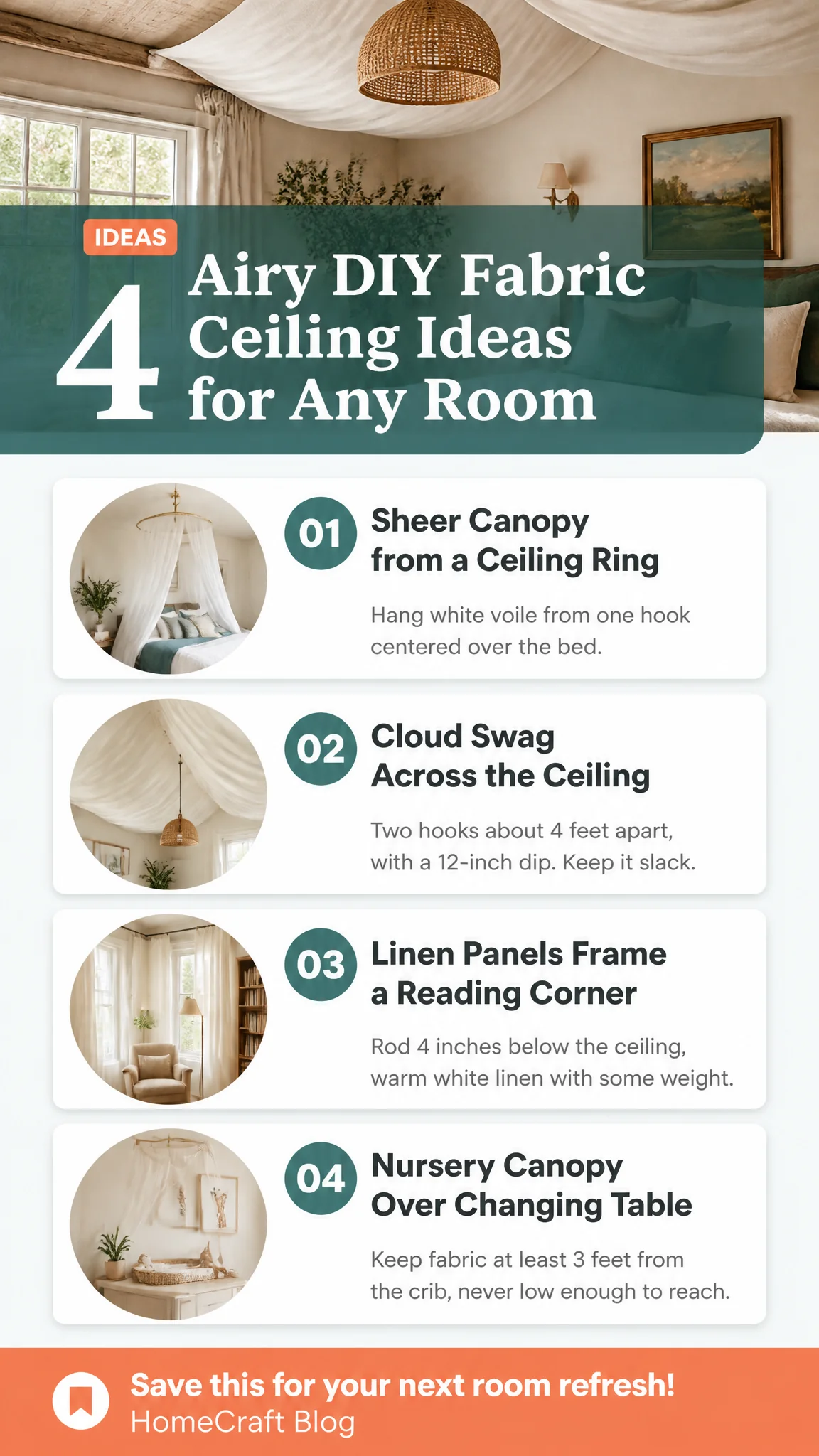
A single panel of white voile or gauze falls from one point centered above the bed. It gathers loosely at the top and spreads over the mattress like a soft tent. The sheer fabric softens the ceiling line without hiding it, and the light still comes through during the day. To recreate it, mount a ceiling hook or ring over the middle of the bed, not over the doorway. Measure from the ceiling to the floor, then add about 6 inches so the fabric pools slightly at the bed edge. (Voile wrinkles in a hot dryer, so hang it to dry if you wash it.) Screw the hook into a joist, or use a toggle rated above the fabric weight.
2. Cloud swag stretched across the ceiling
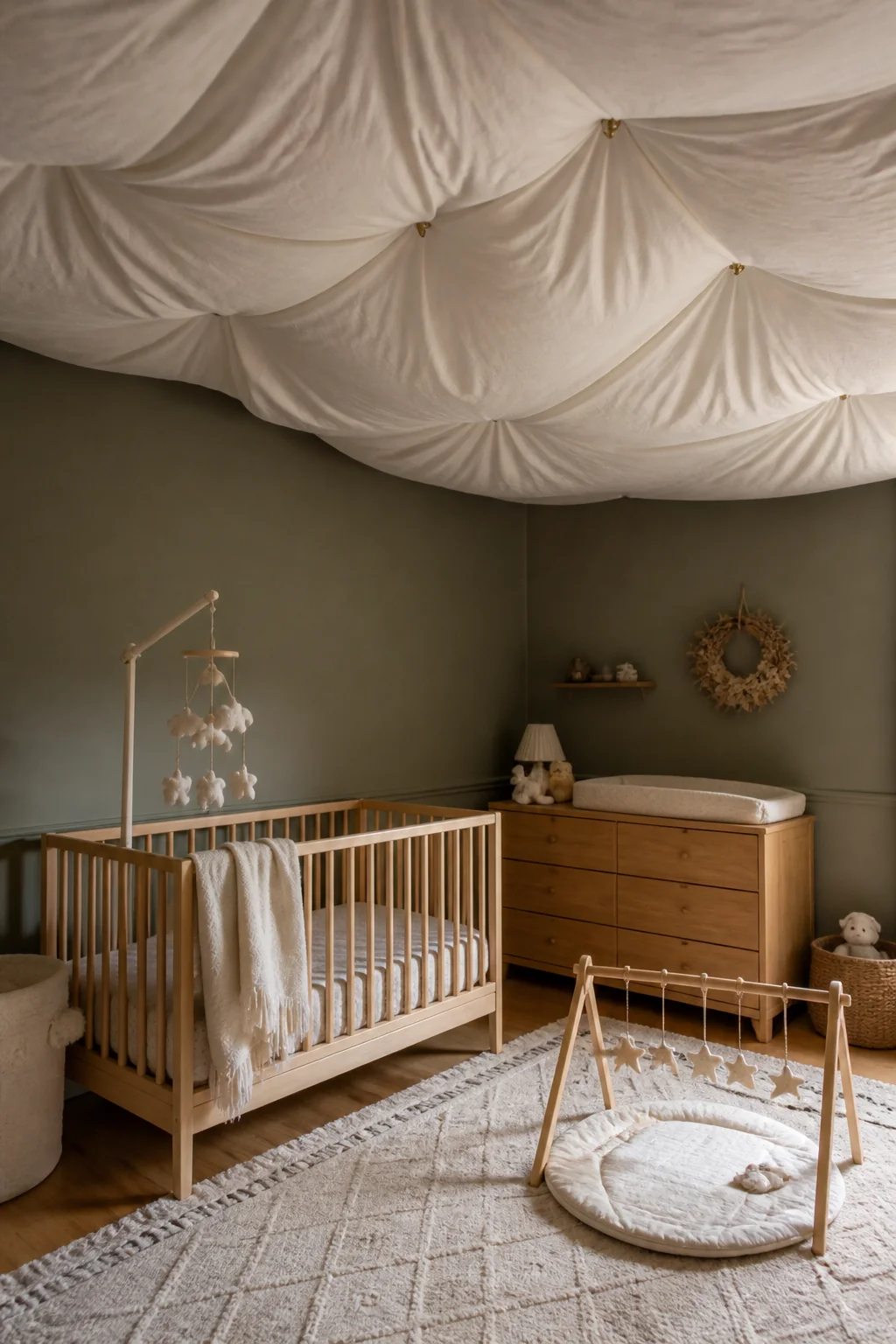
A wide band of cotton muslin in oatmeal or pale gray runs across the ceiling and dips gently in the middle. The dip reads like a cloud or a hammock, so the ceiling feels like a sky without any pattern. The look works best on a long, flat ceiling with no ceiling fan in the way. Place two ceiling hooks about 4 feet apart on the long wall, then drape the fabric through them with a dip of roughly 12 inches. Pulling it taut is the common mistake here. Taut fabric looks like a tarp, and the swag needs slack to read as soft.
3. Linen panels that turn a reading corner into a nook
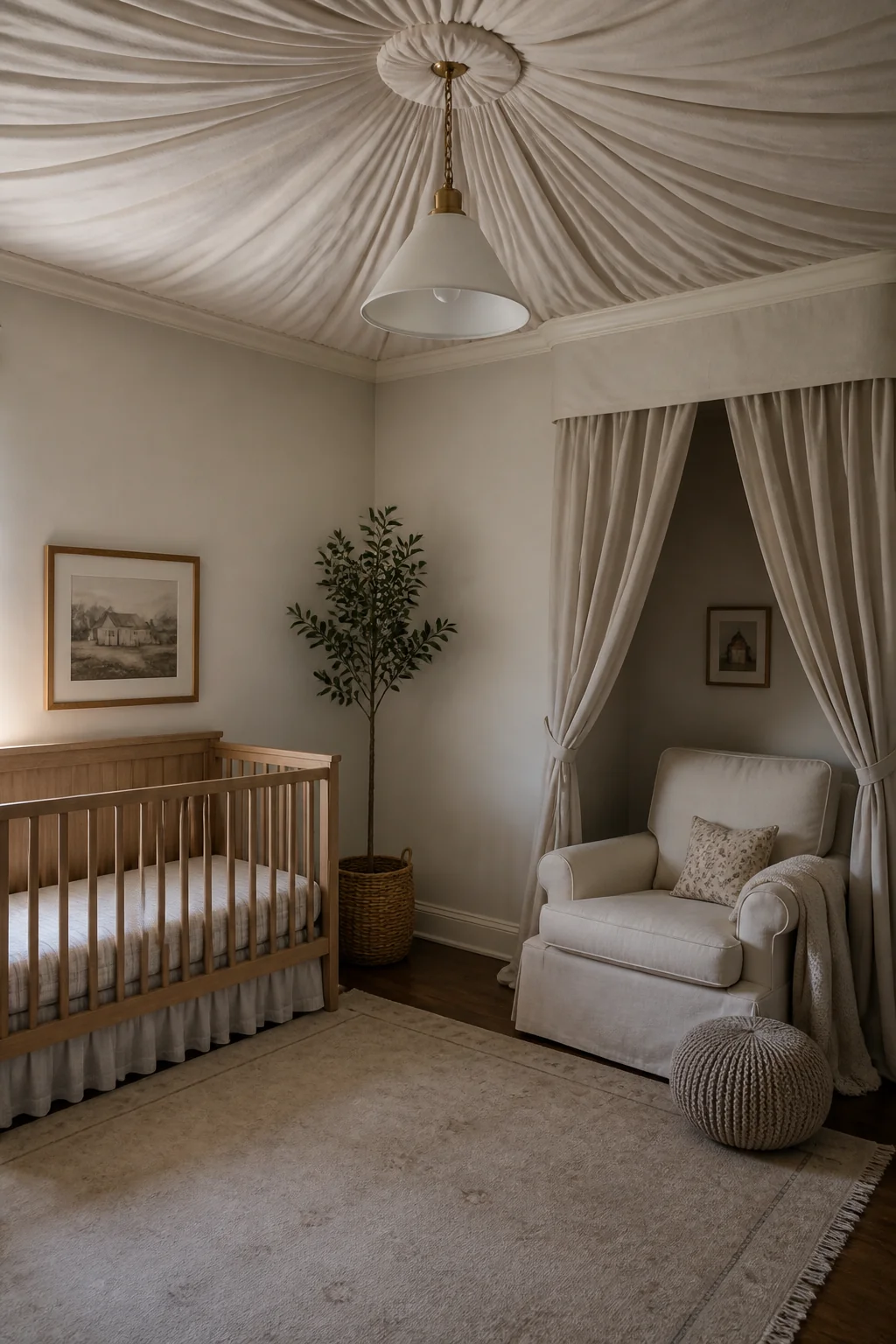
Two ceiling-to-floor linen panels meet at a corner behind a reading chair and frame it like a small room. The soft edges and the vertical lines make the chair feel tucked in rather than pushed against a wall. Mount a rod about 4 inches below the ceiling and extend it 6 inches past the corner on each side, so the panels can stack open without covering the chair. We prefer natural linen in warm white over polyester, which looks flat once a lamp is on. Pick a panel with some weight so it hangs straight instead of rippling.
4. Nursery tent that stays over the changing table
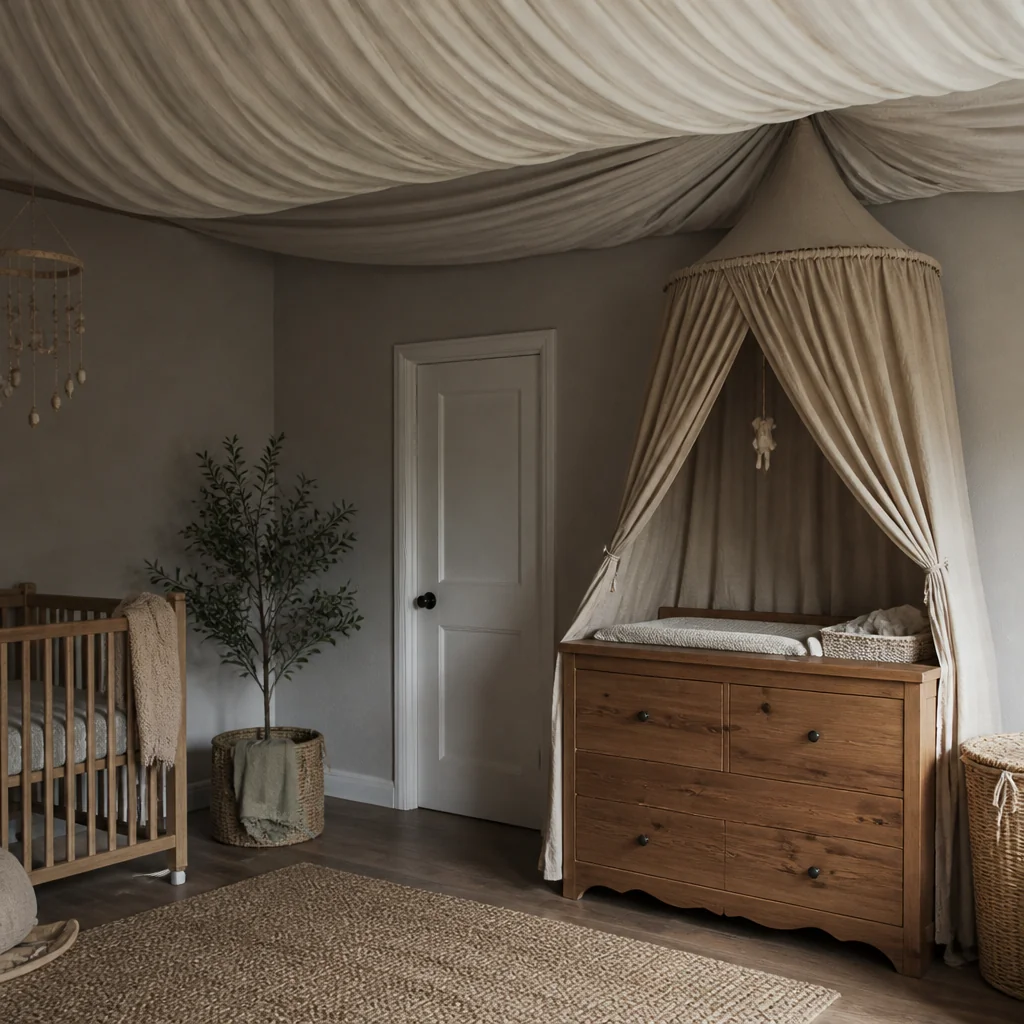
A small cotton canopy hangs over the changing table or glider instead of the crib. You get a sheltered, cozy zone where the fabric is still a design feature. Keep the fabric at least 3 feet away from the crib, and never let any fabric hang low enough for a baby to reach. Mount the ring into a joist above the glider, then drape the panel outward in a loose arc. Nursery rooms collect lint, so choose a fabric you can vacuum with a soft brush attachment every few weeks.
5. Striped ticking on a sloped attic ceiling
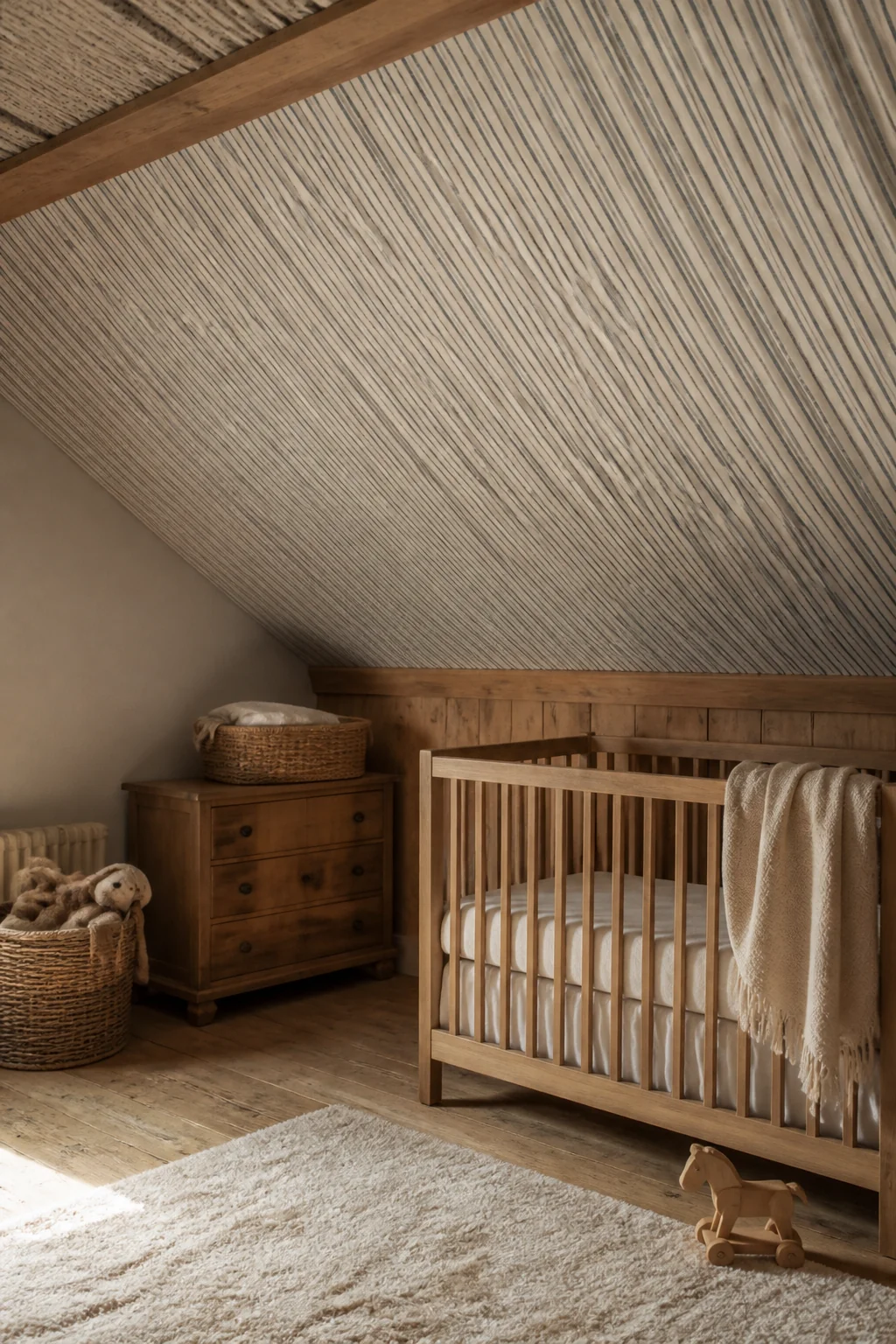
Navy and cream ticking stripes run from the ridge down toward the eaves. The stripes follow the roofline, so the slope looks intentional instead of awkward. Attach thin wood battens along the rafters, then staple the fabric panels to the battens so the seams sit on the lines. Cut each panel so the stripes run with the slope, not across it. Crossing the stripes over the angle makes a sloped ceiling look like it's leaning. Use a strong staple gun and check the staple spacing every 8 inches along the edge.
6. Stretched fabric panels framed in wood
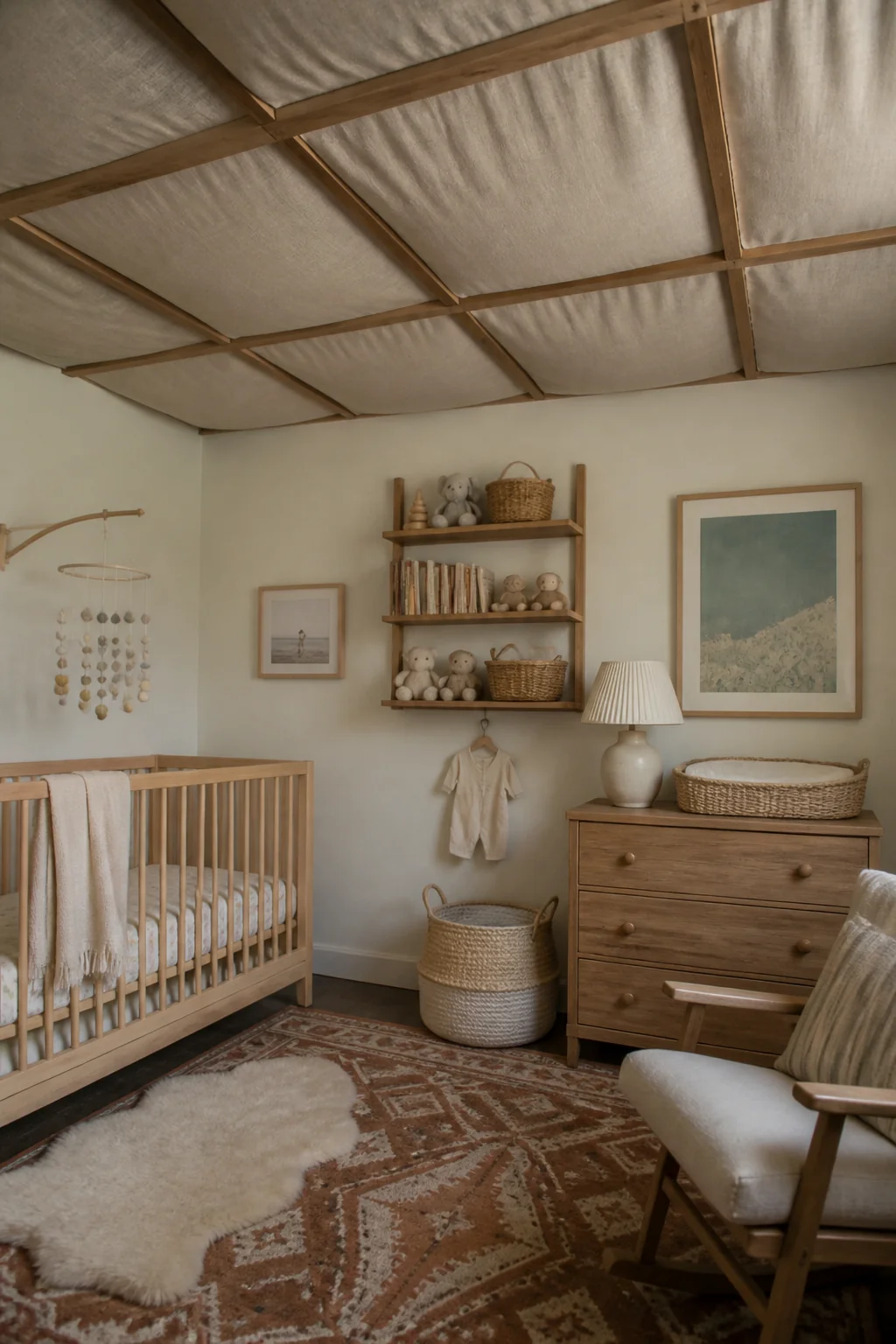
Flat panels of cotton or linen sit inside thin wood frames, fitted into the ceiling in a grid like coffered sections. The frames break a plain ceiling into pieces, and the fabric adds texture without pattern. Build each frame from 1x2 pine, sized around 24 by 48 inches, and staple the fabric to the back of the frame with the weave straight. Keep the frames light, since heavy wood on drywall needs more support than most ceilings get. Screw the frames into joists whenever you can, and use rated anchors for any panel that spans open ceiling.
7. Layered fabric sails above a reading chair
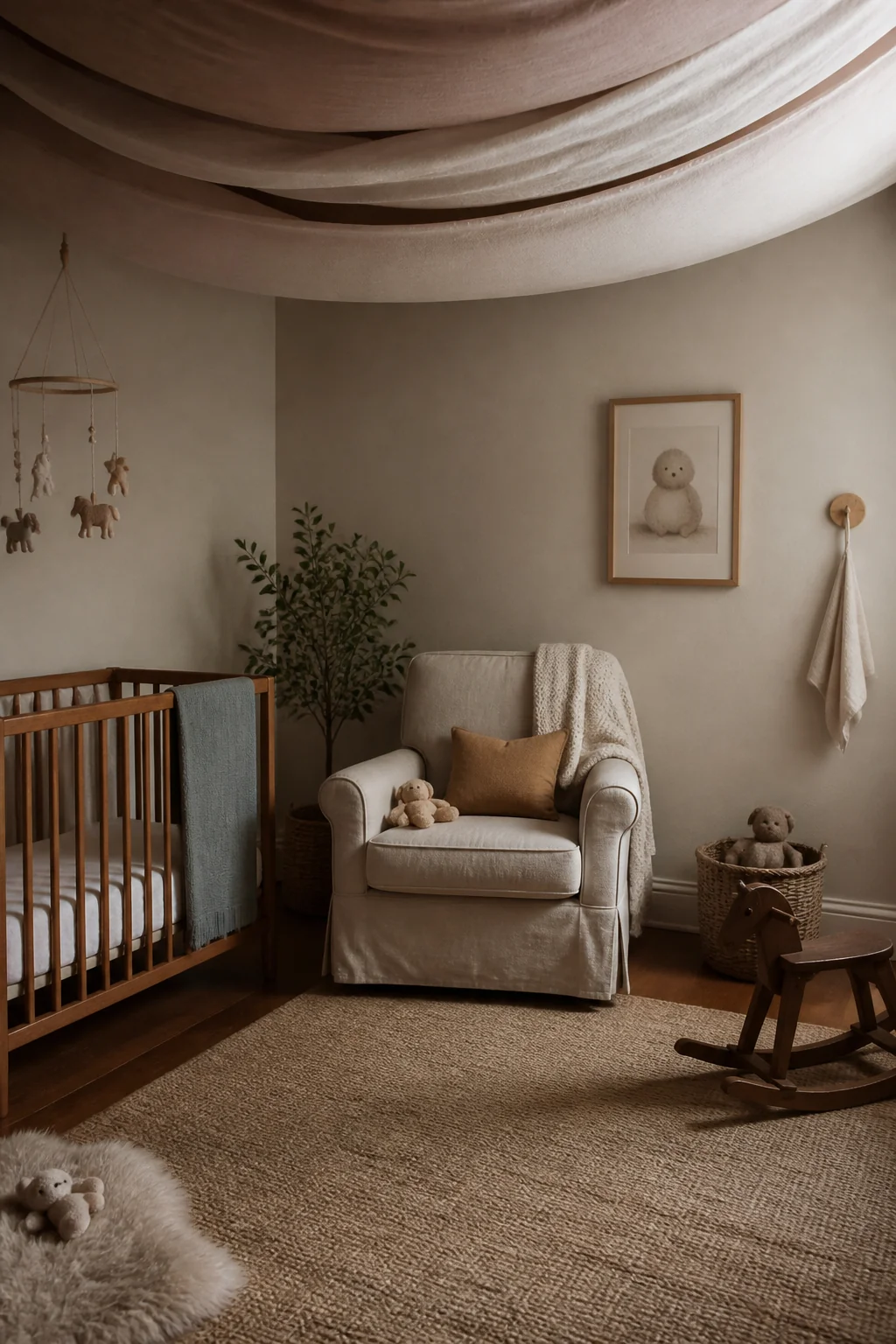
Three triangular sails in cream, clay and sage hang from one ceiling point above the chair. The shapes overlap and repeat, so the ceiling feels like it has movement without any busy print. Cut each triangle from 36 inch wide fabric, hem the edges, then attach the corners to small rings on a single hook. Hang the lowest point about 60 inches off the floor so it clears a seated head. Sails hung too low are the common mistake here, since they end up clipping hair and shoulders when you lean back.
8. Blackout linen canopy on a ceiling track for naps
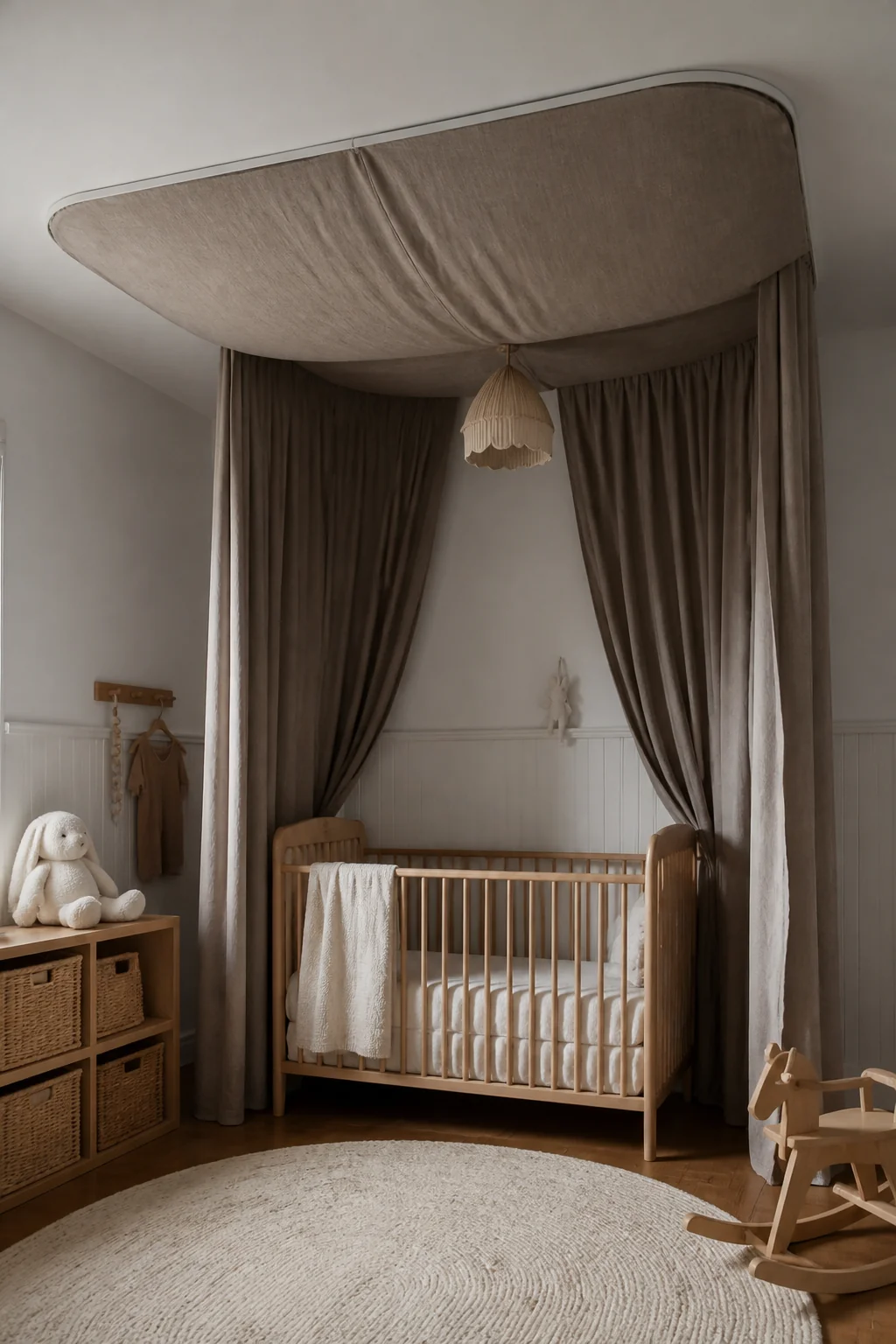
A heavier linen panel runs on a ceiling track and sits over the bed. A cord and pulley pull it across to block the light for an afternoon nap, then slide it back. The look stays calm and linen-soft, while the lining does the blackout work. Mount the track into joists using screws, not drywall anchors, and choose a track rated above the fabric weight. Attach a pulley at the head of the bed, then run the cord along the wall so it stays out of the way. A track that is too light sags within a few weeks.
9. Gauze swag over a dormer window alcove

Warm white gauze fills a dormer or bay alcove from the ceiling down to the sill. It hangs on a curved rod, so the fabric softens the window without closing it off. Measure the width of the alcove first, then pick a rod about 6 inches wider than the opening on each side. Keep the gauze at least 4 inches away from the window glass if you use a lamp nearby. The soft edges pair well with a window seat, which is why this look fits neatly in living room window seat ideas style rooms.
10. Dark jewel-tone fabric wrap in a moody bedroom
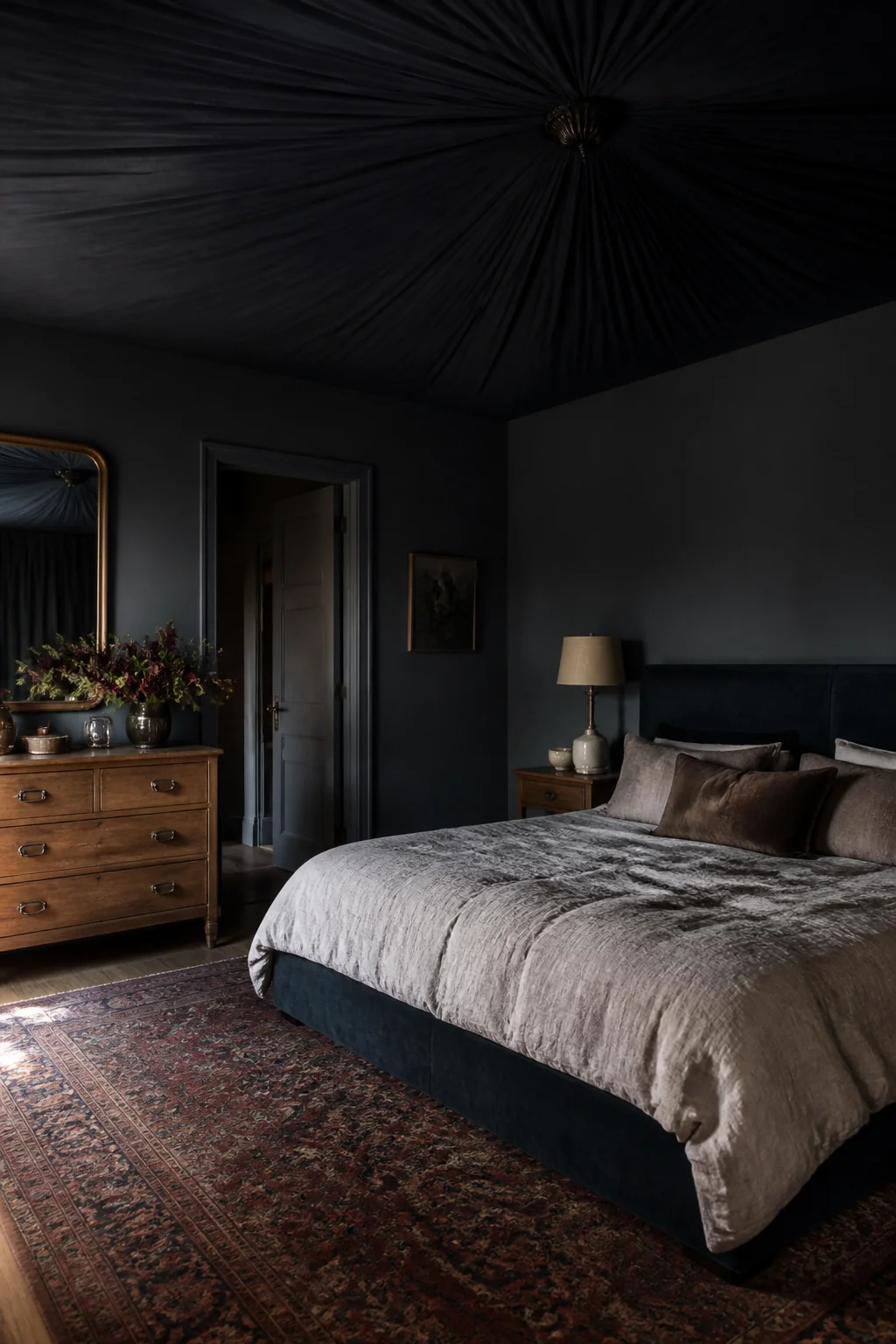
Deep plum or forest green cotton drapes across the ceiling in a loose wrap from one corner. The dark fabric makes the ceiling recede, so the room feels enclosed and quiet at night. Use a midweight cotton so it holds its drape without showing wrinkles. The common mistake is wrapping a small bedroom in dark fabric and then keeping the lighting dim, which makes it feel cramped. Add a warm bedside lamp at about 30 inches off the nightstand, so the fabric has some light to catch.
11. Fairy lights behind a sheer ceiling panel in a nursery
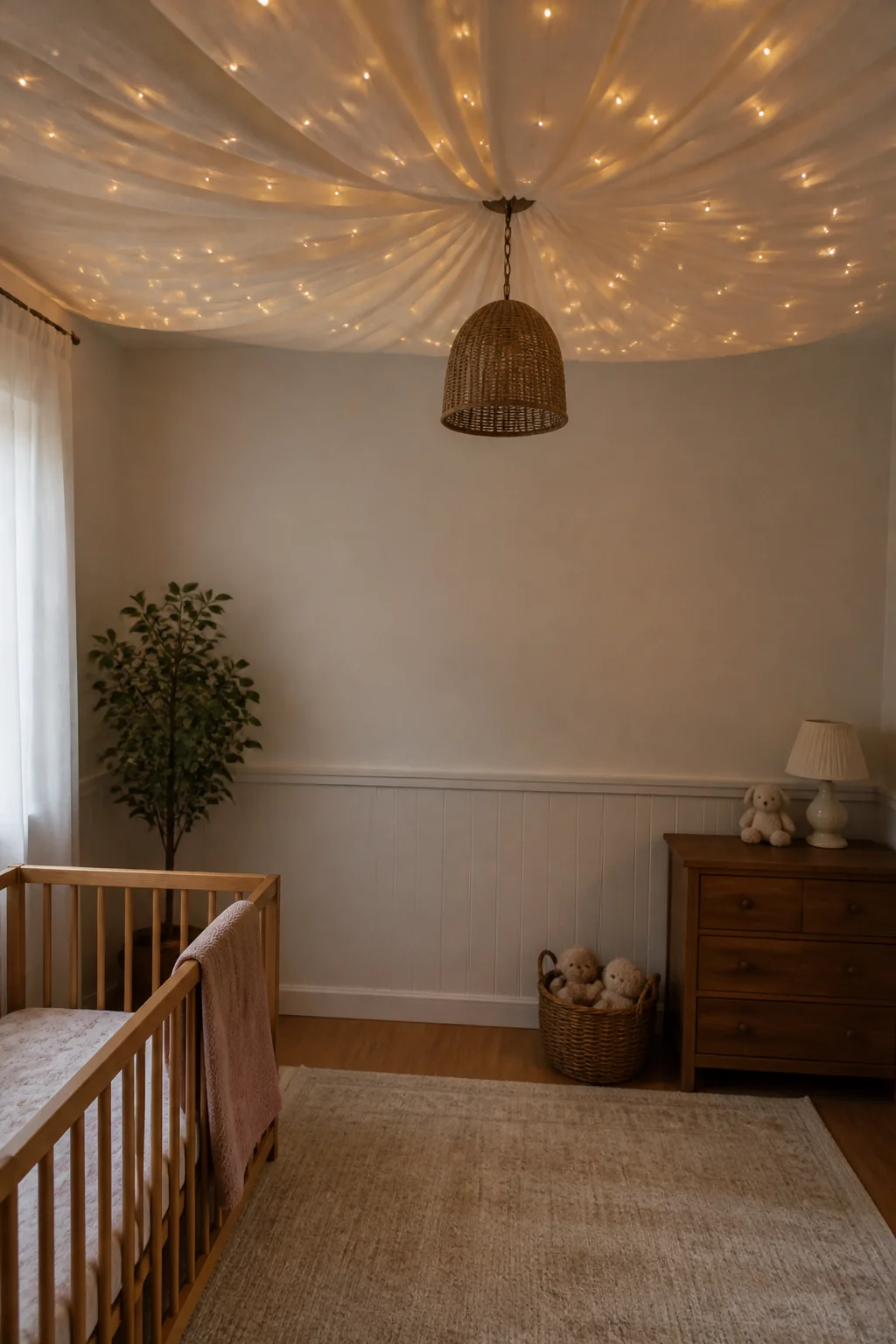
Warm white string lights sit behind a voile panel on the ceiling, so the glow spreads softly instead of showing as points. The sheer fabric diffuses the light, and the room feels like a small, gentle sky. Run the lights along a ceiling hook line and plug them into a wall outlet, never an extension cord. If you want a fixed fixture, turn off the breaker first or hire a licensed electrician to wire it. Keep the lights on a timer so the glow turns off before bedtime.
Hang every panel from hardware that can carry its weight. Drywall anchors pull out, thin rods bend, and the whole look sags into the bed or the chair. Anchor into a joist where you can, use a rated toggle when you can't, and test the rod with a few pounds before you hang the fabric.
Keep this guide handy
The room images in this post are illustrations made with AI.