13 Dining Room Wall Decor Ideas for a Bare Wall Behind the Buffet
Thirteen dining room wall decor ideas for the bare space above your buffet, with the sizes, clearances, and hanging heights that decide whether each one works.
This post contains affiliate links. As an Amazon Associate I earn from qualifying purchases. If you buy through our links, we may earn a commission at no extra cost to you.
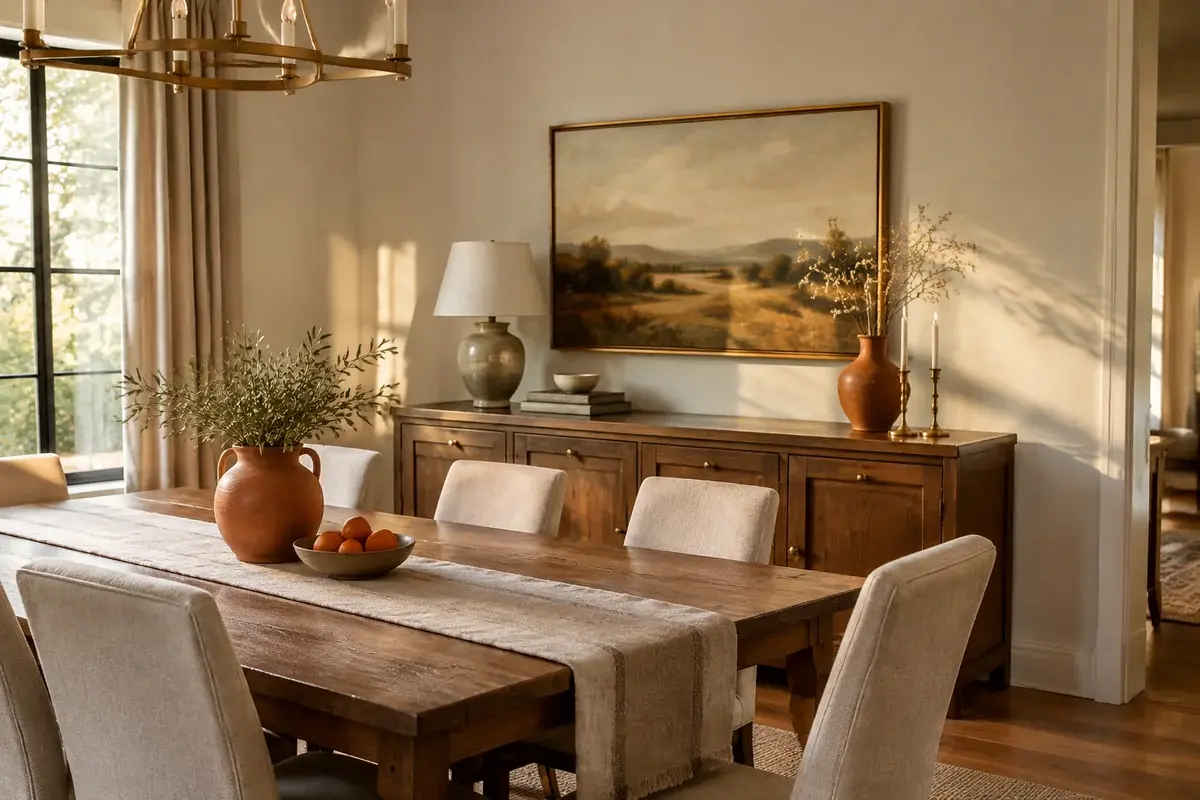
Picture a buffet that runs about 66 inches wide and sits 32 inches off the floor. Above it, there's a single nail hole, a flat stretch of builder-beige about four feet tall, and a lamp that's too small to balance anything. The room looks unfinished because your eye has nowhere to land. The fix is usually a piece sized to the furniture below it, hung at a height that ties the two together. Here are thirteen looks we'd consider, with the sizes and clearances that decide whether each one works in an ordinary dining room.
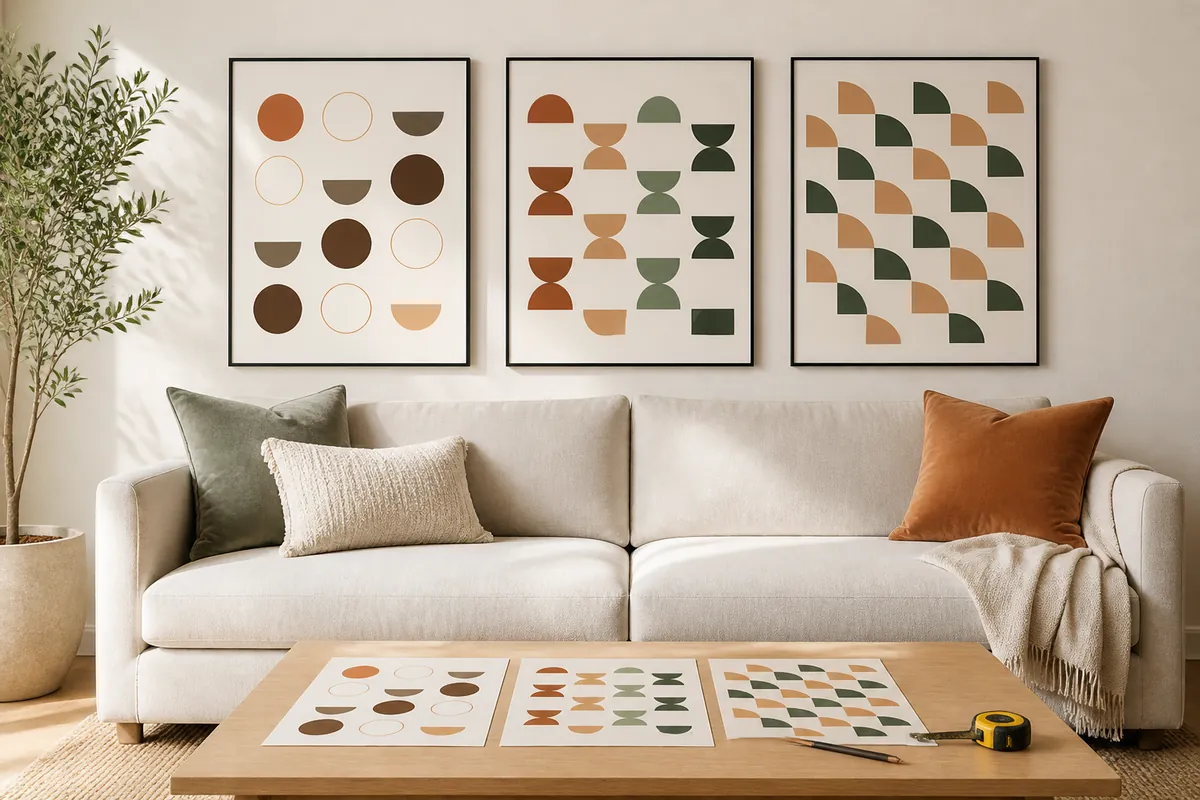 10-page PDF
Free printable kit
Your gallery wall, hung right the first time.
No crooked frames, no extra holes. Three prints and two measured layouts you can print tonight.
- 3 mid-century abstract prints
- 2 layouts with every gap measured
- The 5 hanging numbers designers use
Free. Arrives by email in a minute or two, plus our ideas and occasional shop offers. Unsubscribe anytime. Privacy
1. Hang one oversized piece across two-thirds of the buffet
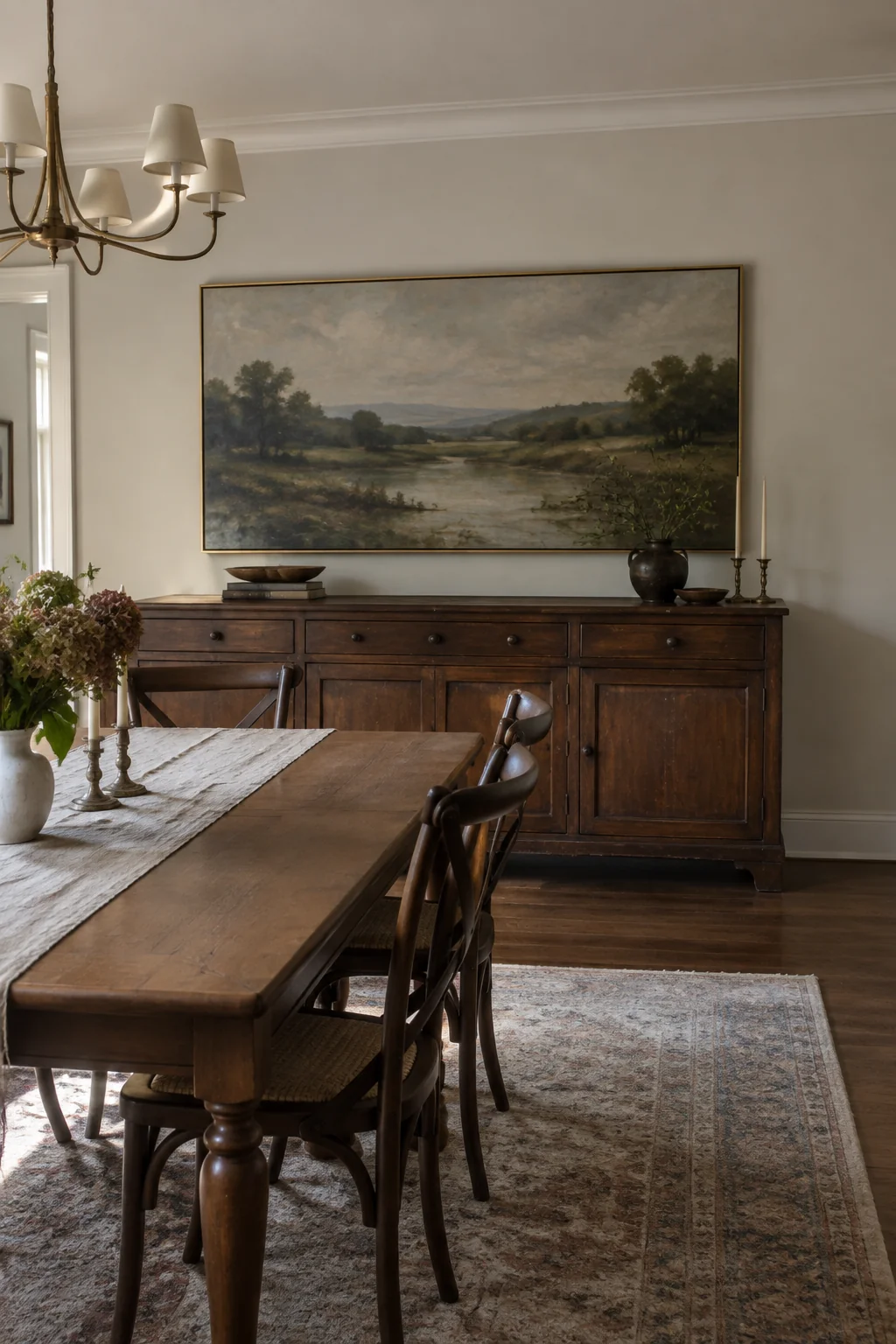
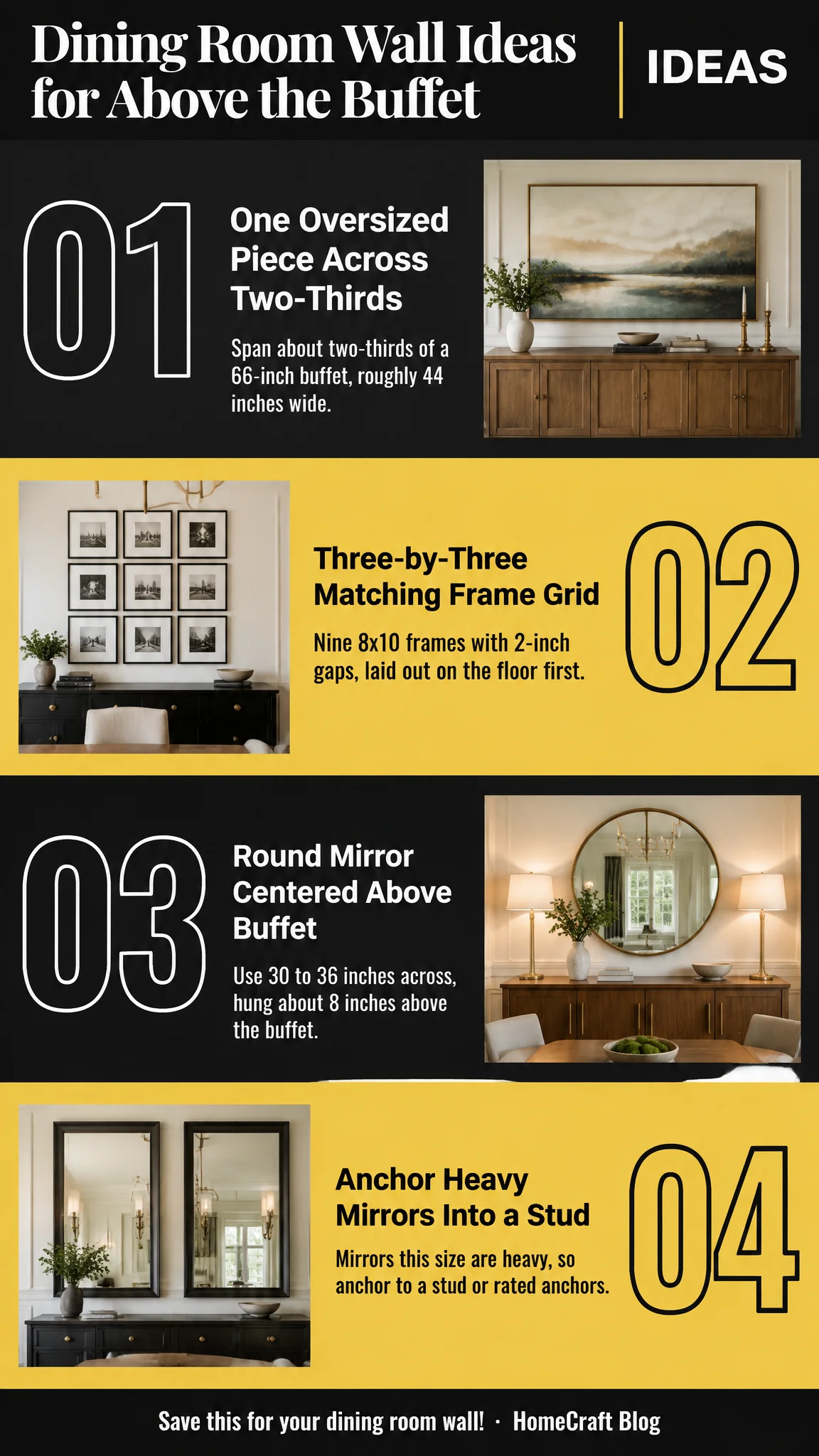
A single large piece of art is the most reliable look for this wall. Aim for a canvas or framed print that spans about two-thirds of the buffet's length, so a 66-inch buffet gets a piece roughly 44 inches wide. The effect is calm and settled: one focal point, a palette pulled from your rug or chair fabric, and a frame in natural wood or black metal. Hang the center about 8 to 10 inches above the buffet top so the art reads as part of the furniture group. The mistake here is a small print centered on a big wall, which makes the whole room look like it's still waiting for something. Canvas works well because it has no glass to glare under dining room light.
2. Build a three-by-three grid of matching frames
This look is built on repetition. Use nine frames of the same size and style, such as 8x10 inches each, with a consistent gap of about 2 inches between them. The full grid lands near 28 inches wide and 34 inches tall, which sits comfortably over a buffet that's 60 inches or longer. Start by laying the frames face down on the floor in their final arrangement, then trace paper templates onto the wall and check the spacing with a level before you drive a single nail. The common problem is spacing that drifts a little wider on one side, and at that point the grid looks accidental. Mix the contents if you like: black and white photos, botanical sketches, or simple abstract prints in a shared color.
3. Center a round mirror above the buffet
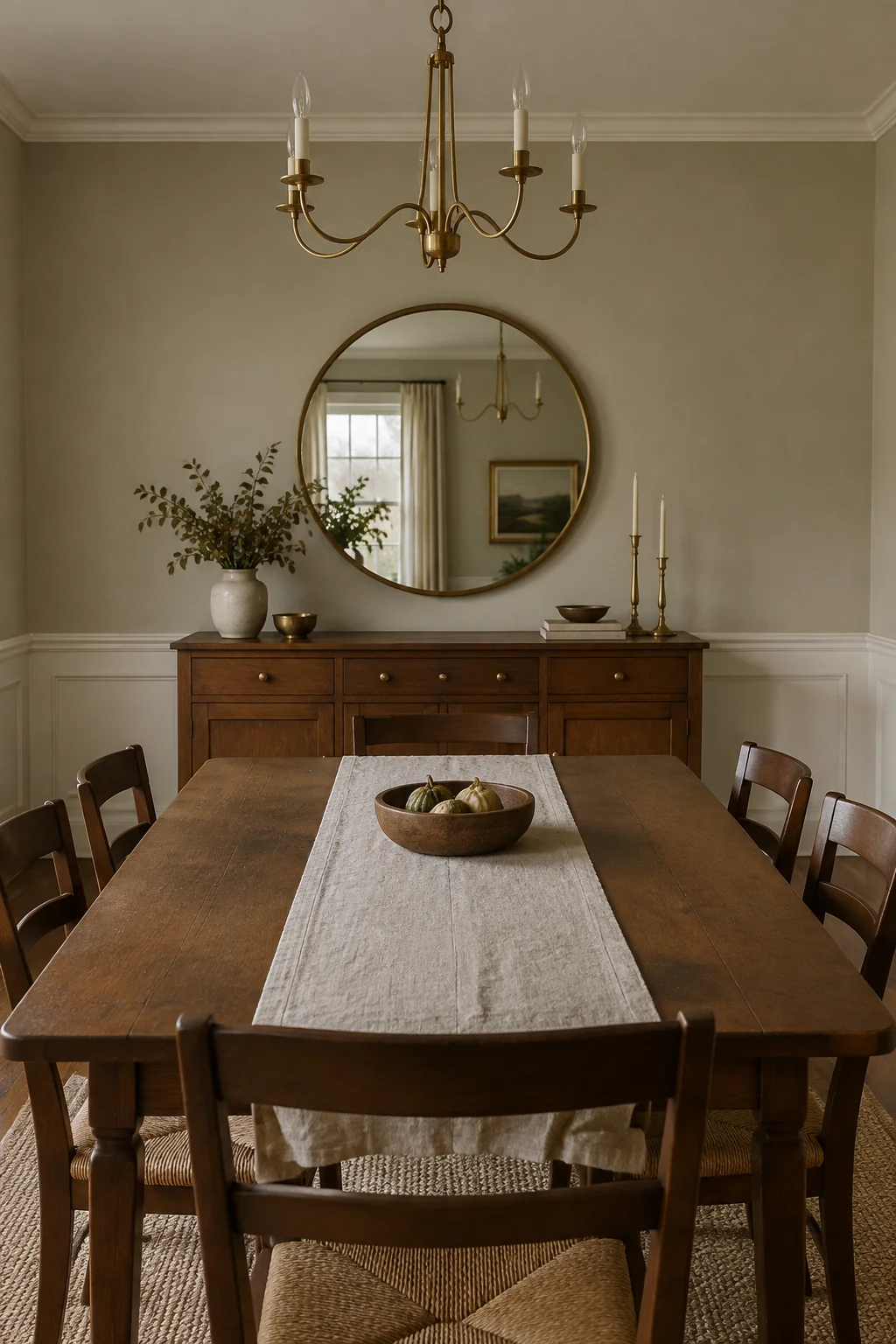
A round mirror opens the wall without adding visual weight. Choose a diameter around 30 to 36 inches for a buffet in the 60 to 72 inch range, and pick a frame in brass, warm wood, or a soft matte finish that echoes your light fixture. Mirrors work best across from or beside a window, because they bounce daylight back into the room and make the table look brighter at lunch. Hang it about 8 inches above the buffet top. A mirror this size is heavy, so anchor it into a wall stud or use anchors rated well above the mirror's weight. Before you hang it, check what the glass will reflect. A mirror pointed at a cluttered kitchen doorway shows the clutter back to you.
4. Float two narrow shelves and style them with dishware
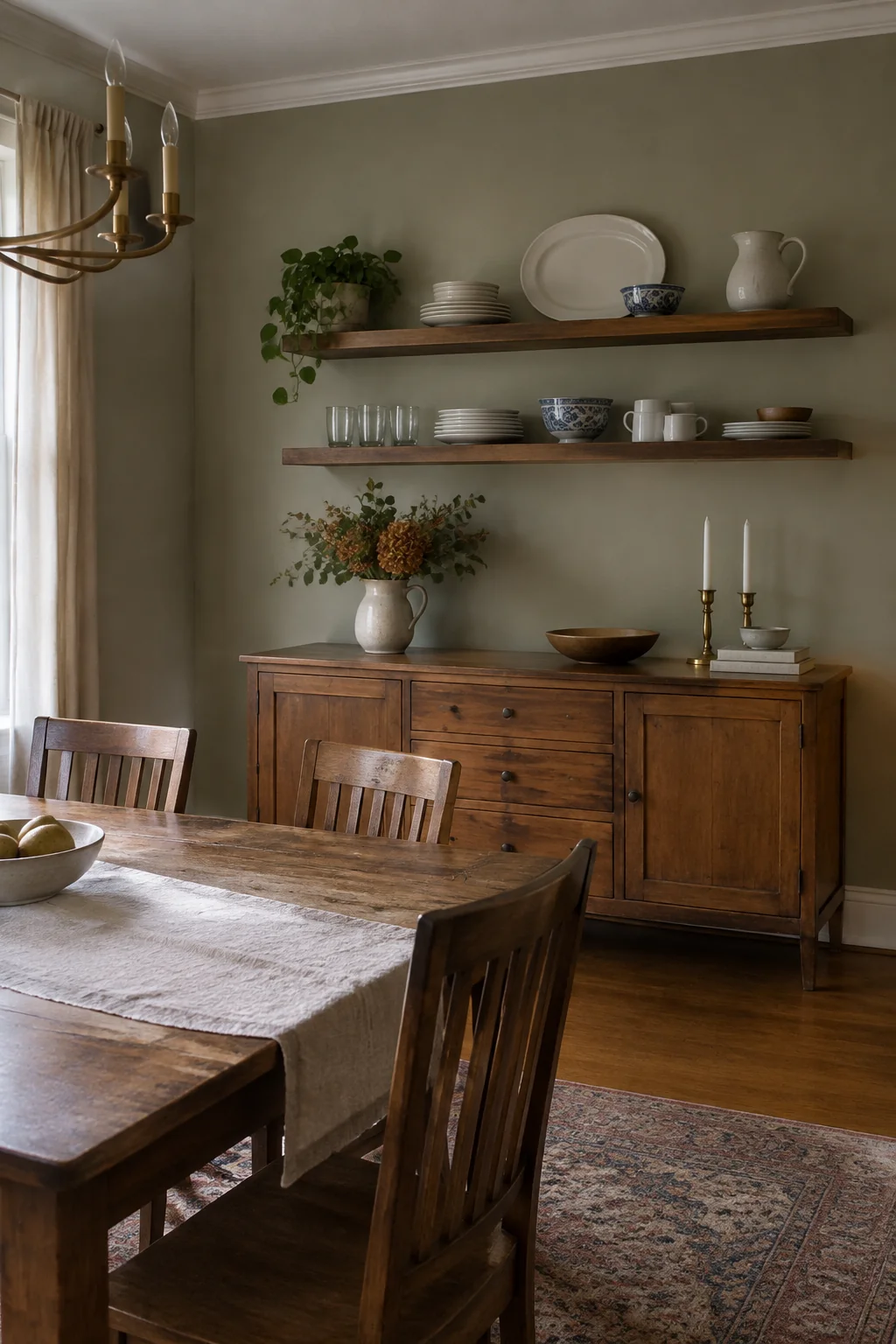
Open shelving turns a blank wall into a display you can change. Use two shelves about 8 to 10 inches deep, mounted roughly 12 inches apart, with the lower shelf sitting about 10 inches above the buffet. Stack a few plates on edge, set a pitcher on the lower shelf, and add a small bud vase or a stack of cookbooks on the upper. Keep the arrangement low and layered so it stays calm. Anything deeper than about 12 inches tends to feel like a kitchen shelf that wandered into the dining room. Shelves loaded with dishes are heavy, so mount them into studs or use hardware rated above the full weight of what you'll place on them.
5. Line up four tall botanical prints in matching frames
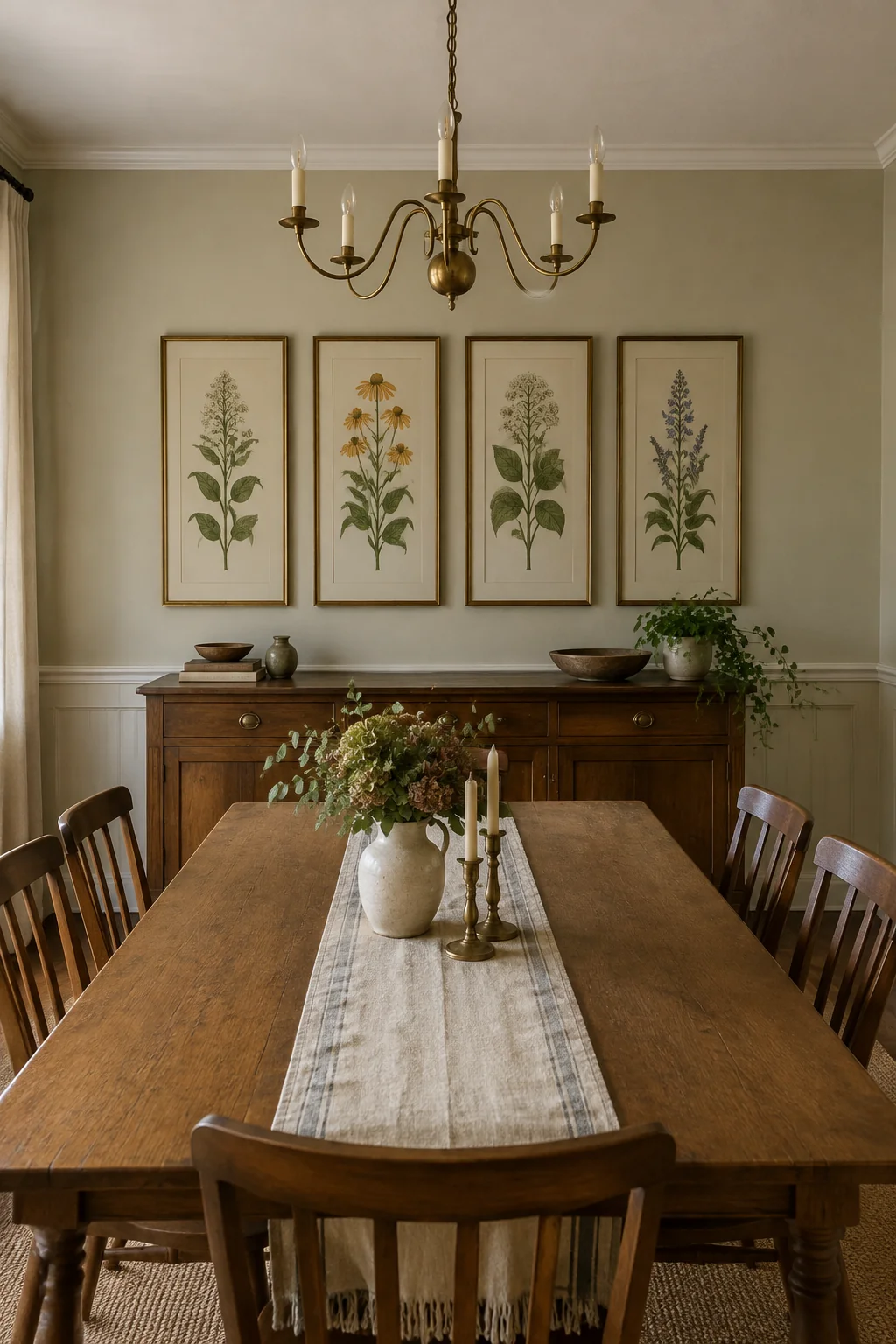
Four vertical prints in one frame style create a quiet, collected look that suits almost any dining room. Use 11x14 or 12x16 inch frames, space them about 3 inches apart, and let the group span the width of the buffet. Cream or white mats keep the wall light and let the botanical line work breathe. The look works because the vertical lines echo the height of the chairs and the sideboard legs, which keeps the eye moving up and down instead of across. Pick prints with a shared color family, such as sage, ink blue, and ivory. If the prints are all different sizes, the row looks like a collection that hasn't been finished yet.
6. Mount a cluster of woven baskets as wall sculpture
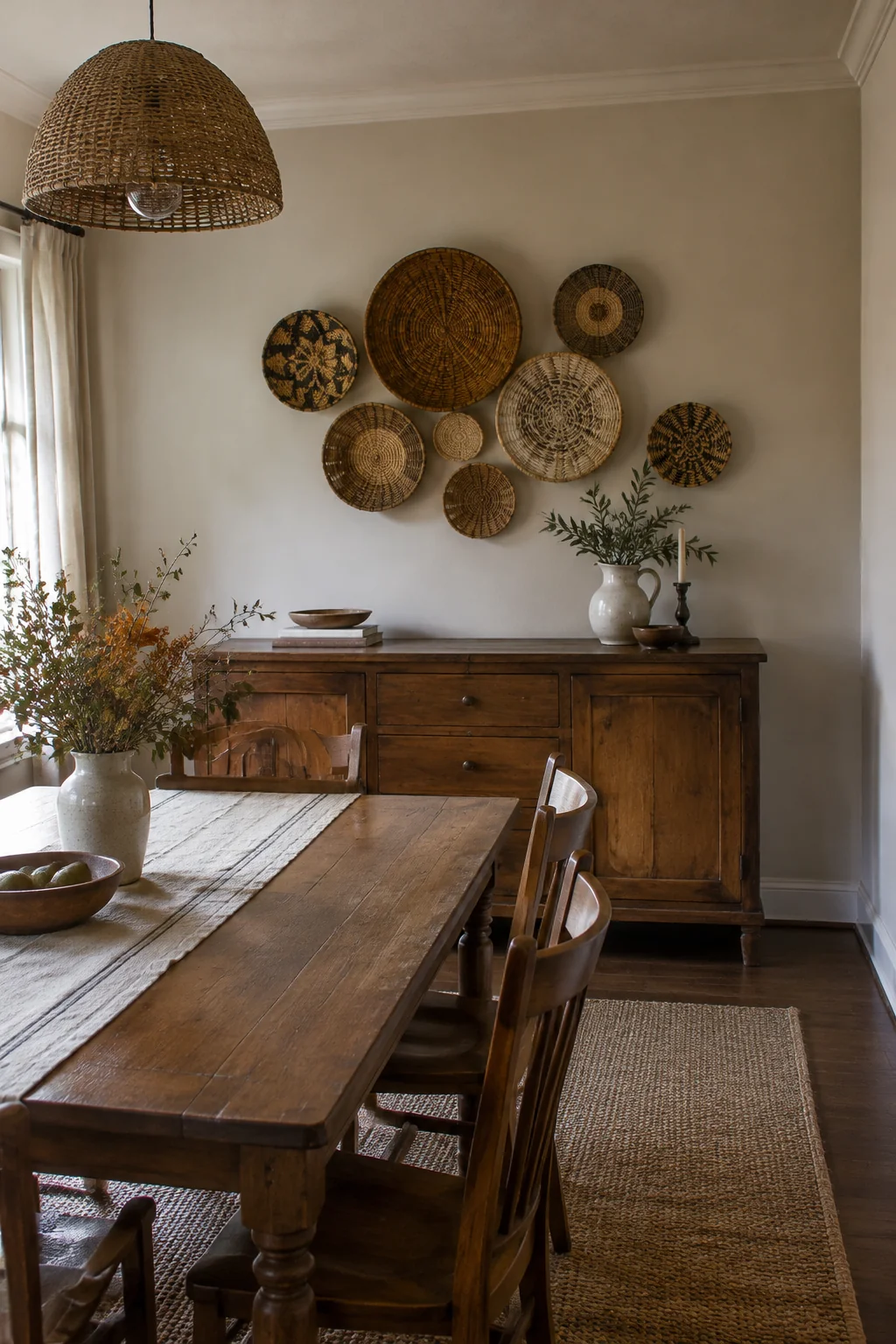
Woven baskets give the wall texture without adding color or noise. Choose three baskets in different diameters, roughly 10, 14, and 18 inches, in natural rattan or seagrass. Hang them on a wall hook or a basket hanger, and keep their centers at slightly different heights so the group forms a loose triangle. Mount the largest basket at the top of the cluster, with its base at least 8 inches above the buffet, so nothing bumps the furniture when someone opens a drawer. Baskets are light, but a deep basket on a flimsy hook will sag and tilt, so check that the hardware is rated for the load. The look is relaxed and warm, and it pairs well with wood tables and linen chair cushions.
7. Panel the wall with board-and-batten in a neutral
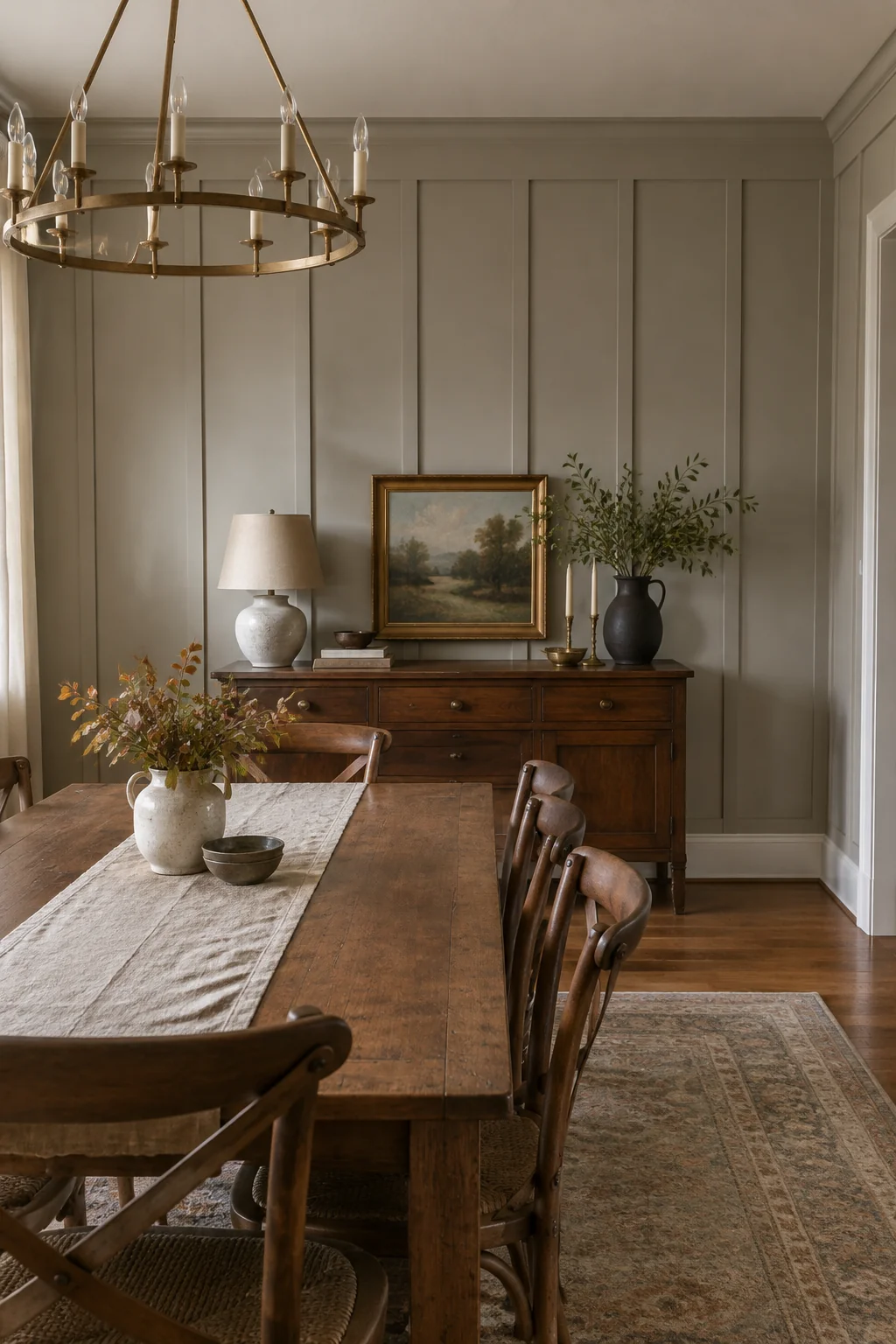
Board-and-batten is a set of vertical boards, usually 3 to 3.5 inches wide, spaced evenly and capped with a horizontal rail. On the wall behind a buffet, the panels usually rise from the top of the buffet to about 42 inches, then stop under a wood cap. Paint the boards and the wall the same warm white or greige in a satin finish so the grid reads as texture, not as a bright stripe. The panel adds depth to a wall that otherwise looks flat, and the vertical lines make the room feel taller. Plan the spacing before you cut. Measure the wall, divide it evenly, and keep the gaps the same width. If the house was built before 1978, test any old paint for lead before you sand or scrape it, and open windows while you paint.
8. Frame a wallpaper panel with picture molding
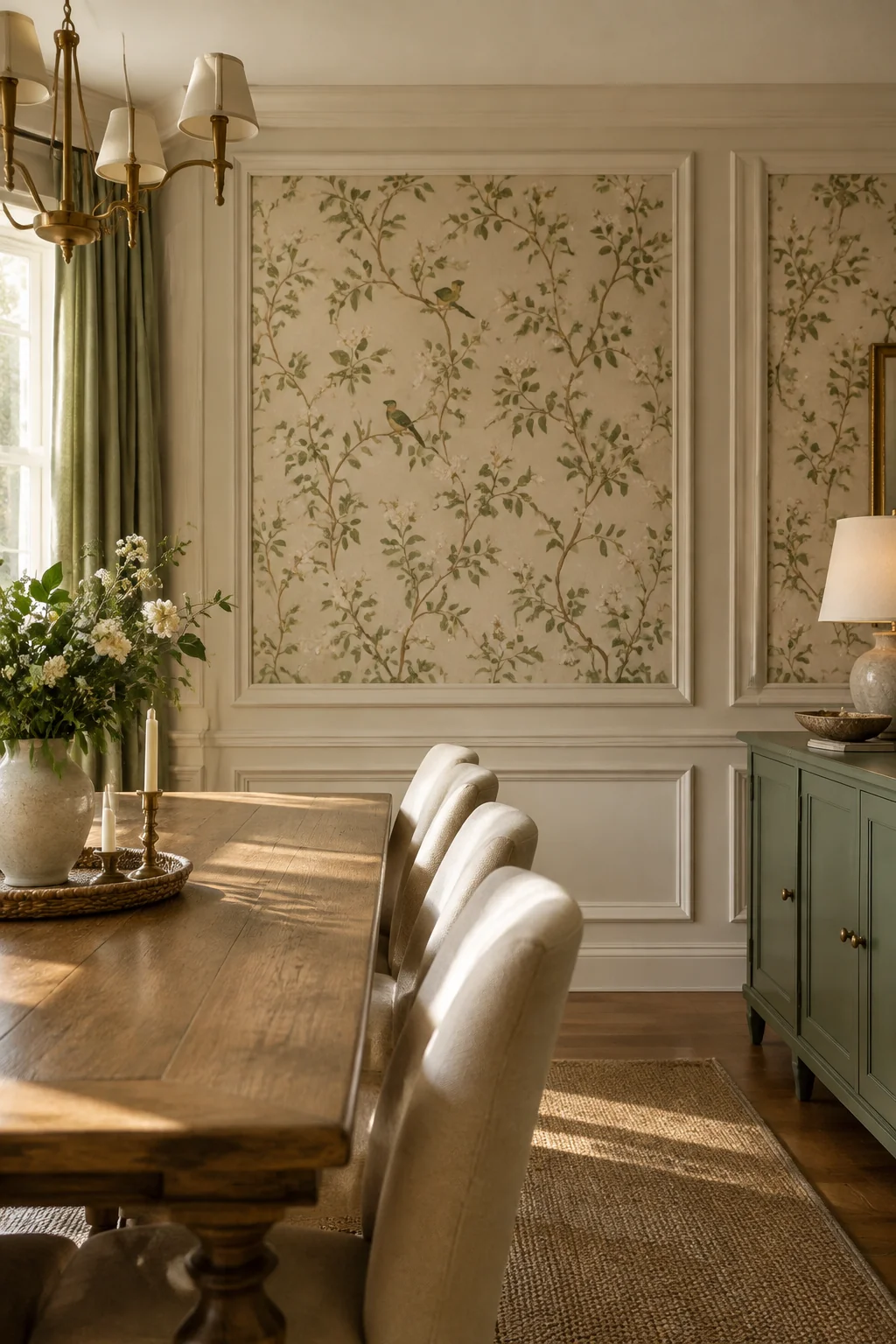
A single panel of bold wallpaper, framed with molding, works as a feature without filling the room with pattern. Choose a design with a strong motif, like large florals, chinoiserie birds, or a dark geometric, and plan for a panel about 36 to 48 inches wide. Frame it with 2-inch picture molding painted to match your trim, and keep the panel's top edge about 8 inches above the buffet. Framed this way, the wallpaper looks like art instead of a backdrop. Measure carefully, because patterns need to line up at the seams, and most wallpaper requires an extra allowance for matching. Keep the rest of the room in solid colors so the panel doesn't compete with the chairs and rug.
9. Flank the buffet with a pair of wall sconces
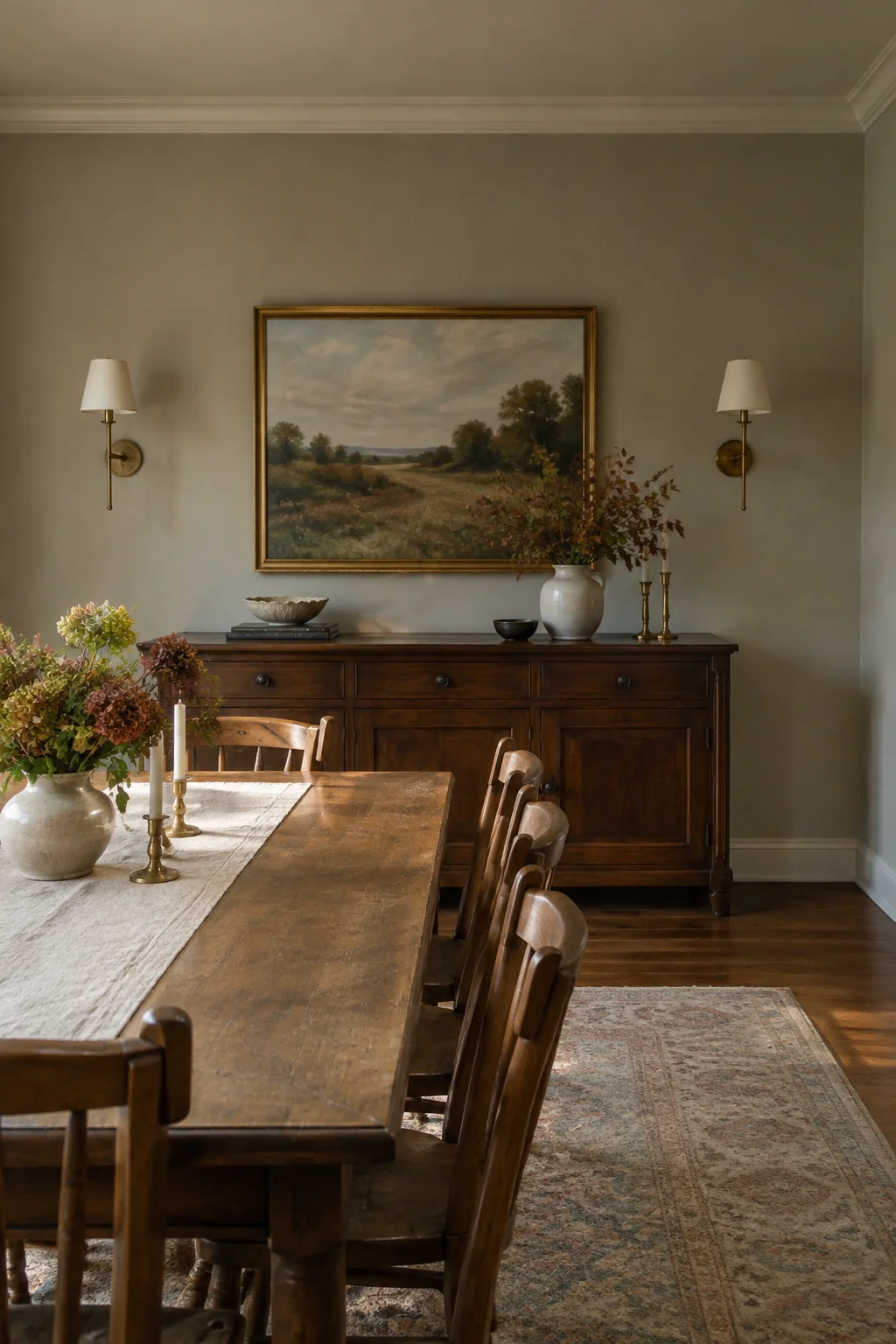
Sconces on either side of the buffet make the wall feel balanced and give you warm, indirect light for evening meals. Mount them so the bottom of each fixture sits about 60 to 66 inches above the floor, which keeps the bulb out of most people's eyeline when they're seated. Place each sconce roughly 12 inches outside the buffet's edge so the light falls onto the wall instead of directly into the room. Plug-in sconces avoid wiring, but the cord has to run behind the fixture and stay out of sight. Hardwired fixtures are a job for a breaker turned off and a licensed electrician. The common mistake is hanging sconces too low, which puts the bulb at eye level and creates glare across the table.
10. Lean layered art on a picture ledge
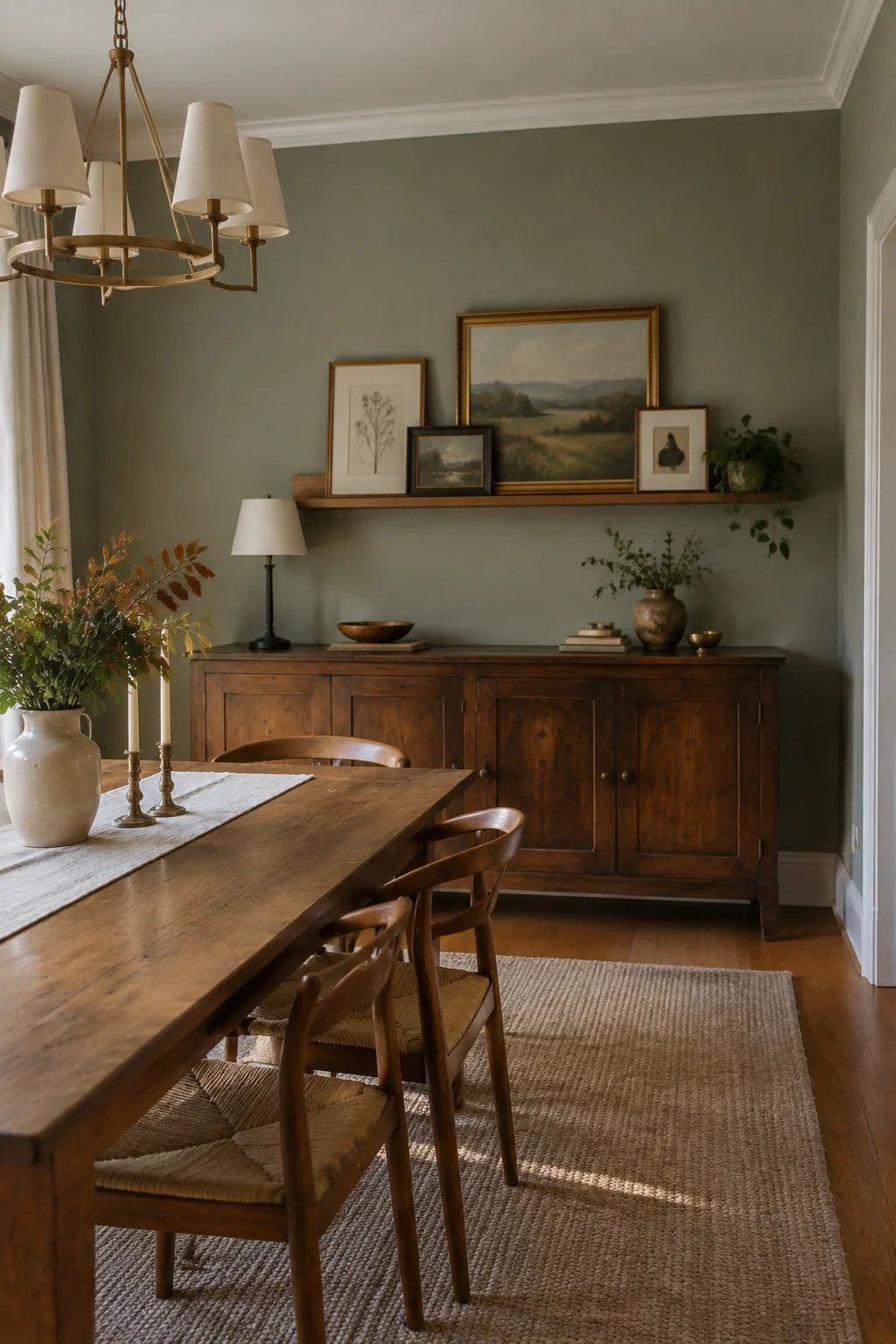
A picture ledge, a shallow shelf about 2 inches deep, lets you lean art instead of hanging it. Choose one large piece as the base, around 30 by 40 inches, and set a smaller print in front of it at an angle. Let the front piece overlap the bottom edge of the larger one so the stack looks deliberate. The ledge should sit about 8 to 10 inches above the buffet, and the ledge itself needs to be fastened to studs or rated anchors. This look is easy to change, which makes it a good match for a dining room that gets used for different occasions. Keep the frames in a related palette, since mixing too many finishes on one ledge breaks up the stack.
11. Hang a wool or linen textile on a wooden rod
A flat textile hung from a wooden rod brings softness to a dining room wall. Pick a wool or linen piece, woven or embroidered, around 36 to 48 inches wide, and mount it on a rod slightly wider than the fabric so the ends show. Hang the rod about 8 to 10 inches above the buffet, and let the fabric fall to within a few inches of the buffet top without touching it. Natural tones such as oatmeal, rust, and indigo work with most wood finishes. The look is warm and a little bit tactile, and it reads well under lamplight in the evening. Textiles collect dust, so plan to brush them off every few weeks, and keep them away from any candle or lamp that could scorch the fabric.
12. Install a plate rail and rotate the dishes
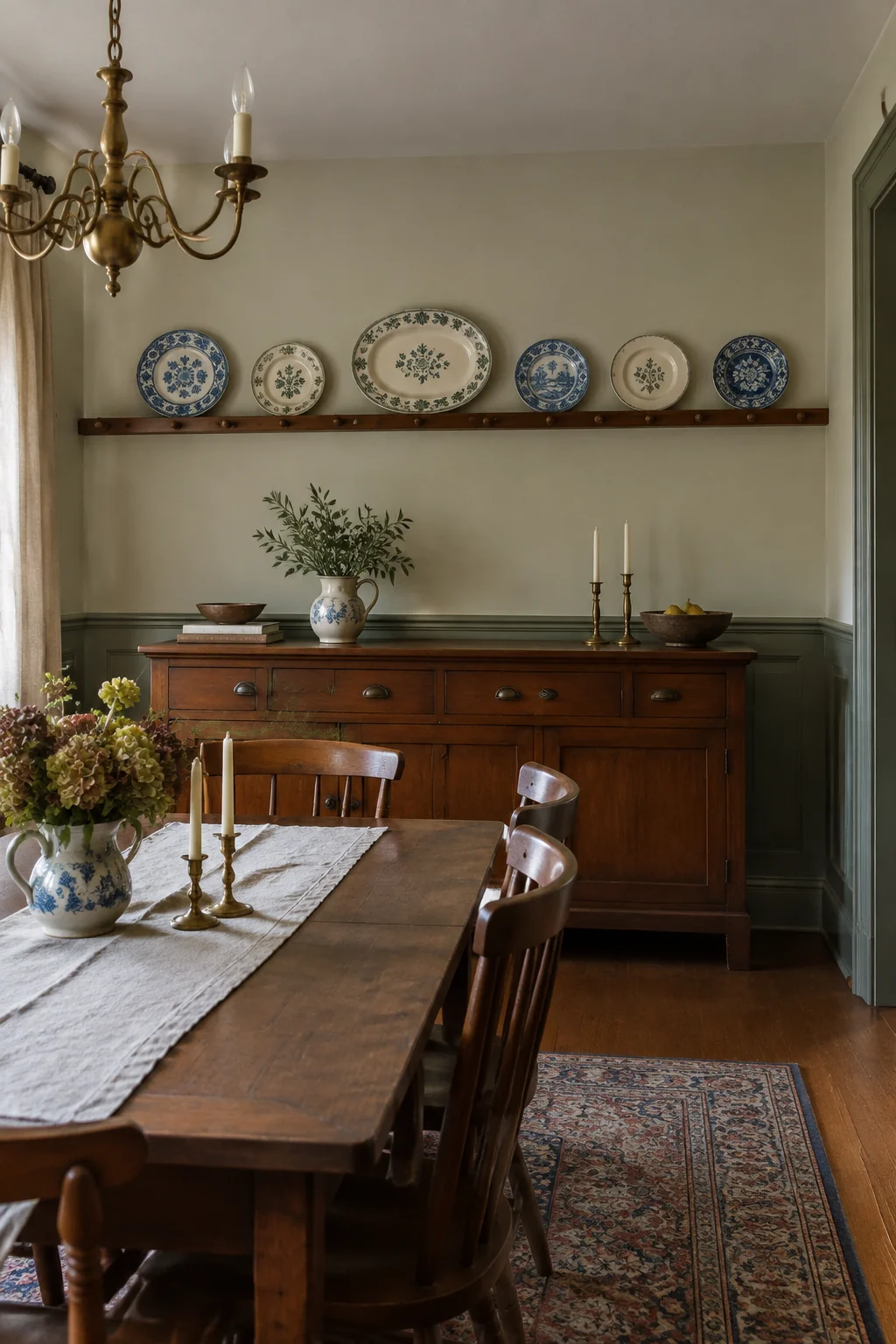
A plate rail is a narrow wood ledge with a lip at the front, designed to hold plates on stands or hangers. Mount it about 8 inches above the buffet, with its ends reaching a little past the buffet's edges so the rail reads as a wall feature. Choose a rail with a projection of about 2 to 3 inches, then fill it with a mix of plates in one color story, such as blue and white or cream and gold. The look is traditional and personal, and it's easy to change as your tableware changes. Plates are heavier than most decorative objects, so anchor the rail into studs and use plate hangers rated for the weight of your dinnerware.
13. Paint the wall behind the buffet a deep color
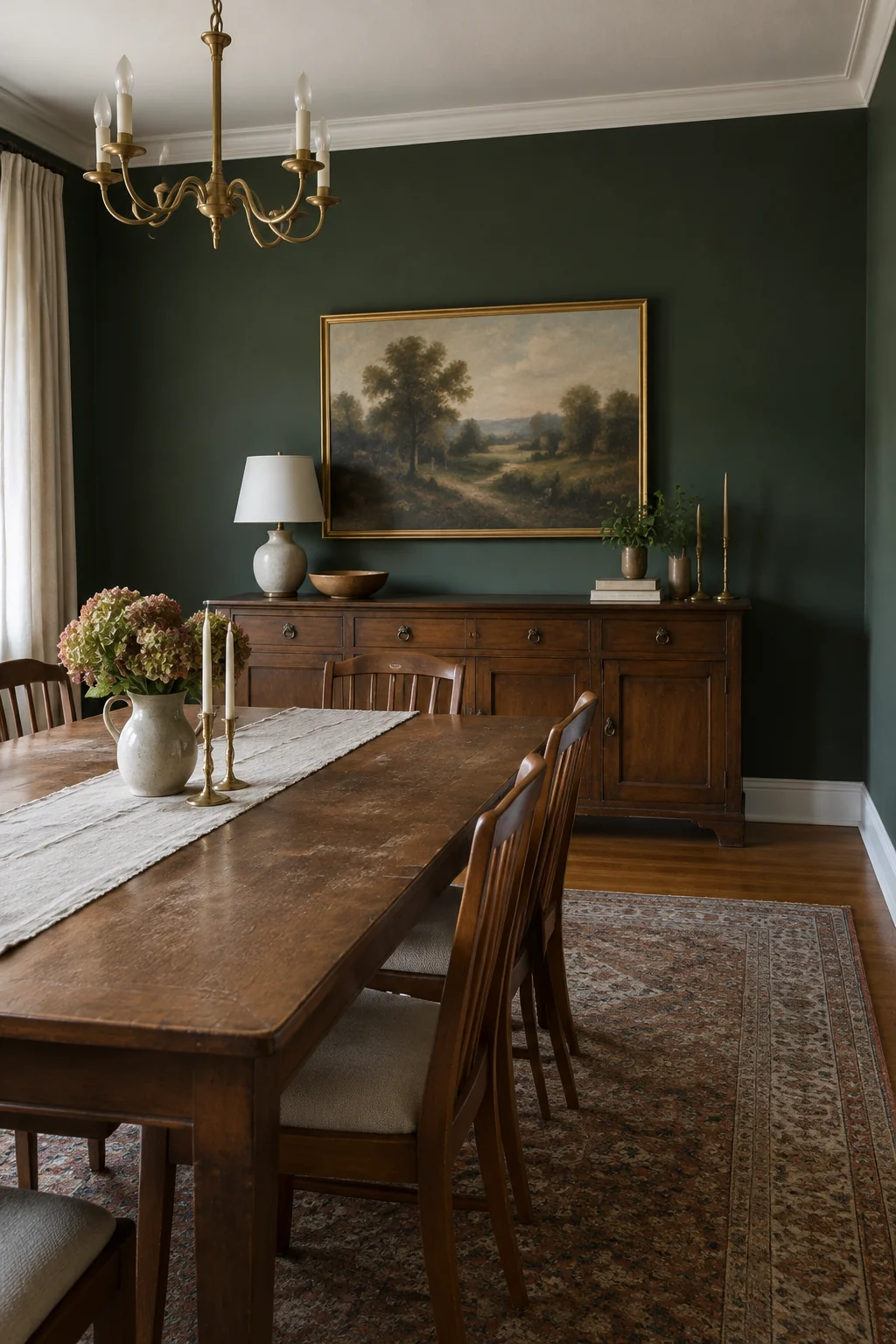
Painting only the wall behind the buffet in a deep color, like olive, plum, or ink navy, makes the furniture and art feel anchored. Use a satin or eggshell finish so the wall can be wiped clean, and paint the whole wall edge to edge, including the trim if you want a seamless look. Test two or three swatches on the wall, since a color can shift between morning daylight and evening lamplight. Deep color works best in a room with good light or warm lamps, because a dim room with a dark wall can feel like a cave. Paint and primer give off strong fumes, so work outdoors or with the windows open, and dry any oily rags flat outside before you throw them away.
Save the full guide
Choosing among these looks comes down to the room around them. In a small dining room, one large piece or a deep wall color can make the space feel wrapped and cozy, while a sprawling grid can crowd the table. A big room can carry a full gallery or a wide plate rail without looking cluttered, and it can hold the scale of a 44-inch canvas without swallowing the chairs. Renters have fewer options for drilling, so leaning art on a ledge, a textile on a rod, or removable hooks rated for the weight are better fits. Homeowners can anchor shelves, sconces, and paneling into studs. If you want more ideas for tight footprints, our small dining room ideas cover scale in detail, and a modern farmhouse dining room ideas guide shows how these looks sit alongside shiplap and rustic wood.
The room images in this post are illustrations made with AI.