12 Warm Home Office Wall Decor Ideas Above Your Desk and Shelves
Bare wall over your desk? These 12 warm home office wall decor ideas cover framed prints, woven hangings, and shelf styling you can finish this weekend.
This post contains affiliate links. As an Amazon Associate I earn from qualifying purchases. If you buy through our links, we may earn a commission at no extra cost to you.
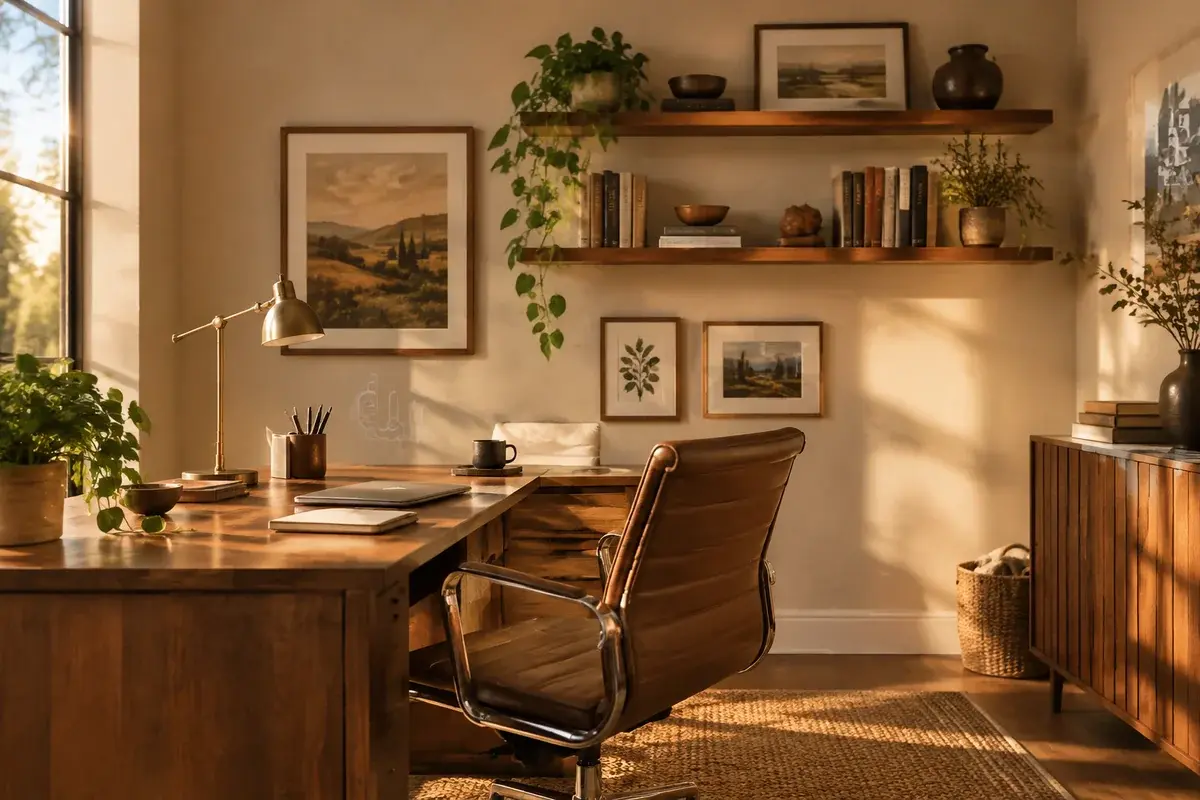
Picture a home office with a bare white wall, a desk pushed flat against it, and one calendar pinned slightly crooked. The room works, but it looks like a waiting room. Usually the wall above the desk gets either nothing or a single print hung so high the frame nearly touches the ceiling line. The shelves get the same treatment: books stacked flat, a plant in the corner, and a stretch of bare paint between them. Warm wall decor gives the eye one clear place to land. The ideas below each start with the look, explain why it works, and then show you how to get it in an ordinary room.
 10-page PDF
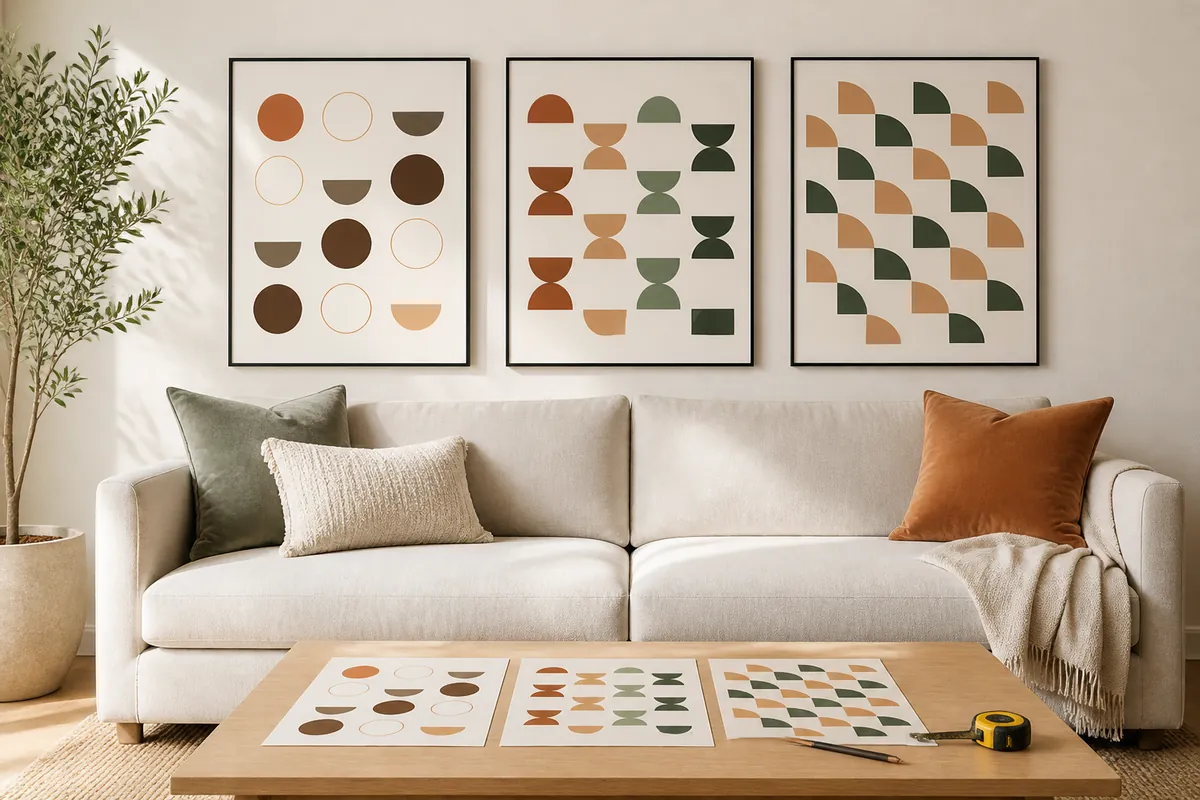
Free printable kit
Your gallery wall, hung right the first time.
No crooked frames, no extra holes. Three prints and two measured layouts you can print tonight.
- 3 mid-century abstract prints
- 2 layouts with every gap measured
- The 5 hanging numbers designers use
Free. Arrives by email in a minute or two, plus our ideas and occasional shop offers. Unsubscribe anytime. Privacy
1. A gallery of warm frames above the desk
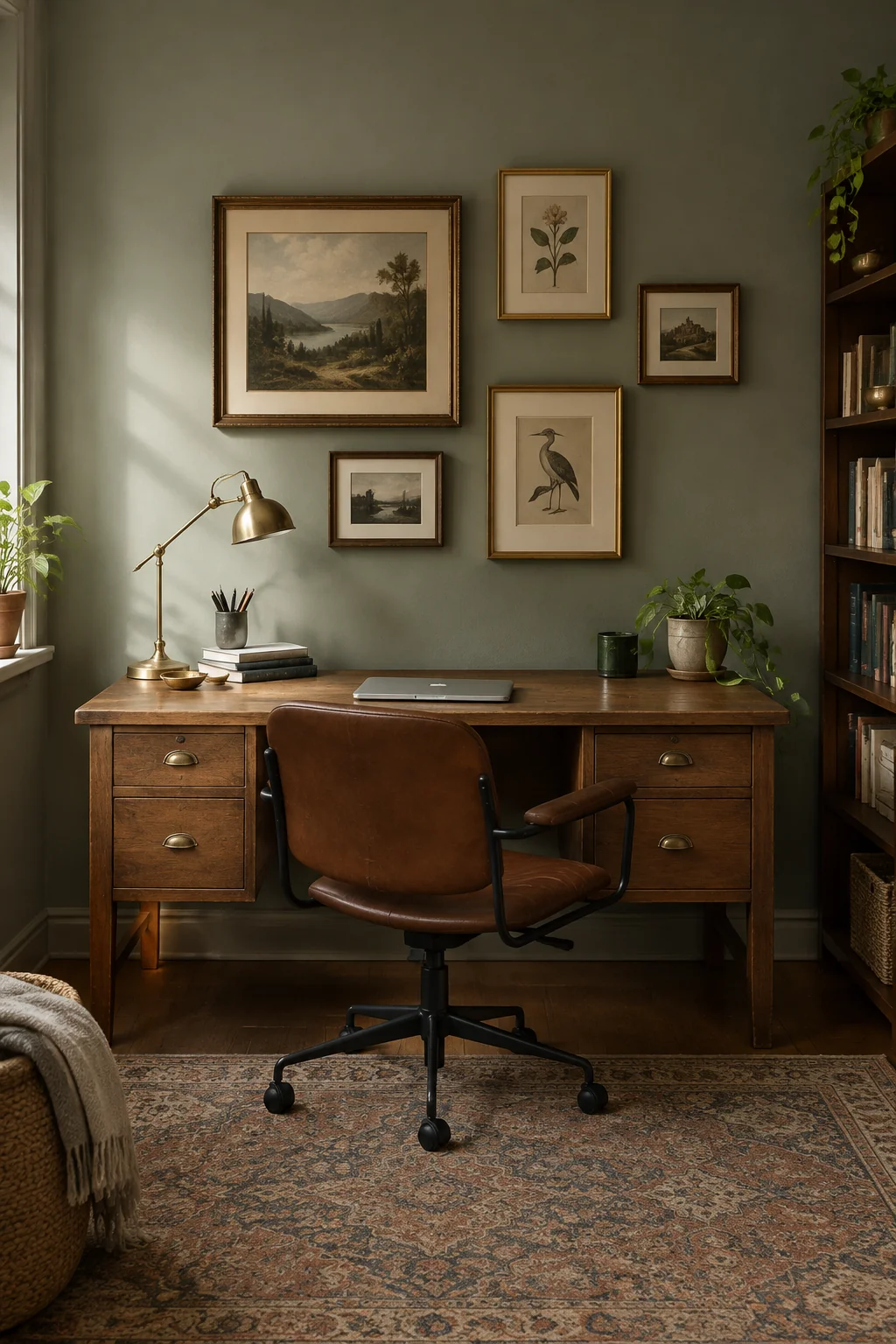
Start with four to seven frames in oak, walnut, or aged brass. Mix the sizes, but keep the finishes in one warm color family. The result feels layered and collected, the kind of wall that looks built over time rather than styled in one afternoon. Cream mats and prints in sand, rust, or olive keep the mix from looking busy. The group works because it has one outer edge, so it reads as a single piece. Lay the arrangement on the floor first with two to three inches between frames, then trace it onto kraft paper and tape that to the wall. Keep the bottom edge about 8 to 10 inches above your monitor. (Glass frames add up fast, so weigh the whole group before you pick anchors.)
2. One oversized landscape print
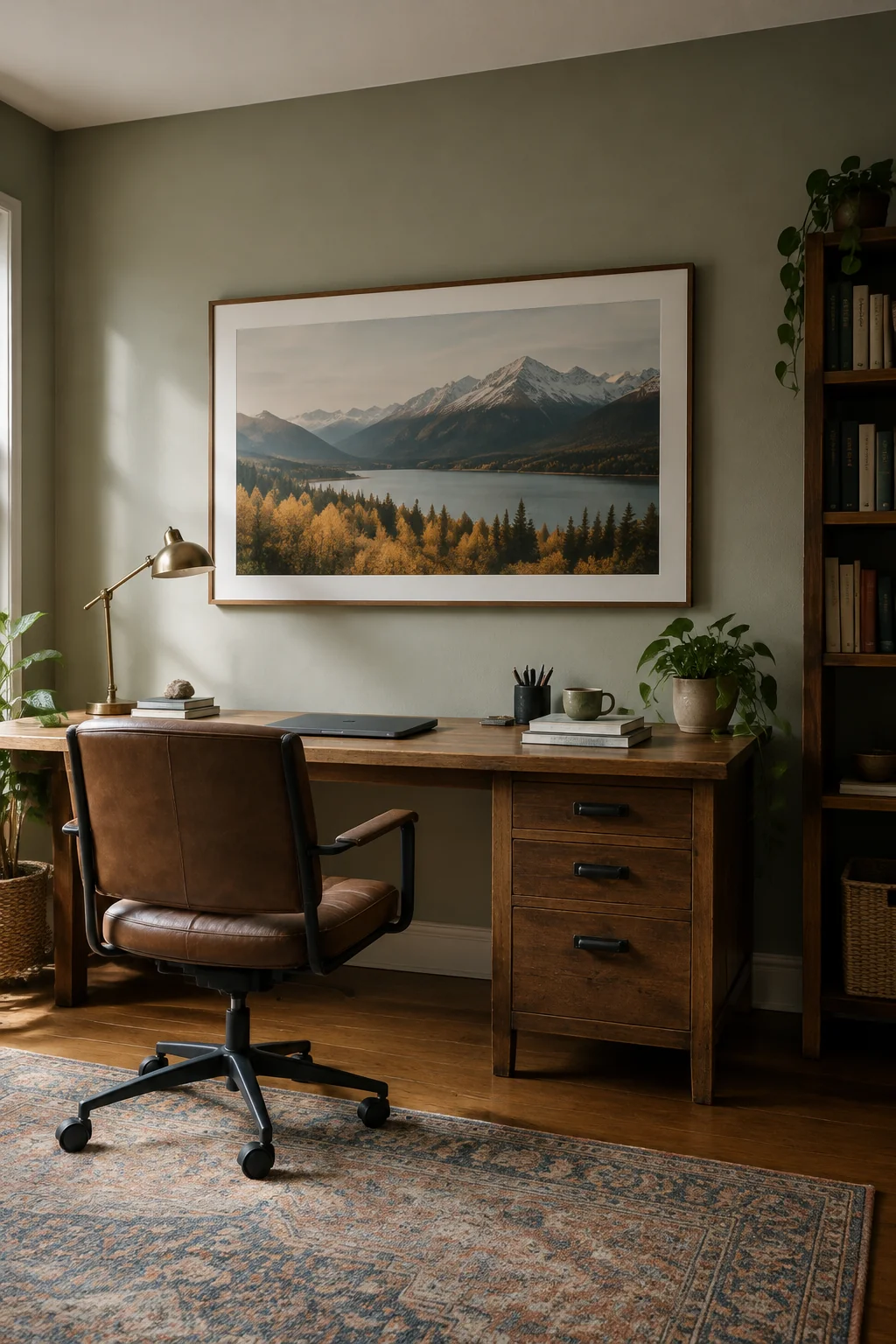
Instead of many small pieces, hang a single large print about two-thirds the width of the desk. A wide landscape in muted blues or a soft watercolor of hills, framed in a thin black or natural wood edge, works well. One strong image gives the wall calm and makes the desk look anchored instead of floating in a blank space. It also reads from the doorway, which is where most of the room gets seen. For a 60-inch desk, look for a print around 36 to 40 inches wide. Center it so the middle sits about 10 inches above the top of the monitor. Small prints tend to vanish on a wall this size.
3. Woven rattan baskets above the shelves
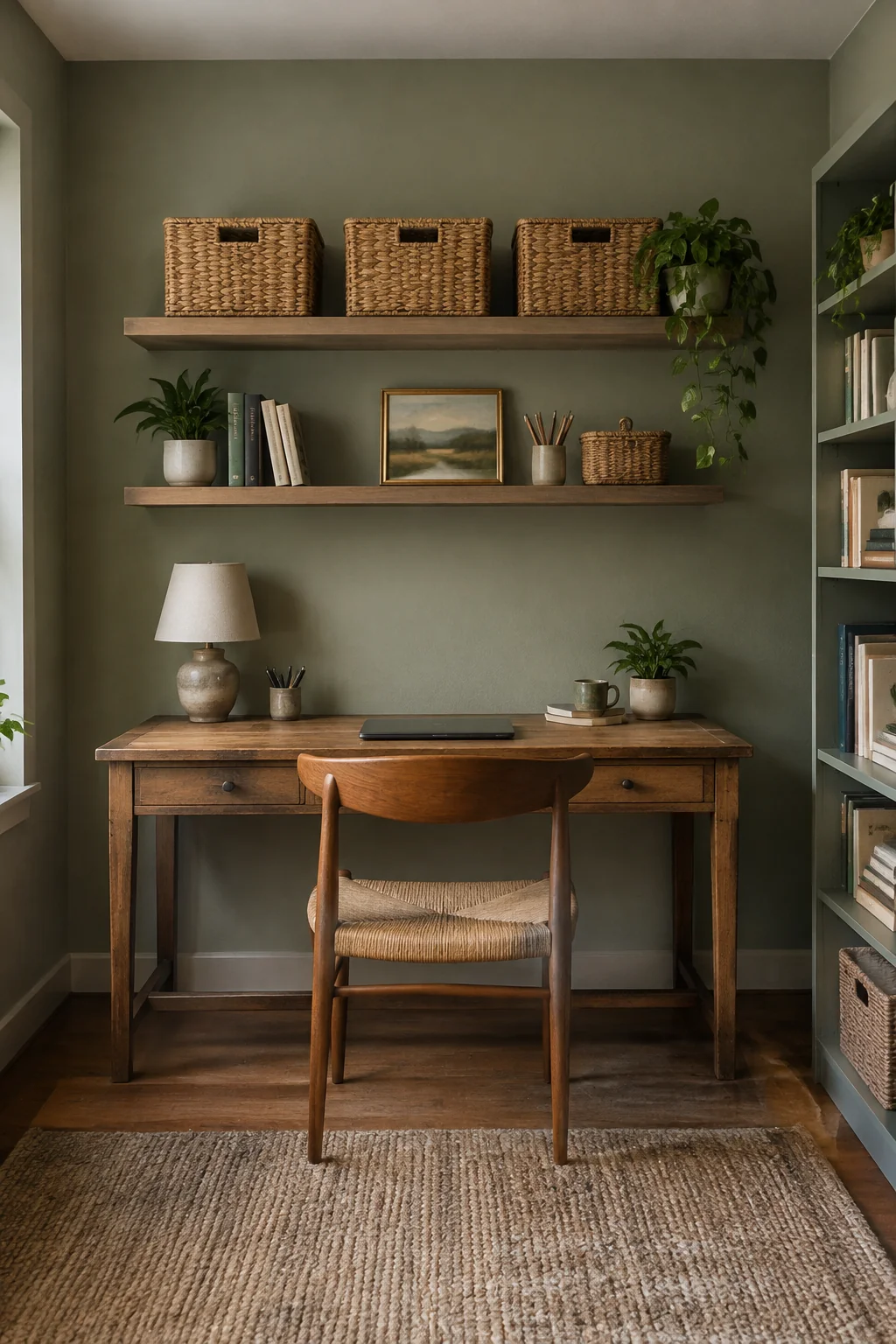
Group three woven baskets in graduated sizes on the wall above a bookshelf, with the largest at one end. Natural rattan, seagrass, or jute in honey and tan tones adds texture without adding color, which keeps the wall quiet. The look is soft and organic, the kind of detail that stops a hard-edged office from feeling like a conference room. The round, open shapes contrast with the straight lines of shelves and spines. Use flat-back basket hangers rated for the load, and keep the group within the width of the shelf below. Baskets holding light things like spare cables or yarn stay put better than ones packed with books.
4. A round mirror with a rattan frame
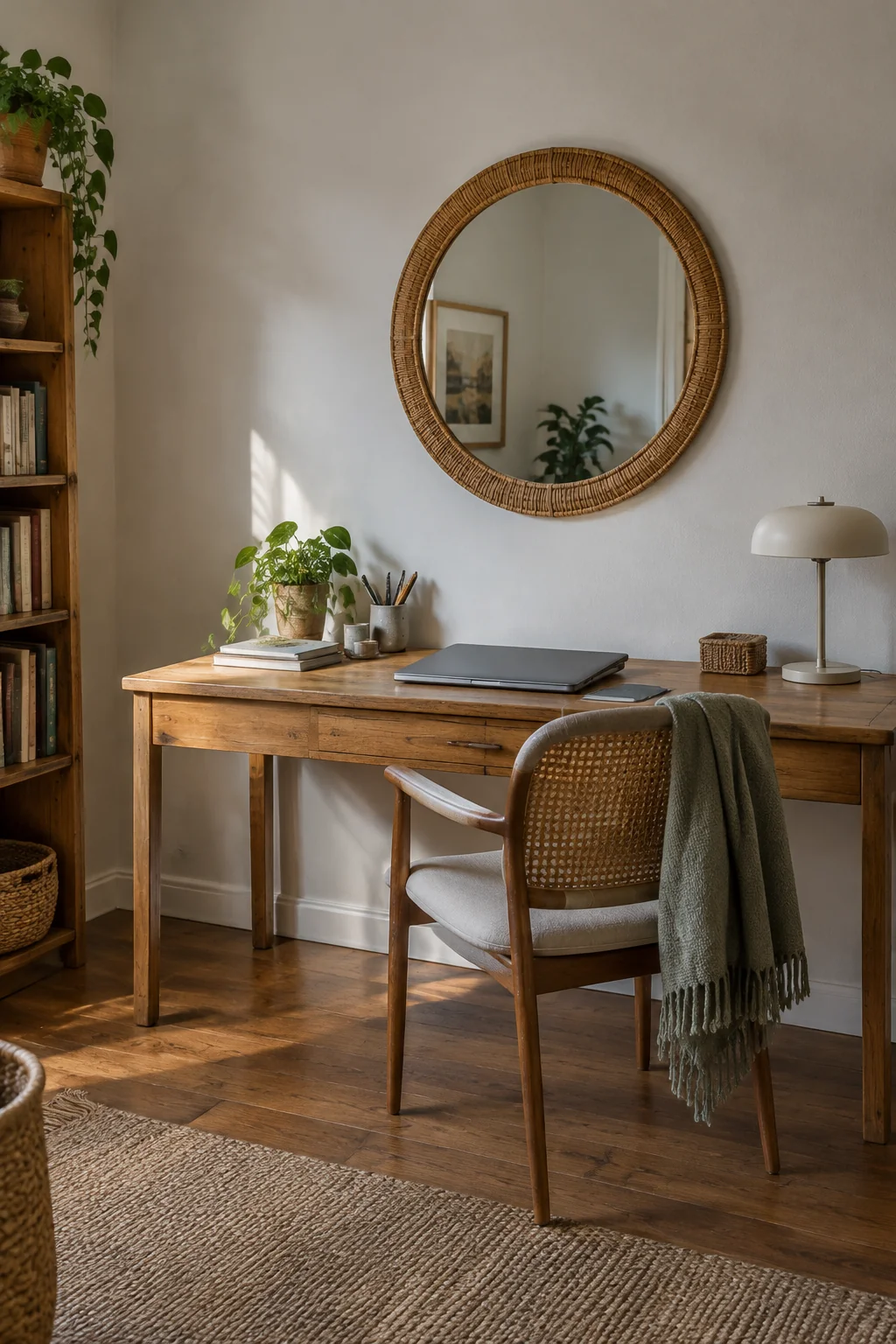
Hang a round mirror with a rattan or wood frame, about 24 to 30 inches across, centered above the desk. The warm frame picks up the tone of your floors or desk legs, so the wall ties into the rest of the room. A mirror also bounces daylight from the window back into the room, which brightens the desk without adding a lamp. Place it at a right angle to the window instead of directly across from it, so it doesn't throw glare into your eyes while you work. Use a heavy-duty hanger, or two anchors rated above the mirror's weight, and go into a stud if you can. (Check the hanger before you hang it, because mirrors this size are heavier than they look.)
5. Stepped floating shelves with books and ceramics
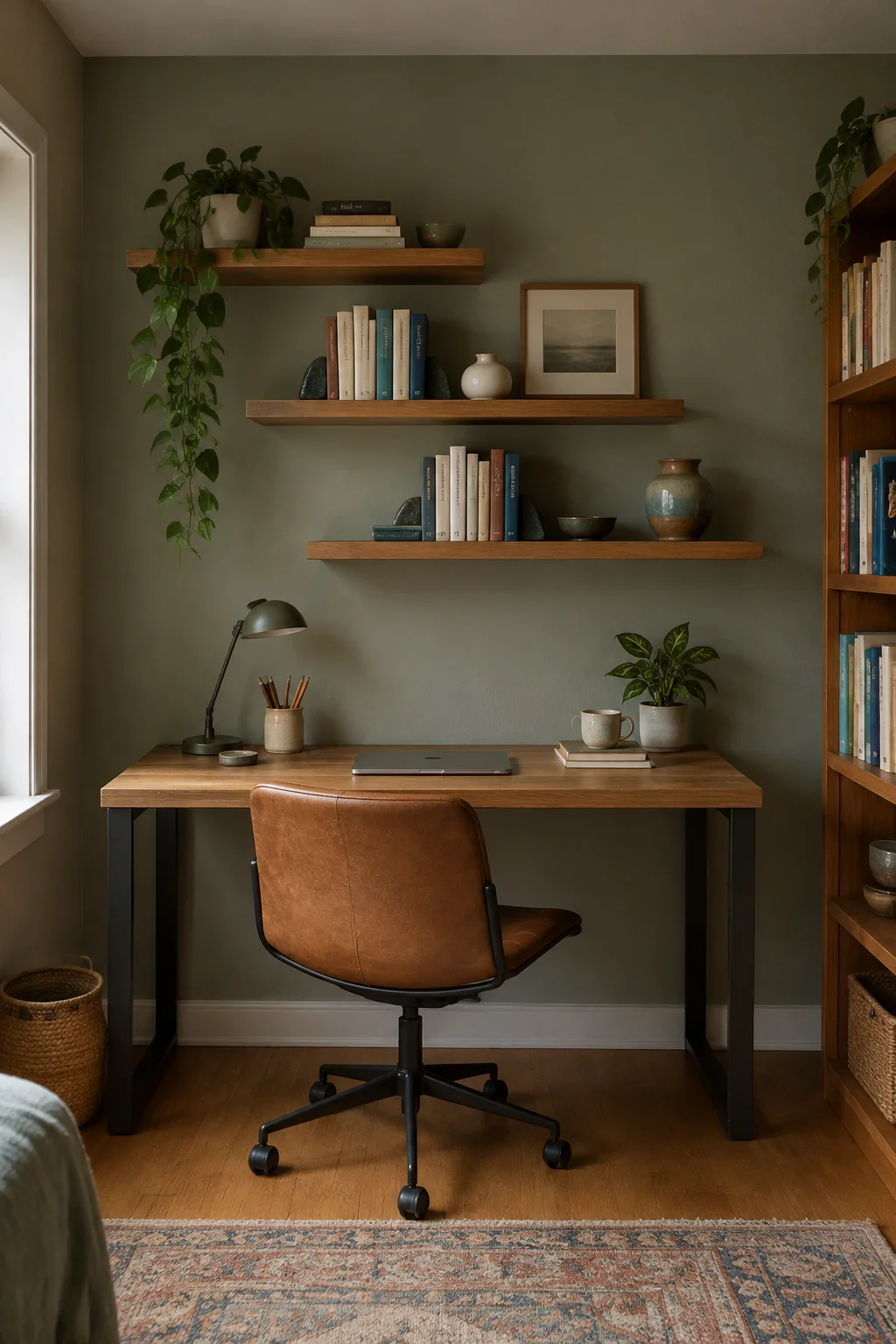
Mount two or three floating shelves at staggered heights, with the shortest at the top or bottom. Stack a few books on their sides, then set a pair of ceramic vases or a small plant at one end. Leave a few inches of open wall between the shelves so the arrangement doesn't look packed. The varied heights create movement across the wall, and the gaps let each object breathe. Keep each shelf to about 36 inches long and no more than 8 inches deep. Anchor the brackets into studs. If you have a bookcase underneath, anchor it to a wall stud too, because a loaded case can tip.
6. A slatted wood panel behind the desk
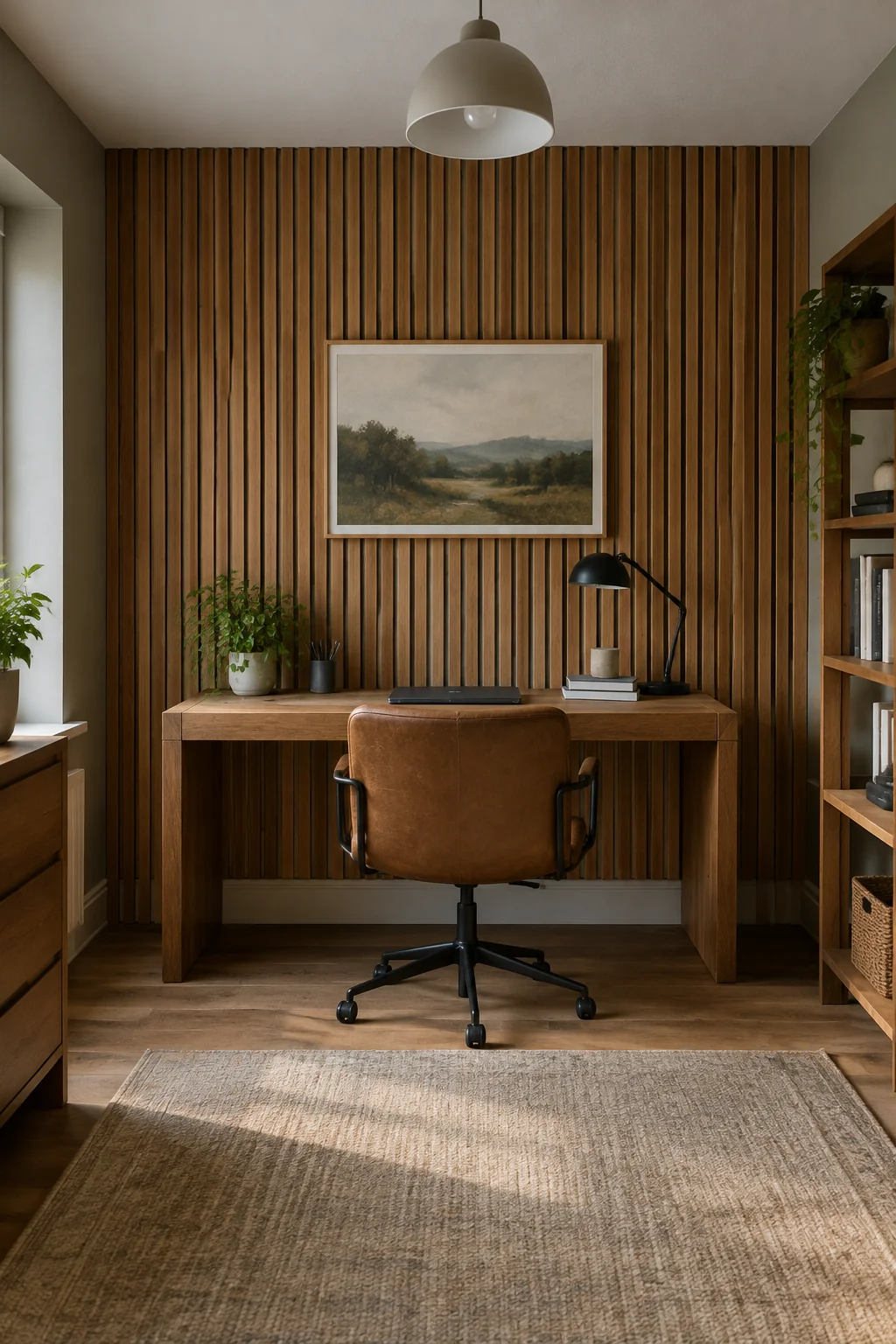
Cover the wall behind the desk with vertical slats of oak, walnut, or pine, about 1 to 2 inches wide and spaced roughly 1 inch apart. Mount them over a dark felt or painted backing so the shadows between the slats read as depth. The look is textured and architectural, with light and shadow running down the wall. Vertical lines make a low ceiling feel taller, and the wood warms a room that's mostly white paint and screens. Plan for a panel about the width of the desk plus 6 inches on each side. Choose a matte or oil finish, since a glossy varnish looks cold under overhead light. (Skip slats if there's a window right behind the desk, because the shadows get busy fast.)
7. Botanical prints in terracotta and cream
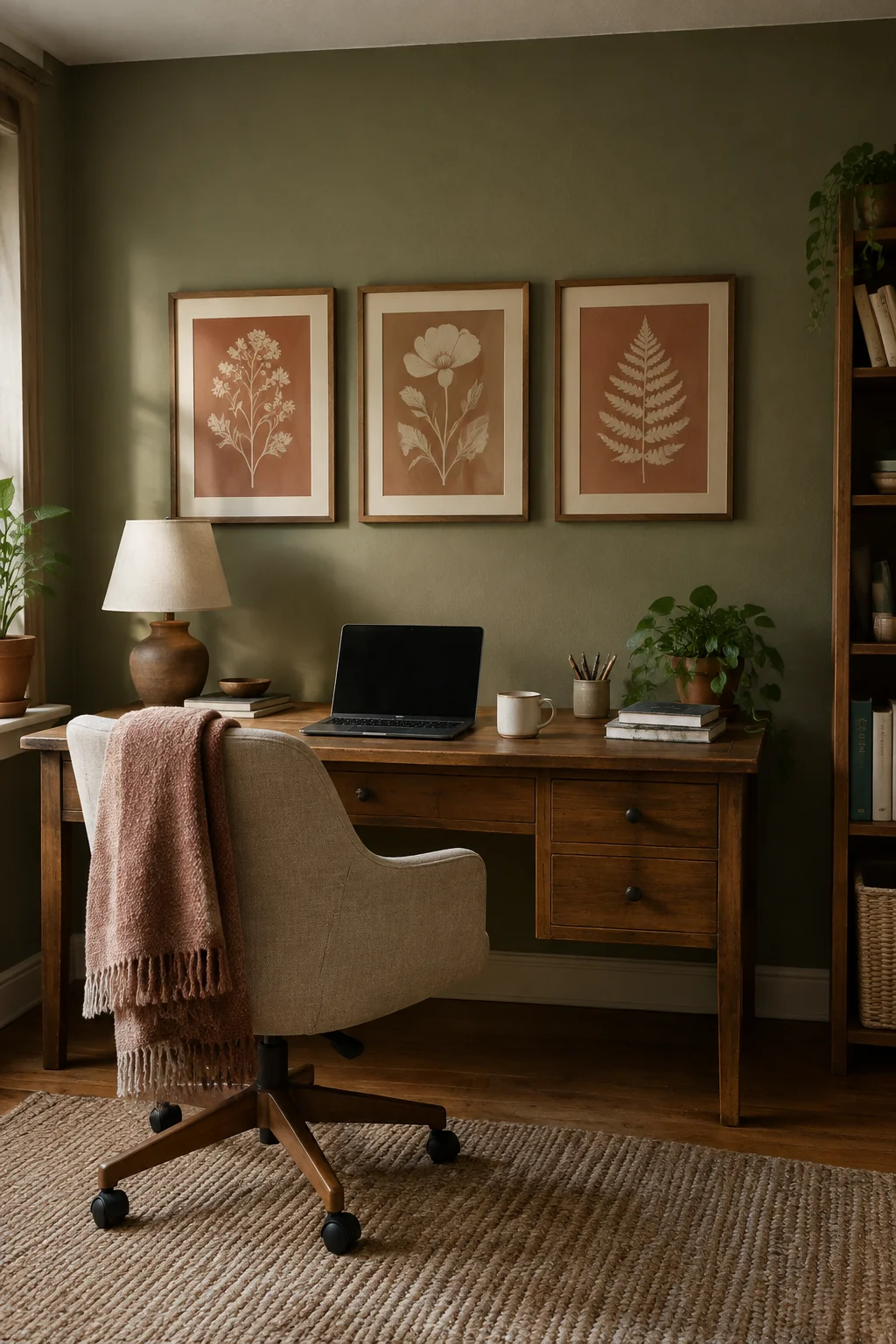
Use three or four botanical prints in matching frames, with a palette of terracotta, cream, and muted sage. The look is gentle and organic, a bit like a naturalist's study in an old house. A limited palette keeps the wall coherent, and these earth tones sit well against the wood and linen most offices already have. Choose frames with the same finish and mat the prints in off-white rather than bright white, which can look cold next to warm paper. (We'd pick a sage with a gray base over a green with yellow in it, since the yellow tends to fight the terracotta.) Hang them in a row with equal gaps of 2 to 3 inches, aligned along the top edge.
8. Leaning art on a picture ledge
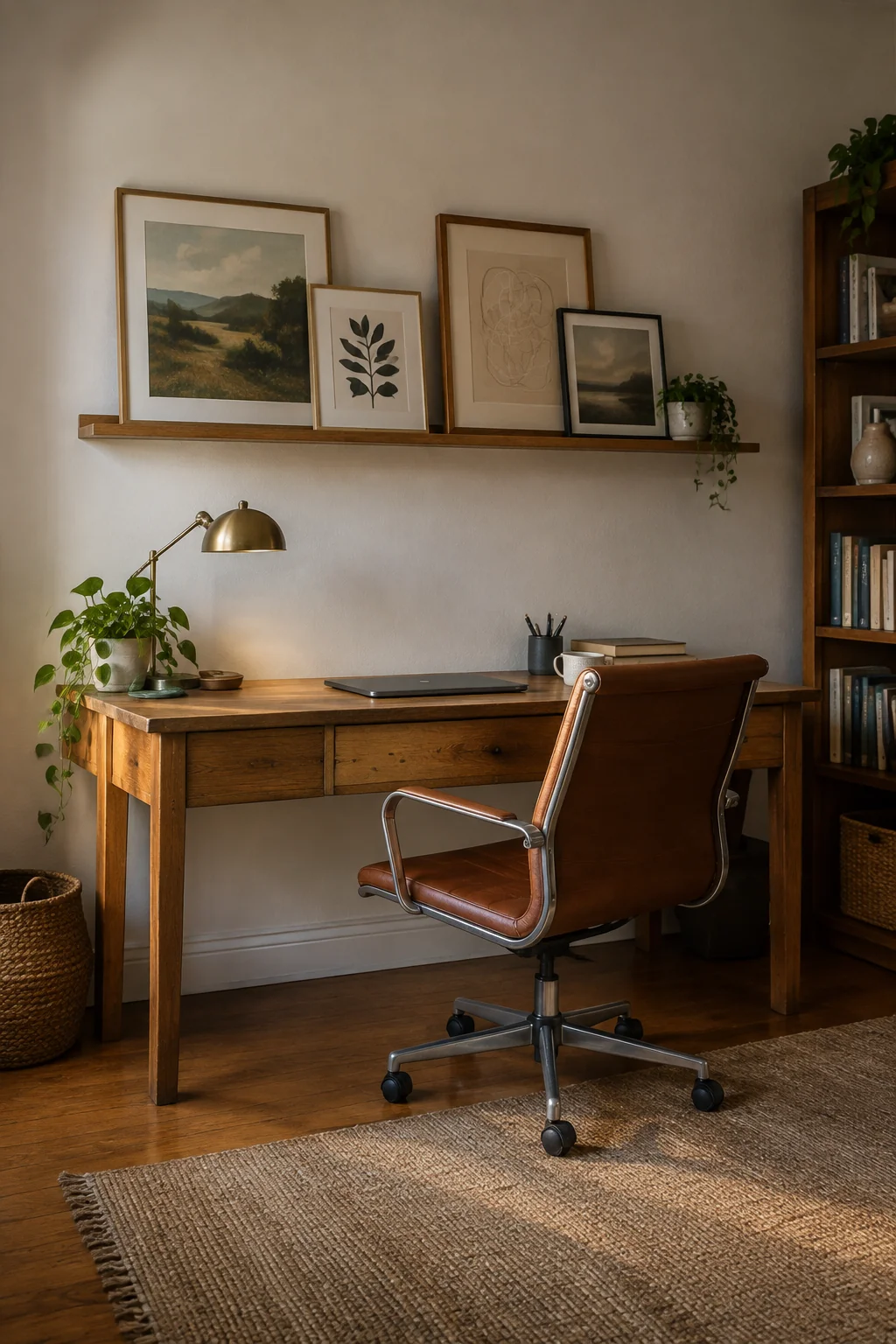
Lean two or three framed pieces against the wall on a picture ledge, letting them overlap slightly and vary in height. The look is relaxed and easy to change, closer to a studio wall than a formal gallery. Leaning art skips the layout stress of measuring and drilling, and the overlap adds depth. Pick a ledge about 2 to 3 inches deep and long enough to span the desk or a shelf. Put the largest piece at the back and the smaller ones in front. Keep the bottom edge of the group about 6 inches above the desk surface. Use a ledge with a front lip, or press a small dab of museum putty at the base of each frame so nothing slides.
9. A removable wallpaper panel behind the shelves
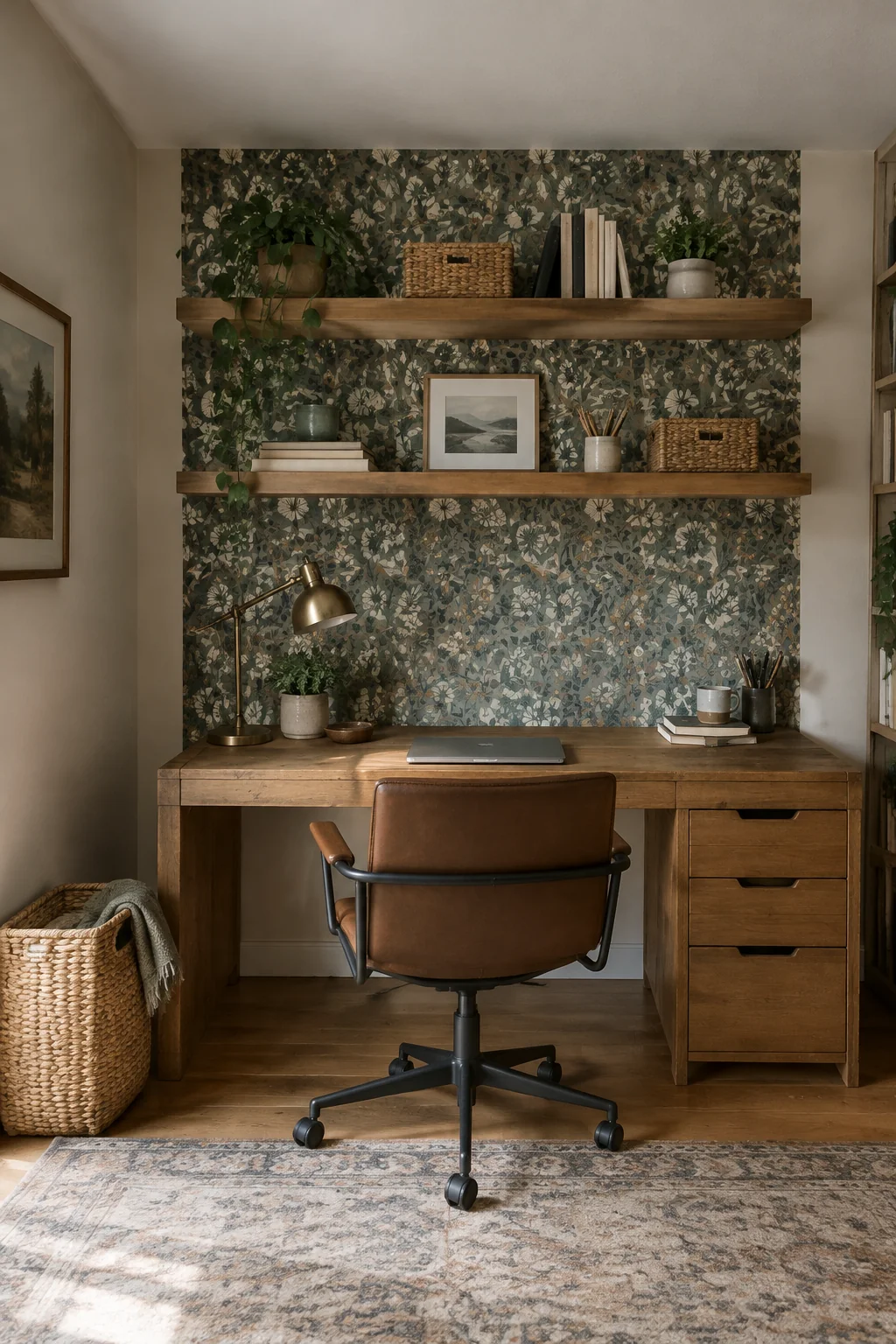
Apply a single panel of removable wallpaper in a warm pattern, such as ochre stripes or a terracotta block print, to the wall behind your shelves only. The paper becomes a backdrop that holds the books, baskets, and objects together. A contained pattern gives color and depth without filling the whole room, so the rest of the office stays calm. Measure the wall between the side walls or the window casing, and order a panel a few inches wider than the shelves. Peel-and-stick papers work on smooth painted drywall, but test a small corner first, because flat paint can lift when the paper comes off. Skip busy prints behind shelves that already hold a lot of spines.
10. A plug-in sconce beside the desk
Mount a plug-in wall sconce with a linen or warm brass shade on the wall beside your desk, roughly 60 inches from the floor. The look is soft, low light that comes from the wall instead of from the desk. A sconce lights the wall, which softens the contrast between a bright screen and a dark room. Run the cord along the back edge of the wall, secure it with clips, and plug it into a wall outlet, not a power strip. If you'd rather hardwire it, shut the breaker off first or bring in a licensed electrician, since new wiring is a job for a pro. Pick a shade about 8 to 10 inches wide so it doesn't overpower the wall.
11. A linen-framed corkboard for notes
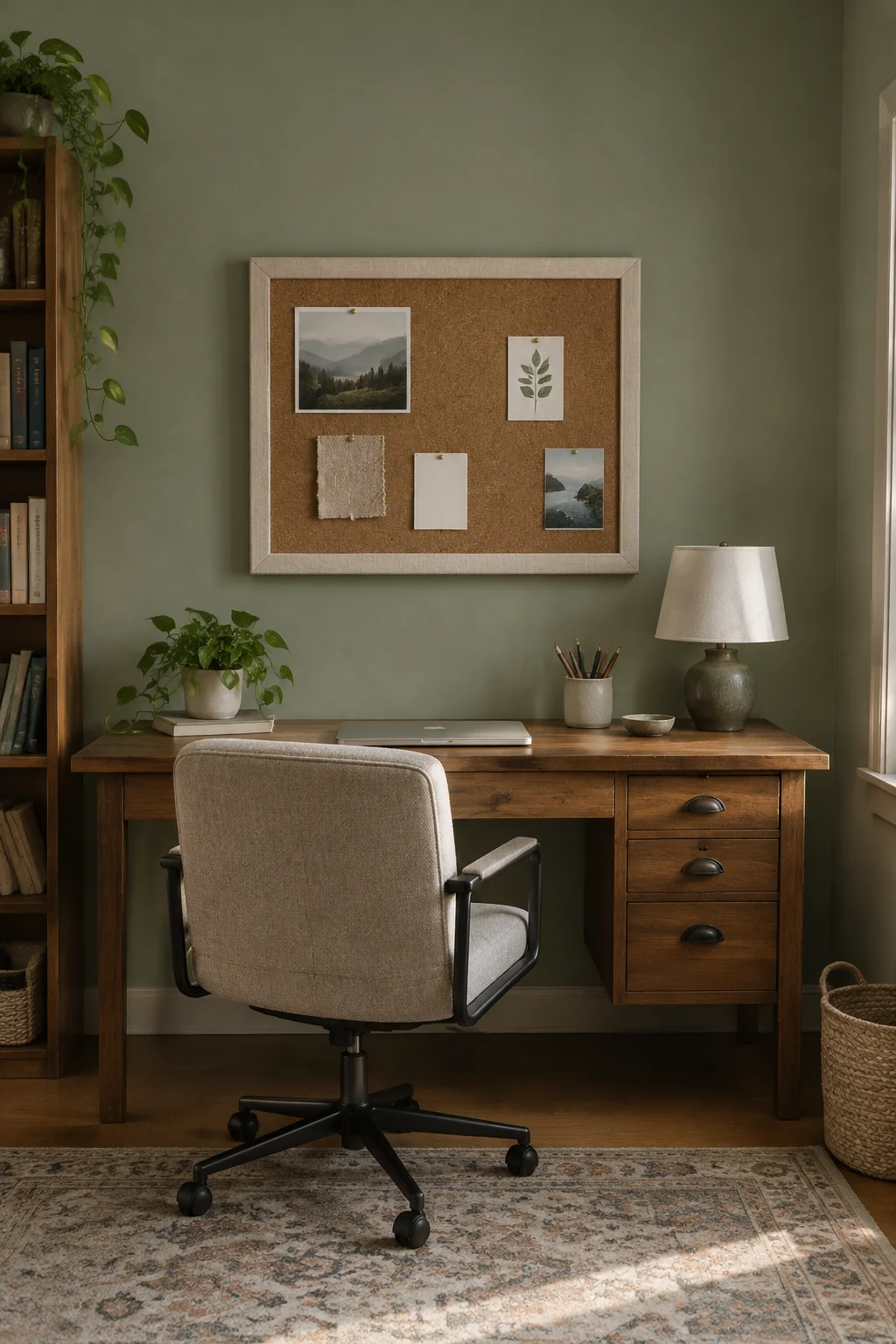
Frame a cork or felt board in linen or natural wood, around 24 by 36 inches, and hang it beside or above the desk. The look is practical but warm, because the fabric softens what is usually a messy wall of sticky notes. A framed board reads as deliberate decor, and a neutral linen keeps the color under control. Hang the top edge just below your eye line when you're seated, and arrange pins and notes in a loose grid rather than a tight stack. A shallow frame keeps the board from looking like a box on the wall. Pins leave small holes in painted walls, so pin into the board itself and keep the wall clear of tacks.
12. A woven wall hanging above the reading chair
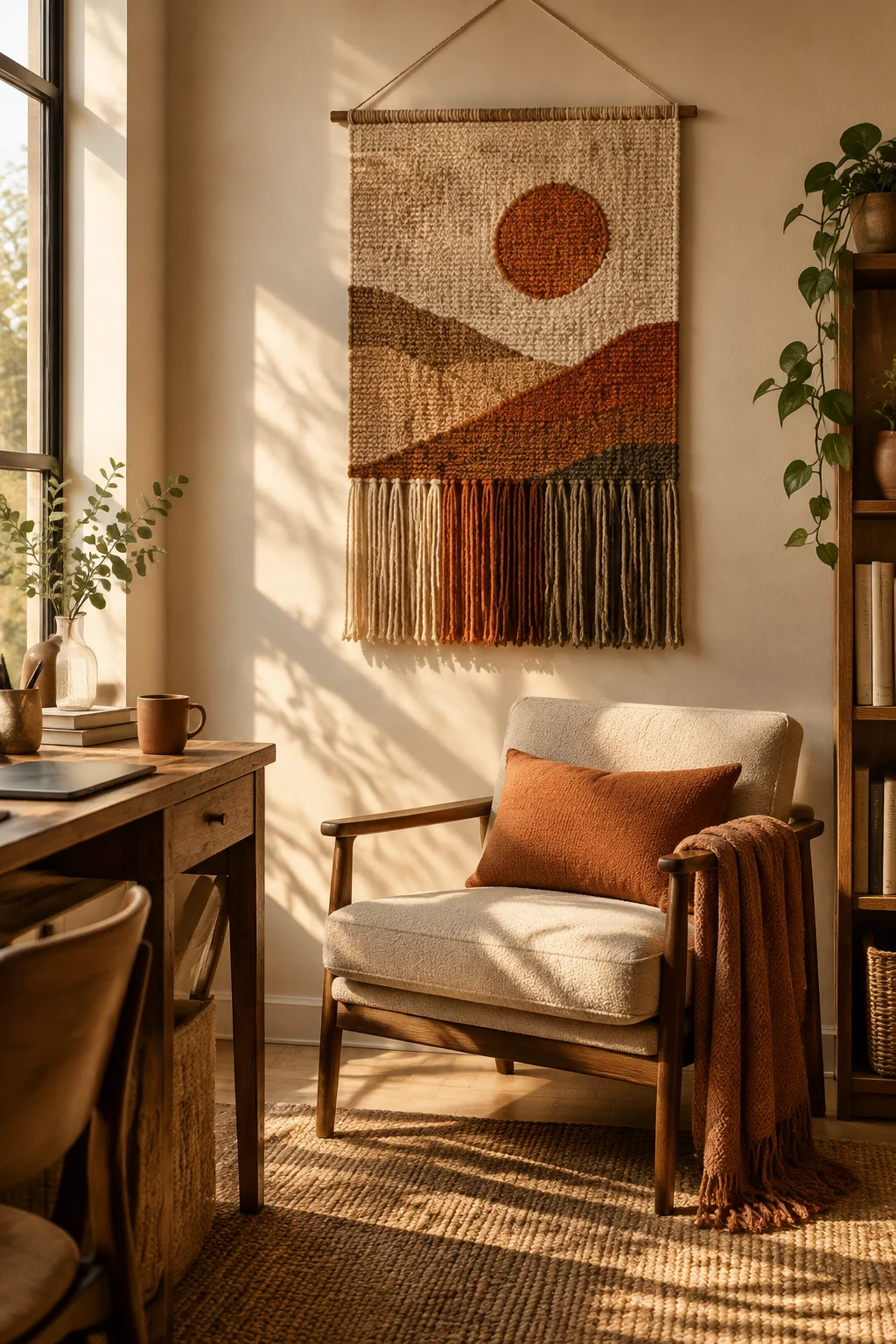
Hang a kilim, wool tapestry, or woven hanging in sand, rust, or ivory above a reading chair or the corner where you read. The look is soft and tactile, bringing fabric to a wall that's otherwise hard surfaces. Textiles absorb sound and warm the room, and a larger piece anchors the corner the same way a large print anchors a desk. Choose a piece about two-thirds the width of the chair and hang it from a wooden rod with simple finials. Keep it at least 12 inches from any lamp, and keep open flame well away from the fabric.
The whole guide in one image
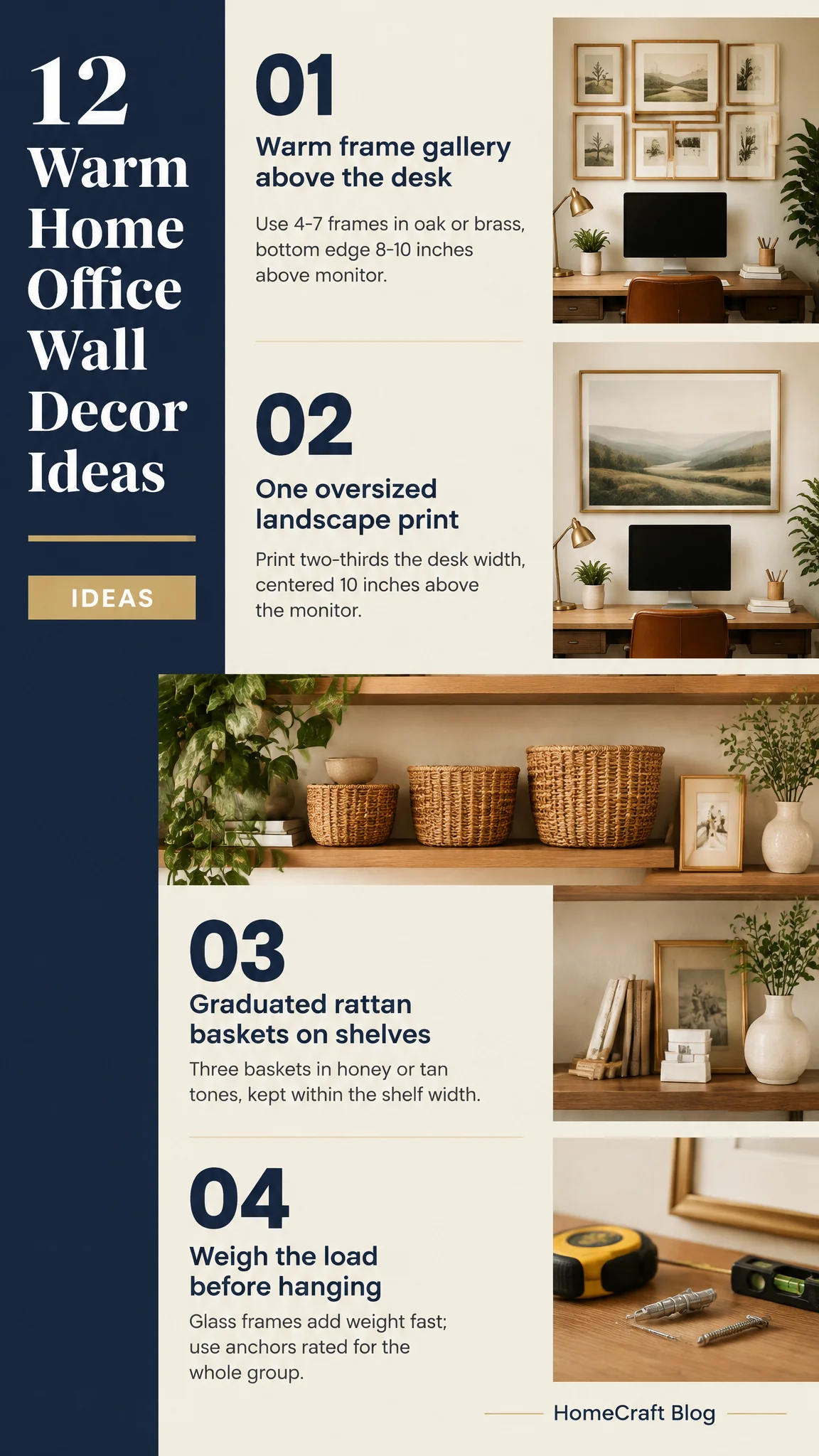
The judgement call that decides most of these is height. We'd hang any group so its lower edge sits 8 to 10 inches above the top of your monitor, even when the wall above the frames looks empty at first. A low group keeps your eyes on the desk, and a high one pulls them toward the ceiling. Most standard desks sit around 29 to 30 inches high, so that placement usually puts the center of your wall art near 60 inches from the floor.
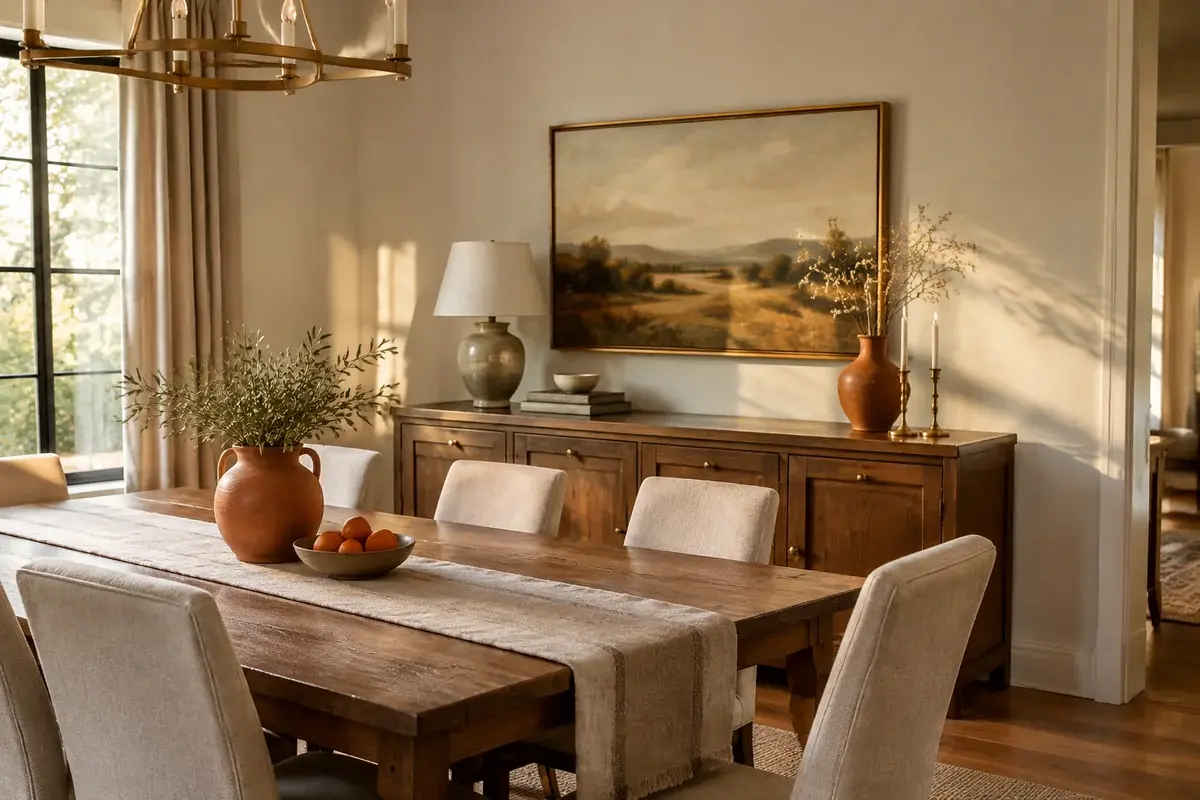
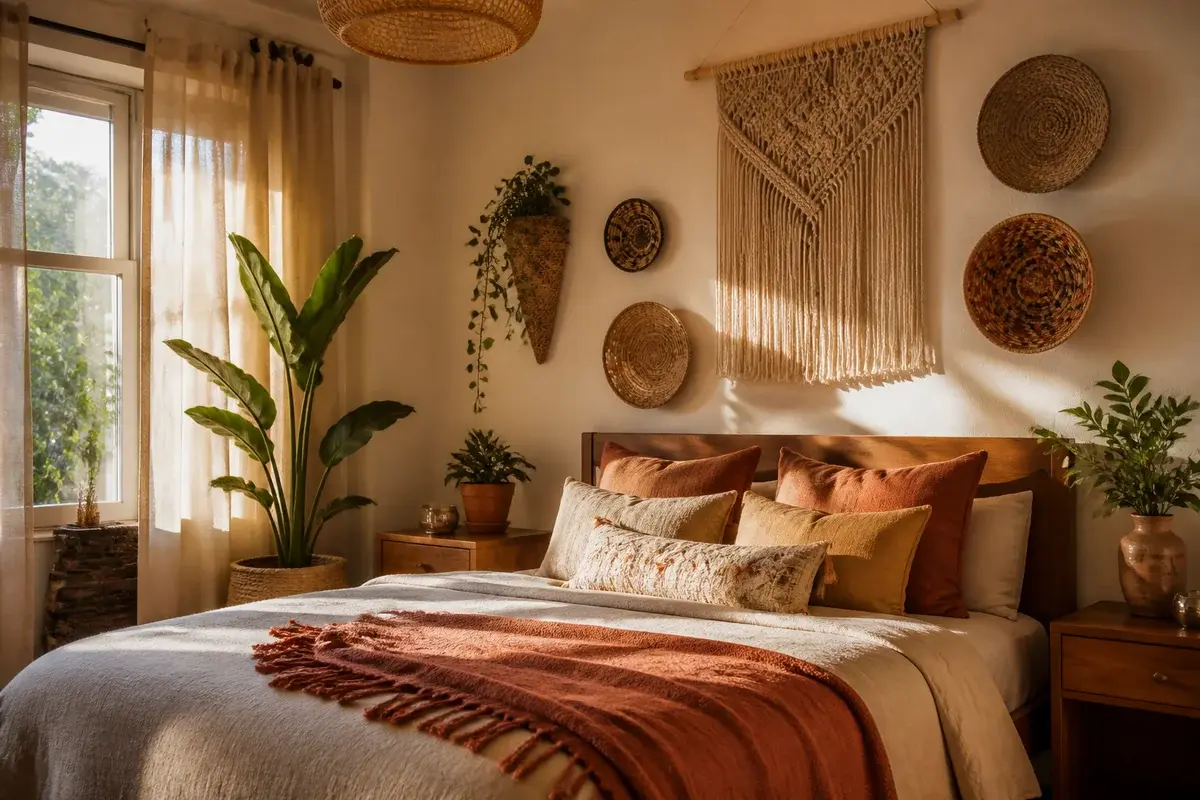
The room images in this post are illustrations made with AI.