Build a Boho Bedroom Wall Without Paint or Wallpaper
Skip the paint and wallpaper: layer macramé, tapestries and woven art for a boho bedroom wall with texture and warmth.
This post contains affiliate links. As an Amazon Associate I earn from qualifying purchases. If you buy through our links, we may earn a commission at no extra cost to you.
The fastest way to give a bedroom wall the boho look is to layer texture without touching a paintbrush. Tapestries, macramé, woven pieces, and floating shelves create the depth and warmth a boho room needs, and you can move or change them whenever you want. This works especially well for renters, for anyone who wants flexibility, or for rooms where you'd rather spend on the right pieces than on permanent changes. Boho runs on collected pieces that feel handmade and layered more than on one color scheme, so your walls can do more work than they would in a formal room. This page covers the wall only; for the whole room on a budget, see 23 boho bedroom ideas for around $300.
 19-page PDF
Free printable kit
That bare wall above your bed? Done this weekend.
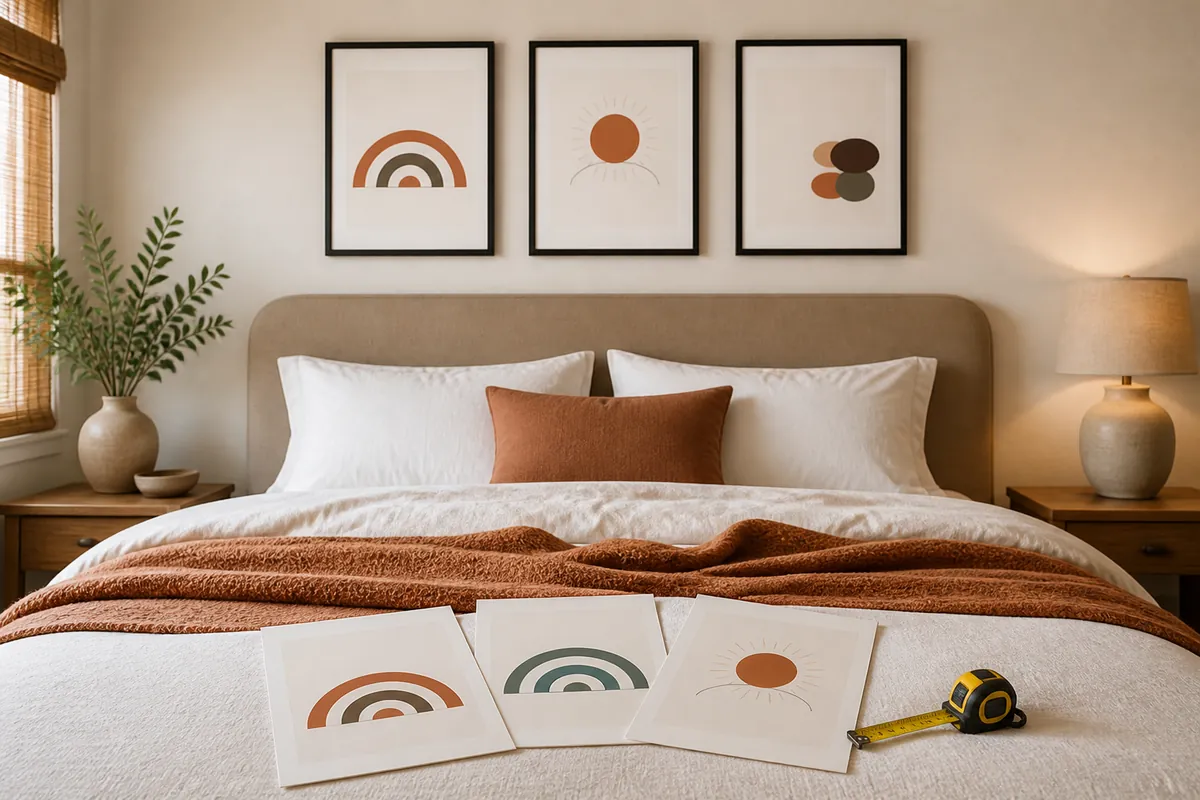
Print 10 boho prints tonight and hang them Saturday, with layouts already measured for your bed.
- 10 boho prints, terracotta + sage
- Layouts for full, queen + king beds
- Heights and gaps worked out for you
Free. Arrives by email in a minute or two, plus our ideas and occasional shop offers. Unsubscribe anytime. Privacy
Start with a large wall hanging as your anchor
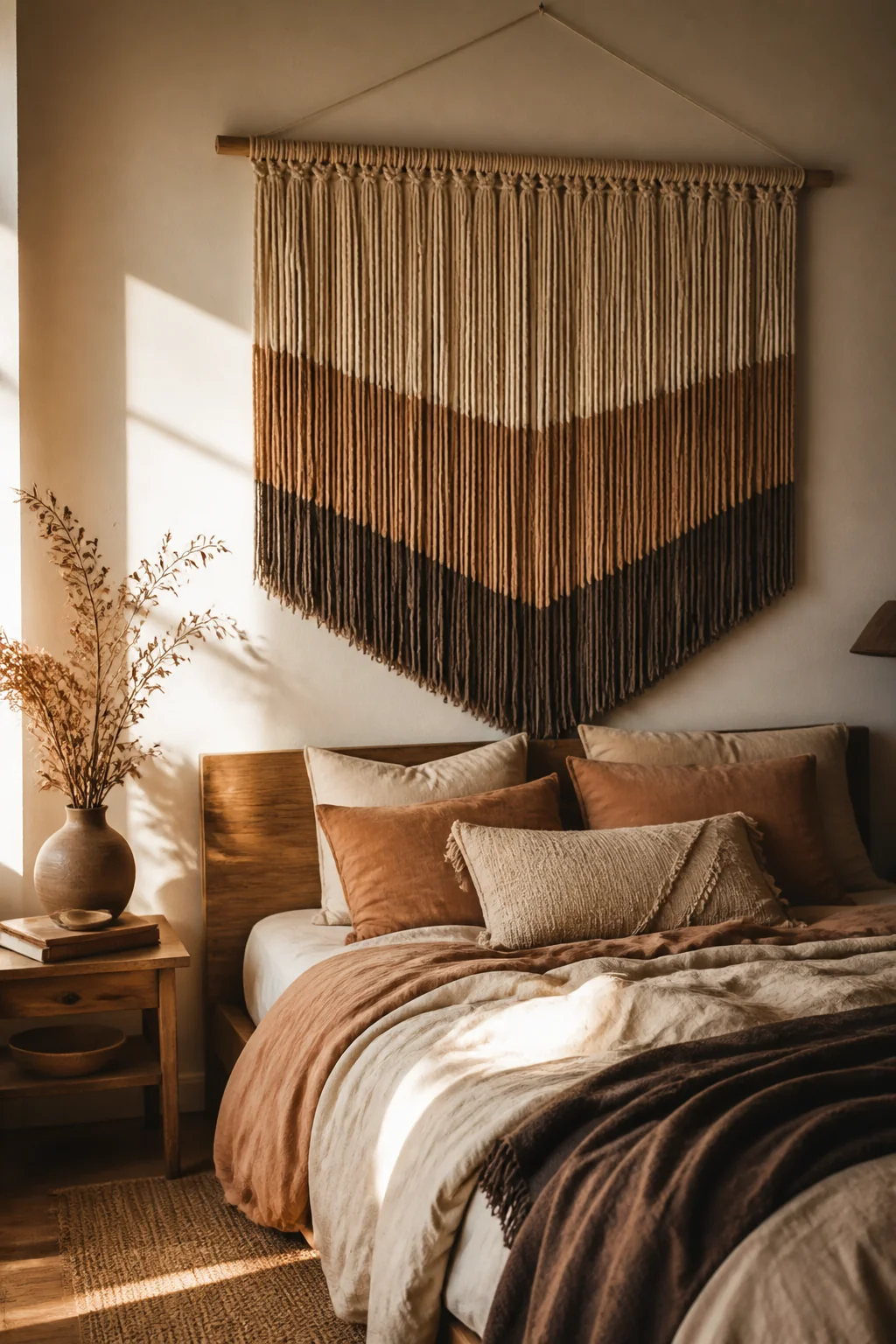
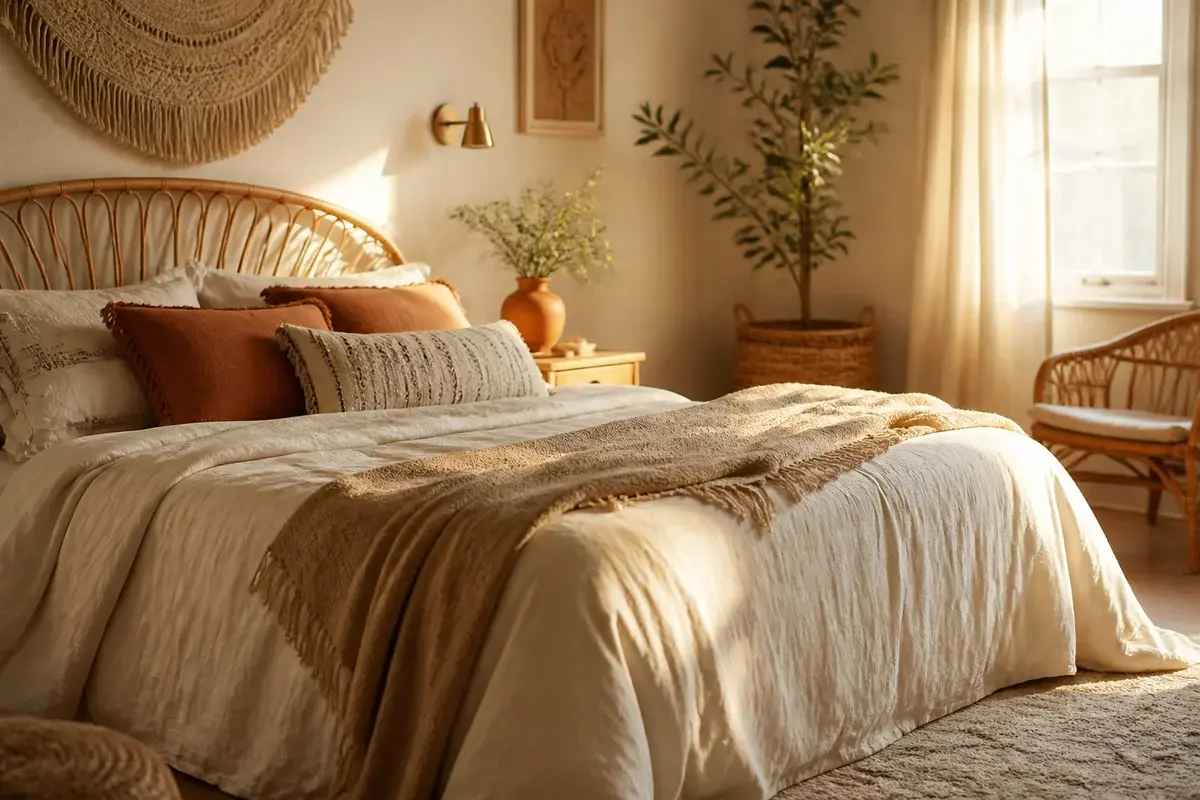
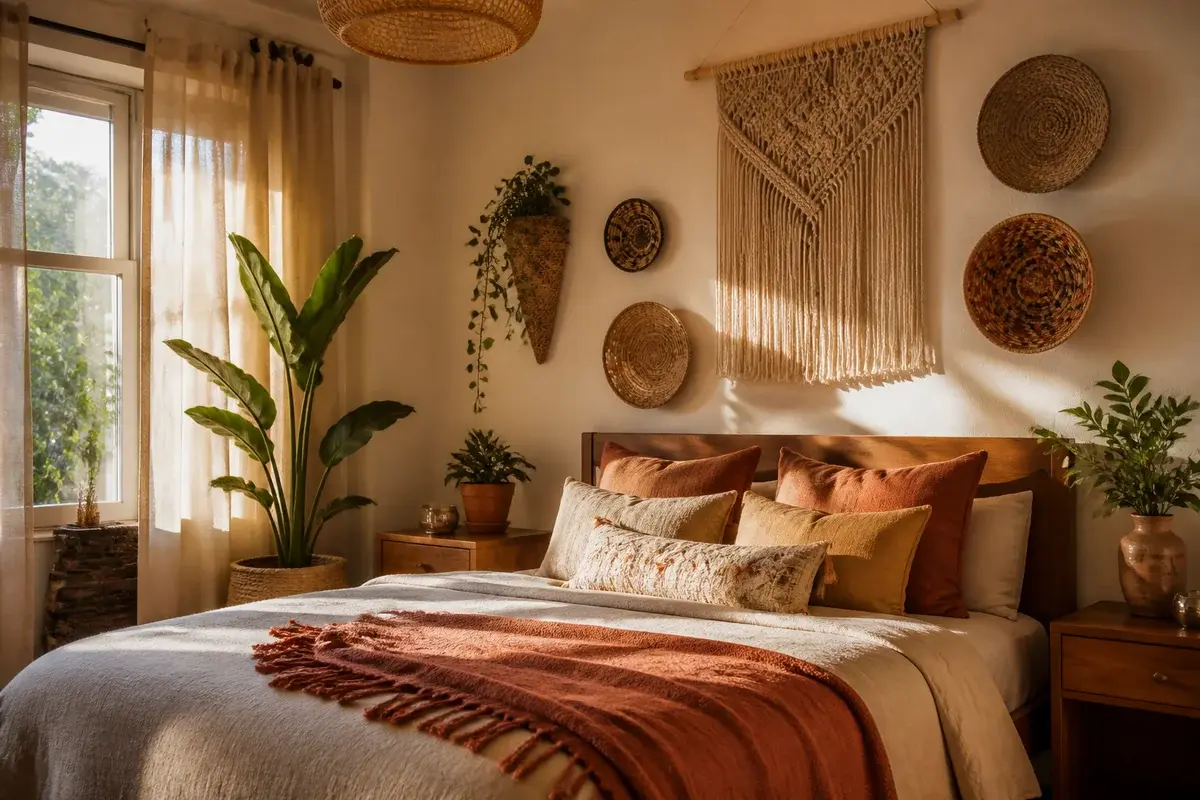
One substantial tapestry or woven wall hanging gives you a frame for everything else. A macramé wall hanging about 3 to 4 feet wide, or a cotton tapestry in cream and natural tones, pulls the whole wall together and makes smaller pieces land better around it. (Think of it the same way you'd anchor a gallery wall with one large frame.)
The piece doesn't need to be expensive, about $30 to $60 for a decent cotton macramé or tapestry from a mainstream home store, but it does need to fill enough visual space that the wall stops feeling sparse. If your wall is over 10 feet wide, you might need two anchor pieces, or one very large one about 5 feet across.
Hang it at eye level, roughly centered on the wall or offset slightly if that's where your bed sits. Measure twice before you punch holes: a wall hanging that's too high reads formal, and one that's too low reads cramped.
Layer woven wall baskets and smaller macramé
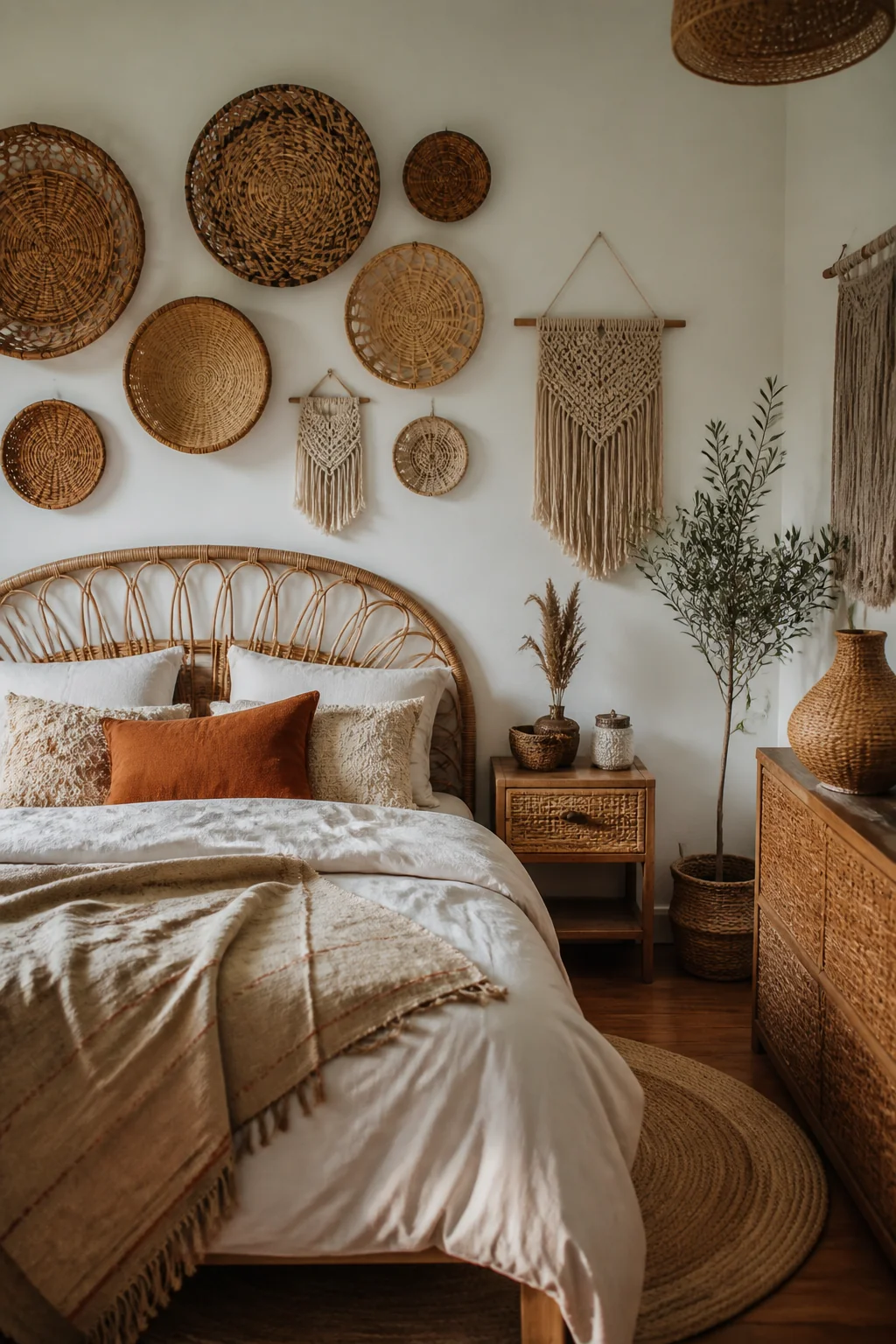
Once the large piece is up, woven baskets and small macramé pieces fill in the space around it without looking cluttered. A cluster of 3 to 5 smaller pieces, scattered asymmetrically around your main hanging, creates visual interest and the "gathered over time" feeling that's core to boho style.
Woven wall baskets run about $15 to $40 depending on size and material. Rattan, jute, and seagrass all work. Keep them relatively flat, since baskets meant to hold things can look like storage rather than decor if they're too deep. You want pieces with visual texture but not much projection.
Vary the shapes: one round, one oval, one rectangular. Don't line them up in a grid. Space them 6 to 12 inches apart so each piece can breathe.
Macramé plant hangers bring in living greenery
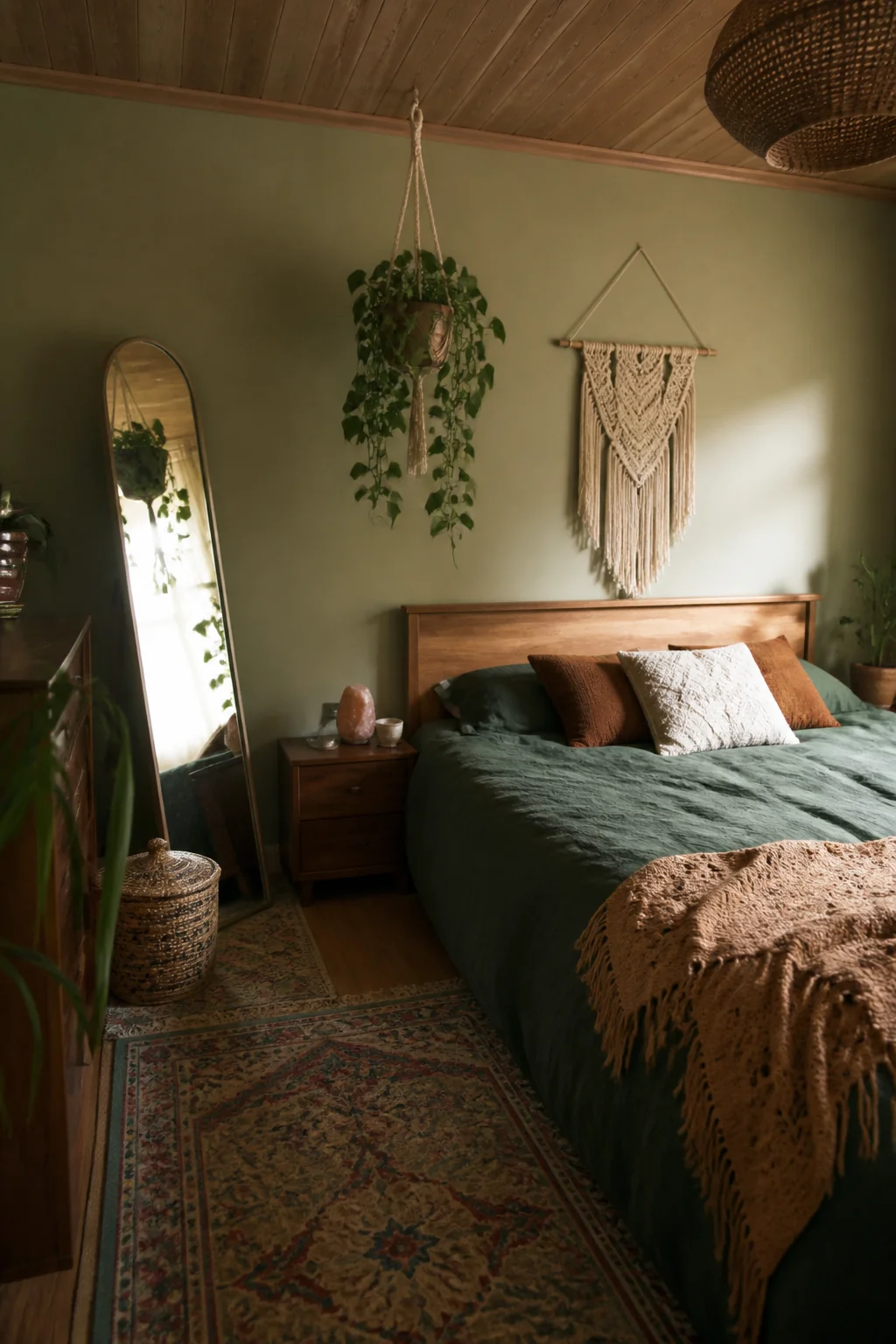
A macramé plant hanger holding a single trailing plant or small potted plant adds life to the wall and softens the geometry of the other pieces. Pothos copes with low light, so it suits a bedroom without direct sun. String of pearls and trailing succulents want bright, indirect light, so give those a spot near the window.
Hang the plant hanger about 12 to 18 inches from the ceiling (not right at the ceiling, which reads jarring). One or two is plenty unless your wall is very large. The plant itself matters: a full, healthy plant with long trailing stems looks intentional; a sparse or struggling one reads sad.
A macramé hanger runs about $12 to $25. The plant is separate, and it'll need water and light, so only hang this if you're willing to tend it.
Use floating shelves for small objects and air
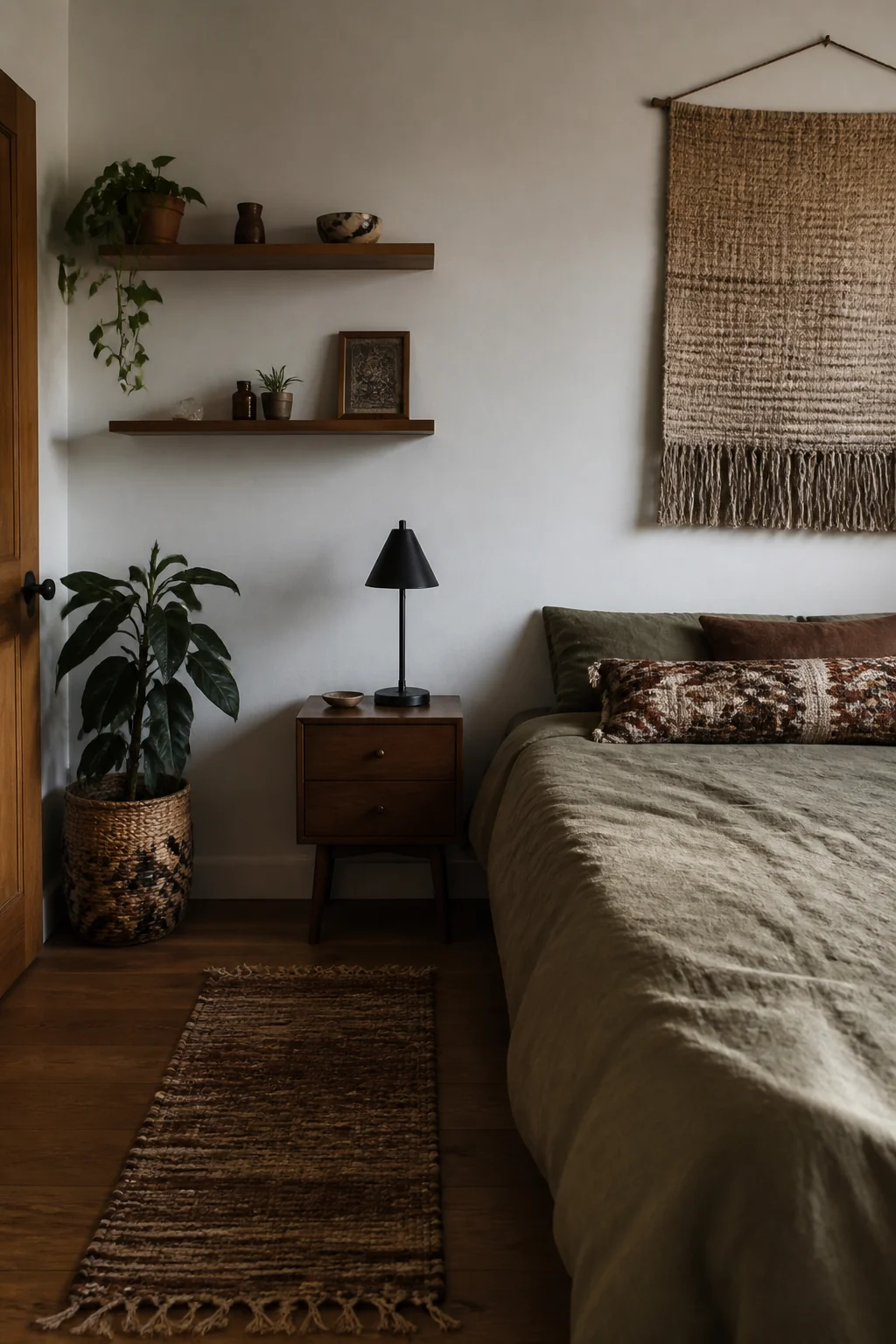
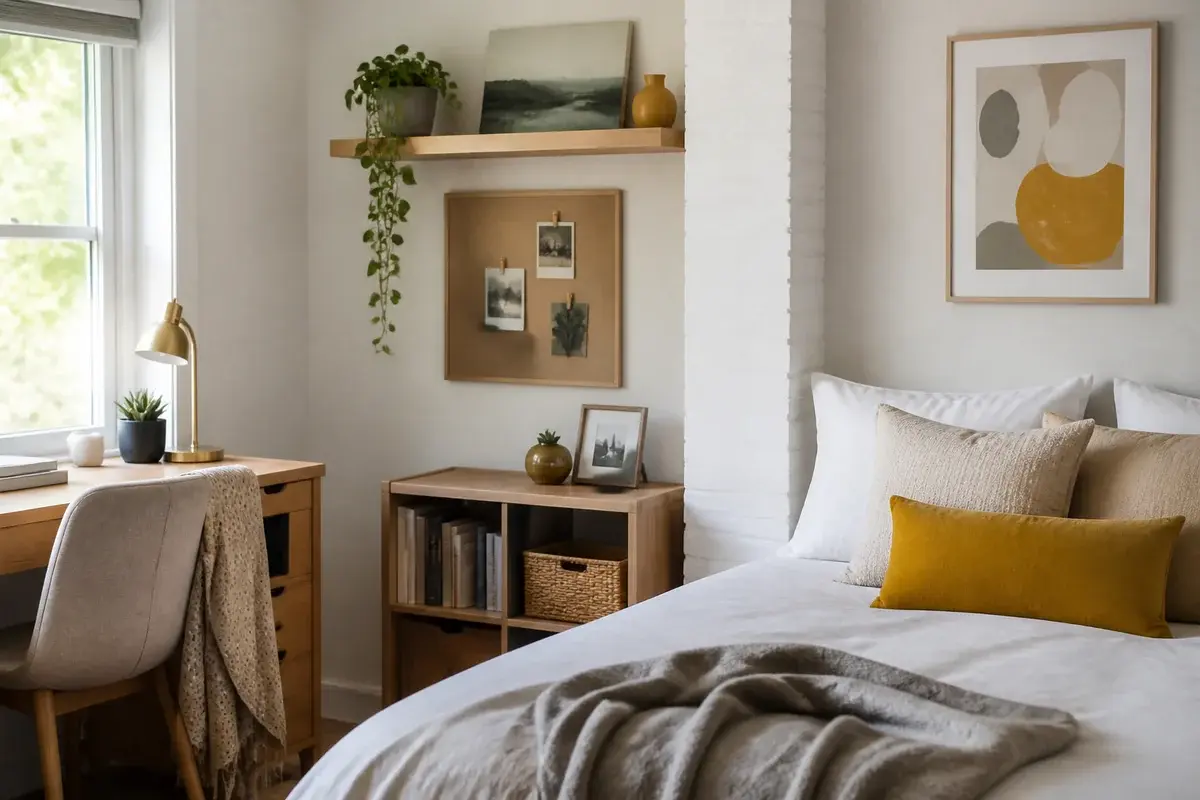
Two floating shelves, positioned asymmetrically, give you a place for small objects without making the wall feel heavy. This also adds a practical element: a place for a bedside book, a small lamp, or a water glass without a nightstand taking up floor space.
Wood or rattan shelves about 18 to 24 inches long work best for a boho look. Position one higher and one lower, slightly offset to one side, rather than stacked. Leave them lightly styled: a small ceramic vase, a folded linen throw, a rock or piece of driftwood, a small plant. Too many objects look more decorative than boho.
Floating shelves are about $25 to $50 each. Installation usually takes a drill and a level if you're confident doing it yourself; otherwise, ask for help from someone who is.
Layers work better than density.
Add a low-pile rug on the wall as secondary texture
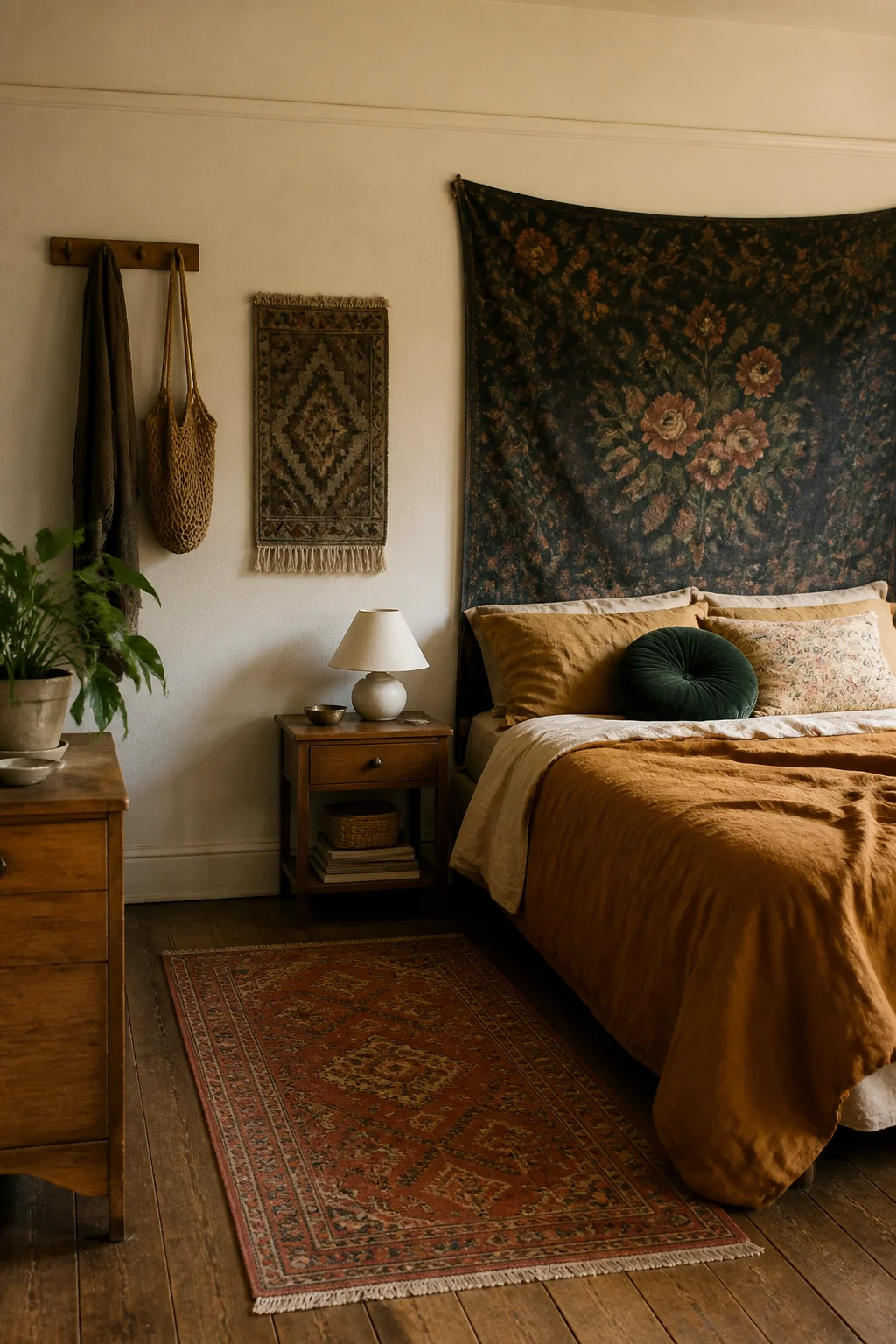
A small kilim or flatweave rug hung on the wall below or beside your main tapestry adds pattern and introduces the warmth of a woven textile without the risk of floor stains or pet damage. (This is purely visual; you're not walking on it.) Kilims in natural cream, rust, and deep red read strongly boho, and the pattern adds geometry without feeling busy.
A smaller kilim, about 3 feet by 5 feet, costs $40 to $100. Hang it with two or three cleats or picture hooks spaced across the top so the weight distributes evenly. Leave some space between it and your main hanging so you don't crowd the wall.
Consider a simple wooden frame for pressed botanicals
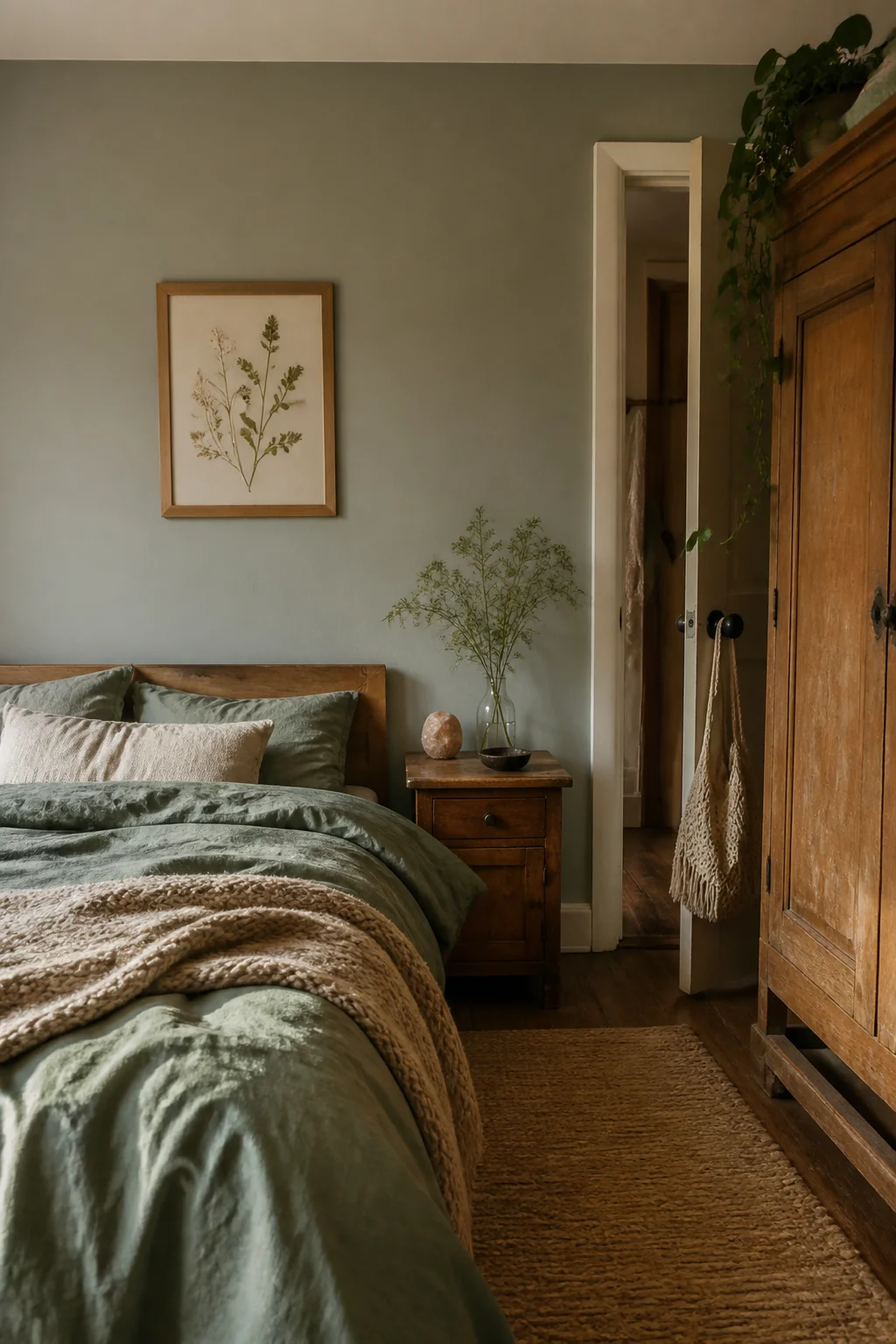
One simple wood frame holding pressed flowers, leaves, or dried grasses brings in botanical detail and reads effortlessly collected. A 16-by-20-inch frame is substantial enough to land without looking like an afterthought. You can press botanicals yourself over a few weeks (flat under a heavy book), or buy small pressed plant sets online for about $15 to $30 and arrange them yourself in a frame.
Group this frame with your other pieces rather than centering it alone. It works best in the lower third of your wall cluster, where a viewer's eye naturally settles.
Let negative space do the work
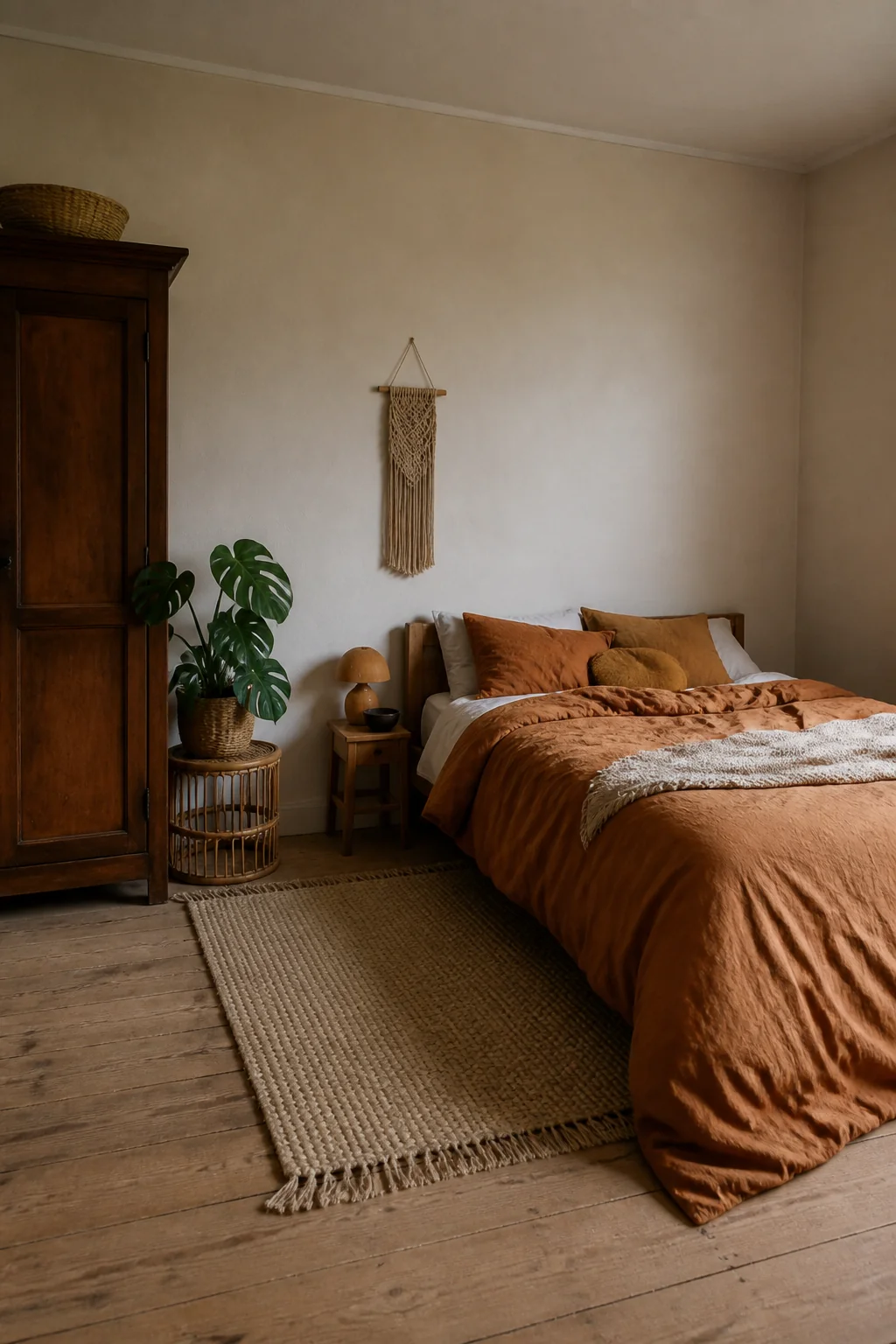
The mistake most people make with boho bedroom walls is treating them as a puzzle to fill completely. Instead, leave breathing room. Boho is about what you've chosen to display, not about coverage. Open wall space between pieces is part of the aesthetic, not something to fix.
If your wall has 15 square feet of space, aim to fill 6 to 8 of those with actual objects. The rest is air. This also makes cleaning easier and prevents the wall from feeling precious or precious-looking, which boho is not.
Lighting shapes how the wall reads at night
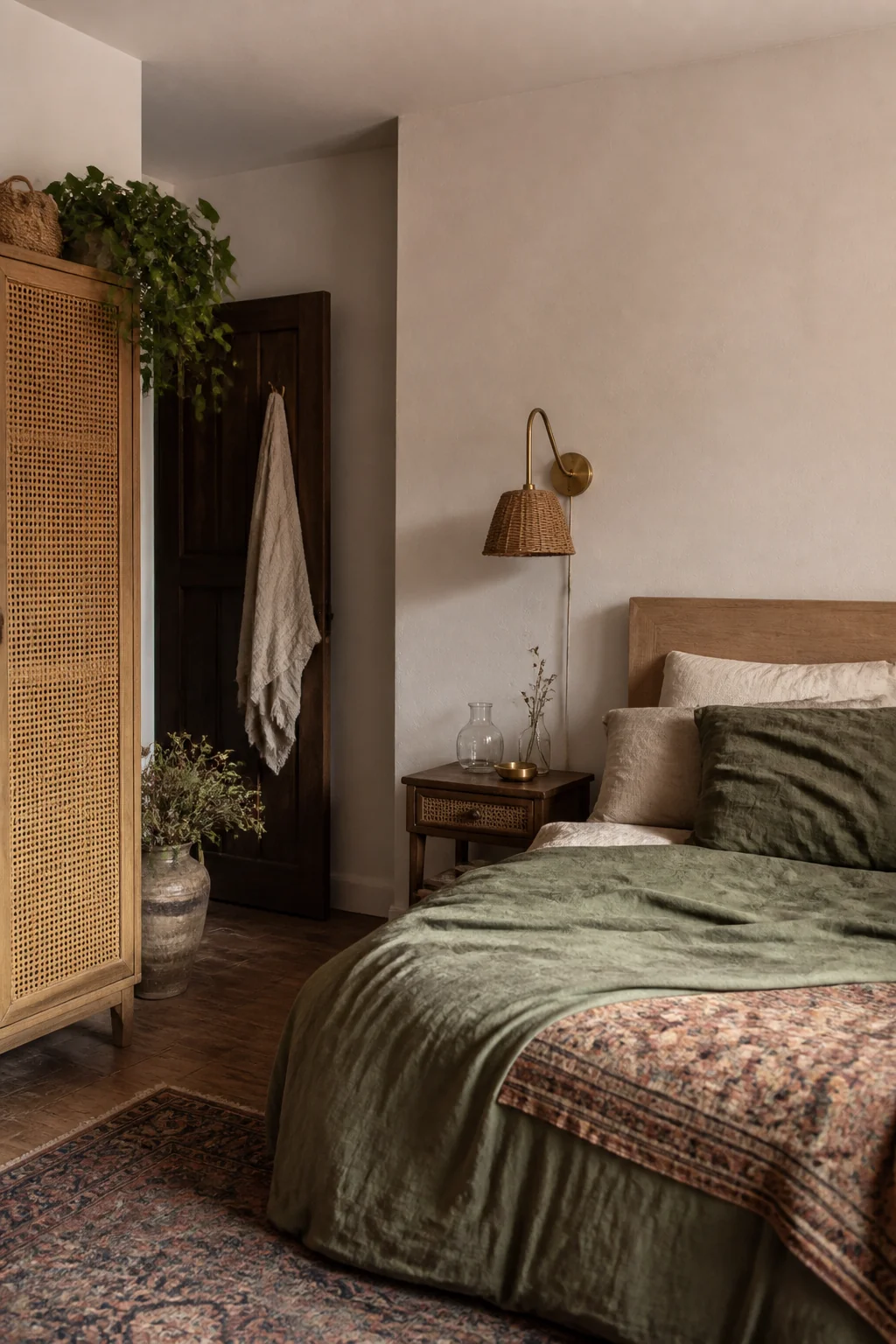
A small wall sconce or a string of warm Edison bulbs hung loosely near your wall hangings adds a different dimension after dark. The light catches the texture of macramé and woven pieces and throws soft shadows, which is where boho texture really sings. A warm 2700-kelvin bulb is better than anything bright or cool (which would make a natural-fiber wall read too clinical).
A simple brass or rattan wall sconce runs $30 to $70. Edison string lights, about $20 to $40. You need an outlet nearby or an extension cord you're willing to hide.
Take the guide with you
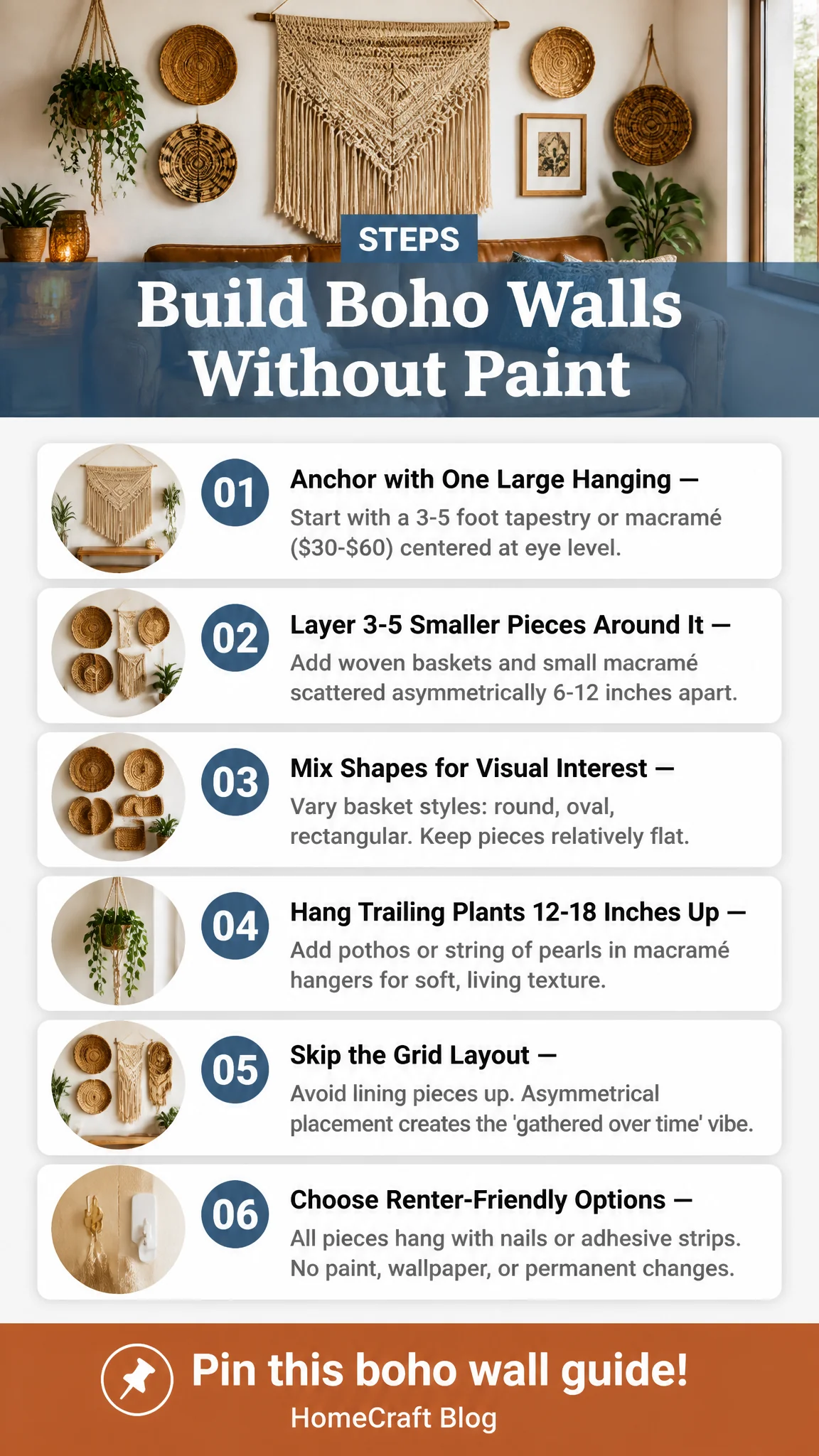
Your boho wall will read differently in a small bedroom than in a large one. A single large tapestry and two woven baskets might be plenty in a 9-by-11-foot room, while a bigger wall needs the layering of baskets, shelves, and plants to avoid looking sparse. In a rental, stick with pieces that hang from hooks or cleats so you can take them down without patches. In a house where you plan to stay, floating shelves and wall sconces feel more permanent and polished. The core idea, texture and asymmetry without paint, works anywhere, but how much you add depends on your wall size, your lease, and how much you actually want to dust.
The room images in this post are illustrations made with AI.