17 Chic Large Wall Decorating Ideas for Every Room
Fill a bare wall with 17 chic decorating ideas: gallery walls, murals, wallpaper, mirrors and shelving, with real sizes and costs.
This post contains affiliate links. As an Amazon Associate I earn from qualifying purchases. If you buy through our links, we may earn a commission at no extra cost to you.
A wall that runs fourteen feet wide and seven feet tall needs a different approach from a normal wall. Hang one 18x24 inch print in the middle of it and the print stops reading as art and starts reading as an oversight. Big walls want either one very large object or a group of pieces that behave like one large object, and either way you need a plan before the first nail. What follows is seventeen ways to fill that space, each with the sizes, the hardware and the rough cost, so you can tell in advance which one suits your wall, your budget, and whether your lease lets you make holes.
1. Create a floor-to-ceiling gallery wall with mixed frames
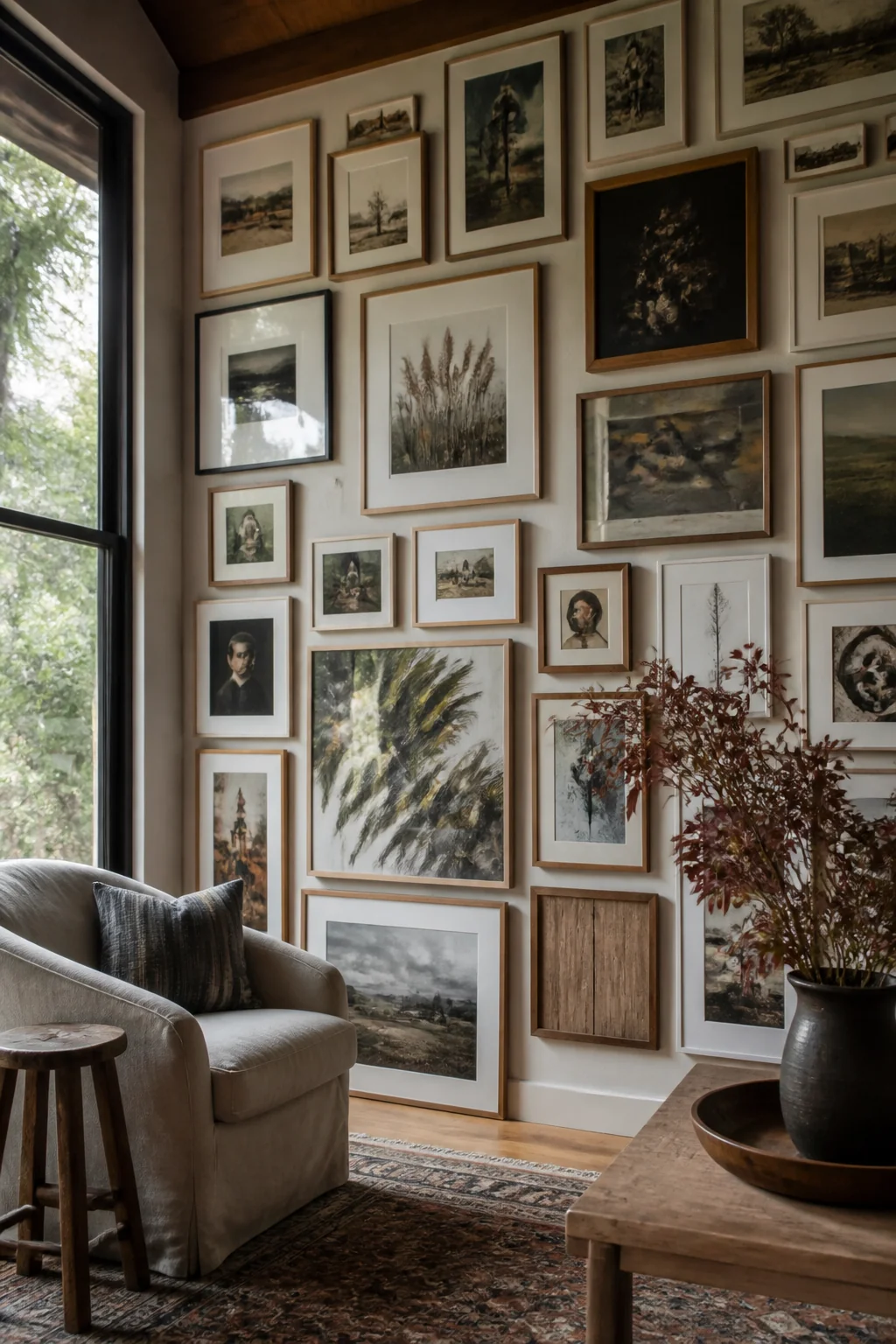
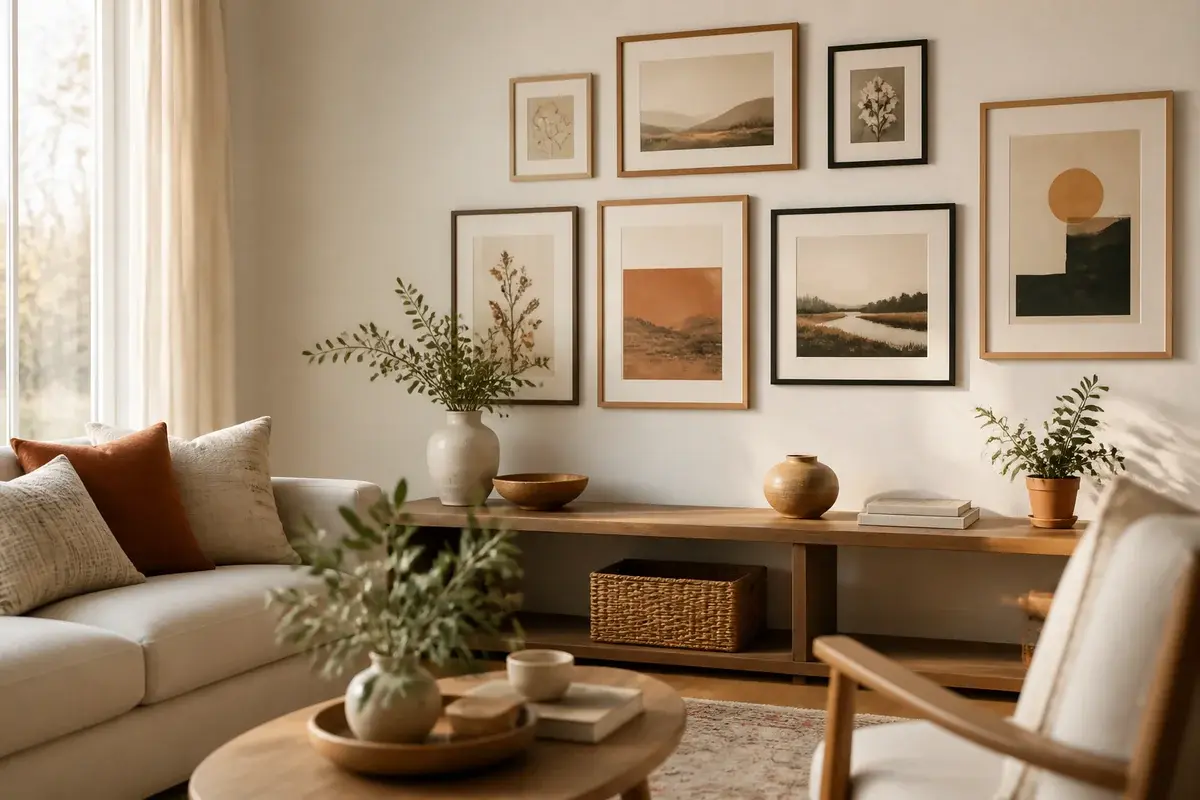
A gallery wall scaled up to roughly 6 by 8 feet handles a big wall better than almost anything else. Mix frame sizes, 8x10, 11x14 and 16x20, in black, white and natural wood, and fill them with prints, photos, pressed leaves, anything carrying color. Cut paper templates the size of each frame, tape them up, and shuffle them around for a day before a single nail goes in. Keep the gaps consistent at 2 to 3 inches, because uneven spacing is what makes a gallery wall look accidental rather than collected. Set the center of the whole arrangement about 57 inches off the floor so it lands at standing eye level, then let it climb toward the ceiling from there. Frames run $10 to $25 each at big-box and import stores, so a twenty-frame wall lands between $200 and $400 before you buy any art.
2. Hang a large tapestry as your anchor piece
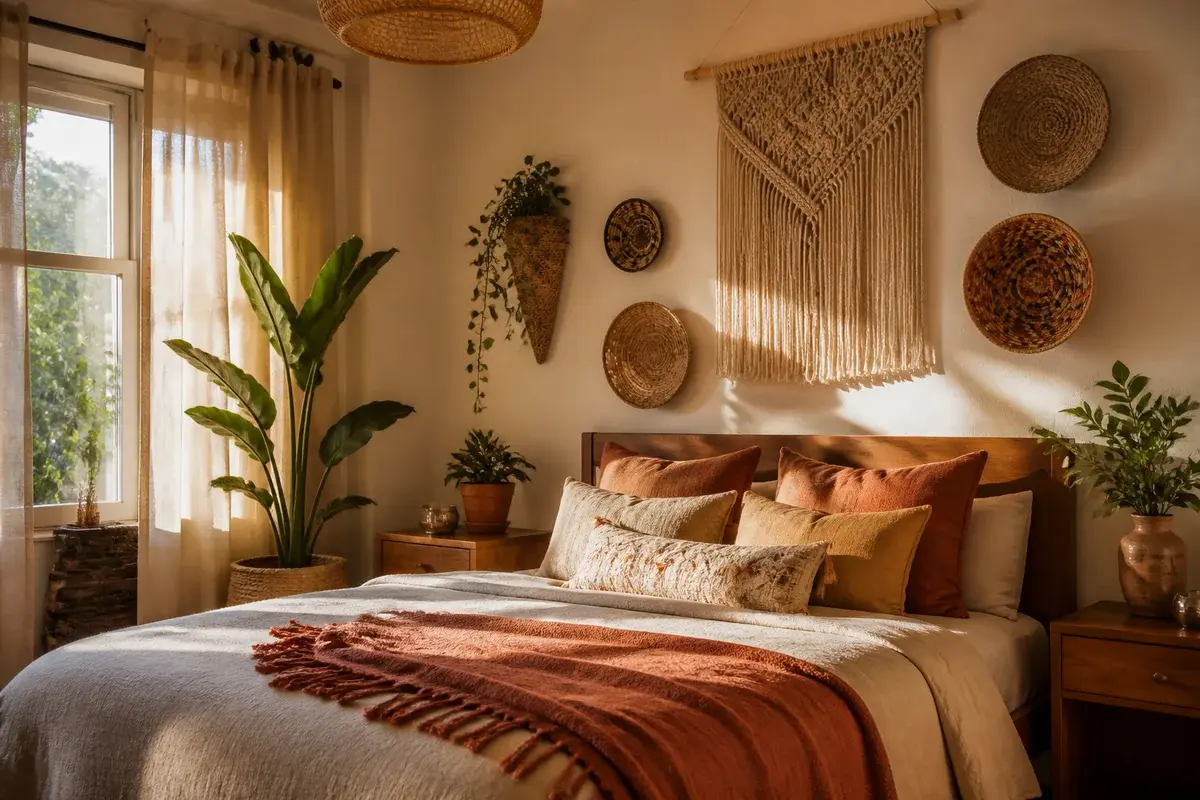
Pick a 60x80 inch tapestry in a pattern you'd be happy looking at every day: boho, geometric, a soft abstract wash. Cotton hangs better than polyester, which tends to shine under lamplight and holds its packing creases for weeks. Expect $35 to $80 at that size. Two nails at the top corners will sag in the middle within a month, so run a curtain rod or a length of 1x2 furring strip across the full width and clip or staple the fabric to it. The whole thing weighs two or three pounds, so plastic drywall anchors are plenty. Steam the creases out before it goes up, not after, since every fold line catches light once the tapestry is flat against a wall. If that wall takes direct afternoon sun, stay with darker or unbleached fabric, because bright dyes on cotton fade unevenly within a season or two.
3. Install floating shelves in a staggered pattern
Three to five floating shelves at staggered heights break a wall up without covering it. Go 24 to 36 inches long and at least 8 inches deep, since anything shallower won't hold a hardcover flat against the wall. Space them 12 to 18 inches apart vertically and offset each one sideways from the last, so your eye zigzags across the wall instead of stopping halfway. Studs sit 16 inches on center in most homes, which means a 24 inch shelf can usually catch two of them. Where it can't, snap-toggle bolts rated for 50 pounds are the fallback, and plastic anchors are worth skipping entirely on anything you plan to load. Shelves cost $15 to $40 each. Style them lightly: a few books stacked flat, one small plant, one object with some height. The empty space between the shelves does as much work as the shelves do.
4. Go bold with a full-wall mural
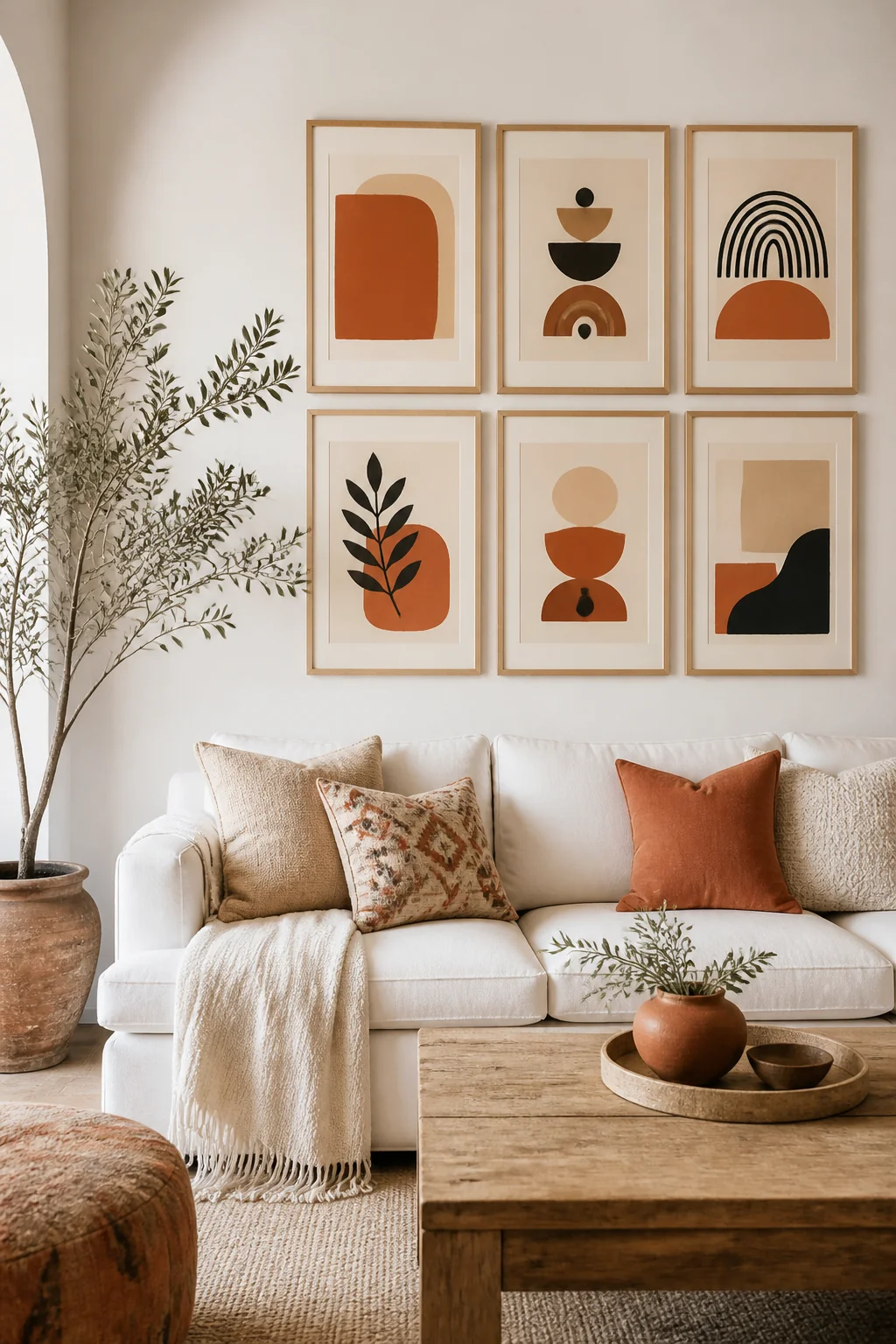
A mural commits the entire wall at once. Hiring a local artist for a 7 by 14 foot abstract in soft grays and whites usually runs $400 to $800, since most muralists quote somewhere between $8 and $20 per square foot depending on how much detail the design carries. Doing it yourself is realistic when the shapes are geometric: prime the wall, chalk-grid or project the design, cut your lines with a 2.5 inch angled sash brush, then fill with eggshell latex. Two coats, two days including dry time. The trade-off is reversal. Painting over a deep mural takes a coat of tinted primer plus two finish coats, so it isn't a weekend undo. We'd only take this on in a room you expect to keep for a few years, and we'd hold the palette close in value to the neighboring rooms so the wall reads as architecture instead of a poster.
5. Layer three different-sized framed prints
Minimal works on a big wall only when the pieces themselves are big. One 40x50 inch frame in the center, flanked by two 24x36 frames with about 6 inches of air on each side, spans a little over 8 feet, which is the right kind of reach for a 14 foot wall. The same layout in small frames would vanish. If a sofa sits underneath, keep the outer frames inside the sofa's arms rather than overhanging them, and hold the bottom edges 6 to 8 inches above the back cushions so the group and the furniture read as one block. Framed glass at 40x50 weighs 20 to 30 pounds, so hang each piece on two hooks set roughly 12 inches apart. That halves the load on each anchor and stops the frame drifting out of level every time someone shuts a door. Hallways and bedrooms suit this quieter arrangement well.
6. Use peel-and-stick wallpaper for instant pattern
Peel-and-stick has gotten good, but the wall underneath has to cooperate. The adhesive bonds to smooth, fully cured eggshell or satin paint, and it slides straight off flat matte paint and orange-peel texture within days. Give fresh paint a full month to cure first, or the vinyl lifts it off when you eventually pull the paper down. A 2 by 12 foot roll from a brand like Spoonflower or Chasing Paper costs $40 to $70 and covers 24 square feet, so a 7 by 14 foot wall takes five rolls once you allow for pattern repeat, landing at $200 to $350. Work top down, one panel at a time, peeling the backing a few inches at a time and pressing with a plastic smoother to push air out sideways. Overlap the pattern match by about an eighth of an inch instead of butting the seams exactly, because the vinyl shrinks slightly as it settles.
7. Hang a statement mirror with an ornate frame
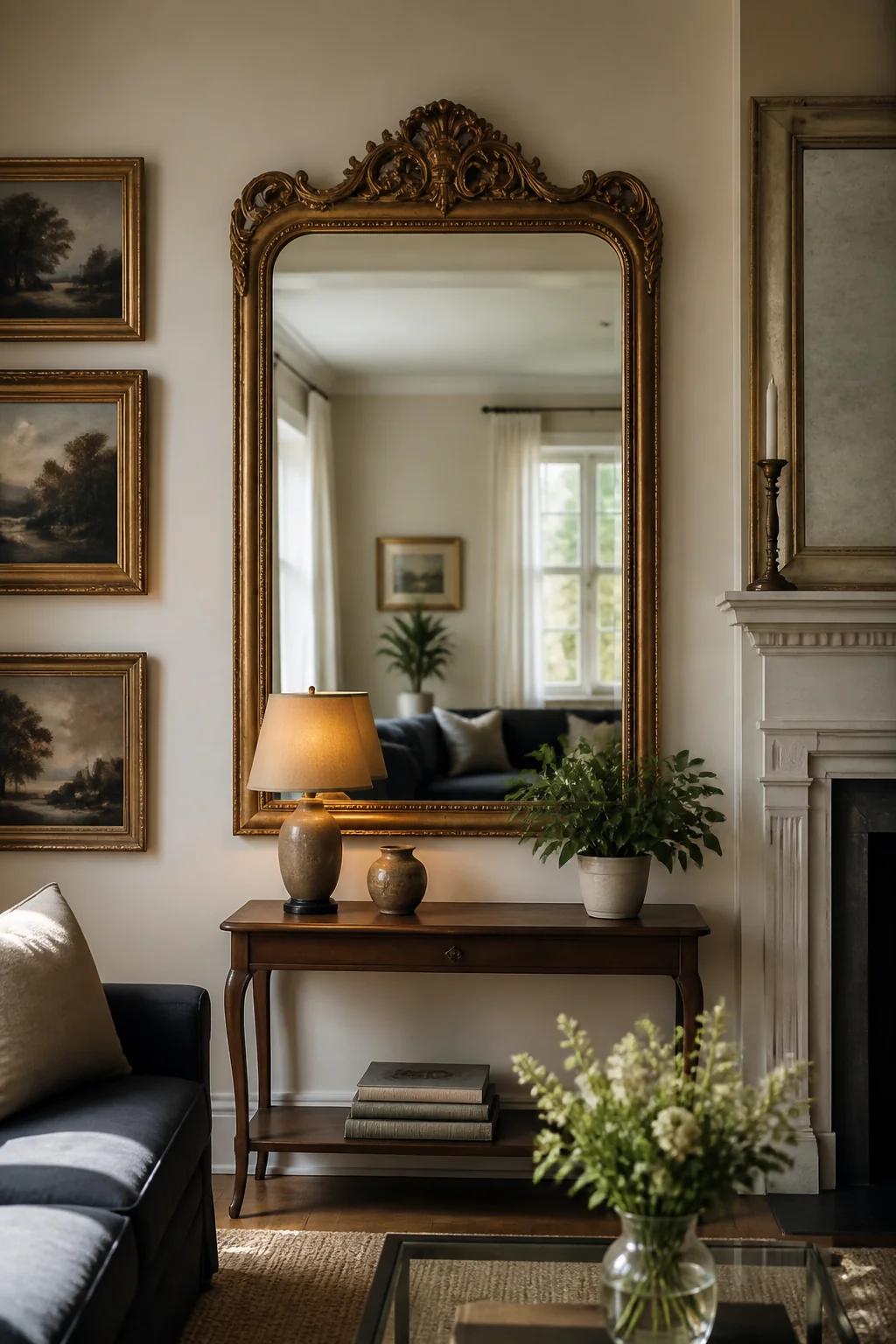
A 4 by 5 foot mirror in a gold or black ornate frame does two jobs at once: it fills the wall the way a large artwork would, and it doubles whatever sits across from it. That second job is the one people forget. Stand where you usually sit and look at the spot you're considering, because a mirror aimed at a blank hallway or the underside of a ceiling fan reflects nothing worth seeing. Point it at a window, a bookcase, or a lamp instead. Expect $120 to $250 at home stores in that size, and expect real weight: framed glass at 4 by 5 feet runs 40 to 60 pounds, which puts you in French cleat territory. Screw the wall half of the cleat into two studs with 2.5 inch screws and skip drywall anchors entirely. Off-center placement reads relaxed, dead center reads formal, which suits a dining room more than a den.
8. Create a living wall with real or faux plants
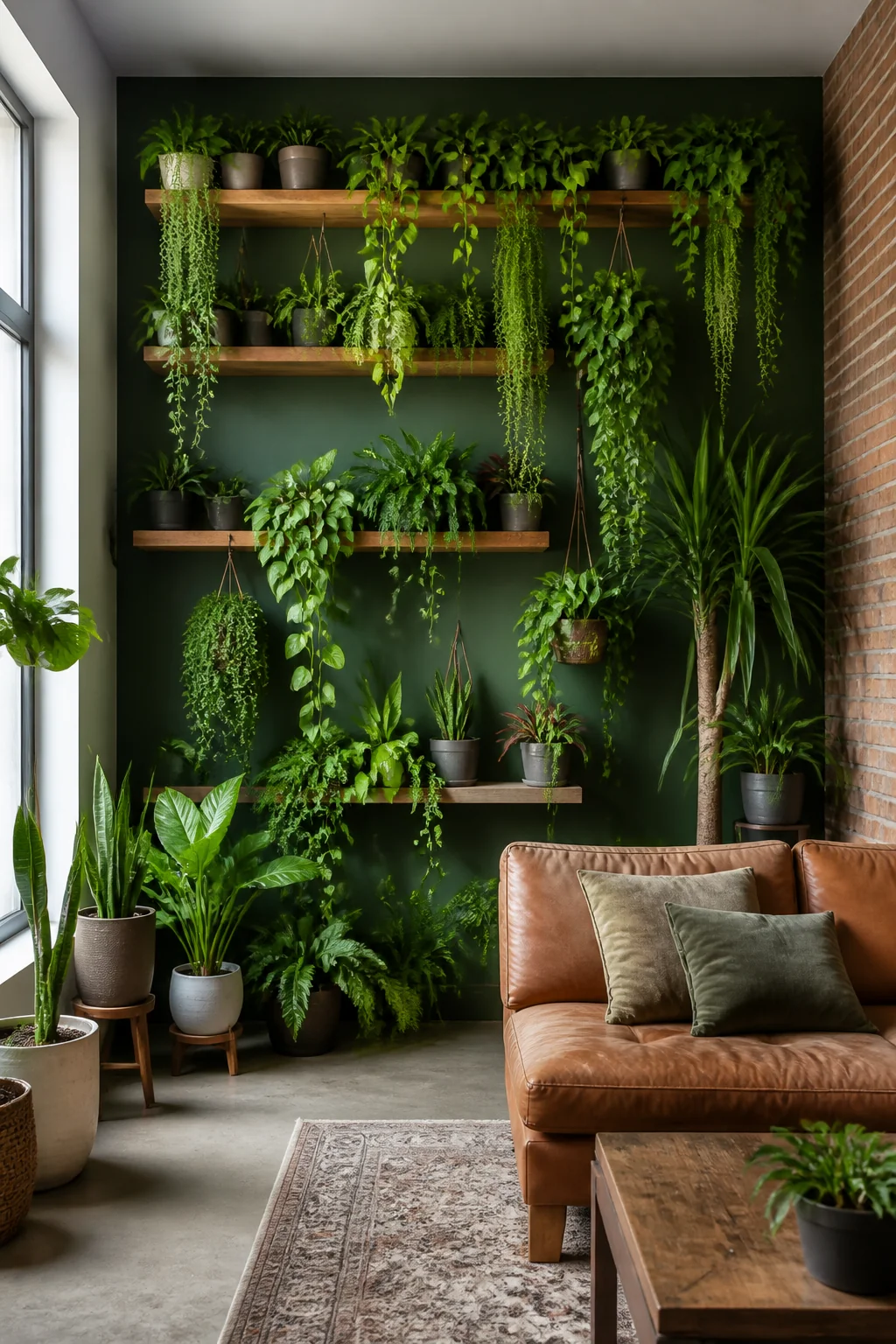
Three to five wooden shelves loaded with plants give a flat wall depth that no printed thing can match. Keep the shelves 6 to 8 inches deep so a standard 6 inch nursery pot sits fully supported, and leave 14 to 16 inches of headroom between them, because trailing pothos and heartleaf philodendron will grow down into that gap and do most of the visual work for you. Real plants want a window within about 6 feet unless you stick to snake plants and ZZ. Water them at the sink and let them drain before they go back up, since a saucer on a wall shelf overflows onto the drywall sooner or later. A wet 8 inch pot weighs 8 to 10 pounds, so catch studs where you can. Faux botanicals run $100 to $200 for a full wall and go anywhere, though cheap ones fade in direct afternoon sun and need dusting every few weeks.
9. Set floating shelves in a bookshelf grid
Where the staggered version is loose, a grid is deliberate, and a big wall can carry that formality. Six to eight shelves of matching length, say 30 inches, in two columns of three or four, with identical 14 inch vertical gaps and a consistent 3 to 4 inch gutter between the columns. The regularity is the entire effect, so mark every hole against a level line before you drill, and measure down from the ceiling rather than up from the floor if your floor slopes. Loaded shelves are heavier than they look: 30 inches of hardcovers comes to 25 to 35 pounds, well past what plastic anchors handle. Get a stud under at least one bracket per shelf and use toggle bolts for the rest. Book spines supply all the color you need, though leaving one shelf in every four half empty is what keeps the wall from reading like a storage unit in an office or bedroom.
10. Commission a custom illustration or portrait
Commissioning gets you a piece sized to your wall instead of to a shelf at a chain store. On Etsy or Fiverr, a 30x40 inch custom illustration runs $100 to $400 depending on the artist's following and how much detail the design carries. Send the wall measurements, two or three photos of the room in daylight, and your real colors, ideally paint chips by name rather than adjectives. Ask up front for a print-ready file at 300 dpi at finished size, and ask how many revision rounds are included, because that second question is where most commissions go sideways. Two to six weeks is a normal turnaround. Plenty of artists deliver the digital file only, which is fine: a local shop will print it on matte or fine art paper for $40 to $90 at that size, and framing adds $80 to $200. Custom work is rarely returnable, so spend real time in a seller's past photos before you pay a deposit.
11. Hang a geometric wall decal that covers most of the space
Decals are the rental answer when you want pattern and can't have paint. A large set of triangles, hexagons or abstract shapes covers roughly a 6 by 8 foot area for $50 to $100, and it comes off later with no patching. Matte vinyl looks far closer to paint than the glossy kind, which reads as sticker the moment a lamp hits it. The surface rule from wallpaper applies here too: smooth, fully cured eggshell or satin holds a decal, while flat matte and orange-peel texture let go within a week. Lay the whole arrangement out on the floor first and photograph it, then transfer it to the wall with a level and light pencil marks, working outward from the center so any spacing drift lands at the edges where nobody looks. To take them down, warm each piece with a hair dryer and pull at a shallow angle, almost flat against the wall, which keeps the paint where it belongs.
12. Paint a bold accent wall in a deep, rich color
Color is the cheapest way to fill this much wall, and at this size it becomes the room's main design decision whether you meant it to or not. Deep emerald, a moody blue, warm terracotta and soft sage all hold up better across 100 square feet than a mid-tone beige, which tends to look undecided at scale. A gallon of quality paint costs $40 to $60 and covers about 400 square feet, so two coats on a 7 by 14 foot wall fit inside one can. Have the store tint your primer toward the finish shade, because deep pigments hide poorly and you'll otherwise be rolling a third coat. Buy two or three sample pots at $6 to $8, paint 2 foot squares, and look at them at breakfast and again under lamplight before you commit. Choose the wall you face from the sofa or the bed, not the one behind your head, the way a minimalist bedroom places its single strong color.
13. Install a ceiling-to-floor fabric wall hanging
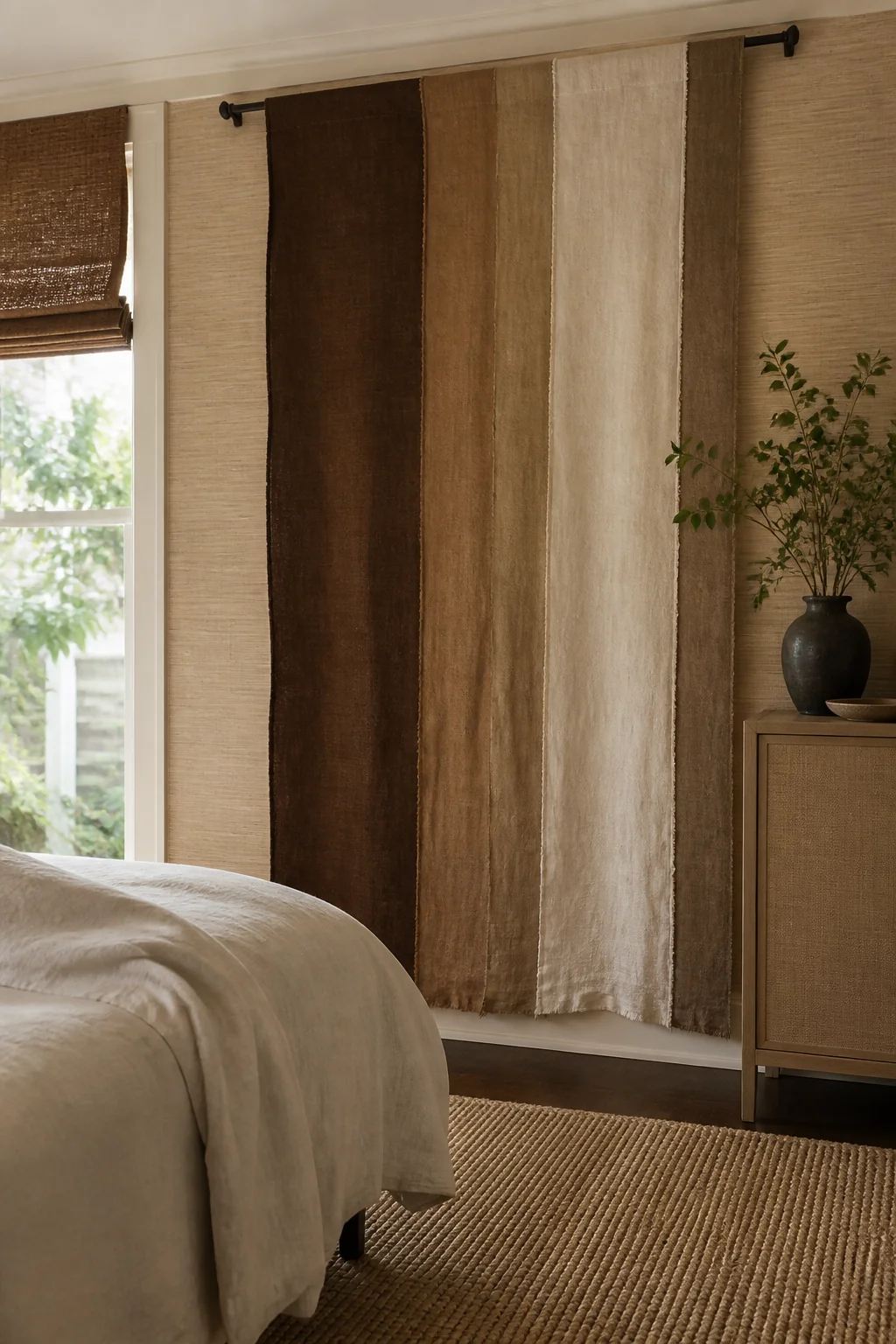
Fabric does something wallpaper can't: it moves a little, and it absorbs sound instead of bouncing it back at you. Drapery-weight linen and cotton come 54 to 60 inches wide, so covering a 14 foot wall means three panels hung side by side rather than one heroic piece. Mount a ceiling track or a row of brackets an inch or two off the wall and hang the panels from clip rings, which lets you take the whole thing down for washing. Allow one and a half to two times the wall width in fabric if you want soft gathers instead of a flat stretched look. Cream or taupe linen reads as pure texture and nearly disappears, while a printed cotton becomes the room's pattern. Plain fabric at that scale runs $30 to $70. Steam it while it hangs, keep it clear of radiators and floor lamps, and hem or weight the bottom edge so it falls straight.
14. Arrange a collection of your own artwork and souvenirs
The pieces most worth hanging are usually already in a drawer: postcards, ticket stubs, kids' drawings, pressed flowers, photos that never made it off a phone. What turns a mixed pile into something deliberate is uniformity in one place only. Pick a single frame color and a single mat color, then let the contents be as odd as they like. Generous mats carry most of that load: a 4x6 postcard floated inside an 11x14 frame with a 3 inch mat holds the same visual weight as a much larger print, and 11x14 frames cost $10 to $25 each. Ask for acid-free mat board for anything you'd hate to lose, since standard board yellows paper edges within a few years. Hang the group as one tight block with 2 inch gaps rather than scattering it, and keep it off a wall that takes direct afternoon sun, which fades ink and pressed plants faster than anything else in the room.
15. Hang large-scale black and white photographs
Stripping the color lets three to five unrelated images read as one set, which is why nature, architecture and abstract close-ups can share a wall here without arguing. Print at 16x24 or 20x30 inches, the point where a photograph stops looking like a snapshot and starts holding a wall. Check the file before you order: a 20x30 print wants roughly 3000 by 4500 pixels, so a 12 megapixel phone photo sits right at the edge and a cropped one won't make it. Choose matte or luster paper over glossy on any wall facing a window, because glossy throws glare from clear across the room. Online printing plus local framing lands near $50 a piece at 16x24, and $80 to $110 at 20x30. Space them 3 to 4 inches apart with centers at 57 to 60 inches. Keep the conversions consistent, all cool neutral or all faintly warm, since one sepia frame among five neutrals is what your eye keeps snagging on.
16. Create a wooden slat wall accent in a section
Slats catch light differently as the sun moves, which is why the texture holds interest longer than a flat painted panel does. Run 1x2 or 1x3 pine or poplar horizontally across the lower half of the wall, or across a defined 6 to 8 foot section, with 2 to 4 inch gaps. Paint the wall behind them a few shades darker first, or mount everything on a painted plywood backer, so the gaps read as shadow rather than as bare drywall showing through. Eight foot boards cost $3 to $6 each and a half-wall section eats twelve to sixteen of them, putting materials around $60 to $120 before stain. Construction adhesive plus two 18 gauge brads per slat holds fine. Check level every third board rather than every one, and rip the top slat narrower if your ceiling isn't true. It anchors a bed in a cozy bedroom or sits behind a desk in a home office, where poplar takes paint more evenly than knotty pine.
17. Layer oversized abstract art with floating shelves
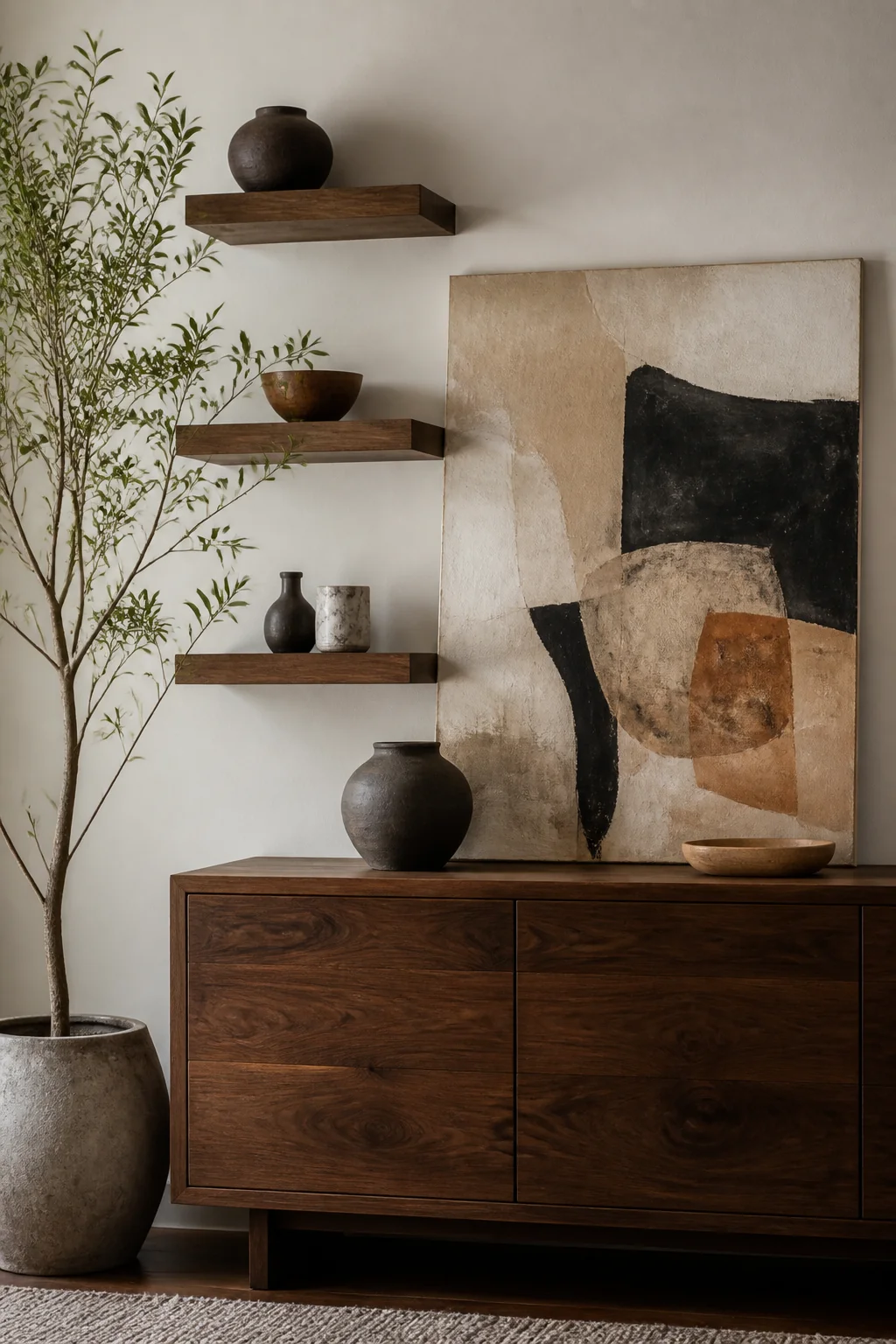
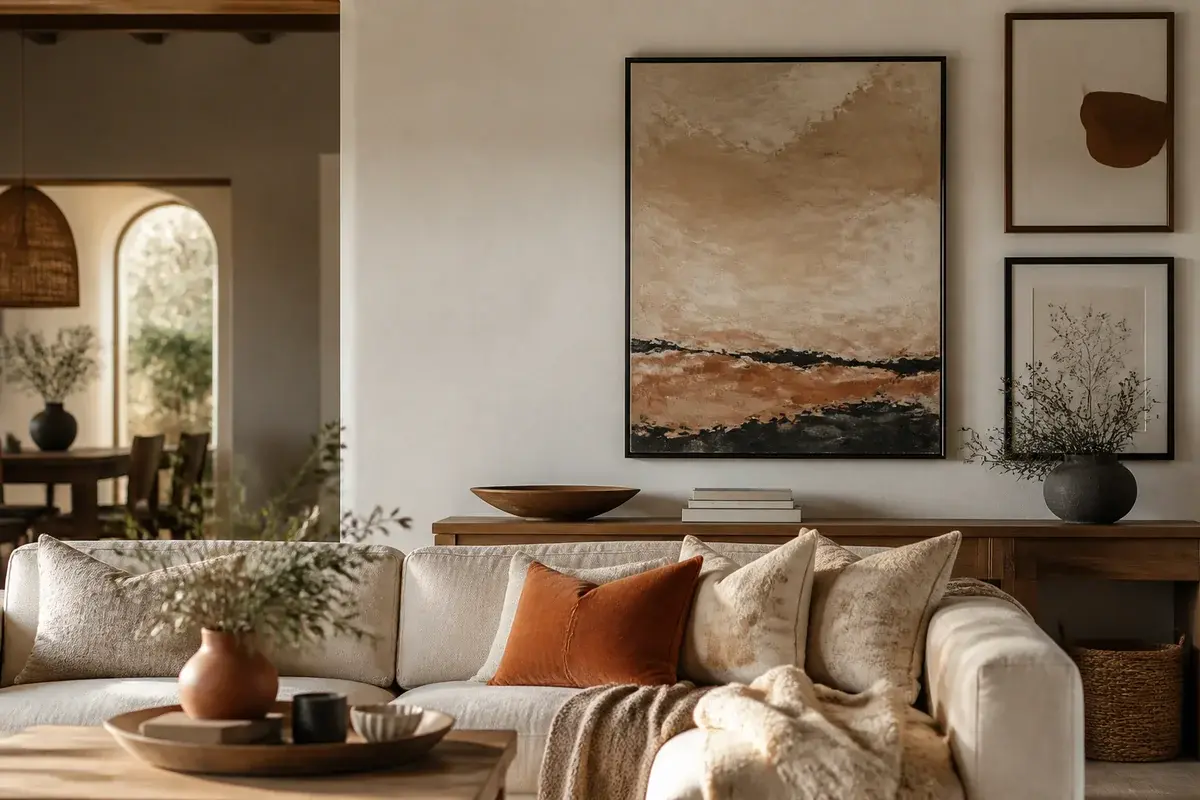
This last arrangement borrows from two earlier ones and settles the balance between them. A single 48x60 inch abstract canvas carries the wall, and two slim shelves underneath add function without competing for attention. Stretched canvas at that size is lighter than it looks, 12 to 18 pounds, but it's awkward to hold flat, so use two hooks about 18 inches apart and have someone steady the bottom edge while you seat it. Ready-made runs $150 to $400; blank canvas and acrylics come to about $60 if you'd rather paint it yourself, and large abstract shapes forgive an unsteady hand better than small ones do. Keep the shelves 4 to 6 inches shorter than the canvas at each end and 10 to 12 inches below its bottom edge, so the three pieces read as one stacked block instead of three separate decisions. Then underfill them. A plant and a leaning book on each is the whole idea; add more and the canvas stops being what you see first.
Pin this for later
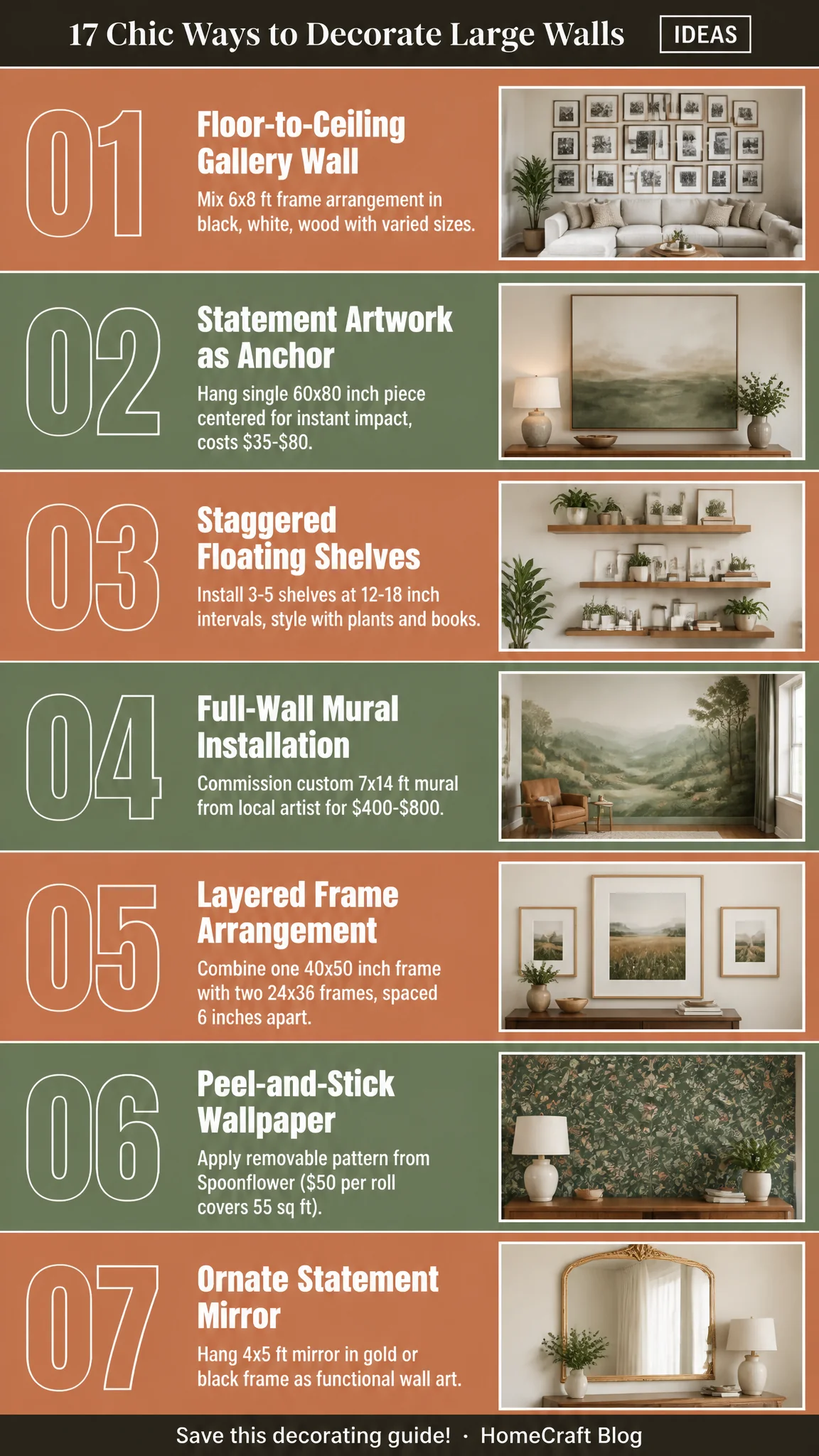
If there's one thing to get right before any of this, it's the anchor. Almost every idea here fails the same way: the right piece, the wrong fastener, and a slow sag that turns up three weeks later when nobody's watching. Weigh what you're hanging, find your studs, and buy hardware rated for that number instead of using whatever's already in the drawer. Scale, color and arrangement are all reversible. A 50 pound mirror that comes off the wall at 2am is not.