20 Calm Back to School Study Space Ideas That Cut Distractions
Set up a study corner that holds up all year: desk sizes, paired lighting, chair heights, storage, and sound control, with real dimensions and prices.
This post contains affiliate links. As an Amazon Associate I earn from qualifying purchases. If you buy through our links, we may earn a commission at no extra cost to you.
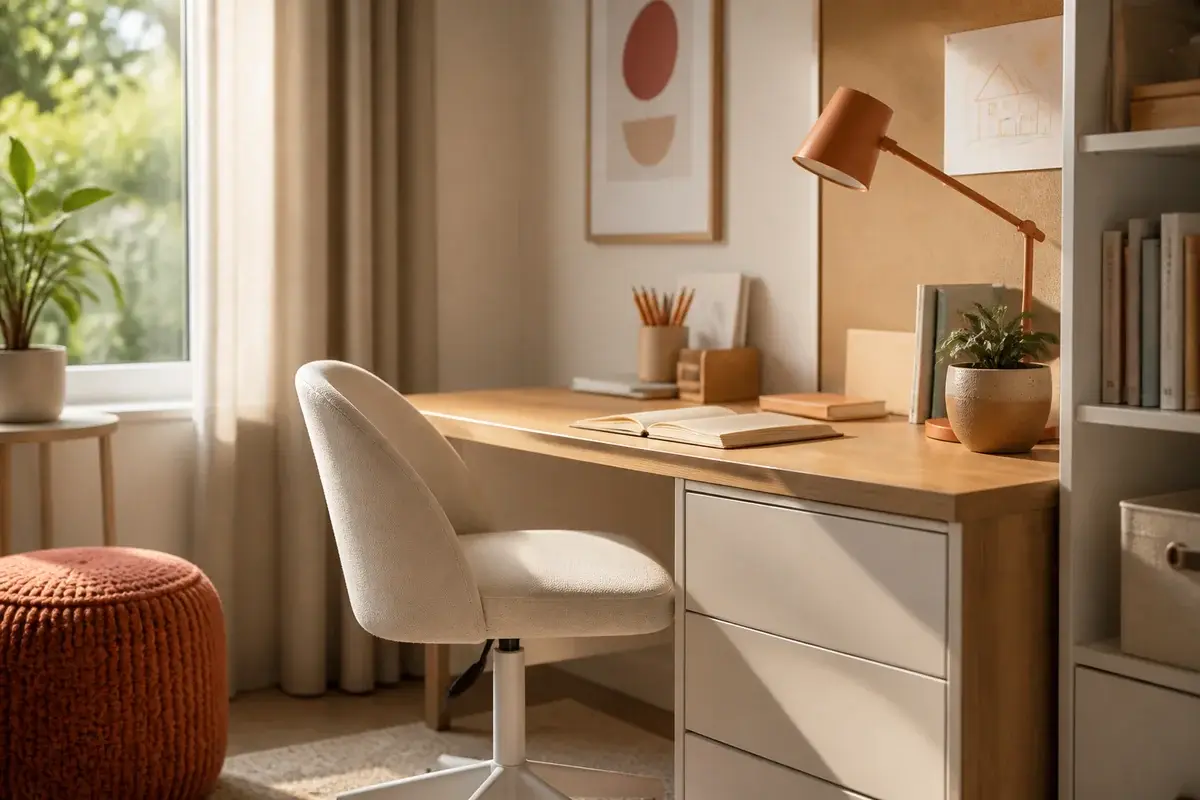
Homework at the kitchen table works until it doesn't. Dinner prep starts, the noise climbs, worksheets slide under placemats, and the calculator disappears for the third night running. A dedicated study zone solves most of that, and it doesn't take a spare room. A corner about 4 feet wide by 3 feet deep holds a desk, a chair, and a rolling cart, which is a footprint you can usually carve out of a bedroom, a landing, or the dead end of a hallway. A calm study zone doesn't need much square footage so much as a clear line between where school happens and where everything else does. Whether you're setting up for a kindergartener, a high schooler, a college student, or yourself, these 20 ideas work across ages and spaces.
1. Anchor with a real desk, even if it's small
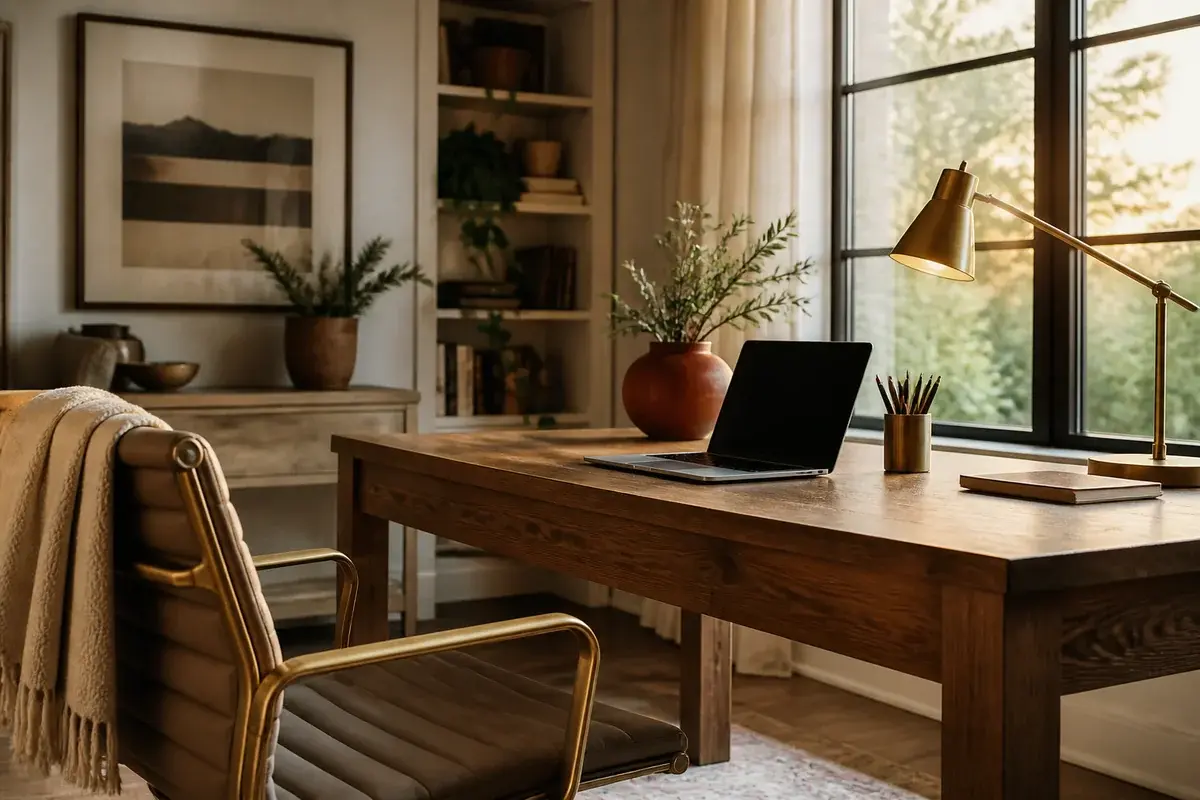
A 36-inch-wide desk holds a laptop and an open notebook side by side, which is really all homework asks for. Look for a depth of 20 to 24 inches. Anything shallower and a 15-inch laptop hangs off the front edge; anything deeper eats floor space you don't have. Standard desk height is 29 to 30 inches, fine for an adult or a teenager. For a child under roughly 4 foot 6, either drop to a 24-inch desk or leave the height alone and add a footrest so their feet aren't swinging. Thrift stores and marketplace listings turn up solid wood desks for $30 to $60, while new flat-pack versions run $80 to $150. Before you commit, check the knee clearance: you want at least 24 inches of open width and 22 inches of depth under the top, or a drawer bank will bruise a knee every evening. The value of a real surface is that it stays cleared for one purpose, which a dining table never can.
2. Layer your lighting with a desk lamp plus overhead light
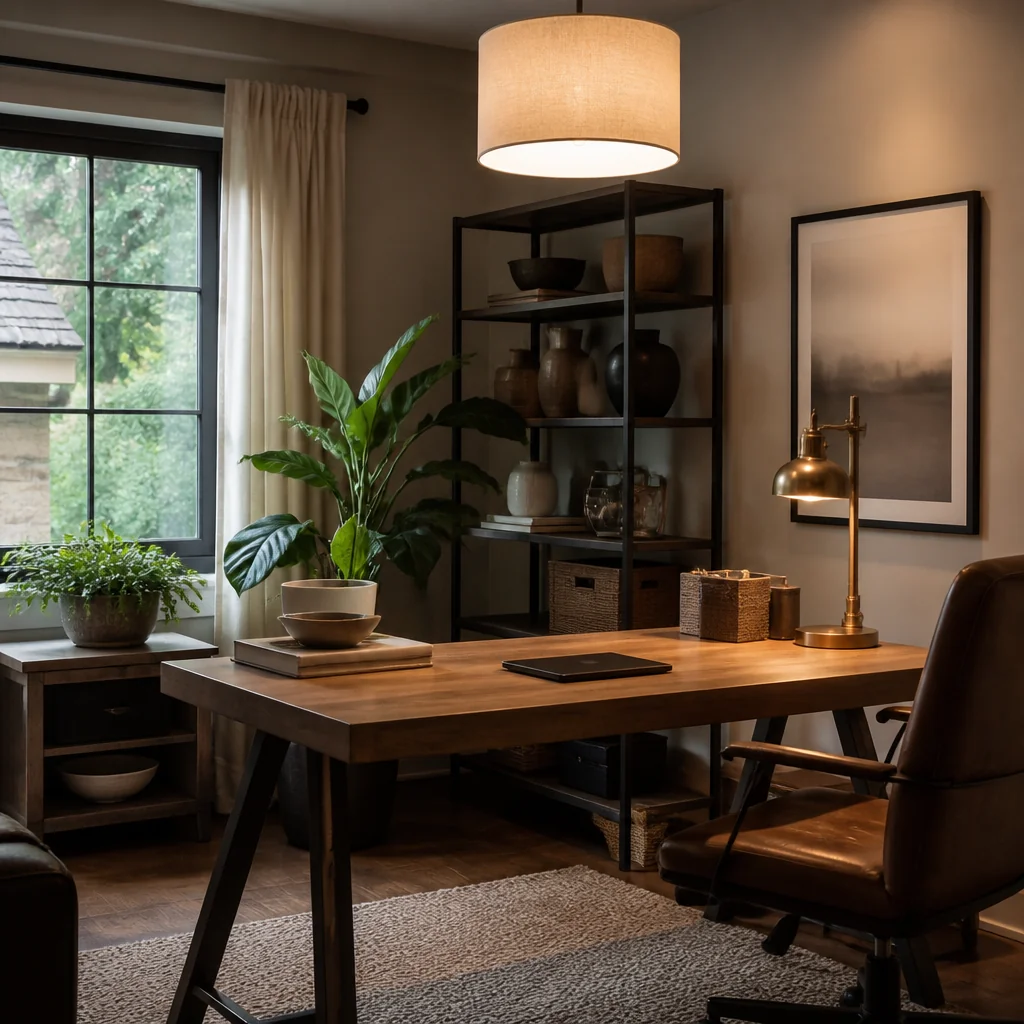
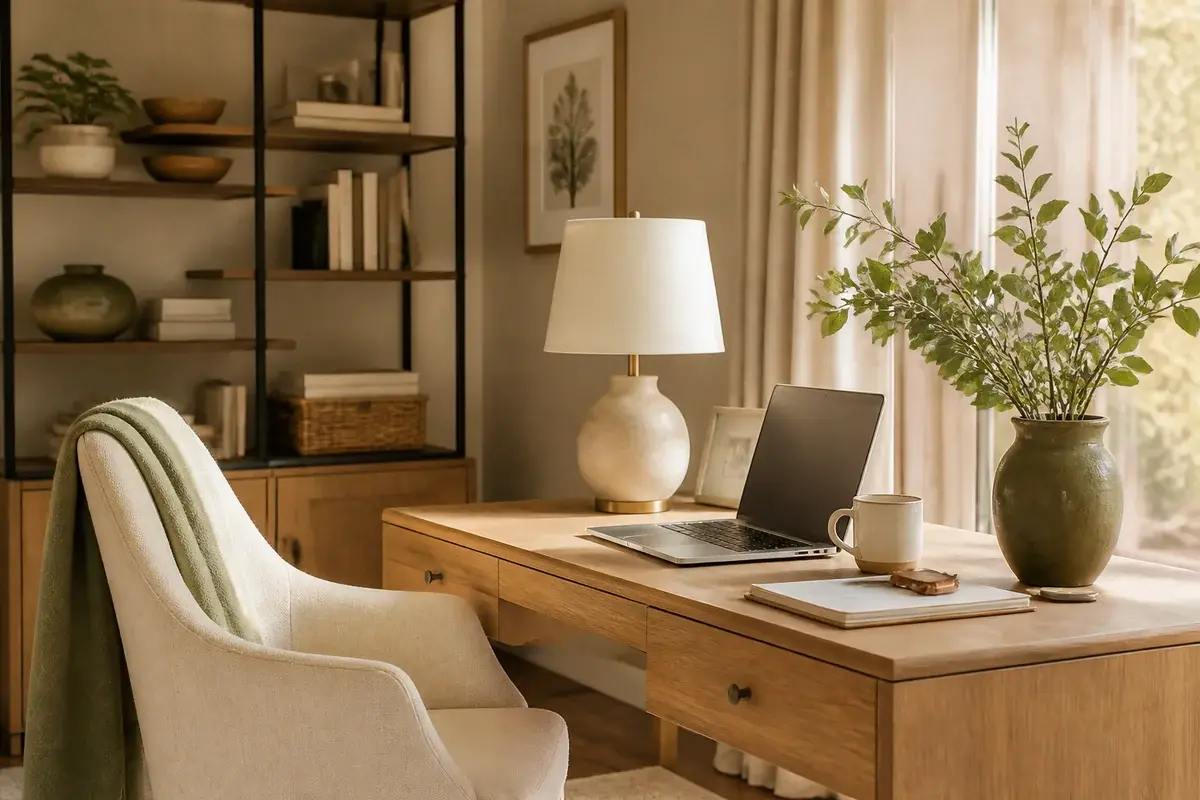
A single ceiling fixture sits behind whoever's working, so their own head and hand throw a shadow straight onto the page. A second source at desk level fills that shadow in, which is the whole reason two lights beat one. A clamp or weighted-base desk lamp runs $20 to $40. Put it on the side opposite the writing hand, so to the left of the page for a right-hander. Aim for a bulb around 800 lumens at 3000K to 4000K. Warmer than that and late homework starts feeling like bedtime; up at 5000K the room reads like a waiting room. No outlet near the desk? A plug-in LED strip light mounted under a shelf costs $15 to $25 and does the same job on a shorter cord. The placement to avoid is a lamp directly behind the laptop, since it throws its own reflection across a glossy screen and makes every line harder to read.
3. Add a small area rug to define the zone
A 5x7 rug is the smallest size that still reads as a room within a room, because it holds the desk, the chair, and the chair's roll-back path. Measure before you order. A desk chair travels 2 to 3 feet backward when someone stands up, and half a chair parked off the edge looks like a mistake. Keep the pile under half an inch. Flatweave cotton or a low-pile synthetic lets casters roll freely; shag grabs them, and it swallows every eraser crumb and pretzel shard that lands there. Expect $40 to $120 for a 5x7 in that construction, plus about $20 for a thin rug pad, which matters more than it sounds: an unpadded rug on hardwood creeps a little further across the floor every time the chair pushes off. In a shared bedroom the rug is doing the real work, drawing the border that says one half of this room is for school and the other half isn't.
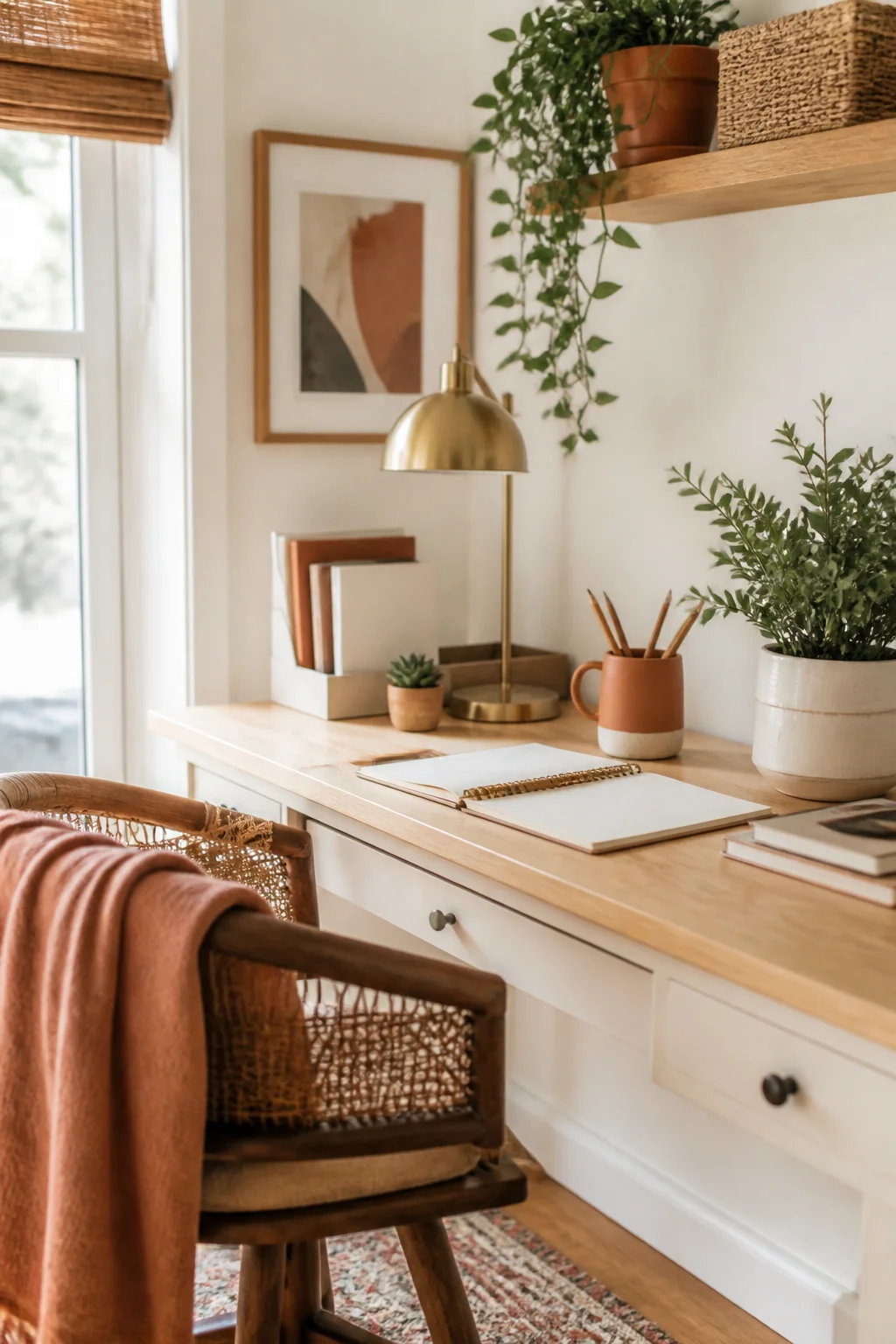
4. Use a rolling cart for supplies and books
A three-tier cart absorbs the pens, chargers, calculators, and half-used notebooks that otherwise colonize the desktop. The common size is roughly 12 inches deep by 14 wide and 30 tall, and it runs $35 to $60 in powder-coated steel. Measure your desk apron before you plan on tucking it underneath, because at 30 inches most carts are a hair too tall to clear a 29-inch desktop and end up parked at the side instead. Give every tier a job: top for what gets used daily, middle for subject folders, bottom for bulk like printer paper and the stapler. Look for lockable casters, since an unlocked cart rolls away the second someone leans on it. The failure mode here is predictable. A cart with no assigned tiers turns into a vertical junk drawer inside two weeks, so a five-minute reset each Sunday is what keeps it worth having.
5. Hang a pegboard above the desk for vertical storage
A 24 by 48-inch pegboard costs $20 to $25 and turns the blank wall above the desk into storage that never touches the work surface. Here's the step people skip: pegboard needs a half-inch gap behind it, or the hooks have nothing to catch on. Screw furring strips or spacer washers to the wall first, hitting studs at 16 inches on center, then mount the board onto those. Hang it so the bottom edge lands 16 to 18 inches above the desktop, which clears a monitor and still leaves the top row reachable without standing up. A variety pack of hooks, small bins, and a cup holder adds $8 to $15. Renting and can't drill? A pegboard leaned against the wall behind the desk and steadied with one adhesive strip at the top will carry light things like scissors, headphones, and a tape dispenser, though it won't hold a loaded bin.
6. Choose a chair that supports good posture
Set the seat so feet rest flat and knees sit level with hips, which usually lands between 16 and 21 inches of seat height for a teenager or adult at a 29-inch desk. Check the seat pan as well: you want two or three fingers of gap between its front edge and the back of the knee, otherwise that edge presses on the leg through a two-hour session. A chair with a slight forward tilt holds the pelvis upright so the lower back stops slumping into a C shape. Expect $80 to $150 for one with adjustable height, tilt, and lumbar support. Below that you're mostly buying foam that flattens by spring. For a younger kid at an adult-height desk, a $25 footrest fixes more than a new chair would, since dangling feet make anyone fidget. We'd skip the gaming chairs with deep fixed bucket seats: they look built for endurance, but they lock you into one position and fit almost nobody under 5 foot 8.
7. Mount a narrow floating shelf for reference books
One shelf at eye level lifts textbooks, binders, and the dictionary off the desktop. A 24 to 36-inch floating shelf runs $15 to $30, and 6 to 8 inches of depth is the sweet spot: deep enough for a hardback, shallow enough that nobody cracks their head sitting up straight. Books weigh more than people expect, roughly 20 pounds per running foot when they're packed tight, so the hardware is not the place to improvise. Land the bracket screws in studs, or use toggle bolts rated for at least 50 pounds each in drywall. Plastic anchors hold for about a month, then pull out with a chunk of wall attached. Mount the shelf 18 to 20 inches above the desktop so a monitor or a propped-up laptop still fits underneath. If you've got books for three subjects and a lamp, one shelf is the right number. Stacking three turns the desk into a cave.
8. Paint an accent wall in soft gray or sage
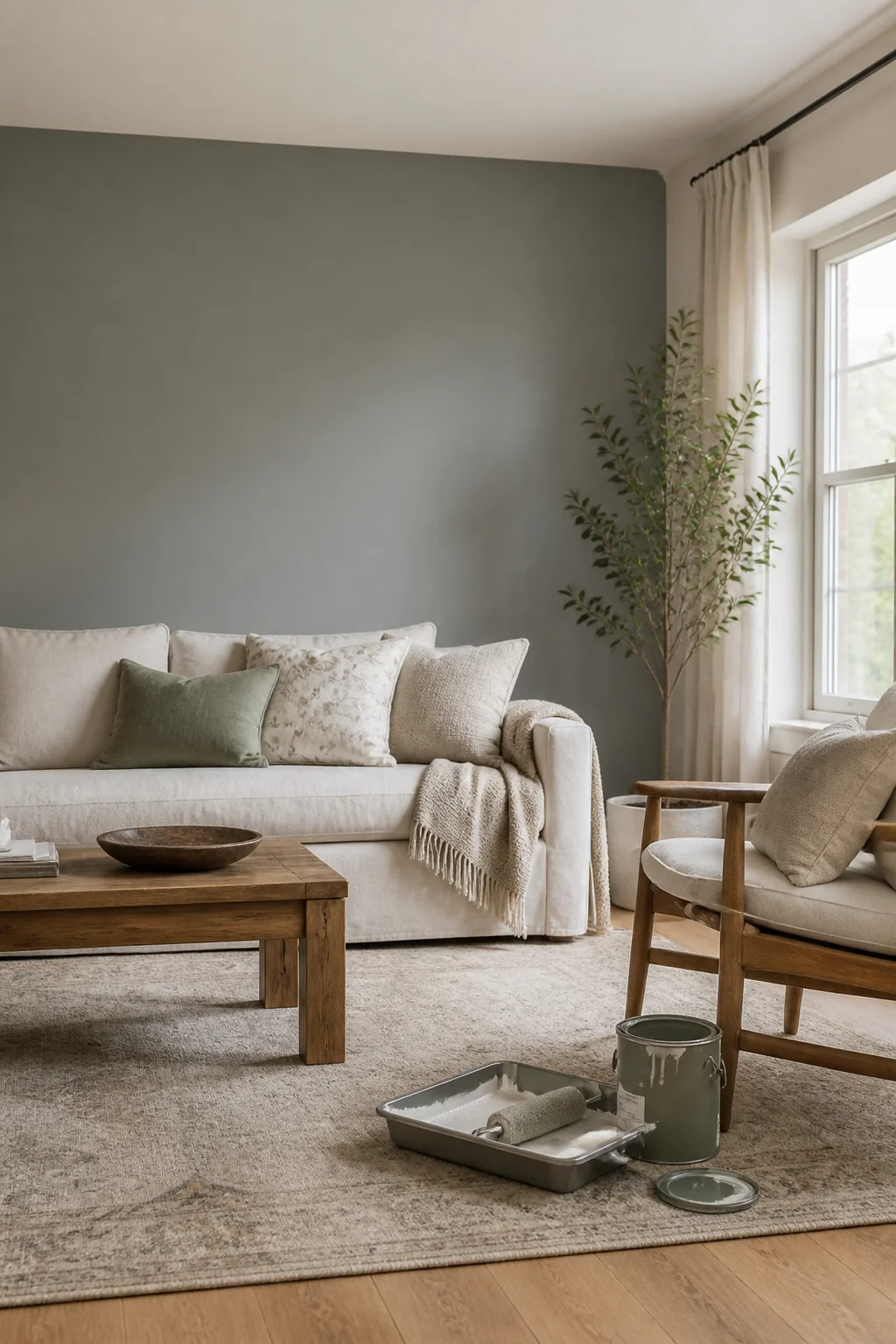
If painting is allowed, the wall the student faces is the one that counts. Grab a single gallon at $30 to $45 and the wall behind a desk will use maybe a third of the 350 to 400 square feet sitting in the can. Soft gray, sage, or a muted clay keeps that field quiet. A saturated color sitting right behind a bright monitor makes the eyes readjust every time they move between screen and wall, and that's what turns into a headache by hour two. Buy two $6 sample pots first and paint 12-inch squares straight onto the wall, then look at them at 8pm under the desk lamp rather than at noon. Colors that read calm in daylight can go green or muddy under warm bulbs. Choose eggshell over flat, since it wipes down at pencil height and flat doesn't. Renting? A peel-and-stick mural panel, or a large piece of plywood painted and leaned behind the desk, gets you the same backdrop with the deposit intact.
9. Add a small plant to the corner
A pothos or a snake plant is the right level of commitment for a desk that already has enough going on. Both tolerate low light, which is what a study corner usually offers, and both prefer to dry out between drinks. Water a 6-inch pot every two to three weeks, and only once the top inch of soil is dry to the touch. A plant that size costs $12 to $20, plus a few dollars for a cachepot with a saucer. Skip any pot without a drainage hole. Water pools at the bottom, roots rot within a month or so, and in the meantime the base sweats onto whatever it's standing on. Set it on the corner away from the writing hand so it isn't getting elbowed all evening. Pothos will trail a foot or more off a shelf edge in a single season, which softens the hard line of a floating shelf without adding one more object to the desktop.
10. Install a simple wire shelf above the desk
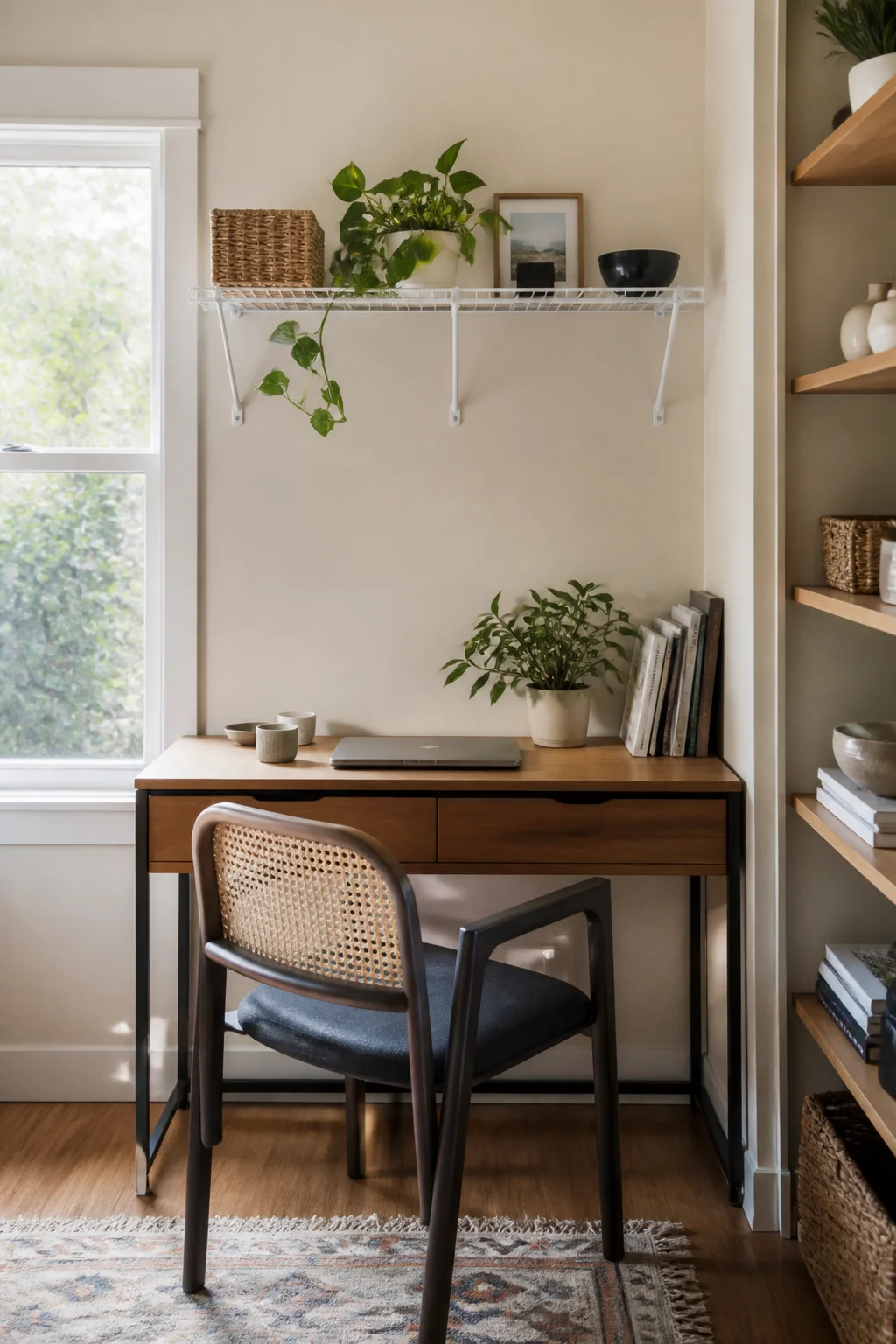
Ventilated wire shelving is the budget version of a floating shelf, and it has one genuine advantage: you can see through it, so it doesn't visually drop a ceiling over the desk the way a solid slab does. A 24 to 36-inch length with brackets runs $15 to $25 at most hardware stores, and it wants a bracket every 16 inches or the wires bow under a row of textbooks. Cut-to-length shelving is usually sold in 4, 6, and 8-foot pieces, so have the store cut one down rather than buying a stock size that overhangs the desk by a foot. The obvious limitation is small items. Pens, erasers, and USB sticks drop straight through the gaps, so anything smaller than a paperback needs a shallow bin to sit in. Keep what's up there down to books in current use, because a shelf that becomes archive storage stops earning its wall space within a week.
11. Use drawer dividers to corral small items
Dividers cost $10 to $15 for a set, and the whole job takes about fifteen minutes. Measure the drawer interior first, both the width and the inside depth. Most desk drawers are only 2 to 2.5 inches deep, and a set of 4-inch bamboo dividers simply won't let the drawer shut. Spring-loaded expandable dividers spanning 12 to 17 inches fit the majority of desk drawers and need no hardware at all. Then do the part that makes it last: empty the drawer onto the desktop, toss the dried-out pens, and sort what's left into no more than four groups. Writing, sticking, measuring, charging. One compartment each. This works because a divided drawer makes putting something away faster than dropping it on the desk, and anything slower than the lazy option gets abandoned by October. If a category won't fit its slot, that's a sign you own eleven highlighters, not that you need a bigger drawer.
12. Hang a whiteboard for daily task lists
An 18 by 24-inch board is the right size: big enough for a day's list, small enough that it can't creep into a wall calendar nobody reads. Melamine boards cost $15 to $30 and are fine for a year or two, but they ghost, meaning old writing stops erasing cleanly once the coating wears. Porcelain-on-steel is closer to $45, still wipes clean after years, and takes magnets, which melamine usually won't. Hang it beside the desk rather than in front of it, with the center around 45 to 50 inches off the floor so it sits at seated eye level. Then hold the line at three tasks a day. A list of twelve reads as failure by 4pm; three gets crossed off, and the crossing off is most of why the board works at all. Once a month, wipe it with a little rubbing alcohol to clear the haze dry-erase residue leaves behind.
13. Layer in soft background sound or a white noise machine
Total silence isn't the goal. A steady floor of sound is, because what breaks concentration is the sudden change: a door slamming, a sibling on the stairs. A white noise machine costs $20 to $40. Fan-based models move real air and never loop, while cheaper digital units play a short recording on repeat and some people hear the seam every ten seconds, so listen to one before you commit. Keep the volume around conversation level and put the machine between the desk and whatever you're masking, usually the door or a shared wall. If music suits the student better, keep it instrumental for anything involving reading or writing, since lyrics compete for the same attention the sentence on the page needs. And for a kid who genuinely works better in quiet, a $25 pair of over-ear muffs beats any machine. Borrow both for a week before spending on either.
14. Add a monitor arm if you use a laptop
A clamp-on arm reclaims the whole footprint the monitor stand was eating, usually around 9 by 10 inches, and lets you set the top of the screen at or just below eye level with the panel about an arm's length away, 20 to 30 inches. Single-monitor gas-spring arms run $30 to $60. Check two things before ordering. First the desk edge: most clamps fit tops between 0.4 and 3.4 inches thick and need 2 to 3 inches of clear space behind for the jaw, so a desk pushed tight to the wall may need pulling out an inch. Second the mounting pattern, which is VESA 75x75 or 100x100 on the back of nearly every monitor. A laptop has no VESA holes, so you either add a laptop tray attachment for about $20 or run the laptop closed with an external screen, keyboard, and mouse. One caution: clamping hard onto a hollow-core particleboard desk can crush the top. A scrap of quarter-inch plywood above and below the jaw spreads the load.
15. Create a closed-off nook with a corner shelf unit
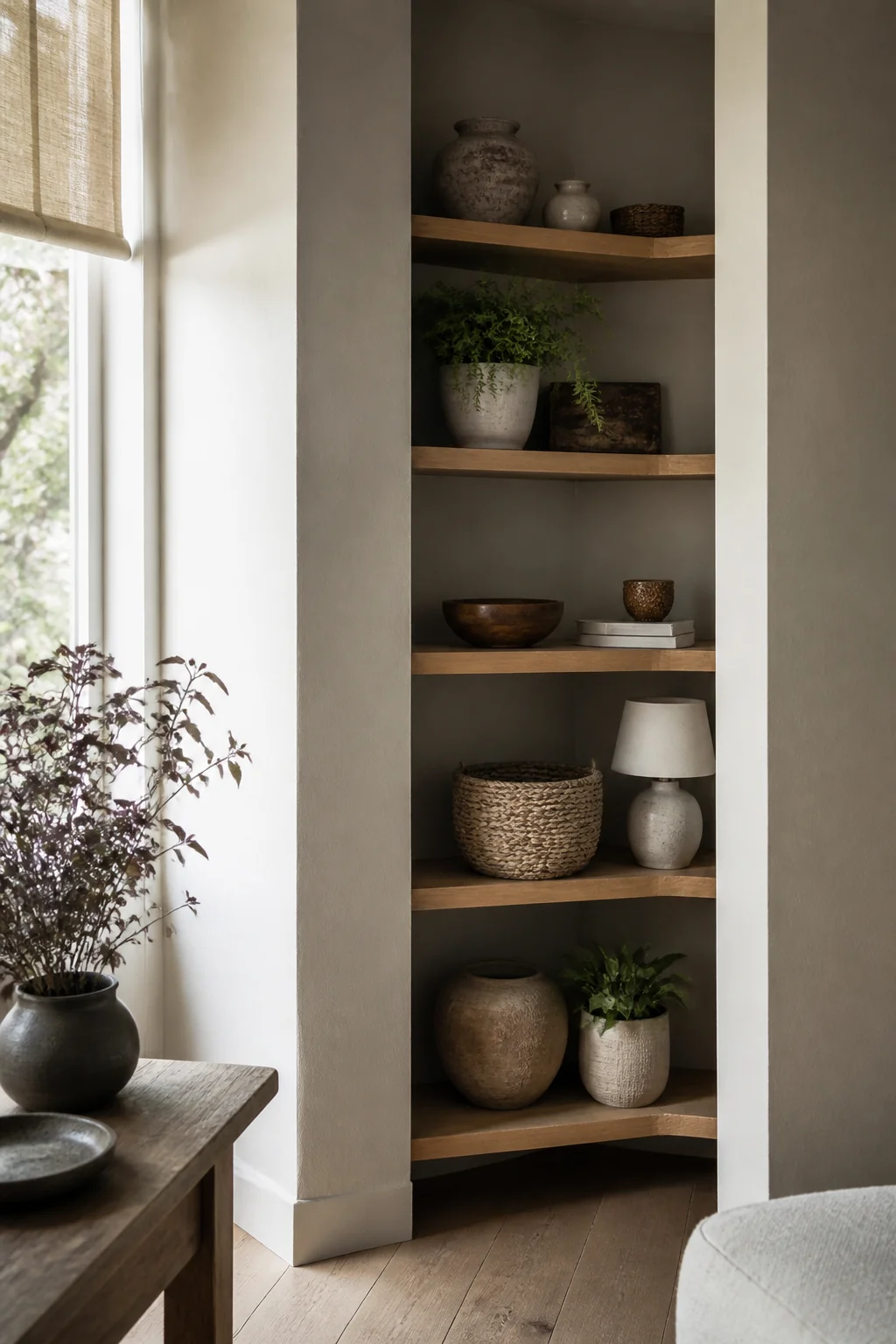
Set a tall narrow bookcase perpendicular to the wall instead of flat against it and it becomes a partial divider, which is why the corner behind it starts feeling like a separate room. Look for 60 to 72 inches tall and only 12 to 13 inches deep. Anything deeper takes a real bite out of the walkway. Budget $50 to $100 for a flat-pack unit that size. Leave at least a 30-inch path alongside it, 36 inches if it's the main route through a bedroom. Anchoring isn't optional, particularly with a younger kid in the house: a loaded 6-foot bookcase standing free will go over if someone climbs a shelf, which is exactly why every unit ships with an anti-tip strap and two screws. Watch what you're blocking, too. If that corner holds the room's only window, turn the unit so its open shelves face the desk and daylight still passes through, or the sense of enclosure costs you a dark box.
16. Use warm-toned string lights around the perimeter
A study space doesn't have to feel clinical to work. One strand run along the top of the wall or around a window frame warms the corner without putting another object on the desk. Buy 2700K warm white rather than the 5000K strands, which read blue and turn the same corner into a garage bay. A 16 to 20-foot LED strand costs $15 to $25, and plug-in beats battery-powered unless you enjoy changing AAs every three weeks. Mount it with adhesive cable clips spaced about 12 inches apart so the strand runs in a clean line instead of sagging between two nails, and keep the run a few inches clear of curtains and bedding. Modern LED strands stay cool to the touch in a way old incandescent ones never did. Just remember what this is: mood light, running alongside the desk lamp rather than in place of it.
17. Keep a small water bottle and snack caddy nearby
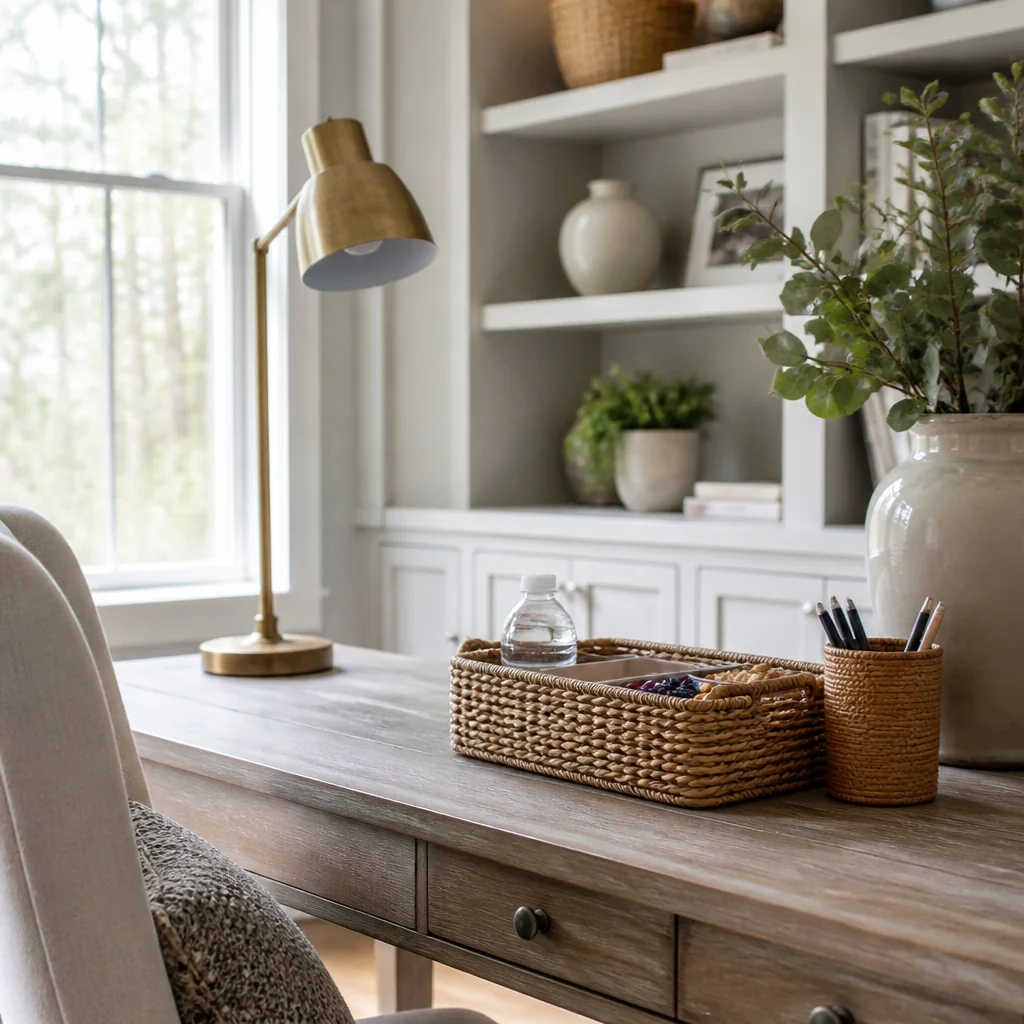
A trip to the kitchen costs far more than the four minutes it takes, because getting back into a half-finished math problem takes another ten. Park a 24 to 32-ounce insulated bottle within reach and keep a small caddy of shelf-stable snacks on the cart: almonds, crackers, dried fruit, anything that doesn't need a plate or a fork. Bottles run $15 to $25, and a wide base tips far less readily than a tall skinny one. Put the bottle on the side away from the writing hand, and where there's a laptop, keep it behind the plane of the screen rather than beside the keyboard. One knocked-over bottle costs more than every other idea on this list put together. Restock the caddy the same day each week so it's never empty at 9pm, which is precisely when an empty caddy sends someone to the kitchen and then to the couch.
18. Mount a cork board for inspiration or reminders
Cork holds what a whiteboard can't: the printed syllabus, the permission slip, the exam timetable that shouldn't be rewritten every week. An 18 by 24-inch board costs $12 to $15. Check the cork thickness before buying, though. Half-inch cork takes a pushpin and closes back up when you pull it out, while the quarter-inch tiles sold in cheap packs let the pin punch through into the wall behind, which is a problem in a rental. A framed board under about 5 pounds hangs fine on two heavy-duty adhesive strips, so no drilling needed. Then give it one rule: nothing stays pinned once it's done. Cork boards fail by accumulation, three layers deep by November, at which point the eye stops registering any of it. One column for this month's dates, one for the current project, and one photo or postcard with nothing to do with school.
19. Add a footrest or under-desk space heater for comfort
When feet dangle or knees ride high, a footrest is the cheapest ergonomic fix available. Look for one 4 to 6 inches tall with a 15-degree tilt, $25 to $40, and it lifts the pressure off the underside of the thighs so the lower back stops compensating. For a younger kid working at an adult-height desk, this counts for more than the chair does. Cold is the other reason people abandon a desk. A small under-desk radiant panel draws 250 to 400 watts and costs $25 to $50, enough to warm the footwell without heating the whole room. If you'd rather run a 1500-watt ceramic heater, plug it straight into a wall outlet, never a power strip or an extension cord, because that's where most heater fires start. Keep three feet of clearance on every side, and buy a model with a tip-over cutoff switch.
20. Set boundaries with a simple "Do Not Disturb" sign
A sign only works if everyone agrees in advance on what it means, so make that a two-minute conversation at the kitchen table. The sign goes up for a set block, say 25 minutes for a younger kid and 45 for a teenager, and during that block the answer to anything short of blood or fire is later. Then it comes down and the door is open again. A sign that lives on the door permanently stops registering inside a week. Handmade costs nothing and tends to work better anyway, since a kid who made the sign has agreed to the rule by making it; printed ones run about $10. No door on the room? Hang it over the back of the chair or clip it to the top of the bookcase divider so it's visible from the entrance. Pair it with a timer everyone can see and the household starts running on the block instead of renegotiating every interruption.
Pin this for later
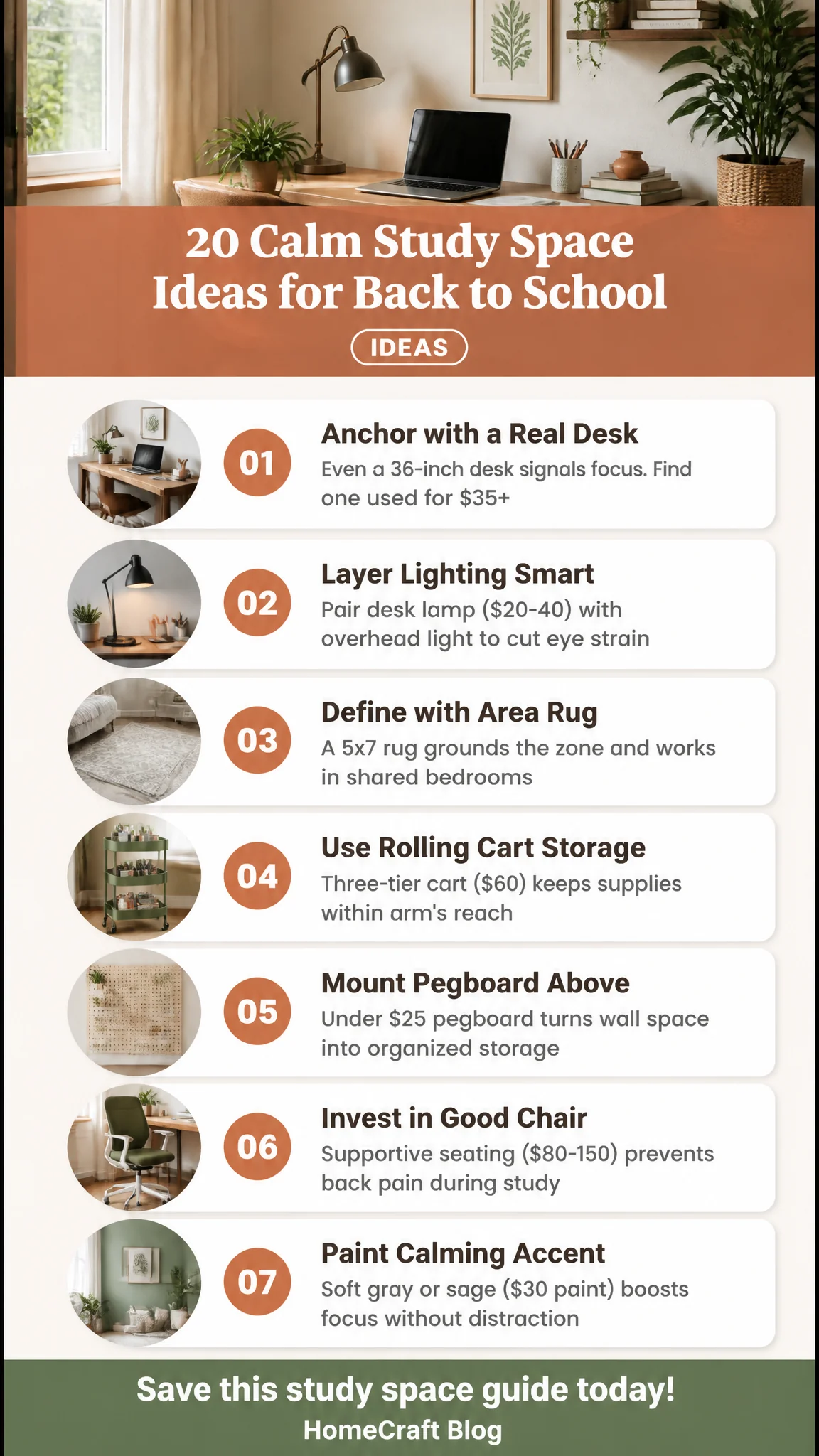
If you only get to three of these, make them the desk, the light, and the chair. Everything else here is storage, comfort, or atmosphere layered on top of a surface at the right height, a page you can see clearly, and a seat that lets you sit at it for an hour. And be honest about the room you have. A study corner sized to the space genuinely available gets used on a Tuesday night in February. A beautiful one that blocks a walkway or swallows the only window quietly empties out by October, and homework moves back to the kitchen table.