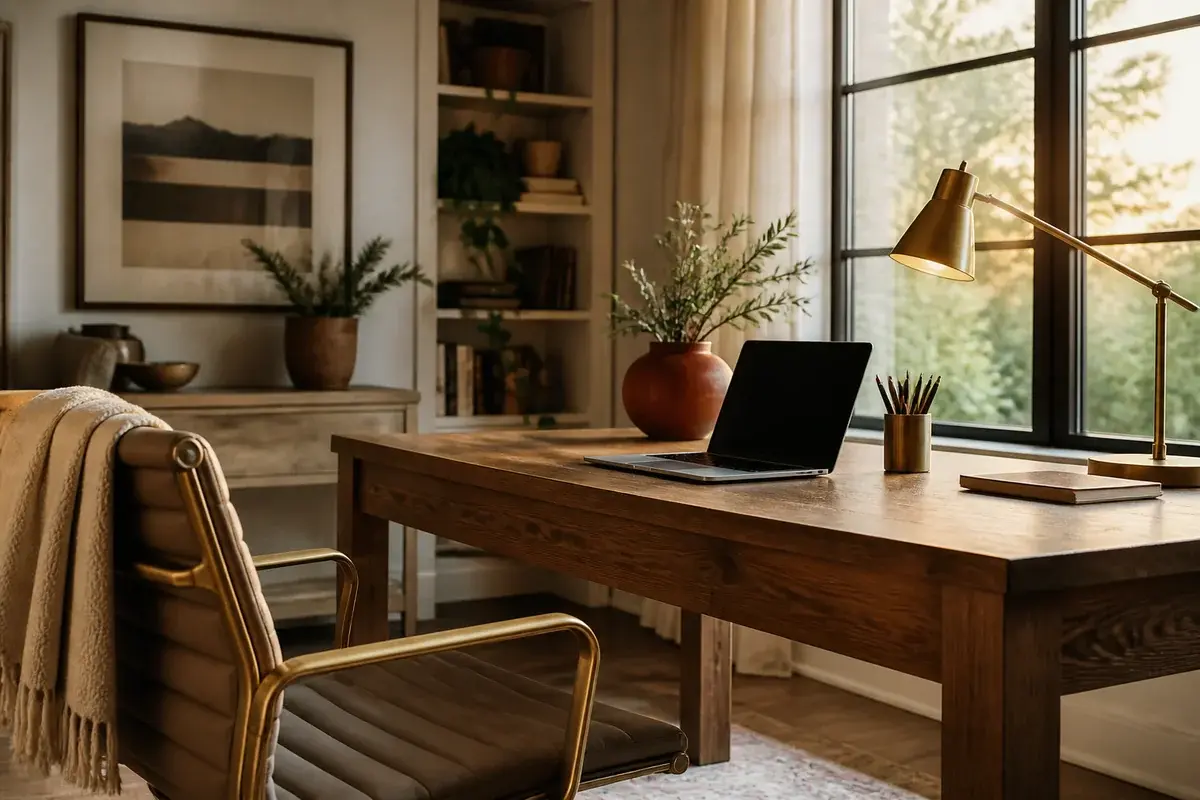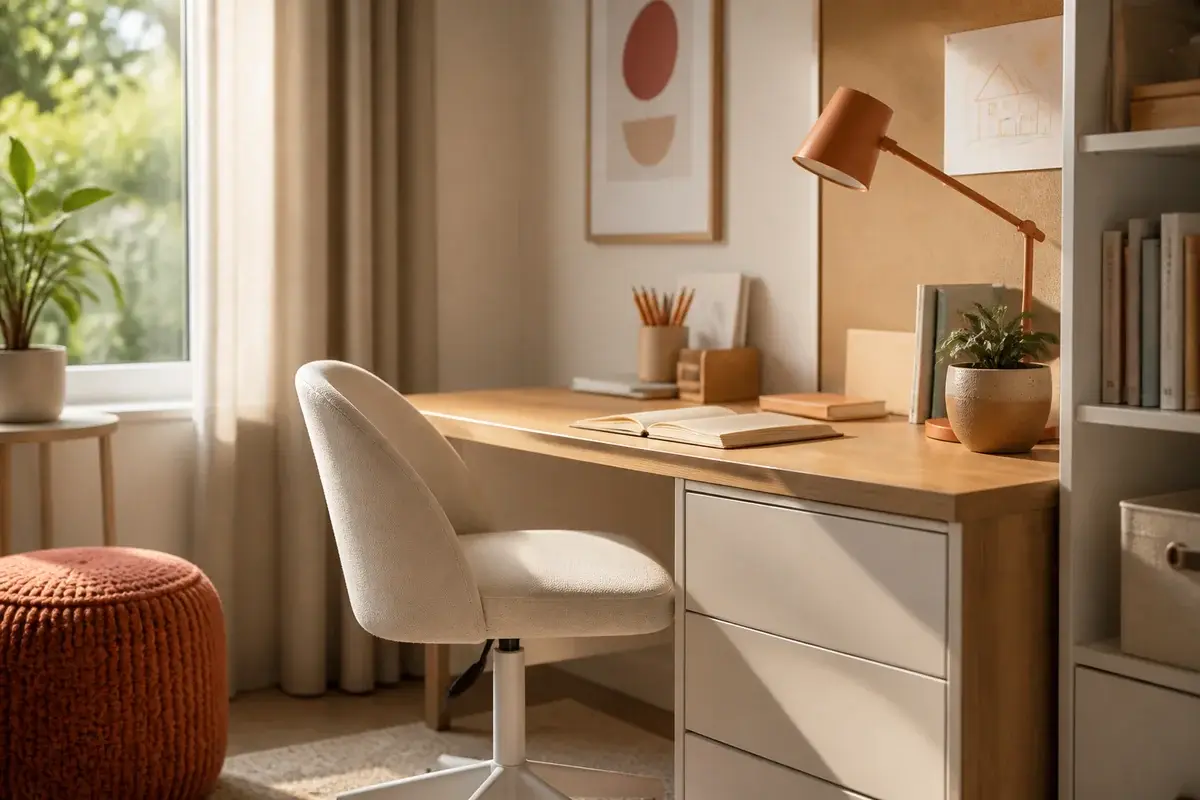
Home Office Decor Ideas for Women: A Setup That Holds Up All Day
Home office decor ideas for women, with real dimensions and prices: chair specs, lighting layers, desk sizes, paint coverage, and storage that fits.
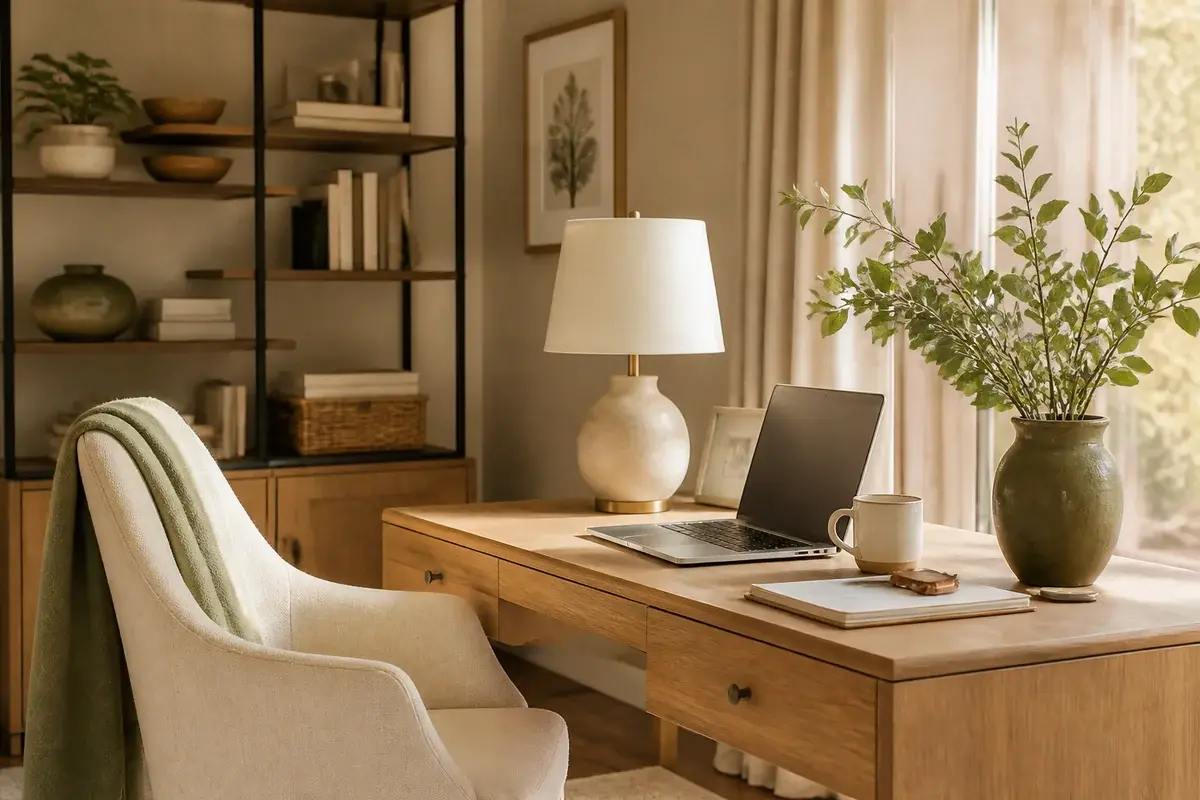
A home office usually starts as a corner. A folding chair pulled up to a spare table, a particle board top from a big box store, a radiator that clanks all winter. It's temporary, right up until it's been eighteen months and your neck hurts by lunchtime.
Here's the honest part. Most of what makes a workspace good has nothing to do with who is sitting in it. Chair support, light layering, and storage behave the same for everyone. Where a difference does show up is fit: standard office furniture is sized around a taller frame, so seat depth, seat height, and desk height are worth measuring rather than assuming. The rest of it is just good workspace design, and it costs less than most people expect.
These home office decor ideas for women are ordered by what your body notices first, with the numbers you'd need to shop from.
Comfort Matters Way More Than You Think
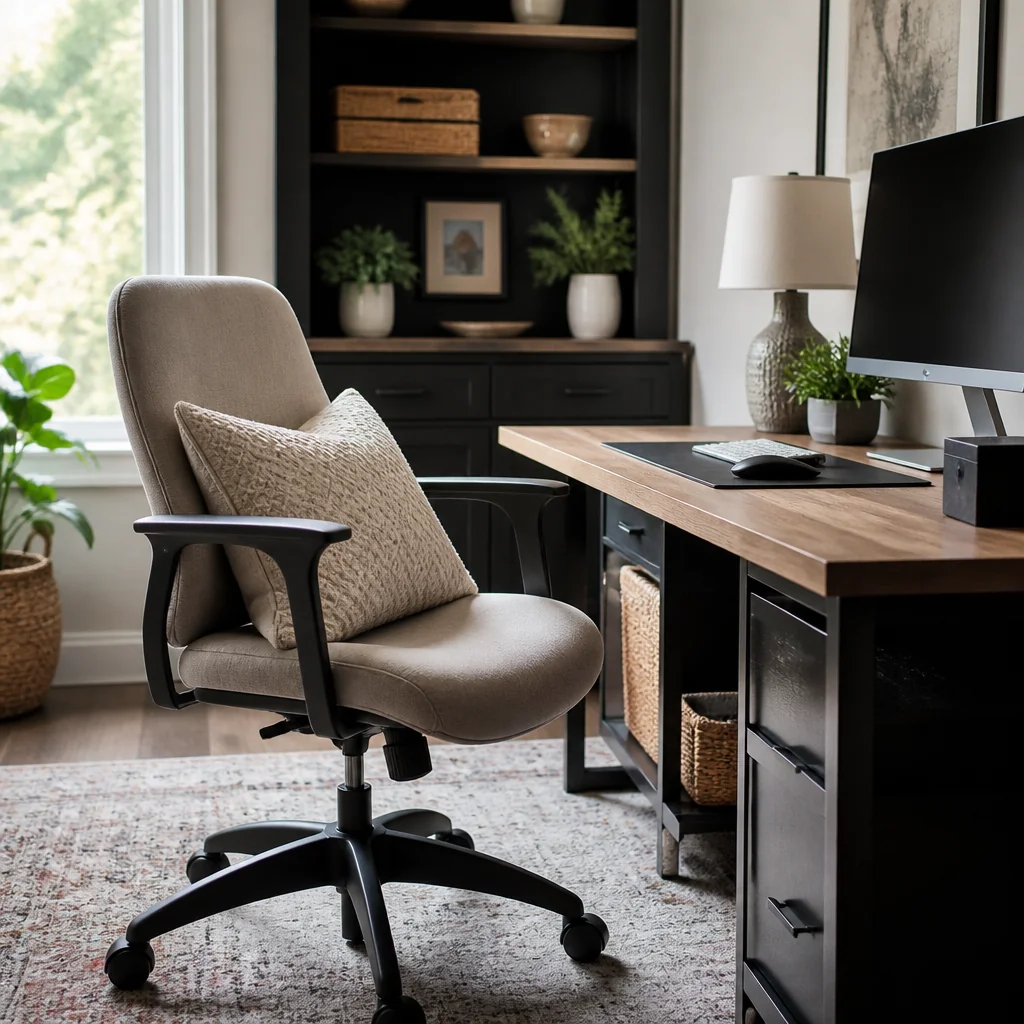
Your chair is where the whole workday happens, and a bad one shows up as neck pain long before you connect it to the furniture.
A dining chair is the usual stand-in, and it fails for a specific reason. The seat is flat, the back is vertical, and nothing supports the inward curve of your lower spine. A couple of hours in, you slump, your shoulders roll forward to compensate, and you spend the afternoon shifting position instead of working.
You don't need a $1,200 chair. In the $150 to $300 range you can get adjustable seat height, genuine lumbar support, and armrests that move. Mesh backing is worth seeking out if your room runs warm.
One spec that almost always gets skipped is seat depth. Most office chairs ship with a 17 to 18 inch seat pan, which digs into the back of the knees if you're under roughly 5 feet 5 inches, and that pressure is what makes a chair feel wrong without anyone being able to say why. Look for a sliding seat pan or a shallower 16 inch seat, then check that the gas cylinder drops far enough for your feet to rest flat on the floor. If it doesn't go low enough, a $25 footrest fixes it.
Desk height matters just as much. Your elbows want to land near 90 degrees, which usually means a surface 28 to 30 inches off the floor. Sit at one before you pay for it.
Lighting That Doesn't Make You Squint
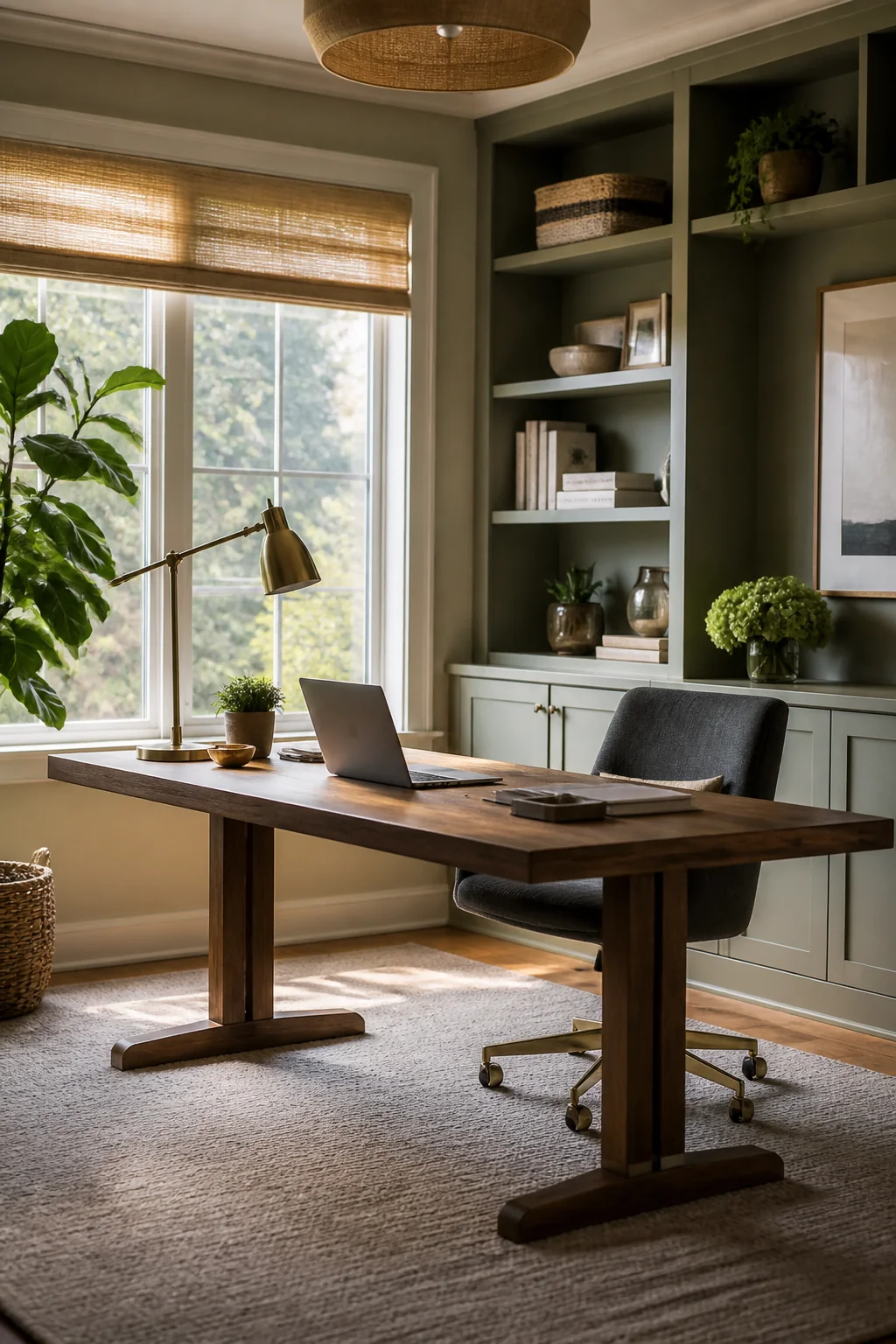
Headaches that arrive around 2 p.m. are usually a contrast problem. Your screen is bright, the wall behind it is dim, and your eyes spend the afternoon adjusting back and forth between the two.
Layering is the fix. Three modest sources beat one bright one: a desk lamp, whatever overhead fixture the room came with, and a floor lamp in the corner to lift the shadows an overhead light throws. Stay warm, 2,700K to 3,000K. Anything above 4,000K reads blue and turns an evening session into a waiting room.
Put the desk lamp beside your monitor, not behind it and not directly above the screen, or the reflection lands in your eyeline. An adjustable-arm lamp around 400 to 800 lumens is plenty for reading paperwork without washing out the display.
Window position is the part people get backwards. A window directly behind the monitor turns your screen into a silhouette and your face into a shadow on video calls. A window directly behind you throws glare across the glass. Sitting perpendicular to it solves both. For the window itself, light-filtering linen roman shades or a neutral roller, roughly $40 to $80 for a standard window, cut the midday sun without putting you in the dark the way blackout curtains would.
Color Choices That Keep You Focused
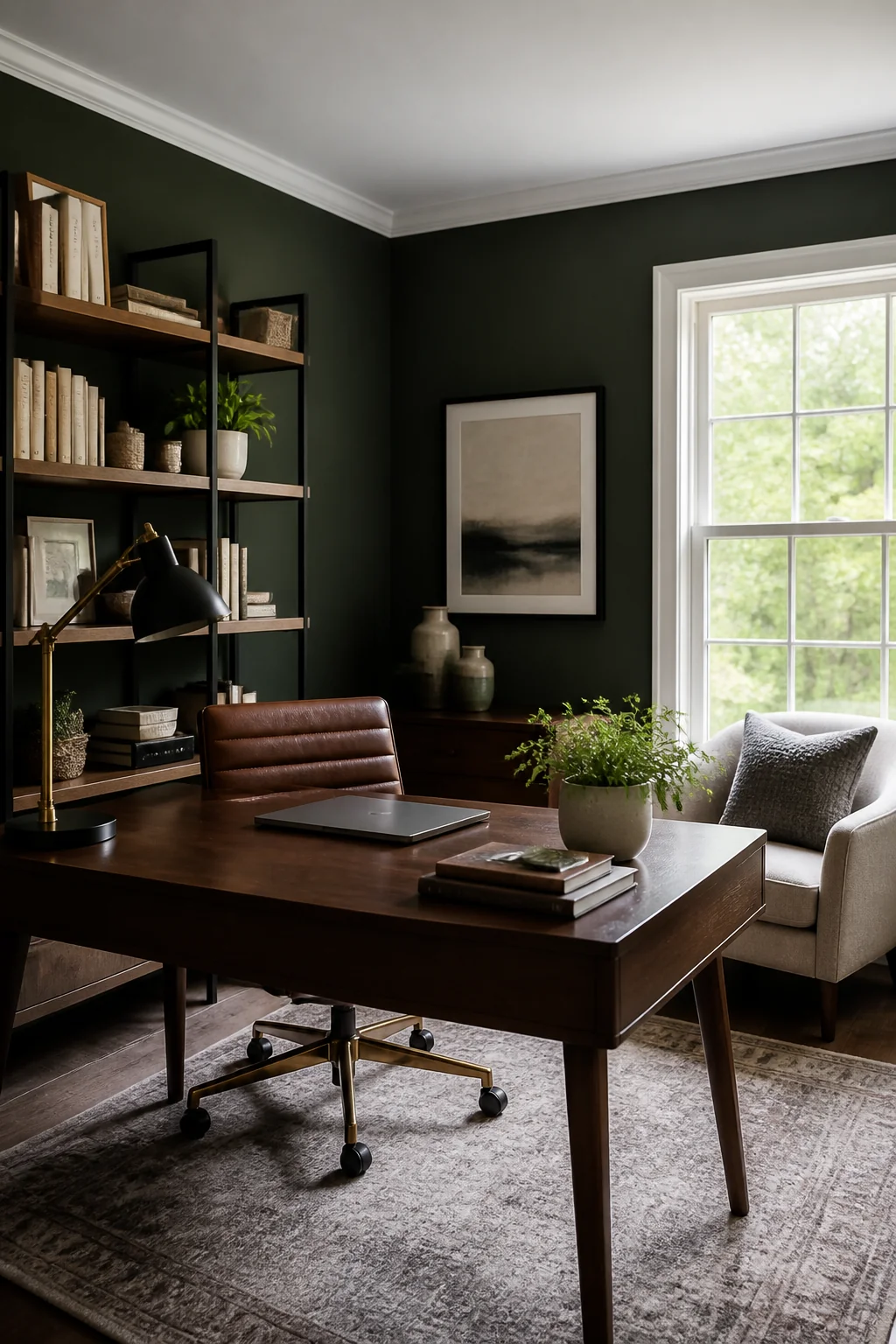
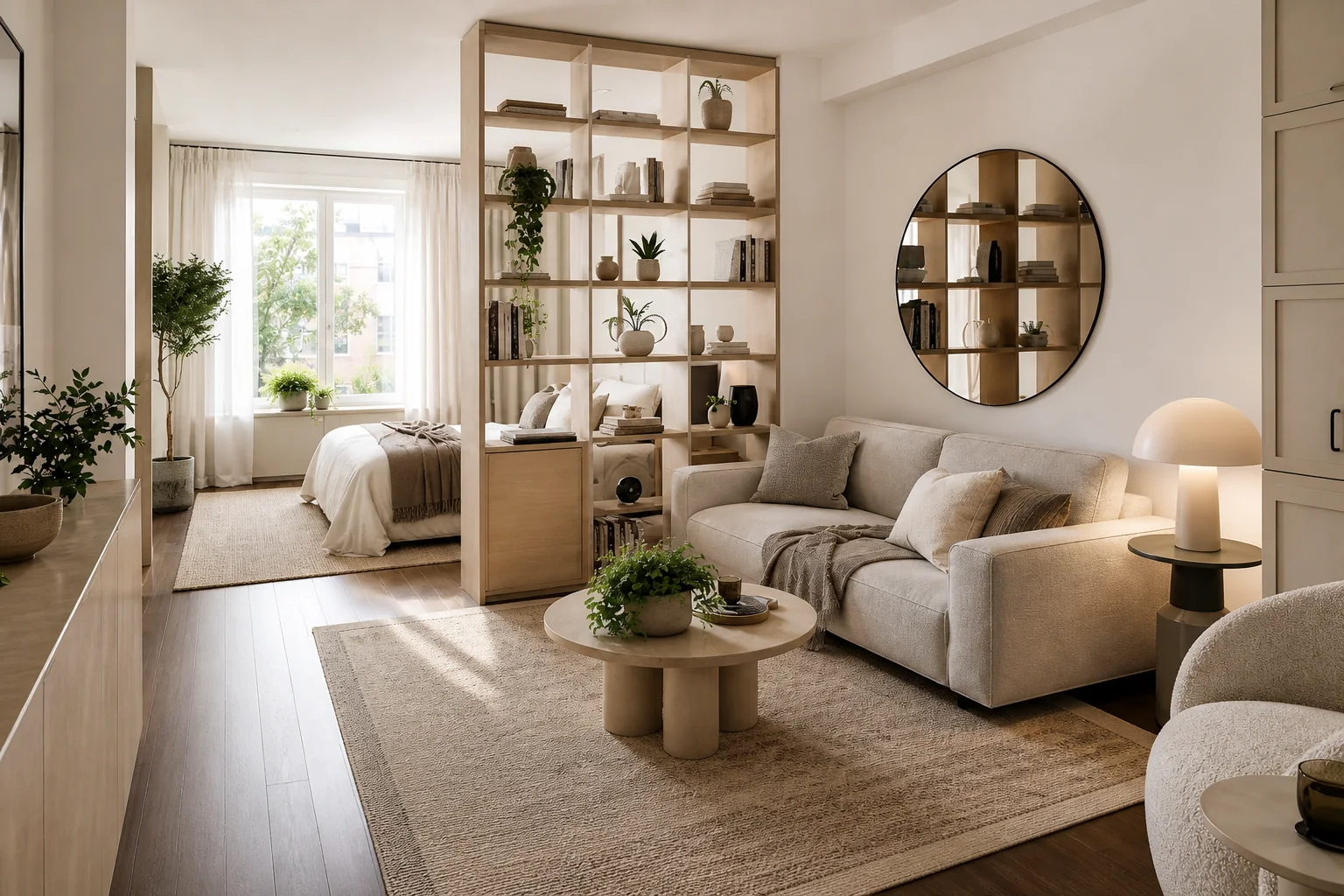
Pink walls aren't the problem. Saturation is. A wall in a high-chroma color fills your peripheral vision for eight hours, and the eye keeps drifting back to it while you're trying to read something else. The muted version of the same color does the job without competing with your screen.
Pale blue, sage, and warm greige land in a comfortable middle range of light reflectance value, somewhere around LRV 55 to 70. That's bright enough to bounce daylight around a small room, and dark enough that the wall isn't glaring beside a lit monitor. If you want a deep jewel tone, put it on the wall behind your chair, where the camera sees it on calls and you don't stare at it all day.
Sheen is worth a moment. Flat paint hides drywall flaws but scuffs where a chair back meets the wall. Eggshell wipes clean, and in a working room that's the safer pick.
Measure the wall before you're standing at the paint counter. Width times height is the number you're buying against, and a gallon stretches over 350 to 400 square feet, so one accent wall in a room this size comes in under a single $30 to $50 can with plenty left for touch-ups. If you're designing a home office with decor ideas that carry over from the rest of your home, pull the color from something already in the room: the rug, a book spine, the wood tone of the desk. Buy two $8 sample pots first and look at them at 9 a.m. and again at 4 p.m. before you commit.
A Desk That Fits How You Really Work
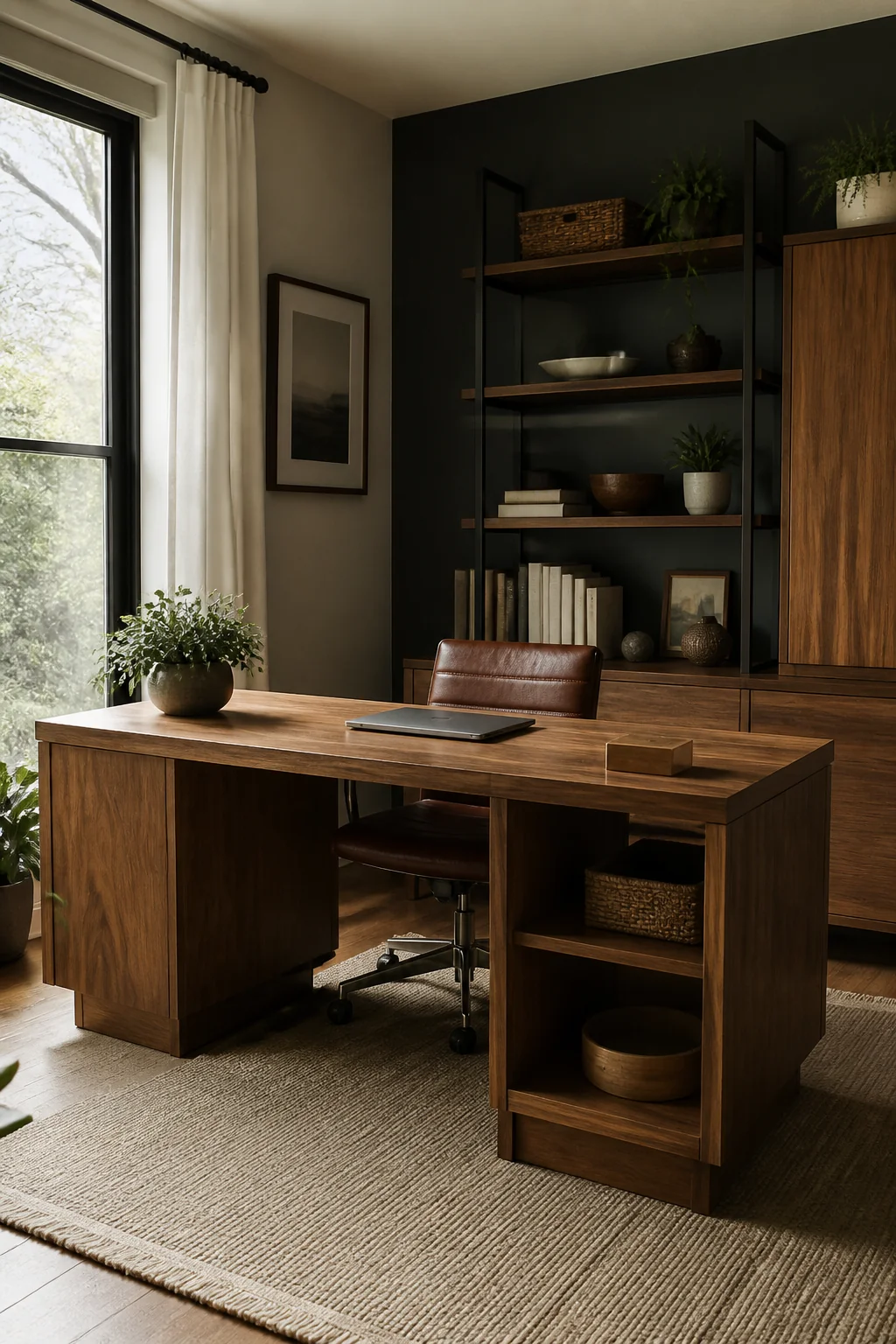
Start with what lands on the surface. A laptop and a notebook need very little. Two monitors, a document stand, and room to sketch need a lot.
The useful numbers: a 48 inch wide top handles a laptop plus one external monitor. Two 24 inch monitors side by side want 55 to 60 inches. Depth is the spec people underbuy. A 24 inch deep desk sits a screen about 20 inches from your face, closer than most people find comfortable for a full day, while 28 to 30 inches lets you push it back to arm's length. Underneath, leave at least 24 inches of clear knee height, and check that a drawer box isn't stealing the space your legs need.
Bigger isn't automatically better. In a small room, a 48 inch desk on the short wall leaves walking room that a 60 inch desk swallows, and visible floor is most of what makes a room read as spacious. Floating shelves above the desk pick up the storage you gave away.
Finish is a genuine trade-off. Solid wood and wood veneer take a mouse well and sand out when scratched. Laminate is cheaper and perfectly serviceable, but a high-gloss top shows every fingerprint and bounces your lamp straight back at you.
Storage That Hides Your Chaos
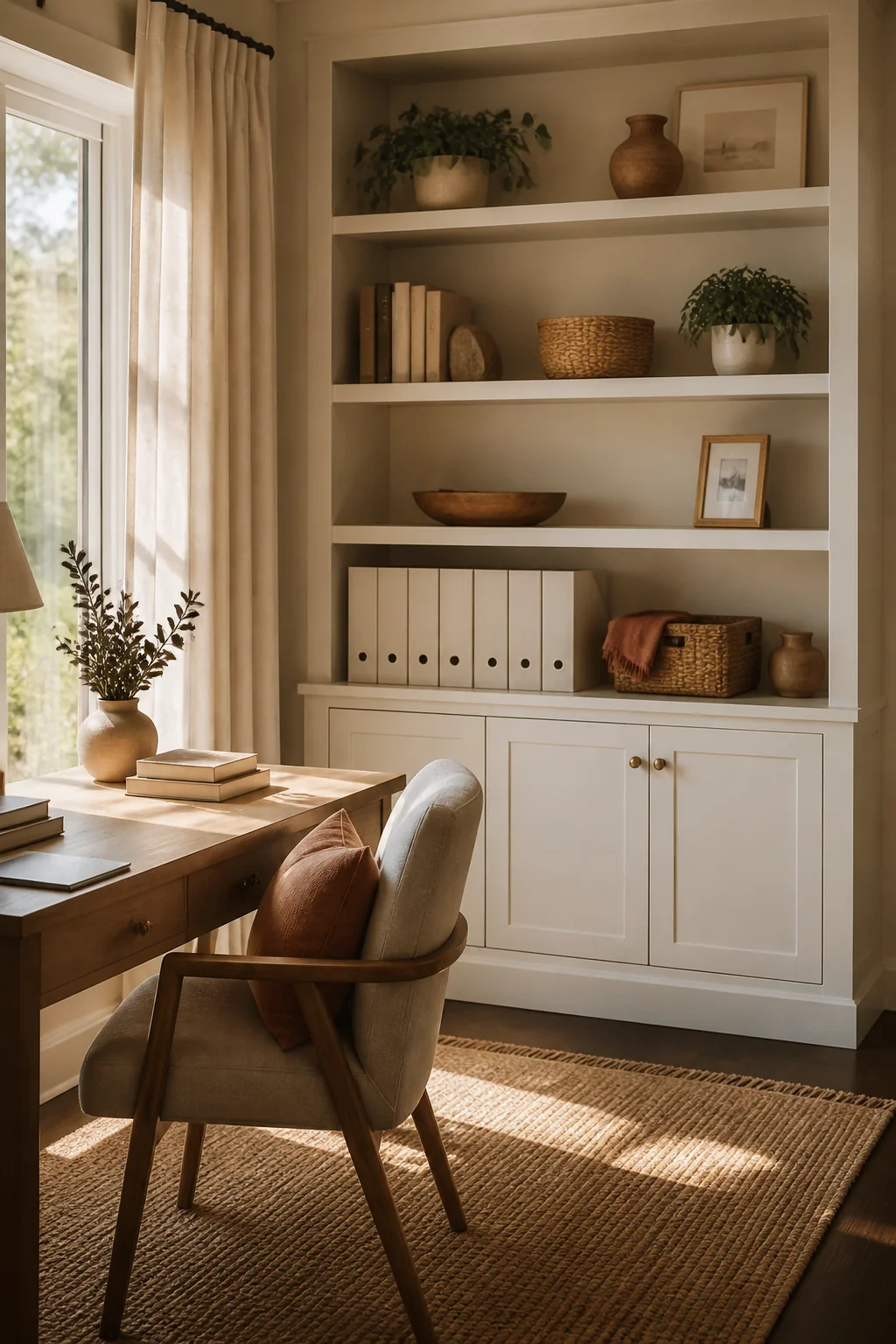
Open shelving photographs beautifully and holds almost nothing you use daily. Chargers, printer paper, spare notebooks, tax folders, the drawer of pens that don't write: none of it looks good on display, and none of it should be the first thing you see at 8 a.m.
Sort by how often you touch something. Daily items stay on the desk or in the top drawer. Weekly items go behind a door within arm's reach. Anything you open twice a year belongs in a labeled box on a high shelf or in a closet, not in prime real estate.
Then measure before you buy. A two-drawer vertical file cabinet runs about 28 inches tall and 15 inches wide, so it slips under a 29 inch desk only if the drawer front clears the apron. Letter folders need 12 inches of interior width, legal needs 15. A 36 inch lateral file holds more per square foot and doubles as a printer stand at a comfortable height. Secondhand steel ones turn up for $30 to $60 and will outlast anything flat-packed.
For cords, a $20 to $30 cable box with a slot at each end swallows a power strip and its tangle. Two or three lidded boxes on the shelf handle the rest.
Greenery and Personal Touches Make It Yours
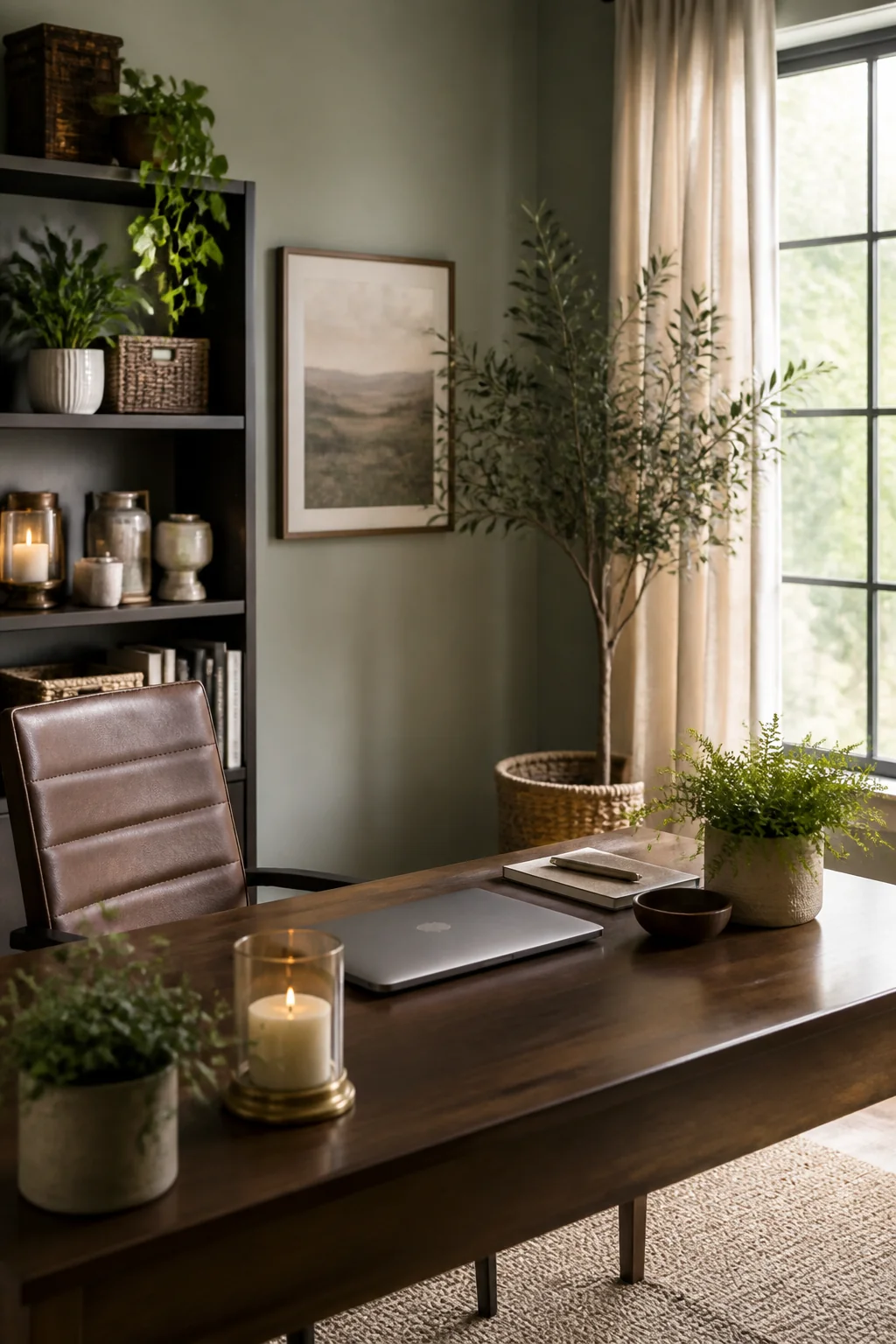
A plant earns its spot for two ordinary reasons. It gives your eyes somewhere to land that isn't a screen, and it gives you one small thing to look after in a room that otherwise stays identical week after week.
Match the plant to the light you have rather than the light you wish you had. A pothos or a snake plant will hold on several feet back from a window and forgives a skipped week of watering. Both run $10 to $20 in a 6 inch pot. A fiddle leaf fig is the one bought on looks in January and dropping leaves by March, because it wants bright indirect light all day and sulks every time it's moved. If your desk sits in a dim corner, that's the wrong plant, and no amount of care will argue it round.
Use a pot with a drainage hole and set it on a saucer. A sealed decorative pot quietly rots the roots, and a wet ring will lift the finish on a wood desk.
For the personal layer, two or three pieces is usually the ceiling before it reads as clutter. An 11x14 print in a 16x20 matted frame runs $25 to $40. Before you drill, sit down at the desk and have someone hold the frame flat against the wall while you measure from the floor to its middle. A reading between 57 and 60 inches is the height a gallery settles on, and from a seated position anything above that starts drifting away from the desk.
Budget-Friendly Upgrades Worth the Money
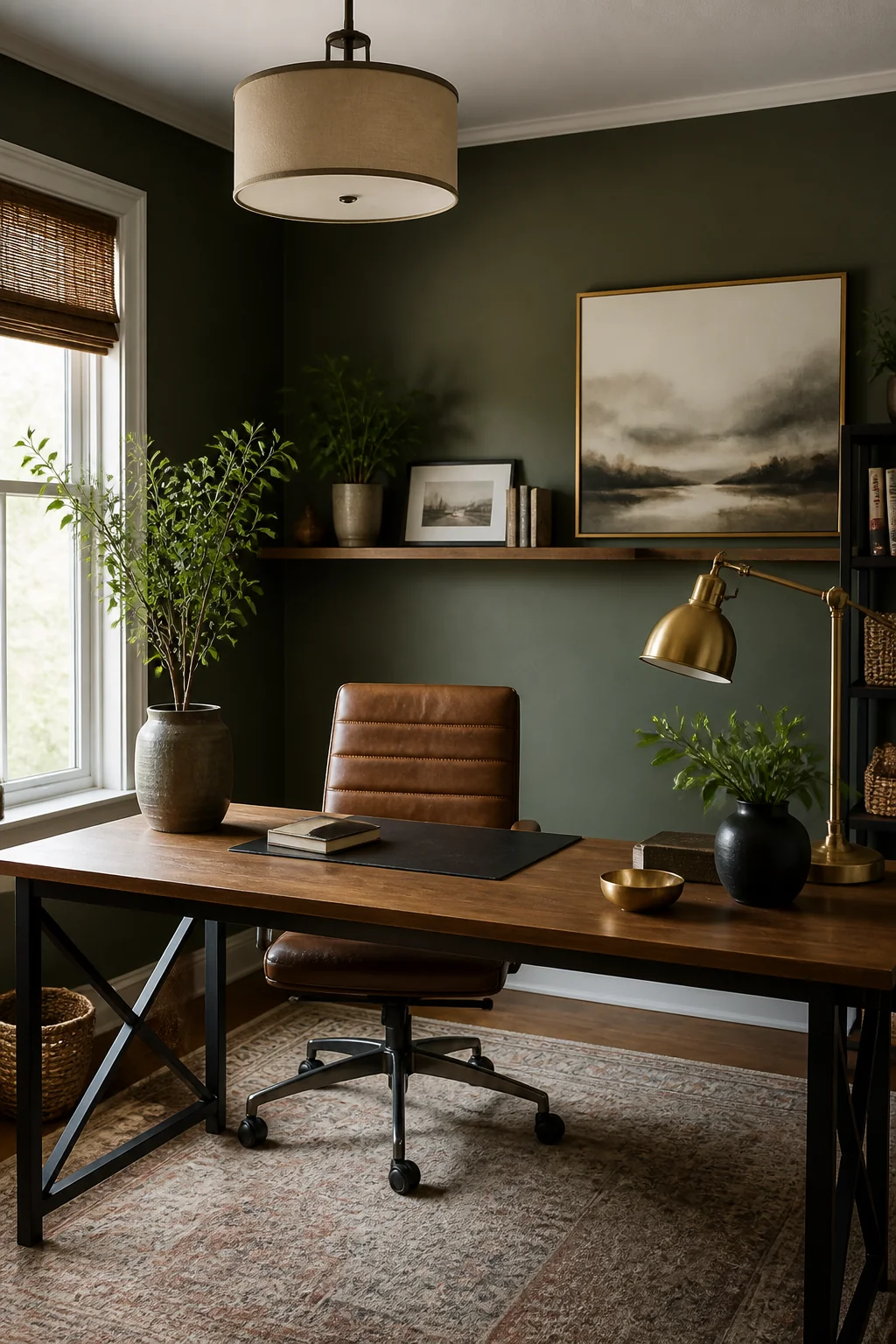
Spend in the order your body notices. Chair first, light second. A $150 to $300 chair and a $30 to $60 desk lamp do more for a workday than any amount of styling, so the first $400 or so of a budget for home office decor ideas for women belongs there.
The desk comes next, and only if the one you have genuinely doesn't fit what you put on it. Paint is the cheapest visible change in the room: under $100 for an accent wall including a roller, tray, and tape. Everything after that can arrive slowly, which is usually how it ends up looking like yours rather than like a set.
Secondhand is where the savings live, specifically on shelving, file cabinets, and side tables. Marketplace listings and estate sales turn up solid wood bookcases and steel cabinets at roughly a third of retail, and older office furniture is built heavier than most new flat-pack. Bring a tape measure, and open every drawer before you hand over cash.
We'd buy the chair new, though. A used task chair with a tired gas cylinder sinks slowly under you all afternoon, and the foam has already compressed to the shape of somebody else. Neither is worth fixing.
Pin this for later
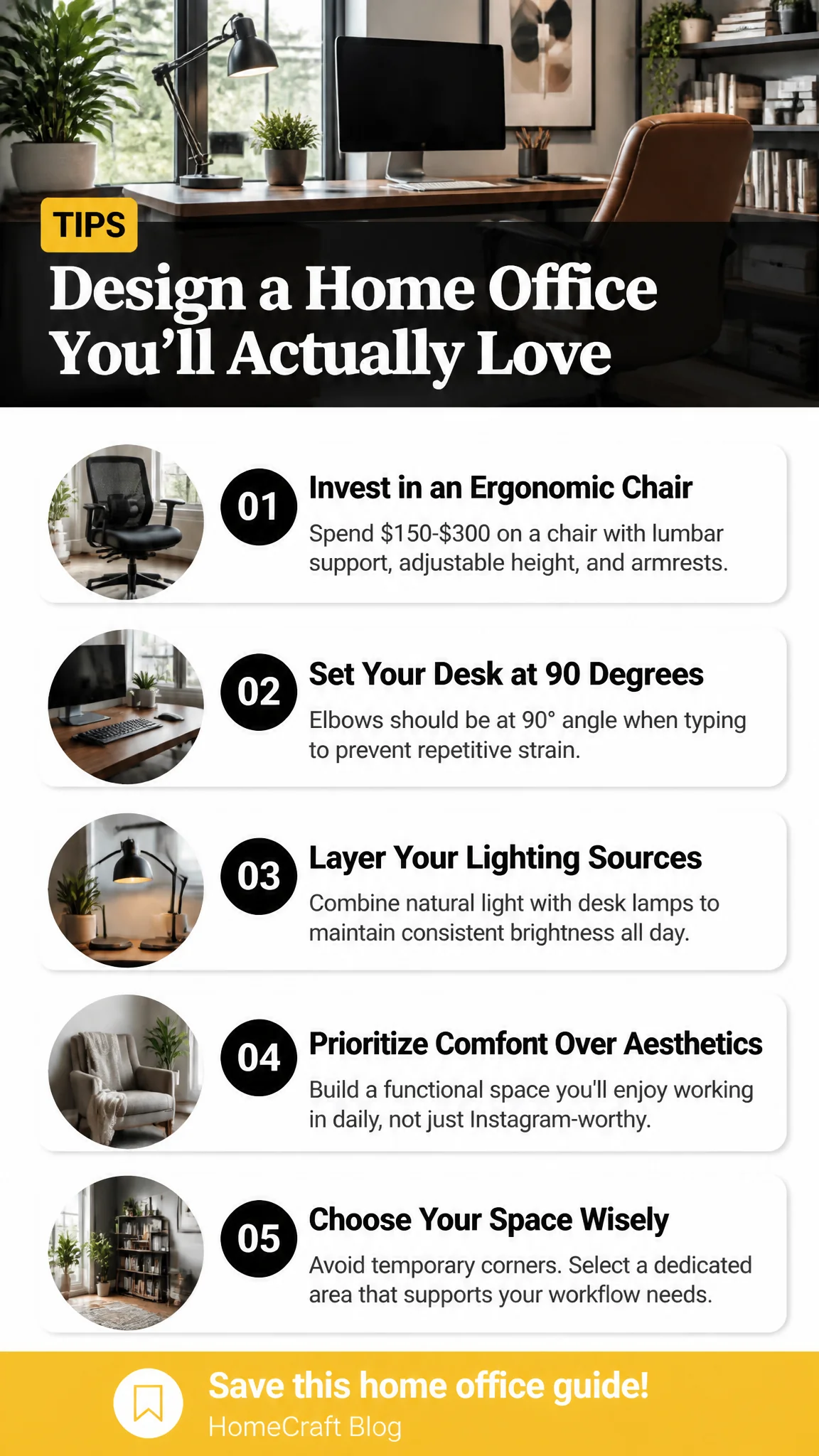
If the budget only stretches to one purchase, make it the chair. Almost everything else here is reversible in an afternoon: paint goes back, a plant moves to a brighter shelf, a box gets relabeled, a lamp gets returned. Eight hours a day in the wrong seat is the one thing you can't style your way out of.
Ideas fade by Friday. A plan finishes the room.
You just read a full guide to your home office. Saving ideas will not change it; a plan will. The Home Decor Collection is every planning tool we make, for every room in the house, in one download, so the after photos below stop being other people's rooms.
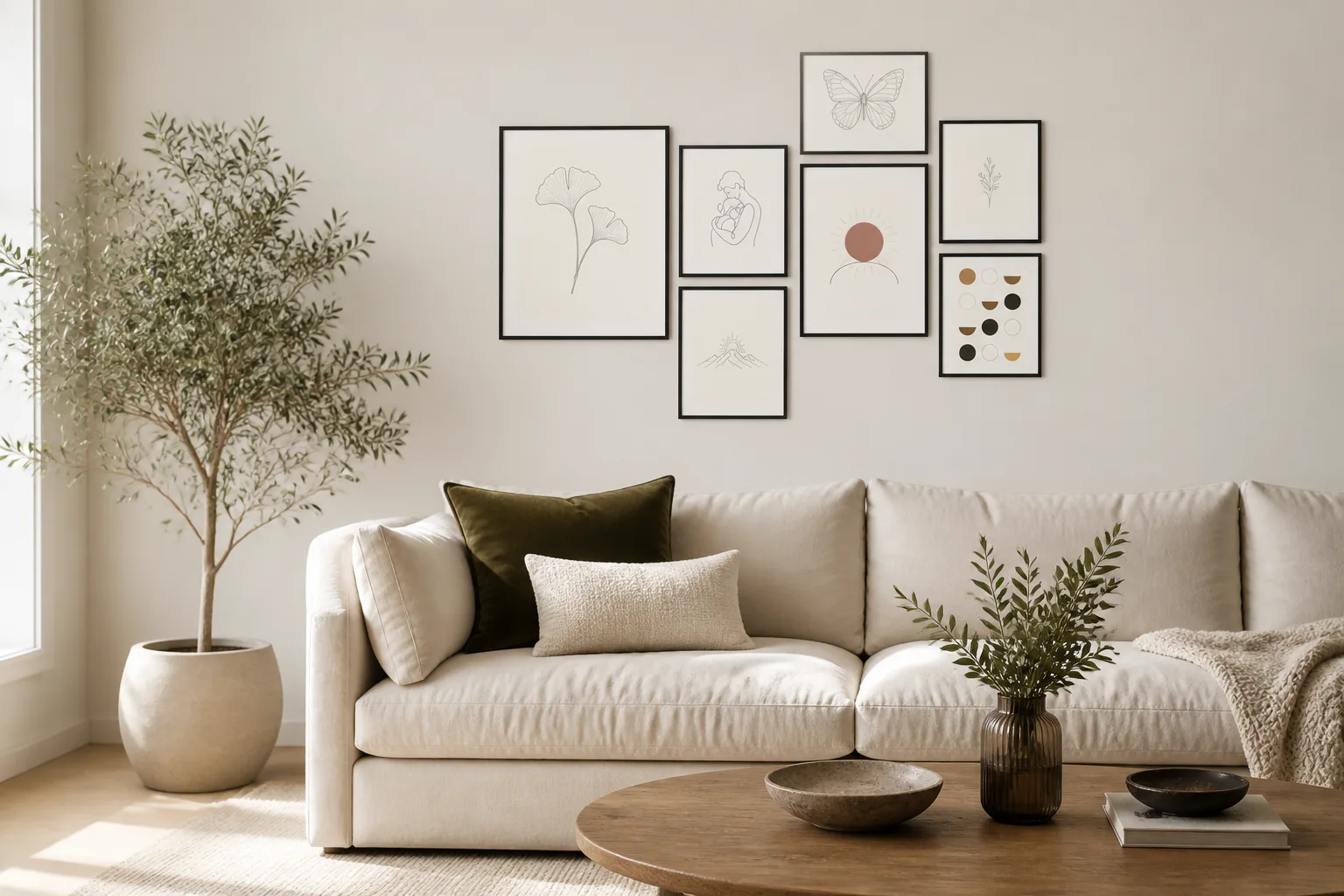
- Six room Style Kits, each with layout, palette and shopping list$114
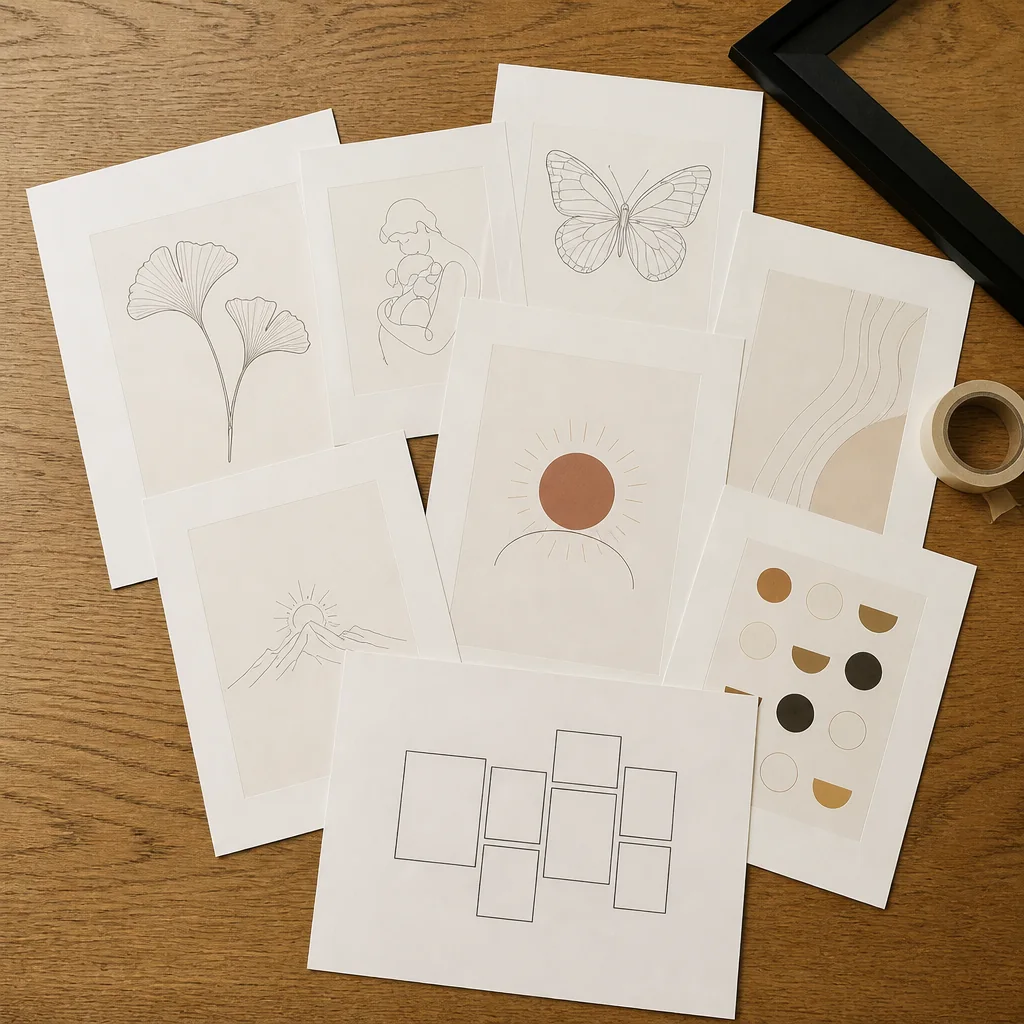
- The Gallery Wall Studio: 200 prints + 15 measured layouts$29
- The Room Makeover System: 40 solved room layouts + workbook$29
- The Color Palette Handbook: 60 palettes shown in real rooms$19
- The Whole-Home Reset: 40 printable organizing checklists$19
- The Decorator's Cheat Sheets: the 40 measurements that matter$9
- All eleven products, bought separately
$219$97
A single hour with an interior designer costs more than the entire Collection, and this one keeps answering for every room you will ever decorate. Free updates included as the products grow. And if it is not for you, the 14 day money back promise means you simply get a refund.