8 Calming Coastal Home Office Ideas for Focus and Light
Bring calm focus to your work with coastal home office ideas that use natural light and smart furniture placement in small spaces.
This post contains affiliate links. As an Amazon Associate I earn from qualifying purchases. If you buy through our links, we may earn a commission — at no extra cost to you.
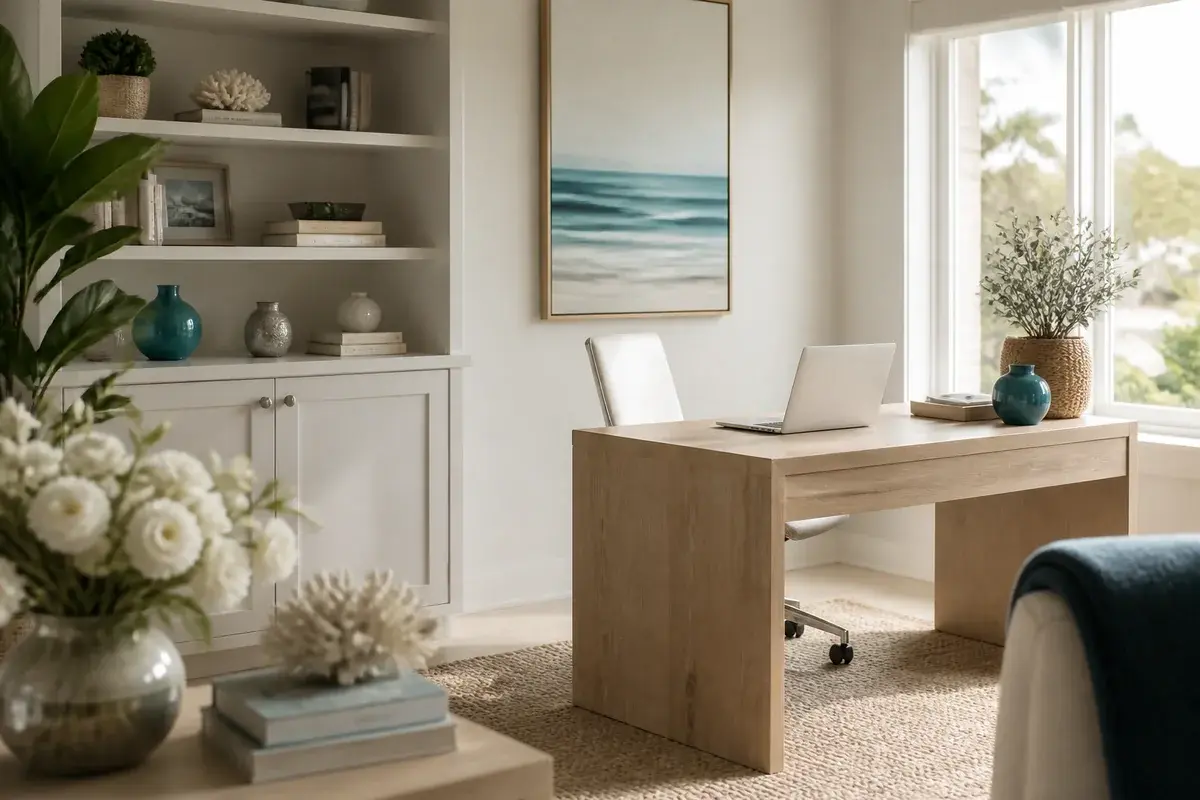
A coastal home office works only when you have real light to work with. North-facing rooms stay cool and gray no matter what you hang on the walls. Small rooms vanish entirely if you crowd them with heavy furniture or too much pattern. Rooms with windows that face the street need serious sight-blocking power so you're not distracted every time a car passes. And if your office shares a wall with the kitchen or living room, sound travels hard. The best coastal office leans into what the room has - light, air, space - instead of fighting against what it doesn't.
1. Pair a white desk with natural wood legs
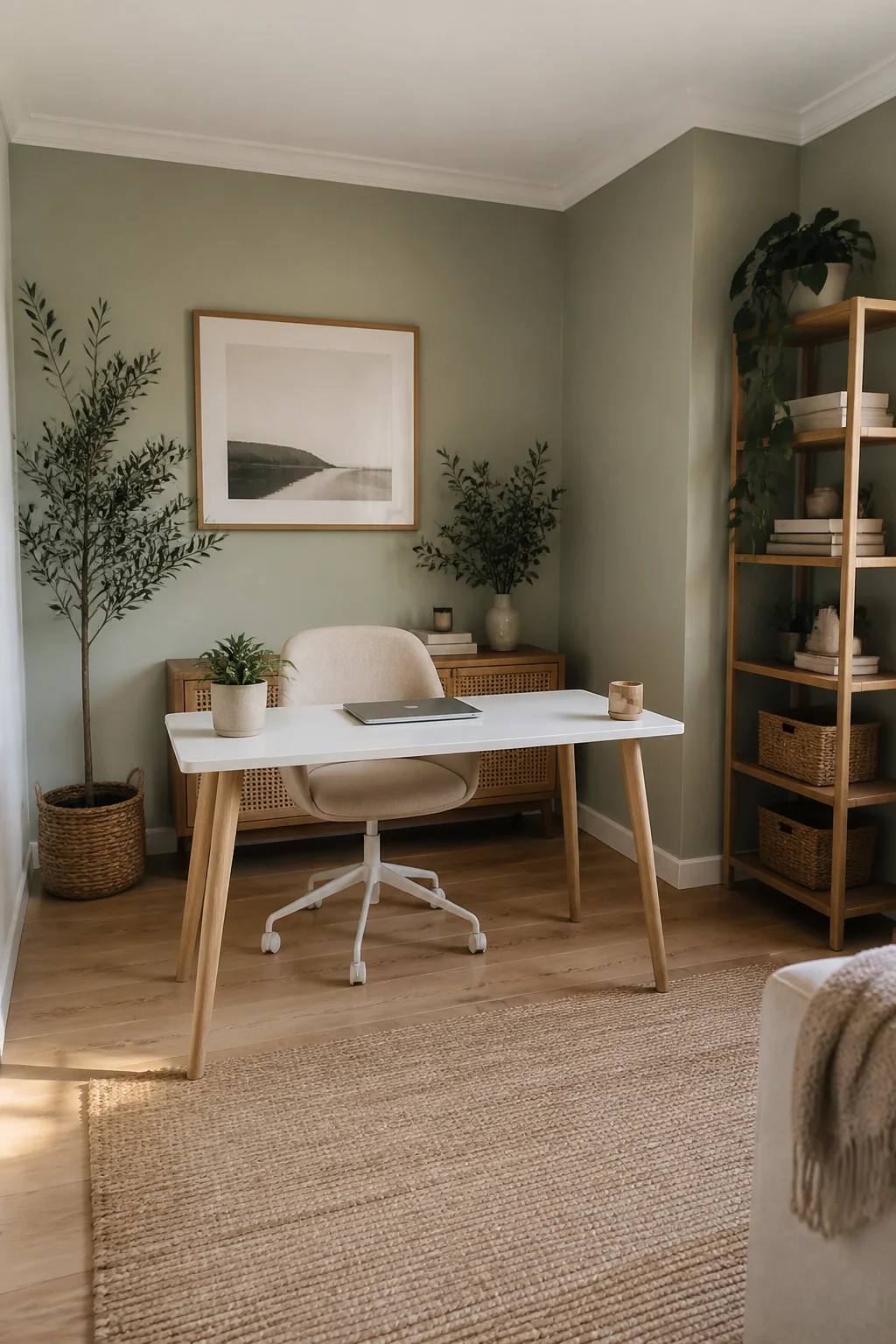
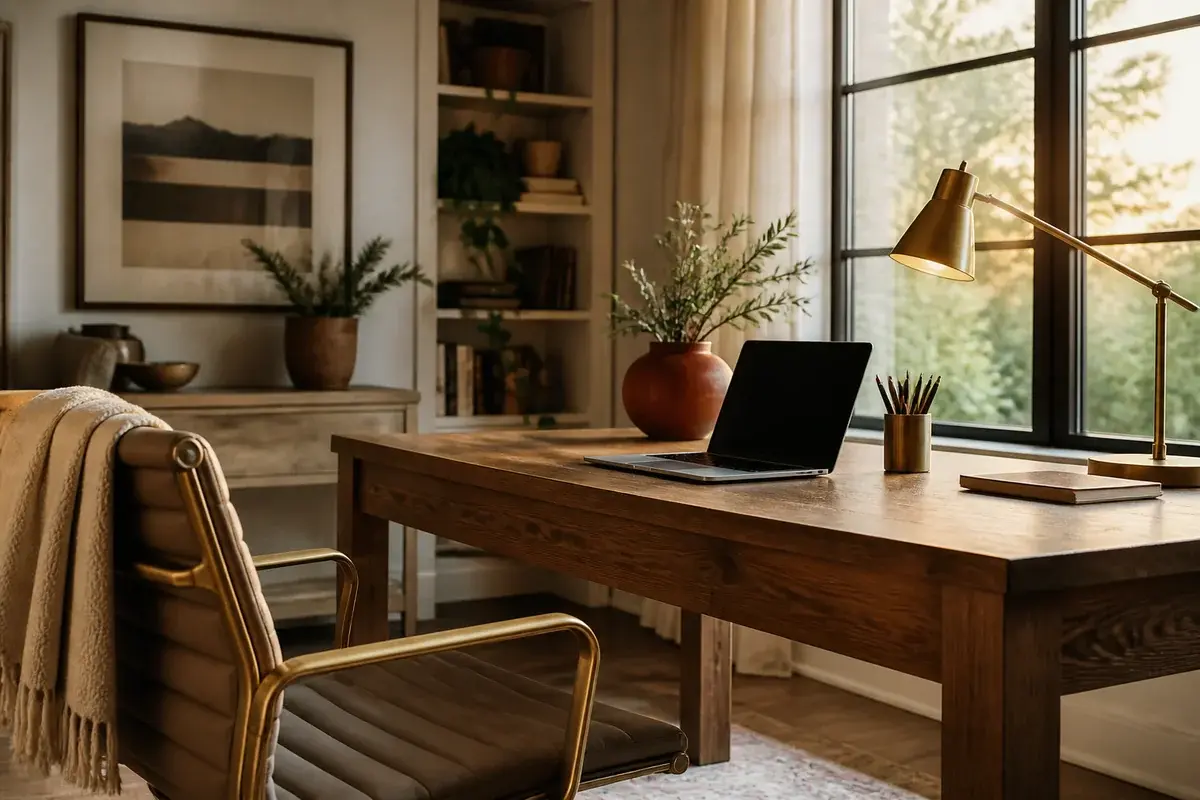
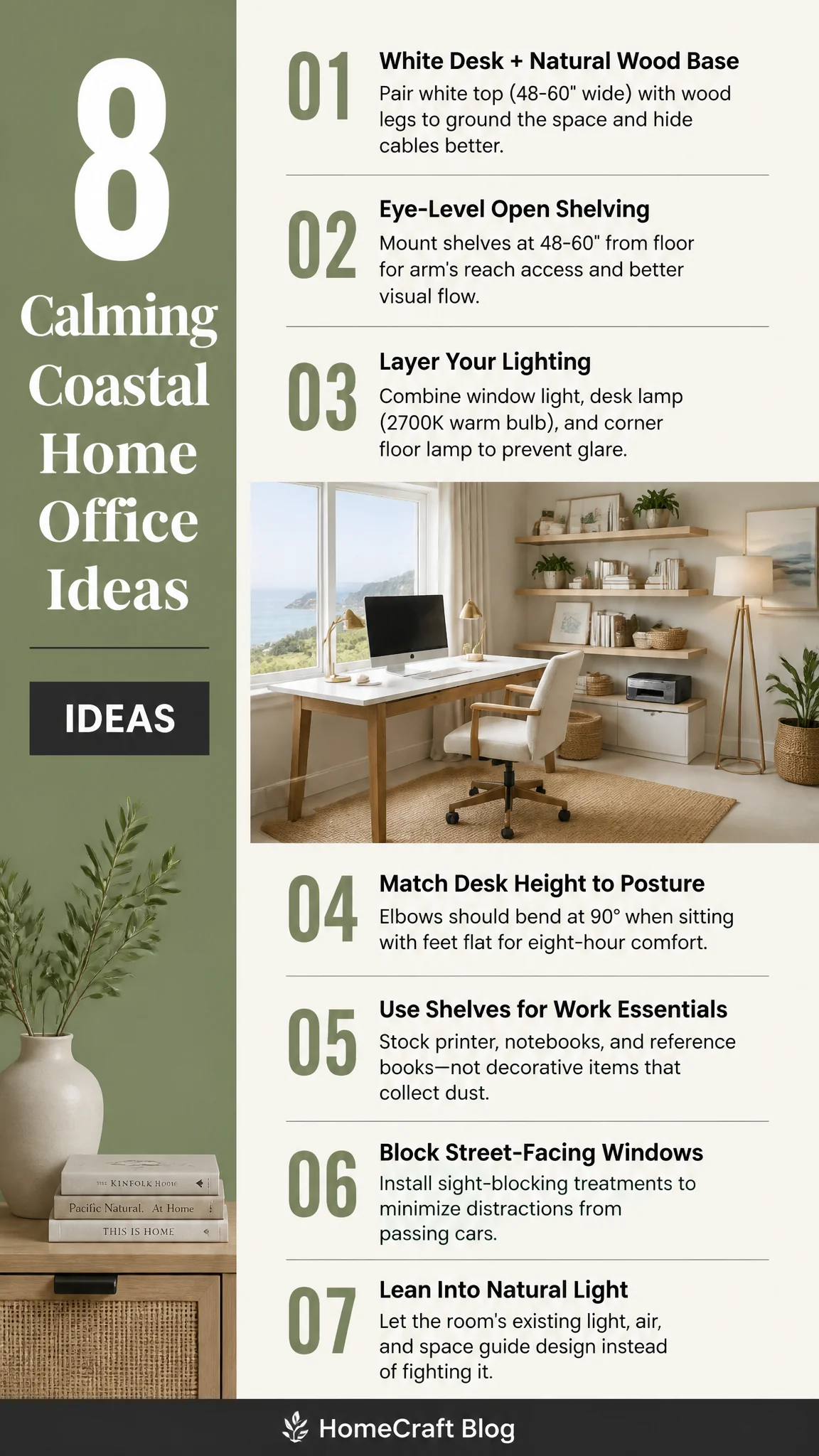
White painted desks are everywhere in coastal design, and they work because they recede. They don't compete with your sightline or take up visual weight. The problem is that a desk that sits too low or floats too high will strain your neck and shoulders across eight hours of work, and a white top alone doesn't fix that. Pair a white top (about 48 to 60 inches wide, depending on what you need to fit) with a base in natural wood or warm metal. The wood grounds the whiteness. It gives the room a material anchor instead of a sterile float. You want the desk to sit so your elbows bend at roughly 90 degrees when your feet are flat on the floor (or on a footrest). The wood base also hides cables better than a glass or metal frame would, and it won't show dust and fingerprints the way white does.
2. Hang open shelving at eye level, not above
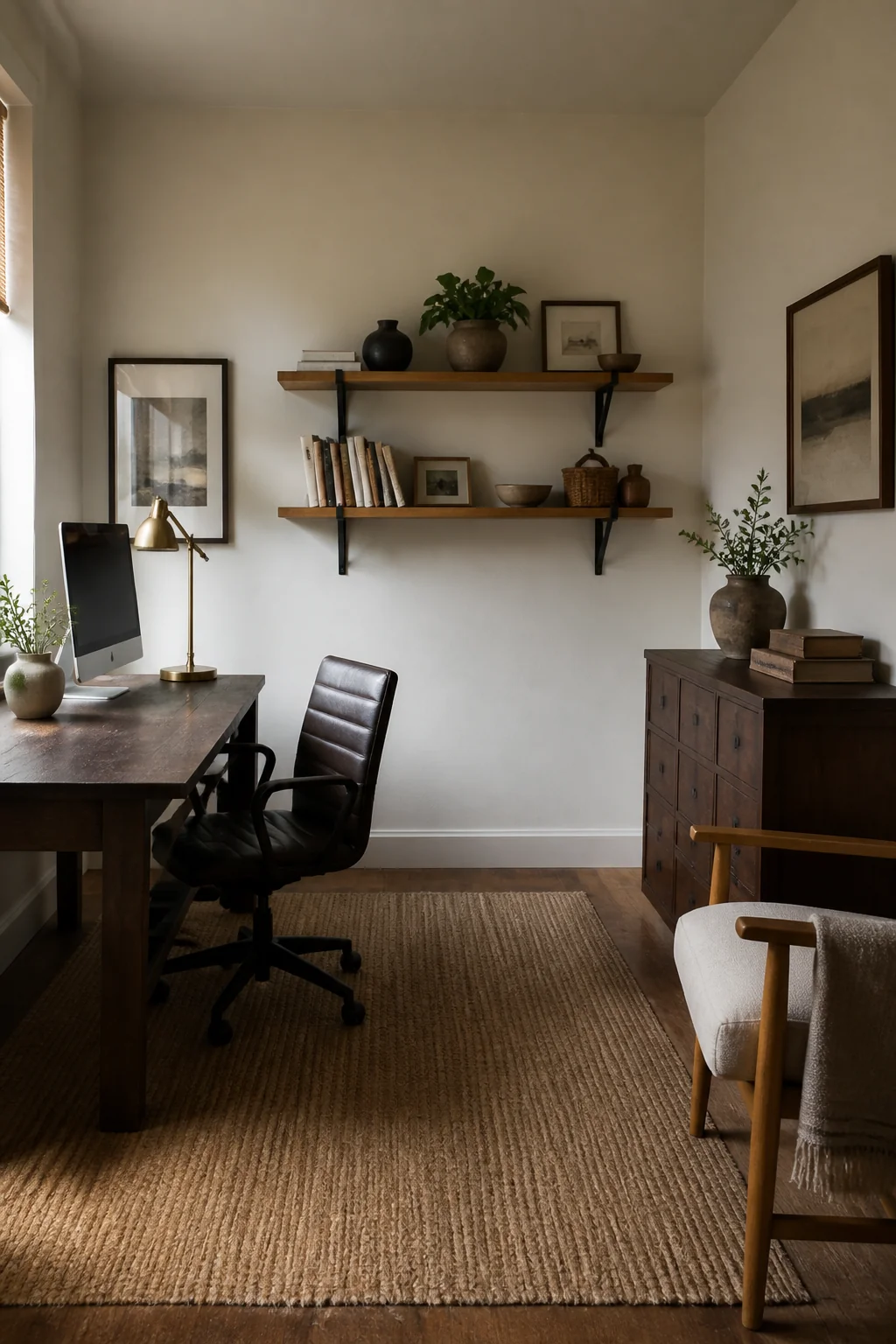
Open shelving is a coastal staple because it doesn't close off a small room the way a cabinet would. The mistake most people make is hanging shelves too high, thinking they'll save floor space. They don't. High shelves sit out of reach, collect dust, and make you crane your neck. Shelves at eye level - roughly 48 to 60 inches from the floor, depending on your height - put what you use within arm's reach and break up the wall visually. Install brackets rated for 50 pounds per shelf so books and boxes don't sag. Use the shelves for what you actually work with: a printer, notebooks, reference books, a lamp. Not decorative objects that make dusting a chore. The shelf itself can be stained wood, painted white, or light gray. The thing that matters is that you can see the wall behind it (not jam-packed), so the room stays open and breathable.
3. Layer the light so you're not fighting glare
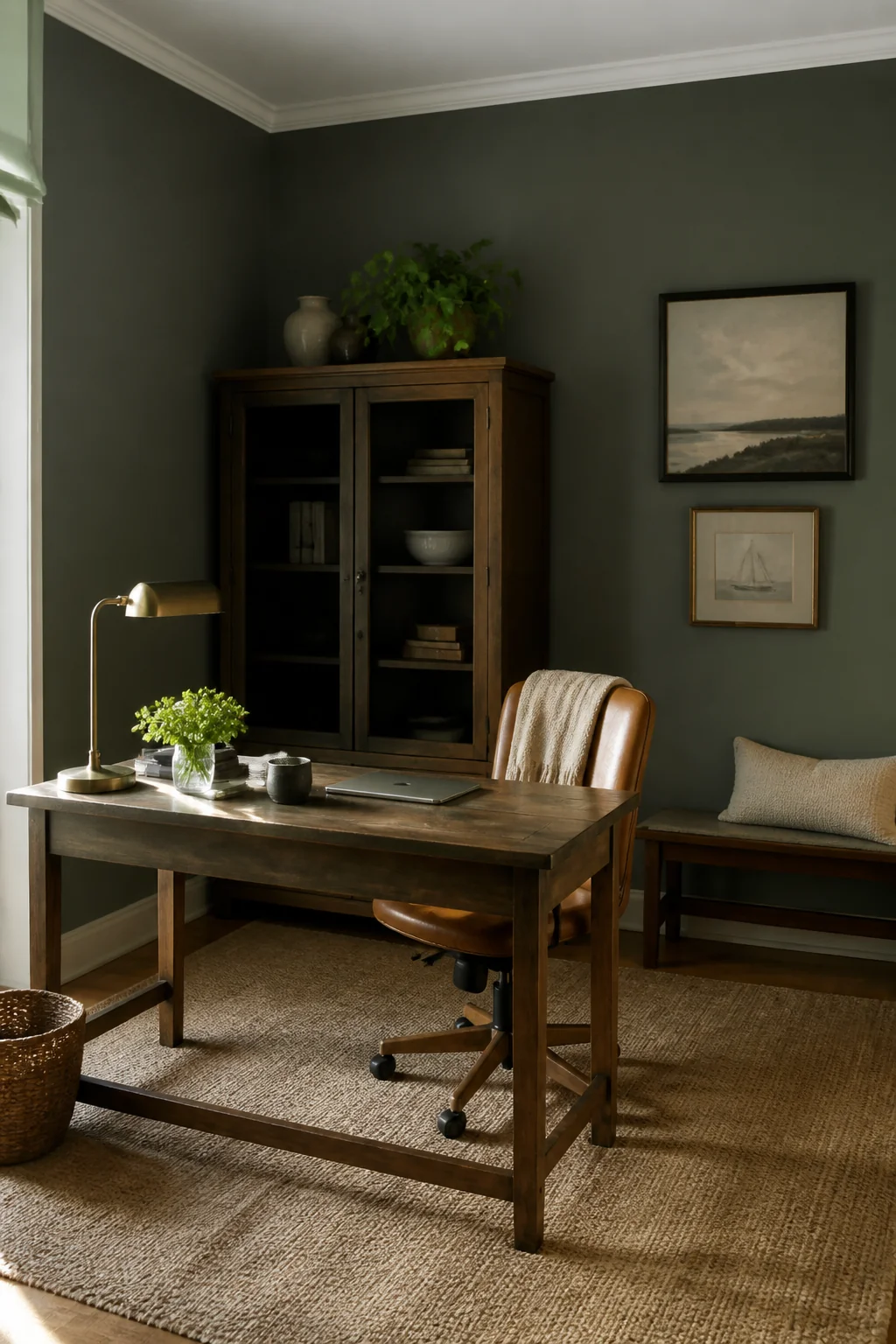
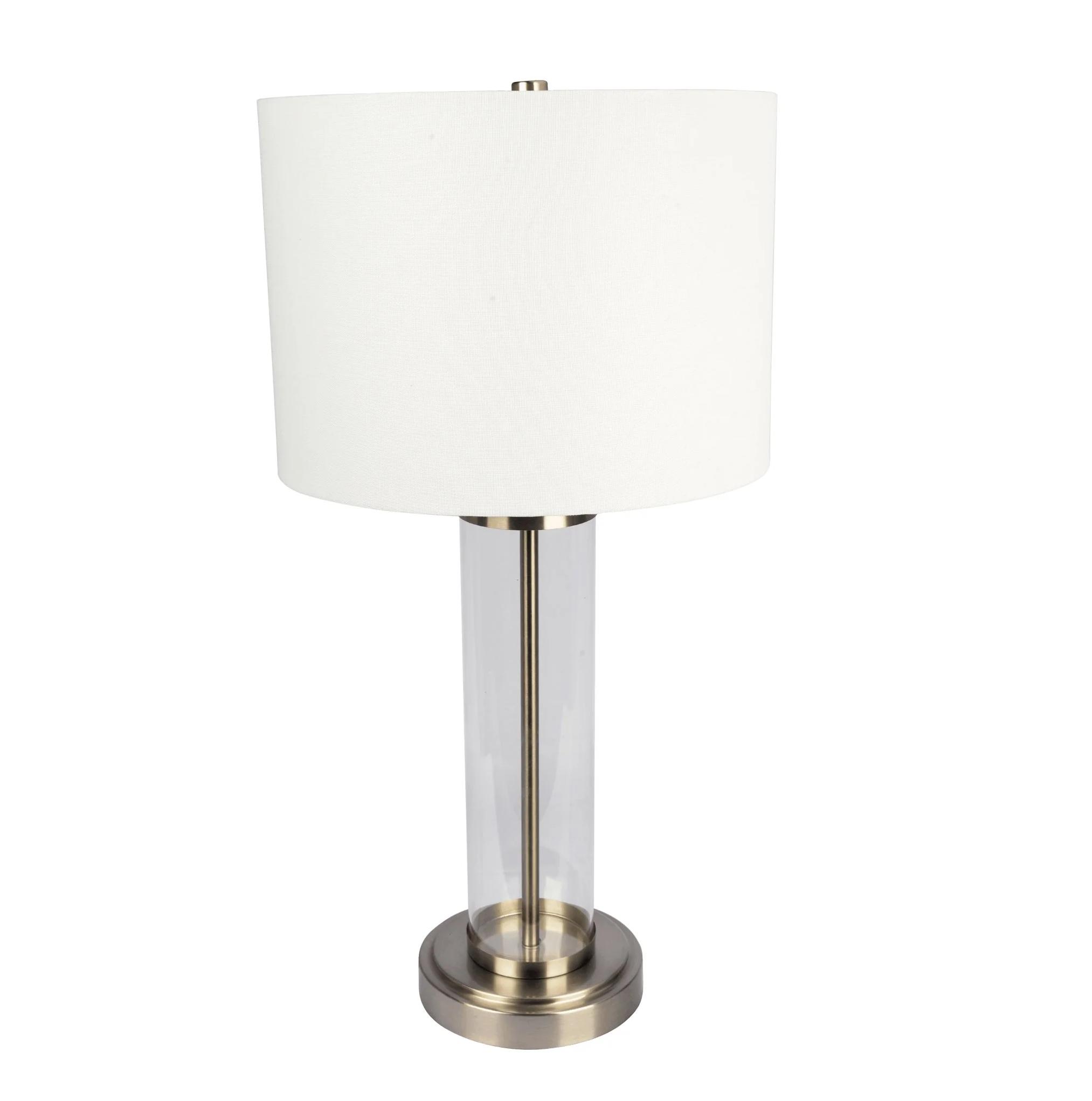
One light source in a home office is a trap. If it's a window, you get glare on your screen by midmorning. If it's overhead, you're squinting by afternoon. Build three layers: the window itself (unfiltered or filtered depending on the direction it faces), a desk lamp with a warm bulb (2700K), and a floor lamp in the corner opposite the window. That spreads the light so you're not chasing shadows across your keyboard. A floor lamp costs $35 to $150 depending on what you choose. Don't buy one that shines straight up at the ceiling - you want it angled so the light bounces off your desk and walls. If your window is south-facing and bright, add a linen roman shade (about $80 to $200 installed) that diffuses the glare without blocking the view. Wood blinds work too, but fabric feels more coastal.
4. Choose a neutral accent wall in soft blue-gray, not white-on-white
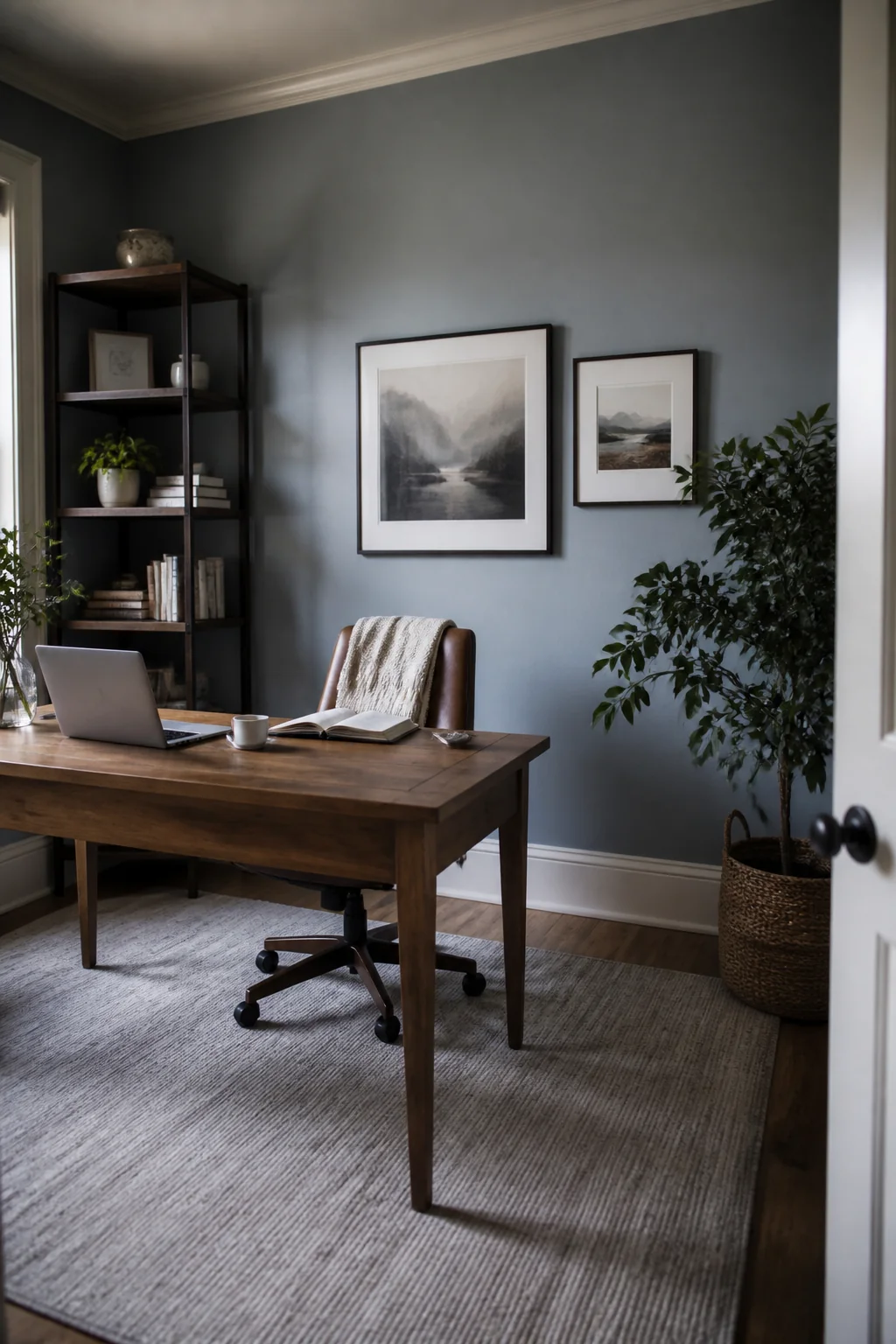
The instinct in a coastal room is to paint everything white. A all-white office reads sterile and can actually make concentration harder because your eyes have nowhere to rest. Paint three walls a soft, warm white (like Alabaster or Cloud White). Paint the wall behind your desk a muted blue-gray - something like Palladian Blue, a softer gray-blue, or even a pale sage. Not bright. Not saturated. Just enough to give the room a sense of place. This wall becomes a visual anchor and it frames you during video calls without making the room feel heavy. The paint costs the same whether it's white or blue-gray, so you're not spending more money - you're making a smarter choice about where your eye goes.
5. Use a natural fiber rug to define the space and soften sound
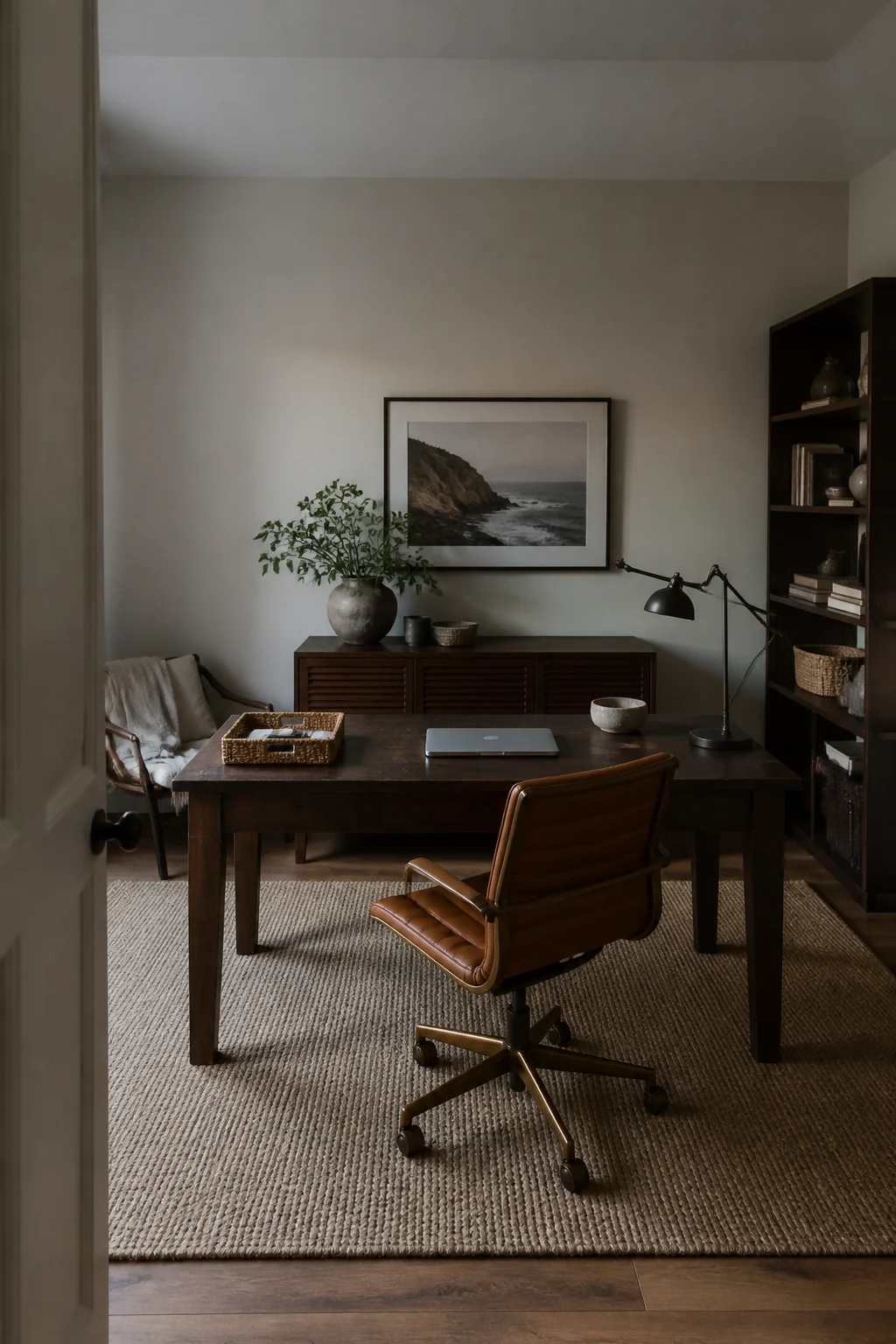
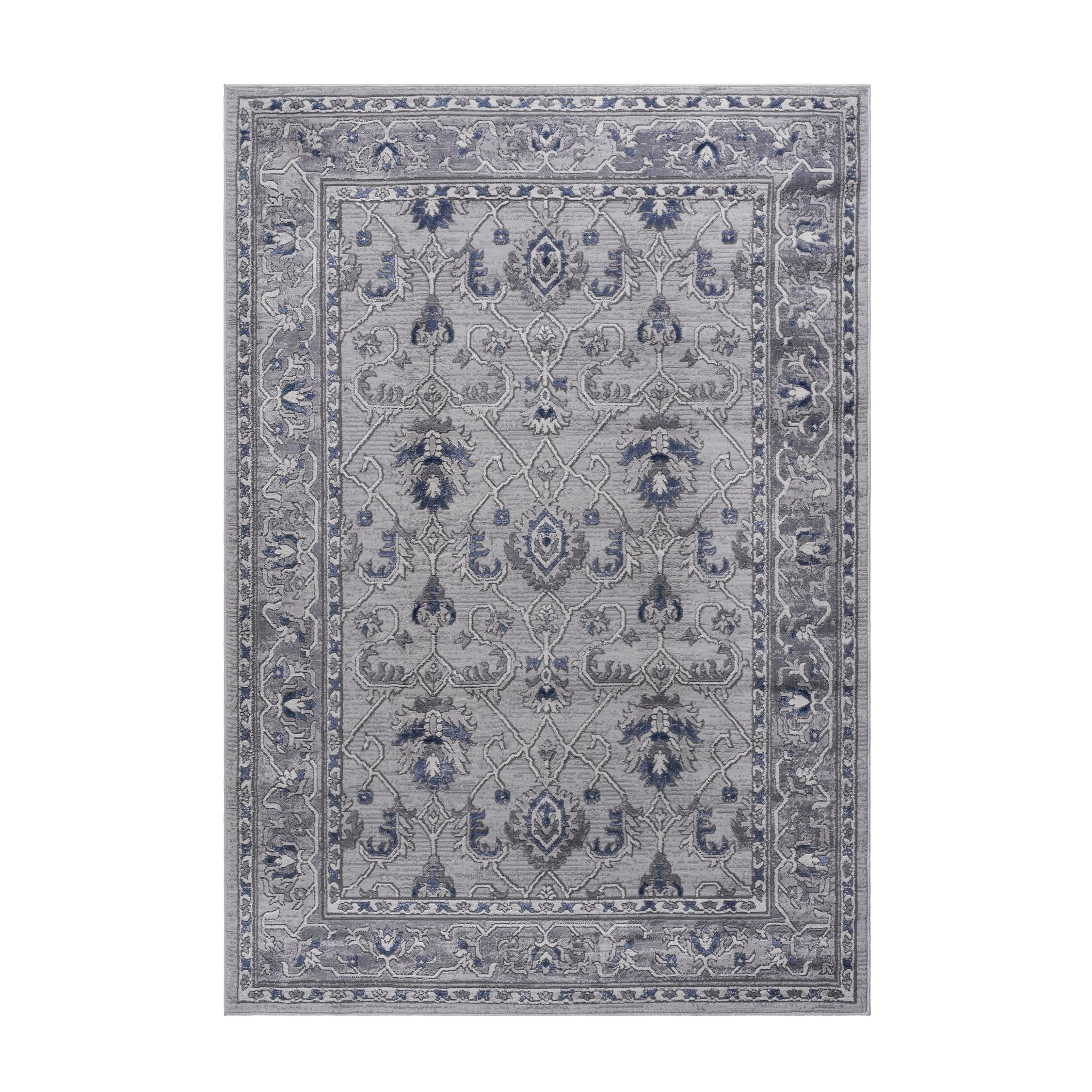
A rug does two things in a home office: it grounds the furniture and it absorbs sound. An all-hardwood office bounces noise everywhere (footsteps, keyboard clicks, chair movement). A rug the size of your desk plus 18 inches on all sides (roughly 5 by 8 feet for most home offices) breaks that up. Choose jute, sisal, or wool in cream or warm gray - nothing patterned, nothing that competes with your sightlines. These rugs cost $150 to $400 depending on quality and size. Jute is the most affordable and the most casual. Wool is softer underfoot and lasts longer. (Sisal can feel scratchy if you're barefoot for hours.) The rug should sit under the front legs of the desk and chair so you're anchored, not floating. A rug too small makes the room feel cramped instead of calm.
6. Install a simple wood or floating shelf above the desk
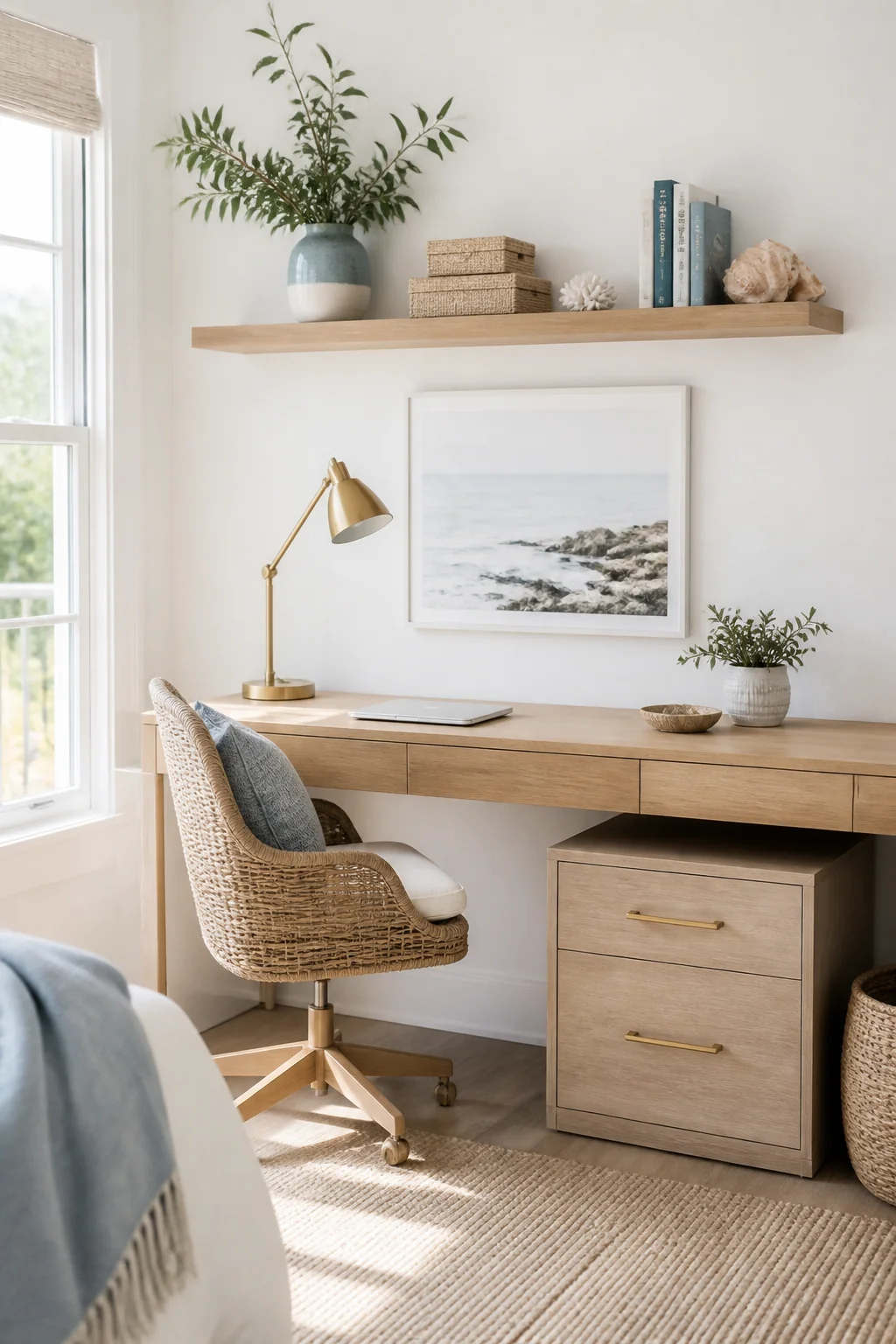
A narrow floating shelf 12 to 18 inches above the desk gives you storage without taking up wall space. It's the perfect place for a printer, a lamp, or the things you reach for most - not your whole office library. Mount it 48 inches from the floor (adjust if you're taller or shorter). Make sure the bracket is bolted into studs so it holds weight safely. A single shelf costs $30 to $80, and a good bracket is another $20 to $50. The shelf should be wood - either stained to match your desk base or painted soft white. Keep it clear of clutter. A shelf above your head that's stuffed with stuff makes you feel boxed in, and it collects dust that falls onto your workspace. The point is function, not decoration.
7. Add a small upholstered armchair in linen for comfort and balance
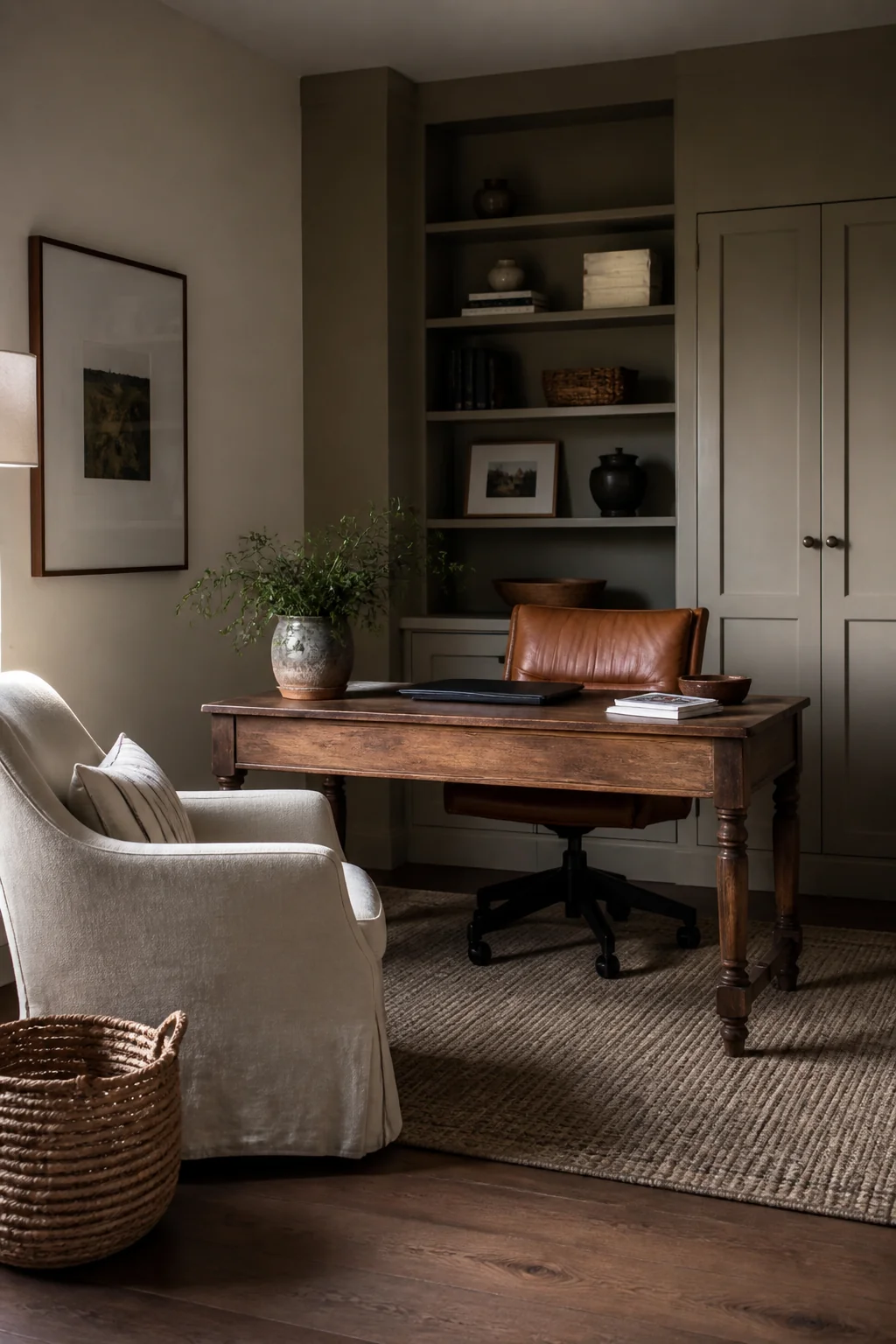
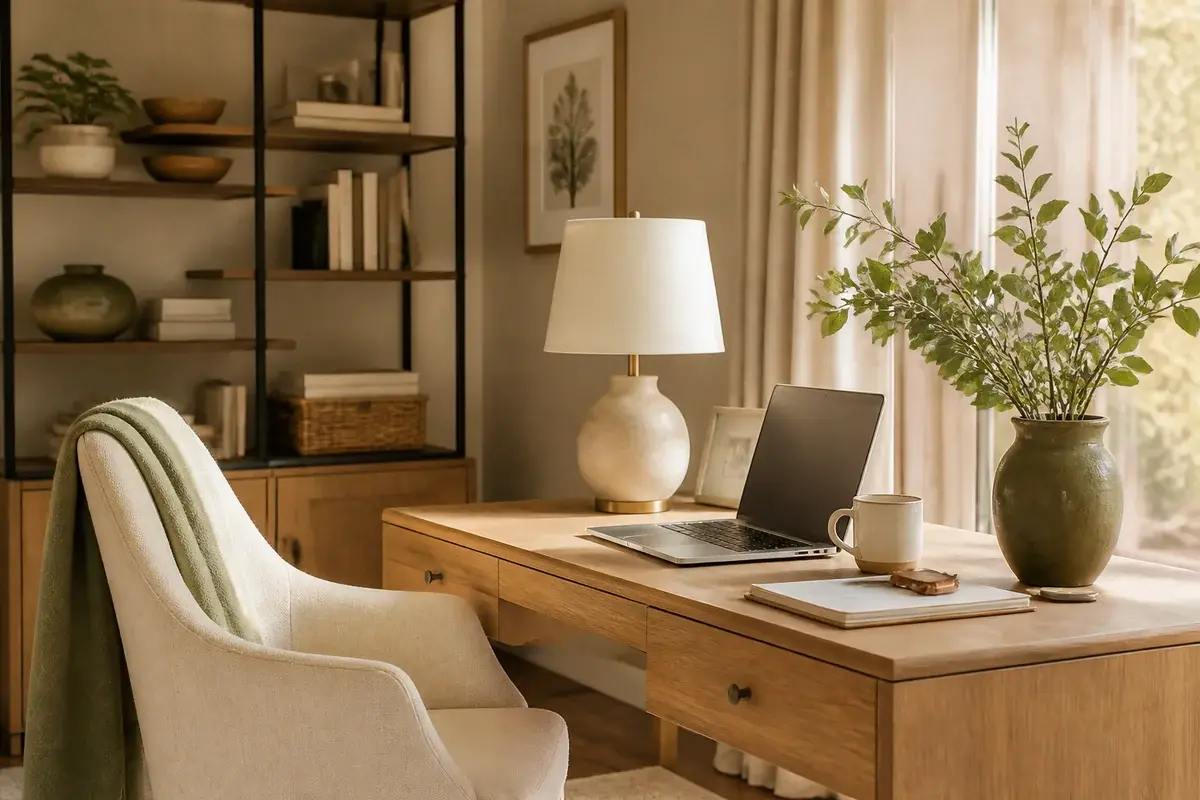
A coastal office with only a desk chair feels incomplete. Add a small armchair (28 to 32 inches wide, which fits a corner without eating the room) in natural linen or soft canvas, in cream, light gray, or pale blue. This is where you sit when you're on a phone call, reading, or stepping back from the desk. The chair softens the space and gives you a place to rest that isn't your work spot. Look for one with a solid wood frame (not particleboard) in walnut or light oak. Budget $400 to $800 for something that won't fall apart in two years. Position it in the corner away from the window so you're not backlit on video calls. If your office is very small (under 100 square feet), skip the chair and use a small ottoman instead - it's less imposing and can double as a footrest or a place to stack blankets.
8. Hang linen curtains in white or warm oatmeal to filter light without blocking the view
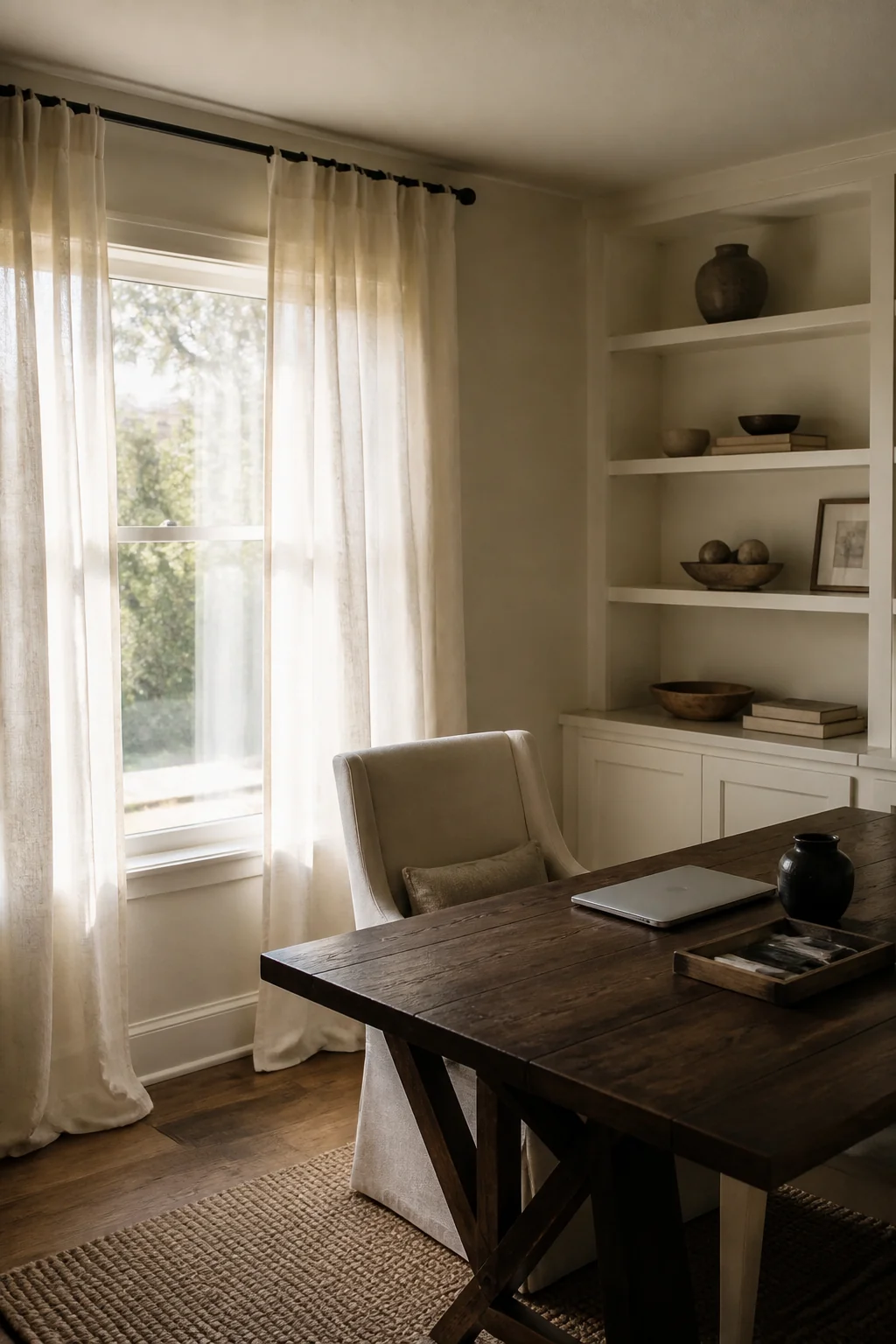
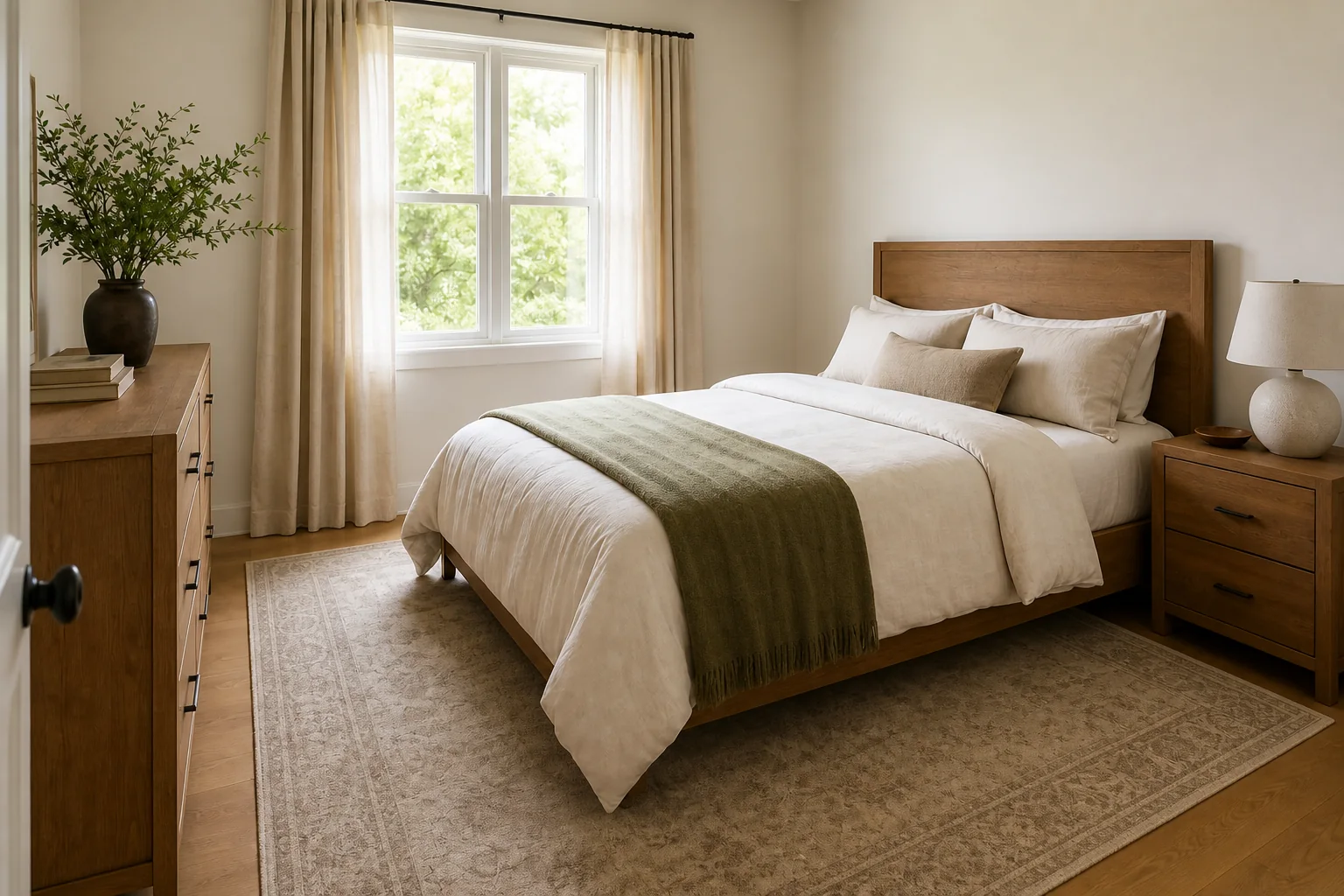
Coastal offices need curtains that soften light, not blackout drapes that make the room a cave. Hang linen panels in white or warm oatmeal from a simple wooden rod (oak or whitewashed) mounted inside the window frame or just above it. Linen is breathable, it filters light beautifully, and it looks right in a coastal room. Panels run about $30 to $80 per panel depending on size and quality. Mount the rod at least 84 inches from the floor (standard window height) and hang the panels so they clear the sill completely - bunching fabric on the sill collects dust and blocks the view. You want the light to come through soft and even, not blocked. If your window is very bright (south-facing), choose a heavier linen or add a second layer of sheer curtains. The point is control, not darkness.
Save the full guide
Measure your desk area (width and depth) and your wall heights before buying a single piece of furniture. Know whether your windows face north, south, east, or west - that determines everything about how light moves through the room across the day. Check that open shelves won't block a window or doorway. Make sure floating shelves will bolt into studs (use a stud finder, about $15). These five minutes of planning save you from buying pieces that don't fit or don't work.
Ideas fade by Friday. A plan finishes the room.
You just read a full guide to your home office. Saving ideas will not change it; a plan will. The Home Decor Collection is every planning tool we make, for every room in the house, in one download, so the after photos below stop being other people's rooms.
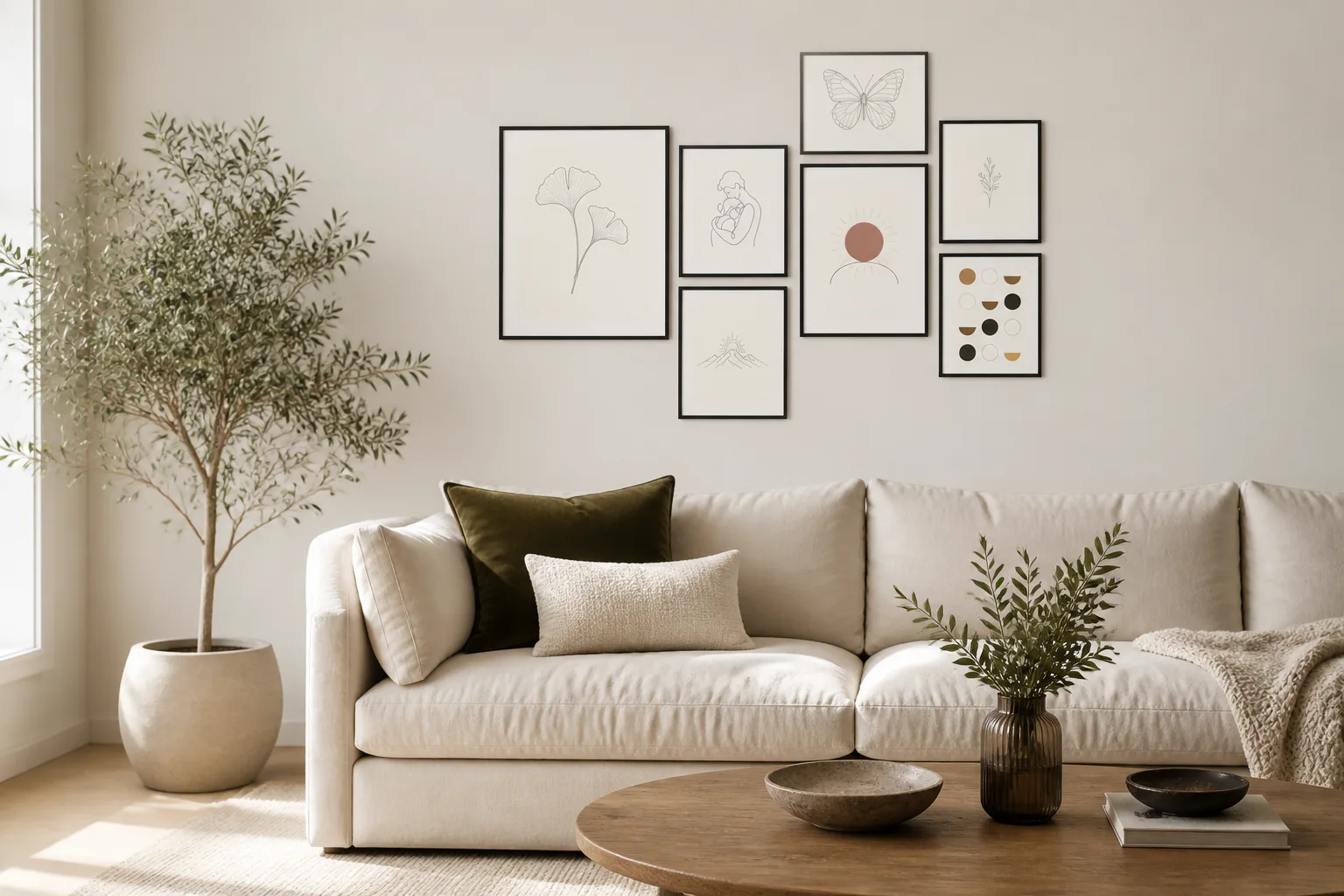
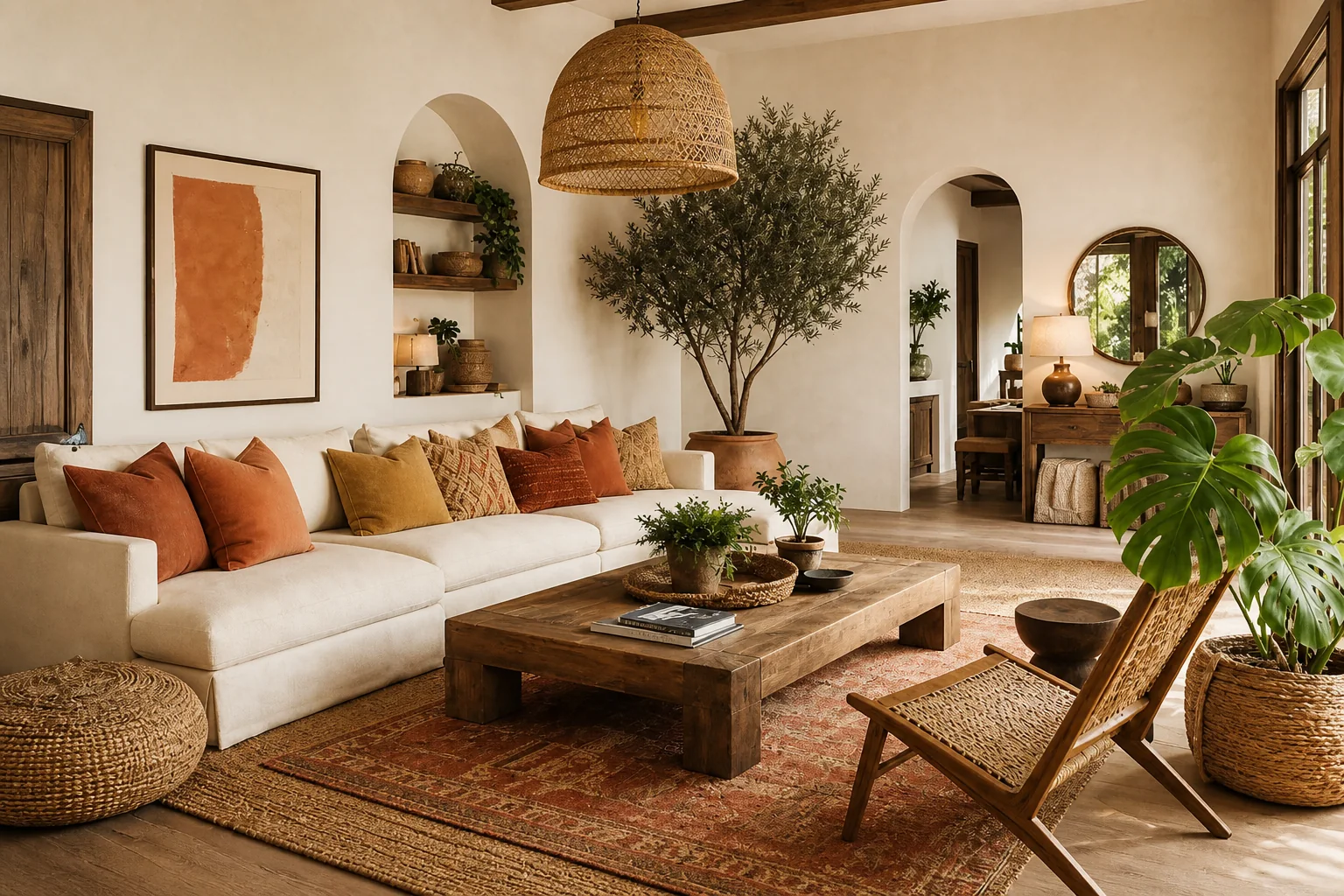
- Six room Style Kits, each with layout, palette and shopping list$82
- The Gallery Wall Studio: 200 prints + 15 measured layouts$24
- The Room Makeover System: 40 solved room layouts + workbook$29
- The Color Palette Handbook: 60 palettes shown in real rooms$19
- The Whole-Home Reset: 40 printable organizing checklists$9
- The Decorator's Cheat Sheets: the 40 measurements that matter$9
- All eleven products, bought separately
$172$69
A single hour with an interior designer costs more than the entire Collection, and this one keeps answering for every room you will ever decorate. Free updates included as the products grow. And if it is not for you, the 14 day money back promise means you simply get a refund.