How to Maximize a Small Closet Without a Renovation
Small closet organization ideas that add hanging space, shelving and door storage without renovating. Real measurements, prices, and what to buy last.
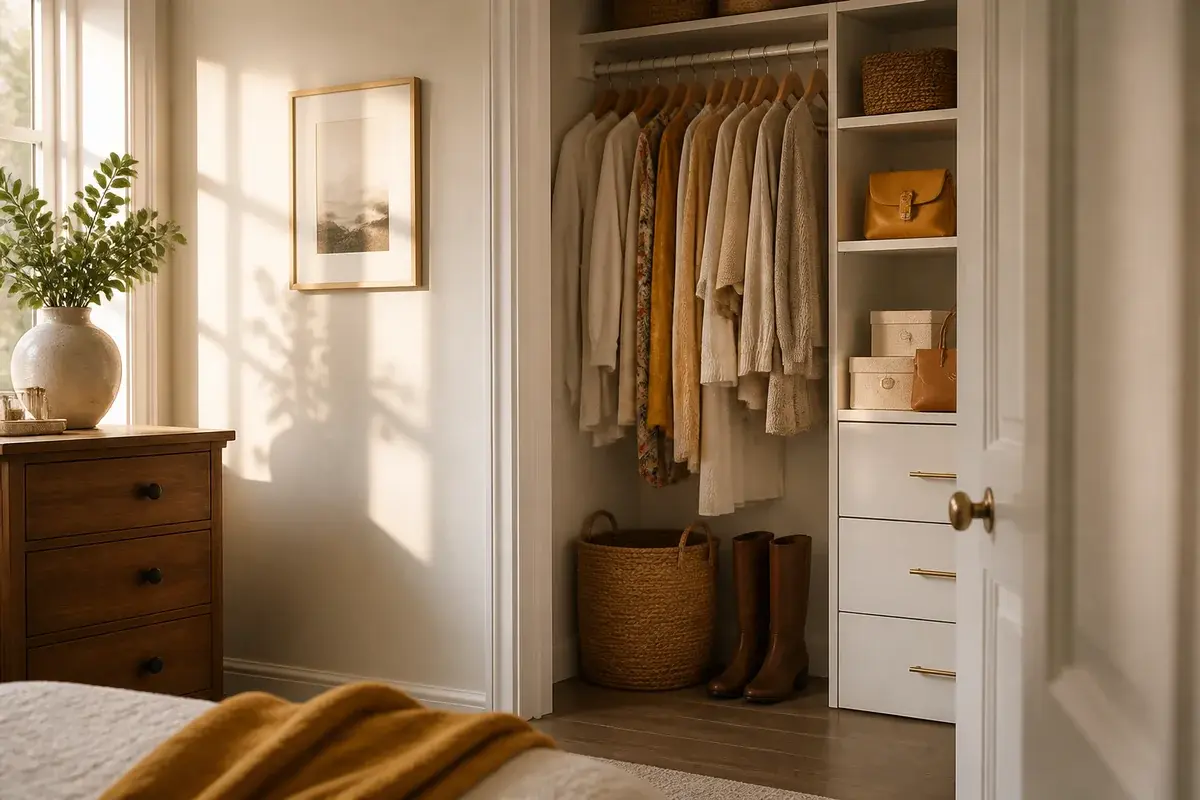
Picture a first-apartment closet: about 3 feet wide, no shelves, one metal rod bolted into a concrete wall, and three new work outfits with nowhere to go. That's not an unusual closet. That's most rentals, most older houses, and nearly every bedroom that isn't the primary one.
The good news is that small closets respond well to cheap, reversible fixes. Everything in this guide adds up to roughly $80 to $100 all together, needs no carpenter and no landlord approval, and fits inside one Saturday afternoon.
A small space isn't a problem. It's a different puzzle, where you solve for vertical inches and door surface instead of square footage. Here's the order we'd work in, and the measurements that decide whether each fix holds.
Double Your Rod Space Without a Contractor
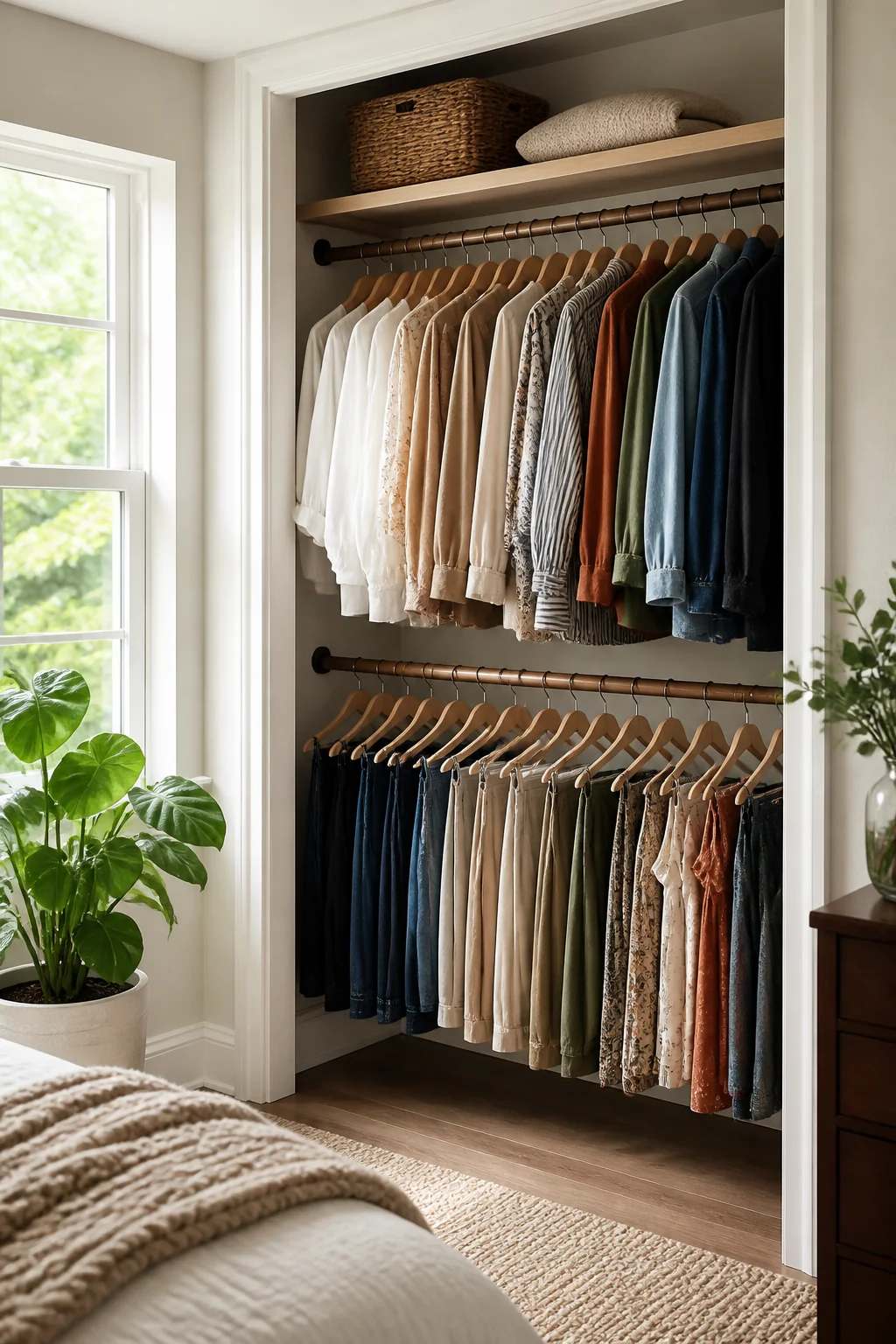
You don't need permission from a landlord to add a second rod, and you don't need to drill.
Measure the interior width first, wall to wall inside the closet, not the width of the door opening. A closet that reads as 3 feet is usually closer to 32 inches inside. Buy a spring tension rod rated for that span, roughly $12 to $18, and leave about a quarter inch of give on each side so it can bite into the walls instead of bowing in the middle.
Height is where this goes wrong most often. Shirts, blazers, and folded trousers need 38 to 40 inches of drop. So put the top rod around 80 inches off the floor and the second one around 40, and you get two usable rows instead of one row with dead air under it. Keep dresses and long coats together at one end of the top rod, with nothing hanging beneath them.
One caution: most tension rods top out near 20 pounds. A packed row of winter coats will walk one down a painted wall overnight. If that's your wardrobe, spend $8 on screw-in rod sockets instead.
Vertical Shelving Claims the Dead Space Above the Rod
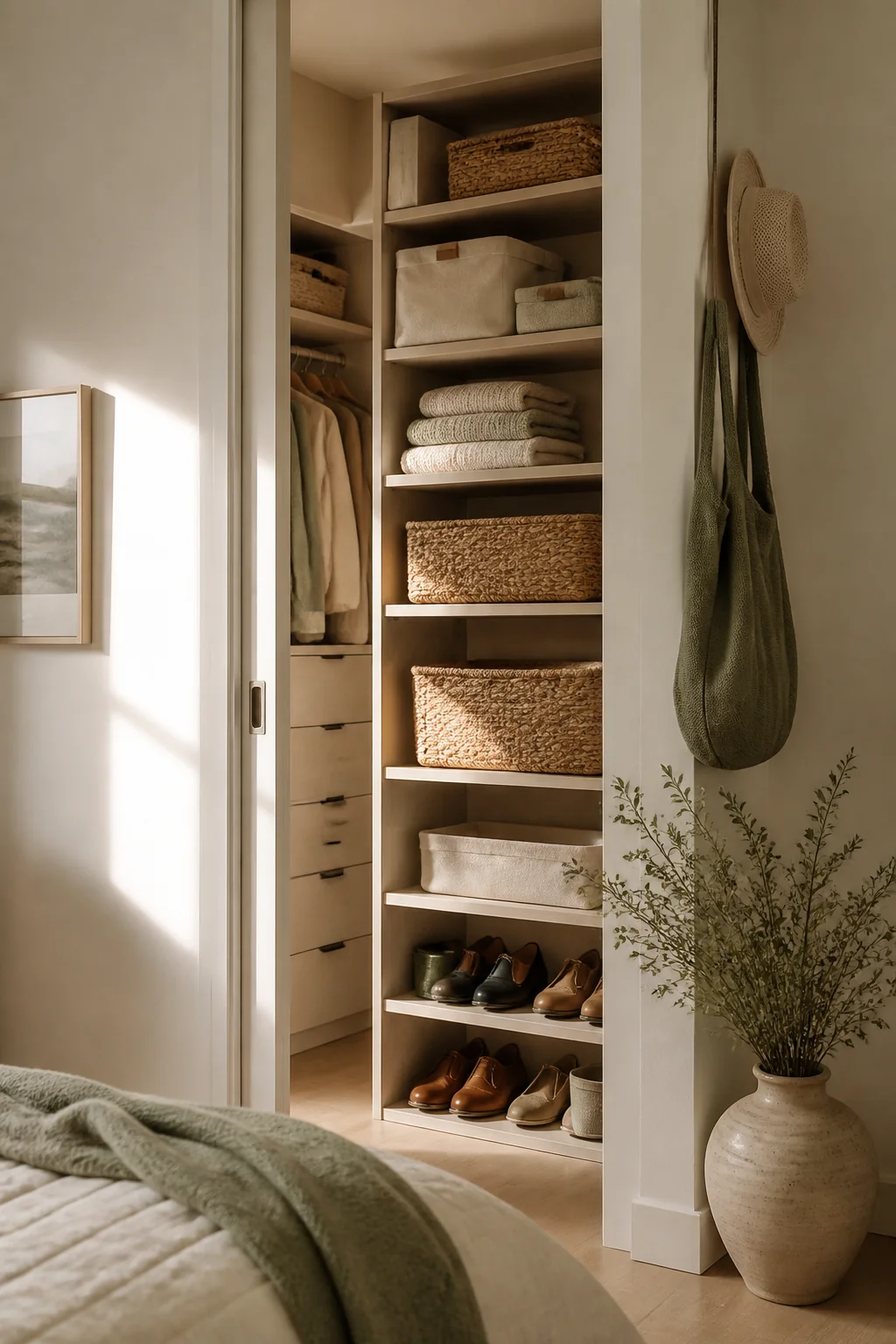
Look up. In most closets there's 15 to 20 inches of bare wall between the top of the rod and the ceiling, doing nothing at all.
Two floating shelves run about $25 for the pair, plus a bracket set and an hour with a drill and a level. Go 12 inches deep rather than the 10-inch shelves sold for living rooms: a standard closet is 24 inches front to back, and a shallow shelf leaves folded sweaters hanging over the edge. Leave roughly 12 inches of clearance between the lowest shelf and the rod below it so hangers still slide freely.
Find studs if you can, 16 inches on center. If you can't, use toggle bolts rated for 50 pounds. Folded knitwear is heavier than it looks, and the cheap plastic drywall anchors in the bracket packet are what fail first.
Anything above about 72 inches needs a step stool, so that shelf is for off-season things you touch twice a year. Down at floor level, a fabric cube organizer around $20 keeps scarves, socks, and belts in separate compartments instead of one heap.
Door Hooks Are the Cheapest Storage in the Closet
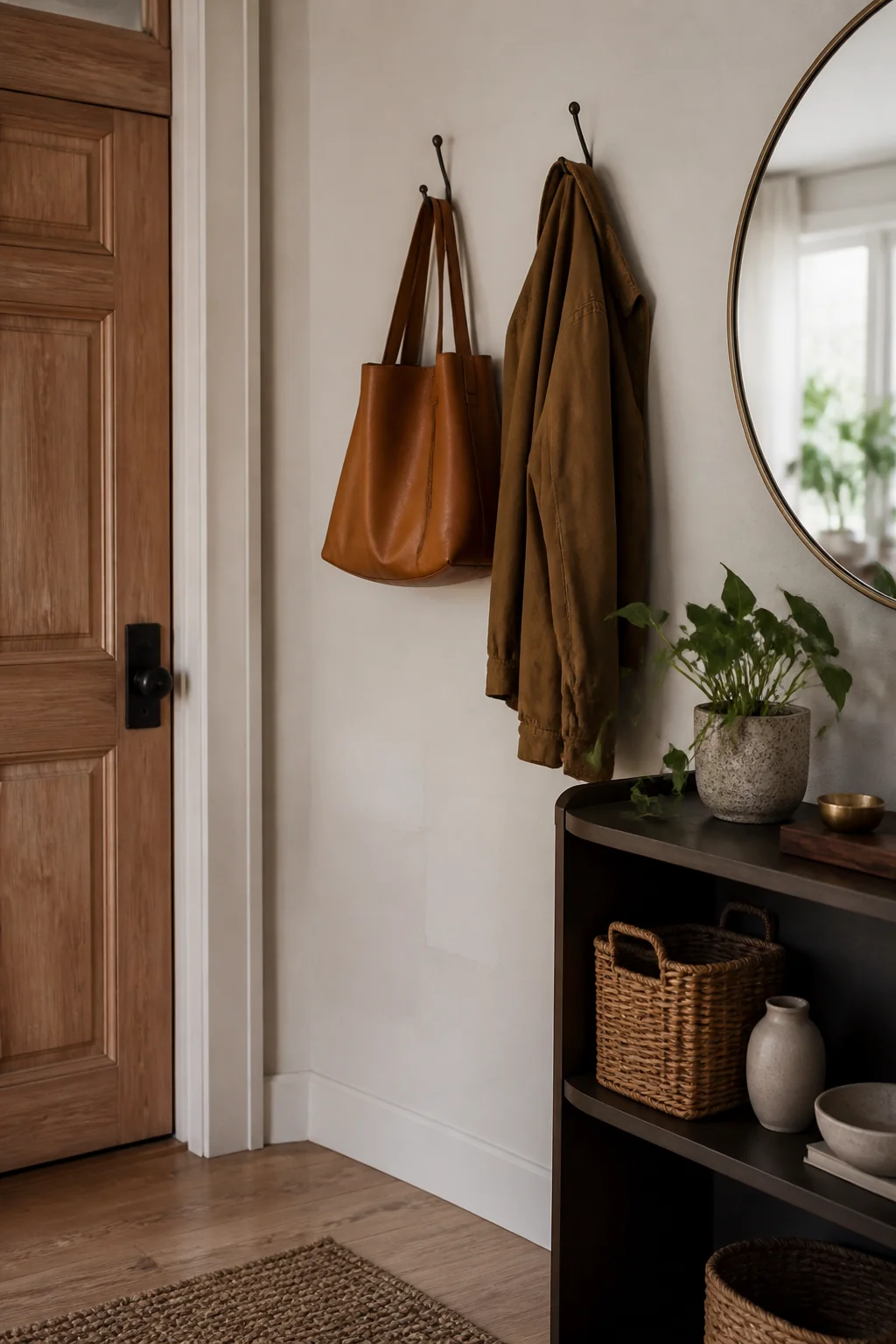
Three adhesive hooks on the inside of the closet door cost about $8 for a four-pack, and they take the awkward items that otherwise eat a whole shelf: belts looped over a single hanger, the tote you carry daily, a hat that won't fold.
Mount them at shoulder height, roughly 55 to 60 inches off the floor. Higher looks tidier in photos and gets used less, which defeats the point of a hook. One of the three is worth giving to a small mirror at that same height, so you can check a whole outfit without stepping away from the rod.
Read the weight rating before you load them up. Most adhesive hooks hold 3 to 7 pounds, and only on a smooth, clean surface. Wipe the door with rubbing alcohol, press for 30 seconds, then leave the adhesive an hour to cure before hanging anything.
Two situations where this fails: textured or freshly painted doors, where the strip peels the paint off with it, and hollow-core doors, where screw-in hooks pull straight out of the skin. An over-the-door rack is the fallback, as long as the door still clears the frame when it closes.
Slim Hangers Are Not a Luxury Item
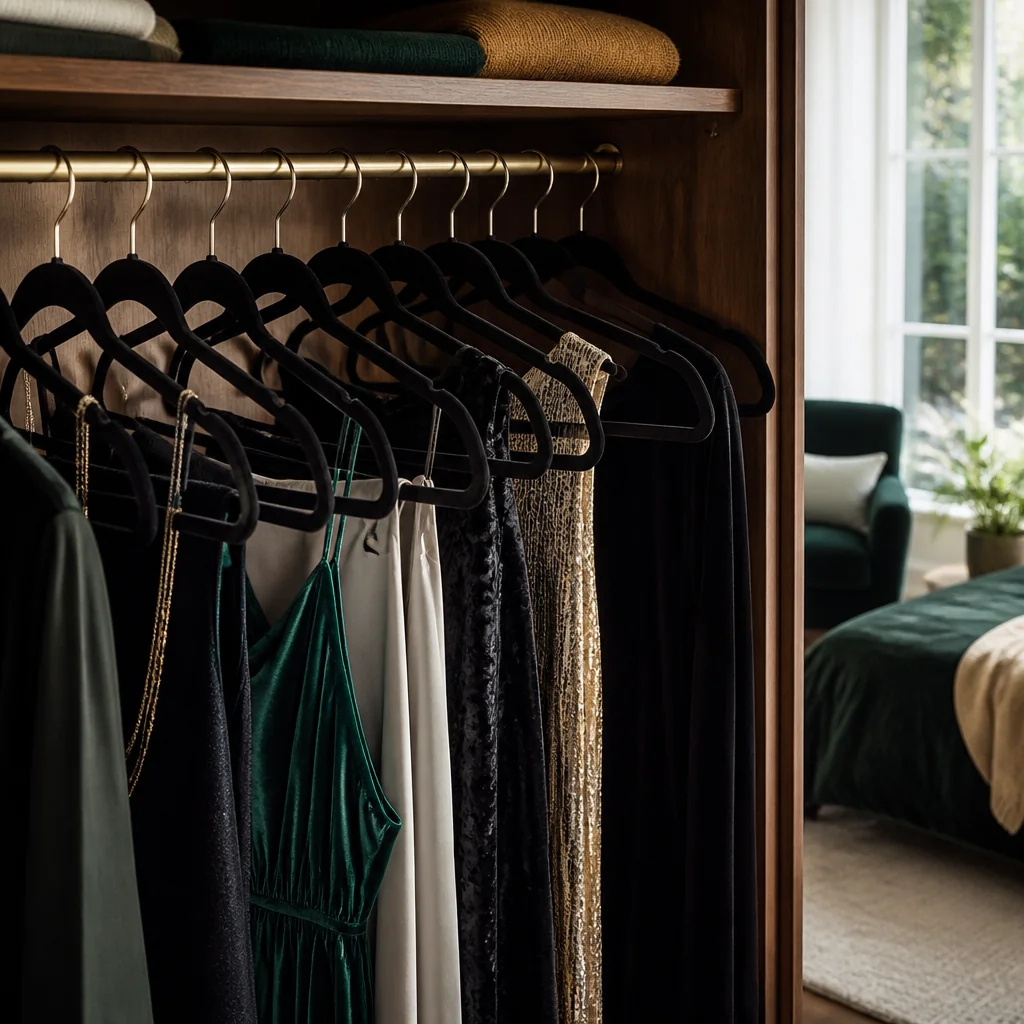
This one sounds too basic to bother with until you put a tape measure on the rod.
A wooden hanger is about half an inch thick at the shoulder, and chunky tubular plastic ones splay wider still once a shirt is on them. Velvet slim hangers sit closer to a quarter inch and cost about $15 for a pack of 20. Across a 32-inch rod, that difference gives back around 8 inches of rail, which is another six or seven shirts hanging where nothing fit before.
The flocked surface earns its place too. Silk camisoles, wide necklines, and jersey dresses stay put instead of sliding off, so the pile at the bottom of the closet stops rebuilding itself every week.
Know two things before you swap the whole rod. The nap snags loose knits and mohair, so keep a few smooth wooden hangers for those. And structured blazers and coats need a broad, contoured shoulder to hold their line: a thin hanger creases them at the seam within a season. Spend the width where it does something.
Smart Storage Boxes Turn Wasted Corners Into Systems
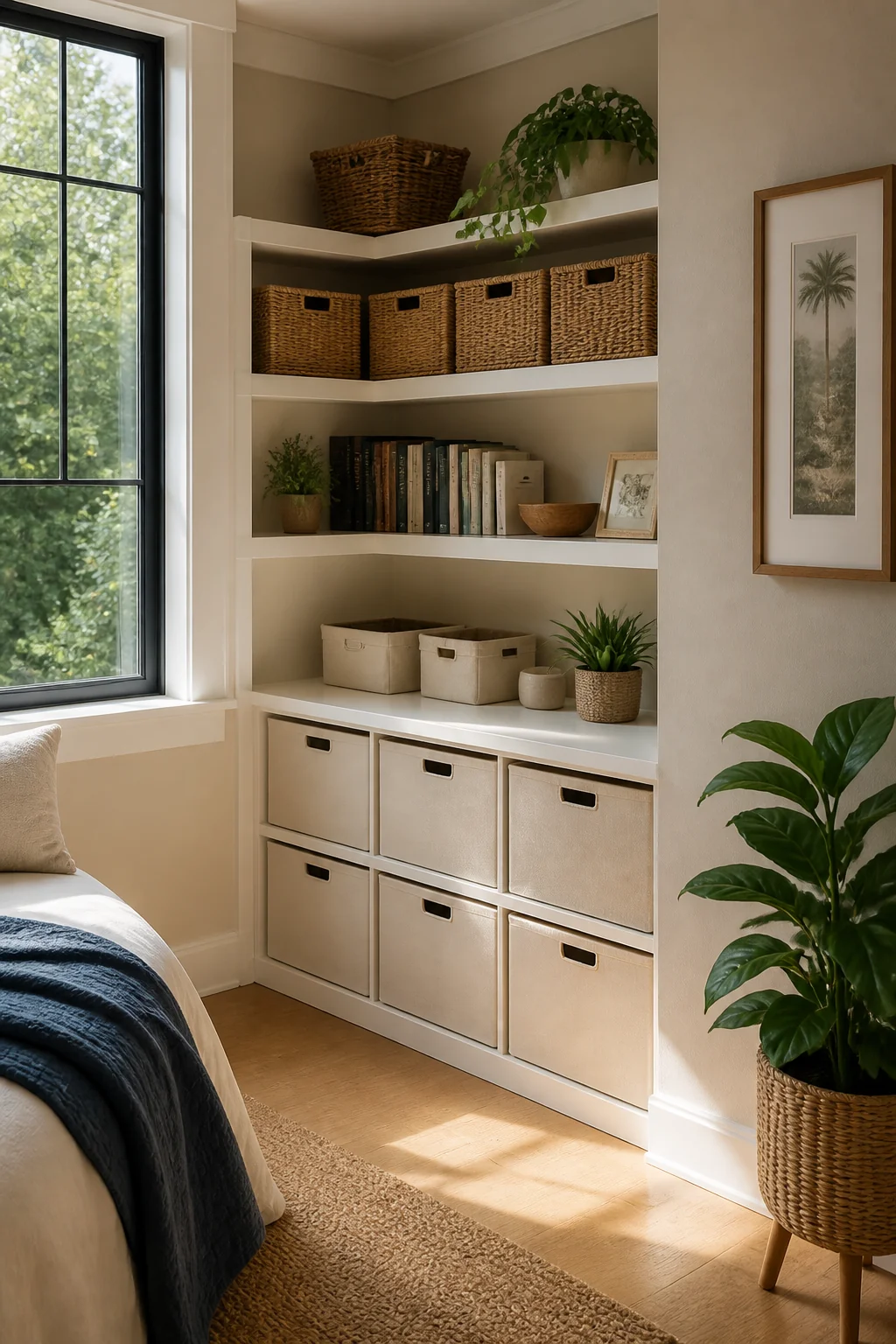
Small closets are rarely a clean rectangle. There's usually a corner tucked behind the door swing, or a strip of floor beside the shoes that nothing standard fits into.
Shallow, wide boxes are what work there, roughly $12 each. Look for ones about 6 inches tall and 12 to 16 inches wide, so two of them stack with room left under a lower rod hung at 40 inches. Rigid sides matter more than the material or the finish: collapsible fabric bins sag once they're half full and won't take a second box on top.
Depth is the real trade-off. Anything taller than about 12 inches becomes a junk drawer, because reaching the bottom layer means unloading the top one first. Two shallow boxes beat one deep tub, every time.
Label the short end that faces out, not the lid, so you can read it without lifting anything. One box for workout gear, one for seasonal accessories, and the things that used to migrate across the floor finally have an address.
Vertical Bag Storage Stops the Pile
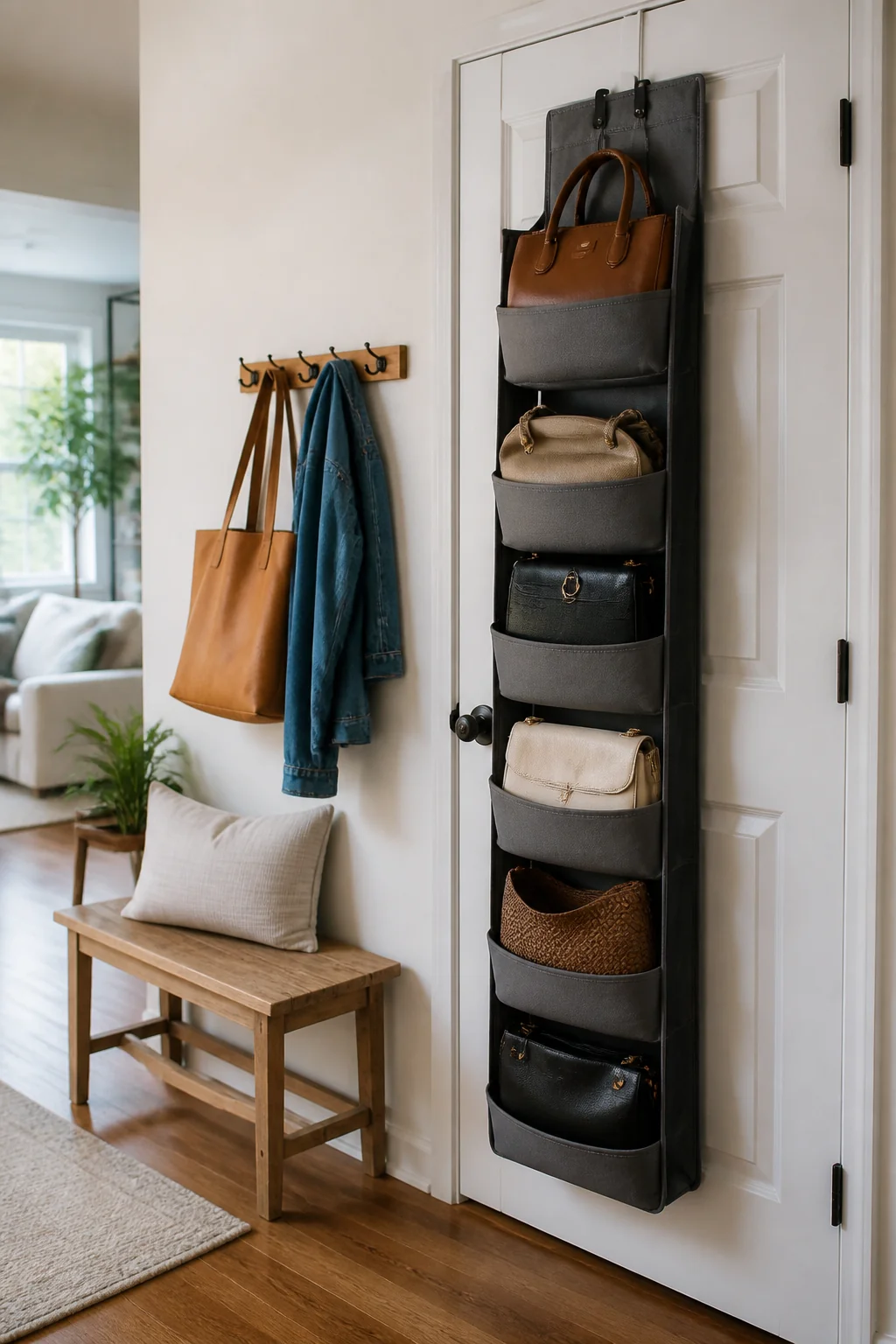
Bags are what break a small closet. They're bulky, they refuse to fold, and a heavy one sags whatever it's resting on.
A slim organizer with clear pockets, about $18, hangs on the back of the door beside the hooks and gives an everyday purse, a work bag, and a gym bag each their own slot. Fill one and you're carrying 15 to 20 pounds on that door, so check that the over-the-door hooks match your door thickness. Standard interior doors are 1 3/8 inches, and hooks cut for a 1 3/4 inch door will rattle and slip.
Clutches and small crossbodies go in the pockets of a hanging shoe organizer, where you can see all of them at once instead of digging.
One exception is worth respecting. Structured leather bags shouldn't hang by their straps: the handles stretch and the body creases at the fold, and neither comes back. Those sit upright on a shelf, stuffed with a rolled towel to hold their shape, with acrylic shelf dividers at around $10 a pair keeping them from toppling into each other.
Track Your Closet Before You Buy Anything
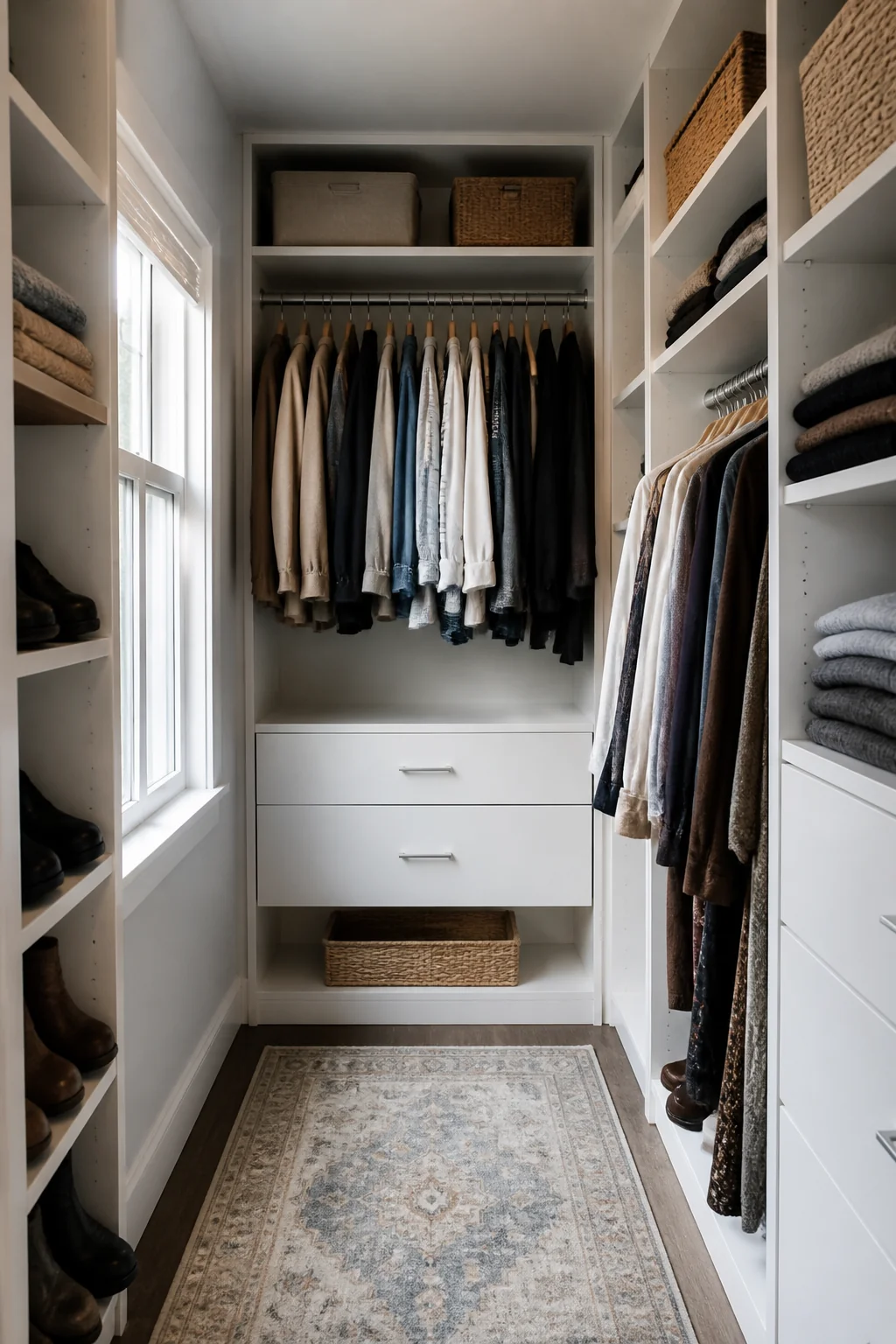
This belongs first, and it's the step people skip because nothing about it involves buying something.
Give it 20 minutes. Pull everything out and sort into four piles: wear it, don't wear it, needs repair, doesn't fit. The repair pile is the one that quietly ruins closets, so put a date on it or let it go now. Nearly everyone turns up the same finds, a stack of near-identical white t-shirts and a couple of bags from a previous chapter of life that haven't moved in years.
If you can't judge your own wardrobe honestly, turn every hanger hook backwards on the rod. Anything still facing backwards in six months hasn't been worn, and that's your donation box filling itself.
Then measure. Note the interior width, the depth front to back, and the height to the rod on your phone before you shop. A bin an inch too deep stops the door closing, a shelf sized by eye is a return trip, and storage bought before the sort is usually storage for things you're about to give away.
Where to Start When You Only Have an Hour
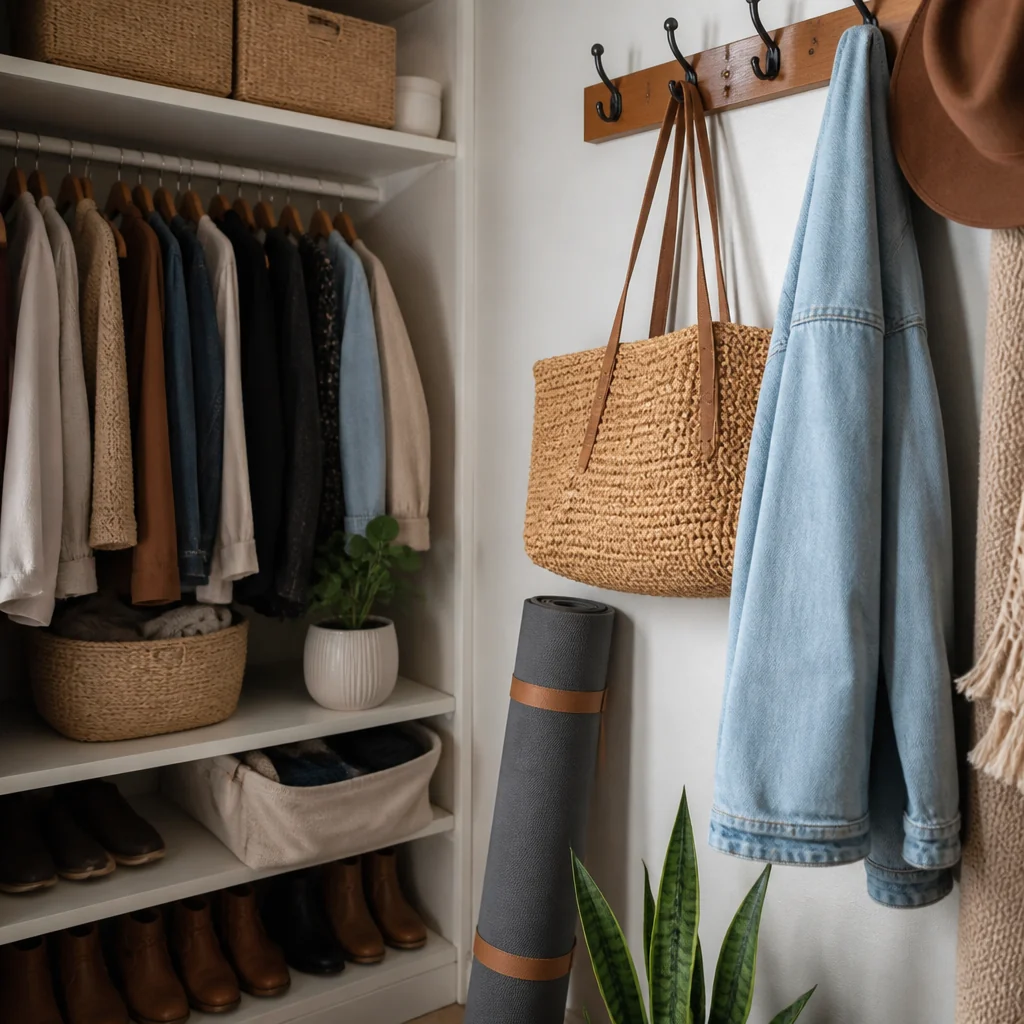
When the whole closet feels like a project you'll never begin, the order matters more than the effort.
The tension rod gives back the most for the least: about $15, five minutes with a tape measure, and a second full row of hanging space. Hooks come next at $8 and ten minutes, and they clear the floor faster than anything else here. Swapping 20 hangers is the slowest of the three, since it means unloading and reloading the rod, but it's the one you feel every morning.
Hold off on the shelves until the sort-out is done. Drilling into drywall is the only step on this list you can't undo, and it's the one that costs real money if the depth turns out wrong.
Keep this guide handy
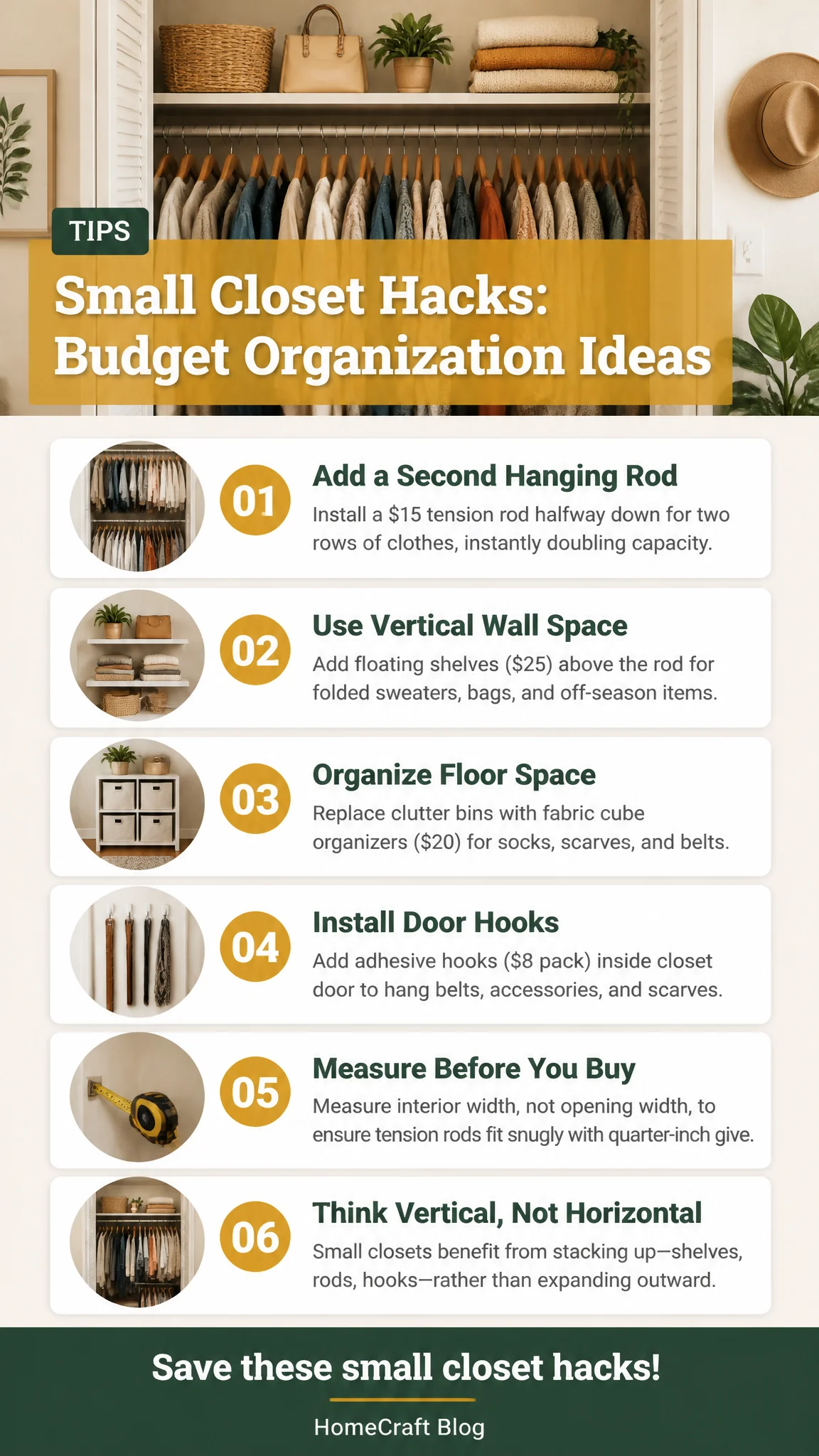
A closet under 4 feet wide can hold a working wardrobe. It just has to be built upward and onto the door, rather than spread across a floor that was never there to begin with.
Ideas fade by Friday. A plan finishes the room.
You just read a full guide to your small space. Saving ideas will not change it; a plan will. The Home Decor Collection is every planning tool we make, for every room in the house, in one download, so the after photos below stop being other people's rooms.



- Six room Style Kits, each with layout, palette and shopping list$114
- The Gallery Wall Studio: 200 prints + 15 measured layouts$29
- The Room Makeover System: 40 solved room layouts + workbook$29
- The Color Palette Handbook: 60 palettes shown in real rooms$19
- The Whole-Home Reset: 40 printable organizing checklists$19
- The Decorator's Cheat Sheets: the 40 measurements that matter$9
- All eleven products, bought separately
$219$97
A single hour with an interior designer costs more than the entire Collection, and this one keeps answering for every room you will ever decorate. Free updates included as the products grow. And if it is not for you, the 14 day money back promise means you simply get a refund.