14 Small Balcony Decor Ideas for South-Facing Balconies That Bake by Noon
Too hot to lean on by noon? These small balcony decor ideas use shade sails, light cushions, and metal-free planters that keep up with full afternoon sun.
This post contains affiliate links. As an Amazon Associate I earn from qualifying purchases. If you buy through our links, we may earn a commission at no extra cost to you.
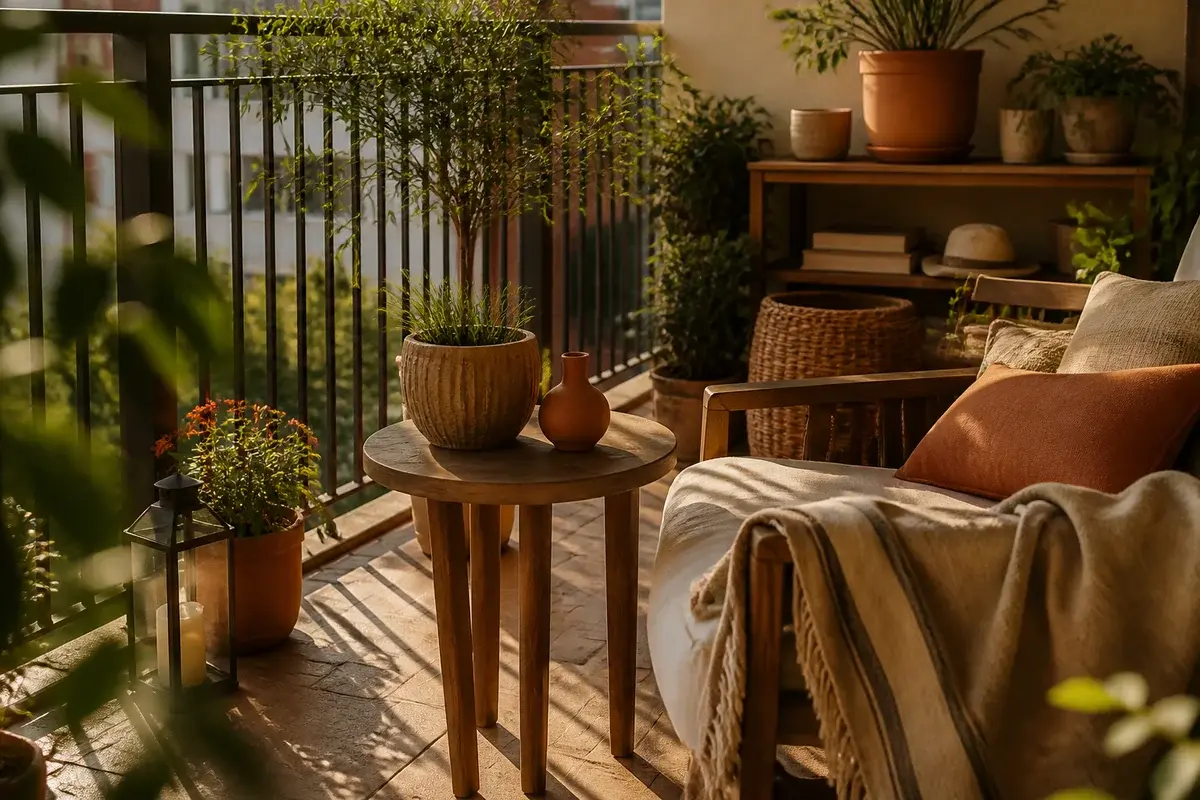
By two in the afternoon, the railing on a south-facing balcony is too hot to lean on. The cushion on your chair has gone pale at the seams, the herbs in the corner pot have crispy tips, and the glare off the concrete makes it hard to read anything on your phone. Full sun hits these spaces hardest at the hours you most want to sit out there. So the decor has to work with the heat instead of fighting it. Each idea below starts with a look you can picture, then explains why it holds up in strong afternoon sun, then gets it onto an ordinary balcony without a major project.
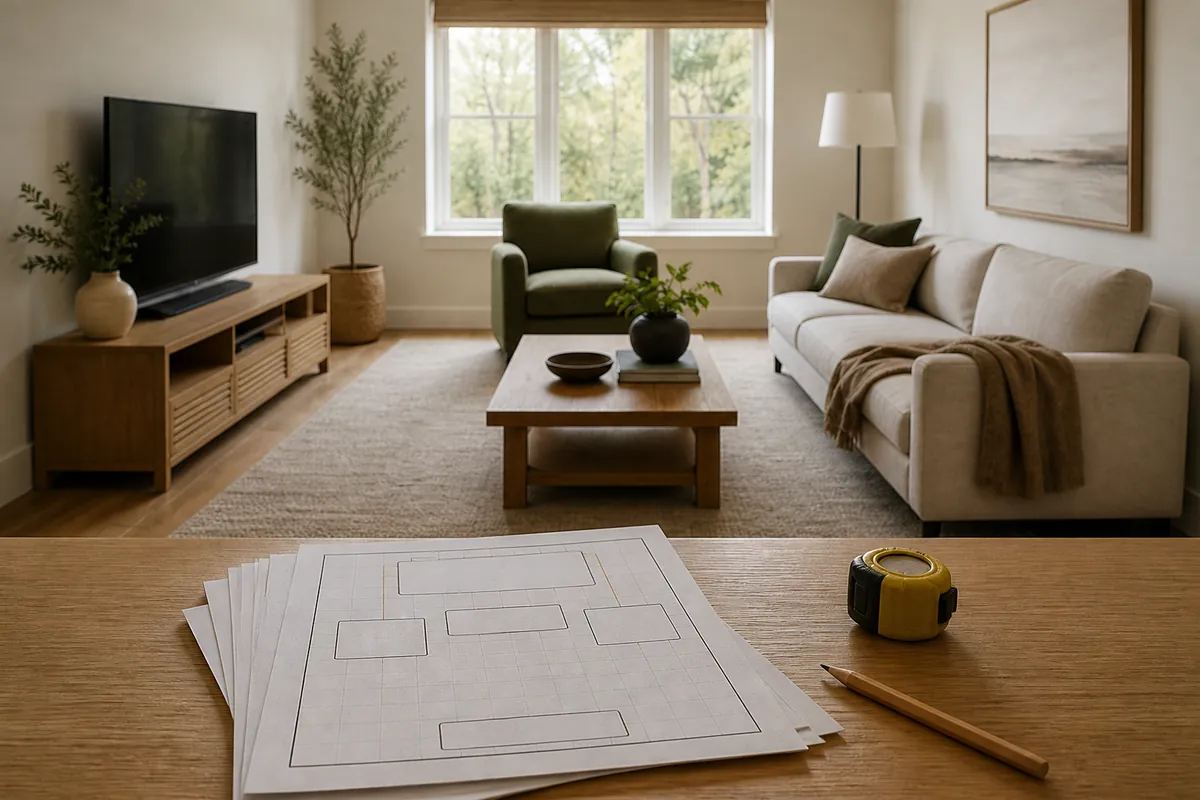 14-page PDF
Free layout kit
Know where the sofa goes before you lift it.
Five living room layouts solved by room size, each shown built. Find yours in a minute.
- 5 layouts for common room sizes
- Each one shown built, with reasons
- A grid page to plan your own room
Free. Arrives by email in a minute or two, plus our ideas and occasional shop offers. Unsubscribe anytime. Privacy
1. Stretch a pale shade sail over the seating corner
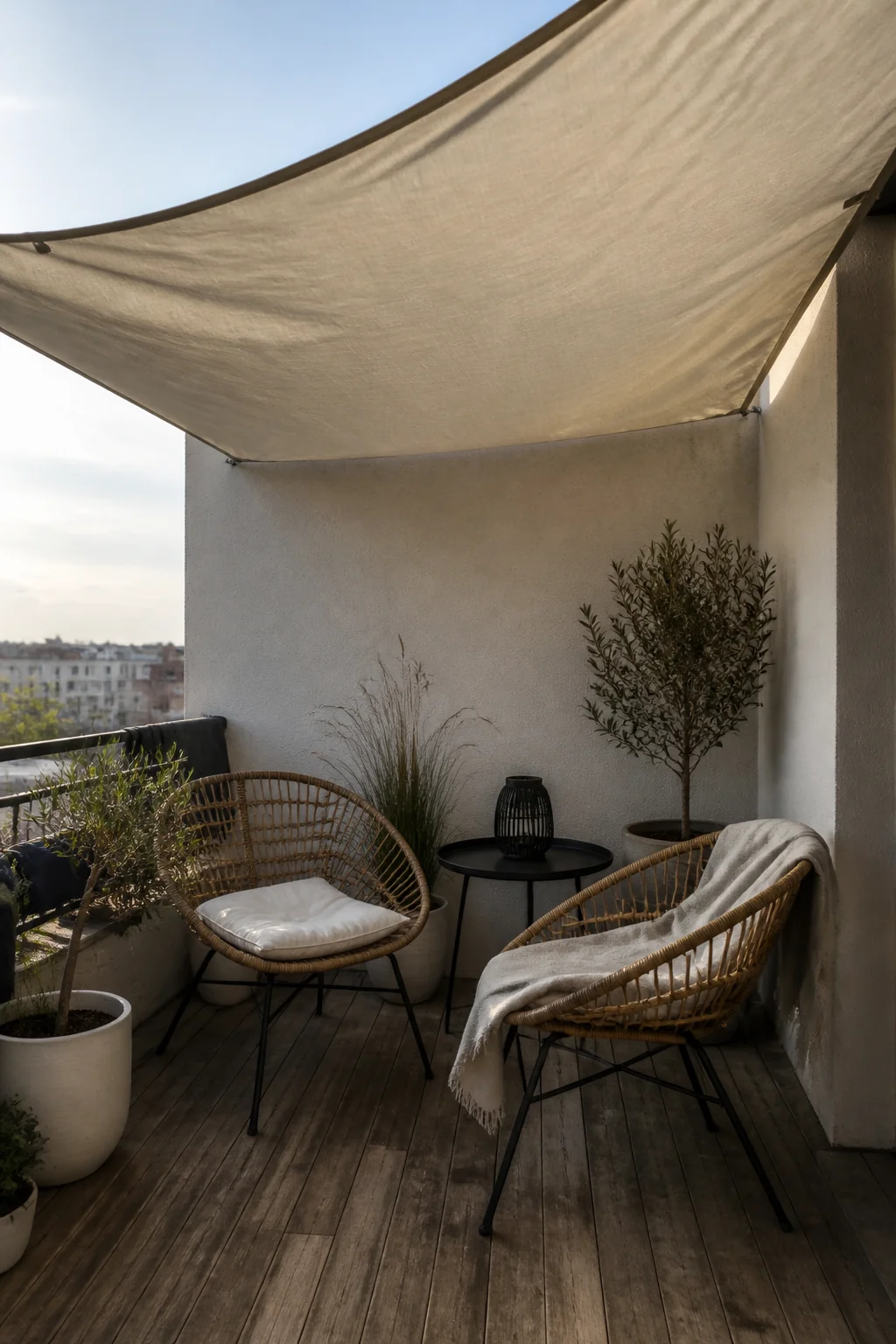
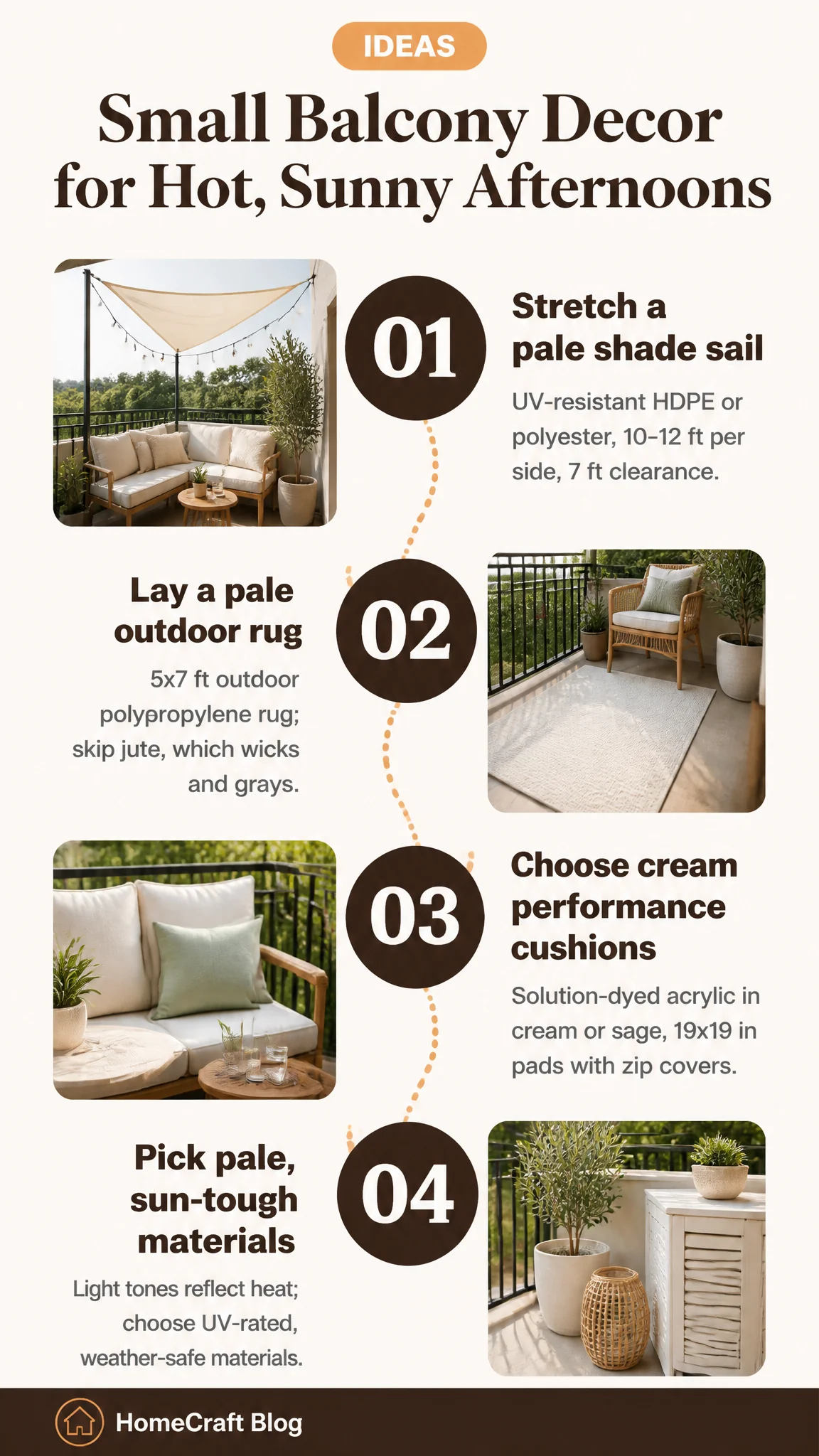
Picture a triangle of off-white woven fabric pulled tight above your two chairs and small table, its edges lifting slightly when the breeze comes through. The shade it throws is soft and moves across the floor as the afternoon goes on, which looks nothing like a flat awning. Light fabric reflects more heat than it absorbs, and the sail keeps direct sun off your seat even when the sun sits low. Look for a fabric labeled UV-resistant in HDPE or polyester, and aim for a side length of roughly 10 to 12 feet so the sail doesn't sag. Keep at least 7 feet of clearance under the lowest corner. Anchor each corner with hardware rated above the sail's tension (the cheap eye screw from the hardware bin is the weak link).
2. Lay a pale woven rug that hides the scorch
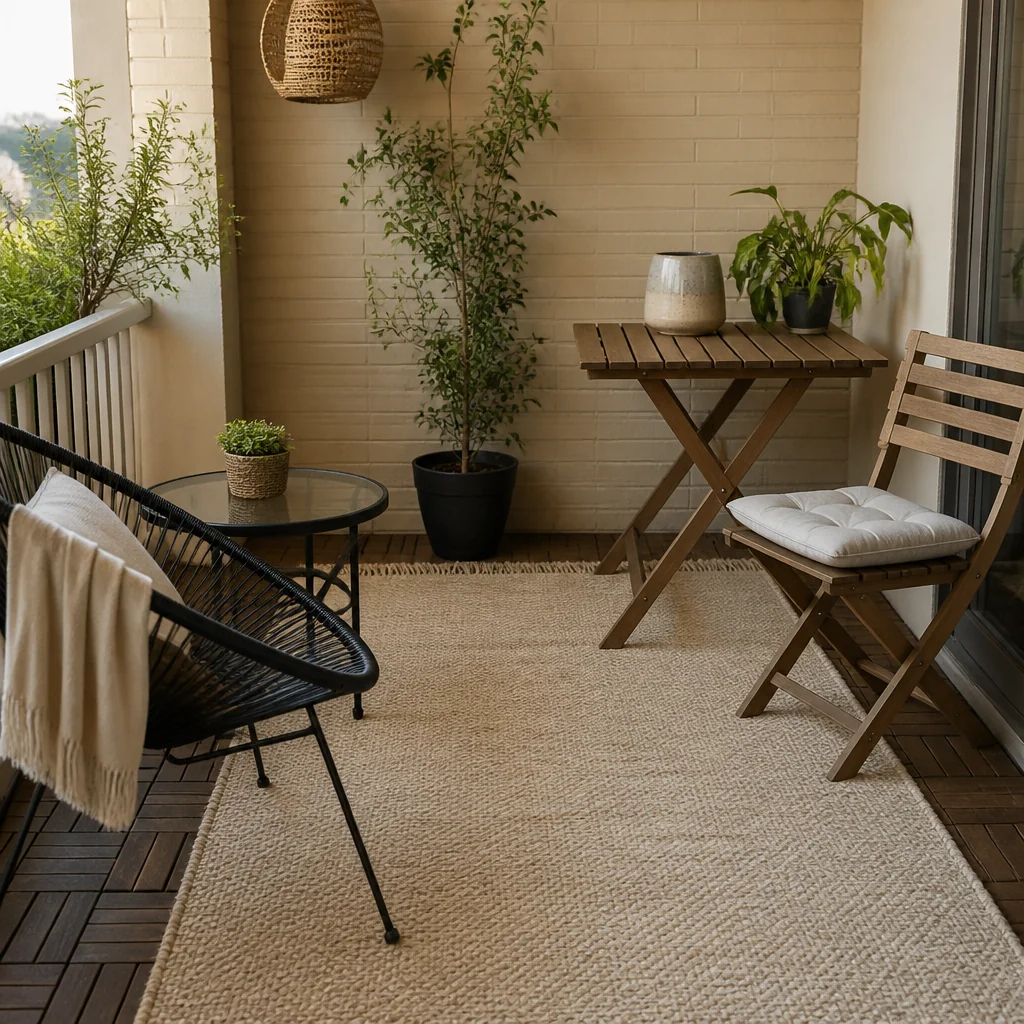
Imagine a flat-woven rug in sand or oatmeal, sized 5 by 7 feet, sitting under both chairs and the table so the front legs of each chair stay on it. The low pile dries quickly after rain, and the light tone bounces glare instead of soaking up the heat that rises off the concrete. The usual slip is buying an indoor jute or sisal rug because it looks right in a photo. Those natural fibers wick water, curl at the edges, and gray under constant sun. Choose polypropylene or polyethylene labeled for outdoor use, leave 2 to 3 inches of bare floor around the edges, and bring it in before a heavy storm if you can.
3. Swap dark cushions for cream performance fabric
Think of seat pads in cream, oatmeal, or pale sage with piping in a slightly deeper tone of the same color. Light fabric stays more comfortable to sit on through the afternoon, and the color still reads fresh when the balcony has been in full sun since midday. Look for solution-dyed acrylic, which holds its color because the pigment goes into the fiber before it's woven. A standard bistro or lounge chair usually takes a 19 by 19 inch pad. Get covers with zippers so you can wash them. The mistake that ruins cushions here is leaving them out through a rain shower with the foam still inside. Tip them upright so water drains, or bring them in.
4. Hang trailing plants from the railing in terracotta
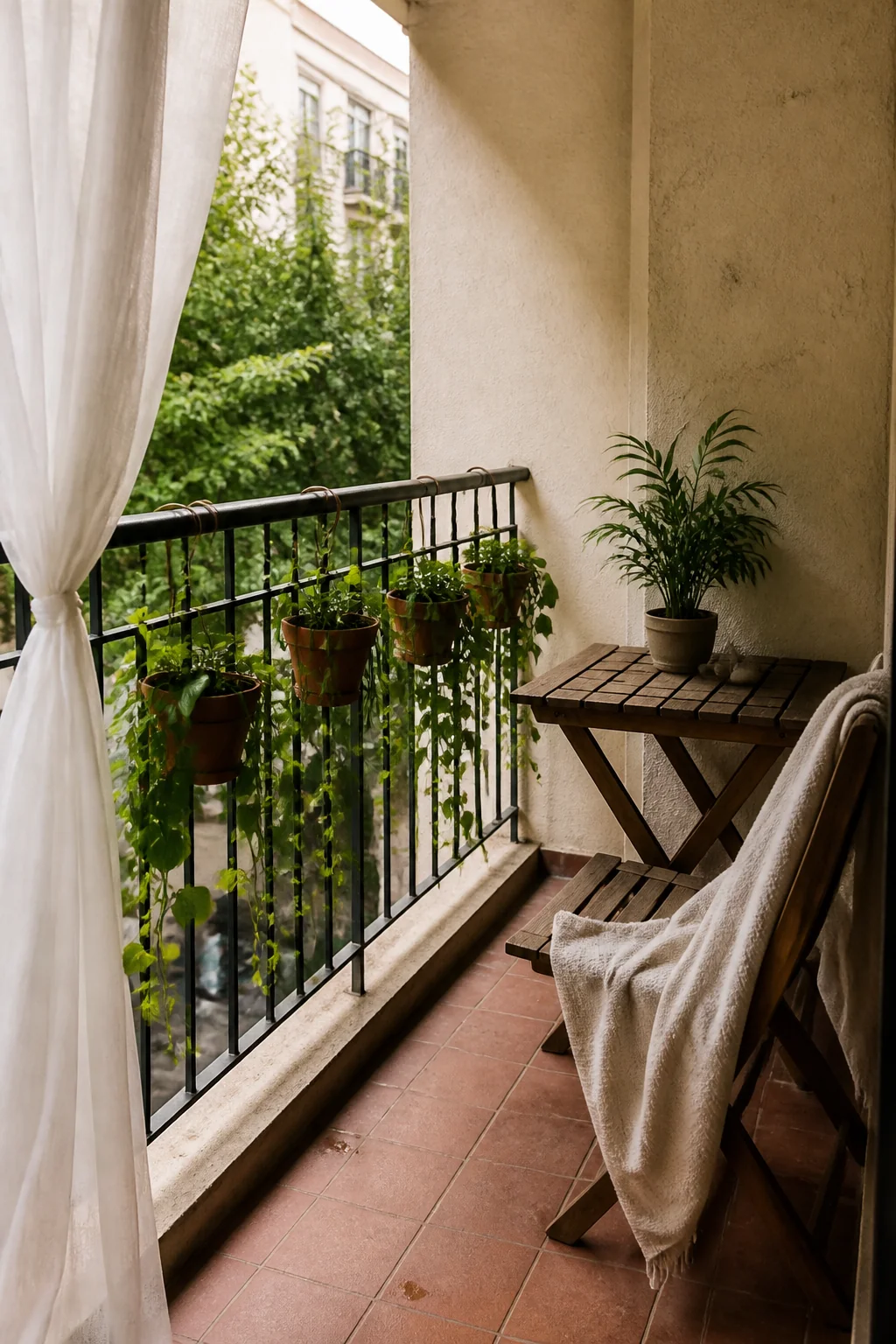
Does your railing have room for a pot about 10 inches across, hanging on the outside? If it does, a glazed terracotta pot on a railing bracket, with trailing ivy geranium or string of pearls spilling down in soft green curtains, puts color at eye level without taking up any floor. The foliage also shades the railing itself, which is the part of the balcony that gets too hot to touch first. Pick a bracket that clears the rail by at least 4 inches so the plants hang free. Rate the bracket against the weight of the pot filled with wet soil, not the dry weight printed on the box. Plain terracotta dries out fast in full sun, so a glazed finish holds moisture longer.
5. Add a slatted ladder shelf for the sun-loving pots
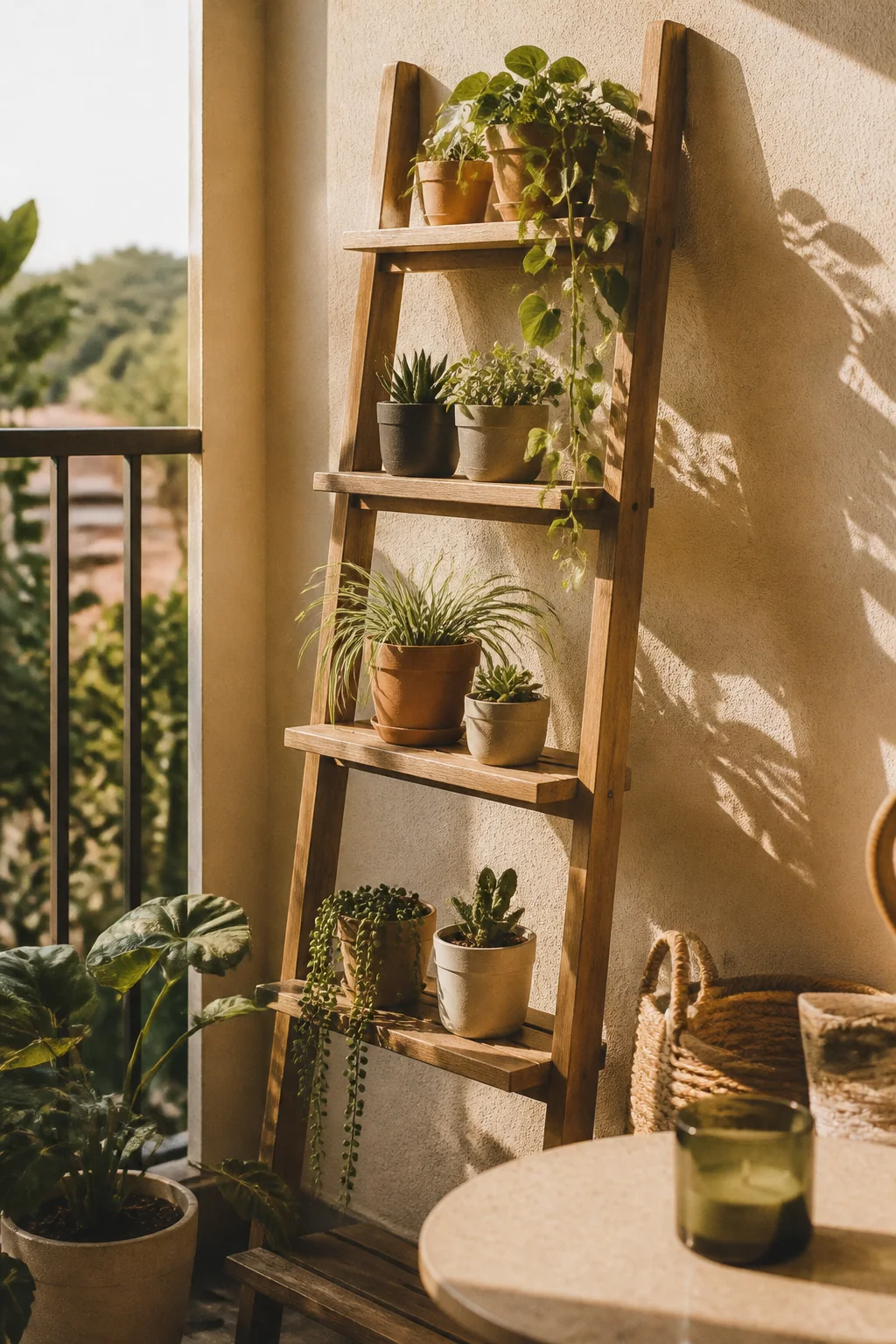
Think of a narrow ladder shelf in pale cedar or white-painted wood, standing about 4 to 5 feet tall against the end wall. Each step holds a pot, so the plants climb upward and the floor stays open for chairs. Put succulents and rosemary on the top step where the light is strongest, and leafy shade plants on the lower steps. Keep the shelf about 24 inches wide and 10 to 12 inches deep so it doesn't block the path to the sliding door. The usual mistake is loading the top step with heavy clay pots, which makes the whole frame lean. Anchor the shelf into a wall stud or use anchors rated above the loaded weight, and move the heaviest pots to the bottom.
6. Light the corner with flameless candles in glass
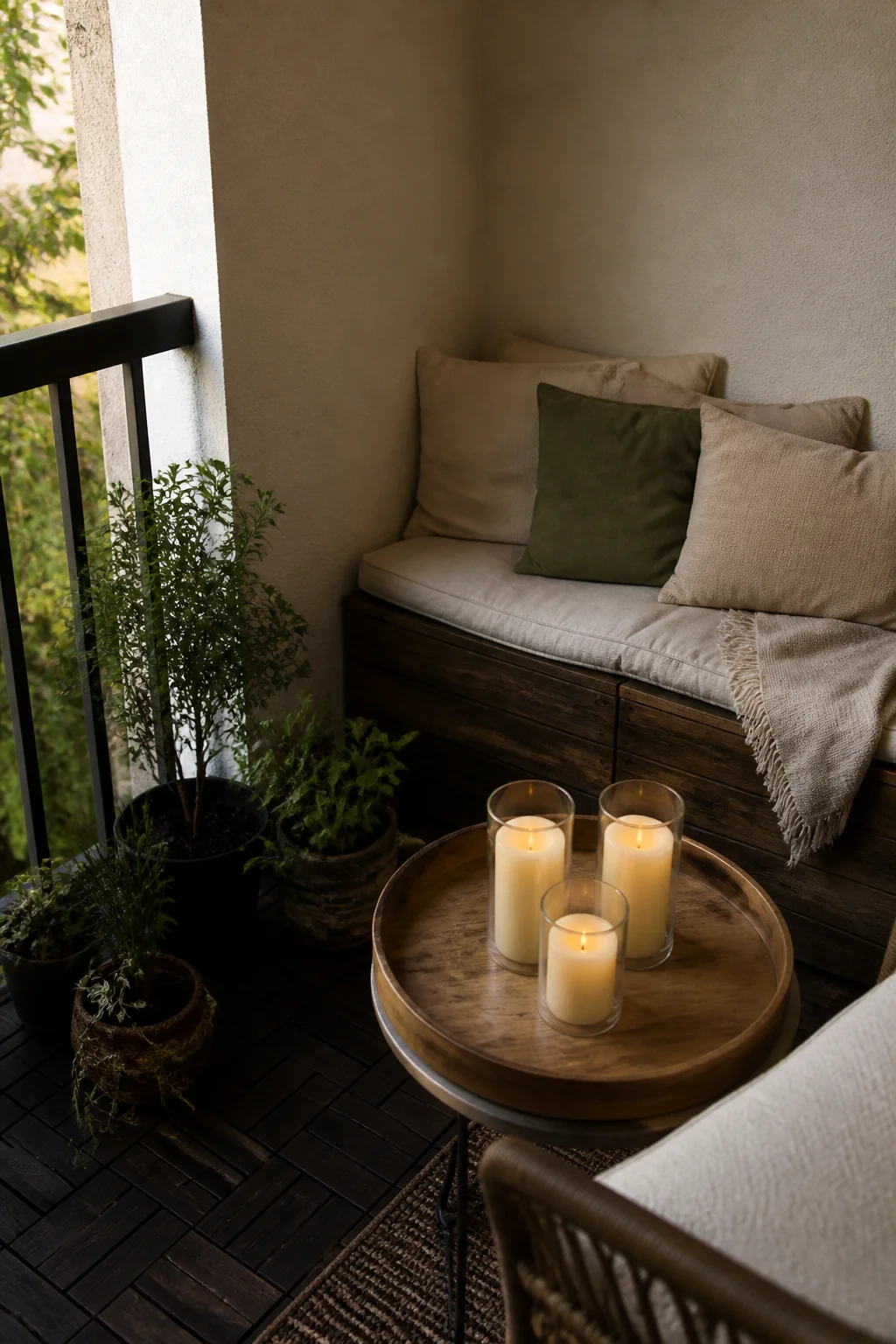
Picture three pillar-style LED candles with a warm white glow, set in clear glass hurricanes at three different heights on a pale tray. The glass catches the last light after sunset, and the candles never melt into a puddle in the heat the way real wax can. Choose outdoor-rated LEDs with a timer so they come on at dusk without any fuss (battery compartments are usually the weak point, so check the seal). Keep the cluster at least 12 inches from cushions, throws, and plants. If you want a real flame, keep it at least 12 inches from anything that can burn, and blow it out whenever you leave the balcony.
7. Mount a fold-down wall table with a pale top
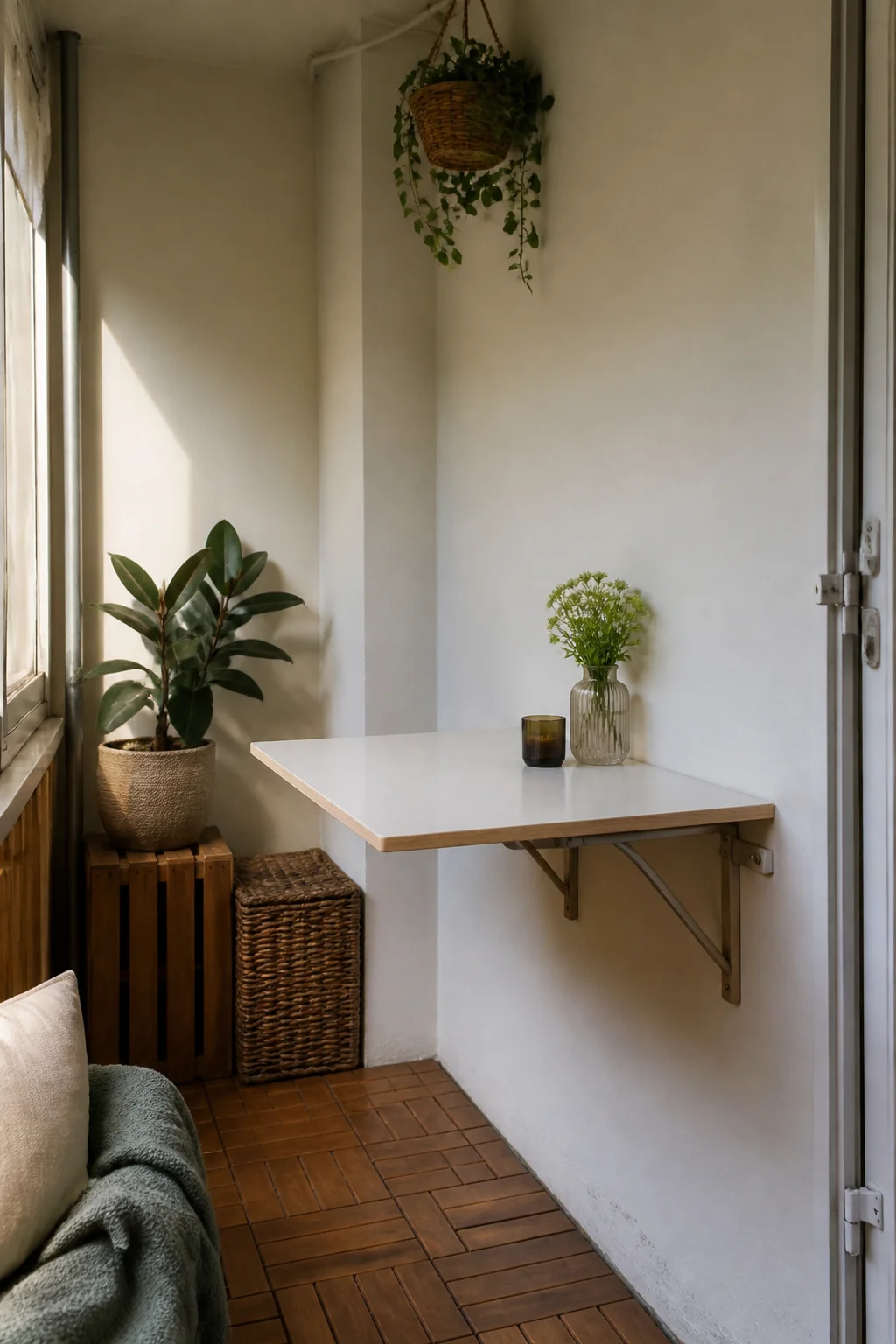
Imagine a slim table with a pale oak or painted top, about 24 inches wide and 16 inches deep, mounted on the wall beside the door. When it's down, it holds a coffee cup and a paperback. When it's up, the balcony floor is completely clear, so a small space never feels crowded. Look for a bracket with a hinged leg or a fold-out support rated for a loaded plate and mug. Mount the top at about 28 to 30 inches above the floor so it works at seated height. Anchor the bracket into studs or masonry anchors, and check the wall is solid before anything goes on the surface.
8. Paint the privacy screen a warm white
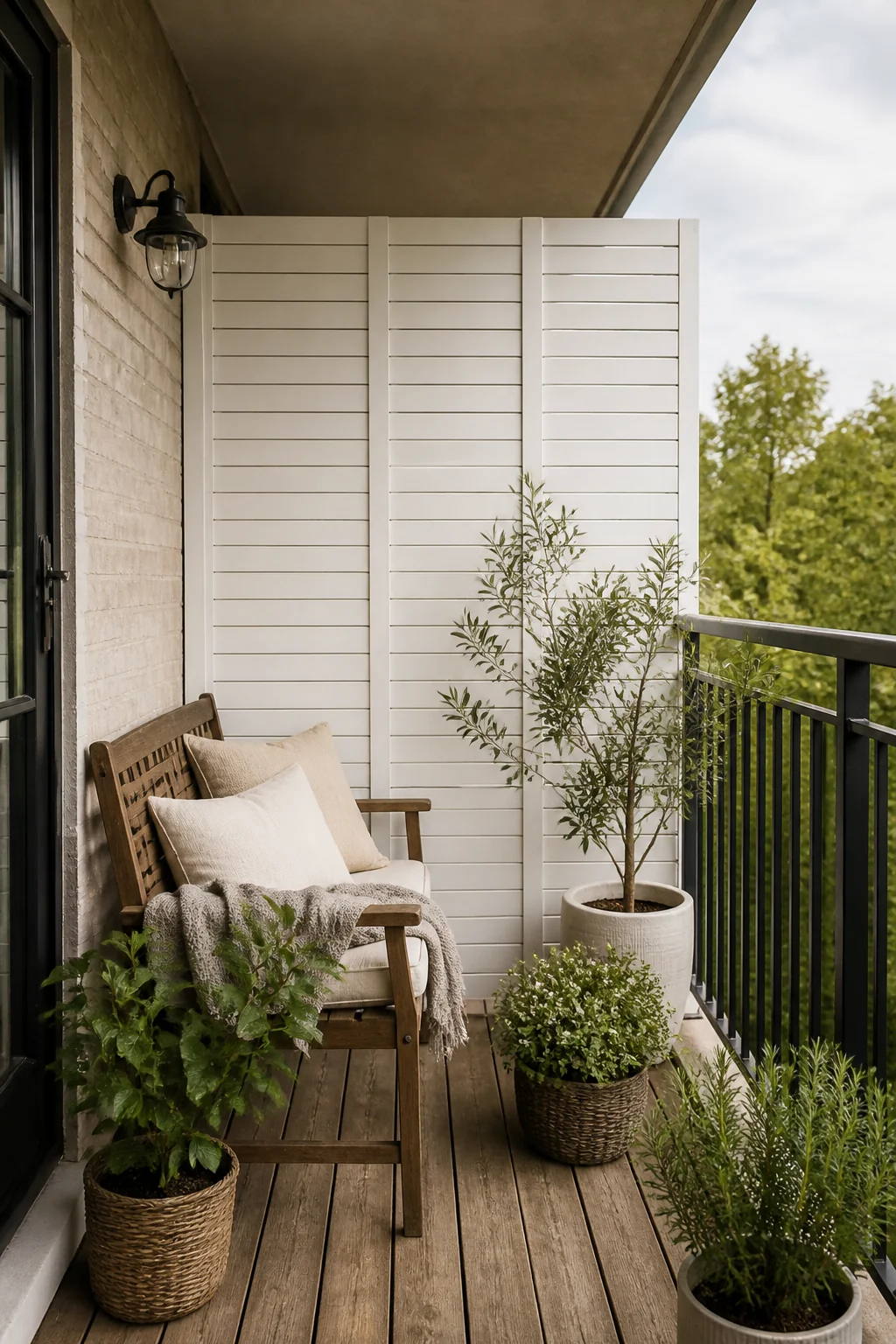
Picture a wall of lattice or stucco painted warm white, with the afternoon sun turning it soft cream instead of harsh glare. Dark trellis panels absorb heat and radiate it back toward your seat, while a light surface reflects more of the sun away. The pale screen also works as a backdrop, so the cushions and plants stand out against it. Use an exterior paint rated for wood or masonry in a satin or eggshell sheen so it wipes clean. If the screen is older wood or the building predates 1978, test the existing paint for lead before you sand. Spray only outdoors or in open air, and keep the nearby windows in mind.
9. Dress the bistro table in a weighted round cloth
Imagine a round linen cloth in oatmeal or white, falling just below the table edge, with small weights sewn into the hem so the edges stay put in a breeze. The fabric softens a hard metal or resin table and gives the corner a finished look that feels more like a room. Choose a diameter that drops 10 to 12 inches over the table edge, so the cloth hangs evenly on all sides. A tight weave matters here, because loose linen lets the sun bleach it unevenly. Take the cloth in after a damp spell, since a cloth left out in wet weather picks up a sour smell fast.
10. Hang floor-length curtains on a high rod
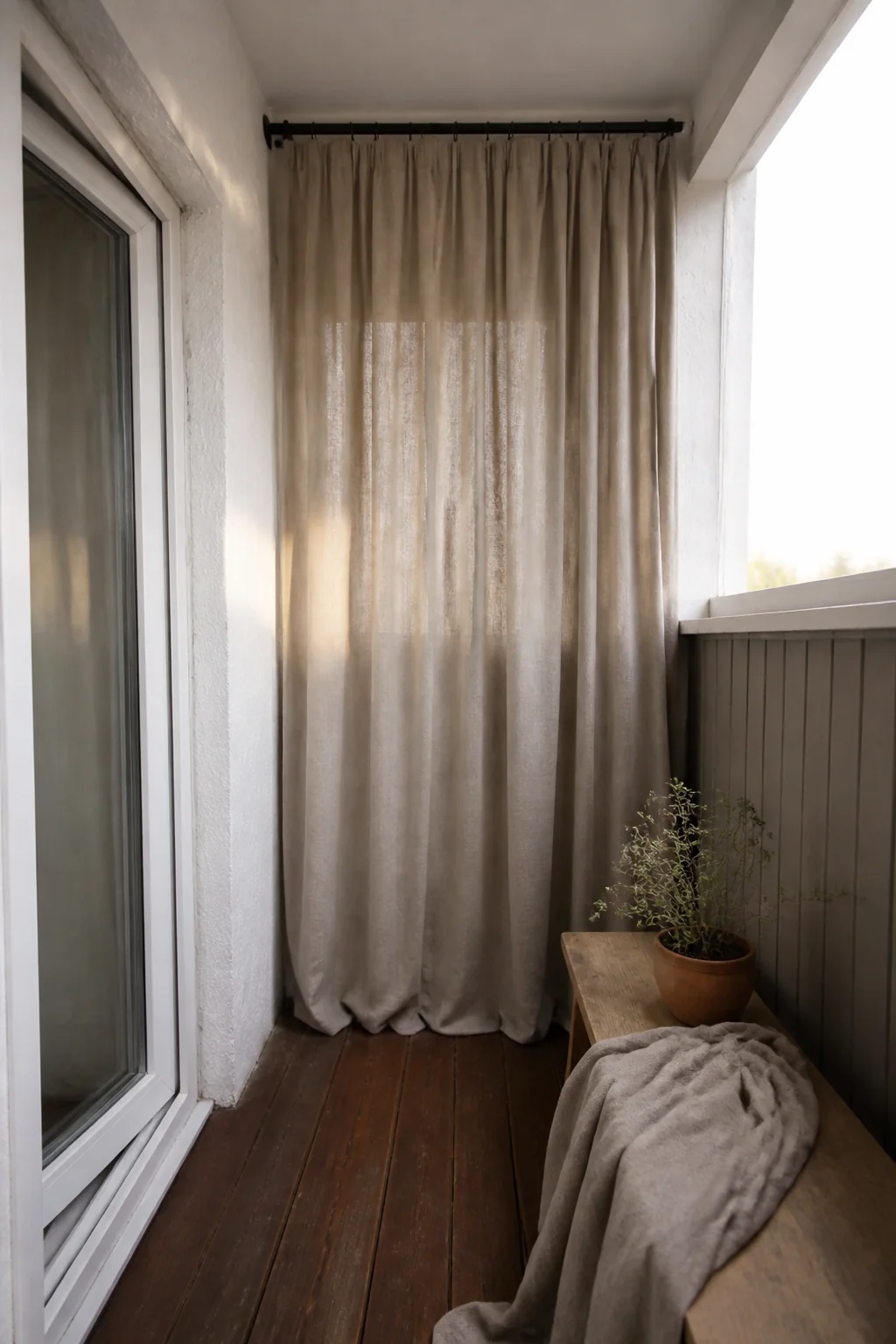
Picture sheer curtains in a mid-tone like sand or dusty olive, hung from a rod mounted about 6 inches above the top of the door frame so the fabric runs straight to the floor. The height makes a small balcony read taller, and the fabric softens glare without cutting off your view. Choose outdoor-rated polyester with a UV-resistant label and grommet tops, not a thin indoor voile that sun breaks down within a season. Leave about 4 inches between the panel edge and the railing so a gust doesn't pull the fabric through the bars. Mount the brackets into studs or anchors rated above the combined weight of the panels and wind load.
11. Run outdoor string lights above the seating
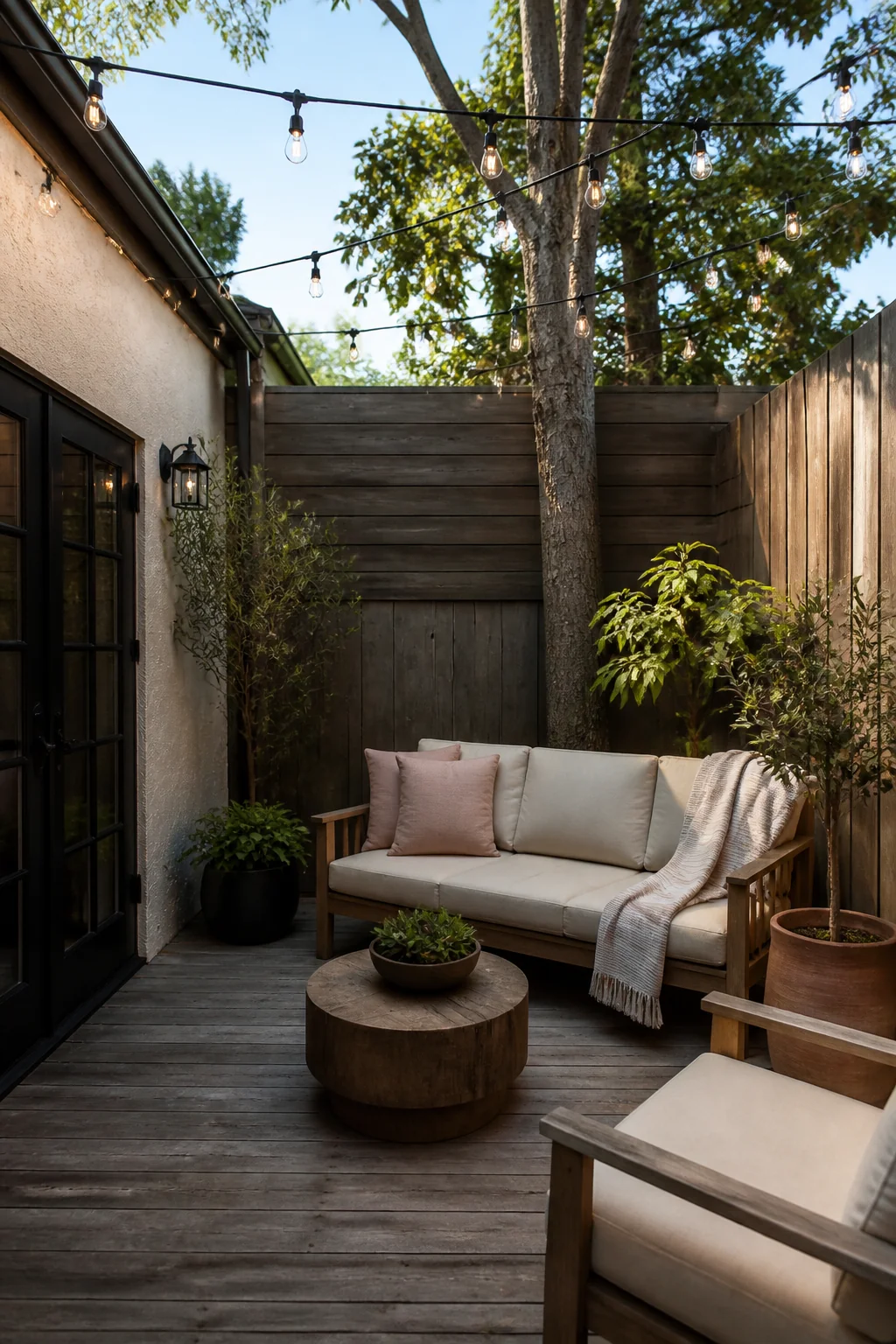
Think of a single strand of warm white string lights running along the railing or just under the edge of the shade sail, with the bulbs spaced about 12 inches apart. Light placed above eye level makes the balcony feel like a room at night instead of a dark box you step onto. Choose plug-in sets with a weatherproof connection, and keep the plug and cord off the floor so water can't pool at the joint. Plug them into a GFCI outlet or a weatherproof outdoor outlet. Don't run them off a cheap indoor extension cord across the door track. The usual oversight is buying indoor-only lights that look fine until the first damp night.
12. Refinish a thrifted side table in a matte finish
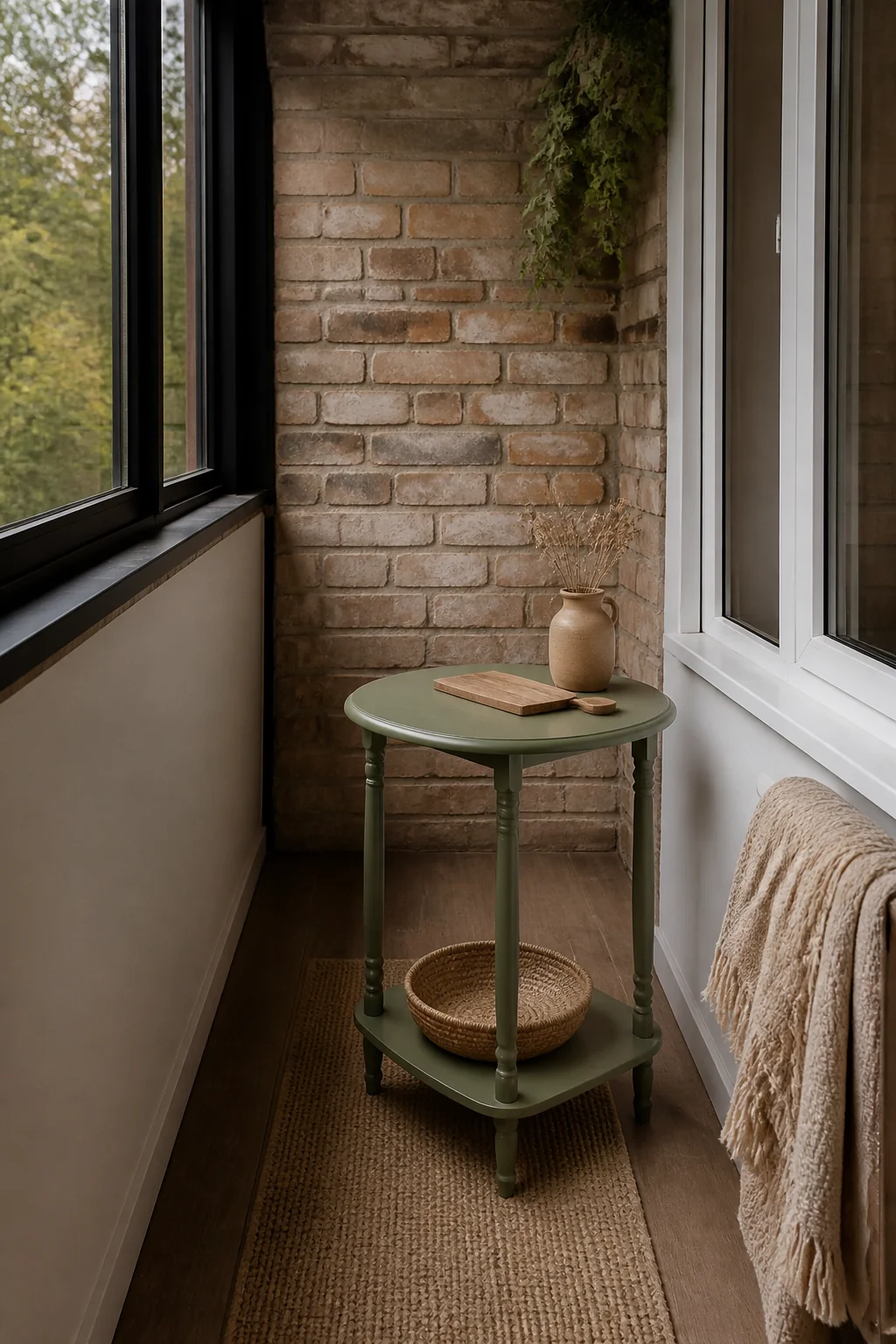
Picture a small round side table in a soft matte sage or chalky white, with the legs left slightly darker so the color sits on the surface instead of fighting the wood grain. A matte finish hides the water rings and fingerprints that show up on glossy paint once the sun hits it. Test the existing finish for lead before you sand anything, since older paint is the real risk on a thrifted piece (a home test kit from a hardware store works for this). Sand lightly outdoors, prime, and seal with an exterior-rated paint or two thin coats of clear polyurethane. Work with windows open or outdoors, and lay oily rags flat to dry before you throw them away.
13. Use a tall grass in a corner pot for a sheer screen
Imagine a clumping ornamental grass about 3 to 4 feet high, growing in a heavy glazed pot in the corner farthest from your chair. The blades move in the breeze and throw a loose, shifting shadow across the seat, so the spot feels cooler without a solid barrier. Use a pot at least 16 inches across, because a tall grass in a small pot tips in the wind. Keep it at least 18 inches from the sliding door so the leaves don't brush the glass. Plant in a fast-draining potting mix, and water in the morning so the roots stay moist through the hottest part of the day.
14. Add a folding wood bench as a second seat
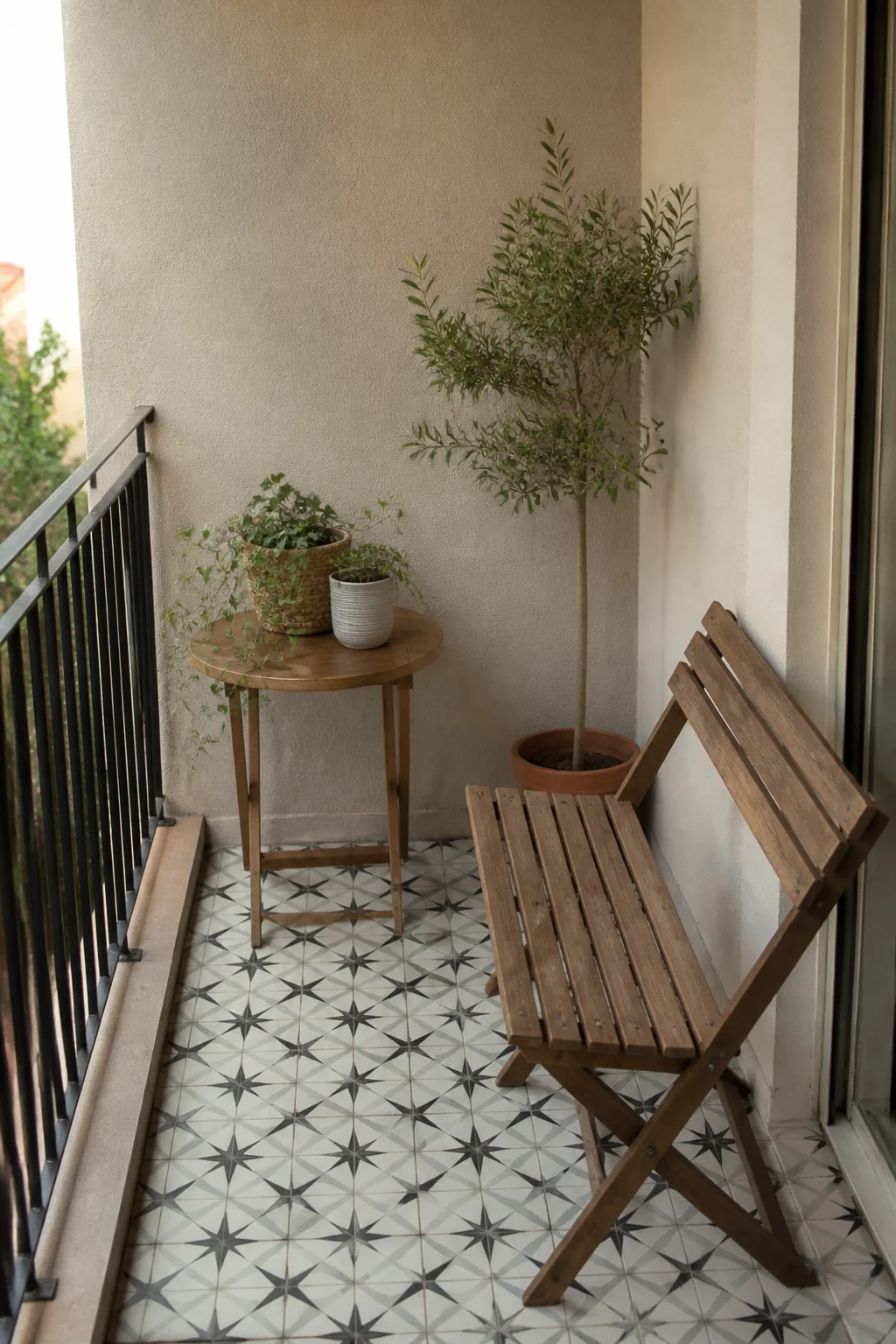
Think of a slim bench in teak or acacia, about 36 inches long, leaning against the wall until someone visits. Open it out and you have a second seat or a footrest without filling the floor. Teak and acacia handle sun far better than pine, which cracks and grays quickly when the surface gets hot. Look for a model with a fold-down leg that locks flat, and check that it stands level on your balcony tiles. Set it at least 12 inches from the railing so a guest doesn't end up leaning into the rail while they sit.
Save the full guide
Every look here asks you to give something up. Pale fabric and light rugs show pollen, rain spots, and dust sooner than dark ones, so you'll rinse and sweep more often. Shade sails, tall grasses, and privacy screens also trade away some of the sunset view from your chair, and the candles only earn their place after dark. We think that's a fair exchange. A balcony you can sit on from early afternoon until the sun drops behind the building gets used, and the pieces that handle sun well tend to age better. Cream cushion covers without outdoor fabric are the first thing to fade, so that's where the trade pays off first.
The room images in this post are illustrations made with AI.