8 Charming Rustic Bathroom Vanity Ideas With Natural Wood Details
Rustic bathroom vanity ideas using reclaimed wood, live edges, and stone tops that anchor your space. Real dimensions and sourcing tips included.
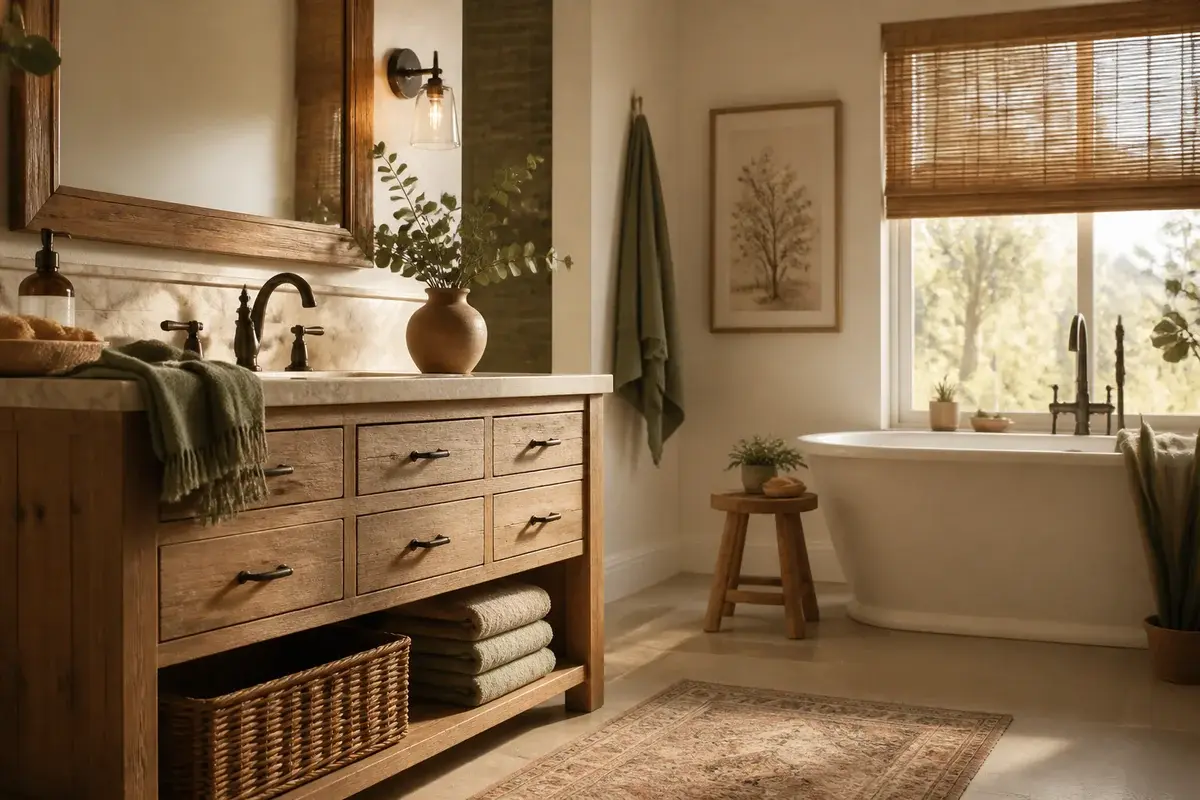
A rustic vanity anchors the whole bathroom. It sets the tone for everything else in the room, from lighting to hardware to how you finish the walls. The best rustic vanities pair solid wood with stone or concrete, keep hardware simple and heavy, and age naturally rather than chasing a contrived "distressed" look.
This works for bathrooms between 40 and 100 square feet, and for anyone who wants a vanity that looks better at year five than at year one. You're not fighting the material here - you're letting it live.
1. Reclaimed Wood Topped With Thick Marble or Granite
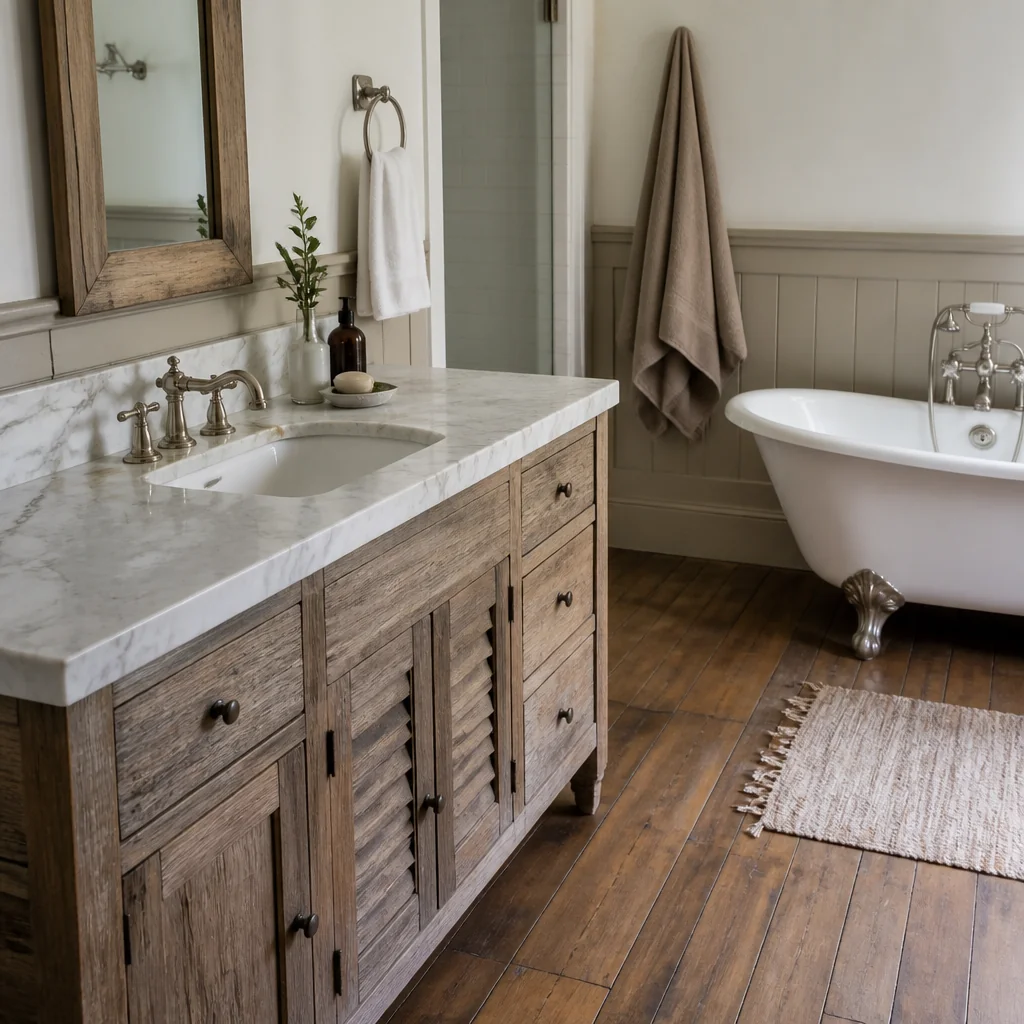
Reclaimed barn wood or salvaged flooring makes a genuine base because the material has actual history. Pair it with a marble or granite top that sits at least 1.5 inches thick (thinner tops flex and chip). The wood supports the stone, and the stone protects the wood from daily water splash.
A typical 36-inch vanity with reclaimed base runs $600 to $1,200 depending on the quality of the salvage. The stone top costs another $300 to $600. The mistake here is underselling the wood by pairing it with laminate or thin composite - that undercuts everything the reclaimed material is doing. The vanity will last 15 years without issue if you seal the wood twice a year and wipe spills immediately. Reclaimed pieces this solid are overkill for powder rooms and work best in master baths where you control the humidity.
2. Live-Edge Slab Sink With Waterfall Legs
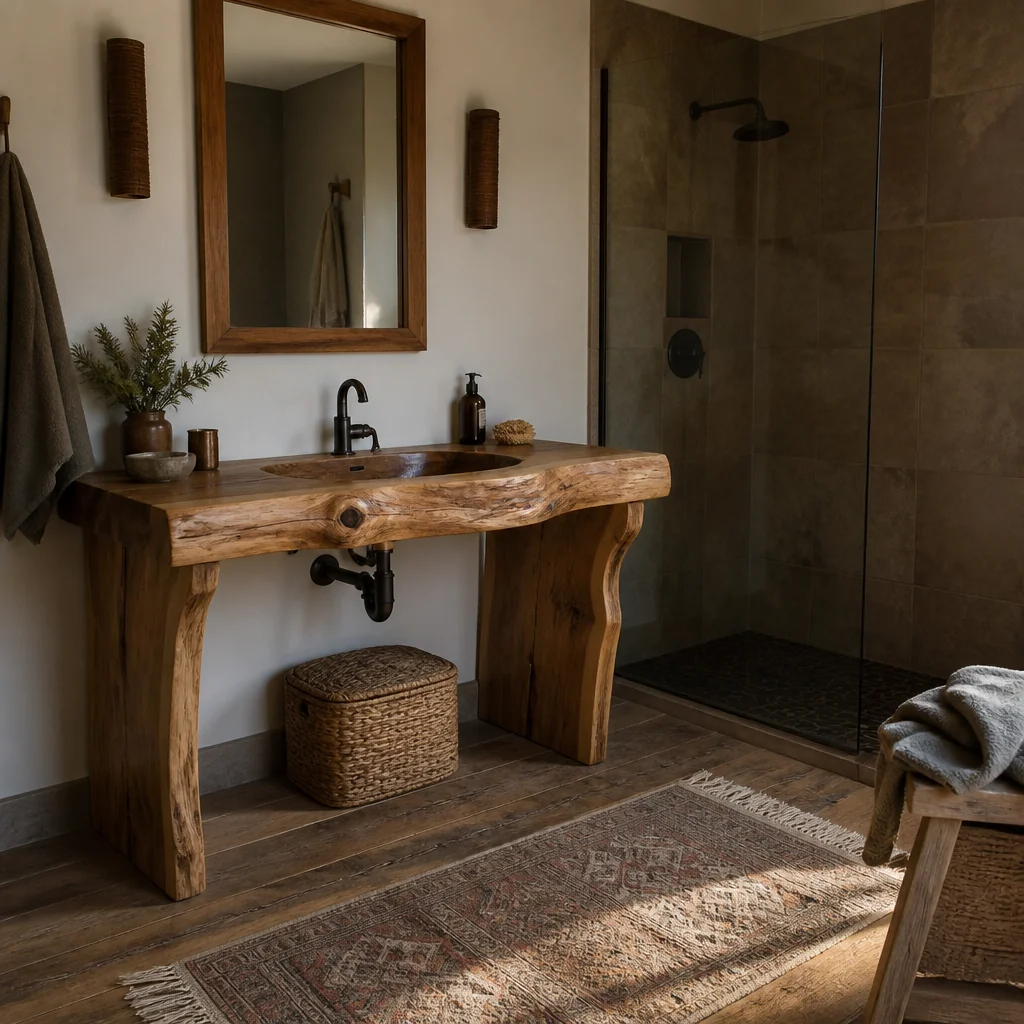
A single wide plank with natural edge becomes the vanity surface, roots itself straight down in waterfall legs that continue the wood grain to the floor. The effect is one long piece, though it's usually three pieces joined invisibly. The sink nests into a routed depression, and the wood around it stays visible.
These are striking because the wood dominates completely - there's no stone or metal surface to compete with the grain. A 48-inch live-edge slab vanity costs $1,500 to $3,000 depending on the wood species (walnut is expensive; pine is cheaper but softer). The waterfall legs need to be genuinely thick - 2 inches minimum - or the whole thing feels flimsy. This style doesn't work well in high-humidity bathrooms because the wood can warp, and it's wrong for kids' baths where rough play gets the piece dinged.
3. Stacked Stone Base With Reclaimed Wood Shelf
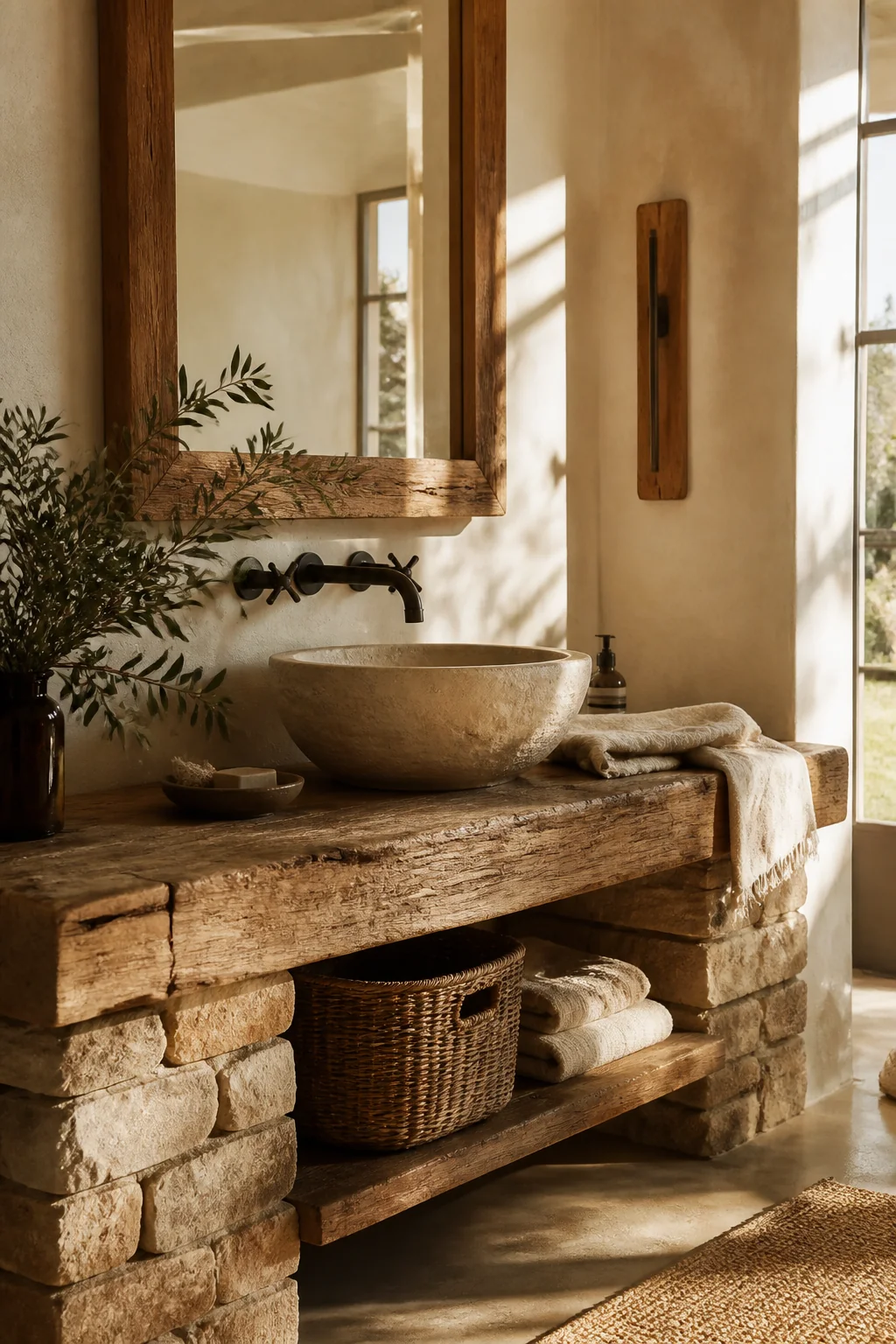
Build the vanity structure in stacked stone or stacked slate, then crown it with a thick reclaimed wood shelf that holds the sink and basin. The stone sits on the ground; the wood shelf hovers. It's chunky and durable, and the two materials play off each other - warmth of wood, coolness of stone.
The stone base is labor-intensive but solid forever (stone doesn't rot, doesn't age out, doesn't need sealing the way wood does). Budget $800 to $1,500 for a 36-inch base if you're hiring the stone work. The reclaimed wood shelf adds another $200 to $400. This approach works in any humidity level because the stone isn't absorbing water. It's a poor fit for tiny bathrooms under 40 square feet where the vanity dominates too much visual weight.
4. Floating Vanity With Exposed Beam Detailing
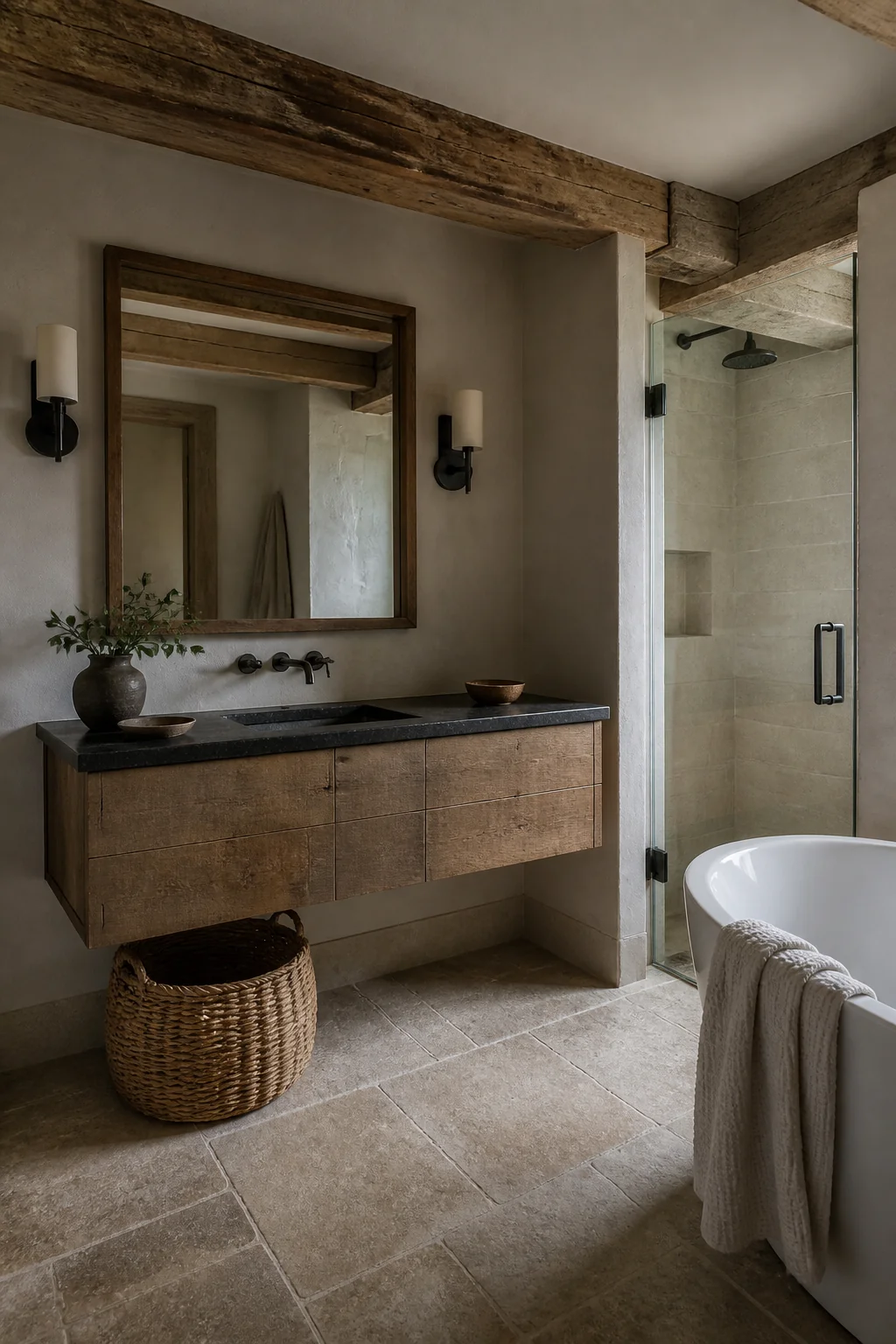
Mount the vanity on the wall so the space beneath opens up, then frame the whole piece with a heavy timber beam above (or recessed into the wall). The beam is structural - it carries visual weight and often hides plumbing. The floating base keeps the bathroom from feeling crowded even if the vanity itself is substantial.
A floating 48-inch vanity costs around $800 to $1,400. The timber beam can come from reclaimed wood or fresh-cut timbers and runs $200 to $500 depending on the species and finish. You need solid blocking in the wall to anchor floating vanities properly, so don't skip the prep work. The look only works if the beam is genuinely hefty - anything under 8 inches tall reads as decoration rather than architecture. Floating vanities aren't ideal in bathrooms where water tends to pool on the floor because you can't clean underneath easily.
5. Narrow Farmhouse Vanity With Turned Legs
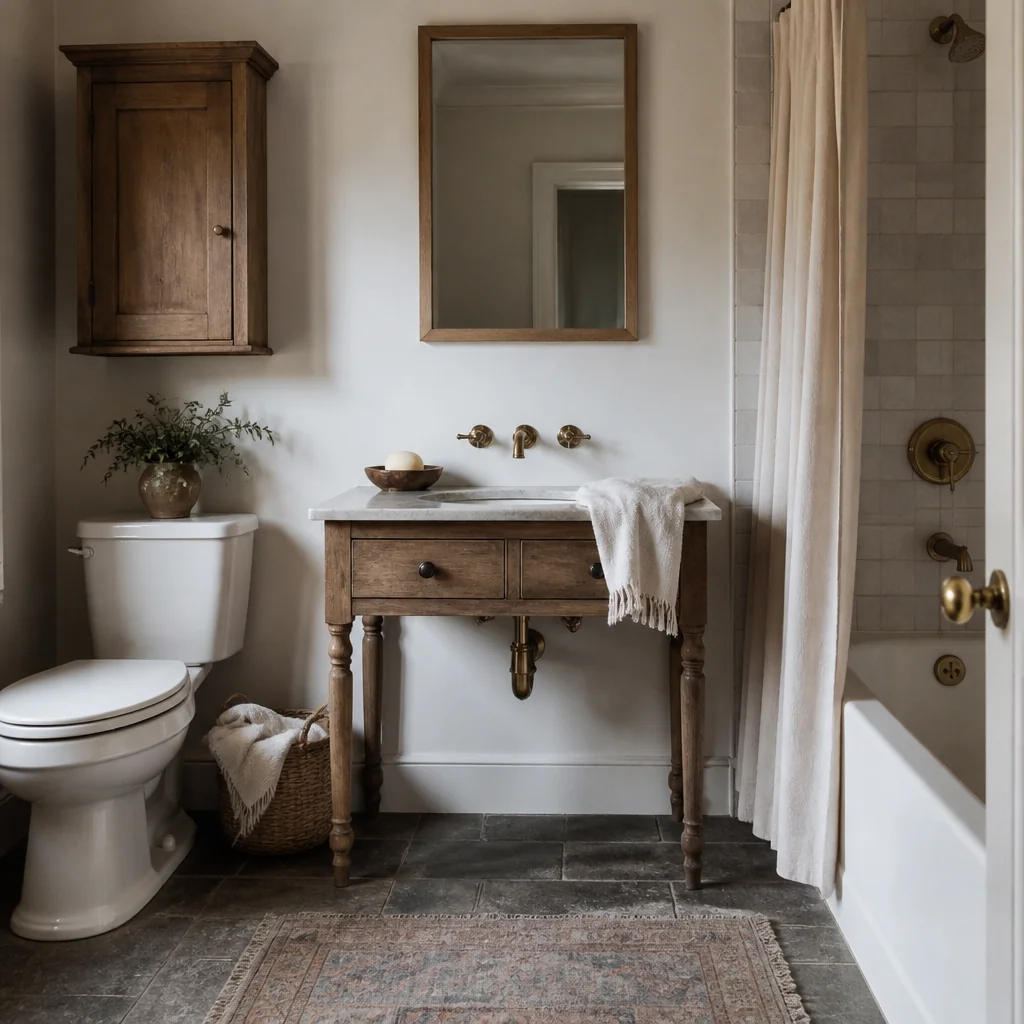
A slender wooden base on four turned legs (think furniture, not cabinetry) gives a softer, less blocky presence than a typical cabinet vanity. The legs are often tapered or reeded. The top is marble or concrete, usually 20 to 24 inches deep. It reads lighter in the room even though it holds a real sink.
This style costs $400 to $900 for a 30-inch width - less than a custom cabinet because the frame is simpler. The turned legs are made to order or salvaged from old furniture; real wood (not mdf) is non-negotiable here or the whole thing wobbles. These are wrong for bathrooms that are longer than they are wide, where the visual line of the legs emphasizes awkward proportions. They also need accessible space around them, so don't try to squeeze one into a corner.
6. Concrete Poured Over Reclaimed Wood Frame
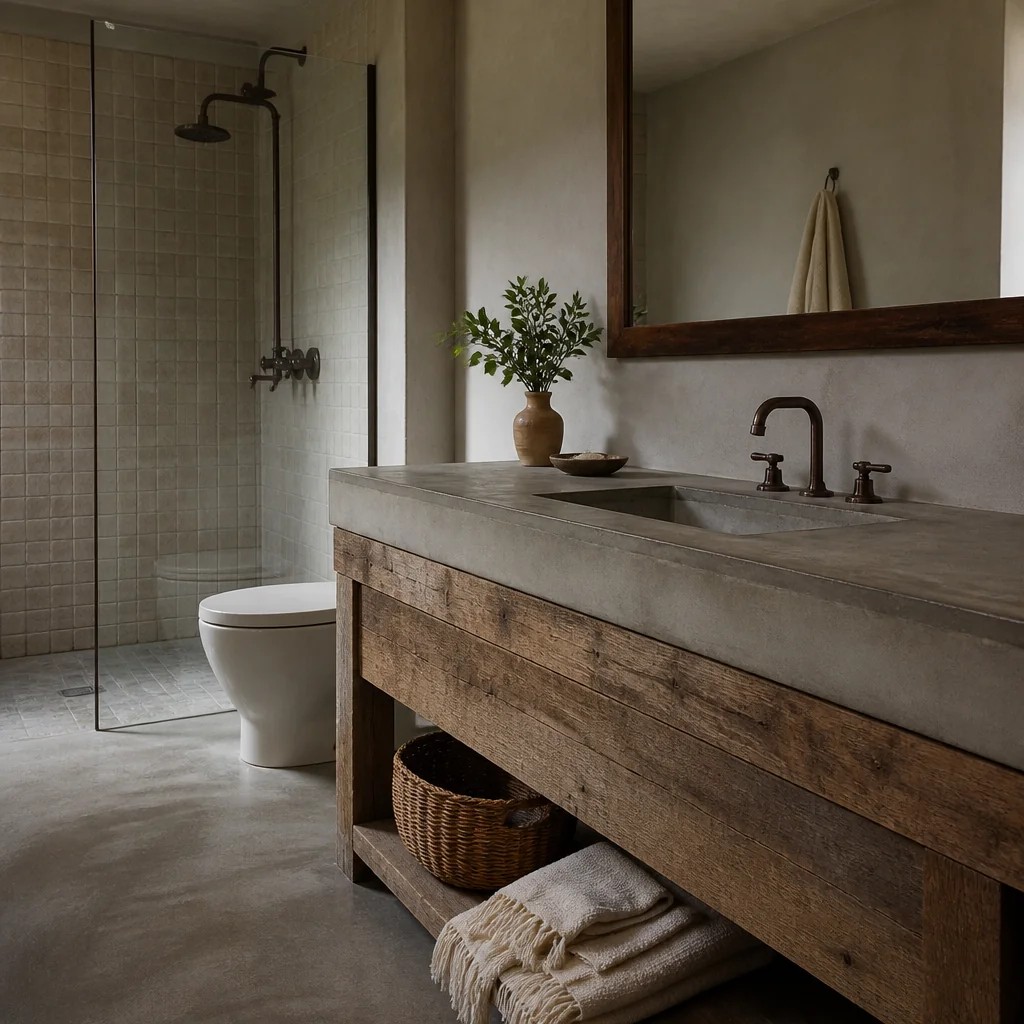
A solid reclaimed wood base holds a custom concrete top poured over it. The concrete seeps down into grain cracks and stains from the wood, creating a marbled, organic surface that looks nothing like smooth poured concrete. Each one is completely unique. The wood shows through in places or stays hidden entirely depending on how you pour.
These cost $1,200 to $2,200 for a 36-inch vanity because the concrete work is custom and the wood underneath has to be sourced carefully. Concrete is surprisingly durable if it's sealed right - quarterly sealing in a bathroom keeps it stable. The porous surface does stain over time (coffee, wine, anything acidic), and some people love that patina while others find it frustrating. This style demands skill in the pouring and sealing, so don't attempt it without experience or hire someone who's made at least a dozen of these.
7. Chunky Timber Slab Vanity With Stone Sink Bowl
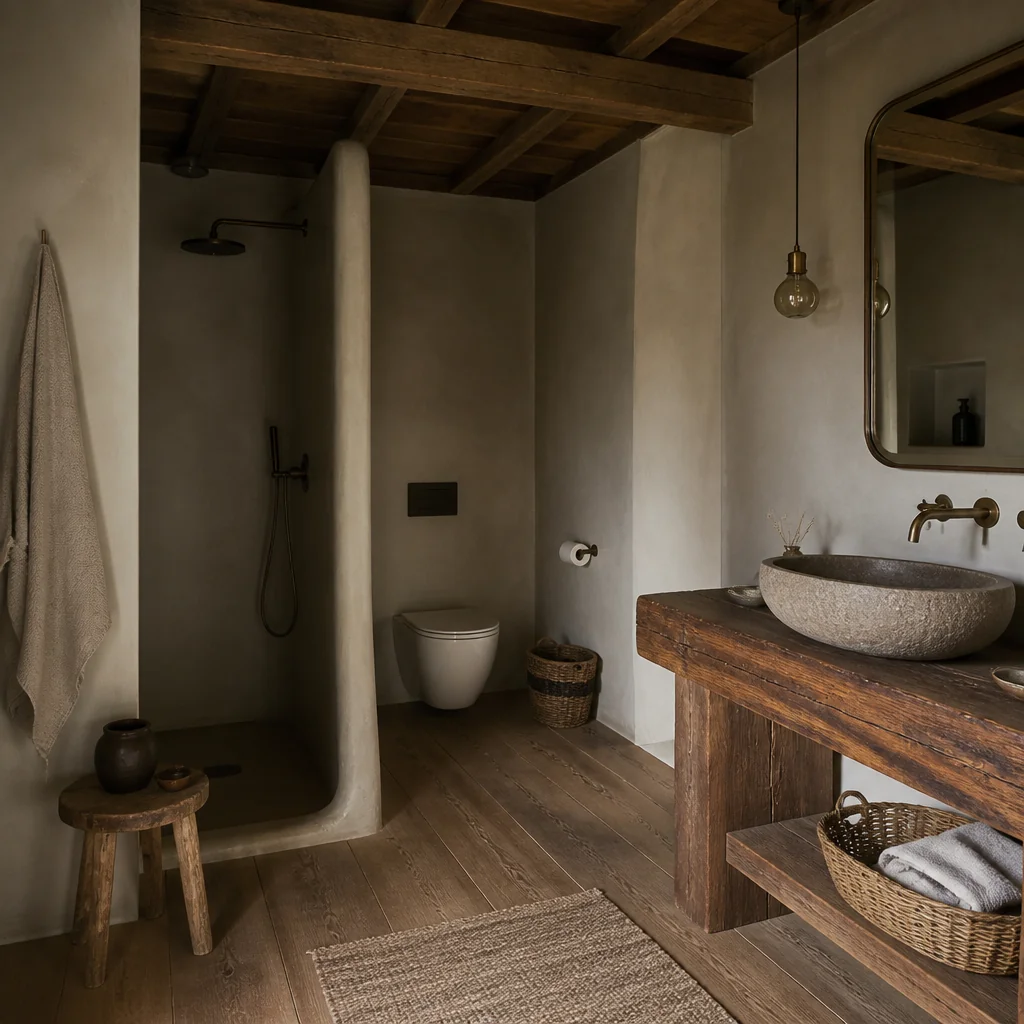
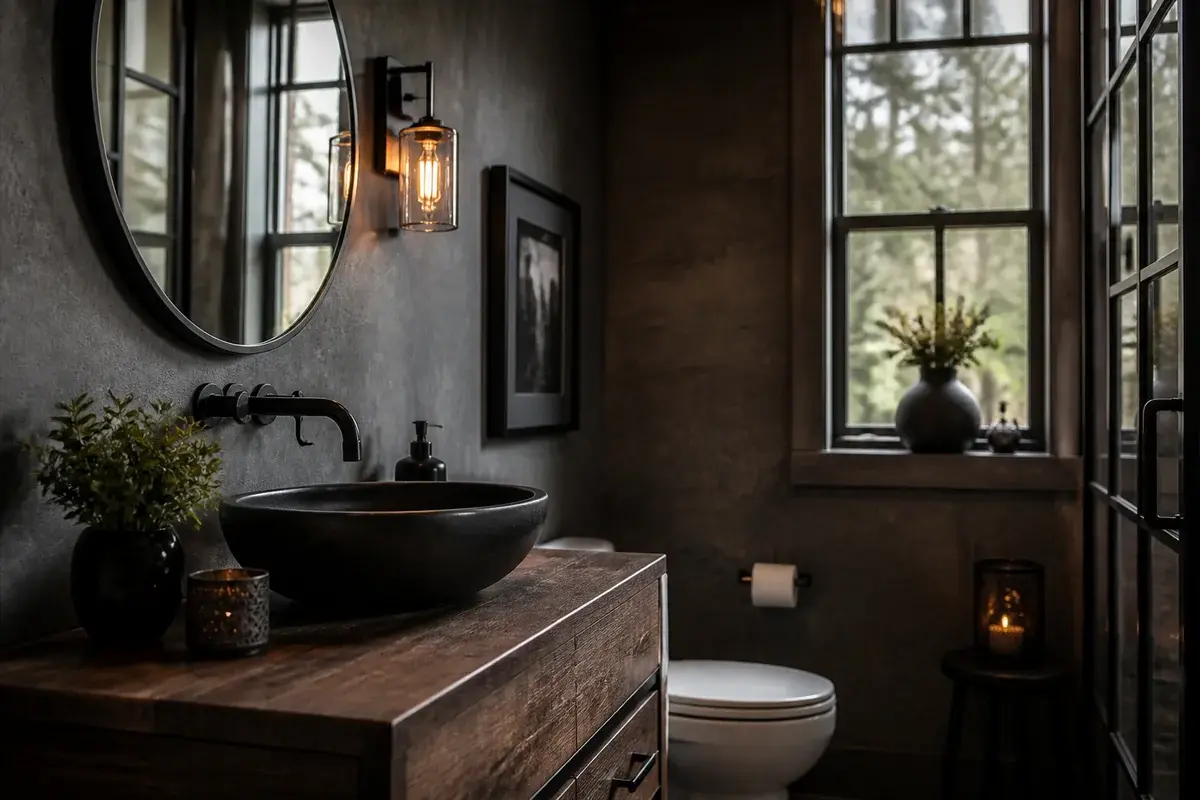
A single thick (3 to 4 inches) timber slab becomes the entire vanity surface, with a stone or ceramic vessel sink sitting on top. The slab can be walnut, oak, or cedar, and it's usually kiln-dried to prevent warping. The vessel sink is a sculptural object - it doesn't recess into the wood, it sits visibly on it.
A solid timber slab vanity runs $1,000 to $2,500 depending on the wood species and finish. The vessel sink adds another $200 to $600. The slab has to be treated with serious finish (not just oil - you need a polyurethane or conversion varnish) because the wood is so exposed. This setup looks best in master bathrooms where the vanity gets careful use. It's risky in guest baths where traffic is heavier and more unpredictable.
8. Weathered Wood Cabinet With Metal Hardware and Concrete Top
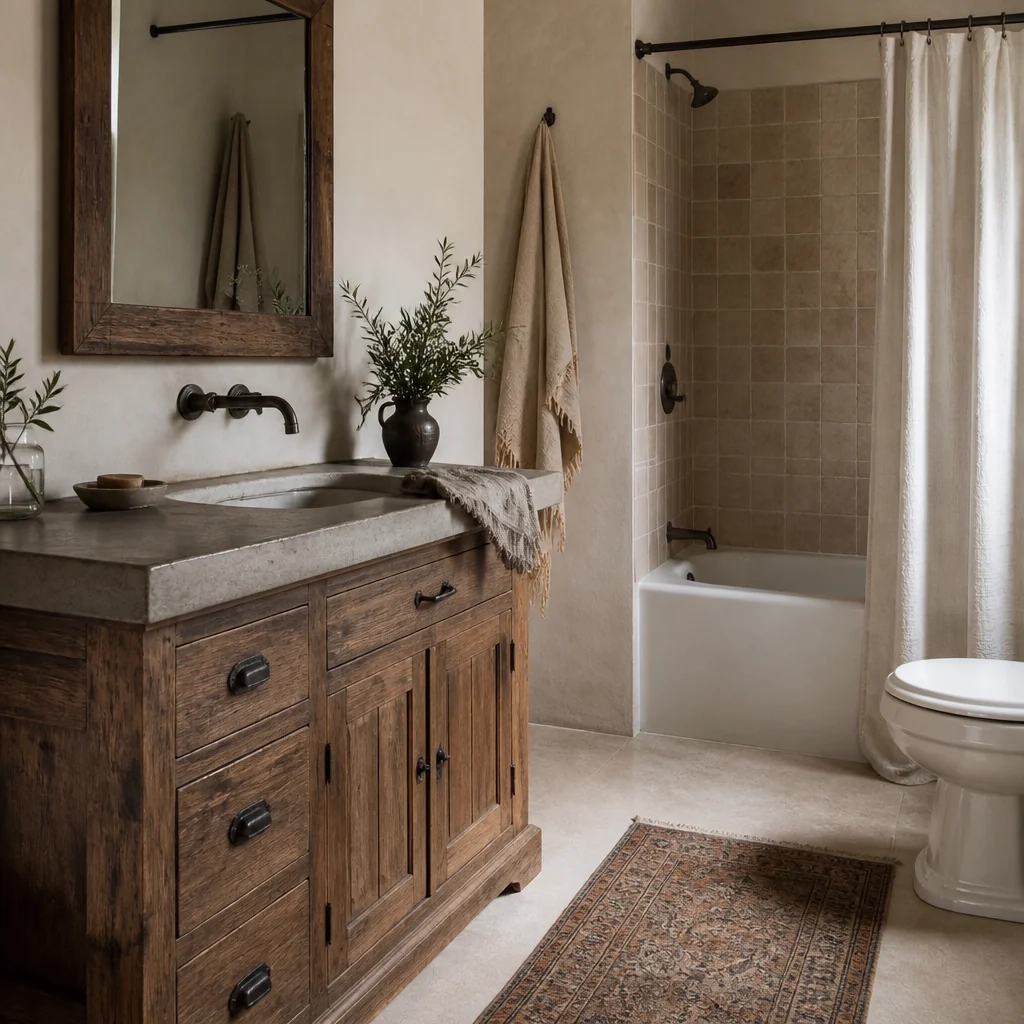
A cabinet made to look genuinely weathered (not artificially distressed) sits under a concrete or polished concrete top. The wood shows grain, age marks, color variation. Heavy black or bronze hardware (oversized pulls, rough-forged knobs) completes the industrial-rustic mix. It balances rough with refined.
Pin this for later
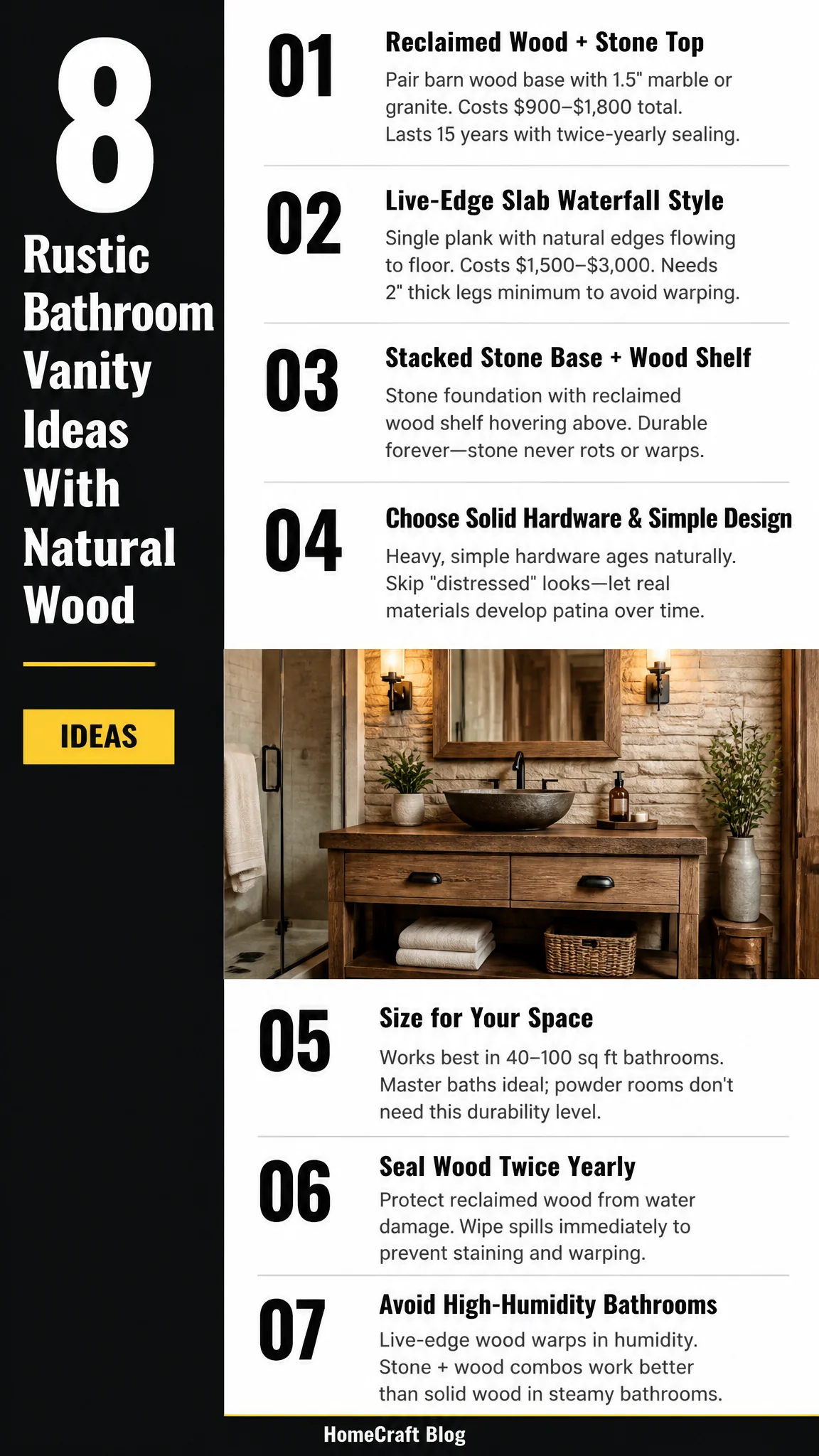
A 48-inch cabinet with concrete top costs $900 to $1,800 and comes custom or semi-custom from makers who specialize in this blend. The hardware alone might run $80 to $200 - cheap hardware ruins the whole effect, so don't compromise there. Weathered wood needs a protective topcoat even though it looks raw; polyurethane matte finish keeps it looking authentic while protecting against humidity and spills. This is the most forgiving style for everyday family bathrooms because the imperfect finish hides marks and aging beautifully.
Ideas fade by Friday. A plan finishes the room.
You just read a full guide to your bathroom. Saving ideas will not change it; a plan will. The Home Decor Collection is every planning tool we make, for every room in the house, in one download, so the after photos below stop being other people's rooms.
- Six room Style Kits, each with layout, palette and shopping list$114
- The Gallery Wall Studio: 200 prints + 15 measured layouts$29
- The Room Makeover System: 40 solved room layouts + workbook$29
- The Color Palette Handbook: 60 palettes shown in real rooms$19
- The Whole-Home Reset: 40 printable organizing checklists$19
- The Decorator's Cheat Sheets: the 40 measurements that matter$9
- All eleven products, bought separately
$219$97
A single hour with an interior designer costs more than the entire Collection, and this one keeps answering for every room you will ever decorate. Free updates included as the products grow. And if it is not for you, the 14 day money back promise means you simply get a refund.