9 Simple Minimalist Living Room Ideas for a Clutter-Free Home
Discover 9 minimalist living room ideas to declutter your space and create a calm, intentional home that actually feels peaceful.
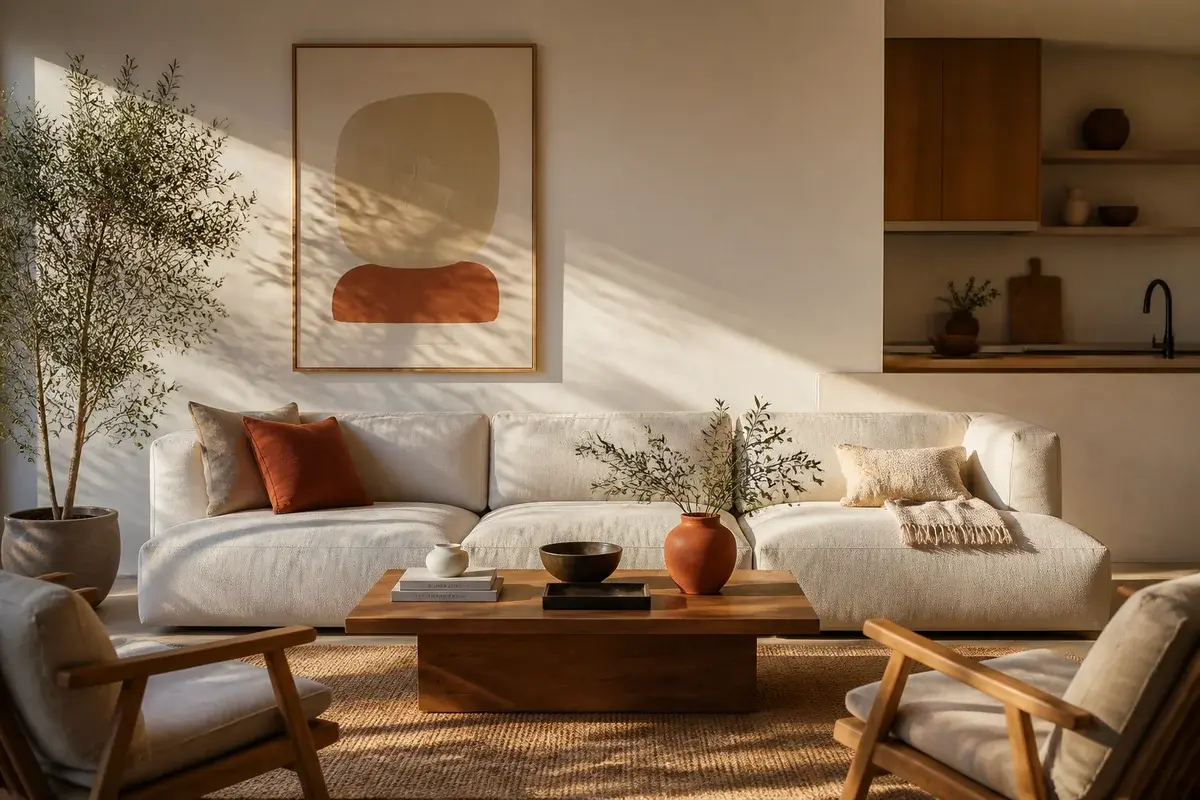
Walk into a room with two pieces of furniture, a neutral rug and one plant, and the first thing you notice is how quiet it looks. No stacks of magazines, no throw blankets over every arm, no small decorations competing for attention. That quiet is the entire point. Minimalism isn't about deprivation, it's about breathing room. If your living room feels like visual noise, these nine ideas work because each one takes something away rather than adding to the pile.
1. Choose One Accent Color and Stick With It
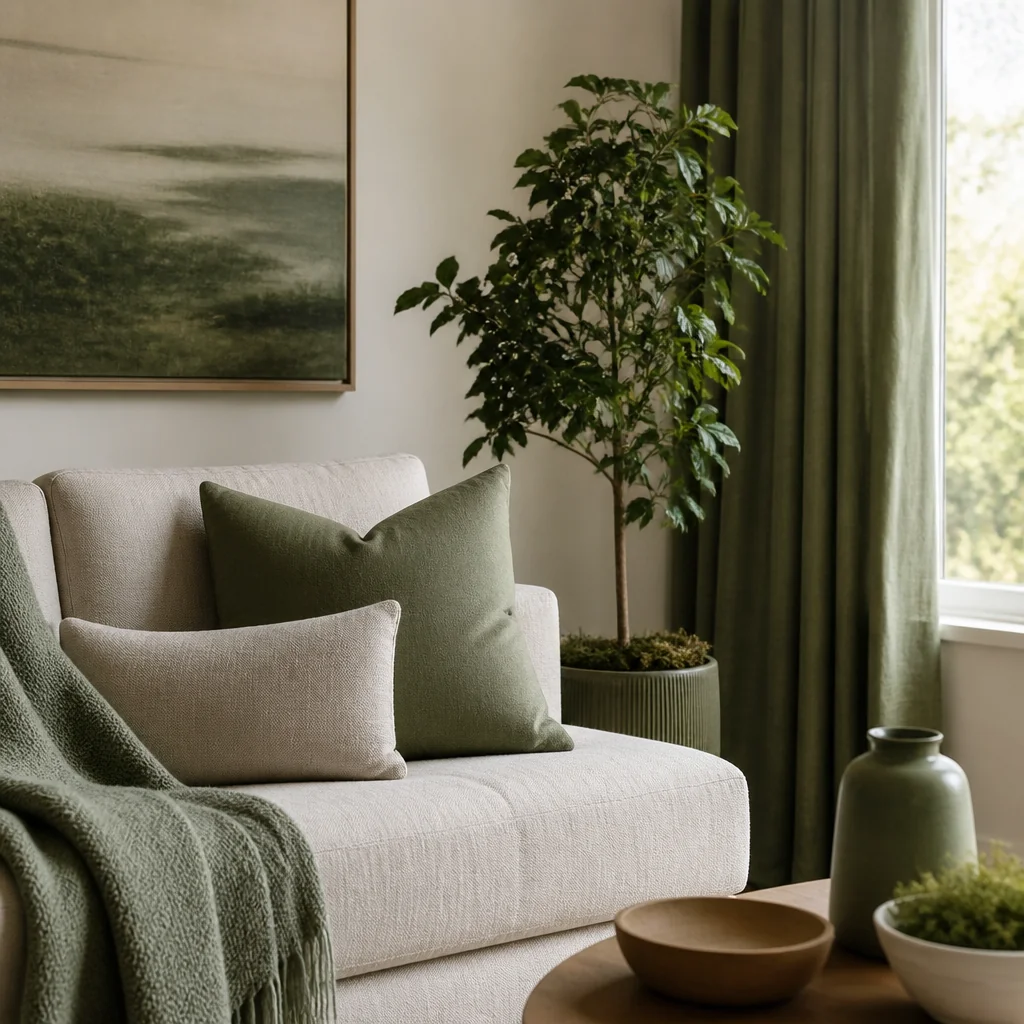
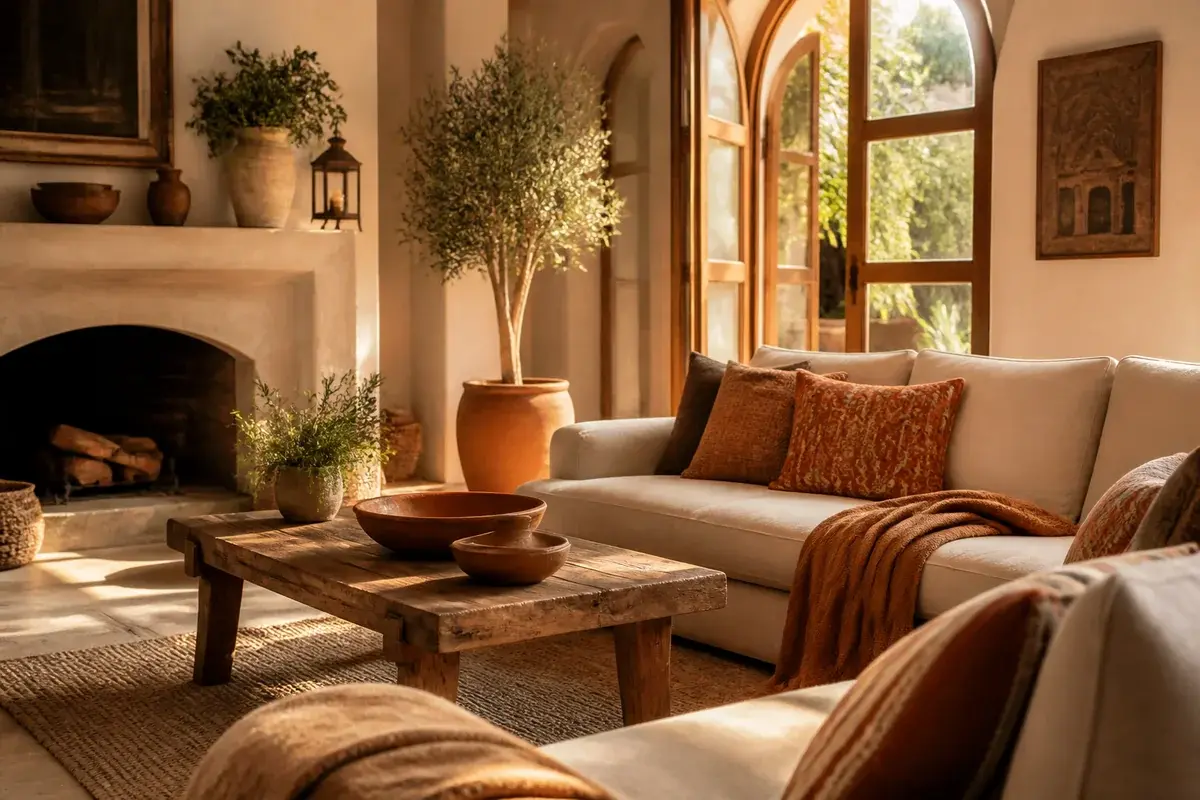
Pick a single color beyond your neutrals and let it show up in small doses. Sage green, dusty blue, warm terracotta: any of them work, as long as there's only one.
Start by counting what you already own. A room that reads as cluttered usually carries four or five competing accents, and the eye takes that as noise rather than personality. Keep the color that appears most often and move the strays to another room or a donation box. Here's the rule that stops it looking accidental: your accent needs to land at least three times, at three different heights. A pillow on the sofa, a ceramic vase at eye level, a folded throw low down near a chair.
Rearranging what you have costs nothing and takes about half an hour. If you want the color on the wall, a quart of interior paint runs $22 to $35 and covers roughly 100 square feet, enough for one accent wall. Cotton pillow covers are $12 to $20 each. One caution: keep the temperature consistent, because a warm terracotta against cool blue-gray walls reads as a clash rather than a scheme.
2. Pick Furniture With Clean Lines and Minimal Legs
Low-profile sofas with exposed legs beat chunky skirted frames in a tight room. You can see the floor continuing underneath them, and that visible floor is the breathing room a small space runs on.
Measure before you fall in love. Legs between 4 and 7 inches tall leave enough floor showing to matter, and 4 inches happens to be the clearance most robot vacuums need to get under a frame. Keep the sofa back under about 33 inches so it doesn't slice the room in half at standing height. The same logic covers coffee tables and media consoles: anything raised off the ground beats anything that skirts down to it.
A well-built sofa on wooden or steel legs runs $600 to $1,500. The trade-off is worth naming, though. Nothing hides under exposed legs, so dust and stray toys sit in plain view, and slim tapered legs bolted into particleboard start to wobble inside a year or two. Check that the hardware anchors into a hardwood frame before you order.
3. Use One Large Rug Instead of Layering
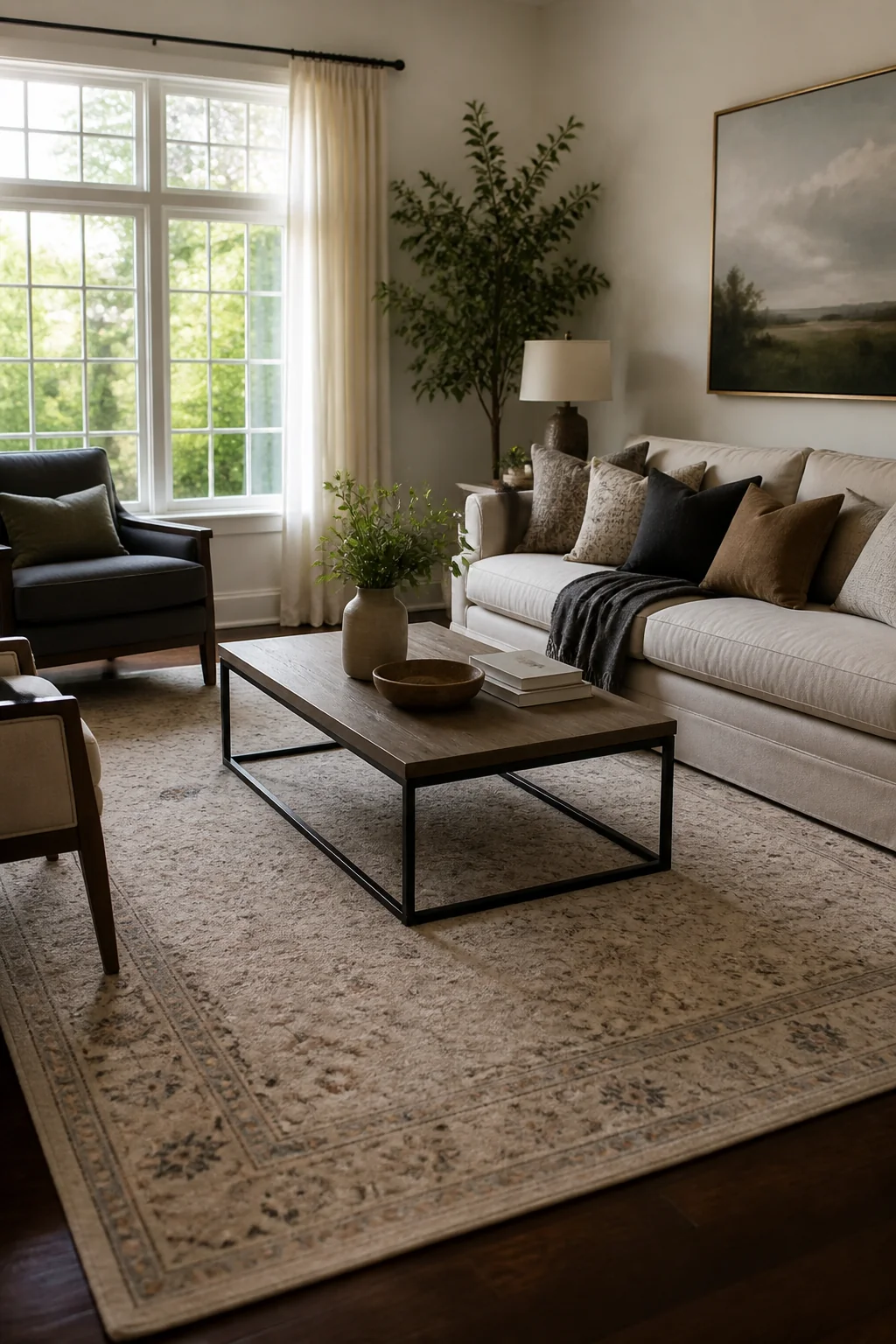
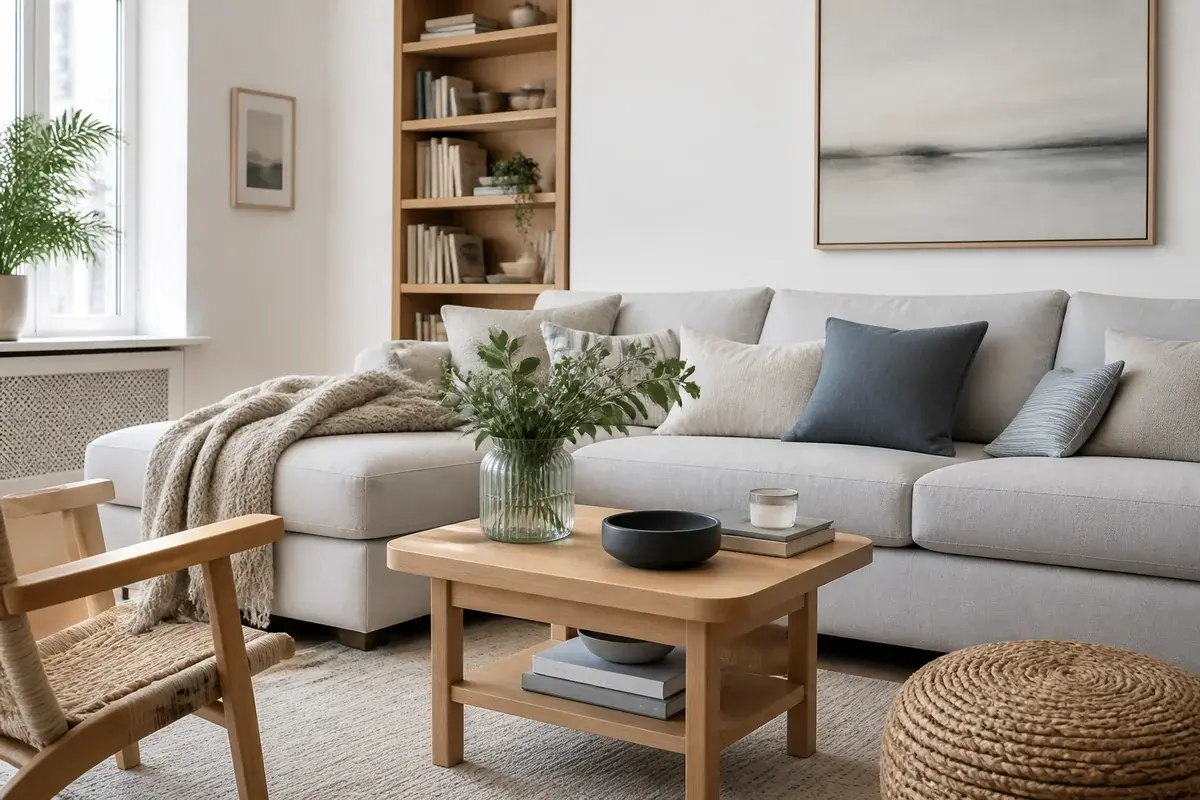
Skip the layered rug situation. One rug in a quiet tone defines the seating area without chopping it into pieces, while stacking two or three mostly manufactures visual clutter.
Size is where this usually goes wrong. The rug needs to be big enough that at least the front legs of every seat rest on it, which means 8x10 for a standard living room and 9x12 once the seating spreads out. A 5x8 works only in a genuinely small room with a loveseat and a single chair. Leave 12 to 18 inches of bare floor between the rug edge and the walls so it reads as a deliberate island instead of wall-to-wall carpet that came up short.
Budget $150 to $400 for solid wool or jute in those sizes. Wool takes daily traffic and springs back under furniture feet; jute costs less and adds texture, but it sheds fibers for the first couple of months and it's rough if you like sitting on the floor. Keep the color close to disappearing: cream, greige, warm beige. Let the furniture and art do the talking.
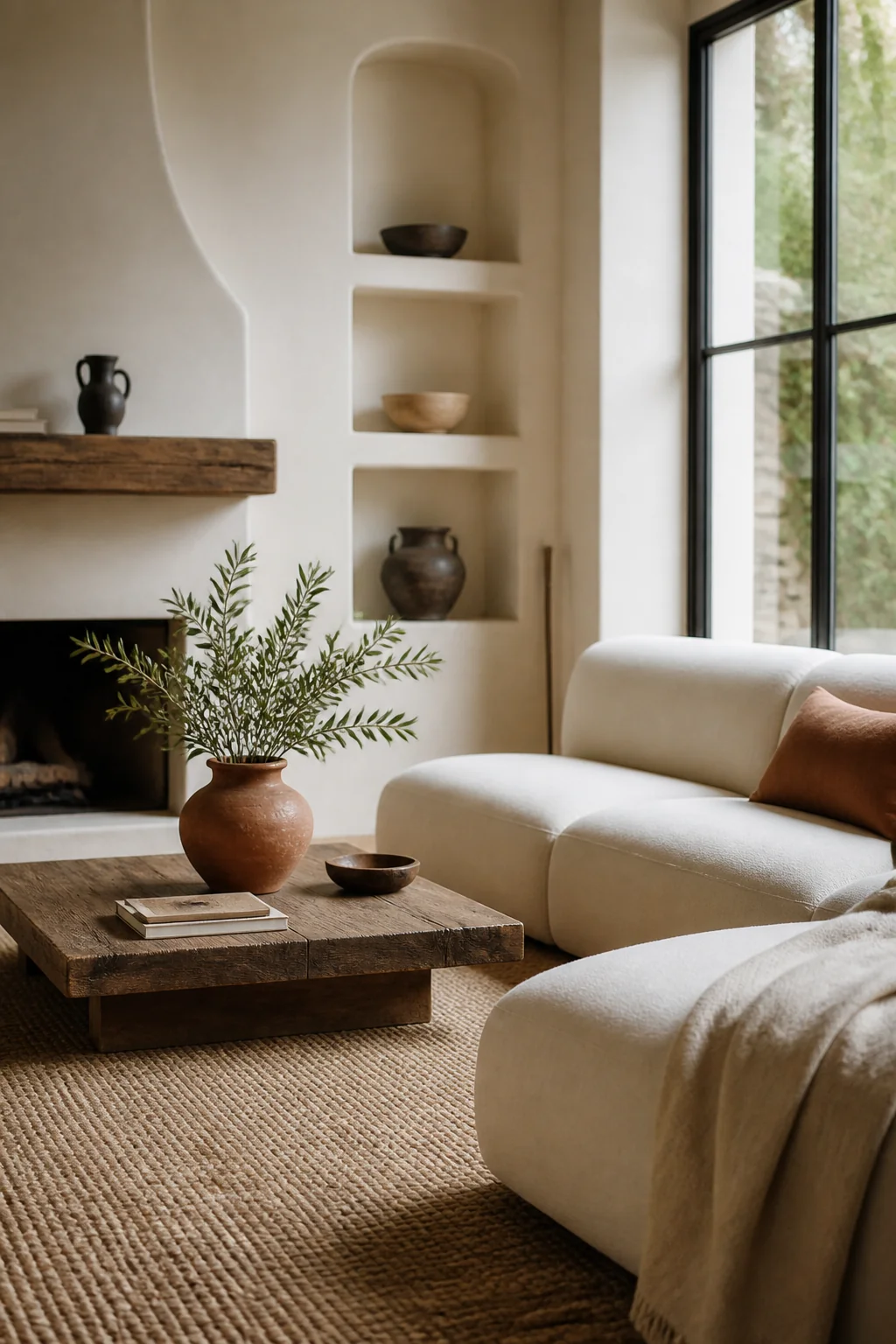
4. Hang Art High and Leave Space Around It
Clustering a dozen small frames tightly across a wall looks busy no matter how carefully you space them. One larger piece, or a tight vertical run of three, does the same job with far less visual work.
These are the measurements that make it look considered. Gallery height is a 57 to 60 inch center, a good deal higher than most people reach for on instinct. Over a sofa that number stops governing, and the 8 to 10 inches between the back cushion and the bottom edge takes over instead, so the art and the furniture read as one block rather than two objects floating apart. Width wants about two-thirds of the sofa below it, unless the sofa is a long sectional, where two-thirds turns into a piece nobody sells and two frames hung side by side across the same run is the practical answer. Hanging a group instead? Keep 2 to 3 inches between frames and measure the whole cluster as a single rectangle.
Two practical notes. Anything over 15 pounds needs a stud or a proper drywall anchor rather than a nail, and hanging too low is by far the more common error, usually because people hang from where their hands comfortably reach instead of from a tape measure.
5. Keep Your Coffee Table Clear Except for One or Two Things
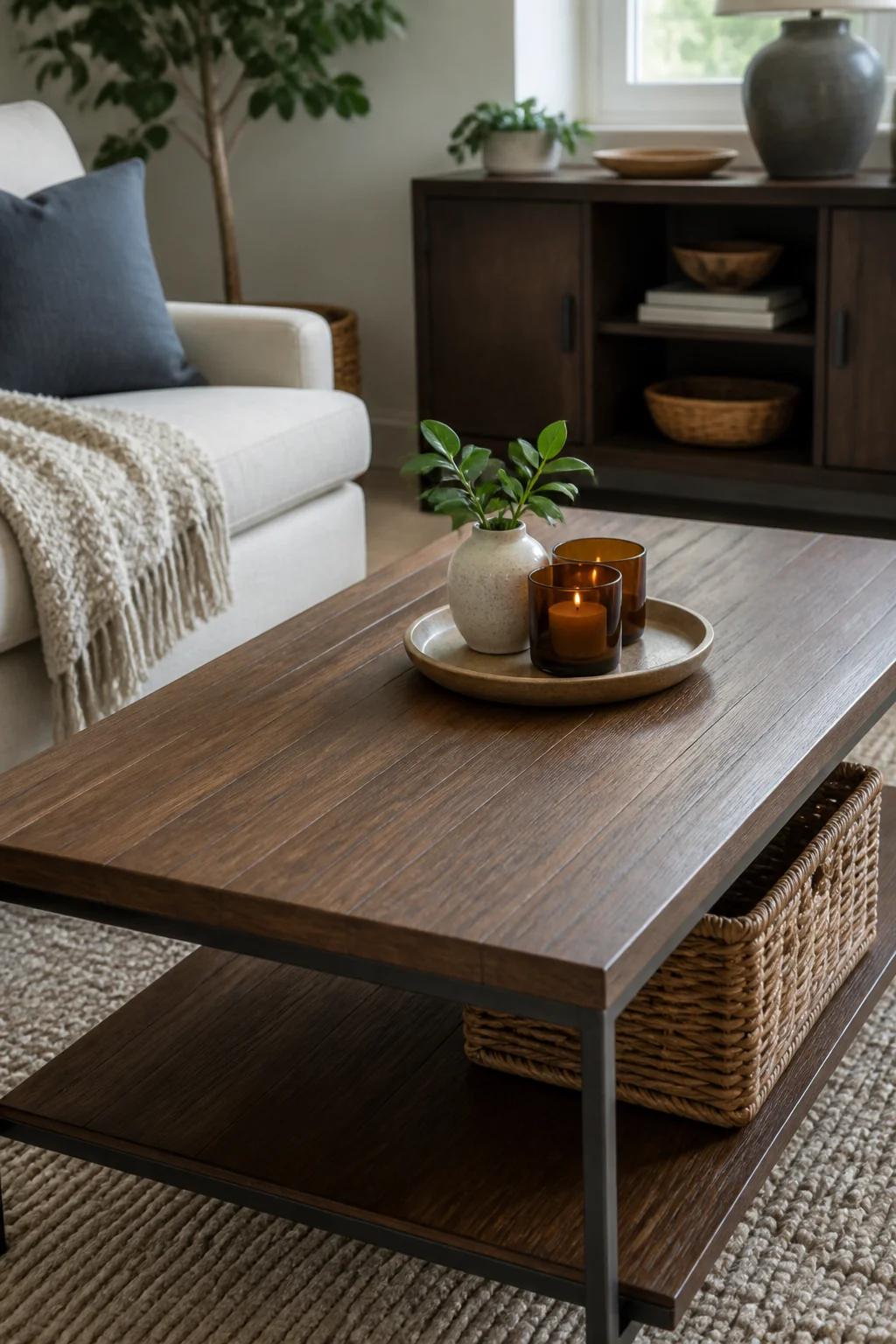
A coffee table is not storage, and treating it like one is why the room never quite settles.
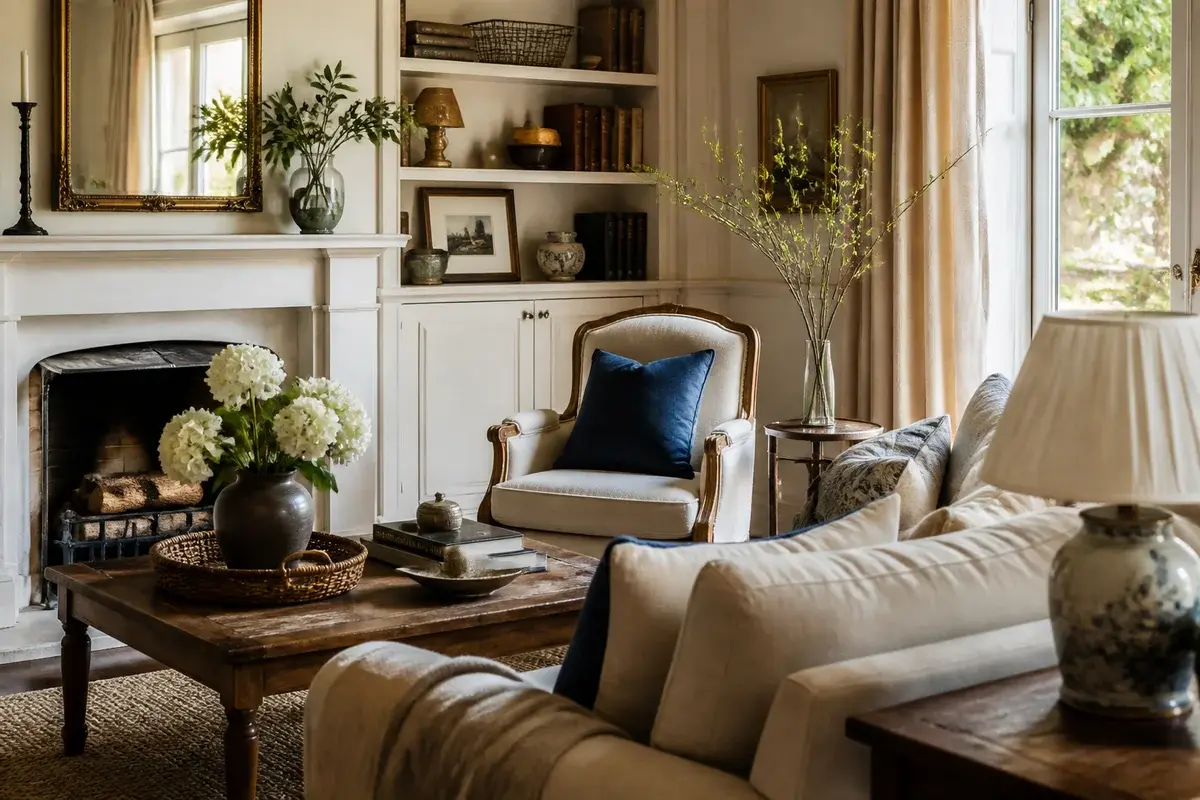
The formula that holds up is one tray plus one object. A wooden or rattan tray in the 12 to 18 inch range gathers the remotes, the coasters and the lip balm into a single shape your eye can skip over instead of five separate things it has to read. Then one taller item, a stack of two books or a small ceramic vessel, gives the surface a focal point. Everything else goes into a lidded basket underneath, $20 to $40 at most home stores.
Build in the reset while you're at it. Clearing the table takes under a minute if you do it when you turn the lights off at night, and twenty if you let it run a week. The failure mode to watch: when the coffee table is the only surface within reach of the sofa, the pile comes straight back however disciplined you are. A small side table, usually $40 to $90, gives the mail and the water glass somewhere else to live.
6. Install Floating Shelves Instead of a Heavy Cabinet
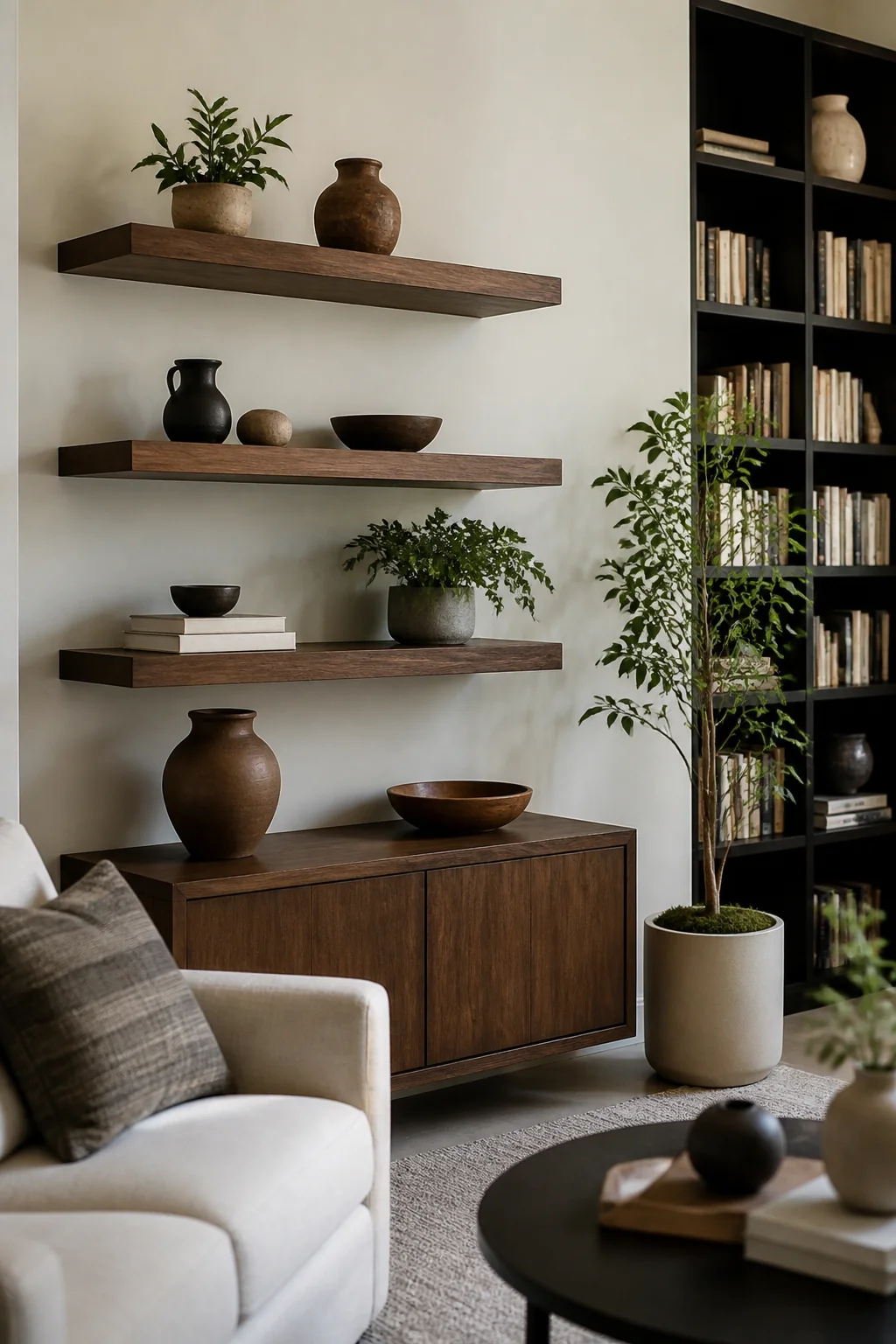
Floating shelves read lighter than an entertainment center because there's no visible base holding them up, just a plane and the wall behind it.
Depth decides what a shelf can hold. Six to eight inches suits frames, small plants and objects; books need 10 to 12 inches, and that extra depth starts to look bulky, so pick a lane rather than splitting the difference. Space shelves 12 to 15 inches apart vertically so the contents aren't crowded from above. Expect $30 to $80 per shelf including brackets. The weight rating matters more than most people assume: anchored into studs, a solid wood shelf carries 40 to 50 pounds, but on drywall anchors alone you're closer to 15 or 20, which is about fifteen hardcovers.
Fill roughly two-thirds and leave the rest bare. That empty third is what separates a styled shelf from a stuffed one. The honest drawback is that floating shelves hide nothing. A router, a game console, a nest of charging cables all stay on display, so keep one closed cabinet in the room for the necessary ugly things.
7. Choose One Type of Plant and Repeat It
Six different plants scattered around a room give you six competing leaf shapes. Choose one variety and repeat it at three sizes instead: a floor-standing specimen in the corner, a mid-size pot on a shelf, a small trailing one by the window.
Match the plant to your light before you match it to the look. Pothos handles low to medium light, costs $8 to $15 in a 4-inch pot and around $25 to $35 in a 6-inch, and forgives a missed watering or three. Snake plants want water only every three to four weeks and rot in soggy soil, which makes them the safer pick if you tend to overwater. Fiddle leaf figs look the part but need bright indirect light within a few feet of a window, and they drop leaves whenever you move them, so decide on the spot before you buy.
Repetition is what makes a small group of plants feel deliberate rather than sparse. Same leaf, three heights, and the eye takes it as one gesture instead of three separate decisions.
8. Get Rid of Decorative Objects You Don't Love
This is the step that feels hardest and moves the needle most. Candles you never burn, decorative boxes holding nothing, pillow covers still in their packaging: none of it is neutral. Every one of them takes a slot that quiet could have had.
Use a box rather than a bin bag, because the reversibility is what makes you honest. Clear one surface at a time, drop every object you hesitate over into a cardboard box, write the date on the lid and slide it into a closet. Anything you come back for within thirty days has earned its place. Whatever's still in there afterward goes to a donation drop, and you'll usually find you can't name half of it without looking.
Three to five objects is a reasonable target for a shelf or mantel, not twelve. And here's the part that gets skipped: don't refill the space. A cleared surface that picks up a new $15 candle two weeks later is right back where it started, just with different clutter on it.
9. Use Closed Storage for Everything Else
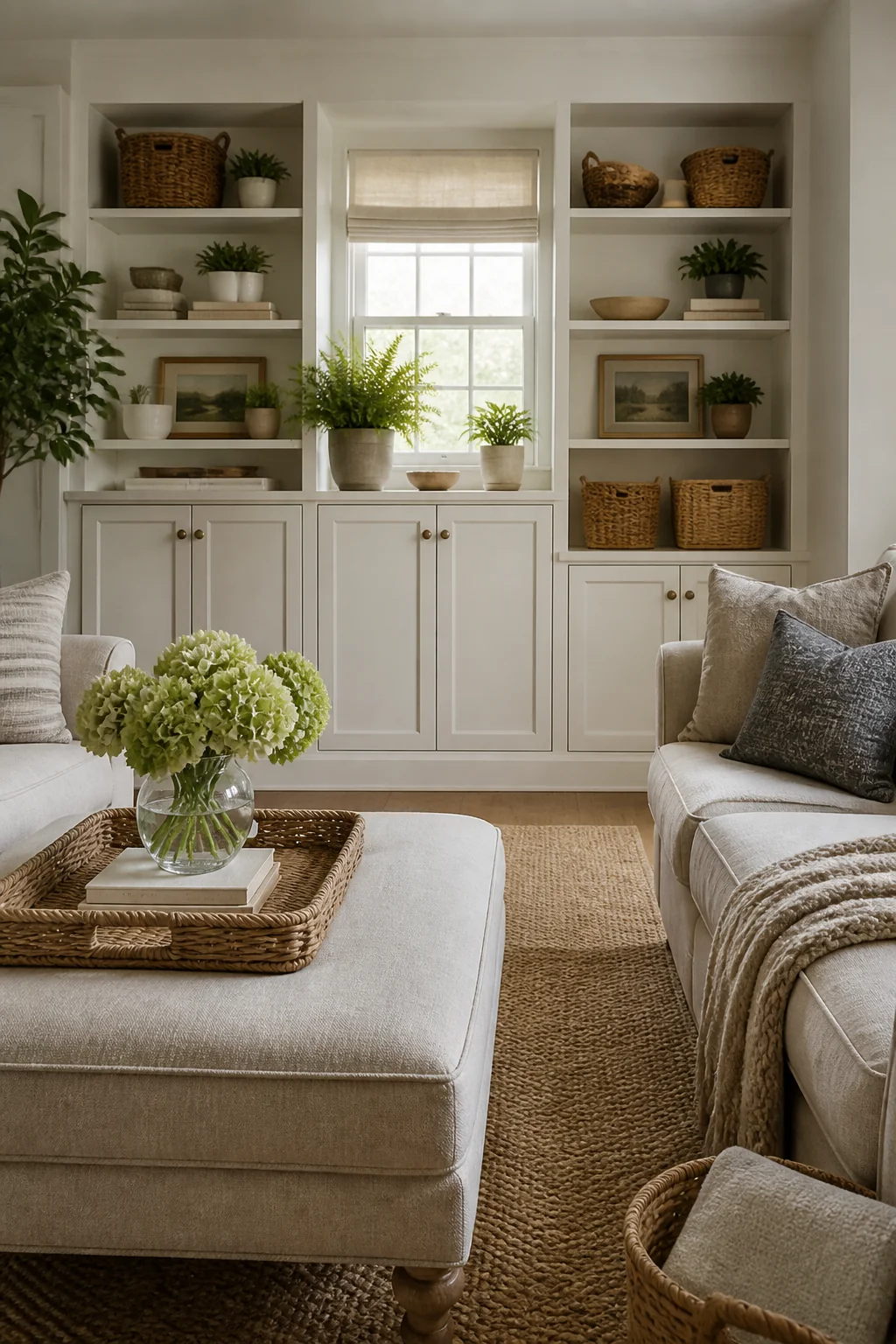
Baskets, cabinets and lift-top ottomans are how a room stays calm without you owning less than you need. Open shelving only works when there's genuinely nothing to put away, and for most households that isn't true.
Give each category its own container instead of one giant catch-all: blankets in a lidded basket beside the sofa, remotes and charging cables in a shallow tray inside the console, kids' things in the ottoman. A storage ottoman with roughly 15 by 30 inches of interior swallows two throws and a couple of spare pillows, and runs $100 to $300 depending on size and upholstery. Woven baskets are $20 to $40 each. If you want them sliding under the sofa, measure the frame clearance first, since most exposed-leg sofas give you 5 to 7 inches and a 6-inch basket is the safe buy.
The failure mode here is predictable. Closed storage with no assigned job turns into a junk drawer you can't see into, and then you're keeping things you'd have thrown out if they'd stayed visible. Empty each container twice a year.
Take the guide with you
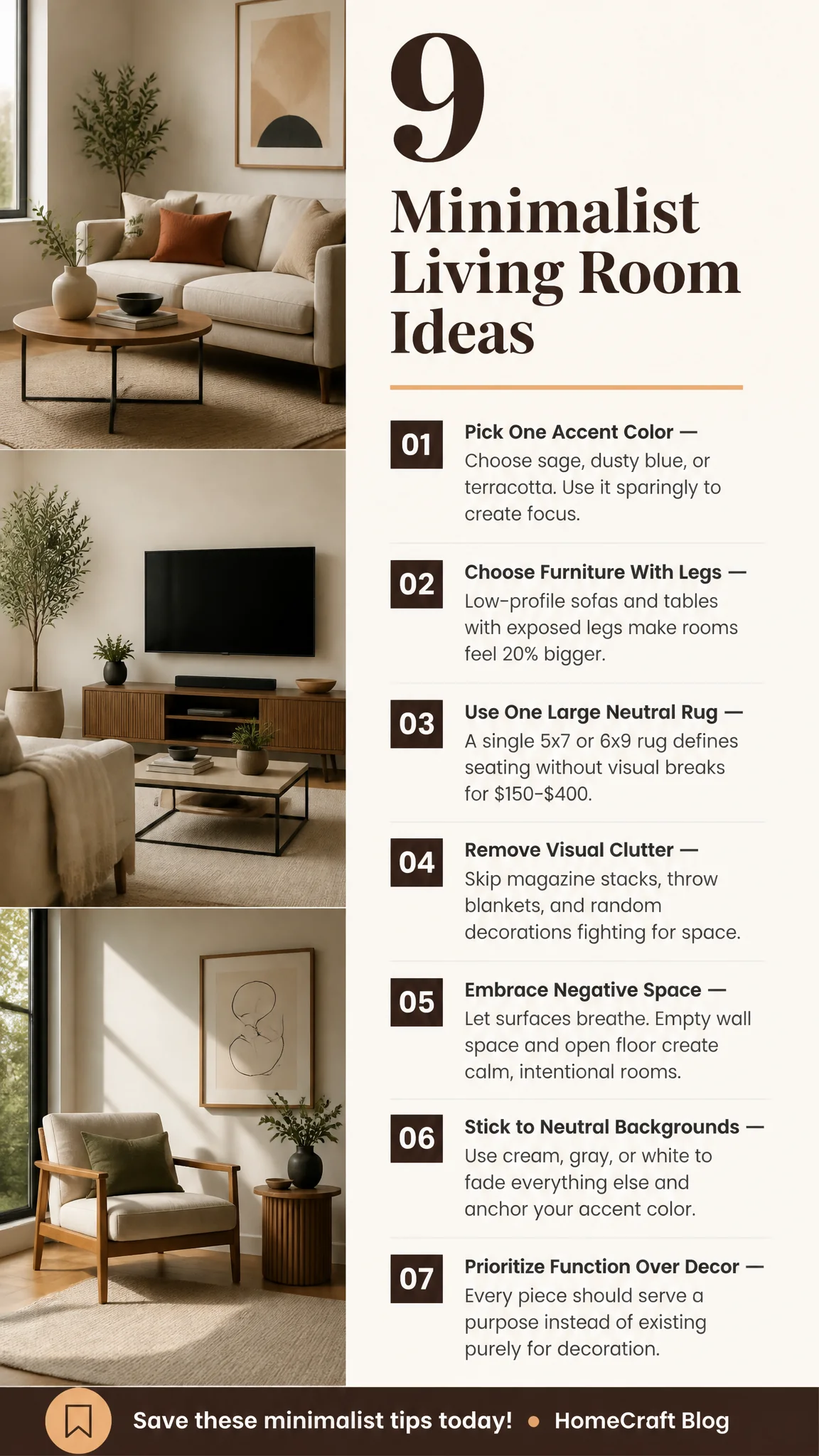
Of the nine, the coffee table and the rug are where the difference shows up fastest, because both change what you see from the sofa and neither asks much of your budget. The furniture decisions can wait until something needs replacing anyway. What's worth remembering is that minimalism here isn't a rule about how little you're allowed to own. It's a running judgement about what earns a place in the room, and a room where every object has a reason to be there feels calmer than one where nothing does.
Ideas fade by Friday. A plan finishes the room.
You just read a full guide to your living room. Saving ideas will not change it; a plan will. The Home Decor Collection is every planning tool we make, for every room in the house, in one download, so the after photos below stop being other people's rooms.
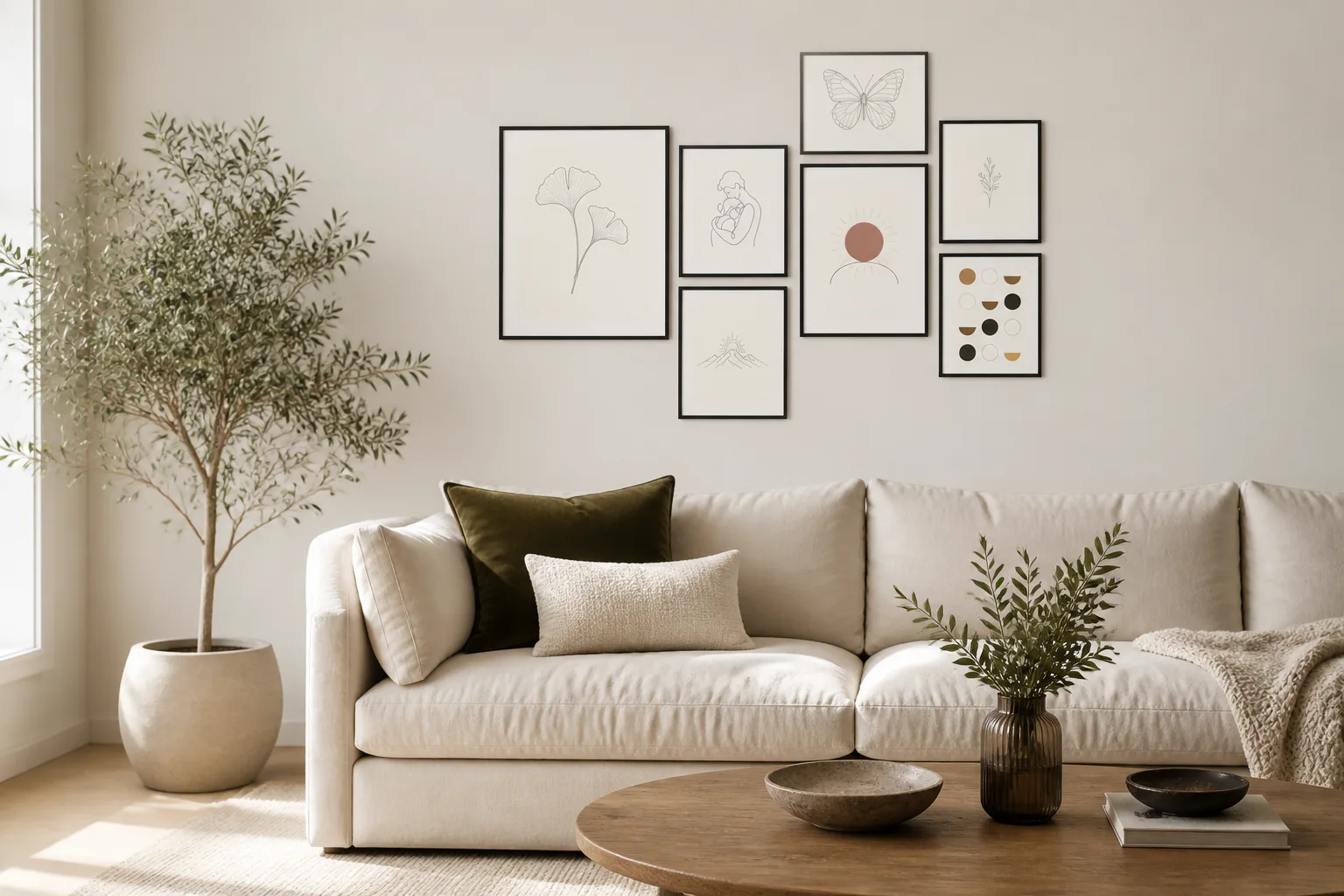
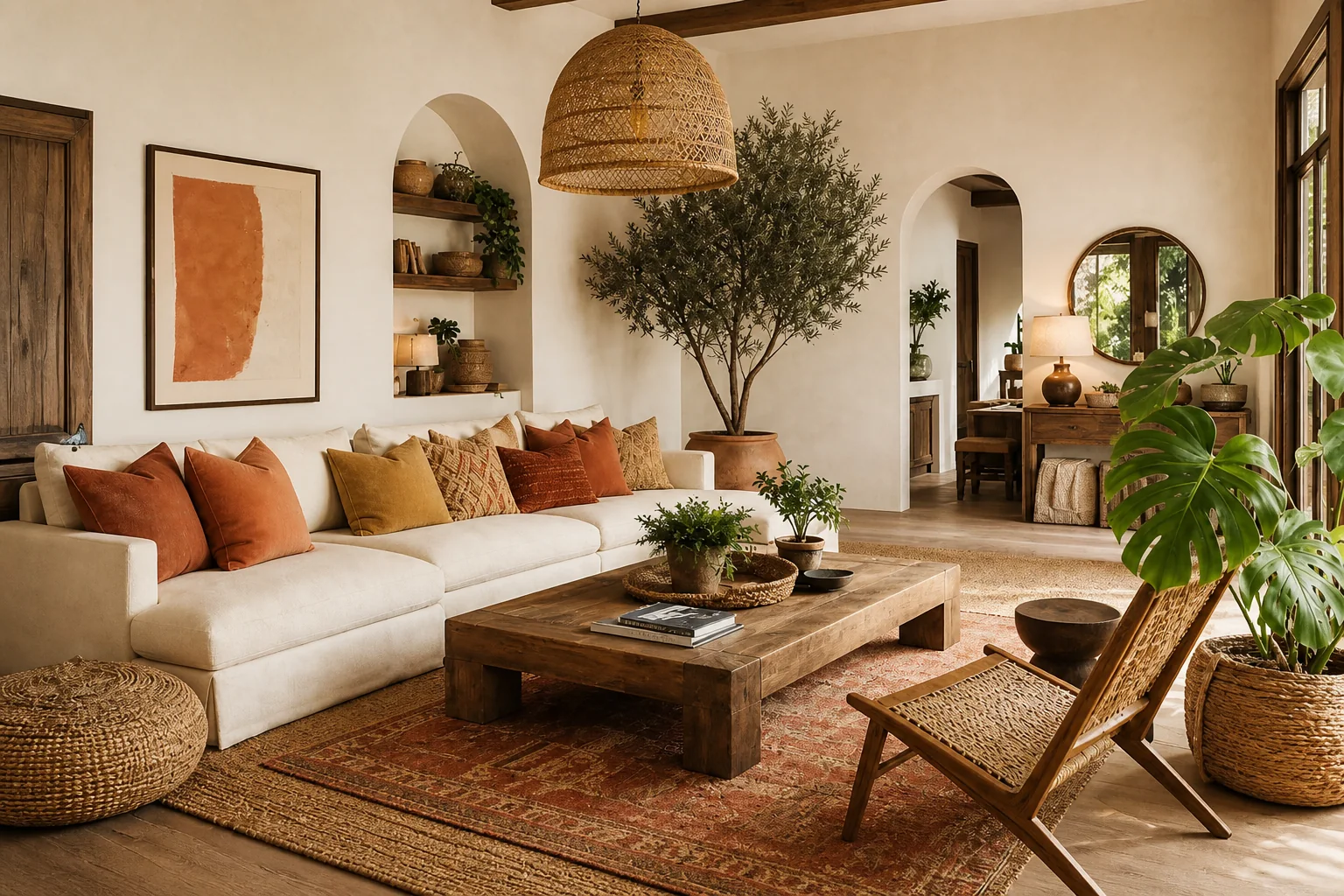
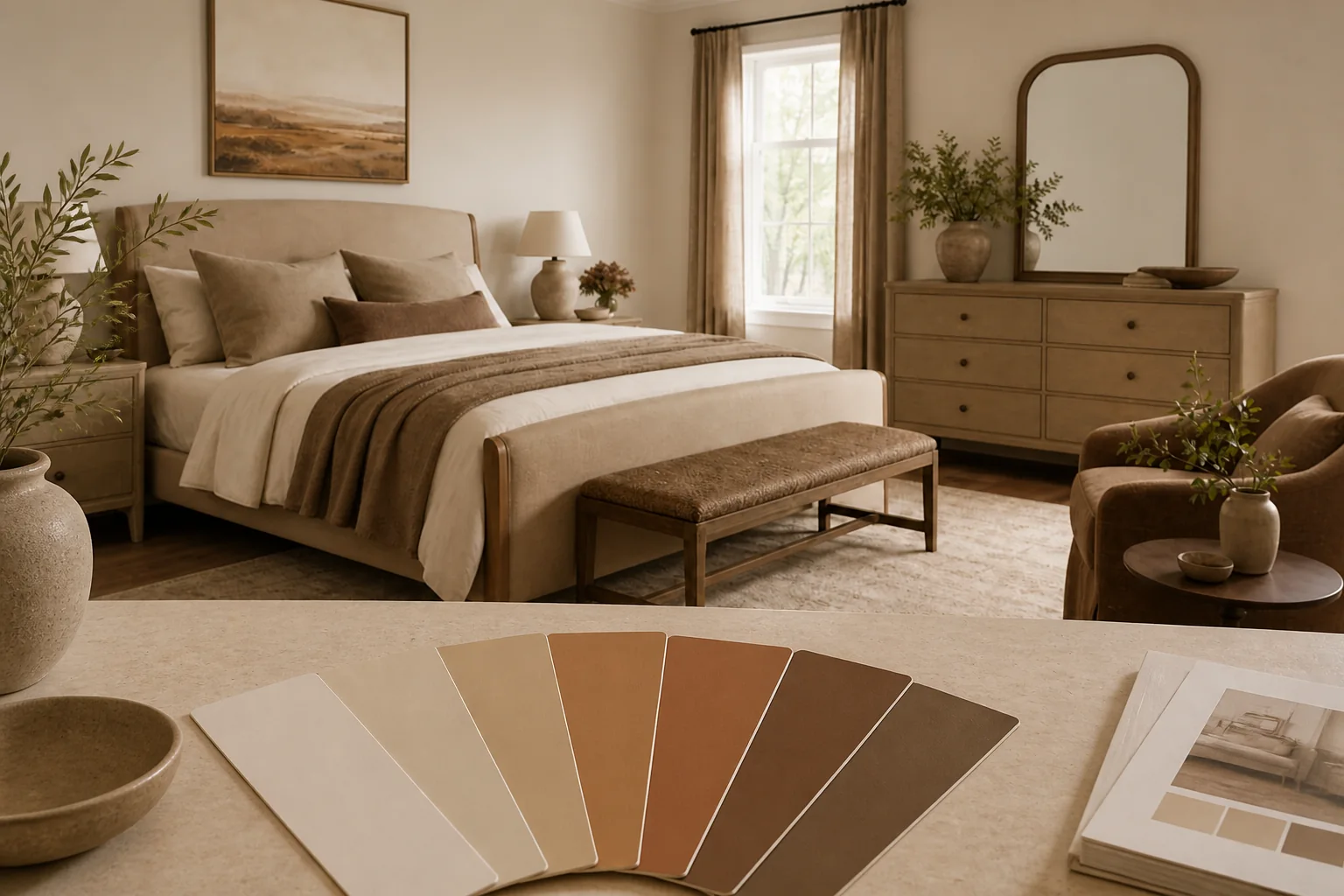
- Six room Style Kits, each with layout, palette and shopping list$114
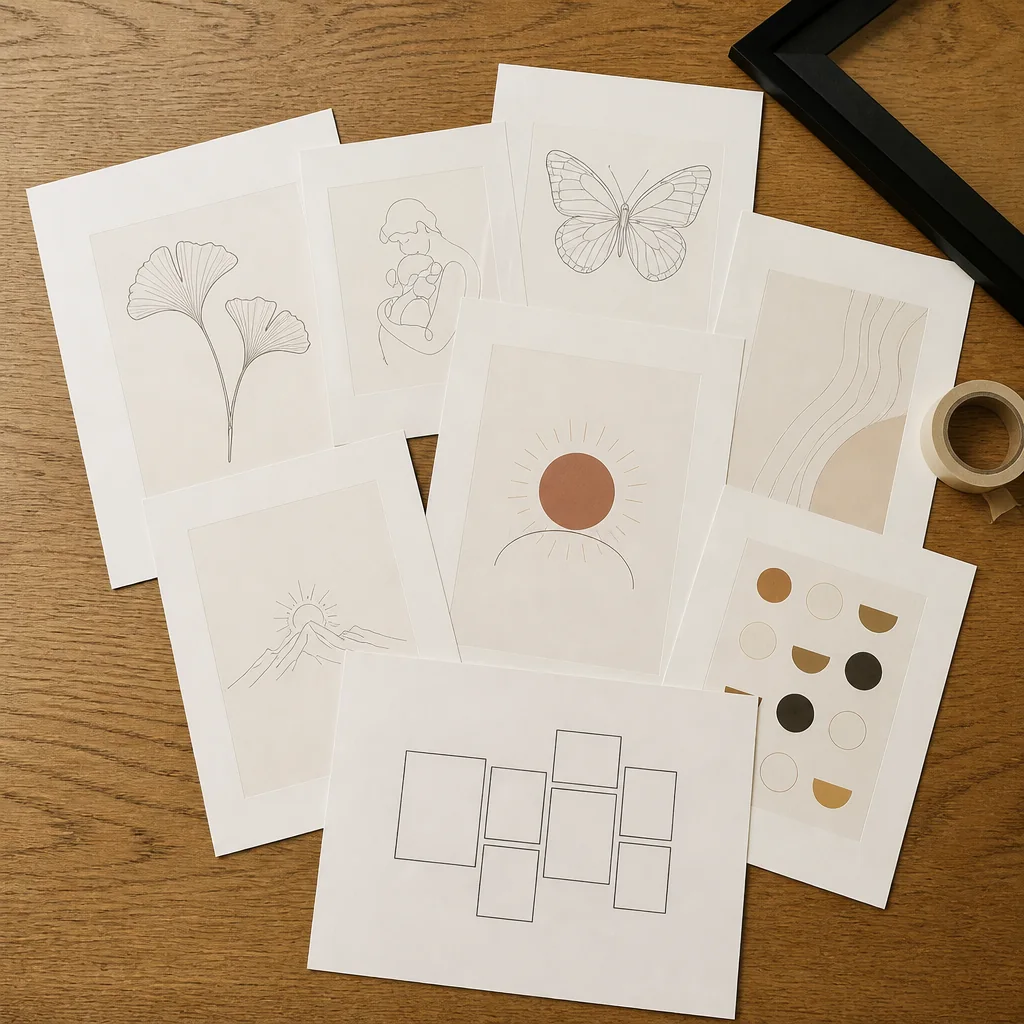
- The Gallery Wall Studio: 200 prints + 15 measured layouts$29
- The Room Makeover System: 40 solved room layouts + workbook$29
- The Color Palette Handbook: 60 palettes shown in real rooms$19
- The Whole-Home Reset: 40 printable organizing checklists$19
- The Decorator's Cheat Sheets: the 40 measurements that matter$9
- All eleven products, bought separately
$219$97
A single hour with an interior designer costs more than the entire Collection, and this one keeps answering for every room you will ever decorate. Free updates included as the products grow. And if it is not for you, the 14 day money back promise means you simply get a refund.