How to Stop Laundry Supplies Piling Up in a Tight Utility Room
Shelf depths, heights and mounting tips for laundry room shelving ideas that hold detergent bottles and boxes above the machines in a tight utility room.
This post contains affiliate links. As an Amazon Associate I earn from qualifying purchases. If you buy through our links, we may earn a commission at no extra cost to you.
Put vertical storage on the wall above the machines and keep the floor clear for the things you walk around. In a tight utility room, the wall space above waist height is usually the largest unused area you have. Shelves there, sized and spaced for the bottles and boxes you already own, stop the supply pile-up before it starts. This works for a closet-sized laundry nook, a hallway utility corner or a room that doubles as a mudroom. Below, we walk through the shelf depths, heights and mounting choices that make the look feel intentional instead of cluttered.
 13-page PDF
Free printable kit
Bare kitchen and bath walls? Fixed this weekend.
Six watercolor prints and two layouts measured for the counter and the tub. Free and ready to print.
- 6 watercolors: 3 kitchen, 3 bath
- Measured layouts: counter and tub
- Hanging tips for steamy rooms
Free. Arrives by email in a minute or two, plus our ideas and occasional shop offers. Unsubscribe anytime. Privacy
Start Above the Machines, Not on the Floor
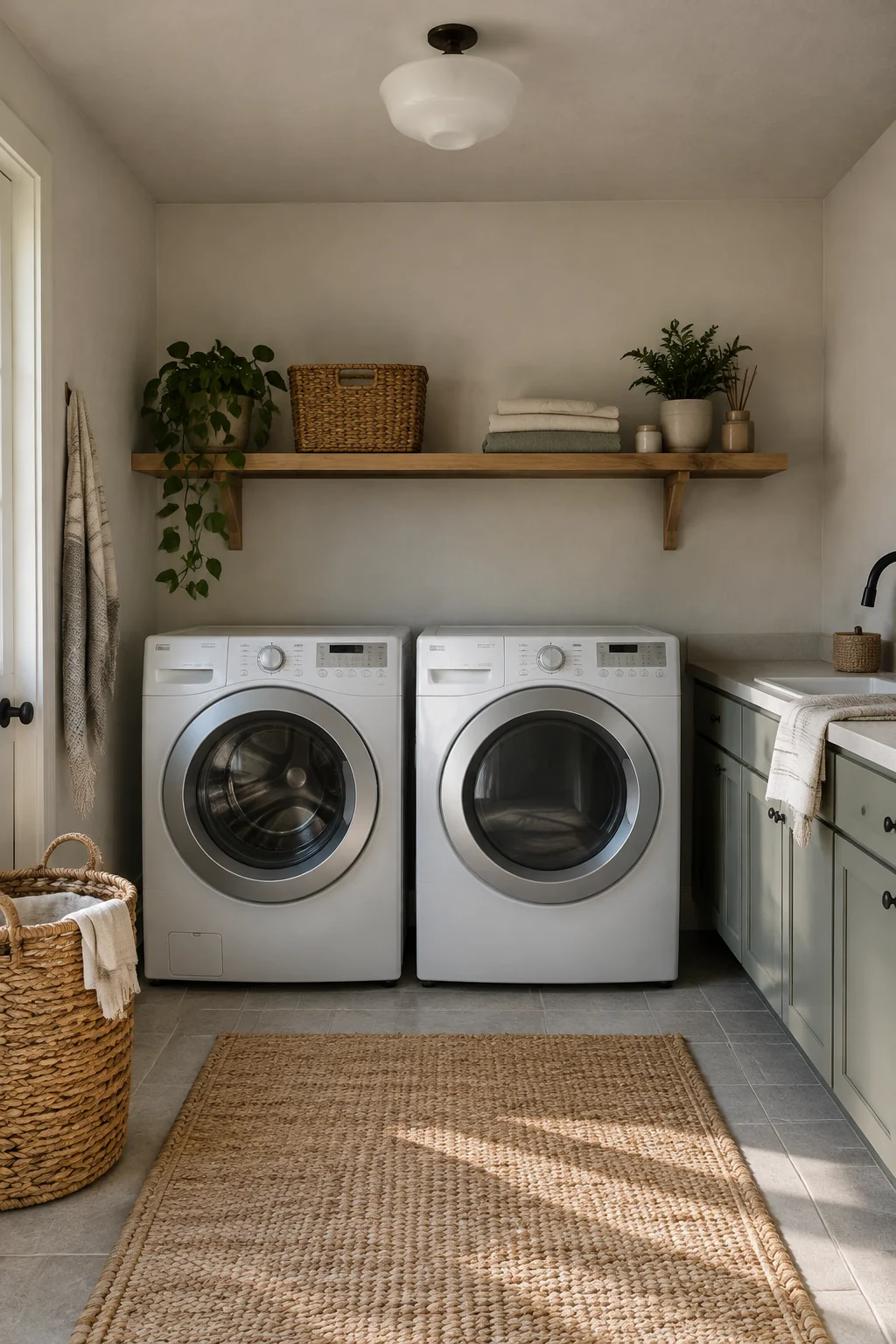
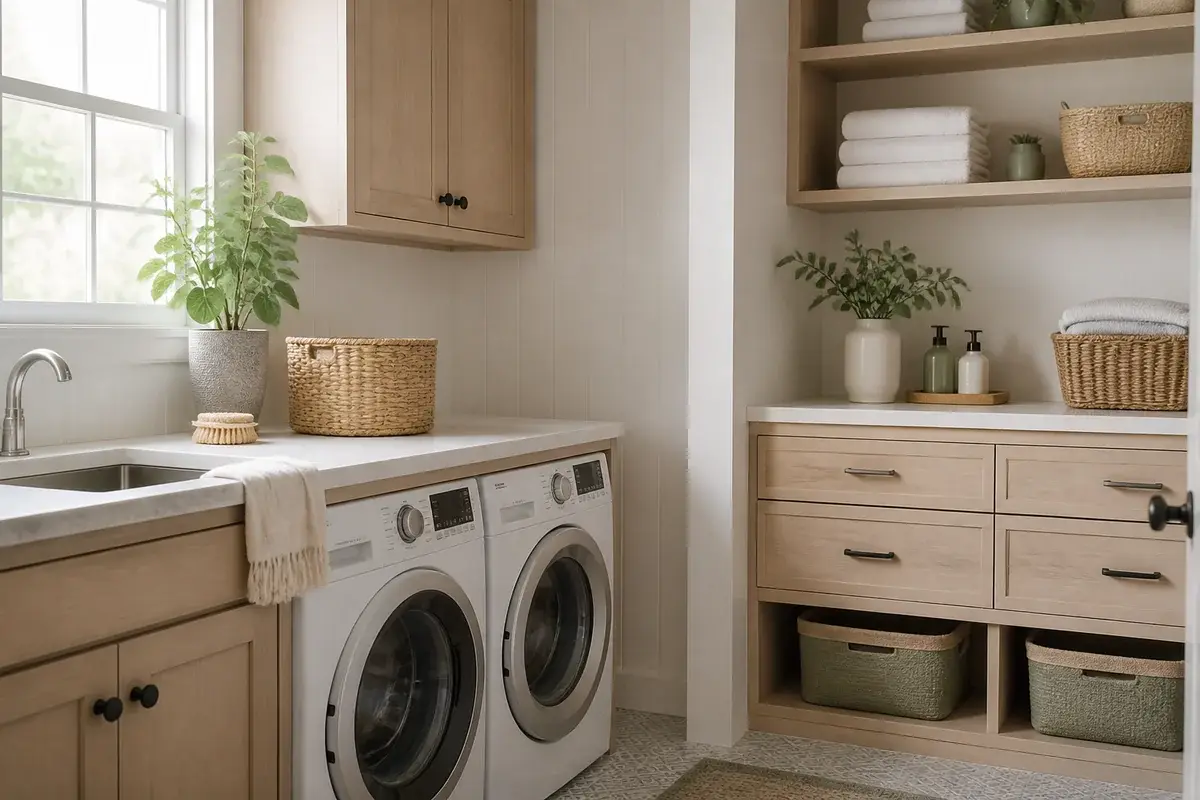
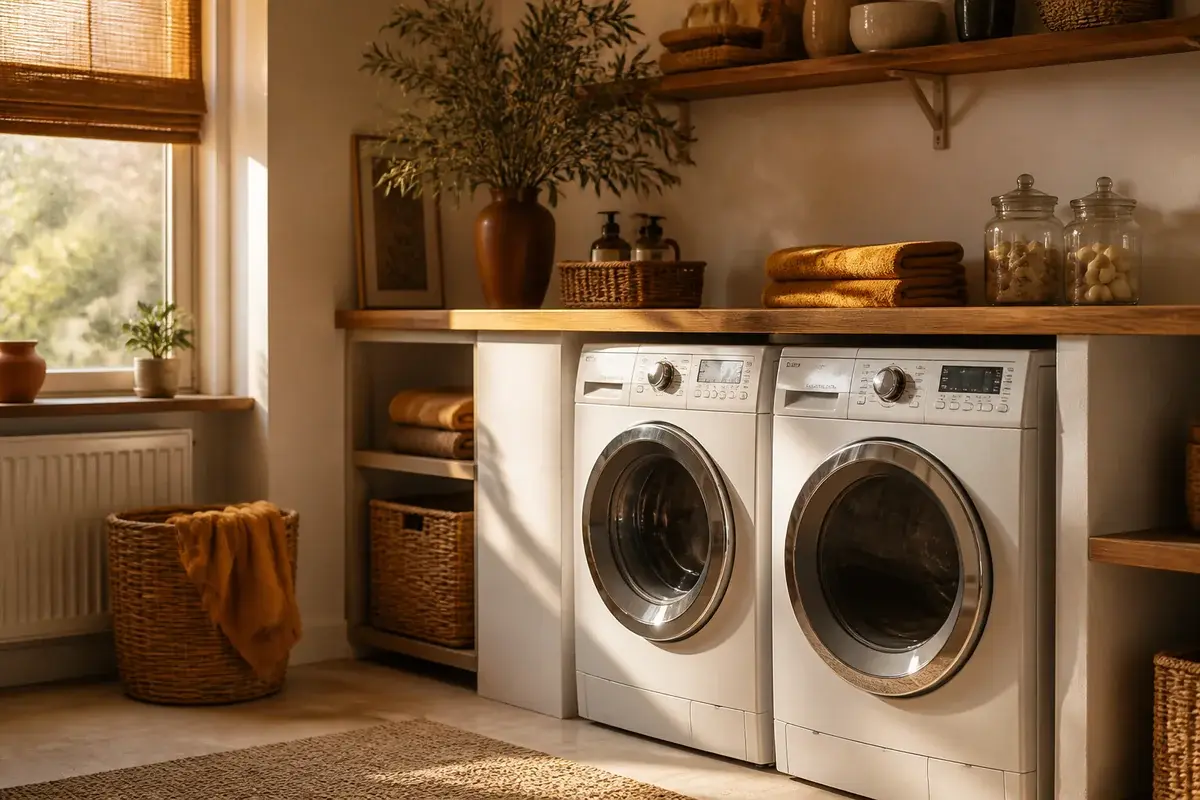
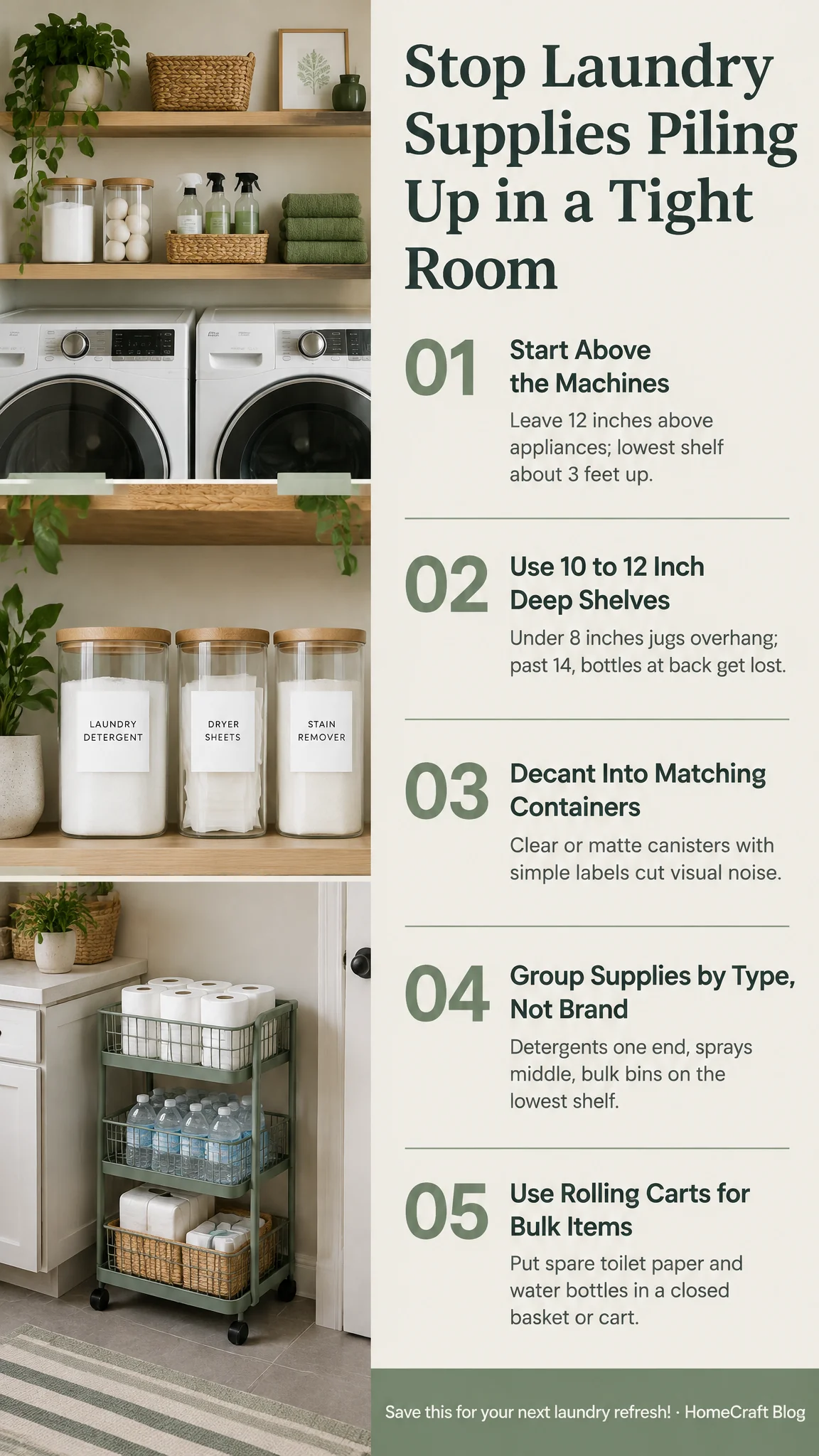
Most supply piles start on top of the washer and dryer because there's nowhere else for the detergent to go. A shelf or two mounted above the machines gives those bottles a home at arm's reach. Leave at least 12 inches between the top of the appliance and the bottom of the first shelf so you can lift a laundry basket without hitting anything. Set the shelf so the lowest item is around 4 feet off the floor, which keeps the most-used products within an easy reach.
Keep the top shelf around 7 feet high if your ceiling allows. Anything above your eye line is for things you use twice a year, like holiday linens or spare drying racks.
Use Shallow Shelves for Bottles and Boxes
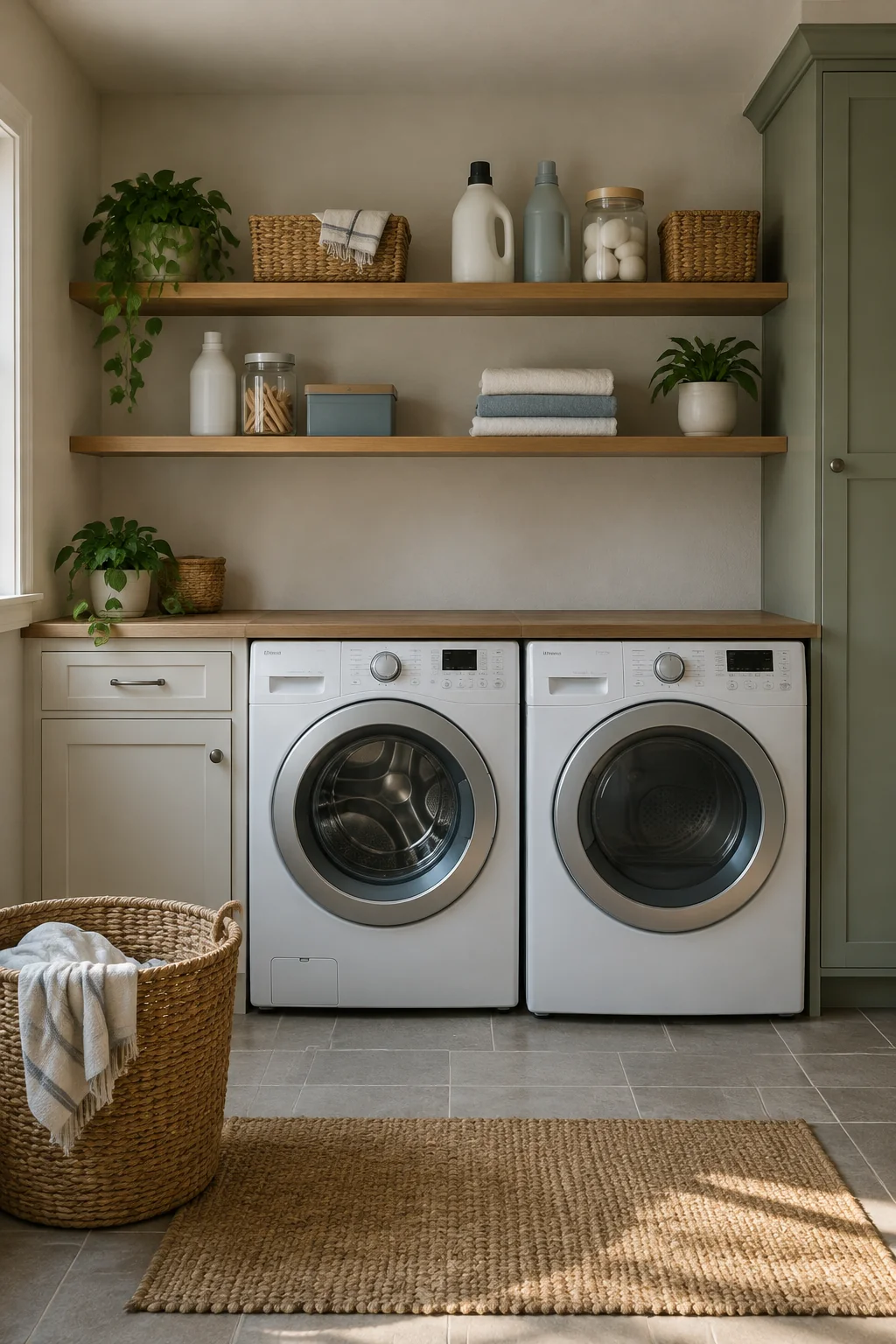
Depth decides whether a shelf looks tidy or looks like a junk drawer on the wall. For most laundry supplies, a shelf 10 to 12 inches deep is the sweet spot. Deeper than that and the bottles at the back become invisible, so they get forgotten and bought again. Shallower than 8 inches and a large jug of detergent will hang over the edge.
We would skip anything deeper than 14 inches in a utility room. It eats floor space you need for a basket or a folding surface, and it rarely holds more than a deep shelf of normal items would.
Lines of Matching Containers Make It Look Calm
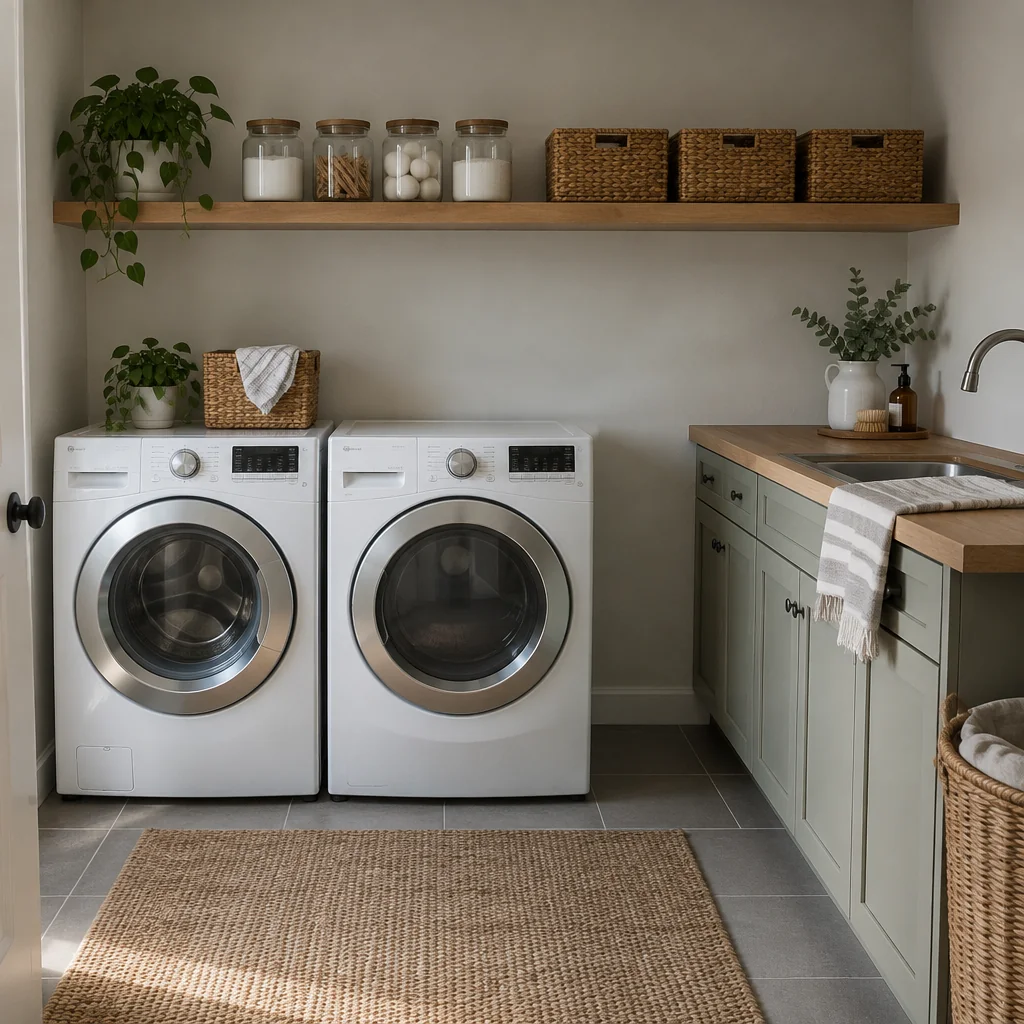
The reason some utility rooms feel calm and others feel busy is almost never the shelf itself. It's the mix of containers on it. Bottles of six different brands in six different shapes read as noise, even when the room is spotless. Decanting powder into clear or matte canisters with simple labels cuts that noise to a handful of shapes.
Group by type, not by brand. Keep detergents on one end, dryer sheets and stain sprays in the middle, and bulk backups in a bin on the lowest shelf. Paper labels in one font are enough. You don't need a full matching set.
Floor-Level Baskets Work Better Than You'd Think
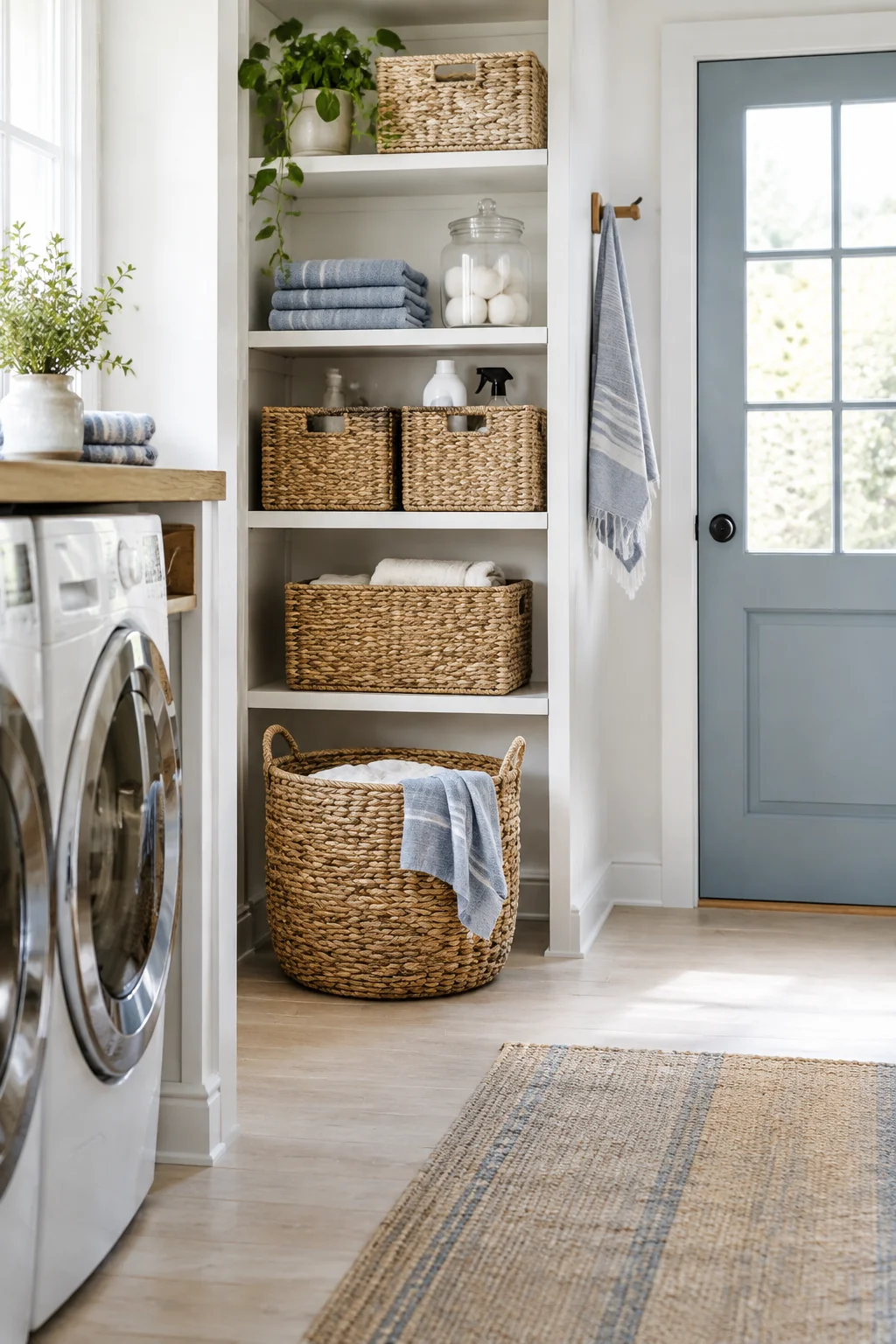
Not every supply belongs on a wall. Bulk items like spare toilet paper, extra dryer sheets or a case of water bottles can sit in a rolling cart or a closed basket beside the washer. Choose a cart that fits the gap next to the machine with about 1 inch of clearance on each side, so the door and the pull handle still work.
Open baskets on the floor collect lint and tend to become laundry piles themselves. A closed bin with a lid or a cabinet with doors keeps the eye from catching on the stack. If you have a toe-kick gap under the machine, check that a low bin still slides in before you buy it.
Anchor Anything Tall or Heavy to a Stud
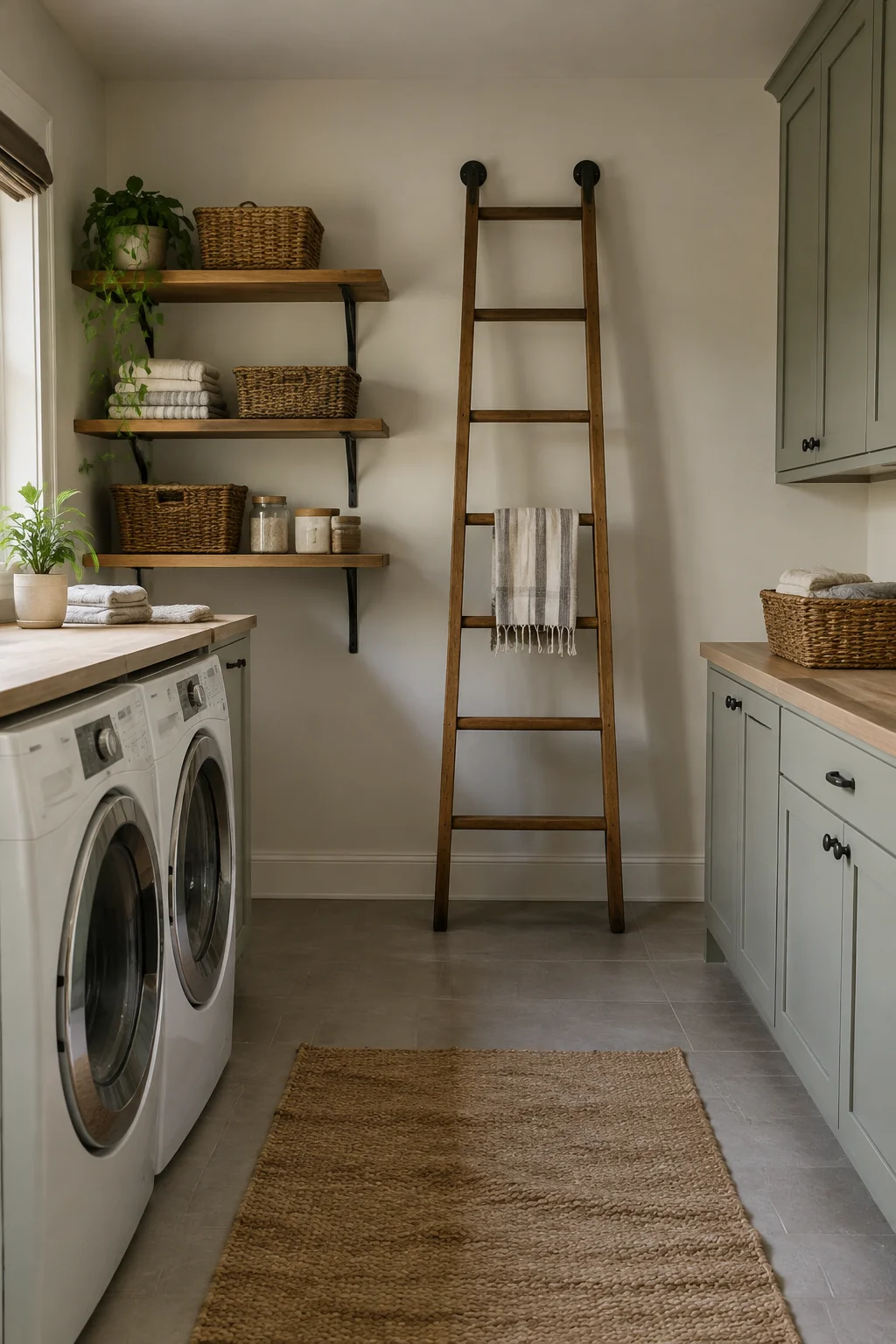
A loaded shelf full of detergent jugs is heavier than most people guess. A full gallon of liquid weighs about 8 to 9 pounds, so a 36-inch shelf with six of them can pull hard on a single anchor. Find the wall studs with a stud finder, and fasten your brackets into studs whenever the layout allows. If a stud doesn't line up with the spot you want, use anchors rated well above the total weight of the shelf and its contents.
Freestanding ladder shelves or tall cabinets need to be anchored to a wall stud too, not just set against the wall. Tip-over is the risk that matters most in a room with a washer that vibrates during spin cycles.
Lighting and Color Decide Whether It Feels Small
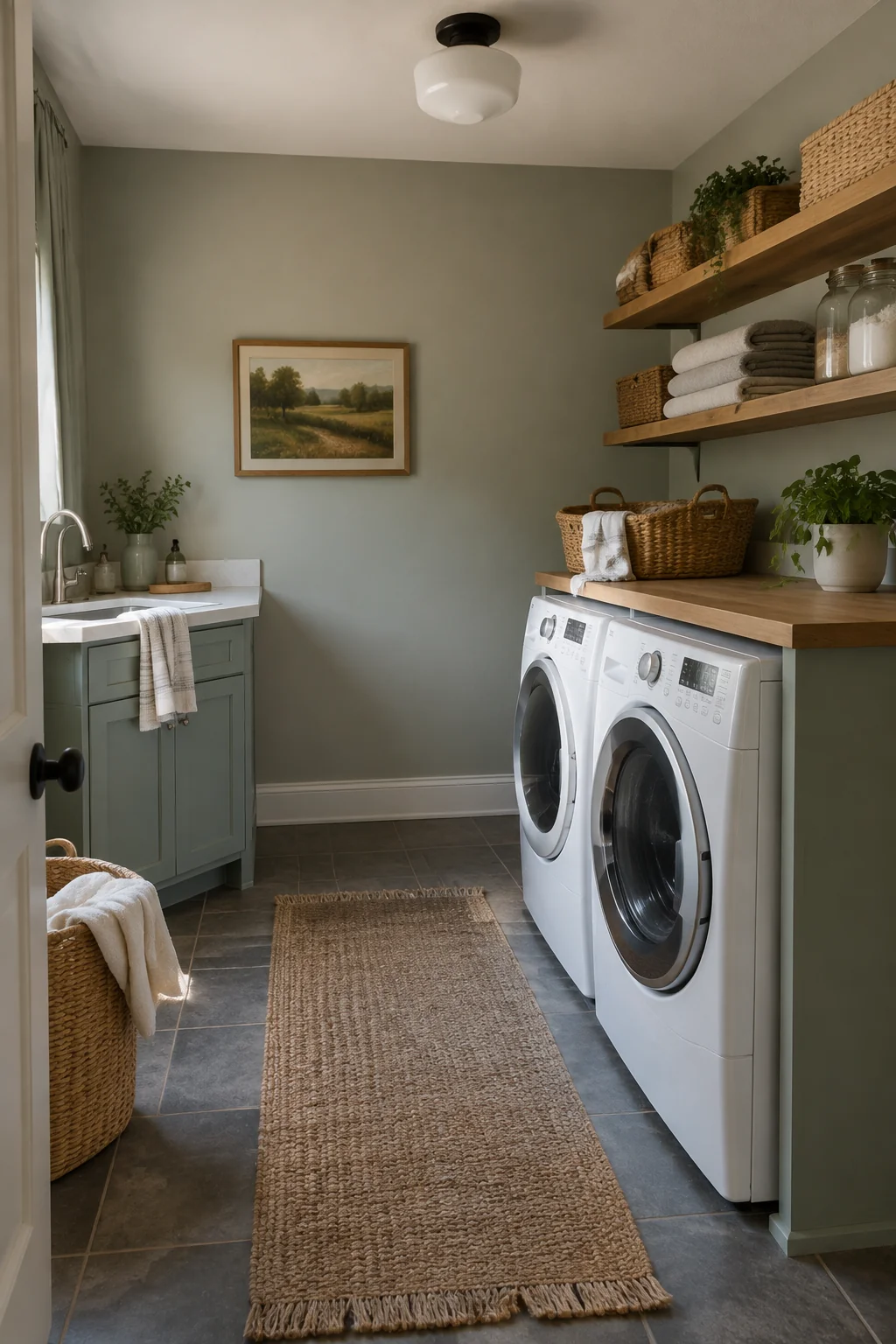
Small utility rooms often have one overhead fixture and a dark wall color, which makes shelves disappear into the background. A warm white or soft neutral on the walls reflects more light onto the shelves, so the containers stand out and the room reads brighter. Paint the shelves the same color as the wall if you want them to recede, or a single contrasting tone if you want them to look like a deliberate display.
Avoid mixing three or more finishes on the same wall. Stick to one wood tone and one metal, and the shelves will look planned.
Make the Shelves Work for the Way You Load
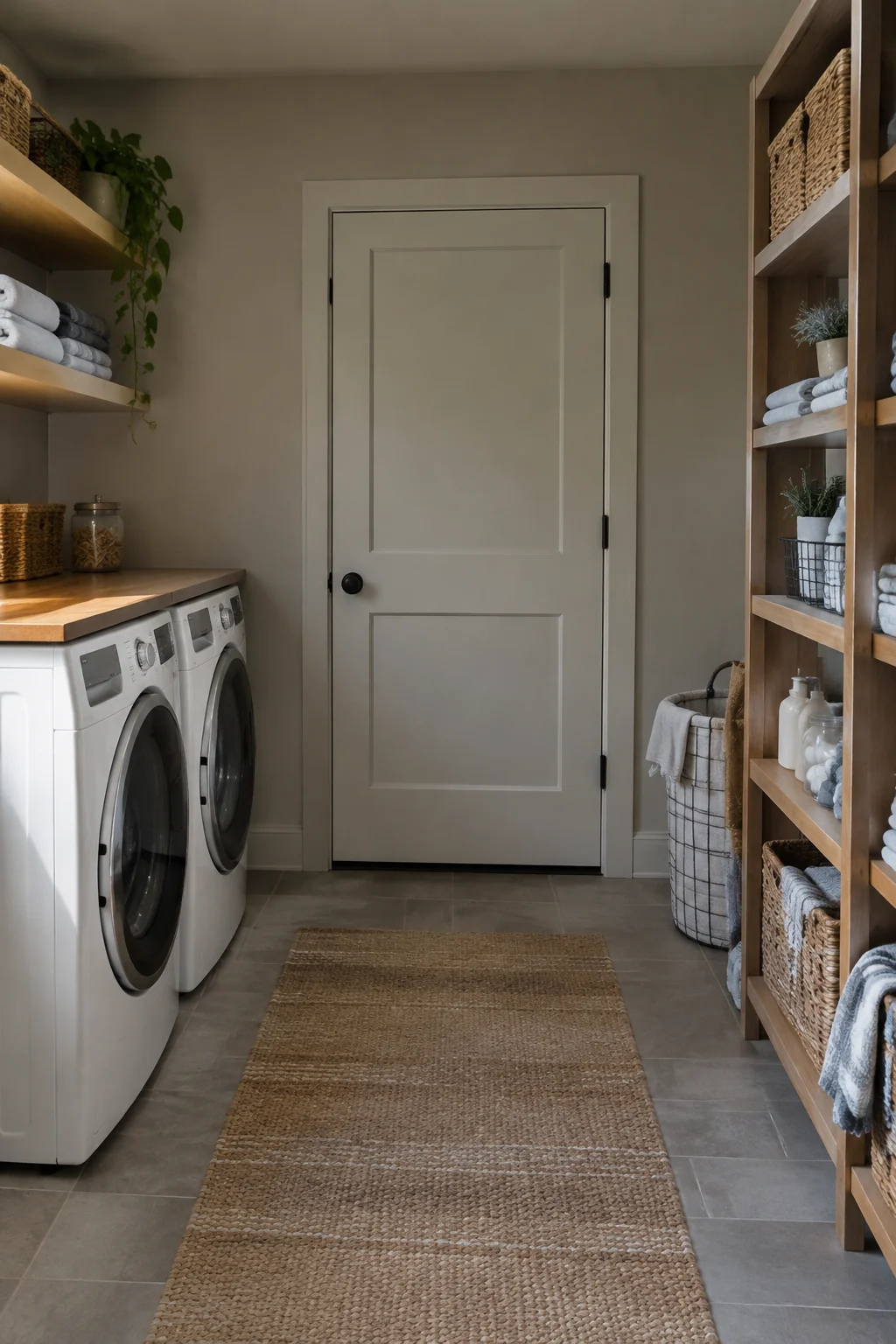
The best shelf layout follows your routine. Put the detergent and fabric softener at the height you grab them from the machine, and keep the stain remover and dryer sheets within a short step of the dryer. If you fold on a counter, leave the shelf above it open and low enough that you can reach without stretching, usually 4 to 5 feet off the floor.
Save this for your next project
Think about the door swing too. A shelf that the door hits every time it opens will get bumped and reorganized, and eventually stop being used.
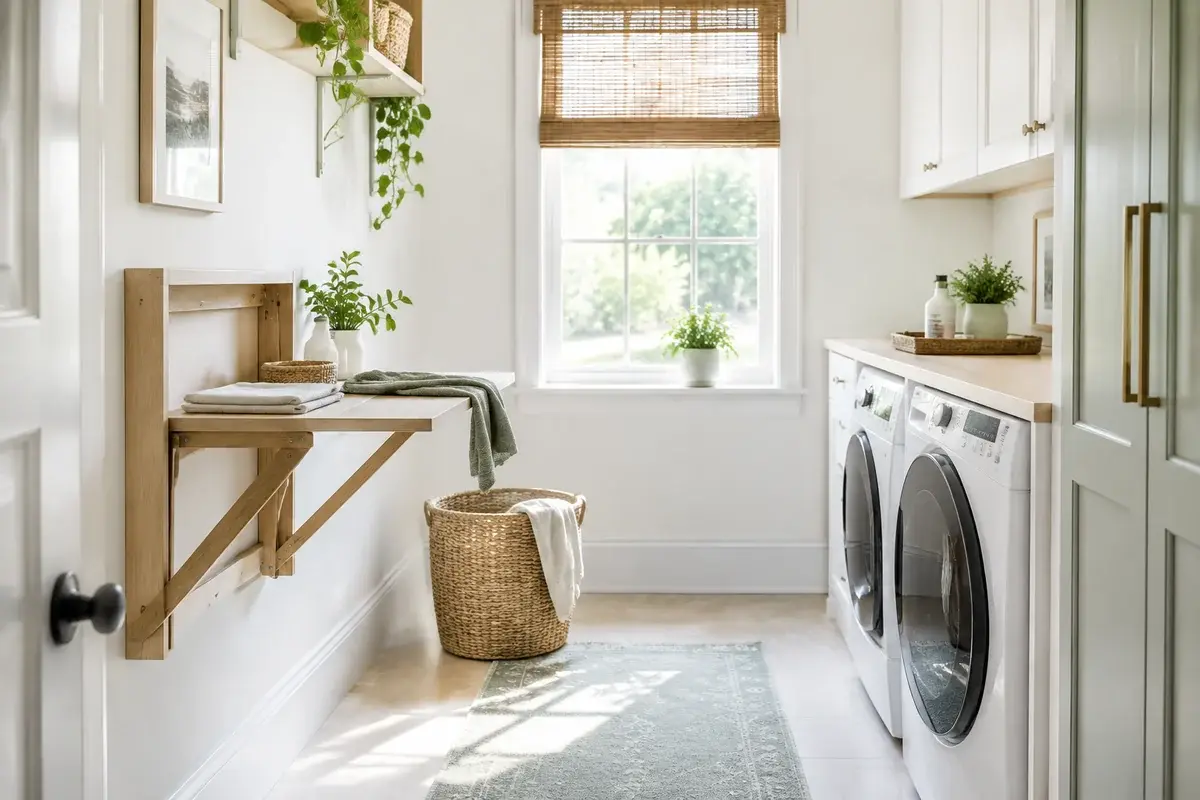
The room images in this post are illustrations made with AI.