Laundry Room Cabinet Ideas: What Works When Your Space Is Tiny
Small laundry room cabinet ideas that fit tight spaces without the bulky built-ins taking over your apartment closet.
This post contains affiliate links. As an Amazon Associate I earn from qualifying purchases. If you buy through our links, we may earn a commission at no extra cost to you.
The standard advice is to install floor-to-ceiling cabinetry, but that doesn't work when your laundry room is a closet wedged between the kitchen and a hallway. Oversized built-ins swallow the space and make it feel like a box. What does work is choosing cabinets that hold what you need without pretending your laundry room is a storage sanctuary. Compact, smart placement, and one strong visual anchor make the difference between a room that functions and one that stresses you out every time you open the washer.
Vertical cabinets above the machines are the move
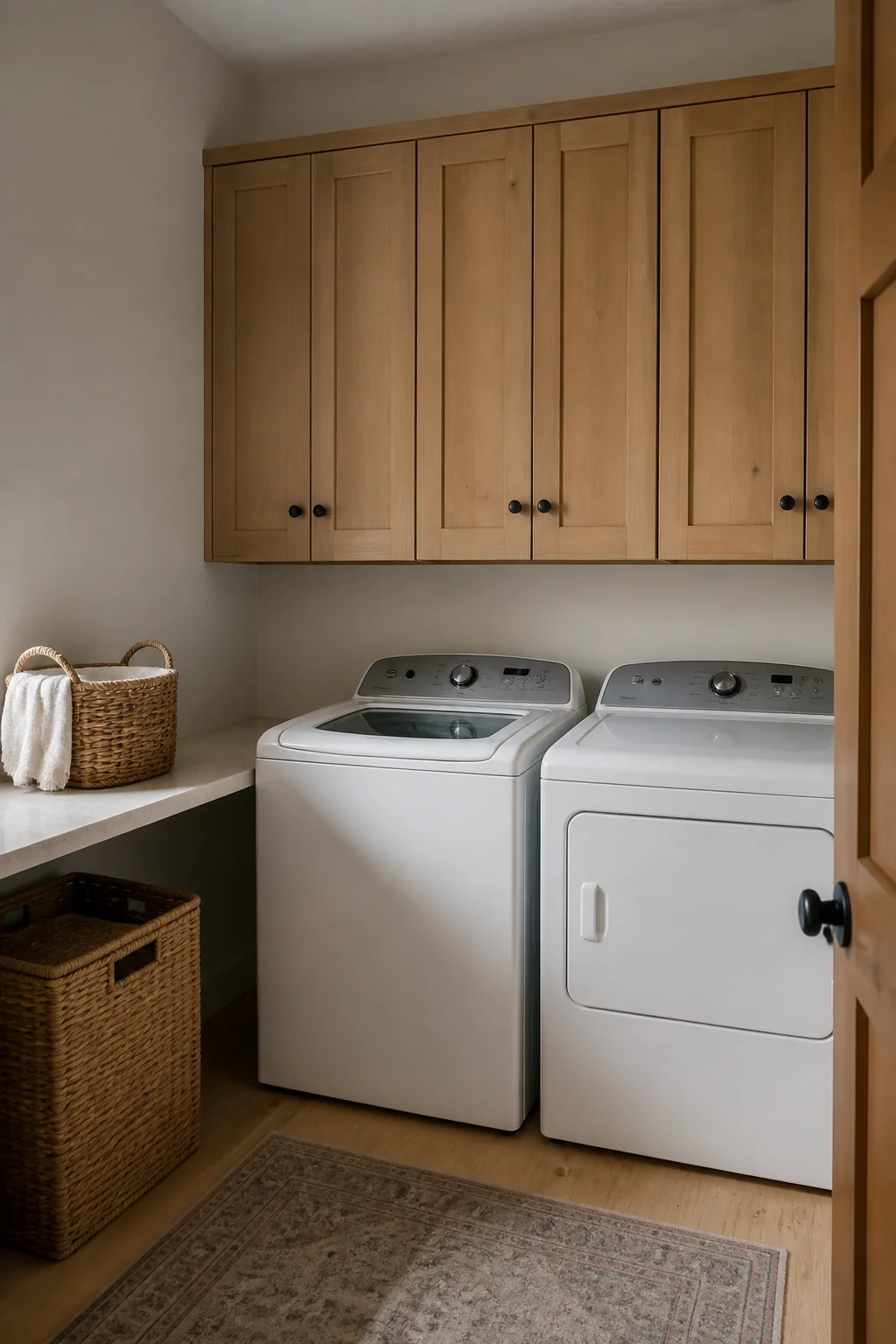
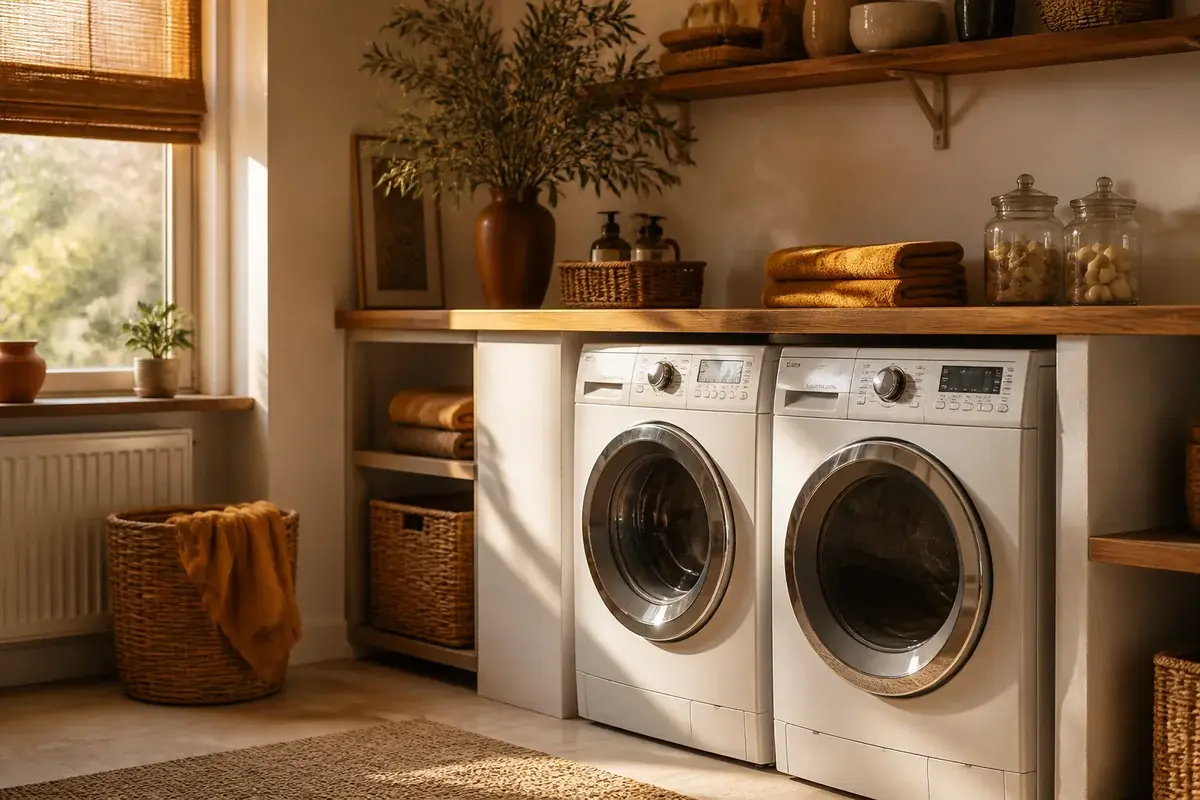
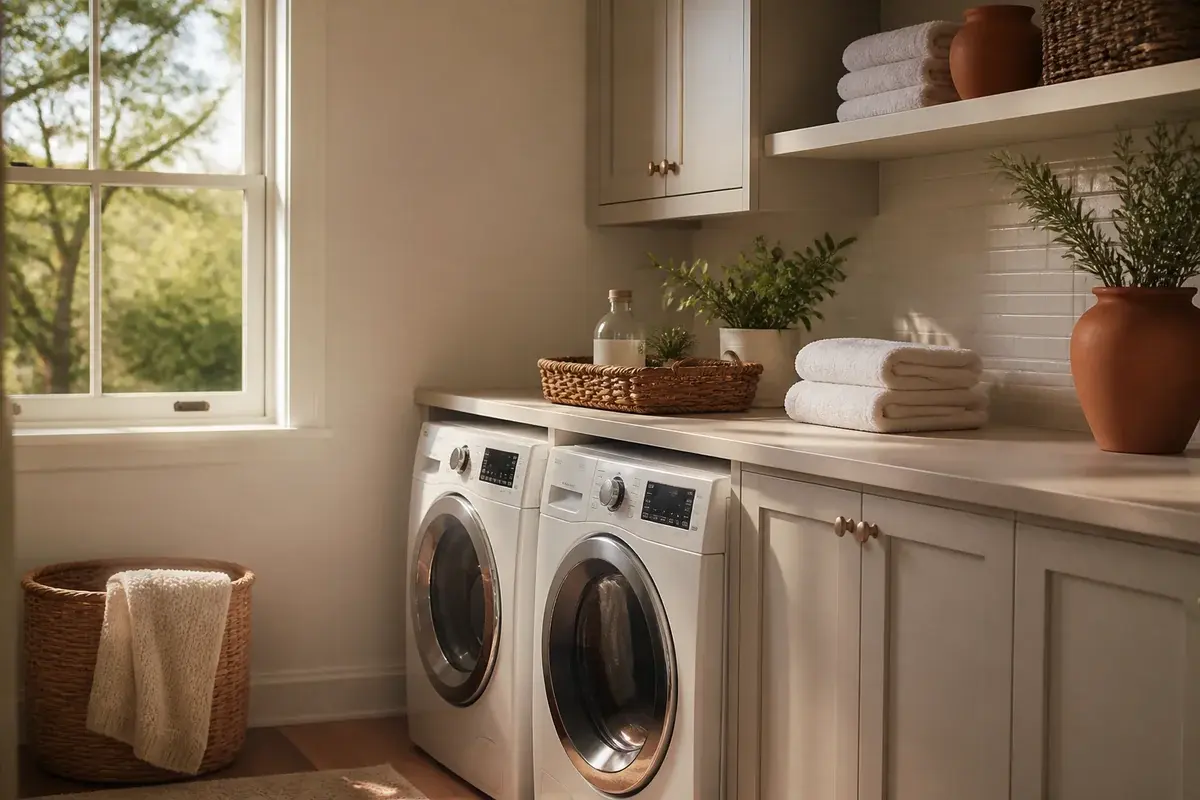
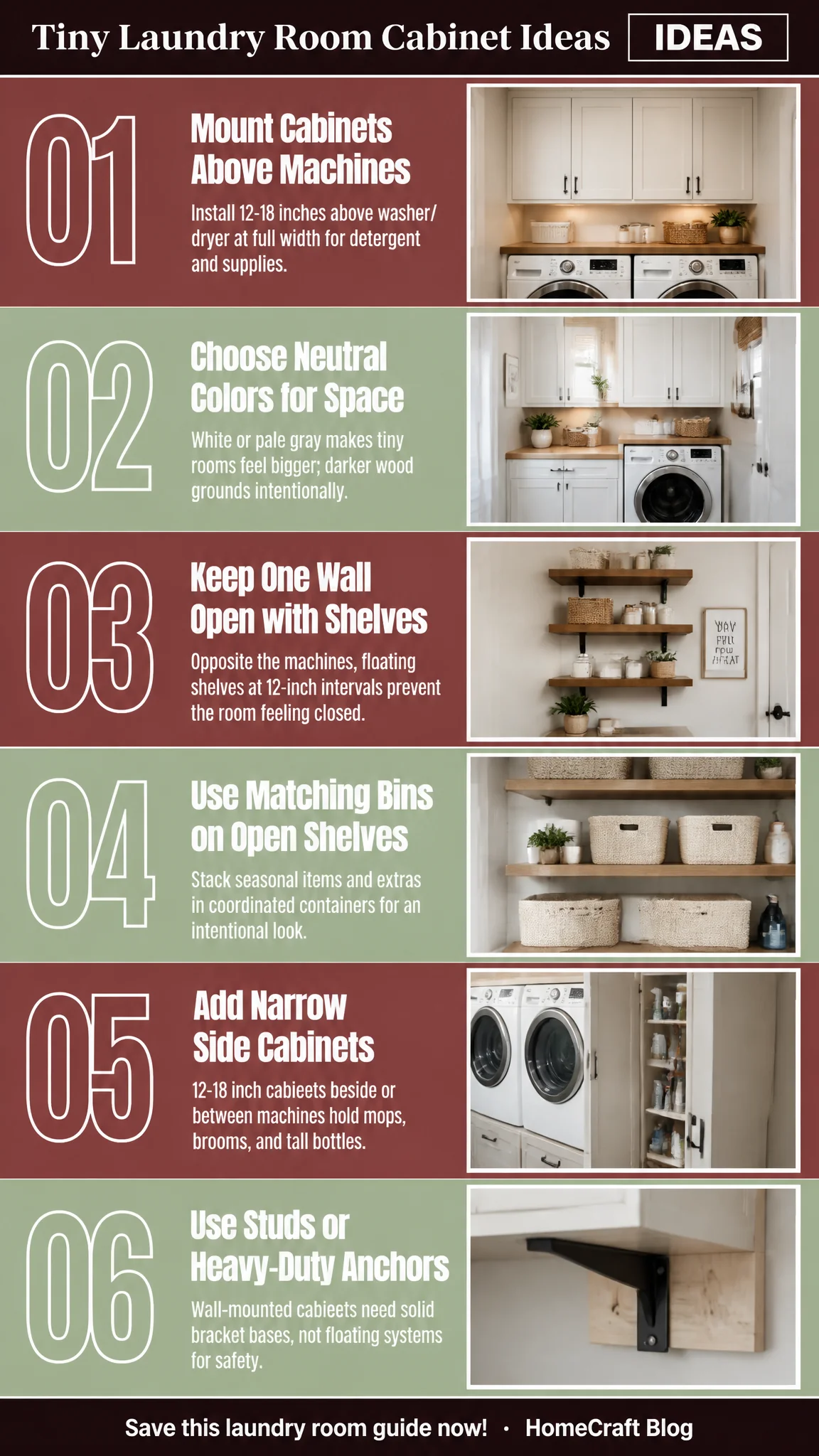
Go tall instead of wide. A cabinet mounted 12 to 18 inches above your washer and dryer, running the full width of both machines (usually 54 to 60 inches), holds detergent, fabric softener, stain treatments, and dryer sheets without eating into floor space. You'll move things off the top of the machines where they sit now in random piles, and the wall stays open below.
A cabinet at that height needs real anchors into studs or anchors rated for the full weight when loaded. Wall-mounted cabinetry this size should sit on a solid base of attached brackets, not a floating system. The cabinet becomes the room's main visual, so color matters. White or a neutral pale gray recedes and makes the room feel bigger. A darker wood or cabinet color grounds the space and looks intentional, though it reads heavier in a tiny room.
Open shelving in one corner keeps it from feeling closed off
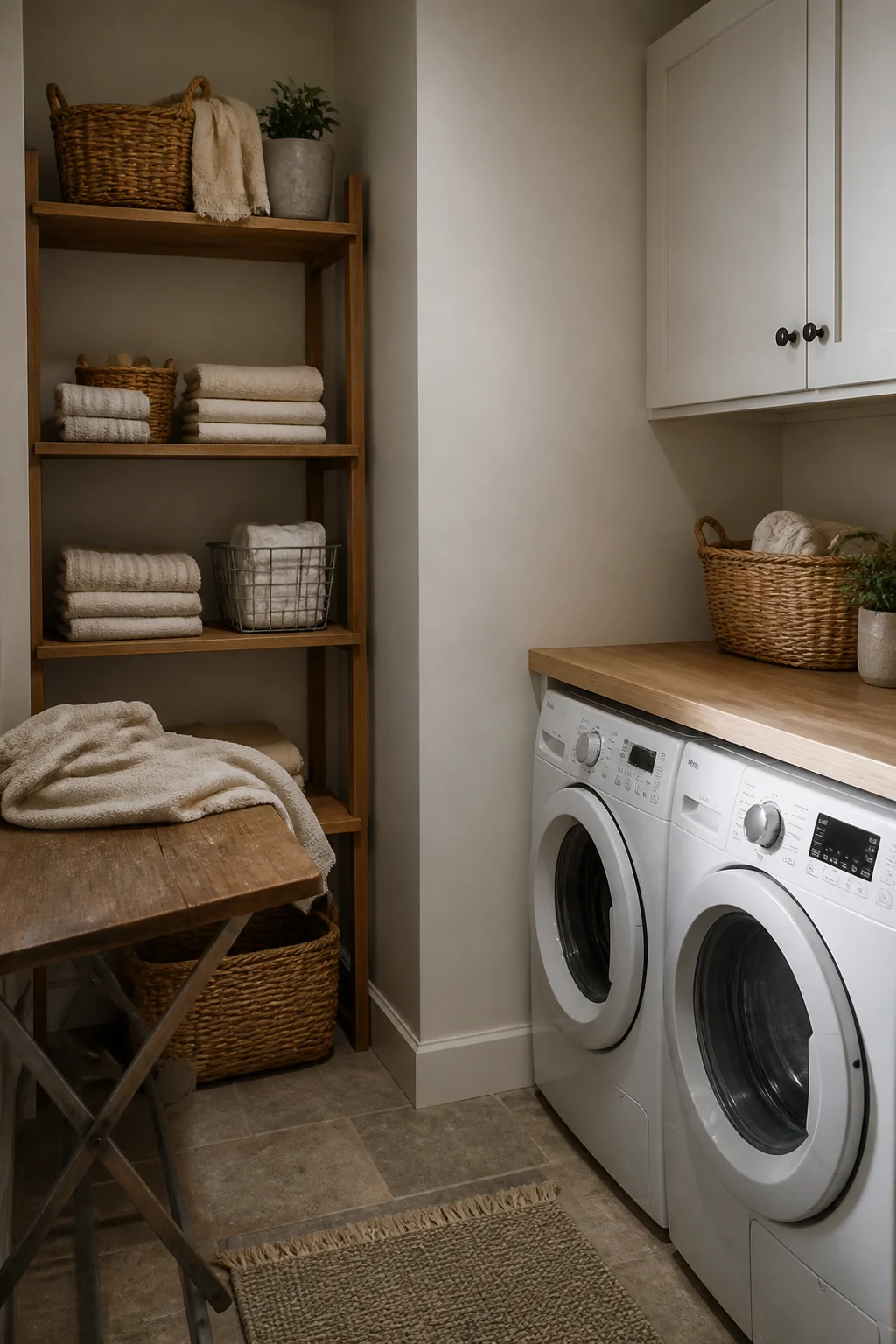
If cabinetry takes up the long wall, keep at least one wall open. Open shelves in the corner opposite the machines, or above a folding table if you have one, hold attractive baskets or boxes where you keep seasonal items, cleaning supplies, or extra linens. Open space prevents the room from becoming a cave.
Stack the shelves 12 inches apart vertically so there's room to lift things in and out without wedging. Three shelves in a 24-inch-wide span is usually the right number for a tiny room. This doesn't have to be permanent; floating shelves anchored to studs cost around $30-80 and work just as well as a cabinet frame when you don't need door enclosure. The items on display need to be in matching bins or containers so the space reads as intentional, not storage overflow.
Narrow cabinets next to or between machines save space
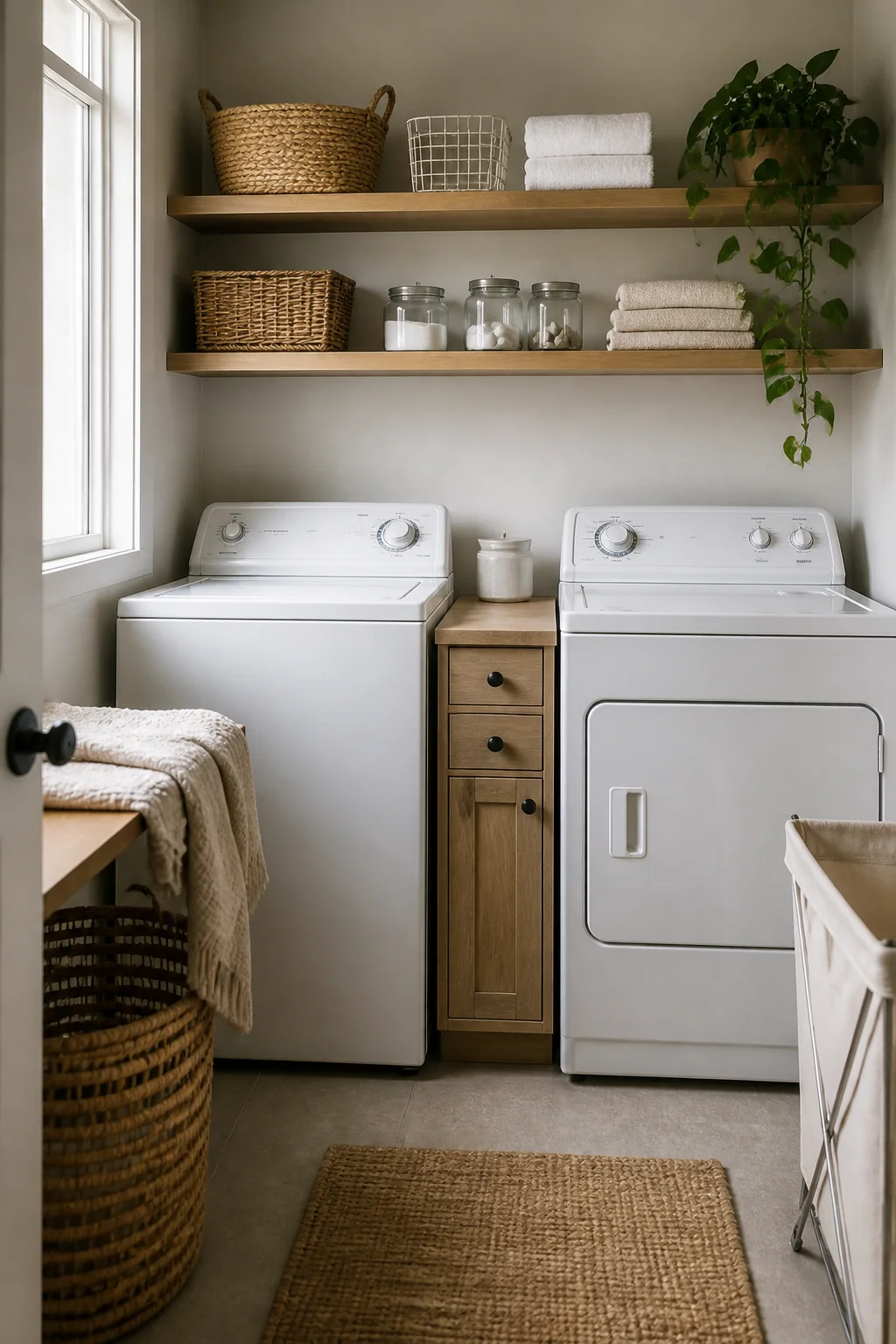
A 12-to-18-inch-wide cabinet on either side of a washer-dryer stack fits in gaps that go unused. These cabinets hold tall bottles, mops, brooms, or cleaning tools you don't want on the floor. Pair narrow cabinets with open shelving above so one side of the room feels solid and the other breathes. The variation in what you see stops the room from looking monotonous.
If your machines sit side by side, you can run a narrow unit above one edge or use a corner, but measure before you plan anything. Most laundry rooms have pipes, vents, or electrical outlets that make the walls less blank than they look. Measure your exact clearances, including the space behind the machines for hoses and vents, before you order or build.
Doors that don't swing into the middle of the room
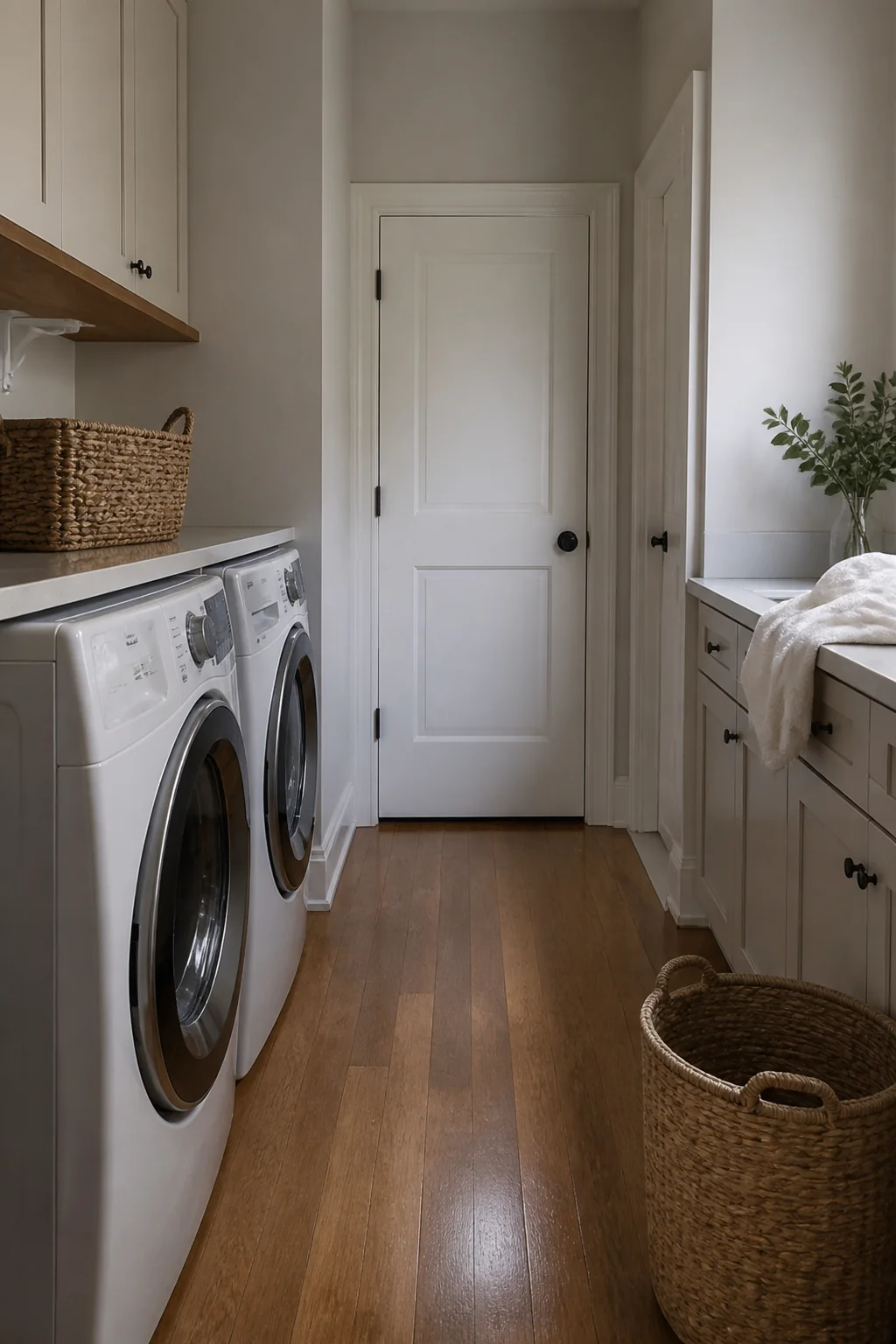
Cabinet doors opening into a tiny laundry room steal floor space and force you to sidestep them every time you fold clothes. Avoid swing-out doors altogether. Instead, choose sliding doors, rolling barn-style doors, or cabinets with no doors at all.
Sliding cabinet doors require about 2 inches of extra depth on either side to slide fully open, and they run on a track that mounts to the top of the cabinet. Barn doors take slightly more space when open but they're more visible, so they need to be cabinet-grade and finished cleanly. If you go with an open design, everything inside stays organized or the room reads as cluttered.
One cabinet in a statement finish makes the room feel designed
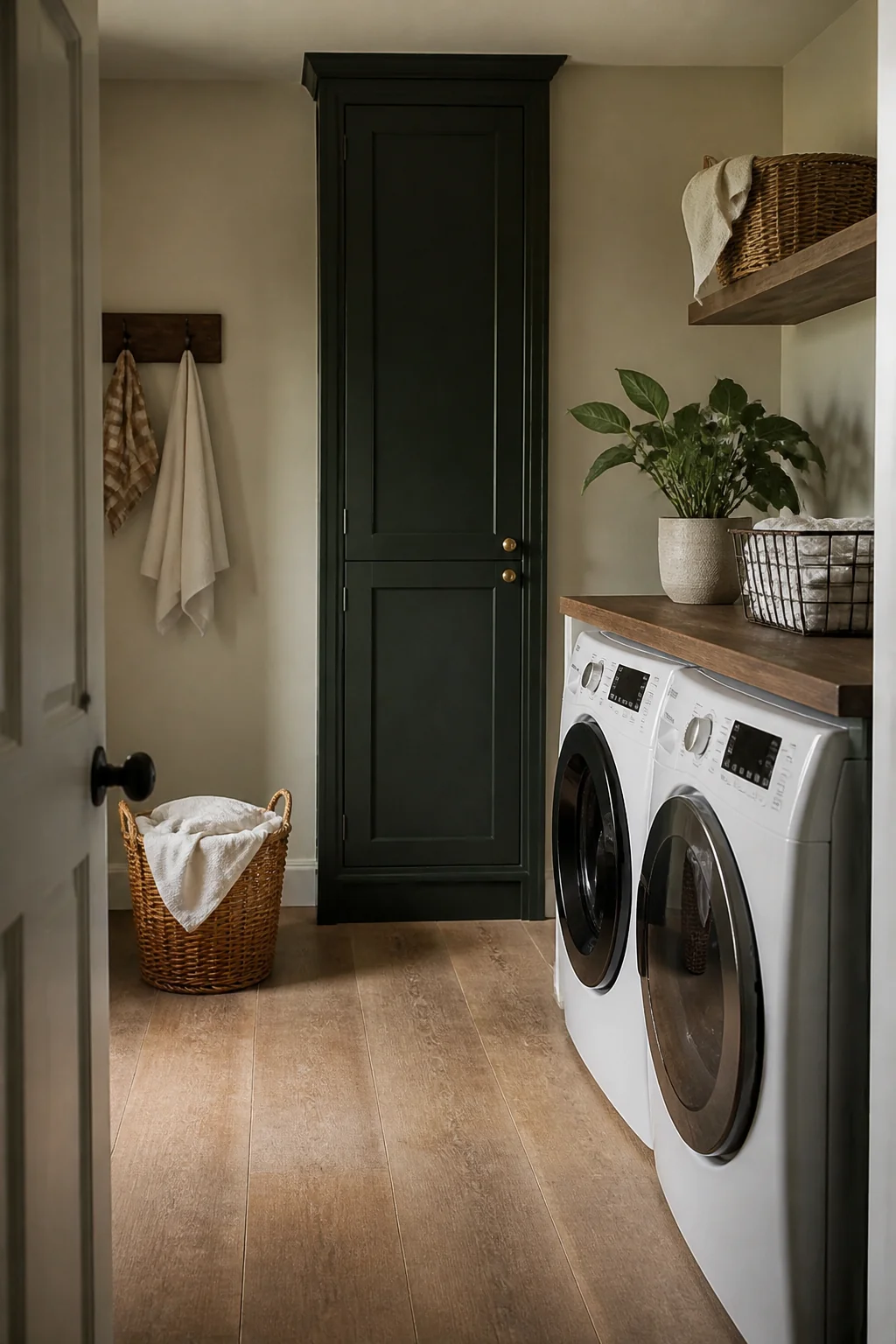
A plain white cabinet works but doesn't stick in your memory. One cabinet in navy, forest green, warm wood tone, or even a soft taupe makes the laundry room feel chosen instead of afterthought. This works best as your main vertical cabinet above the machines, where it becomes the focal point.
The finish you pick should have a subtle sheen or matte coating that's easy to wipe down and resists humidity. Glossy cabinet paint in a laundry room shows every water spot and dusty handprint. A semi-matte or satin finish in a real paint, not cheap enamel, stands up to the room's temperature swings and damp air.
Corner cabinets use dead space where walls meet
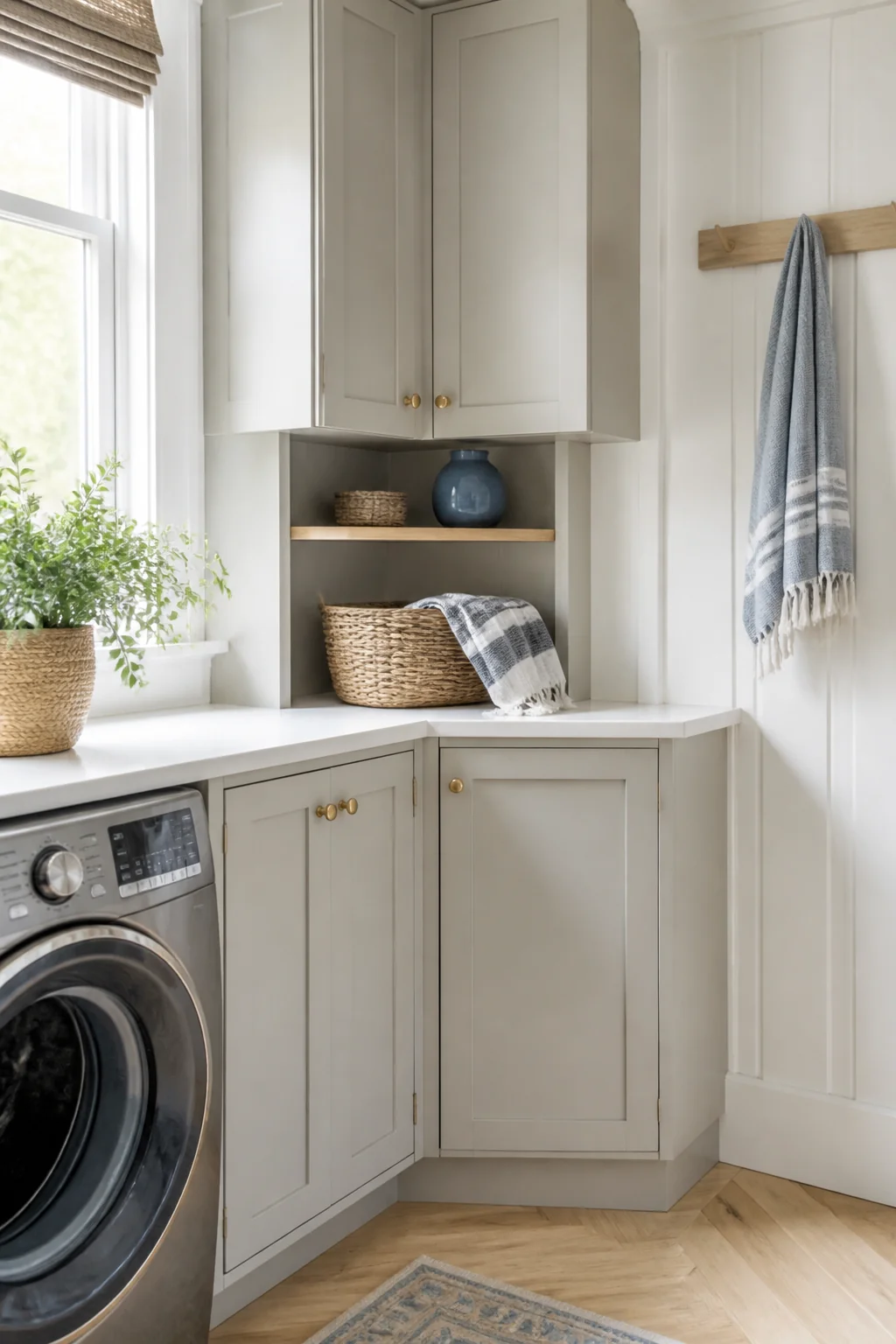
A corner cabinet at shoulder height, 18 to 24 inches deep, grabs storage that a straight wall cabinet leaves empty. This works best in a corner where the machines don't sit, so you're not bending down or reaching around moving parts. Fill it with items you use less often, bulky storage, or things that benefit from being out of sight.
The corner piece needs to be a true corner cabinet with angled doors or sliding panels that open into the corner pocket, not a regular cabinet shoved into a corner where the doors can't open fully. Measure your corner's depth and width before you order.
Tall cabinets flank a washer-dryer combo to use vertical waste
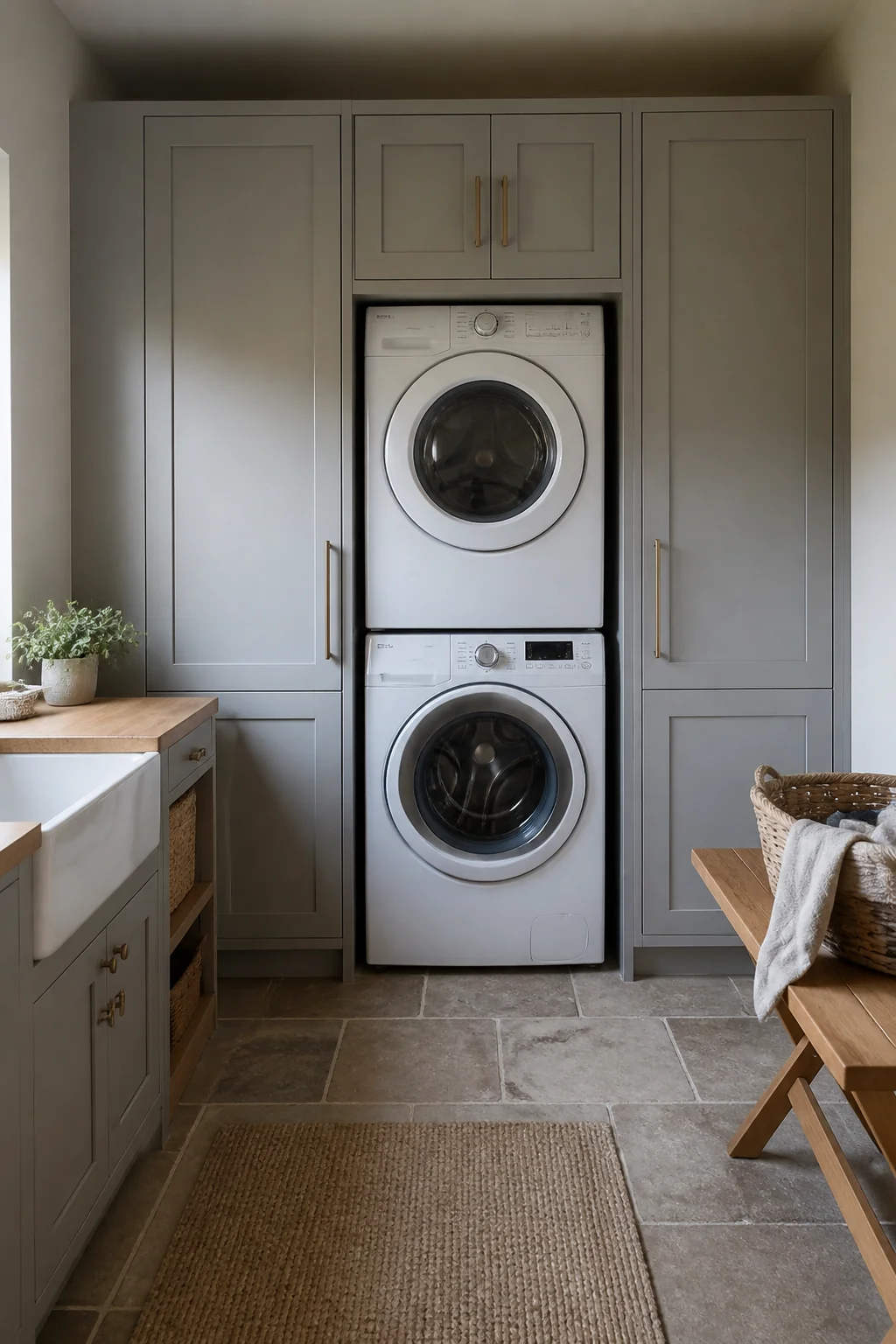
If you have a stacked washer-dryer in the corner, flanking cabinets on both sides create a built-in look without the built-in cost. Each cabinet runs from floor to about 1 inch below the stacked machines' top. This setup works in a room that's at least 7 feet tall and 6 feet wide.
Your entire wall becomes a finished unit instead of a metal box sitting on the floor. Paint the wall behind the machines a clean white or leave it bare, and the flanking cabinetry frames the machines as intentional. Anchor tall cabinets to studs at the top and bottom so they don't tip.
Drawers are better than shelves for small items
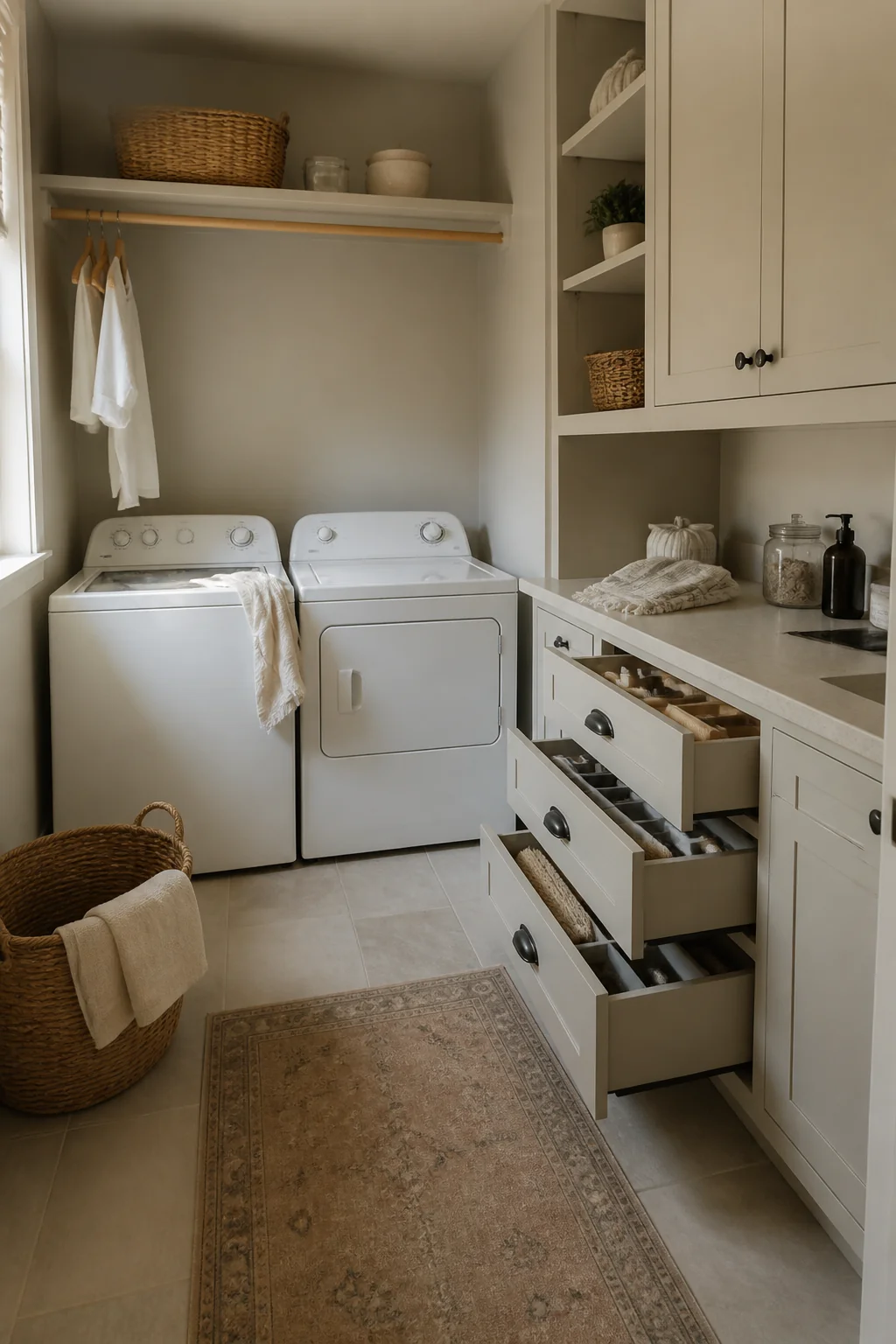
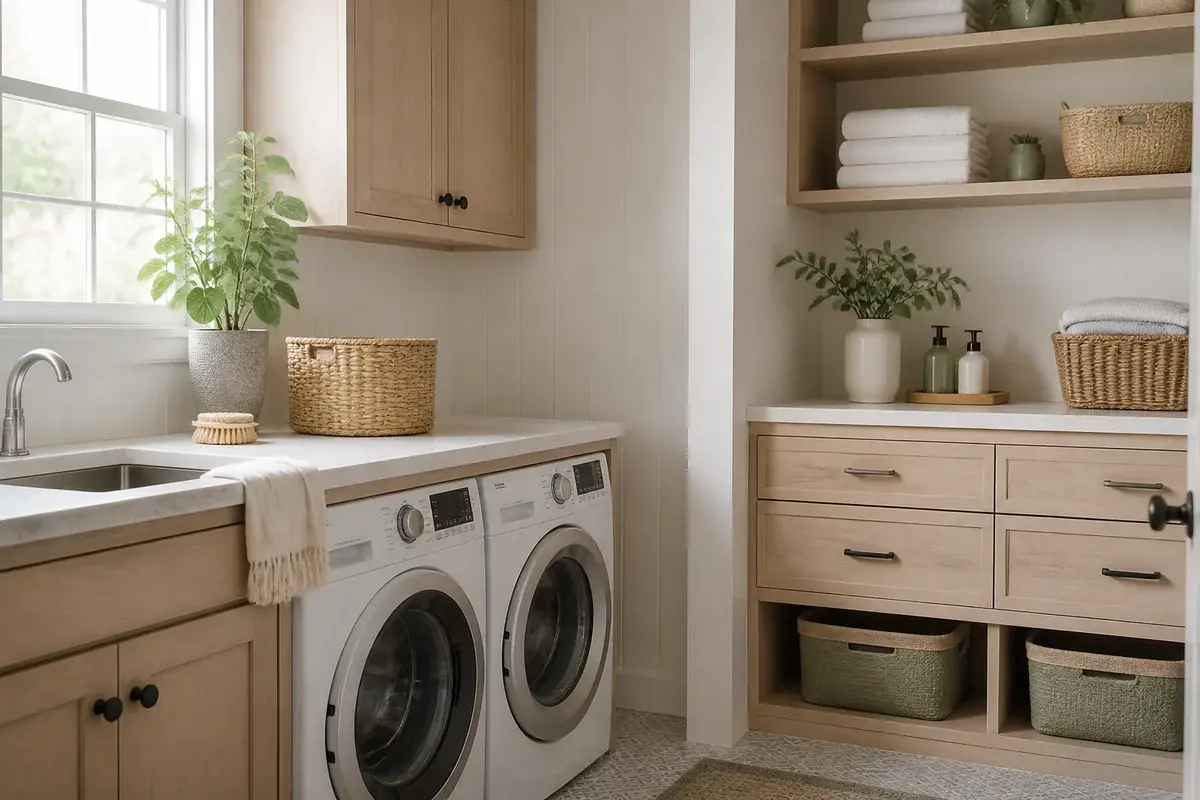
A cabinet with two or three deep drawers holds loose supplies better than shelves. Detergent bottles, lint traps, lost buttons, sewing kits, and dryer vent brushes don't shift around and look chaotic. Drawers close, so the chaos is hidden.
Drawers on a wall cabinet need heavy-duty slides and stops so they don't crash when you pull them hard. A 24-inch-wide cabinet with two full-depth drawers costs more than one with shelves, but if clutter bothers you, the money goes to the system that keeps your stuff tidy.
Save this for your next project
The real test for any cabinet setup is this: can you cross the room, open a cabinet, grab what you need, and close it in under 10 seconds without rearranging anything? If you're shoving items aside, squeezing past doors, or hunting through piles, the cabinets aren't doing their job. Skip a setup that looks pretty but doesn't work for the actual laundry you do every week. Beauty is secondary in a tiny laundry room. Function is the cabinet that wins.