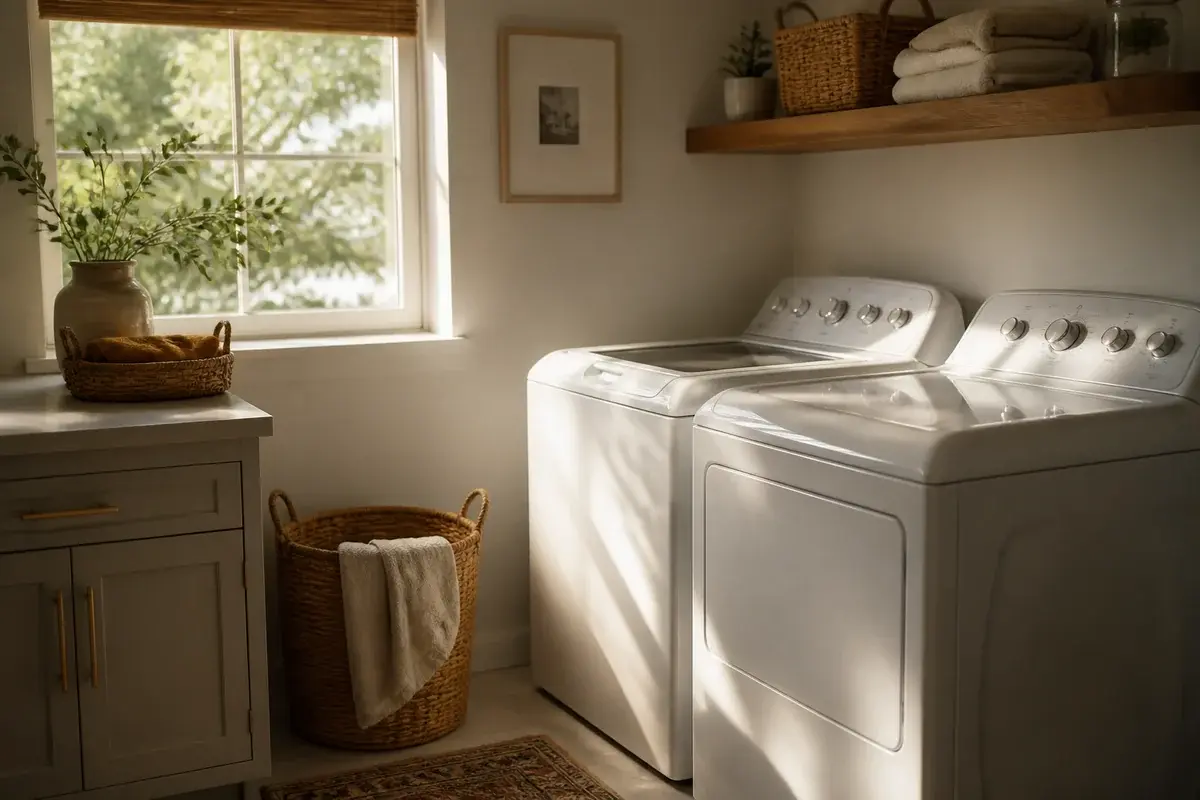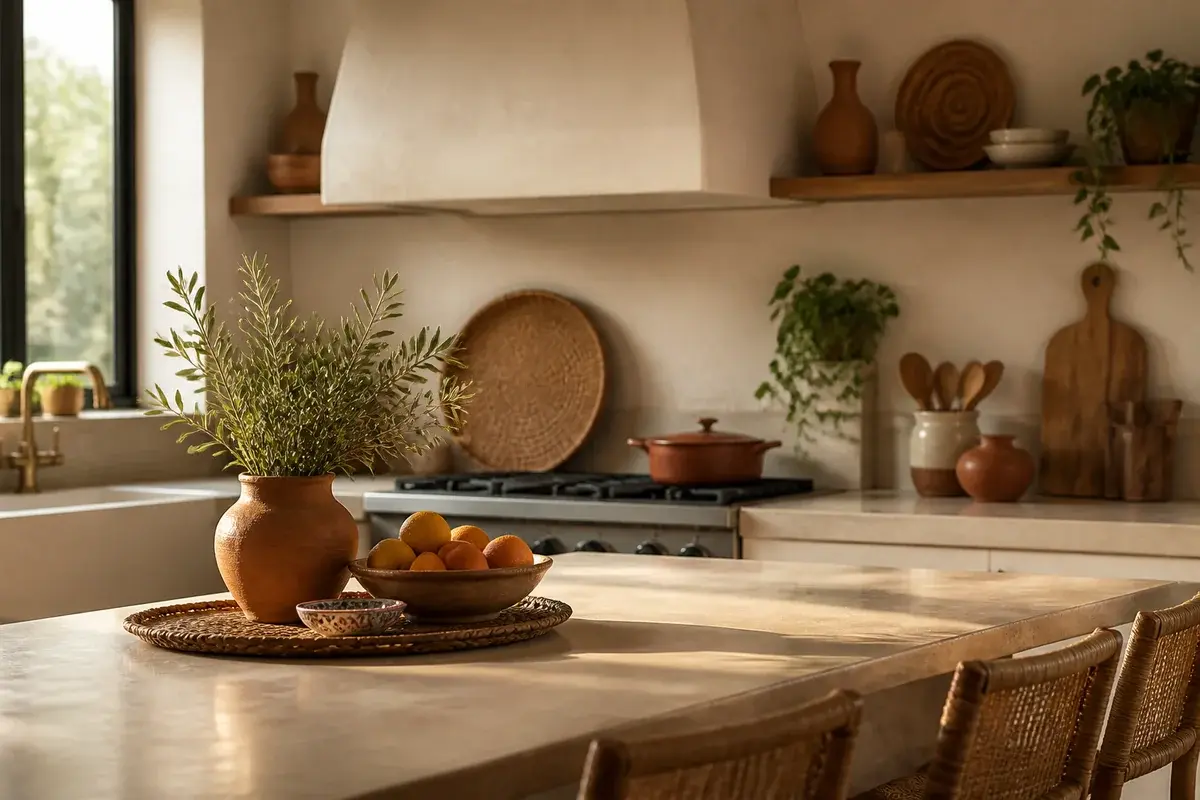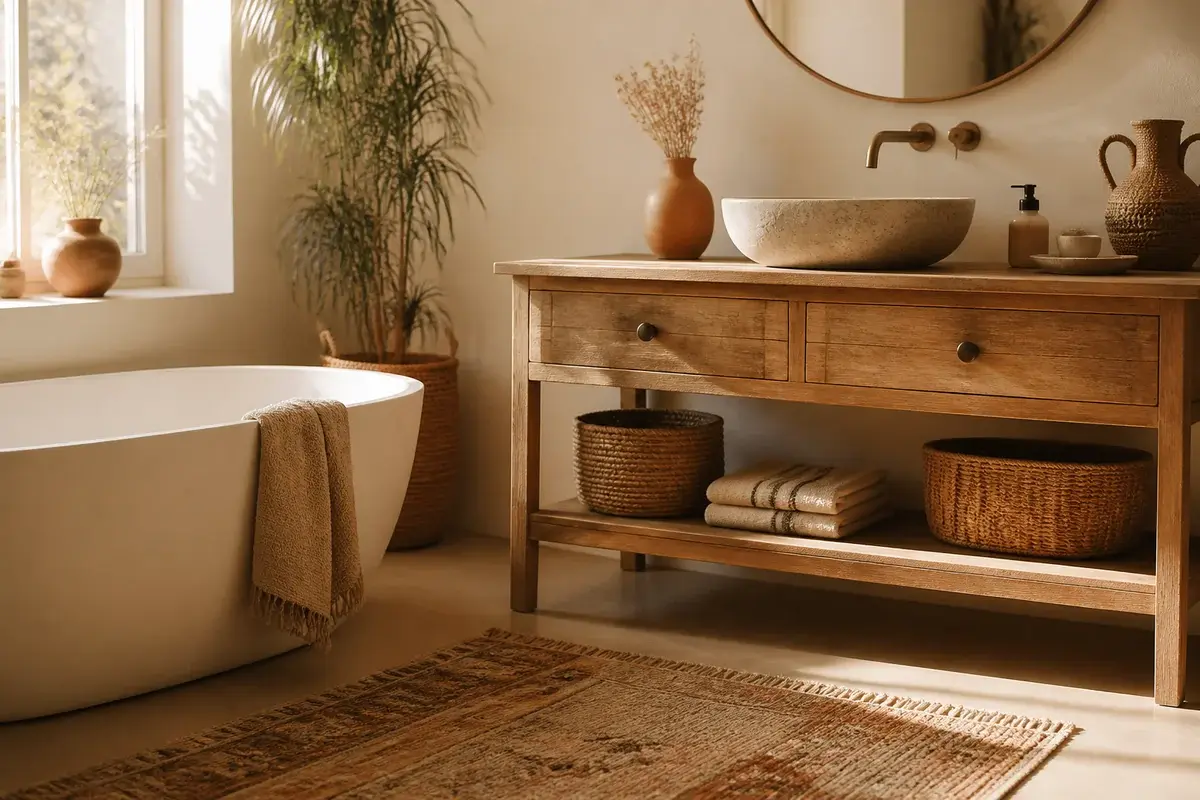
31 Boho Laundry Room Ideas That Make the Space Feel Warm
Warm up a plain laundry room with boho laundry room ideas that hold up to heat and humidity. 31 concrete changes with measurements and prices.
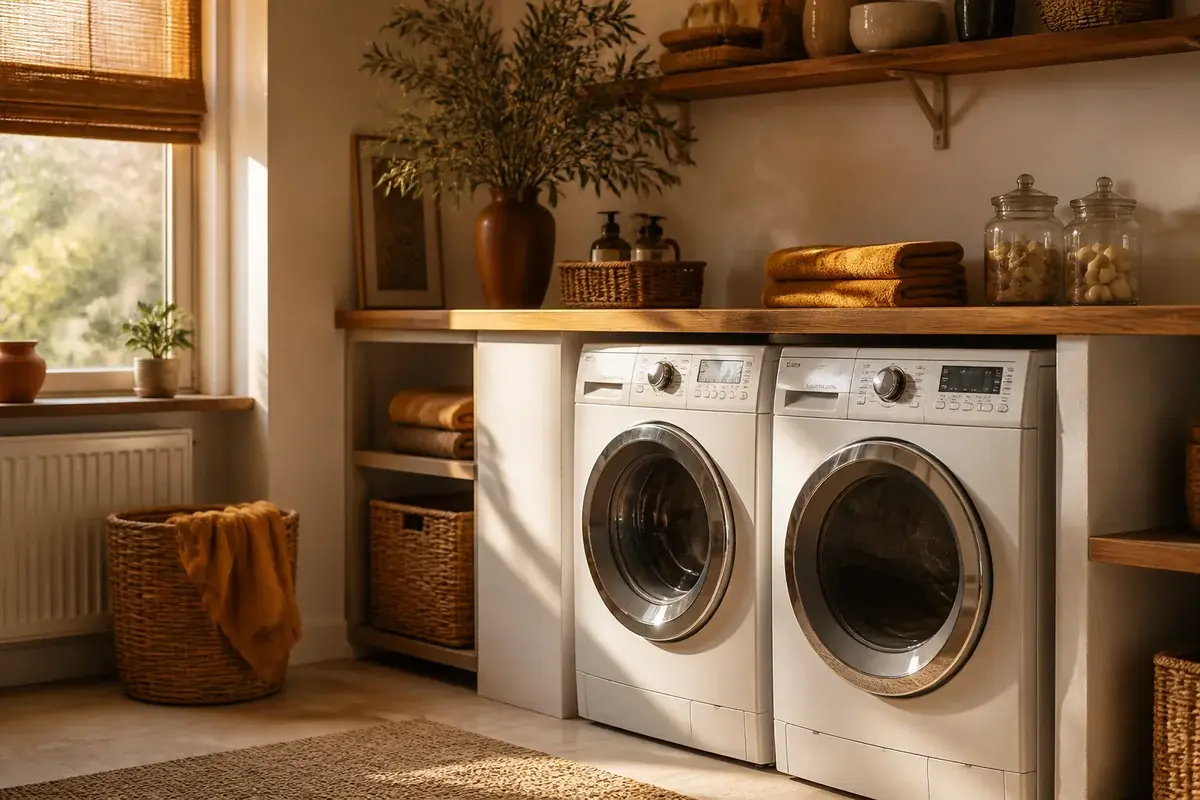
Your laundry room doesn't have to be the sterile, forgotten corner of the house. Blank walls, a fluorescent tube, a floor that's cold nine months of the year: it's an easy room to give up on, and most of us do. It also takes less to fix than you'd think. A boho aesthetic brings warmth, texture, and personality to a room where you spend more real time than you'd guess, and nearly everything below is reversible, renter friendly, and under $80. Here are 31 concrete boho laundry room ideas, with the measurements, prices, and the spots where each one tends to go wrong.
1. Hang woven wall baskets above the washer
Mount two or three flat-backed woven baskets on the wall above the machines and fill them with dryer sheets, stain remover, and wool dryer balls. Shallow is the key word: about 10 to 12 inches across and no more than 5 inches deep, so you can reach in without pulling the whole thing off the wall. Set the lowest one roughly 14 inches above the machine tops, which puts it near 50 inches off the floor and clear of a top loader's lid swing. Anchor into a stud where you can, or use toggle anchors rated for 20 pounds. A spin cycle at 1,200 rpm shakes that wall twice a week, and a single nail works loose within a few months. Keep each basket under about 3 pounds, and don't hang one in the dryer's exhaust path, where warm damp air will make the fiber brittle. Budget $12 to $25 each.
2. Paint your walls a warm cream or soft sage
A soft, muted wall color does the heavy lifting, and both sage and warm cream sit better in a windowless room than flat white, which goes gray and cold under artificial light. Sheen matters more than the color here. Use satin or semi-gloss, because a laundry room swings between humid and dry all week and splashed detergent needs to wipe off; flat paint holds moisture and burnishes to a shiny patch wherever you scrub it. A laundry room is small enough that paint stops being the expensive part. A $35 to $50 gallon carries 350 to 400 square feet per coat, so a typical 6 by 8 foot room gets both its coats out of one can and you still have a cup left for touch-ups. Buy a $6 sample pot first and paint a 12 inch square right beside the machines, then look at it with the door shut and the light on. Sage reads gray under cool 4000K bulbs and distinctly green under warm ones.
3. Swap out the overhead light for a woven pendant
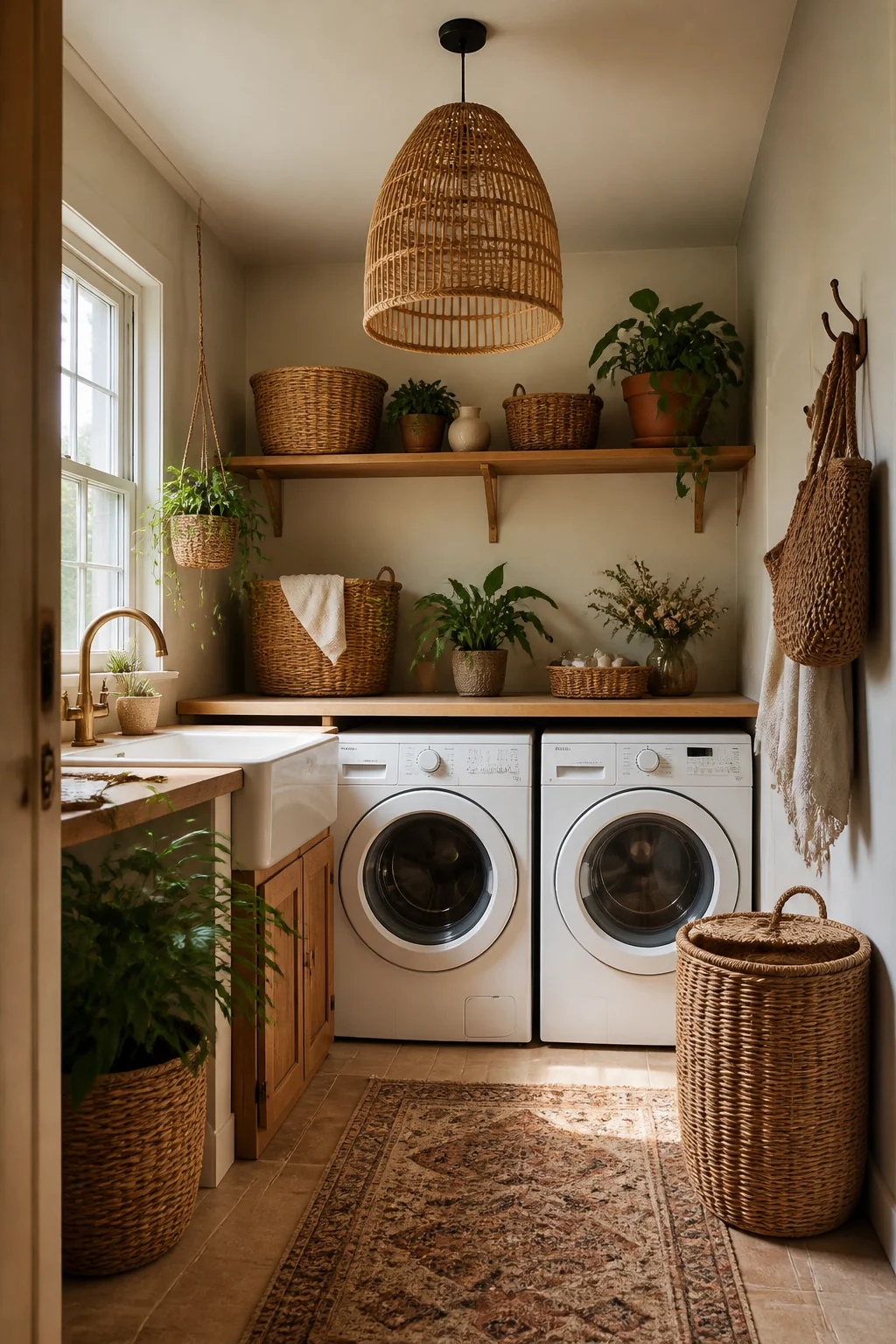
Replace the builder-grade ceiling fixture with a rattan or jute pendant and the whole room reads softer. Fixtures run $40 to $80. If there's already a junction box, the swap takes about 20 minutes: kill the breaker, confirm it's dead with a voltage tester, match black to black and white to white, ground to ground, then screw the canopy to the box strap. Two clearances matter. Keep the bottom of the shade at least 6 feet 8 inches off the floor so nobody walks into it, and 30 to 36 inches above a folding counter. Use an LED no brighter than a 60 watt equivalent, since a fiber shade sits close to the bulb and scorches under heat. The trade-off is light spill: an open weave throws lovely shadows and not much usable light, so keep a task light over the folding zone. Vacuum the shade with a brush attachment every month or two, because lint finds it.
4. Add a vintage wooden shelf for folding supplies
One shelf at the right height stops the room reading as utility. Set the top of a 36 inch board 36 to 38 inches off the floor so it lines up with the tops of front loading machines and gives you a continuous folding ledge instead of two islands. Ten to twelve inches deep holds detergent, a folded stack, and a basket without stealing elbow room. Use two cast iron brackets driven into studs; a pair rated at 100 pounds costs $15 to $25, and a reclaimed board from a salvage yard is $20 to $40. Sand to 150 grit and finish with two coats of hardwax oil, which shrugs off a wet bottle ring far better than raw pine, and can be spot-repaired without stripping the whole board. This one does not work over a top loader, where you need roughly 20 inches of clear lid swing above the machine.
5. Use a macrame wall hanging above the dryer
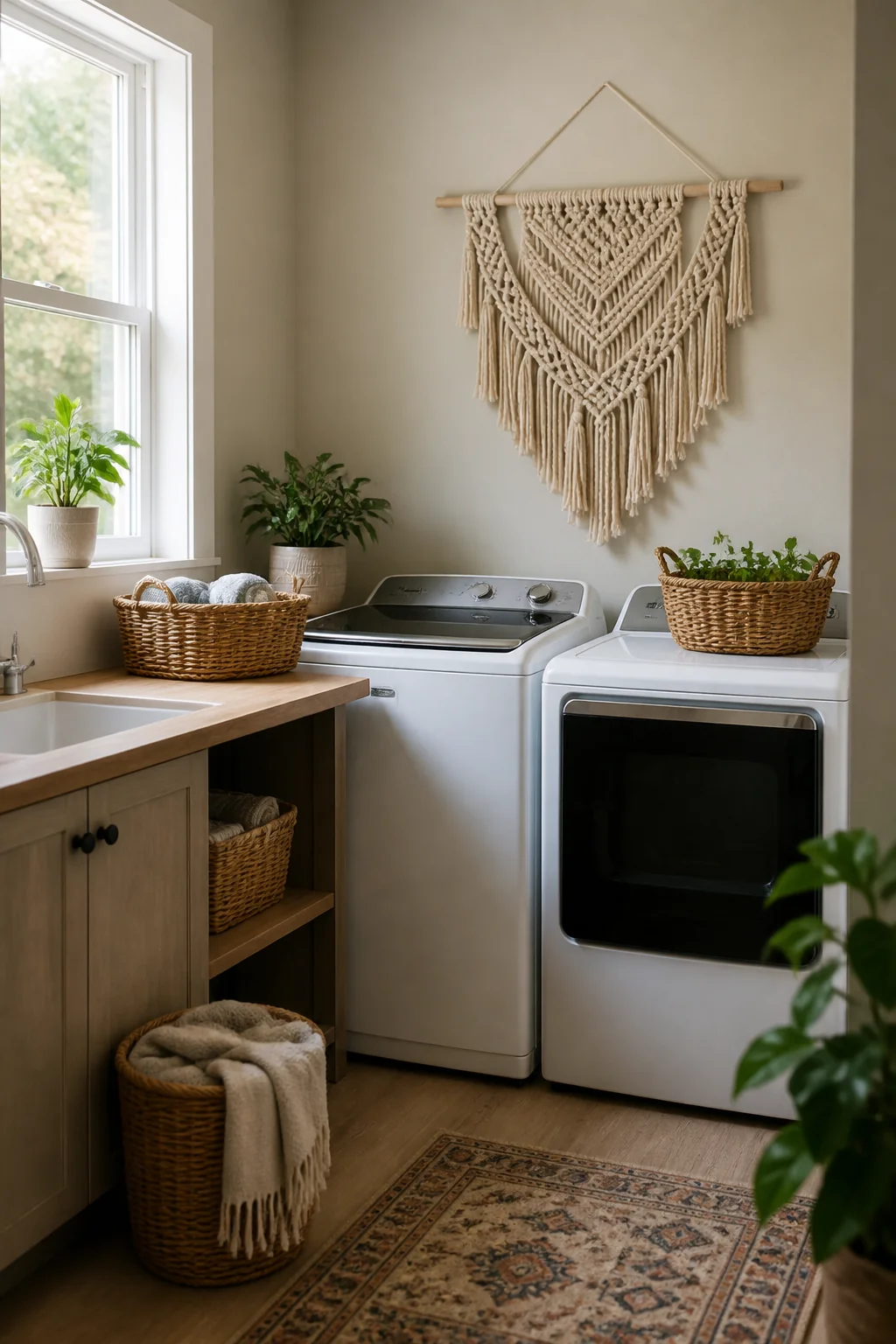
Keep this one small. An 18 to 24 inch cotton macrame panel on a half inch dowel reads as texture rather than a craft project, and two cup hooks set 24 inches apart hold it flat instead of letting it swing. Hang it at eye level, where you'll look while folding. Cotton cord is the catch: it wicks humidity and grabs lint out of the air, so choose a piece you can hand wash in cool water and lay flat to dry, and skip dyed fringe, which bleeds onto the wall behind it. Leave at least 12 inches between the fringe and the back of the dryer, and trim any tail long enough to reach the drum door. Small pieces cost $15 to $30 and take ten minutes to hang. If your dryer vents into the room through an indoor lint trap kit, put fabric on a different wall entirely.
6. Roll towels and display them in an open crate
Rolled towels in an open crate turn a supply into decor. A crate around 18 by 12 by 10 inches holds eight to ten rolled hand towels, or four bath towels. Roll them the way a hotel does: fold in thirds lengthwise, then roll tight from the short end so you end up with a 4 inch cylinder that holds its shape instead of unspooling. Stand them on end and the crate reads as a honeycomb. Two cautions. Rough sawn crates snag terry loops, so run 120 grit sandpaper around the inside edges or line it with a folded cotton dish towel. And only clean, fully dry linens belong in it, since a solid-bottomed crate has no airflow and a slightly damp towel turns musty in about a day. Vintage crates run $15 to $30 at flea markets, and new stained pine ones are around $20.
7. Bring in a small rug for comfort underfoot
Put a 2 by 3 foot rug in front of the machines and the floor stops feeling like a garage. Cotton flatweave beats jute in this particular room, tempting as jute is. Jute sheds fiber that ends up in the machines, stains permanently where detergent drips, and holds damp against a concrete slab for days. A washable cotton flatweave goes straight into the wash when it gets grubby, which it will. Keep the pile under half an inch so a front loader's door still clears it on the swing, and put a thin non-slip pad underneath, since a rug that slides while you're carrying a full basket is a genuine hazard on a hard floor. Budget $30 to $60 for the rug and $10 to $15 for the pad. If your machines sit on pedestals, measure the door's lowest point first; some clear the floor by only 3 inches.
8. Hang a vintage-style mirror to bounce light
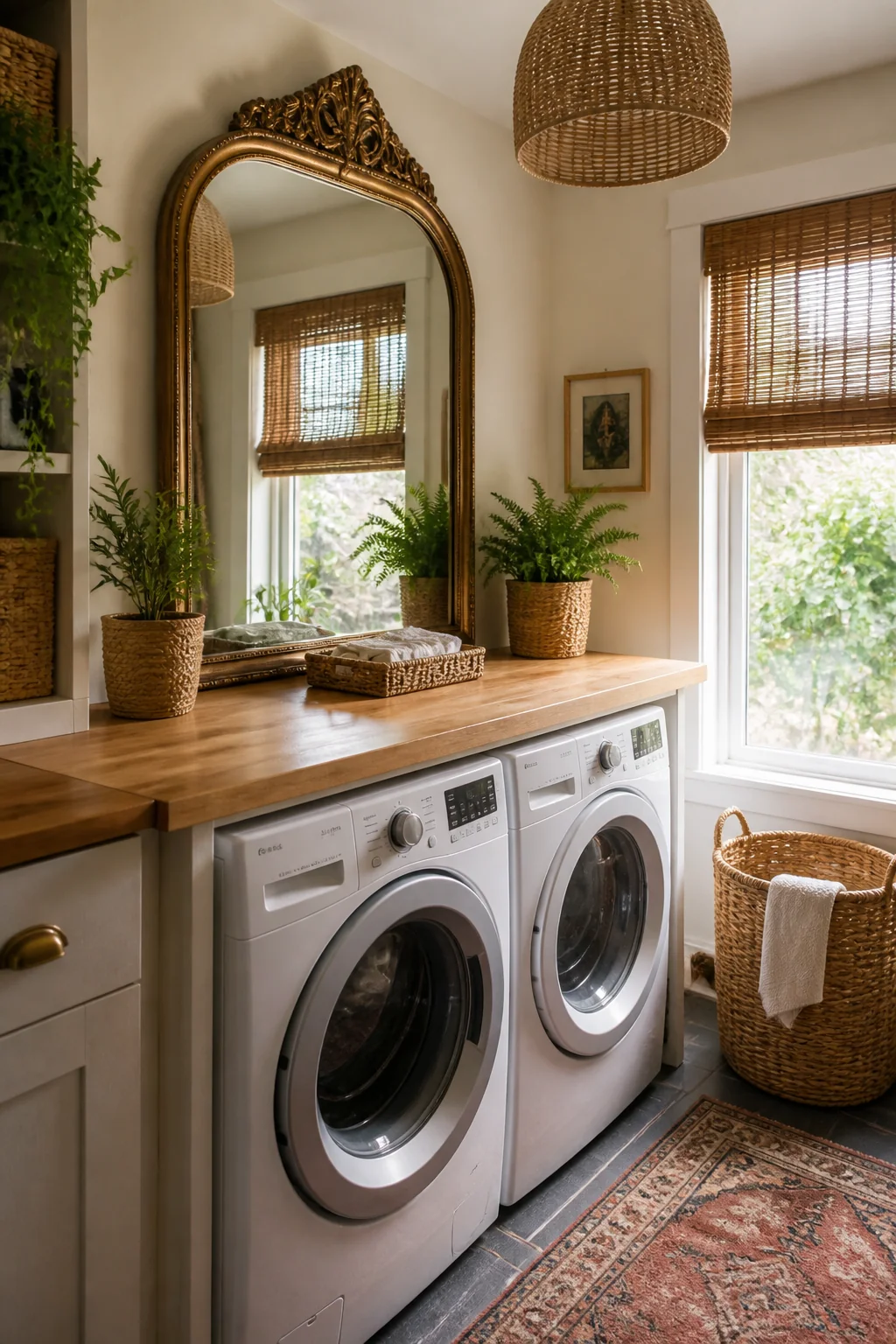
A round rattan-framed mirror, 24 to 30 inches across, pushes light back into a room that rarely has enough. Hang it on the wall opposite the window, or opposite the doorway if there's no window. You will actually use this one, checking a collar or hunting a stain, so let your own face set the height rather than the wall, which puts the center near 57 inches. Mirrors weigh more than they look: a 28 inch one runs 8 to 12 pounds, so use two D-rings spread across the frame with anchors rated for 20 pounds each, which also keeps it hanging level instead of drifting off-square. Expect $30 to $50 for a rattan-wrapped one. Check the back before you buy. Cheap mirrors with cardboard backing and unsealed edges develop black spotting around the rim within a year or two in a humid room, as moisture creeps under the silvering. Look for a sealed or painted backing, and keep it off the wall the dryer vents through.
9. Paint the washer and dryer trim or doors
If your machines are plain white, painting the base panel or the door frame a color pulled from the walls makes them recede into the room. Appliance enamel is not optional here, and neither is the prep. Degrease the metal, scuff it with 220 grit until the gloss is gone, wipe with denatured alcohol, then lay down a bonding primer made for slick surfaces. Ordinary latex over factory appliance enamel peels off in sheets the first time a basket drags past it. Follow with two thin coats of appliance epoxy from a spray can, $8 to $15, and let it cure a full week before you load the machine. Mask the control panel, the door gasket, the vent, and every safety label. Painted metal still chips at the door edge over time, and any paint job can complicate a warranty claim, so on a newer machine consider peel-and-stick vinyl instead.
10. Install floating shelves in natural wood
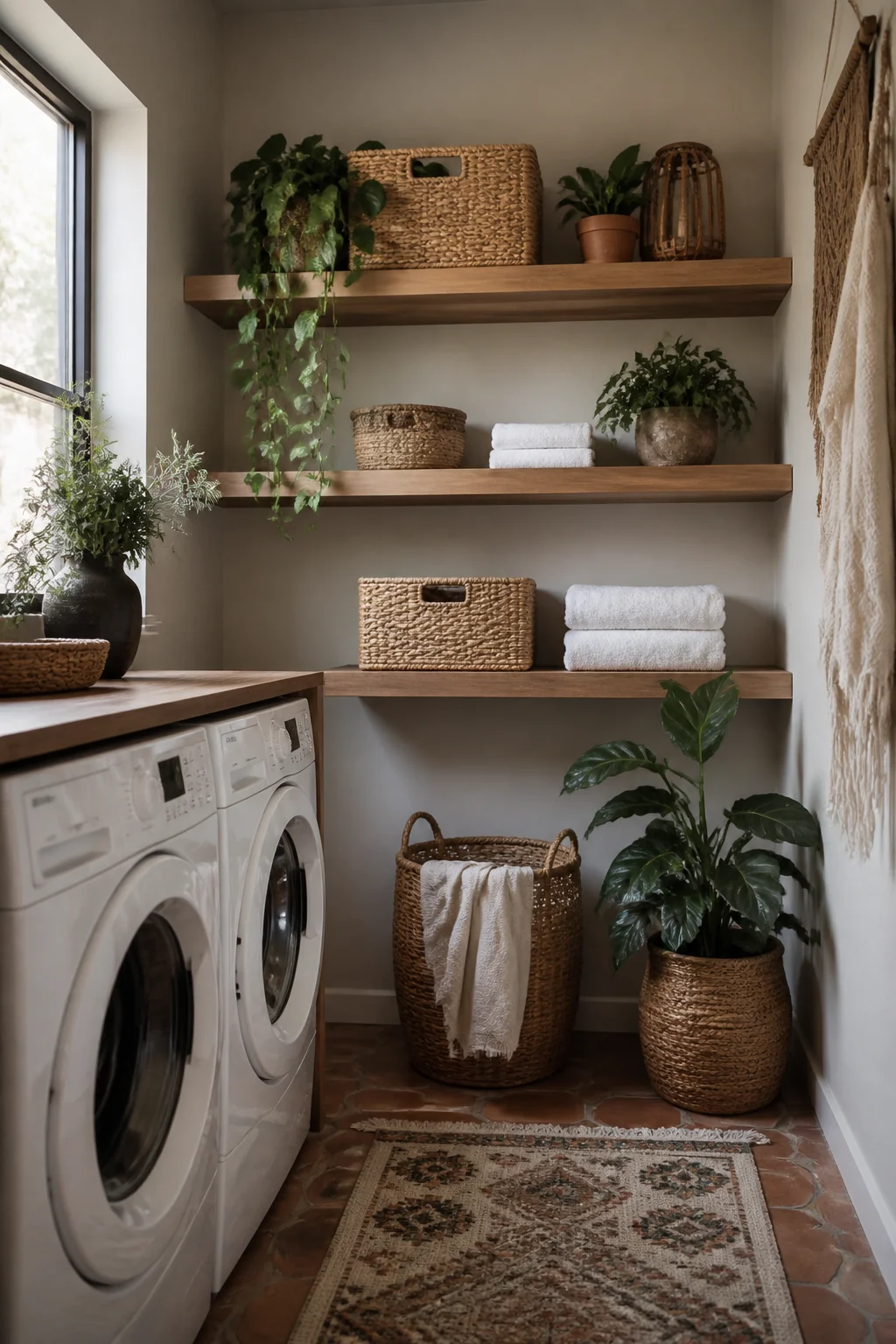
Floating shelves buy display space without giving up a single inch of floor. The bracket is the whole story. A solid shelf 1.5 to 2 inches thick hides a steel rod bracket that has to land in studs, which sit 16 inches on center in most walls. Two studs will carry 40 to 50 pounds on a 24 inch shelf; drywall anchors alone top out around 10 to 15 pounds, which is roughly three full detergent bottles and a plant. Stack them 18 inches apart vertically so a tall bottle and a trailing pothos both fit, and start the lowest one 15 inches above the counter so you can still set a basket down. Eight inches deep is plenty, while 12 inches starts to feel like something you'll knock your head on. Solid oak or ash runs $25 to $45 a shelf. Load heavy things near the wall, where the bracket is stiffest.
11. Add peel-and-stick wallpaper with a geometric or botanical print
Peel-and-stick wallpaper is the renter's version of an accent wall, and it's fussy about what's underneath it. It grips smooth eggshell or satin paint, and slides right back off flat paint, textured orange peel, and bare drywall paper. Wipe the wall with rubbing alcohol first, and if you painted recently, let it cure a full 30 days before sticking anything to it. A standard roll is 2 feet by 16.5 feet, covers about 28 square feet, and costs $35 to $45, so an 8 by 8 foot wall takes three rolls once you allow for pattern matching. Work top down, peeling back a foot of backing at a time and smoothing from the center out with a felt squeegee so bubbles exit at the edge. Overlap seams a quarter inch. Humidity lifts edges near the dryer first, so run a bead of seam adhesive there.
12. Place a woven laundry hamper in the corner
A tall woven hamper does the same job as a plastic bin without announcing itself. Look for 24 to 28 inches tall and 16 to 18 inches across, which swallows roughly one full wash load, about two bushels. Seagrass and water hyacinth are the two materials worth paying for, and both breathe, which is the point: damp towels sealed inside plastic start to smell within hours. Add a removable cotton liner so you can lift the whole load out, carry it two steps to the machine, and wash the liner along with it. Budget $50 to $70. The trade-off is upkeep. Water hyacinth mildews where a soaked towel presses against the weave for a couple of days, so let it air out between loads and wipe the inside with a vinegar solution if it ever smells sour. Tucked in a corner, it also stays clear of the machine door's arc.
13. Hang dried pampas grass in a tall vase
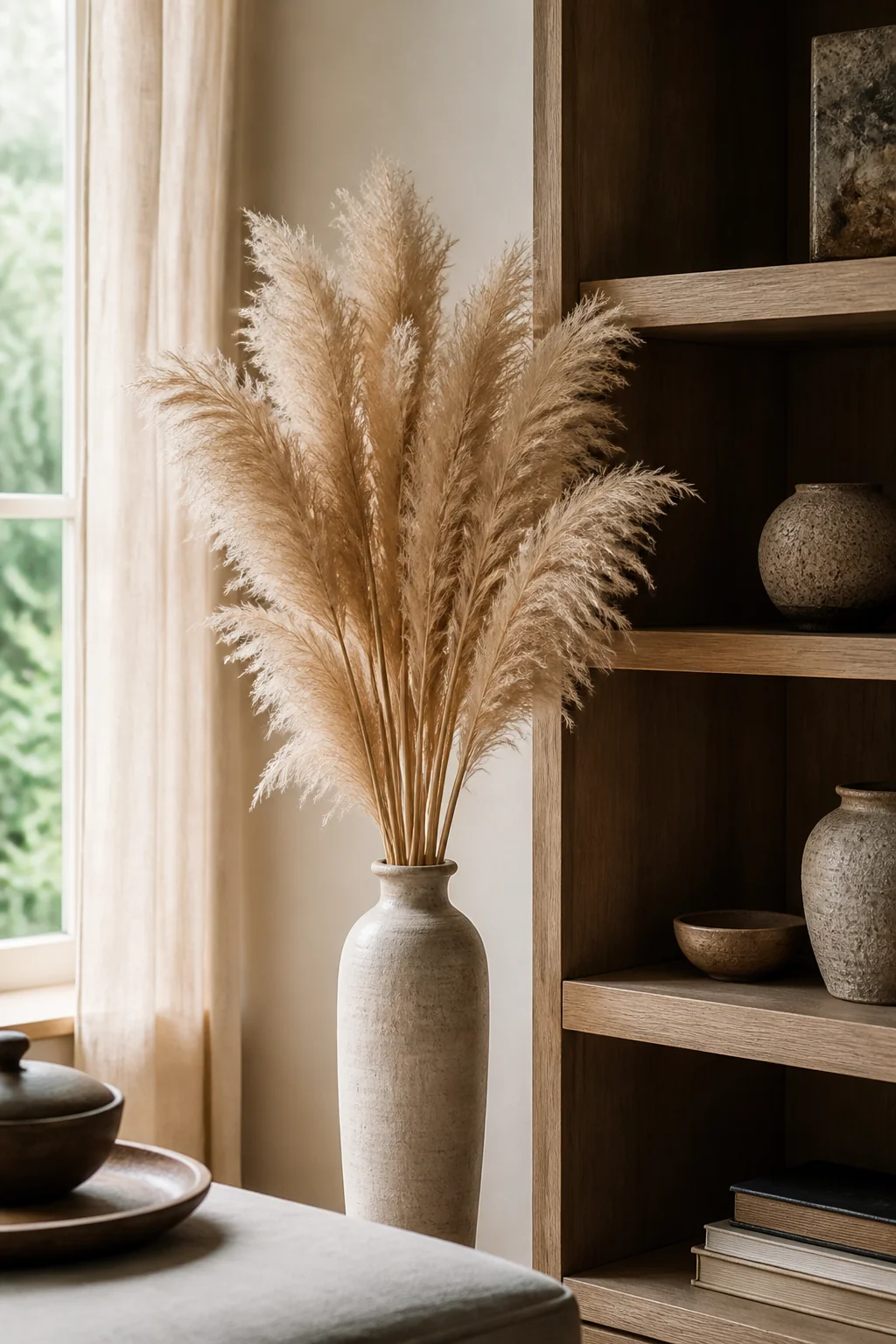
Dried grasses give you the boho silhouette with nothing to water. Proportion is the only rule that matters: about two thirds of the total height should sit above the vase lip, so a 14 inch vase wants stems cut to roughly 28 inches. A narrow neck holds the bundle upright without floral foam or filler. Pampas sheds, and in this room it sheds into open machines, so take each plume outside, mist it with unscented hairspray or a matte clear sealer, and let it dry an hour before it comes back in. Keep the vase out of the dryer's exhaust path and away from the door, where every pass knocks seed heads loose. A bundle costs $10 to $15 and looks good for two or three years before it goes dusty and limp. In a narrow room, dried wheat or bunny tails read the same at a third of the width.
14. Install brass or copper hooks for hanging items
Trading builder-grade hooks for solid brass or copper buys a lot of warmth for very little money. Buy solid, not plated. Brass plating over a zinc core pits and flakes in a room that goes humid twice a week, and it usually shows within a season. Solid brass costs $8 to $12 per hook and patinas to a soft brown instead, which you can either leave alone or bring back with lemon juice and salt on a cloth. Mount them 60 to 66 inches off the floor so a hanging robe clears the ground, and space them 6 to 8 inches apart, or two loaded hooks tangle every time you reach for one. A single number 8 screw in a decent drywall anchor holds about 15 pounds, plenty for a robe or a stack of mesh wash bags. Hit a stud for anything you'll hang soaking wet.
15. Add a linen curtain to hide shelving or storage
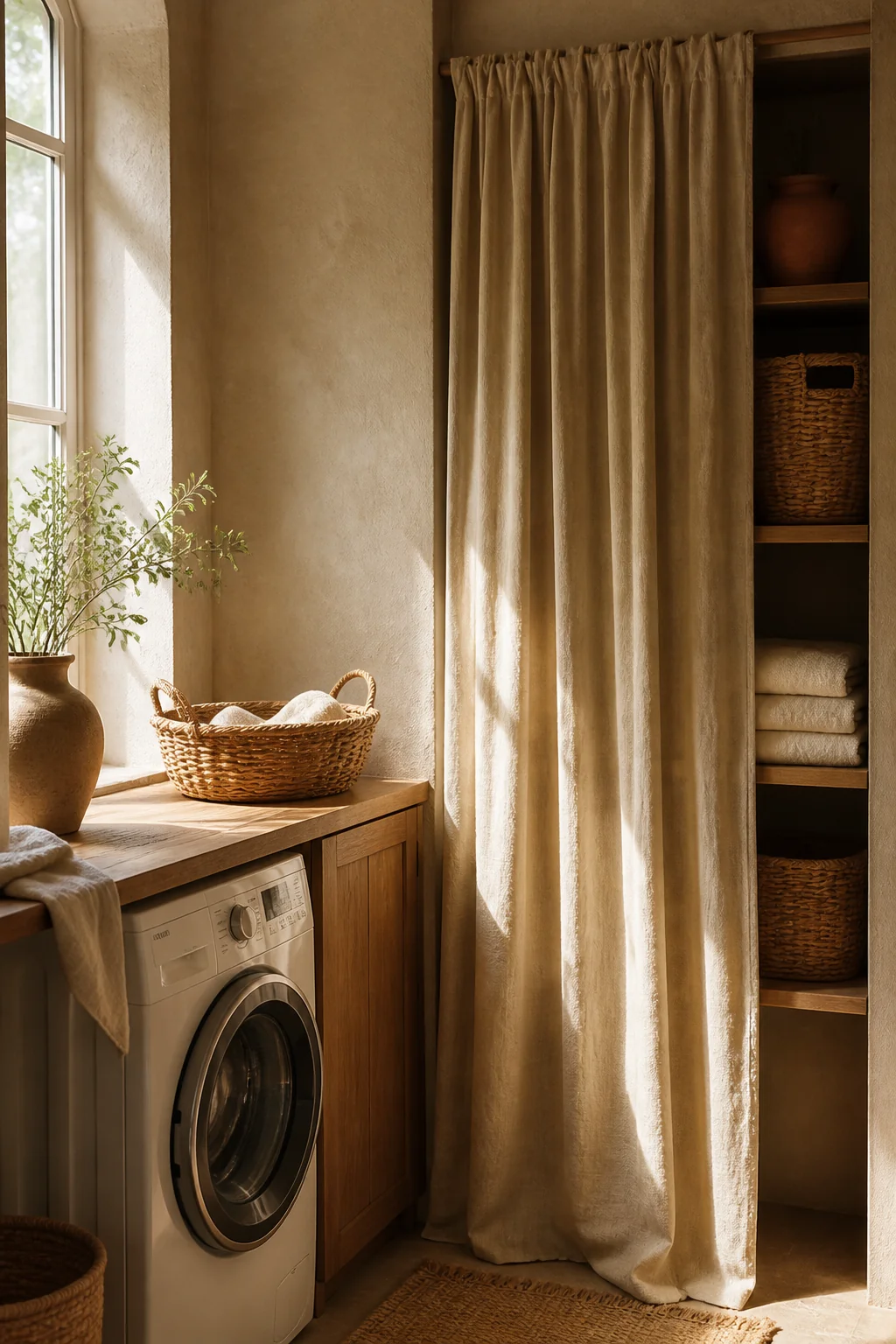
A linen panel on a wooden rod hides open shelving in about fifteen minutes, with no drilling into cabinetry. Measure the opening and buy panels totaling 1.5 to 2 times that width so the fabric still gathers when it's closed; a 40 inch opening wants 60 to 80 inches of linen. Mount the rod 2 to 4 inches above the opening and let the hem stop half an inch above whatever sits below. A 1 3/8 inch wooden rod with two brackets is about $20, and panels run $25 to $40. Weight is what separates a curtain that hangs straight from one that billows every time the dryer door swings: look for medium weight linen around 150 to 190 gsm, and skip sheers, which show every bottle behind them. Linen wrinkles and takes on dryer smells, so wash cold and rehang it damp rather than reaching for the iron.
16. Create a laundry detergent display with vintage bottles
Decanting detergent into glass gets the neon jugs off the shelf, and it works fine as long as you respect what's inside them. Use bottles with a chemical-resistant gasket, and put anything containing bleach or hydrogen peroxide into amber glass or ceramic, since light breaks both down and a clear bottle on an open shelf slowly drains their strength. Never combine two products in one vessel. A 32 ounce bottle costs $8 to $15 and holds about sixteen loads at two tablespoons each. Label every one with the product name and the dose, and keep the original jug with its instructions under the sink. That part isn't decorative housekeeping: a decanted bottle has lost its child-resistant cap and its warning label, which matters in a house with kids or pets. Leave pods in their sealed tub, because loose in a humid room they fuse into one solid block.
17. Hang string lights along one wall
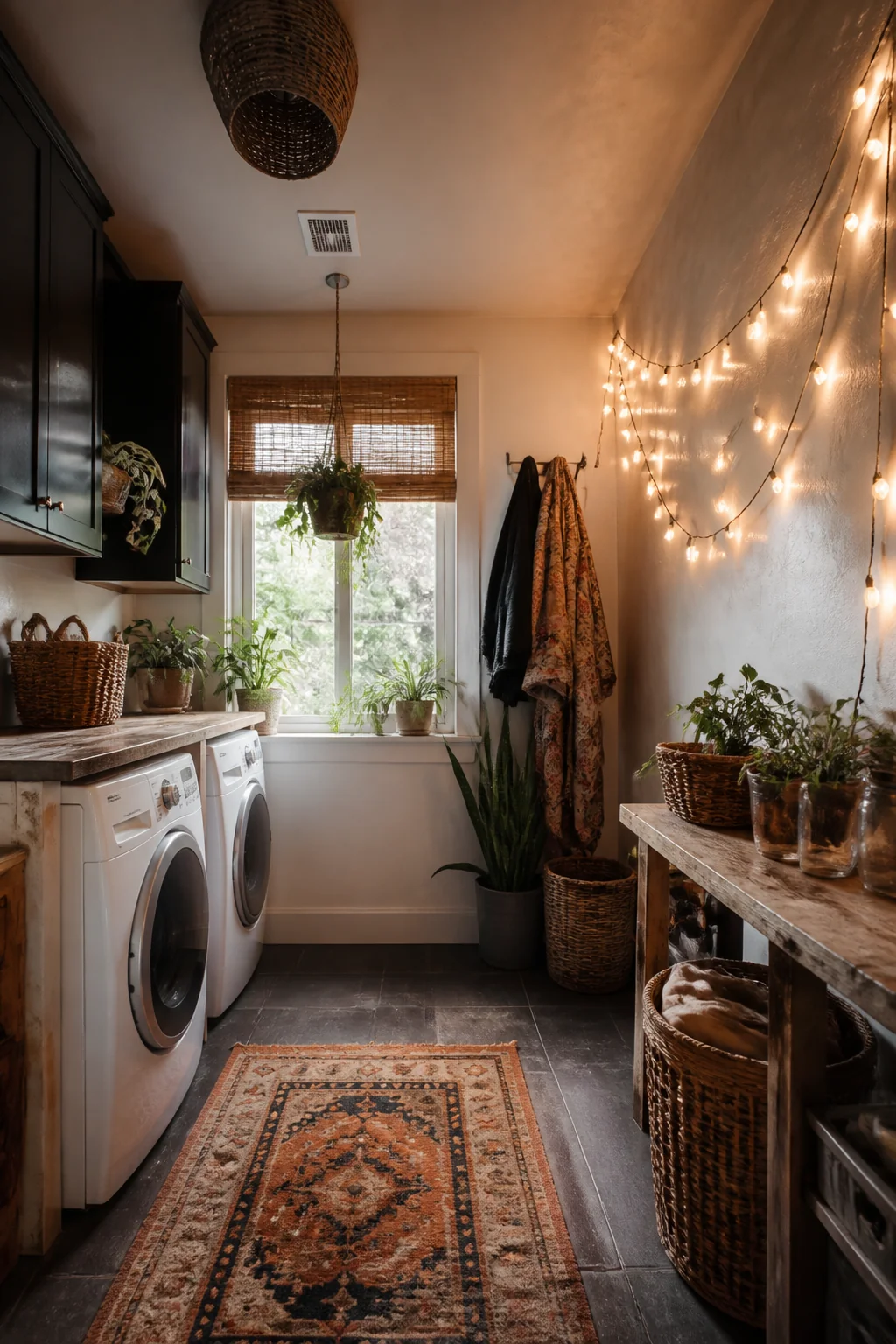
Warm white string lights give the room a glow no ceiling fixture will. Look for plug-in LED strands rated 2400K to 2700K, since anything cooler reads blue and undoes the whole point. A 20 foot strand with about 30 bulbs covers one 8 foot wall with a gentle drape and costs $15 to $25. Mount with adhesive clips every 12 inches so the swags stay even, or run the strand along the top edge of a shelf for a cleaner line. Two rules keep it safe and useful. Keep it well away from the dryer vent and any sink, and plug it into a GFCI outlet rather than running an extension cord across a walkway you carry baskets through. And treat it strictly as mood lighting. You still need 500 to 750 lumens over the folding area to spot a stain on a dark shirt, which a bulb strand will never deliver.
18. Place a small wooden ladder for folded items
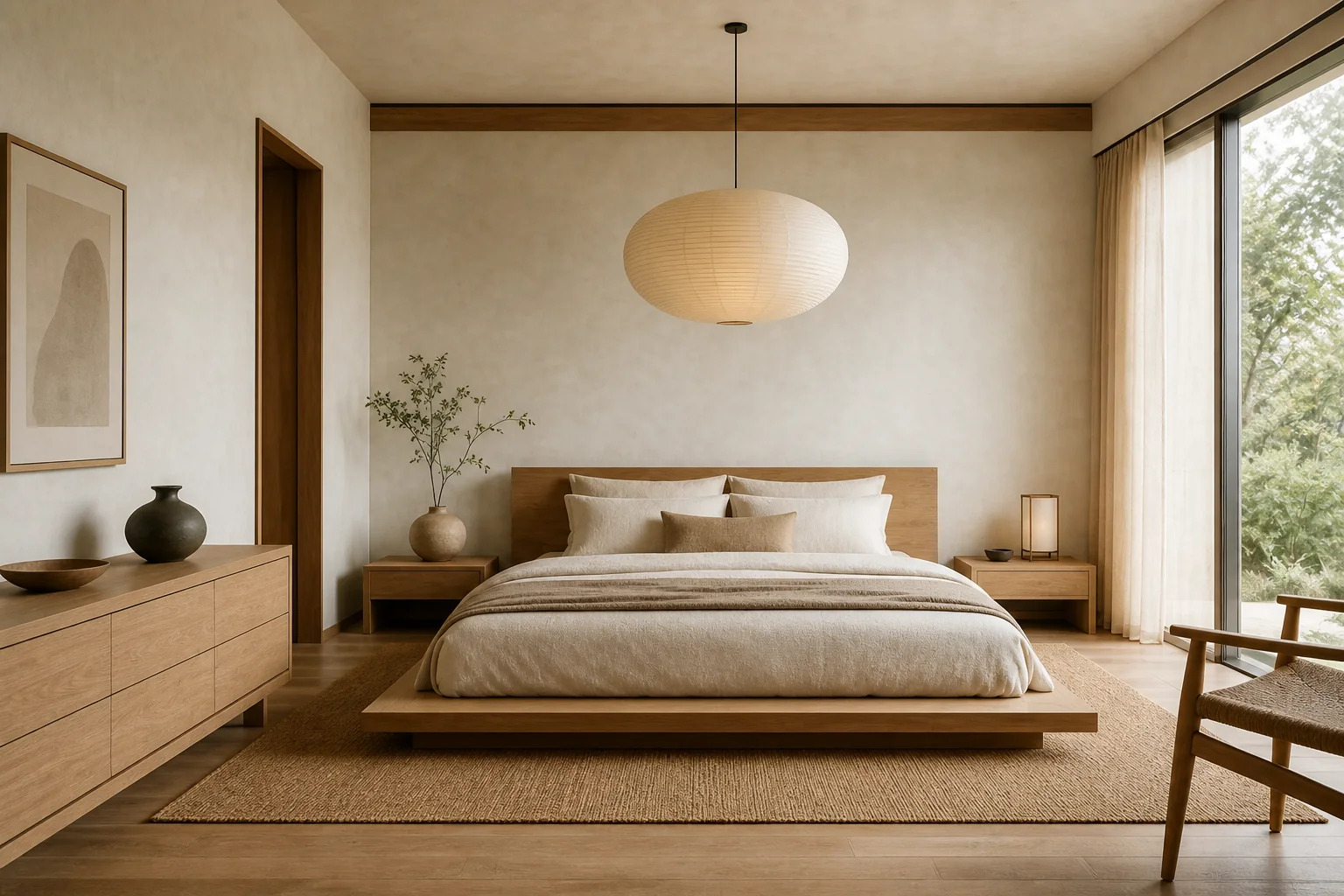
A leaning wooden ladder holds folded blankets and towels where you can see them, and costs nothing in wall hardware. Look for one 60 to 72 inches tall with rungs about 12 inches apart, which gives four or five draping spots. Lean it at 10 to 15 degrees, putting the feet 18 to 20 inches out from the wall, and check that you still have a 30 inch path past it. Only dry, folded linens belong here. A damp towel left against raw pine leaves a mildew ring that won't sand out, and the wood darkens permanently where the fold sits. If there's a toddler in the house, strap the top rail to the wall with a furniture anchor, because a leaning ladder is exactly the shape a two year old wants to climb. New ones run $40 to $80, an unfinished craft store version is $15 to $30, and two 2x2s plus dowels will build one for under $20.
19. Use fabric baskets in matching neutral colors
Fabric bins do the quiet work of hiding everything you don't want on display. Buy them to fit the shelf rather than to fit the picture in your head. The standard 11 by 11 by 11 inch cube overhangs most floating shelves, which are 8 to 10 inches deep, so on a 10 inch shelf look for bins closer to 12 by 8 by 8 inches and the front faces will sit flush. Three or four in cream, tan, or oatmeal, all from the same product line, is what makes a mismatched shelf read as one thing. Construction decides how long they last in a damp room: bins stiffened with cardboard inserts soften and bow inside a year, so choose cotton rope, felt, or canvas with a sewn-in stiffener or a wire rim. Expect $10 to $20 each, and leave an inch between them so one pulls out without dragging its neighbors.
20. Add a small round side table for folding overflow
A round table catches the overflow that never fits on top of the machines. Twenty four inches across is right for a small room, roughly four square feet of surface, enough to lay out one load. Height is where a side table usually fails you. Most sit 22 to 26 inches high, which is fine for staging a basket underneath but forces you to bend over to fold, and that gets old by the third load. If you want to fold on it, look for a taller accent or bistro table at 32 to 34 inches so it sits near the machine tops. Check the floor plan too, since a front loader needs about 30 inches of clear door swing and the table has to live outside that arc. Rattan and cane tops dent under a full basket, so set a 20 inch wood round on top. Expect $60 to $120 for something that holds up.
21. Hang a macrame plant hanger with a trailing succulent
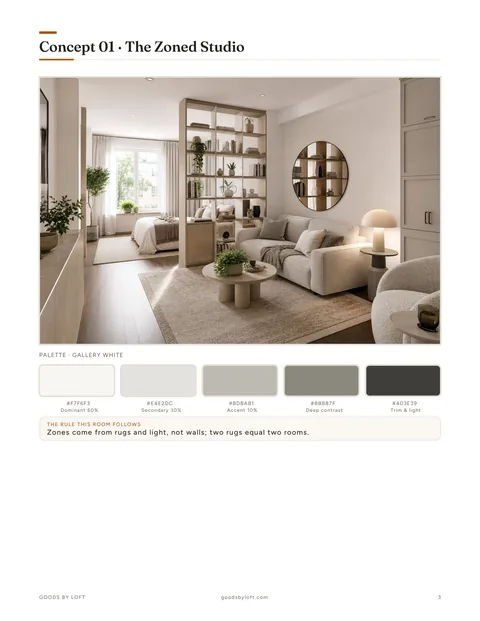
A macrame hanger with something trailing out of it softens a hard corner, but the plant you choose decides whether it survives past the first month. String of pearls is the classic trailing succulent for this look, and it only works if the room has a window. In windowless light it stretches, pales, and drops beads within about two months. Where there's no window, pothos, heartleaf philodendron, and spider plants trail just as well and handle a room that swings humid twice a week, which is close to what they'd pick anyway. Screw the ceiling hook into a joist rather than drywall: a 6 inch pot with wet soil weighs 4 to 8 pounds, and it's the swinging that pulls a plastic anchor out, not the static weight. Use a screw hook rated for 25 pounds or better. Set the pot inside a cache pot or a lipped saucer, since watering a hanging plant over a dryer is a mess you make exactly once. Hanger and plant together run $25 to $40.
22. Paint a wooden cabinet or dresser for closed storage
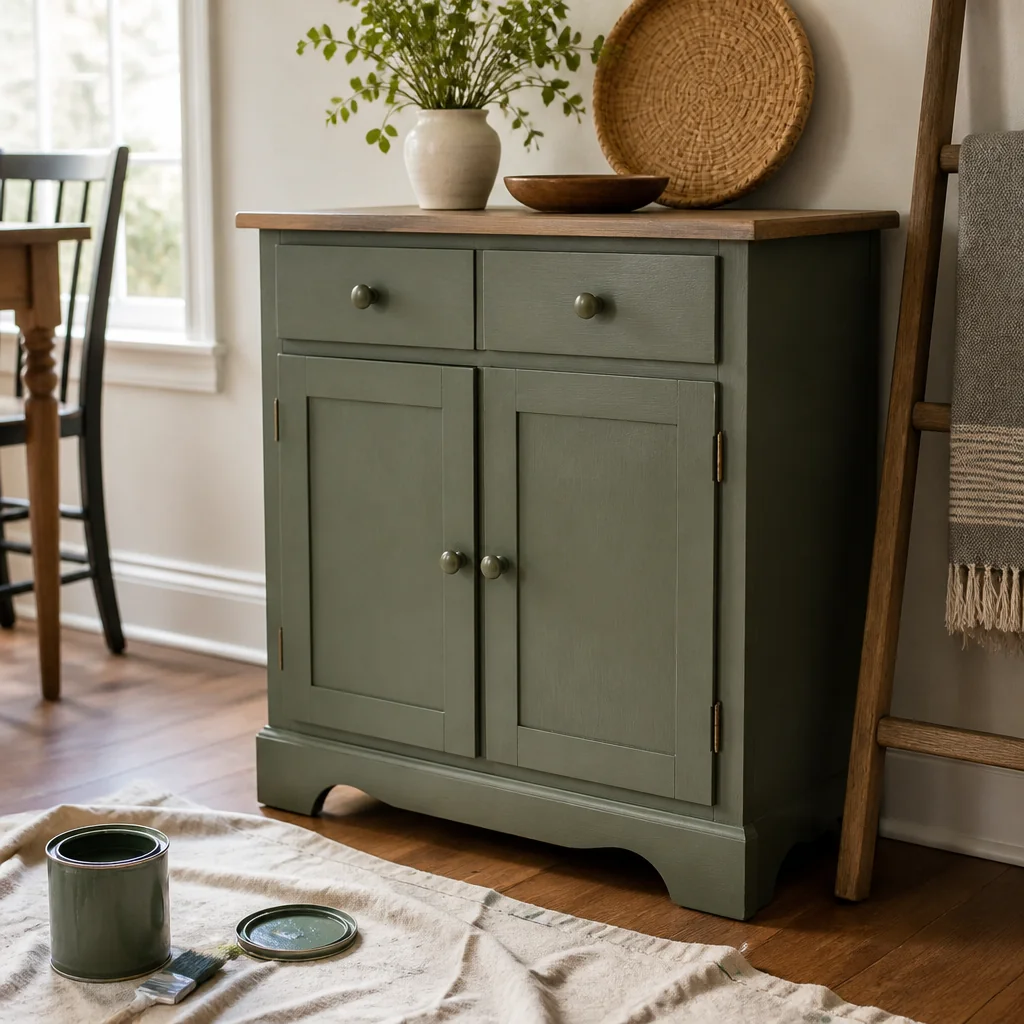
A wooden dresser or small cabinet puts stain removers, spare bulbs, and the ugly bottles behind a door. Measure the gap before you shop: most dressers run 30 to 32 inches tall, a few inches below a 36 inch machine, so it gives you closed storage rather than a continuous counter. Buy solid wood, not laminate over particle board, which swells at the edges and delaminates in a room that gets steamy. Painting it fills a weekend. Pull the drawers, wash with a TSP substitute, sand to 150 grit, then seal old stain with a shellac-based primer, or tannins bleed pink through cream paint within days. Finish with two coats of alkyd enamel, which cures hard enough to survive drawers sliding against it. A used piece runs $30 to $100 plus about $40 in primer and paint. Line the drawers with felt so bottles don't slide every time you open one.
23. Line the walls with botanical prints in wooden frames
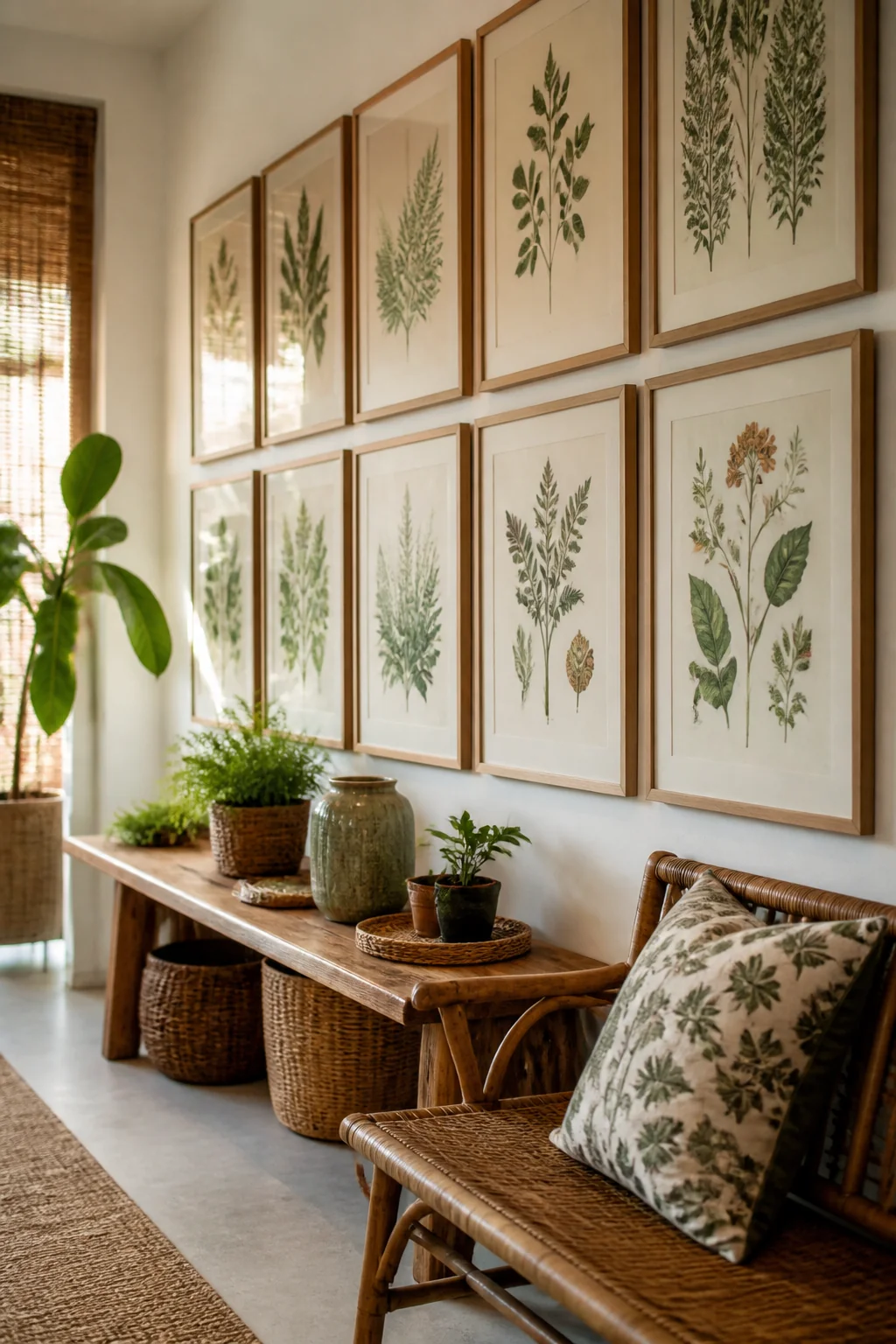
Three to five botanical prints in plain wood or rattan frames give the room a focal wall for very little money. Mix sizes, an 11 by 14 alongside a pair of 8 by 10s, and treat the group as one rectangle. Your eye goes to the middle of that rectangle rather than to any single frame, so the middle is the thing to place, at 57 to 60 inches off the floor with 2 to 3 inches between frames. Cut kraft paper templates the size of each frame and tape them up first, because moving tape beats filling holes. Digital prints on Etsy cost $5 to $15 and frames run $8 to $20. Plan for the humidity. Paper pressed flat against glass ripples in a damp room and can eventually stick to it, so use a mat to hold the print off the glass, or print on heavier card stock. Hang the group on a wall away from the dryer rather than directly above it.
24. Use a vintage-style soap dispenser for detergent
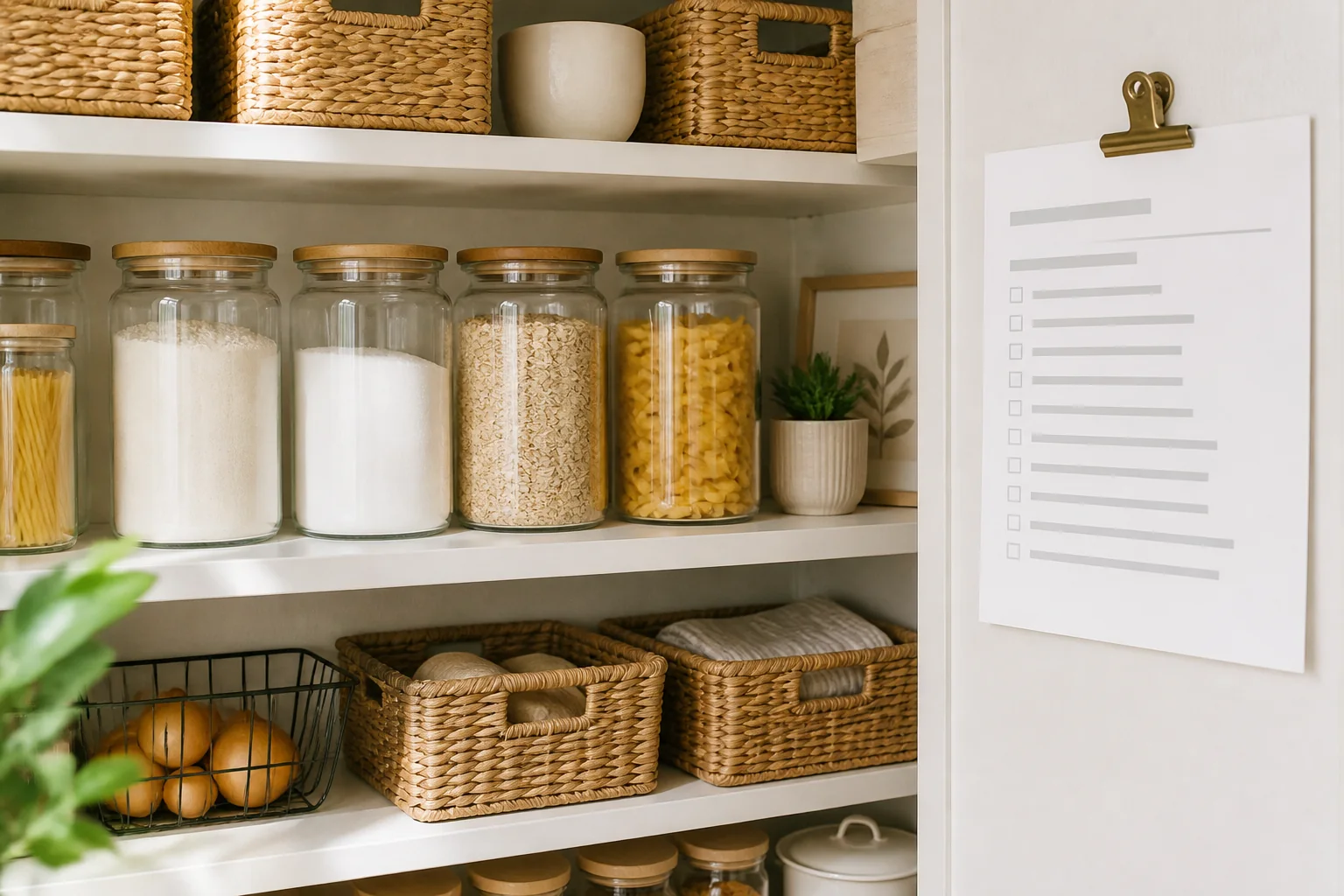
A ceramic or glass dispenser beats a jug with a dried crust down one side, but the pump is what decides whether you keep using it. A standard soap pump is built for thin hand wash and stalls on thick HE detergent within a week, usually with the plunger stuck halfway down. Look for a wide-bore lotion pump instead, or skip the pump entirely and use a tilt jar with a spout, which pours a measured glug and has nothing to clog. A 16 ounce dispenser holds about eight loads at two tablespoons each, so plan on a weekly refill. Expect $10 to $20. Rinse the nozzle under hot water at every refill, because detergent dries into a plug at the tip and then sprays sideways across the shelf. Keep one product per dispenser, and mark the dose on the underside if you'd rather not see a label.
25. Hang a woven wall hanging as your main focal point
This is the piece the rest of the room arranges itself around, so scale it properly. A hanging looks tied to whatever sits under it only while it holds close to two thirds of that width, and the tie goes slack below that, which puts you at 24 to 30 inches over a table or a pair of machines, with the bottom edge 6 to 10 inches above the surface. Woven wool with loop pile and raw roving carries more visual weight than knotted cotton from across the room, which is exactly what a focal point needs to do. A 30 inch wool piece can weigh 3 to 5 pounds, so hang the dowel on two cup hooks in anchors rated for 20 pounds rather than one nail in the middle. Machine-made pieces run $30 to $60, handwoven $100 to $150. Hang it above a folding table or on the wall you face from the doorway, never directly over the washer, where vibration walks it crooked and lint settles deep into the pile.
26. Add a small pouf or ottoman for sitting while you fold
A pouf gives you somewhere to sit through the tedious part, which is pairing socks. Seat height is the spec that matters: 16 to 18 inches is a comfortable perch, and anything under 14 inches puts your knees above your hips and gets uncomfortable within minutes. Measure the floor before buying, because a 20 inch pouf still has to leave a 30 inch path to the machines. Jute and cotton poufs cost $35 to $50 filled, while an unfilled cover is around $25 and takes 8 to 10 pounds of stuffing, another $20 and an hour of stuffing it by hand. Woven floor pieces collect lint and dust in the one room that manufactures both, so look for a removable, washable cover. The thing a pouf won't do is double as a step stool. Bean or shredded foam fill compresses under a standing adult and rolls out from under you.
27. Install a wooden rod and hang linen towels
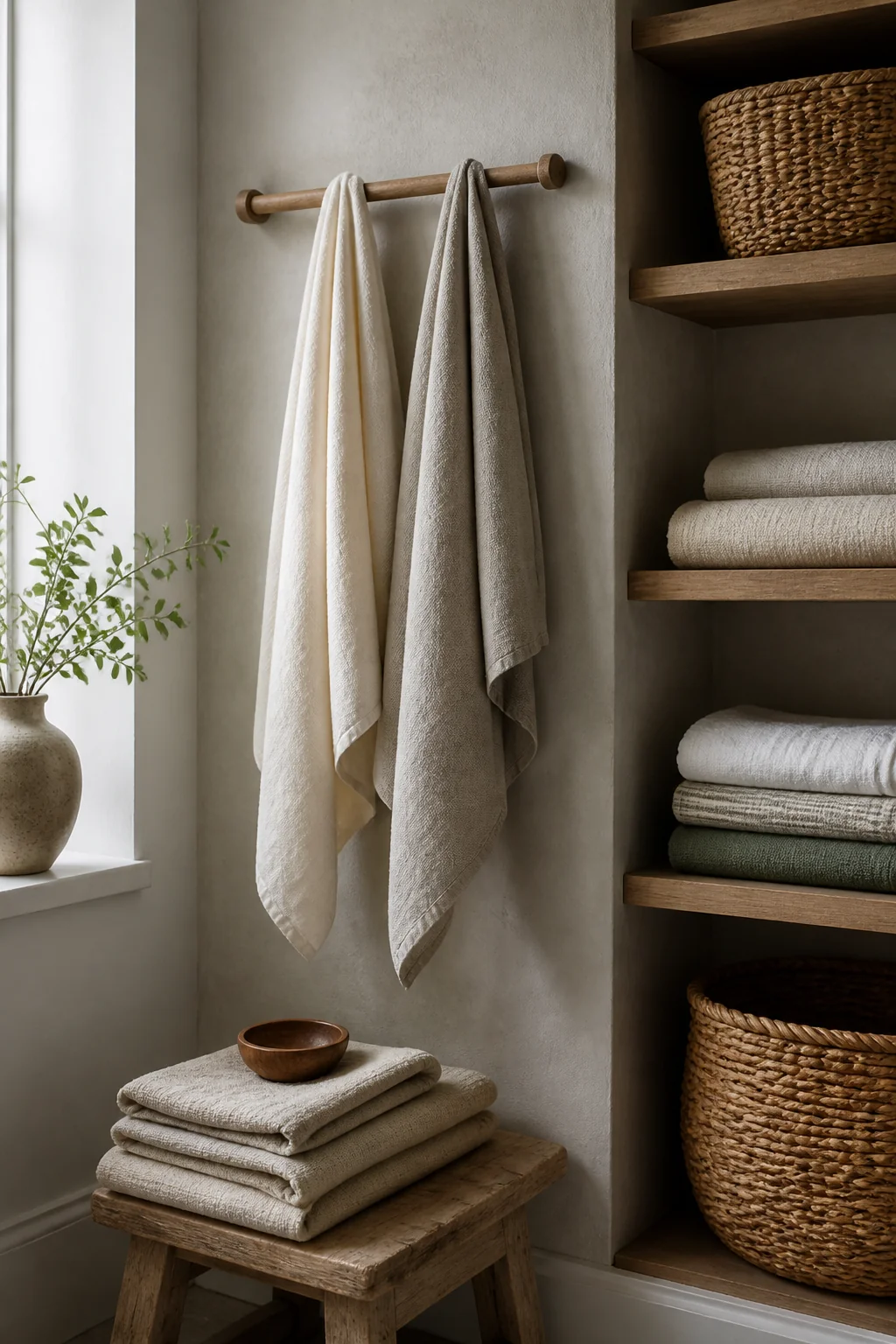
A wooden rod with towels on hangers turns a blank wall into something like a linen closet with the door taken off. Use a 1 inch hardwood dowel in two closet flanges, mounted 12 inches out from the wall so the hangers hang square, and 68 to 72 inches off the floor so the hems clear the counter. A 36 inch span is about the limit before a 1 inch dowel visibly bows under eight loaded hangers, so add a center support past that. Wooden hangers cost $1 to $3 each. The rod earns its keep twice over, since it's also where hand-washed items drip dry overnight. Seal the dowel and the hangers with a clear finish first. Raw wood leaches tannin into anything wet resting against it, and a tan stripe across a white linen towel does not wash out.
28. Create labels for all your storage containers
Labels are what stop a pretty shelf sliding back into a junk drawer within a month. Match the label to the surface it's going on. Vinyl peels off fabric bins as soon as they flex, so use kraft tags on twine or a clip-on frame that hooks over the rim. Glass and ceramic take waterproof vinyl or a chalk marker that survives a wipe-down. A label maker runs $20 to $40, with waterproof tape cartridges around $12 a roll. Pick one font, set it in all caps at least half an inch tall, and you'll read it from the doorway instead of at arm's length. On anything you decanted, write the product name and the dose per load, not just the word Detergent. If somebody else runs a wash, or a child gets into the cabinet, the name of the actual product is the information that counts.
29. Place a small wooden bench for sorting laundry
A wooden bench along the wall works harder than it looks. A 36 by 14 inch bench with an 18 inch seat gives you a spot to sit and sort, and if the apron leaves roughly 14 inches of clear space underneath, it holds three standard laundry baskets so the sorting happens off the floor. What it will not do is serve as a folding surface. Eighteen inches means bending double, and folding wants something at 34 to 36 inches. Used benches run $40 to $100. If you're buying an old painted one, anything made before 1978 may carry lead paint, so either leave the finish intact and seal it with a clear coat, or test it before you take sandpaper to anything. Add felt pads to the feet so it doesn't score the floor when you drag it out to sweep behind.
30. Hang woven wall organizers with pockets
A pocketed organizer keeps the small stuff visible: stain pens, lint rollers, spare buttons, and the coins that come out of jeans. Hang it on the back of the door with an over-the-door bracket sized for a standard 1 3/8 inch interior door, or mount it flat on the wall beside the machines at about 50 inches, where you can reach in without looking. Four to six pockets is the useful range, and each one holds a pound or two before it starts to droop. Cotton canvas and macrame both work, though canvas cleans up better. Expect $15 to $25. The failure mode is predictable enough to shop against: pockets with no stiffened top edge or dowel spine curl inward and swallow whatever's inside, and within a few weeks you stop reaching for it. Empty and shake it out monthly, since lint gathers in the bottom seams.
31. Add ambient lighting with a small table lamp
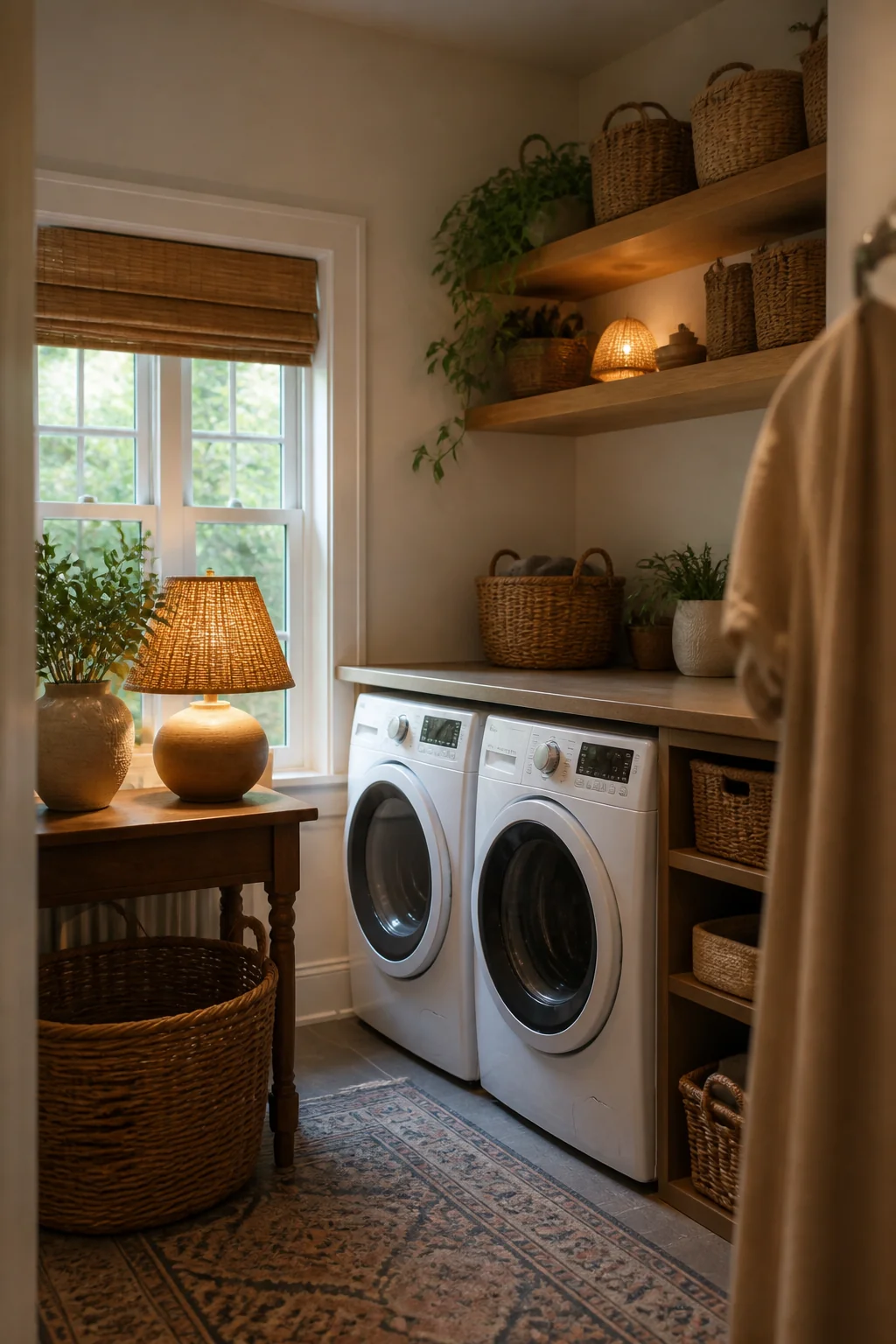
A small lamp on a shelf gives the room a second, lower light source, which is most of what separates a finished space from an institutional one. Use a warm 2700K bulb in the 450 to 800 lumen range, since this lamp is for atmosphere and not for spotting a stain. Ceramic and rattan bases run $25 to $40. Set it so the bottom of the shade sits near eye level when you're seated, usually a shelf 40 to 48 inches up. The real constraint is the cord: you want an outlet within 6 feet and nothing crossing the floor between the shelf and the machines, where a basket corner will catch it. A cord cover or an adhesive channel along the shelf edge handles the rest. Skip paper and untreated fabric shades, which take on moisture and go wavy at the seams. On a plug-in timer, the room greets you already lit.
Save the full guide
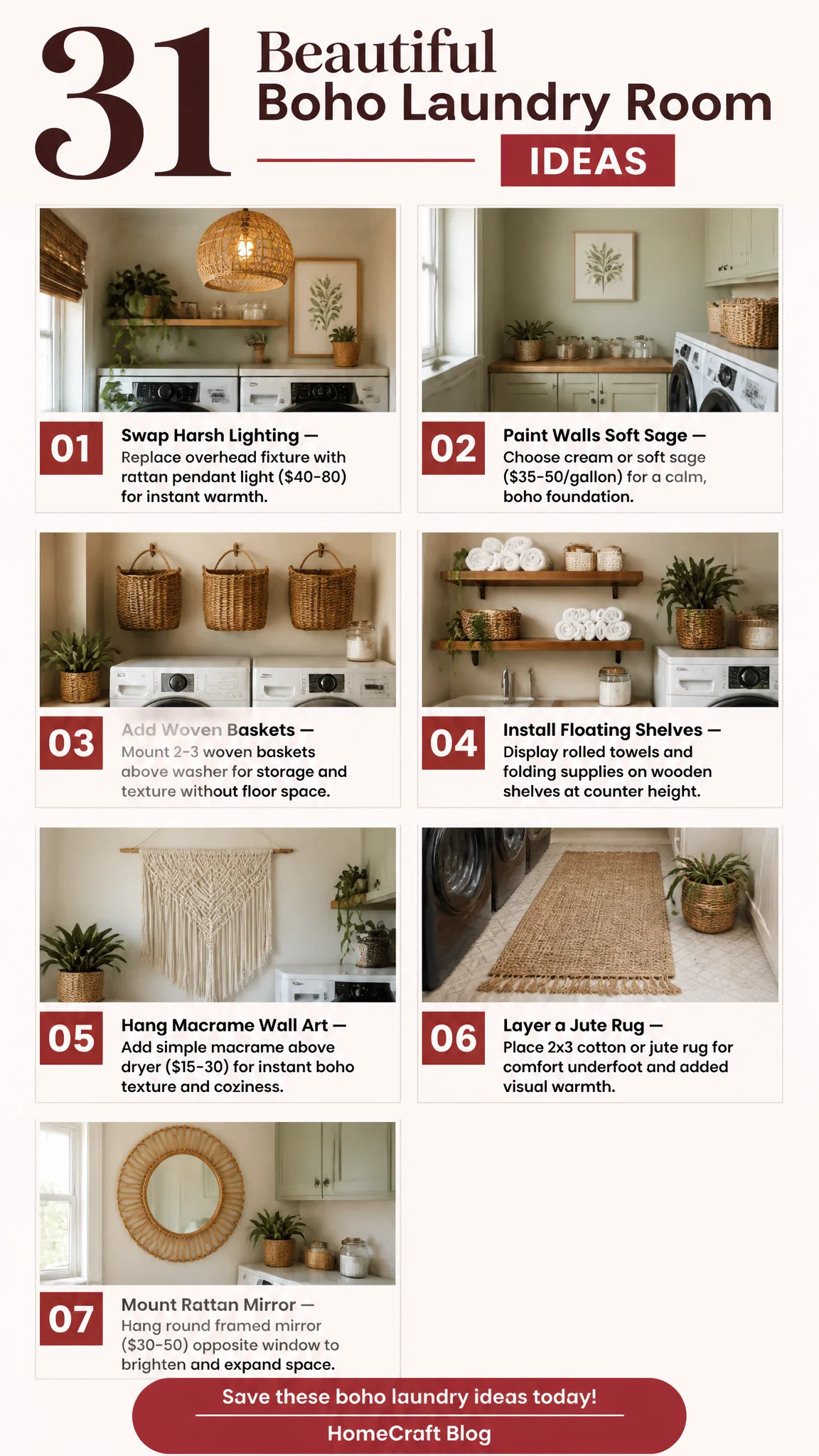
Everything on this list has to survive the same two things: heat off the back of the dryer and the humidity that follows every wash. That's the filter worth running purchases through. Sealed wood, washable cotton, solid brass, and a mirror with a properly sealed backing will still look right in three years. Cardboard-stiffened bins, plated hardware, jute near a slab, and raw pine under damp towels will not, and a room full of things quietly going wrong is worse than a plain room. If only one change is happening, make it the light. A warm 2700K bulb in a woven shade does more for how this room feels at 9pm on a Sunday than any basket on the wall.
Ideas fade by Friday. A plan finishes the room.
You just read a full guide to your laundry room. Saving ideas will not change it; a plan will. The Home Decor Collection is every planning tool we make, for every room in the house, in one download, so the after photos below stop being other people's rooms.
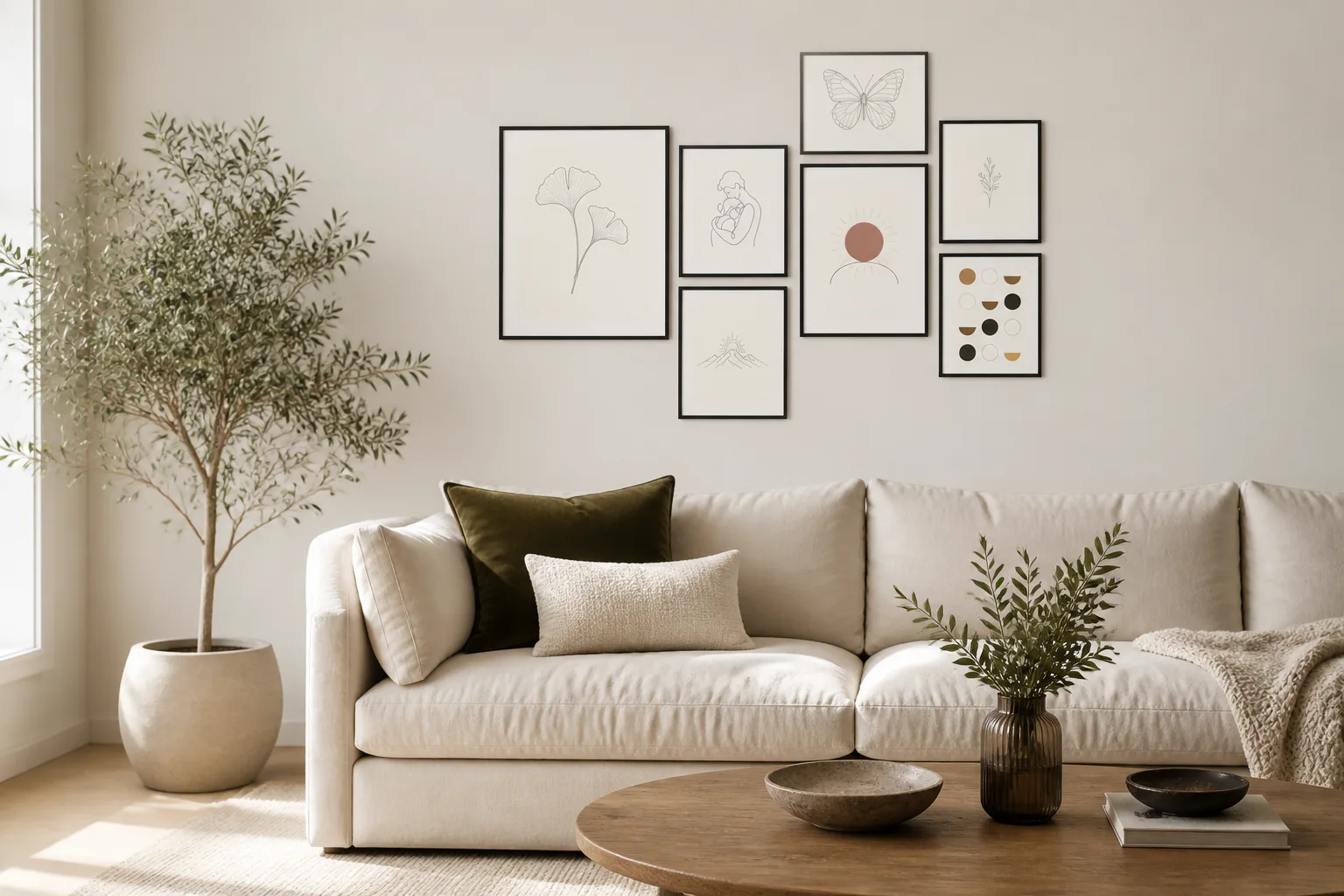
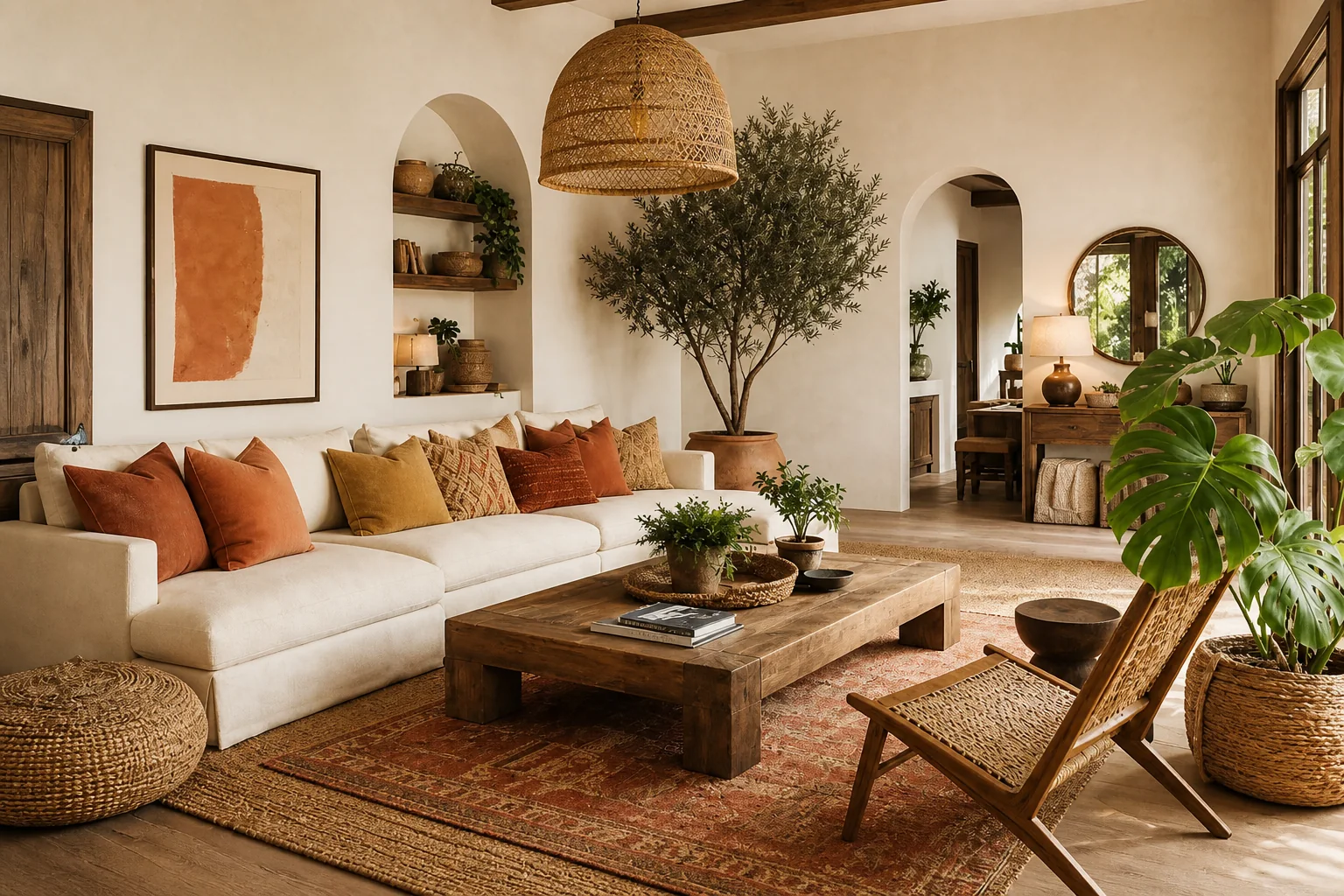
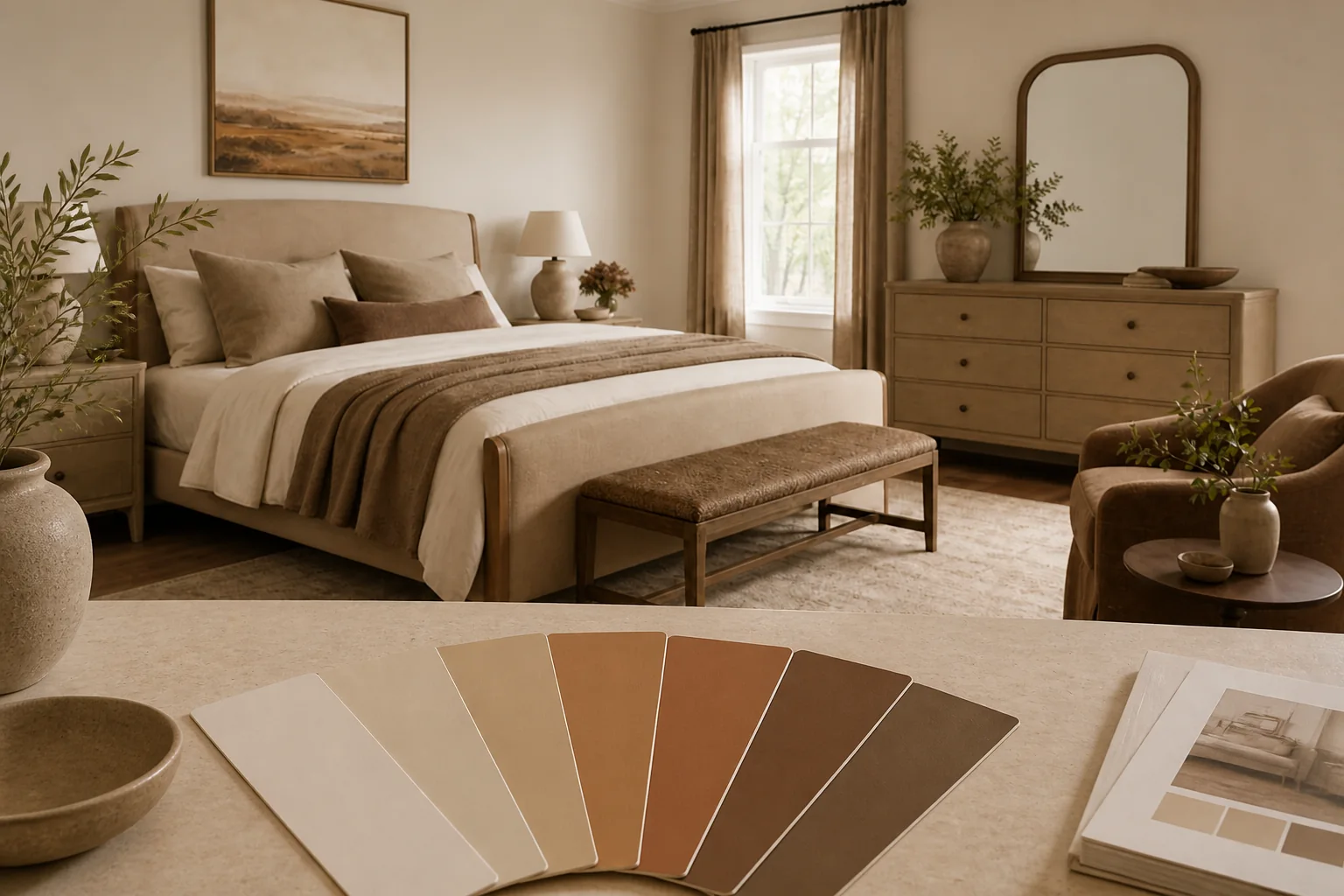
- Six room Style Kits, each with layout, palette and shopping list$114
- The Gallery Wall Studio: 200 prints + 15 measured layouts$29
- The Room Makeover System: 40 solved room layouts + workbook$29
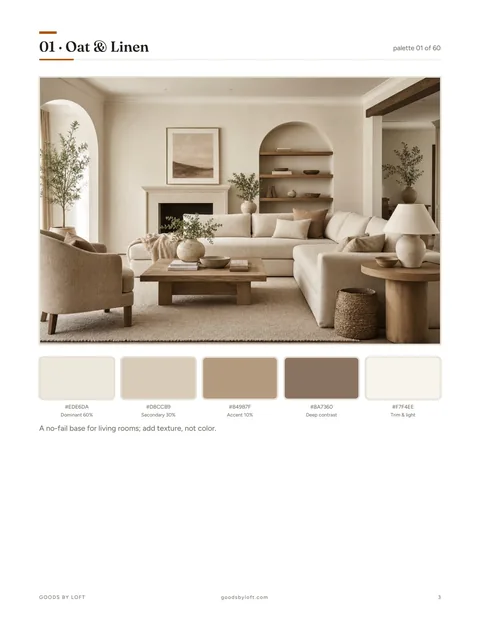
- The Color Palette Handbook: 60 palettes shown in real rooms$19
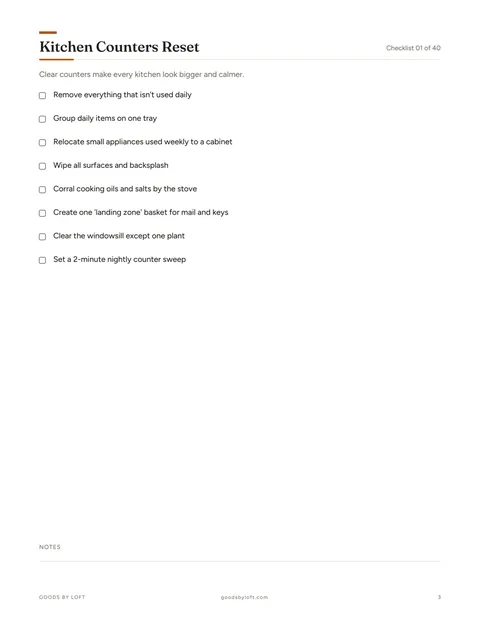
- The Whole-Home Reset: 40 printable organizing checklists$19
- The Decorator's Cheat Sheets: the 40 measurements that matter$9
- All eleven products, bought separately
$219$97
A single hour with an interior designer costs more than the entire Collection, and this one keeps answering for every room you will ever decorate. Free updates included as the products grow. And if it is not for you, the 14 day money back promise means you simply get a refund.