How to Style Your Outdoor Space for Labor Day Like a Designer
Style your patio for Labor Day using real design principles: rug sizing, string light height, seating clearances, and a two-color palette that holds together.
This post contains affiliate links. As an Amazon Associate I earn from qualifying purchases. If you buy through our links, we may earn a commission at no extra cost to you.
Most patios in late August look exactly the same: a few sad planters, some lawn chairs that don't match, maybe a deflated pool float from June. Between the heat, the pollen, and summer winding down, it feels pointless to bother, which is exactly when a little styling makes the biggest difference.
Labor Day is a good moment for outdoor decorating: there's warm weather ahead, a real reason to gather people, and enough time for changes that hold up through September and October rather than one weekend. Here's how to plan it properly instead of throwing something together an hour before people arrive.
Start With a Real Outdoor Rug
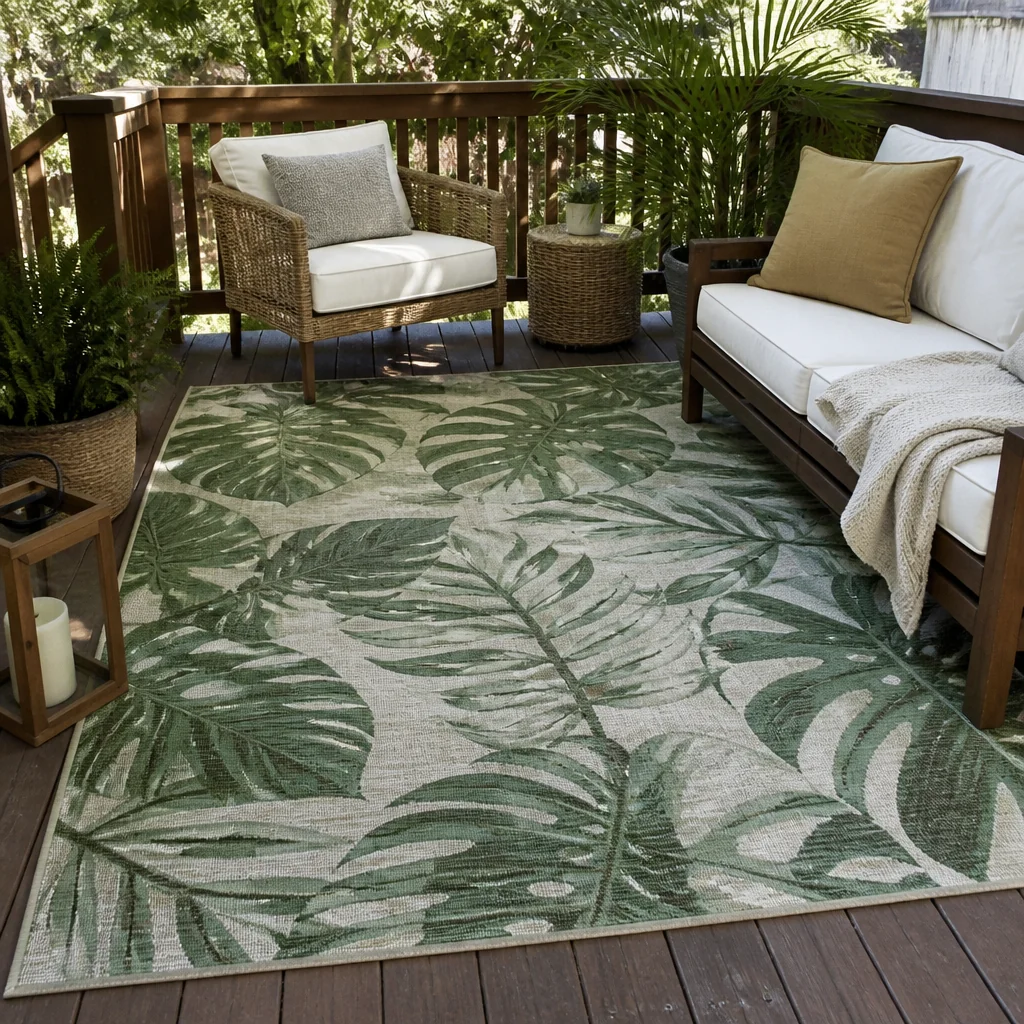
An outdoor rug is the one thing that grounds a whole patio. It defines the seating zone, adds color and pattern, and makes the space read as intentional instead of accidental. The conventional rule is to tuck it fully under the furniture, but there's a simpler test: the front legs of every chair should land on the rug. If they're floating off the edge, the rug is too small and the grouping falls apart visually.
A 5x8 covers most standard patios and runs $80 to $200 depending on material. If your seating group spans more than about 8 feet, go up to an 8x10 rather than shrinking the furniture to fit. Skip beige. A striped or geometric print reads as designed, and solids work as long as they're warm and saturated: terracotta, navy, forest green. Pale gray and cream disappear against concrete and make everything look temporary.
Polypropylene and wool blends are the two materials worth buying. Polypropylene shrugs off rain and UV, hoses down, and dries fast if you stand it on edge. The thing it won't survive is sitting flat and wet under a heavy planter all season, which is how you end up with a bleached rectangle by October. Put the rug down first, then the furniture.
Lights Are Your Biggest Design Tool
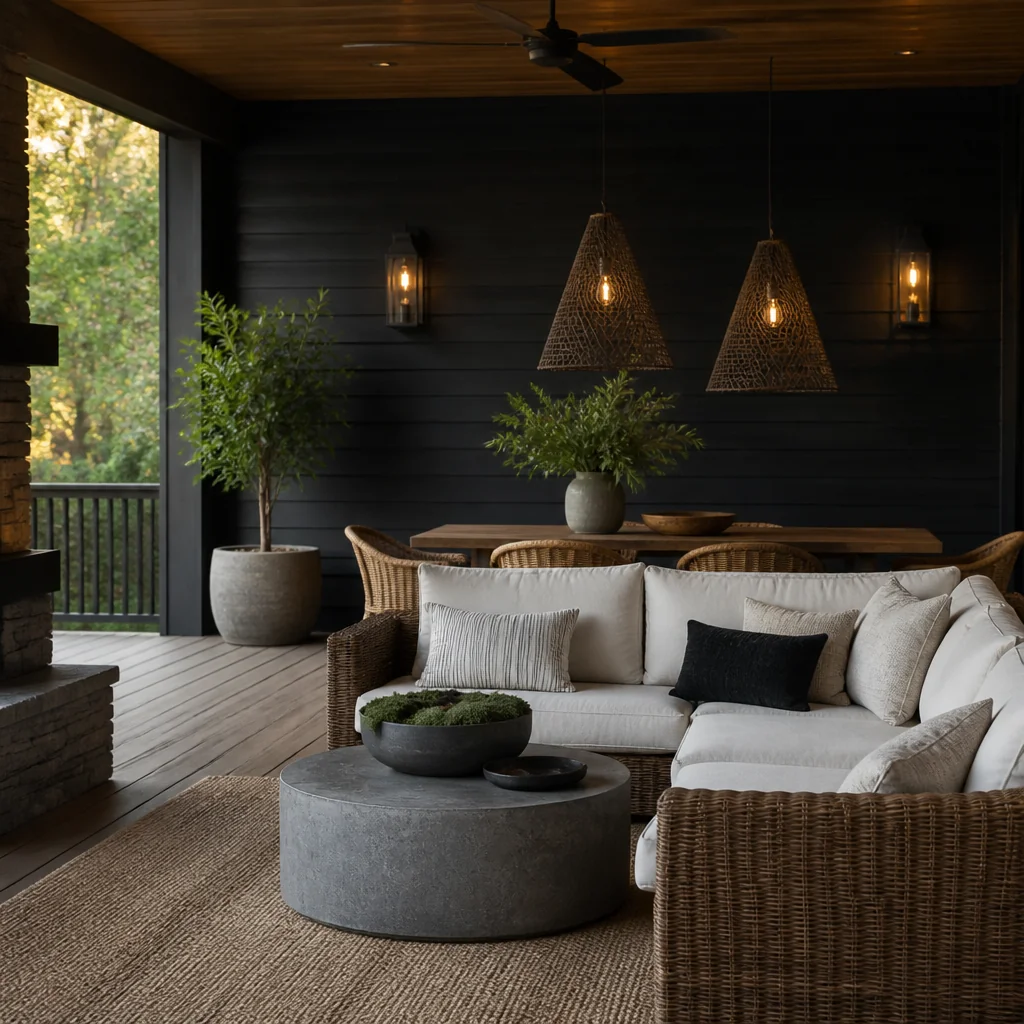
String lights, lanterns, or a pair of uplights finish a patio in a way nothing else does. They're not only functional. They're what turns a daytime space into somewhere people want to sit after the sun drops.
Here's where it usually goes wrong: the lights get hung too high and too sparse. Run string lights about 7 feet off the ground in a tight grid or a zigzag, so the bulbs sit just above head height and throw light onto faces instead of onto the tops of heads. One or two strands look thin. Three to five, depending on deck size, read as layered. Solar Edison-style strands cost $30 to $50 for 20 feet, but the panel needs direct afternoon sun to hold a charge past bedtime. On a shaded patio, spend the extra on a plug-in strand and a $15 outdoor-rated extension cord instead.
Paper or metal lanterns are the alternative if string lights feel too casual for your setup. Hang them at staggered heights on clear fishing line, which disappears at night. Keep any real flame down inside a hurricane glass; an open candle blows out in the lightest breeze and then you're relighting it all evening.
Seating That Invites People to Stay
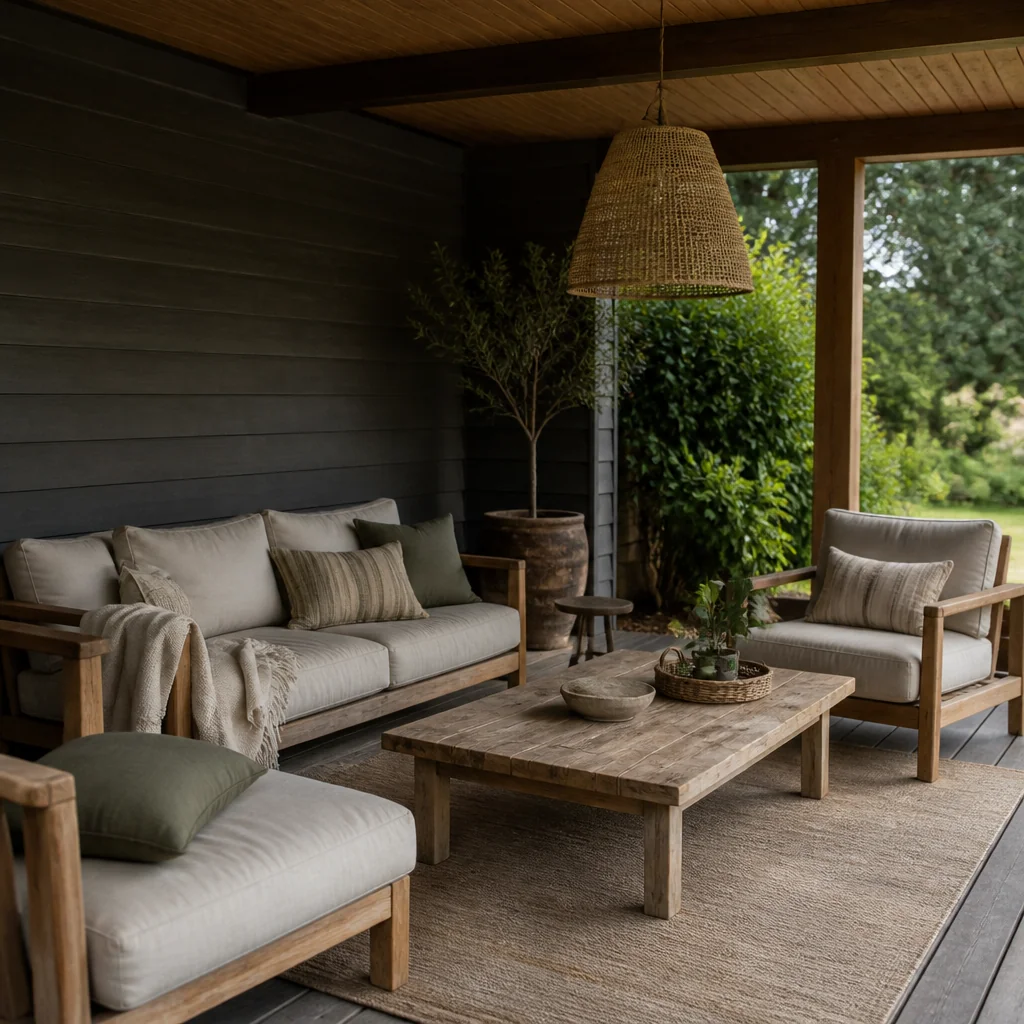
Your outdoor seating doesn't all have to match. It does have to look planned. That means an intentional grouping, not furniture scattered around like people abandoned ship.
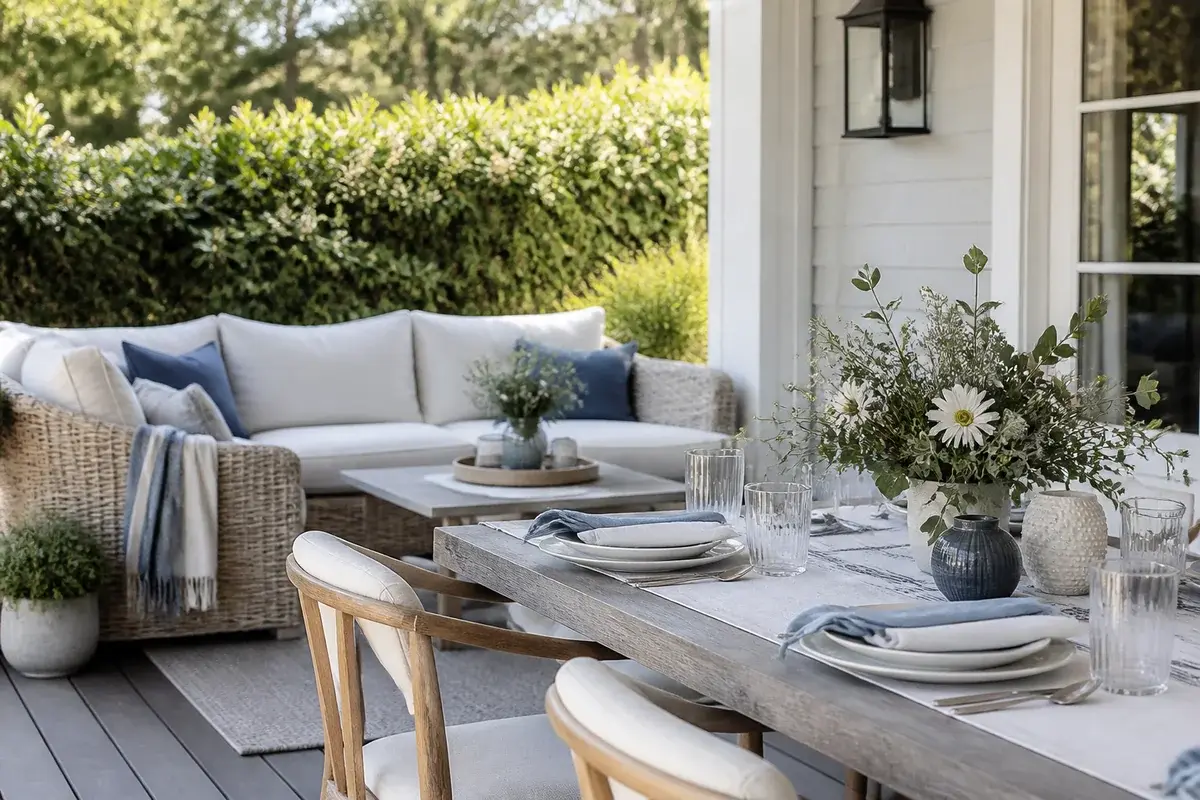
Pull chairs and outdoor sofas into a real conversation zone, close enough that nobody has to raise their voice over the neighbor's music. Somewhere around 7 to 8 feet across the whole group is the range that works, with roughly 18 inches between a seat and the side table beside it, so a drink is reachable without leaning. A small wood or metal accent table in the $40 to $80 range earns its keep here, because it gives the grouping a center to point at.
Cushions carry more weight than the frames do. Even inexpensive outdoor cushions in solid navy or natural linen make a set look considered where bare wood or metal looks unfinished, and you'll spend about $20 to $30 each. Two or three in the seating area is enough. If the patio takes full afternoon sun, look for solution-dyed acrylic: printed polyester fades to a chalky version of its old self in one season.
Color Should Come From Textiles and Plants
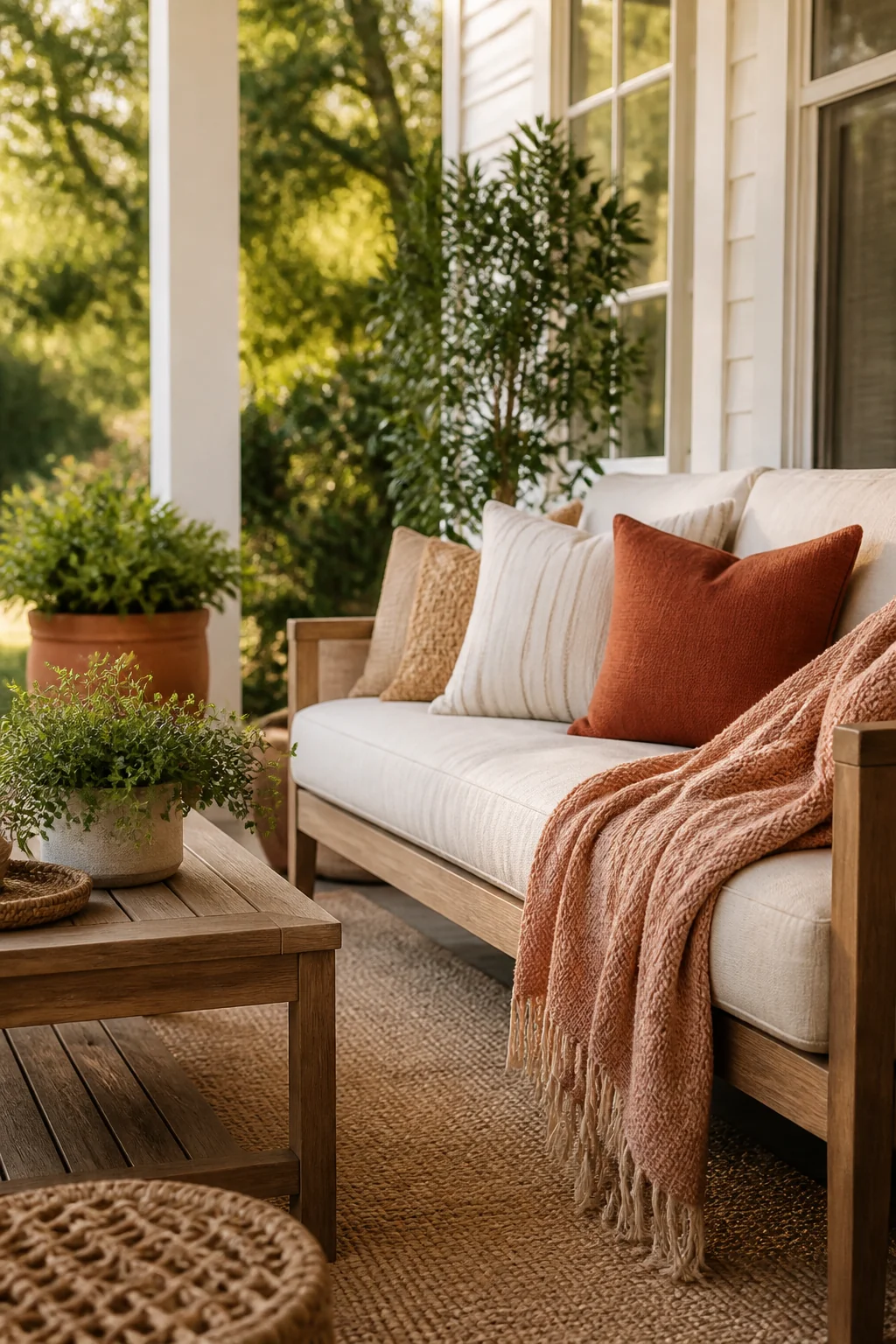
Outdoor color tends to fail in one of two directions: everything goes white and beige, or seven shades land at once and the patio feels chaotic for reasons nobody can name. Pick a palette and hold to it.
Two or three colors, maximum. Navy and white with rust or terracotta accents works. Olive green with cream and natural wood is timeless. Even coral or yellow reads as designed once it repeats, in a pillow, a planter, and a stripe in the rug. That repetition is what tells the eye a choice was made.
Plants carry the rest of it. Tall planters, roughly 14 to 18 inches across, hold ornamental grasses or a small olive or citrus tree and give you height above seated eye level. Mid-sized pots with flowering annuals add texture at knee height. Group them in odd numbers, three or five, and push them into corners or along the edges; a single pot marooned in the middle of the patio reads as accidental. One caution on material: unglazed terracotta wicks water out of the soil and needs watering nearly every day in late-August heat, so glazed ceramic or resin is the kinder choice if you're away for the long weekend.
Tables Need to Feel Like a Destination
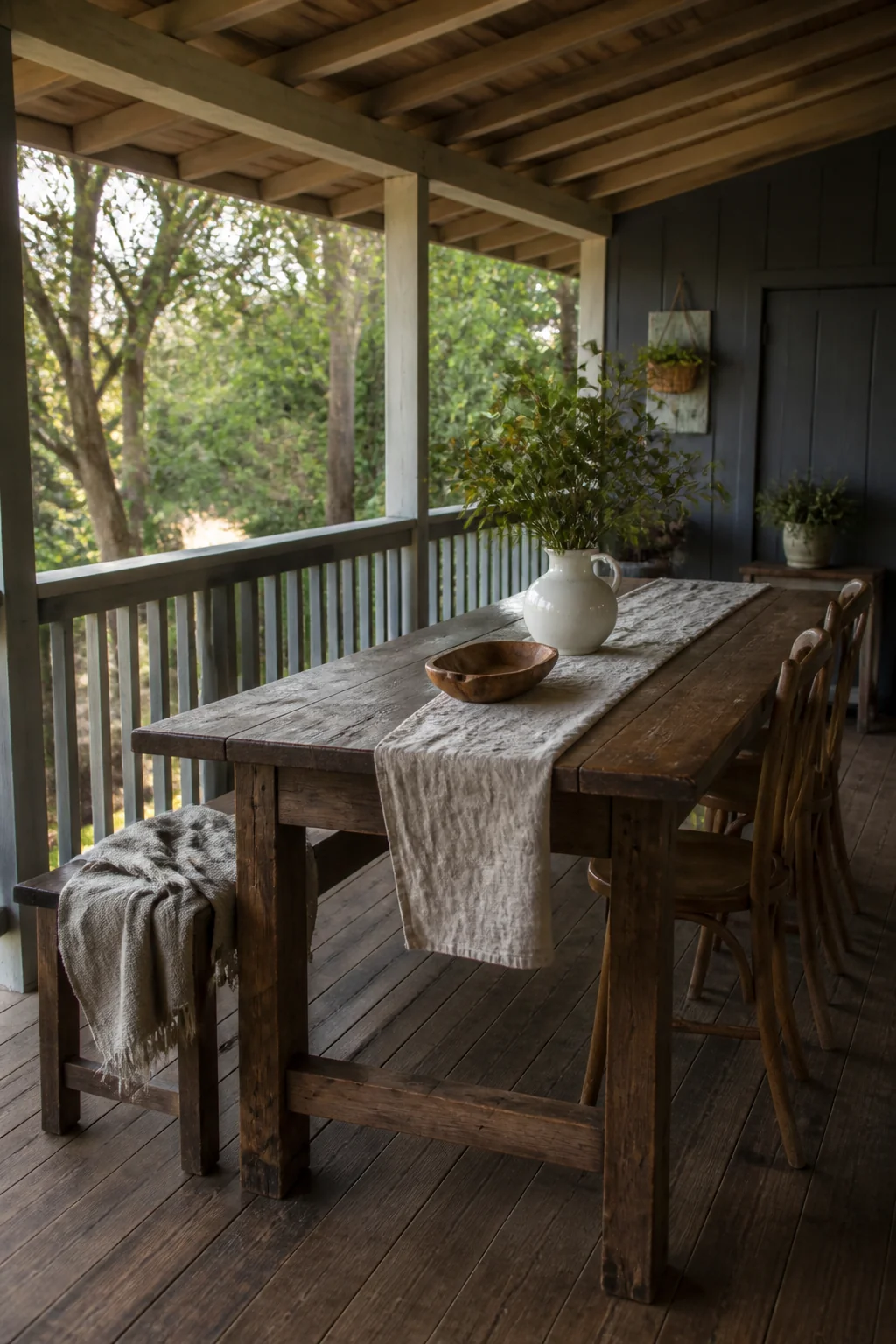
An outdoor dining or side table gives people a reason to linger. It's where drinks sit. Where food goes. Where someone can set a plate down instead of balancing it on a knee for twenty minutes.
A simple wood or metal table 36 to 48 inches across suits most patios, and you want about 36 inches of clear floor behind each chair so people can push back and stand without hitting the railing. Nothing fancy is required. A concrete-topped table runs $150 to $300 and looks substantial without looking precious. Wood in the $120 to $250 range is warmer and ages well, though untreated teak grays out within a season unless you oil it each spring, which some people want and some people don't.
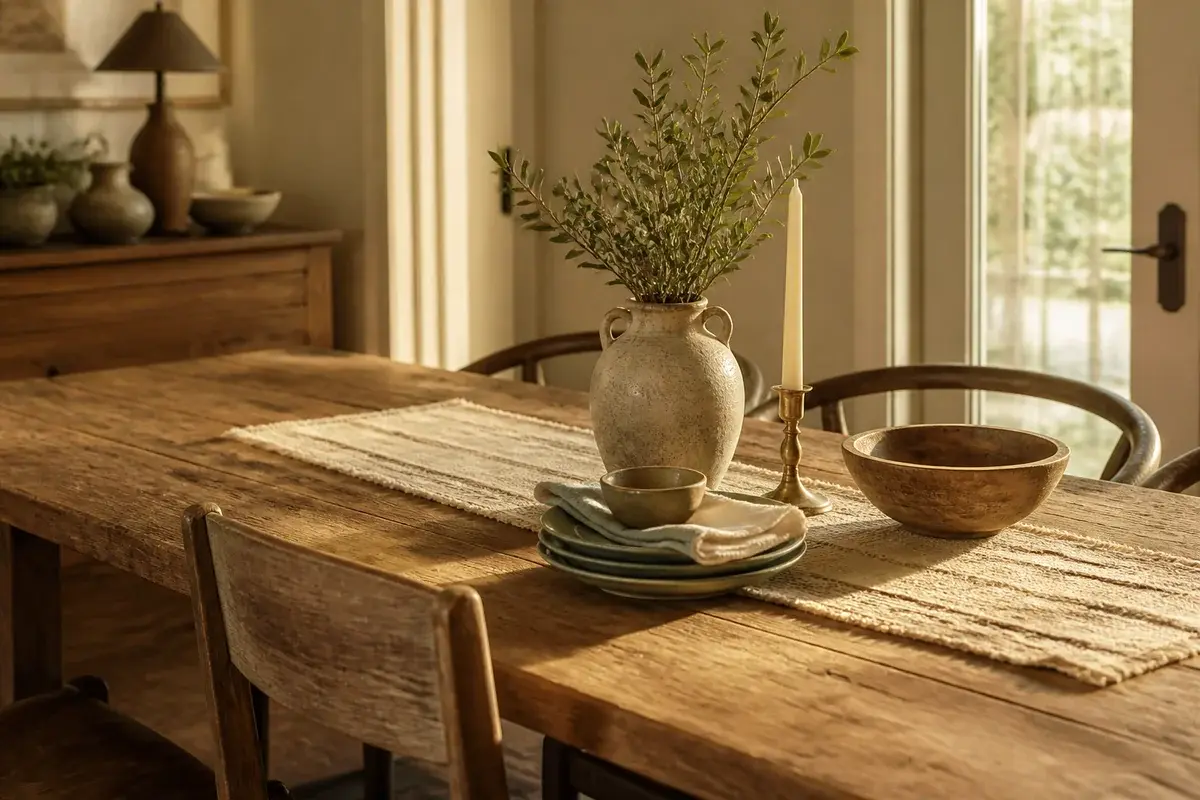
Dress it even when nobody's eating there. A linen runner or cloth in white or a natural shade, plus a small centerpiece: fresh greens in a glass or ceramic container, nothing elaborate. Weight matters more than looks outdoors. A heavy ceramic vase stays where you put it in a gust, while a light glass one ends up in pieces on the pavers.
Finishing Details Are Where Your Personality Shows
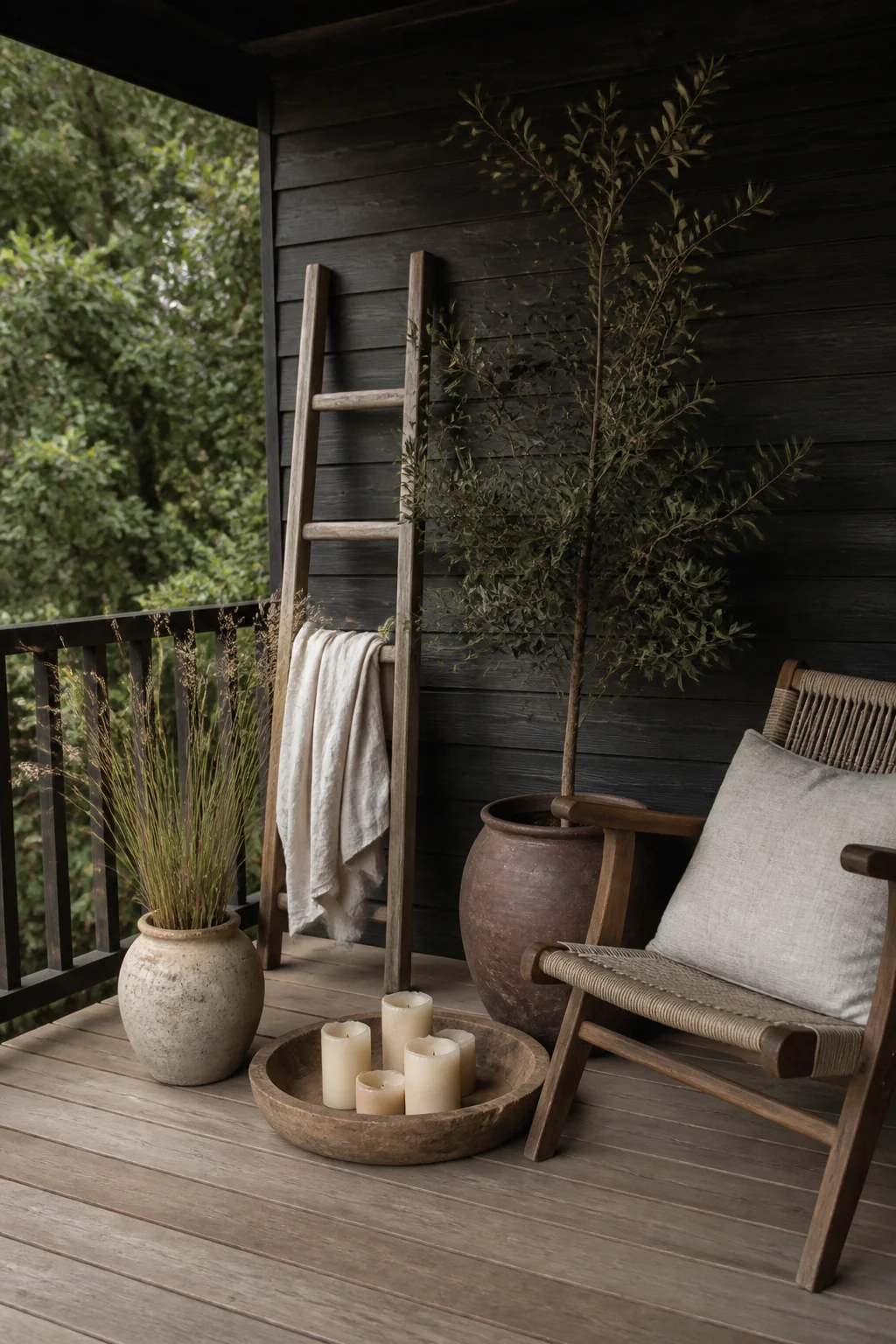
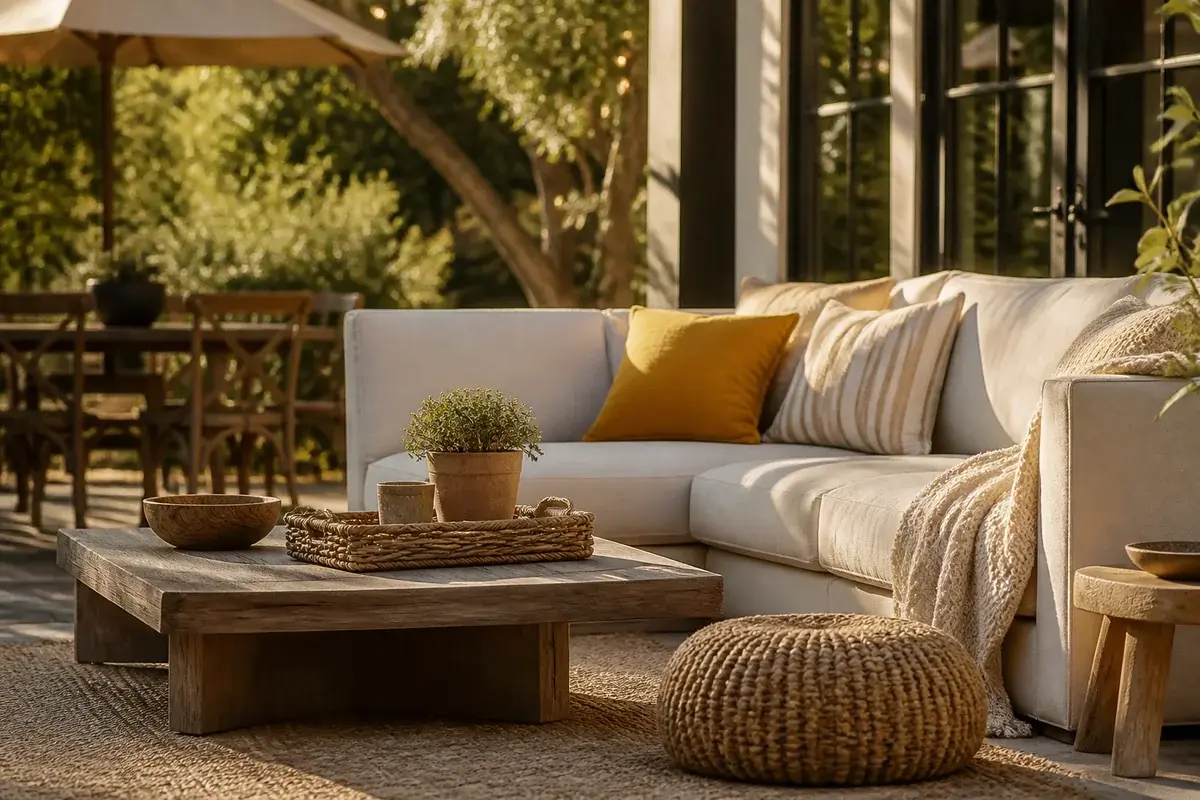
Lanterns, candles, and small accent pieces are where personality gets in without tipping into clutter. A pair of ceramic stools or poufs in your palette adds seating and texture at the same time, and they move easily when more people show up than you planned for. A wooden ladder leaning against the fence holds blankets or a trailing plant and often costs almost nothing at a salvage yard.
Blankets earn their place once the evening cools. Chunky linen or cotton throws in cream, navy, or rust over a chair back look deliberate and get used, which is the test. Store them in a deck box, $60 to $120 for a solid one, or they come indoors smelling like damp patio. Battery LED pillar candles, about $15 to $25 for a set of three, give you the flicker with none of the relighting.
One statement piece is the ceiling: a large planter, a sculptural plant stand, or a wooden sign with something plain on it. Past that it starts to feel fussy, and every extra object is one more thing to carry inside when a storm rolls through.
The Usual Advice About Maintenance Is Worth Following
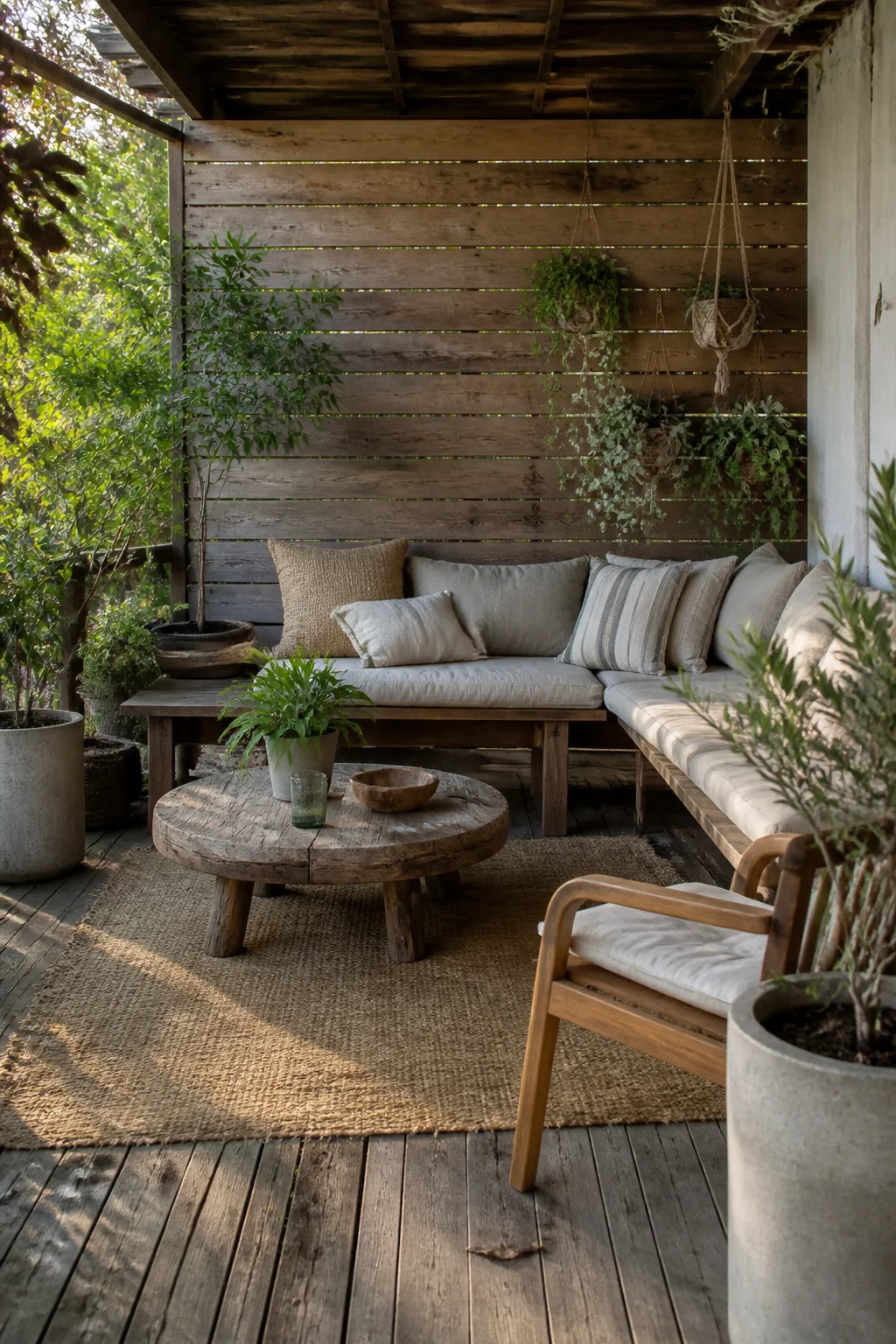
Upkeep doesn't have to be a project, but a space that looks forgotten stops looking good quickly. Sweep once a week so grit doesn't grind down into the rug backing, where it cuts the fibers from underneath. Deadhead flowering annuals and most of them keep producing into October. Wipe cushions with mild dish soap and water when they get dusty, then stand them on edge to dry so the foam inside doesn't stay damp and start to smell. None of that runs more than ten minutes.
If you can't commit to even that, design around it instead. Sedum, lavender, and ornamental grasses forgive a missed watering; hydrangeas and ferns will not, and they show it within two days. Choose metal or wood over pale fabric. Choose a pattern over a pristine white cushion, because a pattern hides a spilled drink and white announces it to everyone.
The whole guide in one image
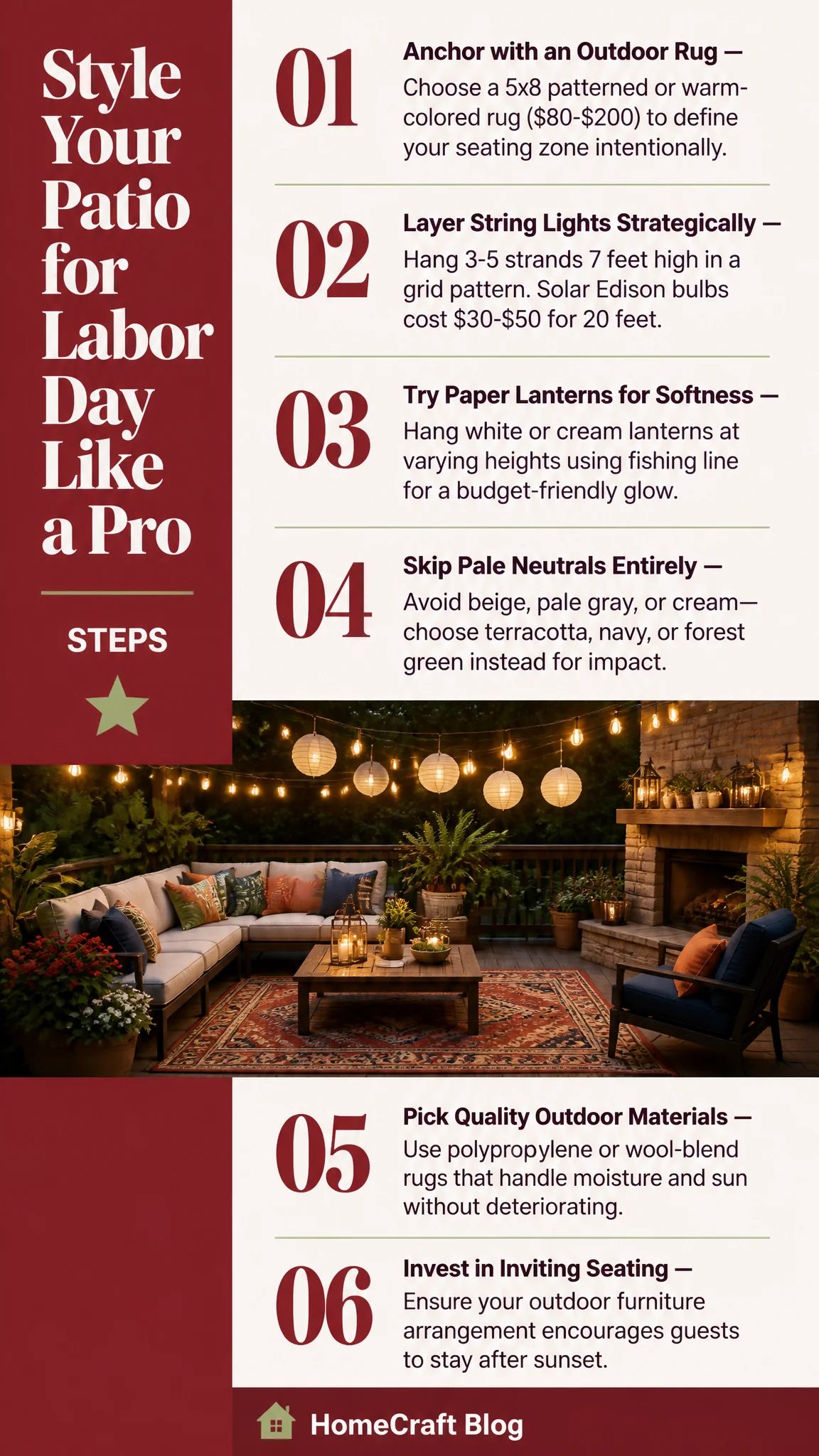
Of everything here, the rug and the lights do the most to change how a patio reads, and both can go in over a single afternoon. The rest can arrive slowly, a planter or a throw at a time. A patio that looks cared for isn't the one with the most in it. It's the one where a few things were chosen on purpose and then kept up.