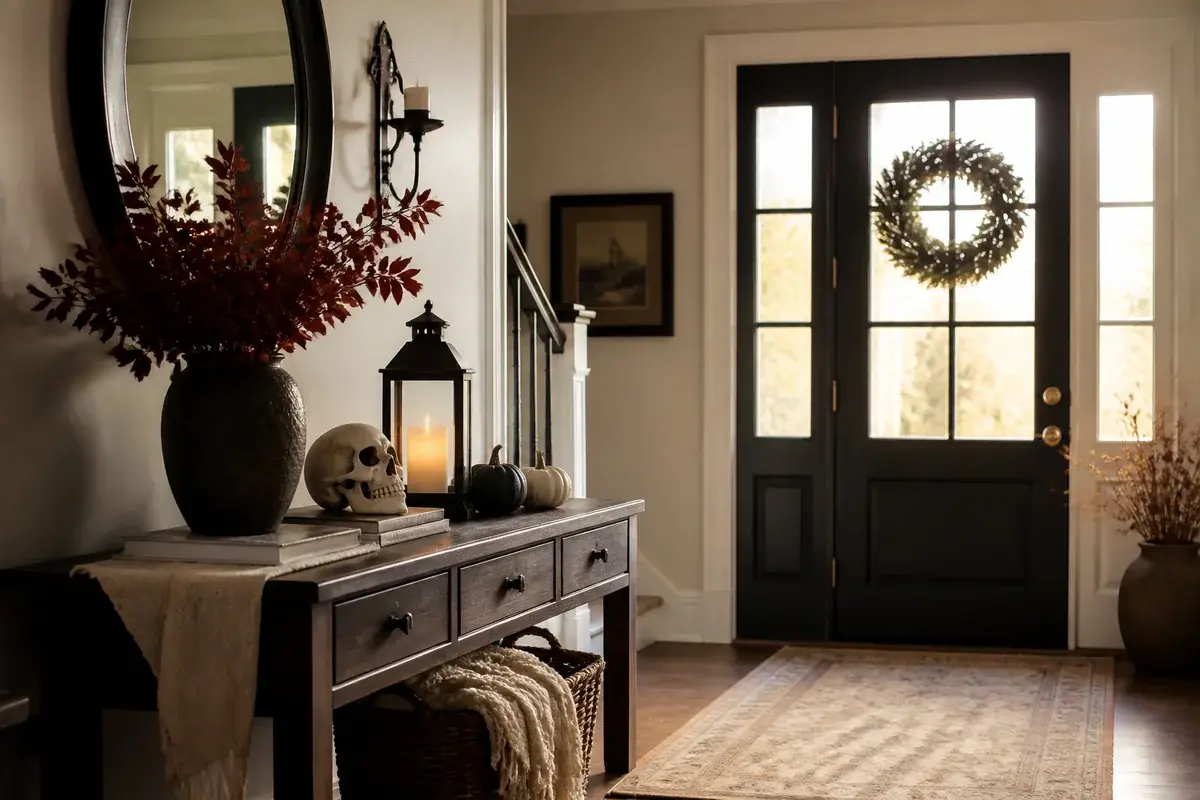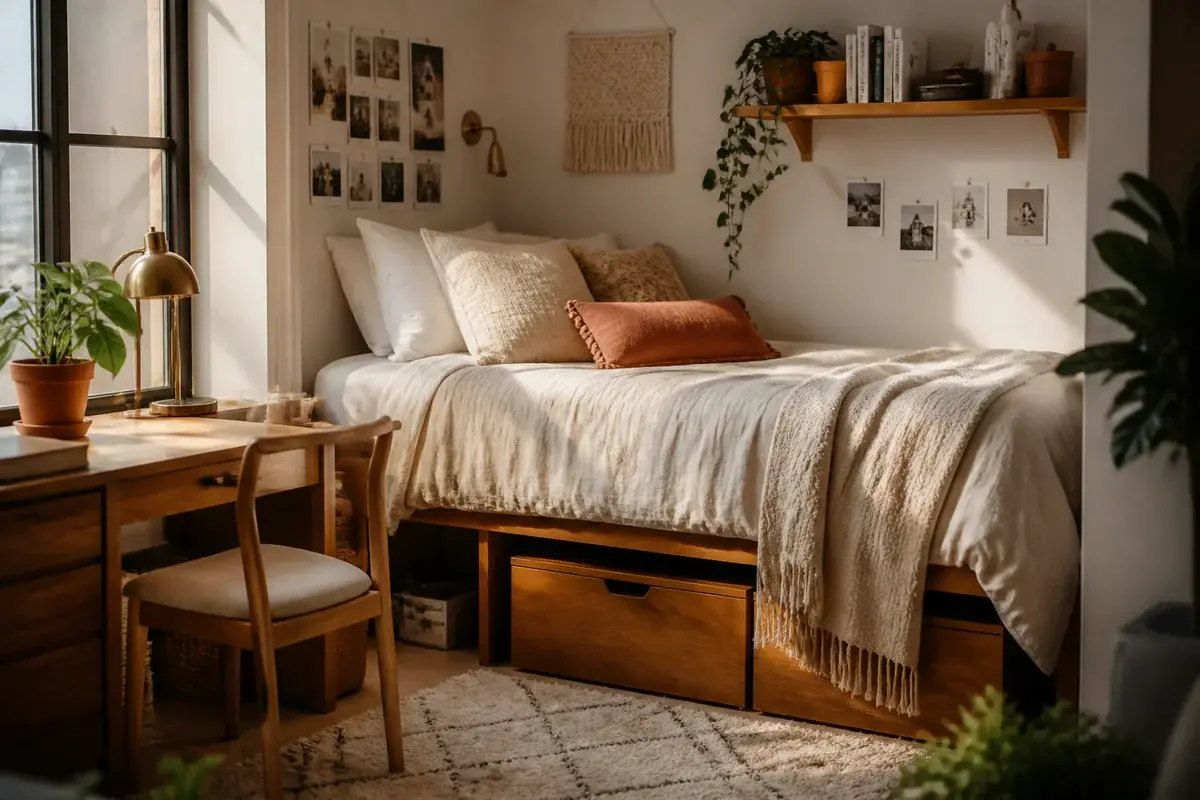
How to Clear a Cluttered Home Without Buying a Single Bin
Small apartment, no drilling, no new bins. Work through this declutter your home checklist to clear the hallway, doorway, and that wall full of leaning stuff.

This post contains affiliate links. As an Amazon Associate I earn from qualifying purchases. If you buy through our links, we may earn a commission at no extra cost to you.
A small apartment gives you very little room to hide things. The doorway might be 32 inches wide, the hallway might have one corner you can reach without turning sideways, and the wall you are not allowed to drill into is probably the one with the most stuff leaning against it. That rules out the usual fix before you start. You can't mount a rail, screw in a shelf or add a tall cabinet without creating a new problem. So the job is to clear what's already there, using the space you have, and to decide what leaves the room. This approach works in a studio, a rental or a family home, and it starts with the surfaces you see first.
 8-page guide
Free style guide
Stop buying things that don’t go together.
Print the 2-minute quiz, circle the words you love, and find your style. Then see what makes a room look like it.
- A print-and-circle quiz, 5 styles
- Each style shown as a finished room
- Palette, 4 key pieces, one rule
Free. Arrives by email in a minute or two, plus our ideas and occasional shop offers. Unsubscribe anytime. Privacy
Start With the Surfaces You See From the Doorway
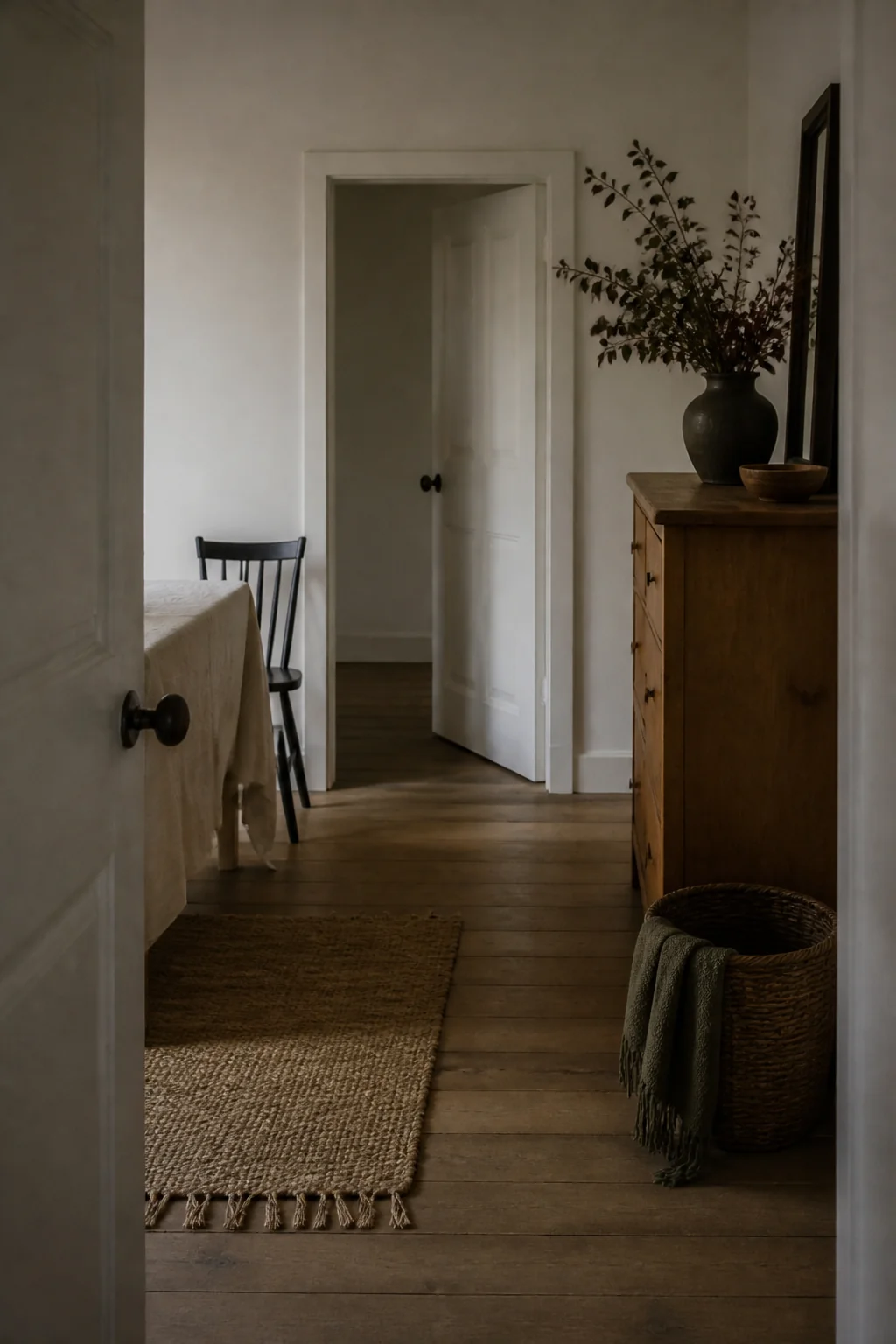
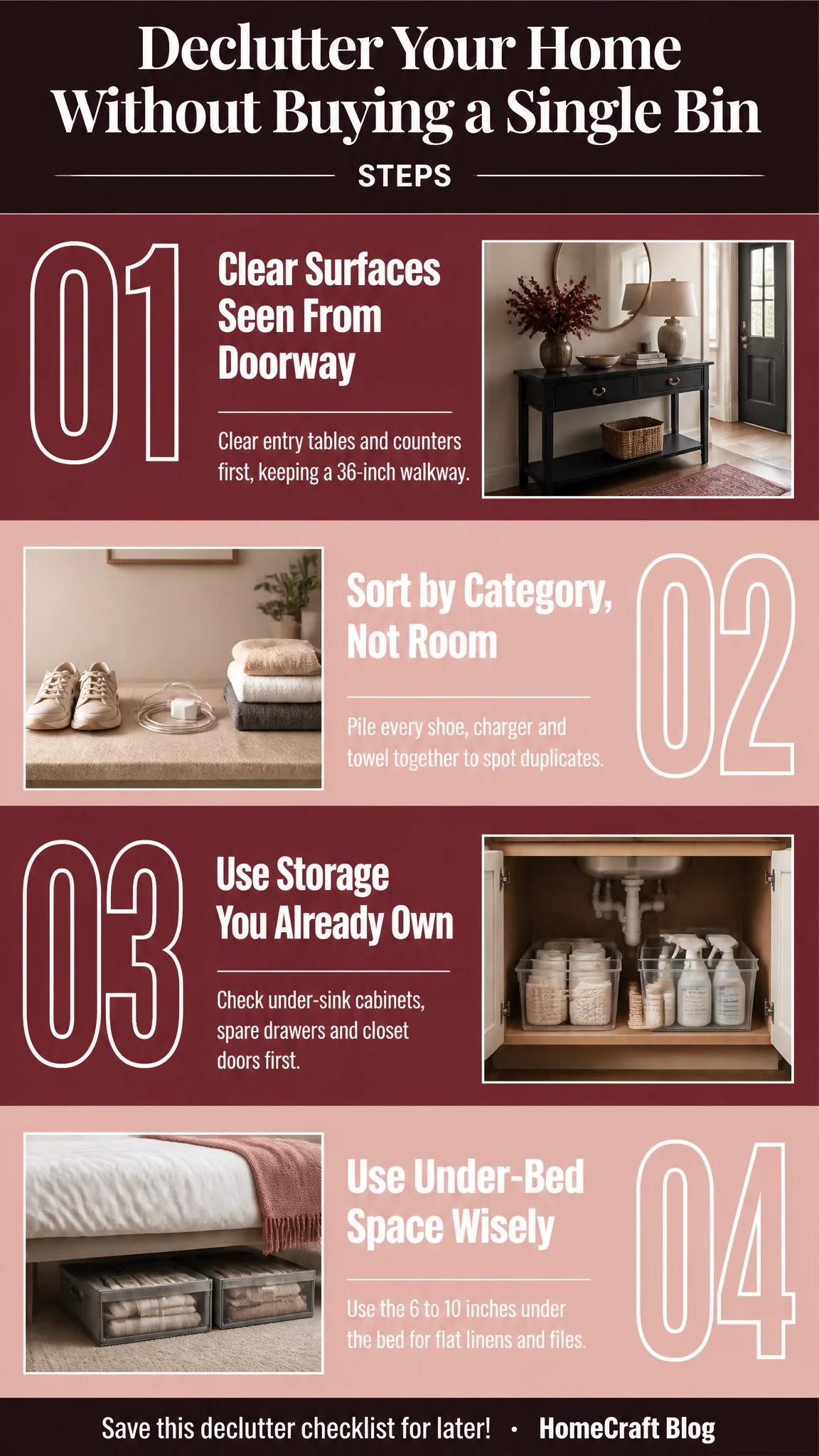
The clutter you notice first is almost always on a flat surface: the entry table, the kitchen counter by the kettle, the coffee table, the top of the dresser. Clear those before anything else. An empty surface makes the room read as calm even when the closets are still a mess, and it gives you a clear view of what you own.
Keep a walkway of at least 36 inches through the main path of a room if you can. Anything that narrows it, including a basket on the floor or a stack of mail on the arm of a chair, gets moved first. If a room only allows 24 inches, that is a sign the furniture is too big for the space, not that you need more storage.
Sort by Category, Not by Room
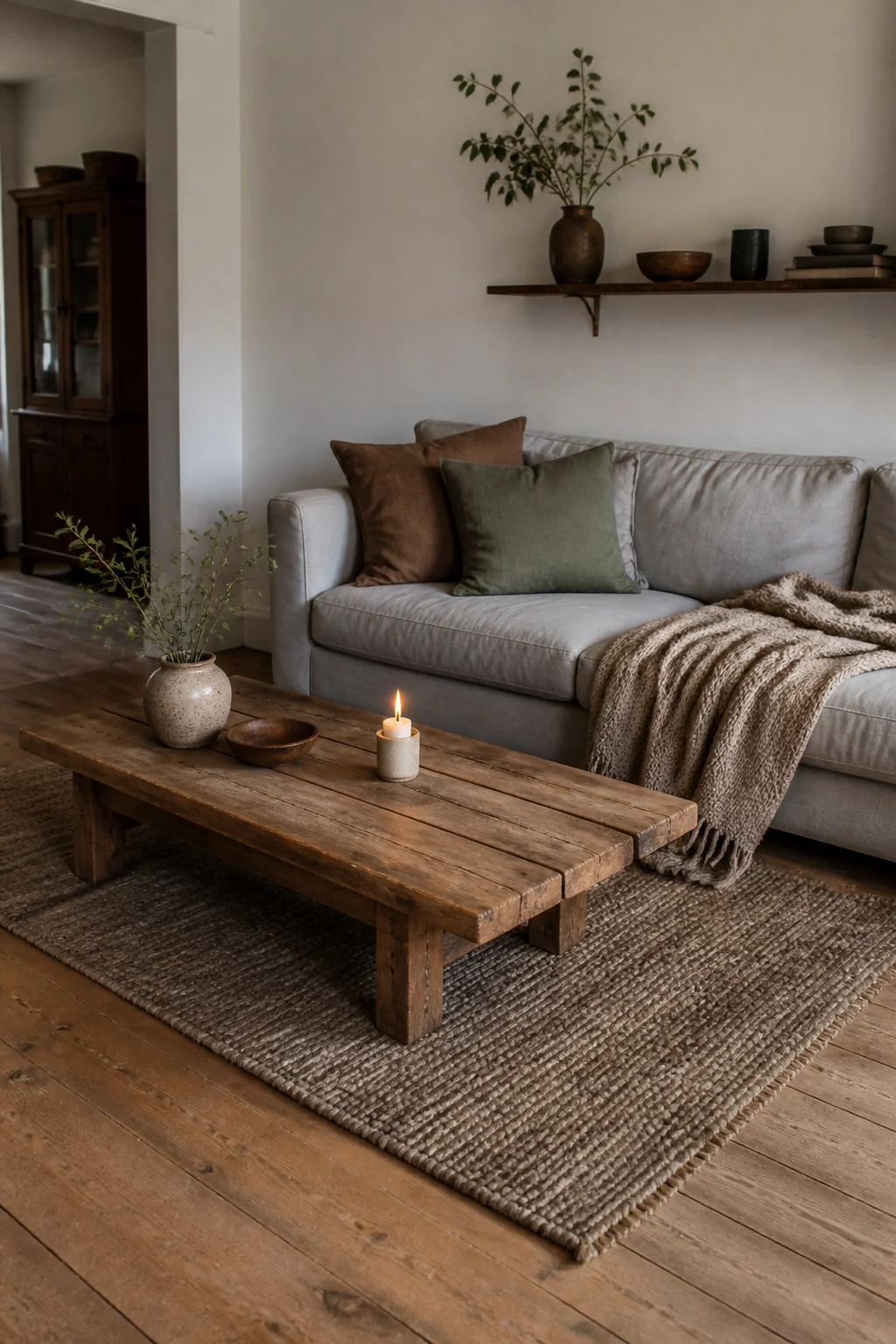
Going room by room sounds logical, but it leads to the same bag of mismatched things moving from one spot to another. Sort by category instead. Pull every pair of shoes, every set of chargers, every candle and every spare towel into one spot, usually the floor of the room where they live most. You'll be surprised how many of one item you have.
Once everything of one type is in front of you, the decisions get easier. Three phone chargers in one pile are obviously too many. Five throw pillows in one pile tell you the sofa is overloaded. A category shows you the pattern, and the pattern is what you're really clearing.
Give Every Item a Home That Already Exists
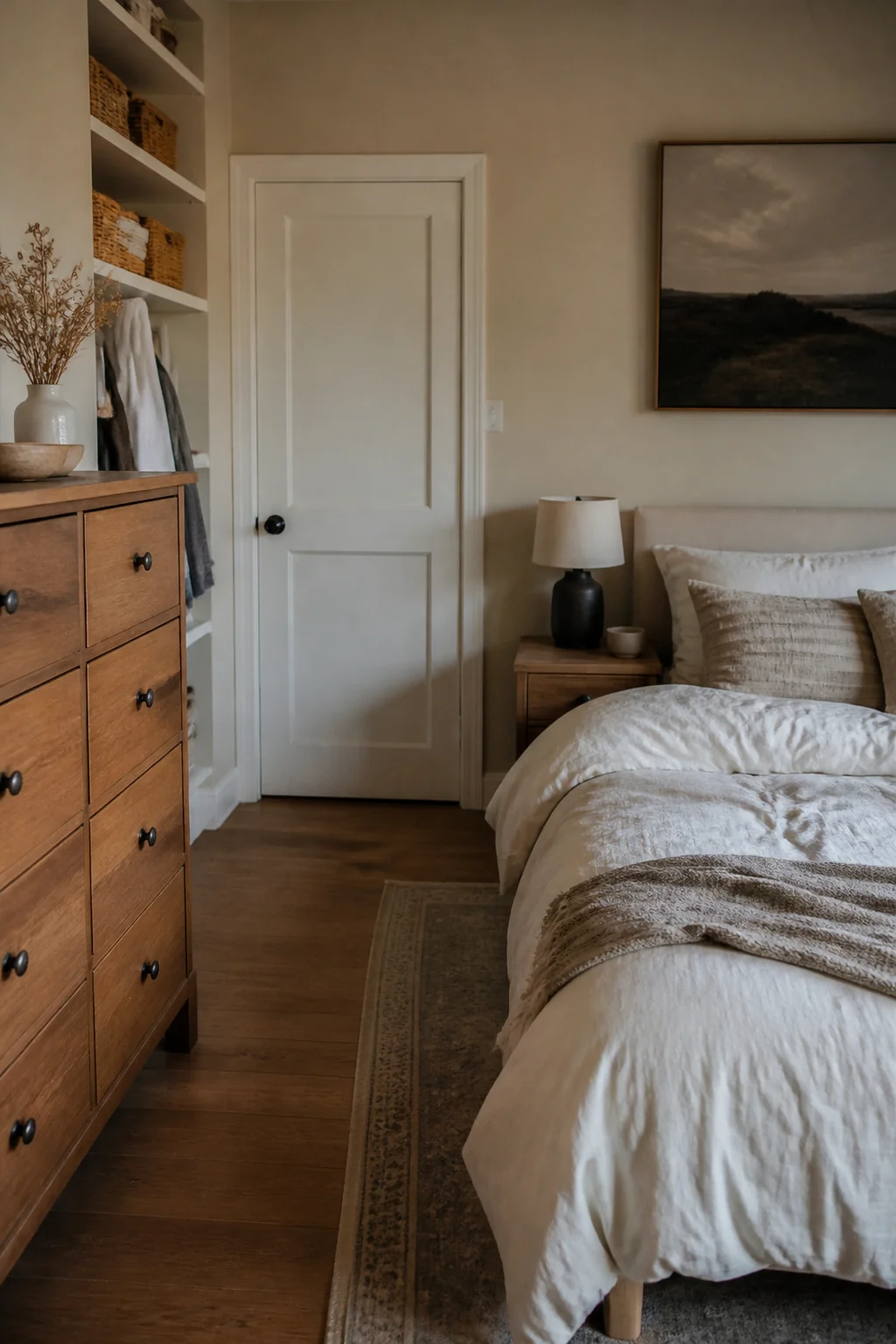
The most common mistake is trying to organize clutter into a new system before you've decided what stays. You end up with a stack of matching boxes that hold the same unused things. Skip that. Look for storage that's already in the house: the cabinet under the bathroom sink, the empty drawer near the stove, the space under the bed, the back of a closet door.
Under-bed space is often one of the best options in a small bedroom. Most bed frames leave roughly 6 to 10 inches of clearance, which fits flat items like extra linens, out-of-season sweaters folded in a pillowcase or a stack of paper files in a shallow box. Use that space for things you reach for a few times a year, not for daily items you'll have to crawl to get.
(A drawer that sticks is usually sticking because it's overfilled, so take half out before you assume it needs a repair.)
Here is a checklist you can run through room by room:
- Clear the surfaces you see from the doorway first.
- Gather each category into one pile on the floor.
- Keep the amount you use in a month, not the amount you might need someday.
- Put daily items in the spots closest to where you use them.
- Move seasonal and occasional items to under-bed, high closet or back-of-cabinet space.
- Set aside anything broken, expired or duplicated for removal.
Use the Vertical Space You Already Have
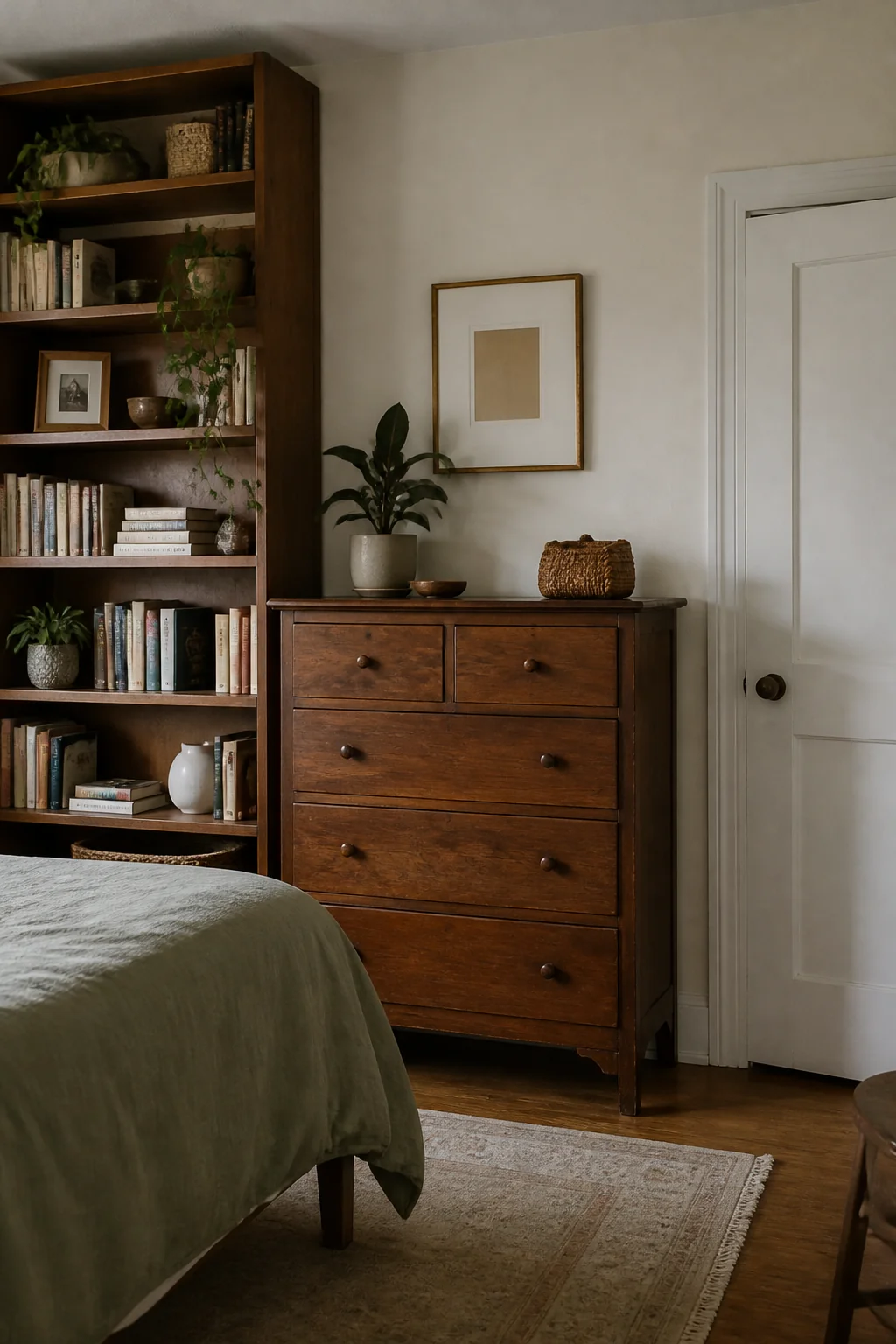
A tall bookcase or dresser can hold a surprising amount, but only if it isn't crowded at the top. Stacking boxes on top of a bookcase also raises its center of gravity, so keep heavy items low and reserve the top for lighter, decorative pieces. If the piece is tall or top-heavy, anchor it to a wall stud with the hardware that comes with it, especially in a home with children or pets.
Wall space is useful too, as long as it's space you're allowed to use. Over a door, a slim over-the-door rack on the back of a bathroom or closet door holds towels, belts or hair tools without a single hole. For anything heavier than a light towel, check the weight rating on the hook and confirm it's rated above what you'll hang.
The Closet Shelf Is Where Decluttering Usually Stalls
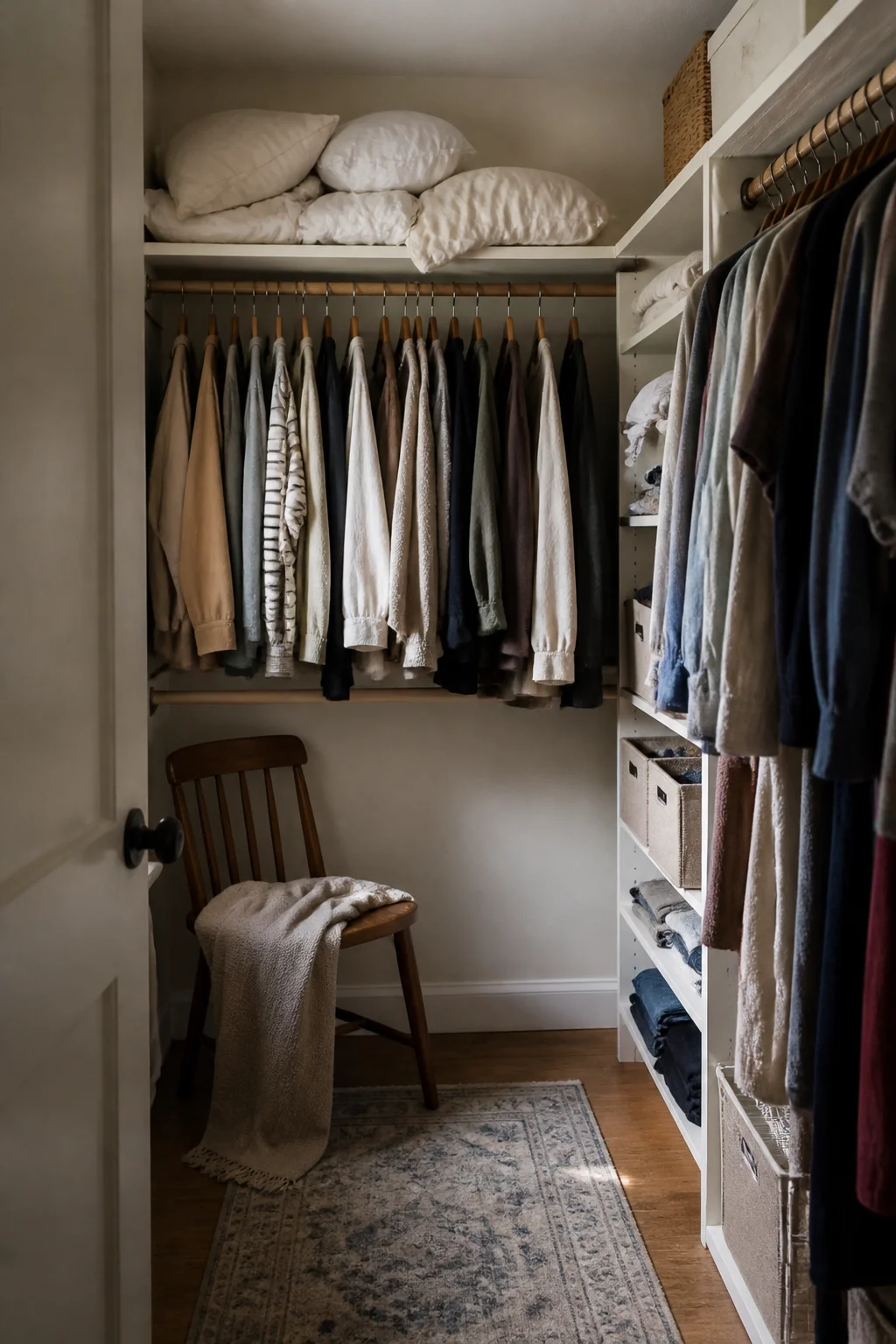
Closets are where most people push the clutter they haven't decided about yet. The door closes, the problem seems solved, and the pile grows. Treat the closet as the last room you clear, not the first. Once the surfaces and the categories are sorted, you'll know what needs to fit on the shelves.
A top shelf that you can reach only with a chair is best used for things you'll rarely need, like holiday decorations or backup bedding. Put the everyday items on the rod and the lower shelf. If you want a deeper walk-through on closet clearance, our guide on organize your closet for the new year covers rod heights and shelf spacing in more detail.
Decide What Leaves, Then Make It Leave
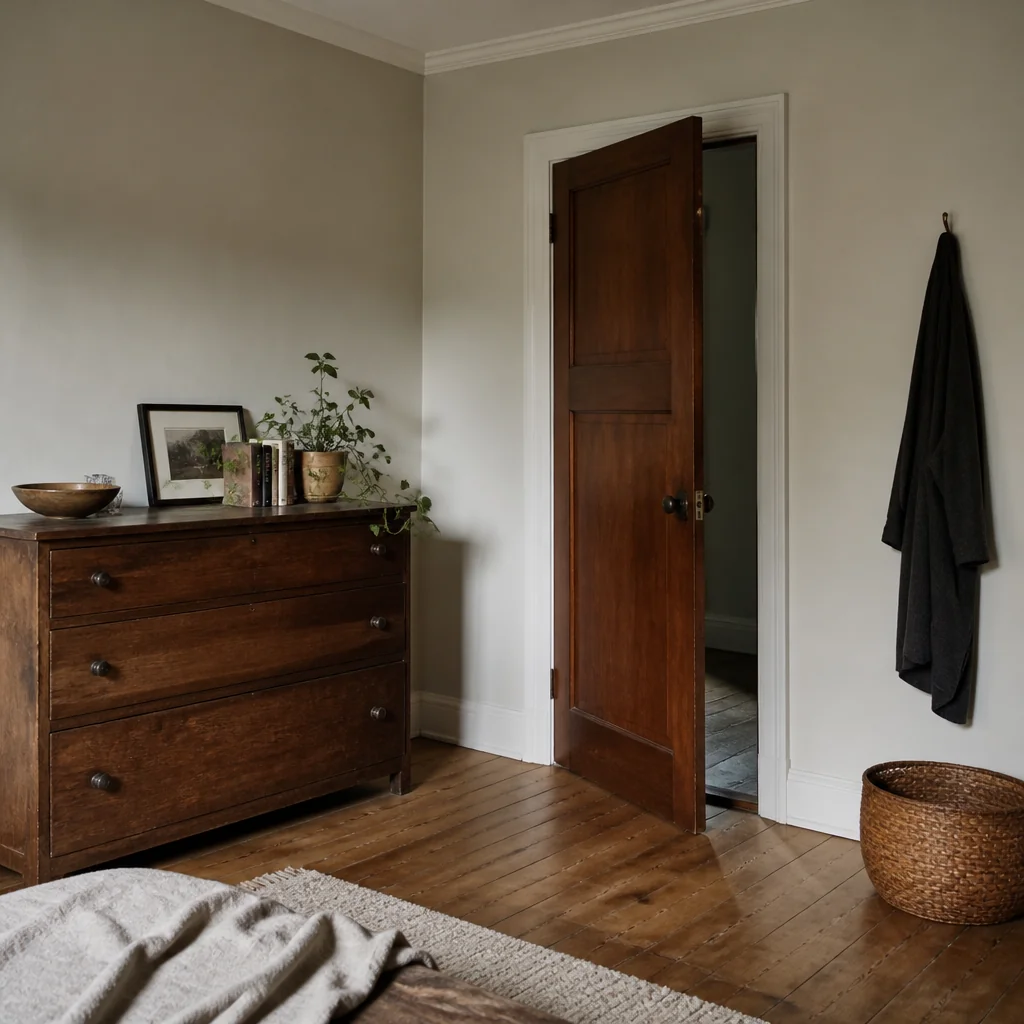
Clearing a room is not finished until the donation bag is in the car. Set up a single box or bag labeled for donation, and keep it near the door so it gets moved out on your next trip. A box that stays in the hallway for a month is just a new pile.
Be honest about the things you keep out of guilt. A gift you don't use, a kitchen tool that never gets out of its drawer, a coat that doesn't fit: these take up room every day. The ones that earn their space are the things you use, the things that make a room work and the things you'd replace right away if they were gone.
The Entry Table Usually Tells You When the Clutter Is Back
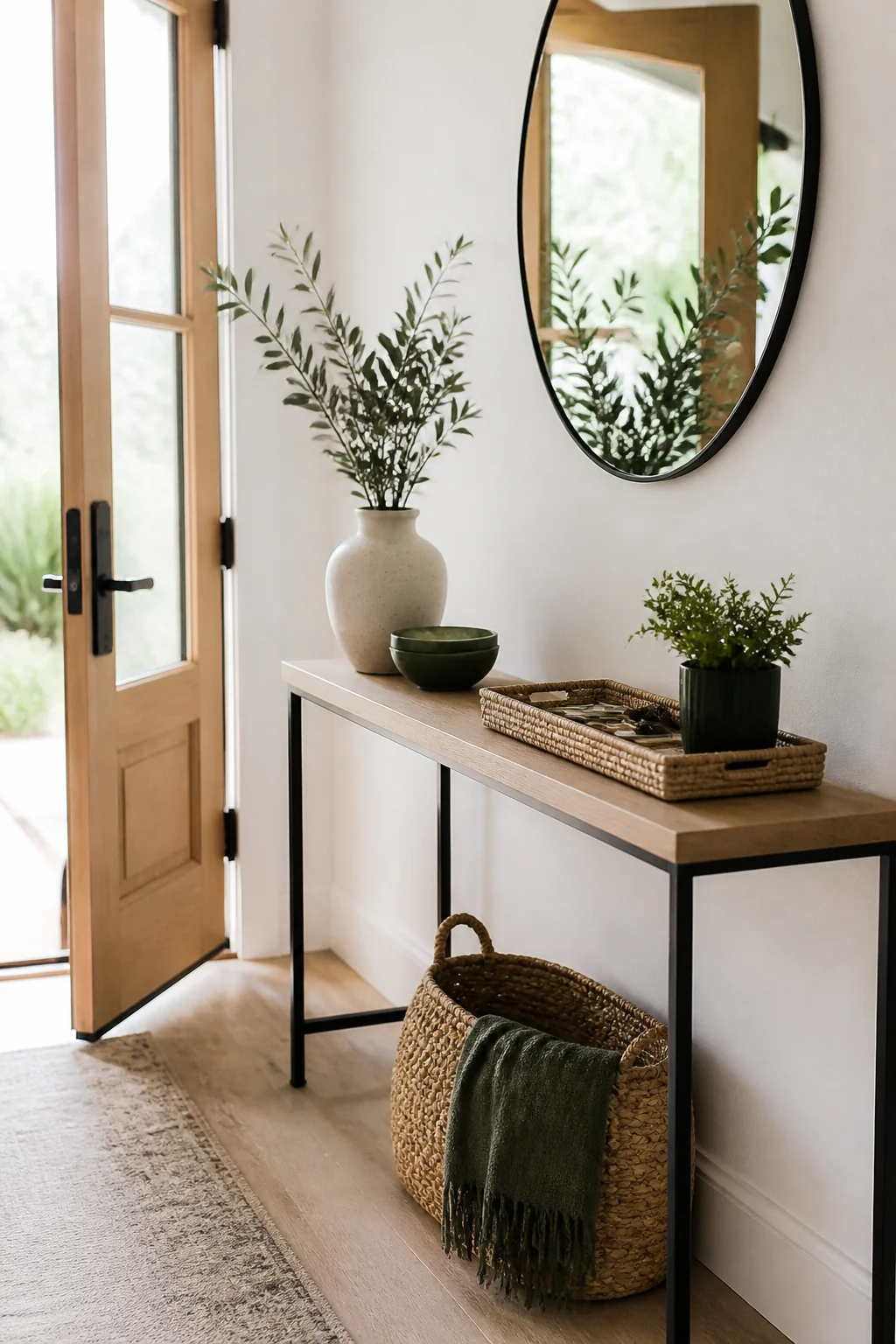
Once you've cleared a room, the first surface to fill up again is almost always the one by the front door. Keys, mail, bags and shoes collect there because it's the spot you drop things on the way in. Give that table a small tray or a shallow basket, and empty it every evening. If the tray is full by Thursday, the clutter is coming in faster than you're putting it away, and that tells you where to look next.
Keep this guide handy
The room images in this post are illustrations made with AI.