How to Decorate a Dorm Room Without Losing Your Deposit
Cheap, practical dorm decorating ideas for a small rented room: real prices, real measurements, and the housing rules that decide what you can hang.
This post contains affiliate links. As an Amazon Associate I earn from qualifying purchases. If you buy through our links, we may earn a commission at no extra cost to you.
On move-in day a dorm room looks like a storage unit: cinder block walls, a twin XL bed pushed into the corner, and, once the desk and dresser are in, maybe six square feet of clear floor. Most residence hall doubles run somewhere between 100 and 180 square feet for two people, so the room is tight by design and there's nothing you can do about that part. What you can change is everything on top of it, and you don't need a big budget or any design skills to do it. Decorating a dorm well is mostly about knowing which four or five changes carry the most weight in a small rented room you have to hand back in May. Here's the order we'd work in, what each piece costs, and the housing rules that decide what you're allowed to hang. Narrower guides cover dorm walls that come down clean, dorm bedding that doesn't look cheap and a 10x12 college bedroom.
Start With What You Already Have
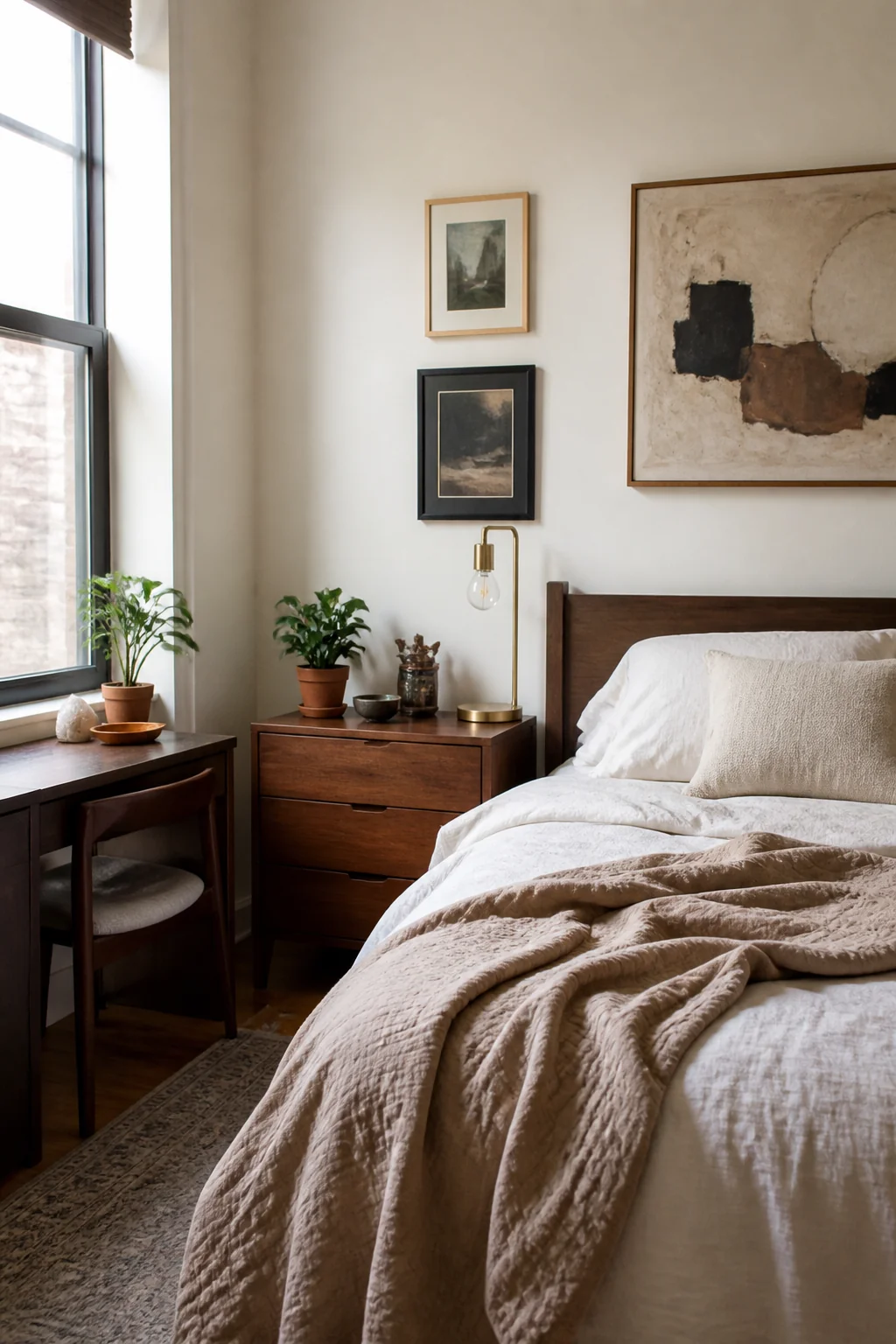
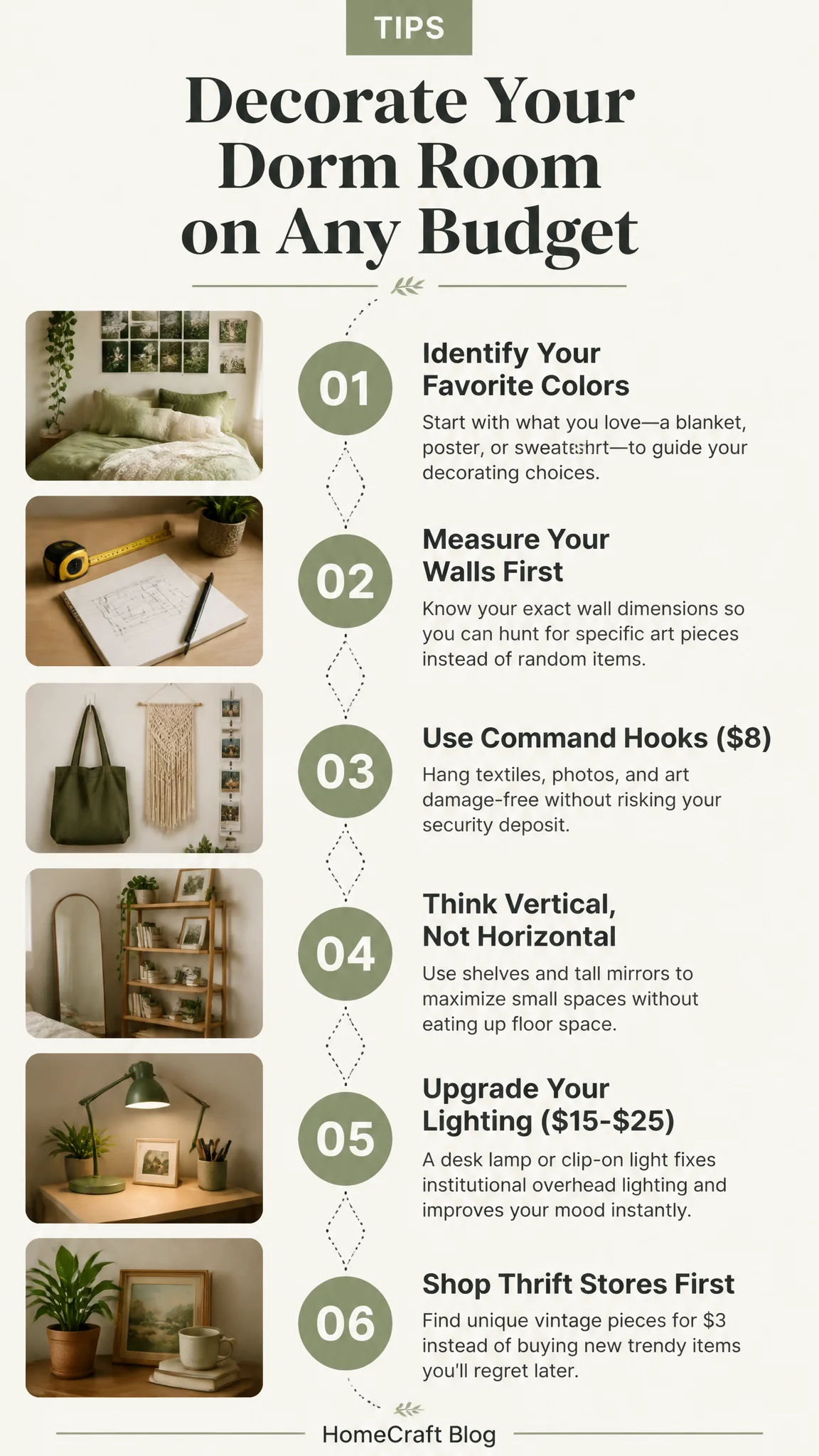
Before you spend a dollar, unpack the boxes and look at what came with you. The poster from your bedroom at home, the blanket your mom sent, the sweatshirt in a color you clearly keep choosing: none of that is decor yet, but it tells you which palette you'll still want in March.
Pick one piece as the anchor and let it set the color. A single dusty green blanket is enough to steer every later purchase, and it stops you buying four things that argue with each other. The conventional advice here is worth following: build around what you already like rather than what's trending, because the trend will be over before the lease is.
Then measure, which is the step everyone skips. Write down the width of the wall above your desk, the window width, and the clear floor between the bed and the desk. You want 30 to 36 inches in that gap so a desk chair can pull out without hitting the frame. Snap a photo of the empty room before anything goes in. Shopping with real numbers on your phone is how you avoid hauling a 5-by-7 rug up three flights into a room that fits a 3-by-5.
Your Walls Are Free Real Estate
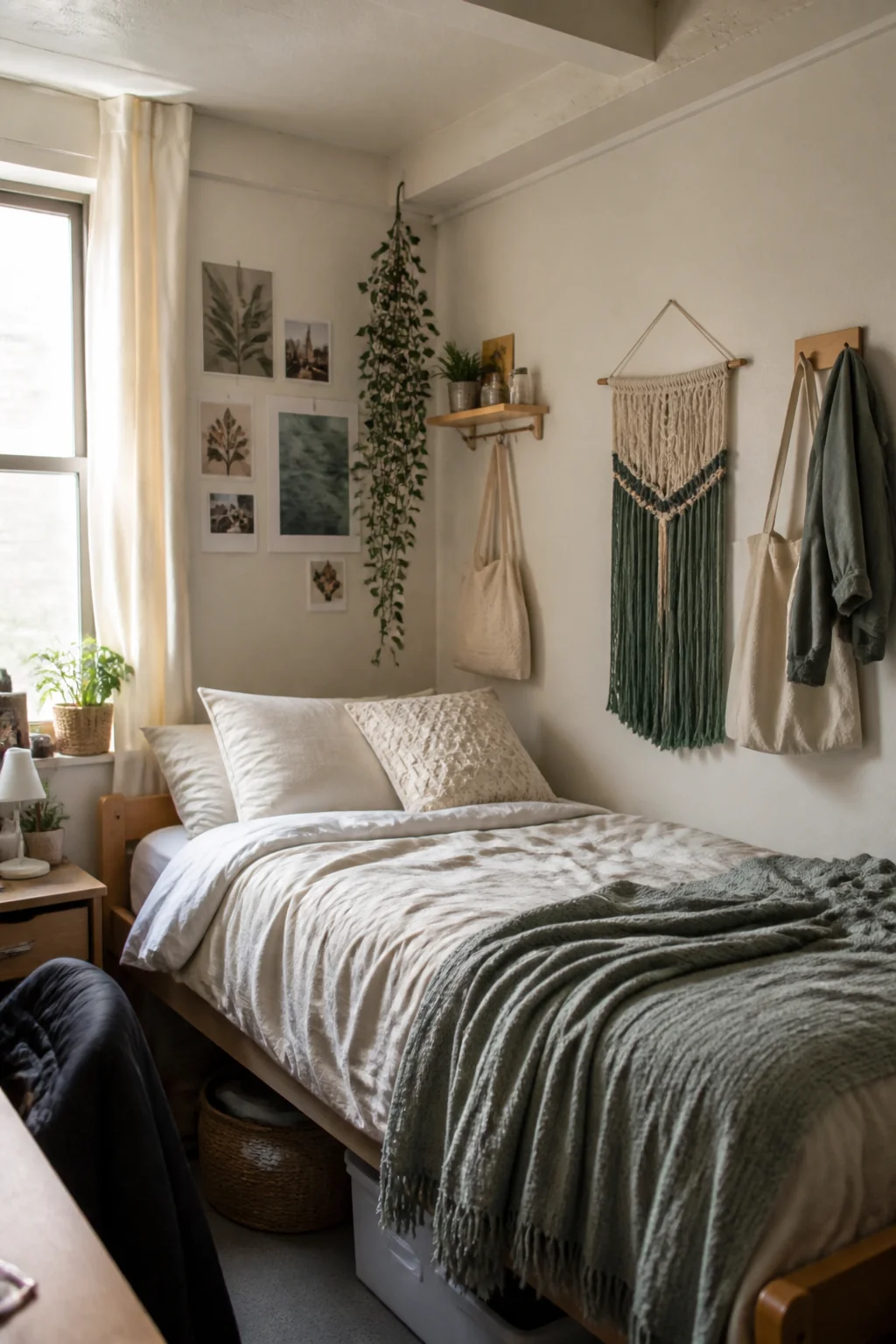
Dorm walls start blank, which beats inheriting someone else's paint choices. The catch is the damage clause: most housing contracts bill you for nail holes, tape residue, and anything that peels paint on the way off.
Damage-free picture hanging strips are the workaround. A pack runs about $8 to $12, and the large size holds roughly 16 pounds with a full set of four. Wipe the wall with rubbing alcohol first, not a household spray, because the film those sprays leave behind is what makes a strip let go a week later. Press for 30 seconds, wait an hour before you hang anything on it, and when you take it down, pull the tab straight down and keep stretching.
Two failure modes worth knowing. Strips don't hold on bare cinder block or heavy texture, so lean framed pieces on a shelf there instead. And a tapestry gets heavier as it sags, so anchor it at more points than seems necessary. Dorm art drifts toward the ceiling because nobody measures for it, and height alone is what makes a decent print look like something taped up in a hurry; bring the center of each piece down to about 57 to 60 inches off the floor and a $3 thrift store find reads as deliberate. The same color logic that works in a living room works here at a quarter of the scale. Your walls have a lot of power in a room this small: a shelf or a tall mirror buys you storage and depth without costing you any of your 100 square feet of floor.
Lighting Is the Cheapest Upgrade in the Room

Institutional ceiling fixtures usually run 4000K or higher, the flat blue-white of a classroom. That color temperature is fine for finding a dropped pen and grim for everything else, which is why a dorm room can feel like a waiting area by 9pm.
A clip-on lamp or a small desk lamp costs $15 to $25. Put a warm LED bulb in it, around 2700K and roughly 800 lumens, and the light goes yellow and soft instead of clinical. Two sources at different heights, one on the desk and one near the bed, do more than one bright one ever will, because the shadows stop landing straight down on your face.
Read your housing rules before you buy. Halogen bulbs and torchiere floor lamps are banned in most residence halls under fire code, and daisy-chained extension cords usually are too, so plan on one surge protector strip. String lights are cheap and perfectly fine if you like them, though they do read a little high school. The point is simply that light comes from somewhere other than the ceiling.
Rugs Ground the Space (And Hide Bad Carpet)
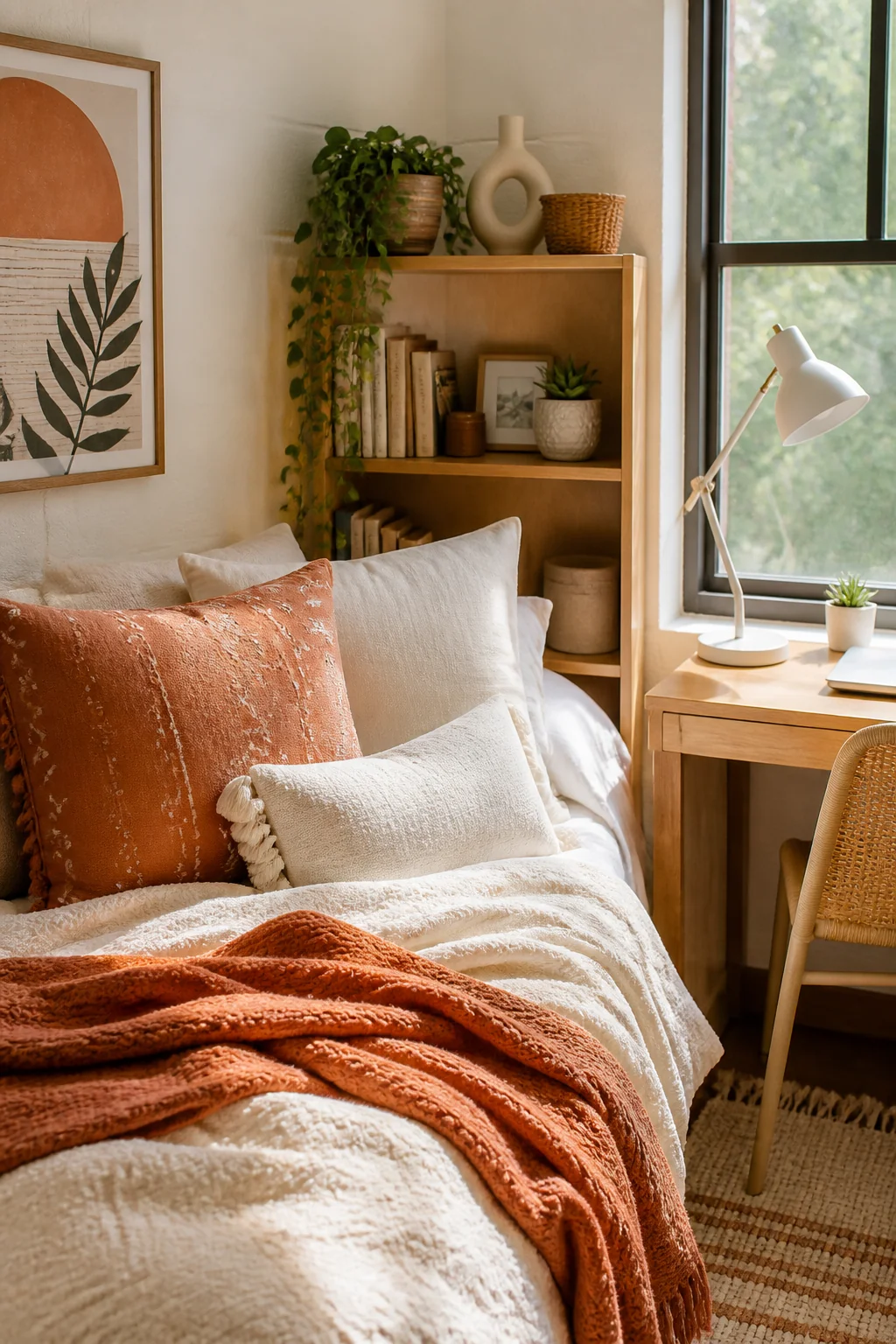
Dorm carpet is short, gray, glued down, and immune to styling. A rug covers it, and it doesn't have to be big or expensive.
Measure first. A 5-by-7 is 60 by 84 inches, which swallows the whole walkway in a shared room. In most doubles a 3-by-5 beside the bed or a 4-by-6 under the desk chair fits better, and either runs $20 to $60 depending on where you shop.
Material decides how long it survives. Low-pile polypropylene handles vacuuming and spot cleaning, and the smaller sizes fit a laundromat machine when something inevitably gets spilled on them. Jute photographs beautifully and sheds grit into the carpet underneath all year. A thin felt rug pad, about $15, keeps the whole thing from creeping every time you shove your chair back.
Color is a trade-off here, not a taste question. Cream calms the room and shows every coffee ring. A mid-tone or a pattern hides eight months of foot traffic. Whichever way you go, it rolls up and comes home with you in May.
Bedding Sets the Tone for Your Whole Room
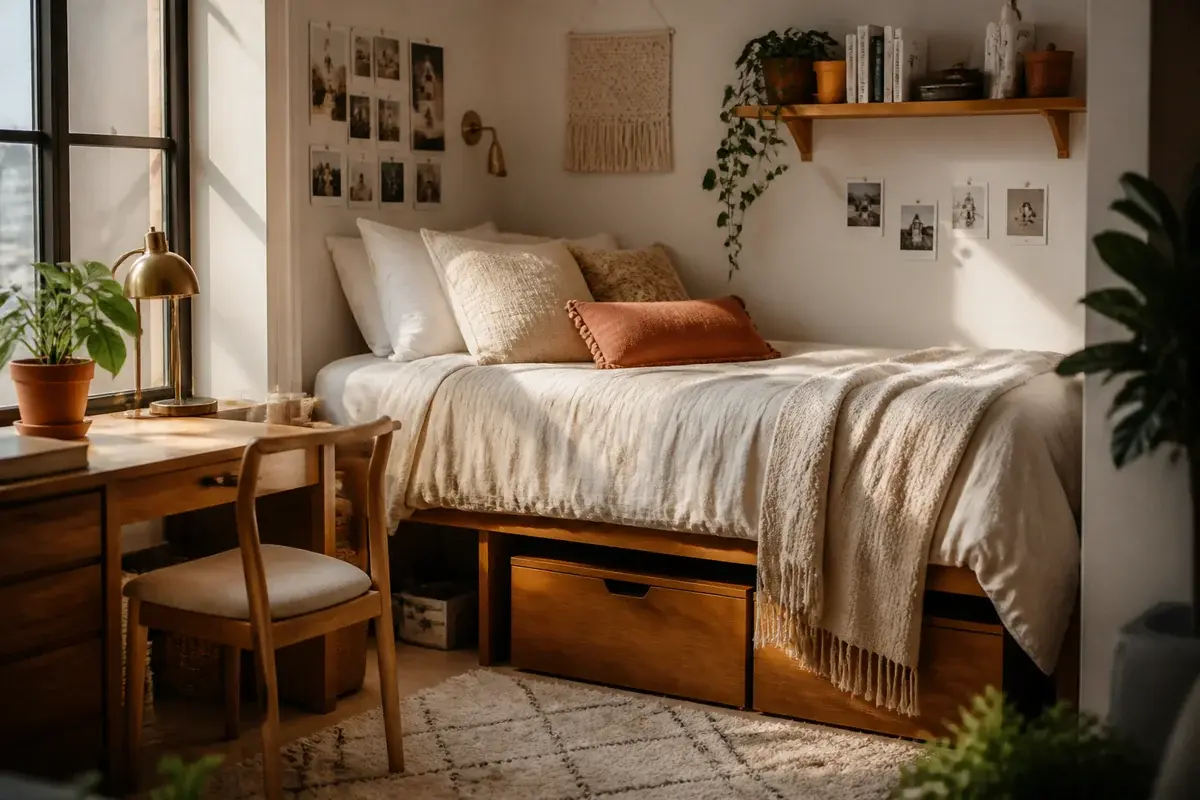
Your bed eats about half the floor plan, so whatever color your bedding is, that's the room's color whether you planned it or not.
Deal with the sizing trap first. Most residence halls use twin XL mattresses, 39 by 80 inches. A standard twin sheet is 39 by 75, five inches short, and the fitted corners pop off in the middle of the night for the rest of the year. Check your housing site for the mattress size before you order anything. Then buy one good twin XL sheet set and a blanket you like, $30 to $50 for both. Pillows can come later, one at a time.
Skip the white duvet. In a shared room it goes gray in about three weeks, and washing it means carrying it to a machine you share with a whole floor at $1.50 to $2 a load. Mid-tones and prints buy you weeks between washes. Cotton percale breathes; microfiber is cheaper and sleeps hot, which matters in a building where you rarely control the thermostat. If the mattress is the thin vinyl-covered kind, a two to three inch foam topper at $40 to $70 will do more for your week than anything else on this list.
Storage Doesn't Have to Look Like Storage
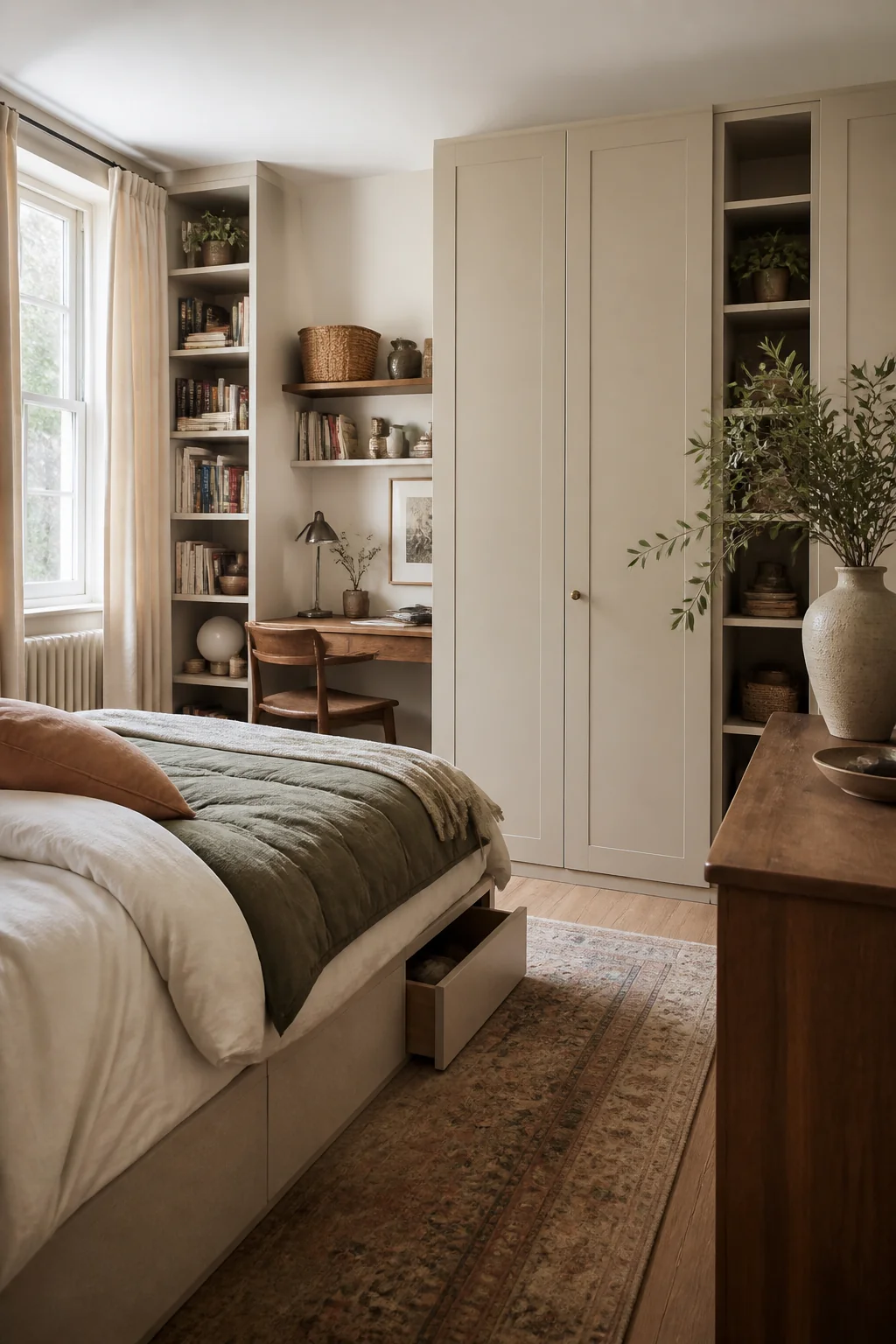
Dorm closets are shallow and oddly proportioned, so the overflow has to live somewhere, and it might as well look like furniture rather than a supply cupboard.
Measure the gap under your bed before you buy a single bin. A standard dorm frame leaves 7 to 12 inches of clearance, which rules out most of the tall containers sold as under-bed storage, so check the height printed on the box. The ones that do fit run $20 to $30. Bed risers add 5 to 8 inches for $15 to $25 a set, but plenty of housing offices ban them outright or supply their own adjustable frames instead, so ask before you spend.
Floating shelves at about $15 each are excellent in an apartment and usually need drilling, which your contract almost certainly prohibits. Adhesive shelves and over-door hooks are the dorm equivalent, rated somewhere around 5 to 10 pounds, so keep textbooks off them.
One quiet trick: pick a single bin color and stay with it. Six matching containers read as storage. Six mismatched ones read as clutter with a lid on it.
Small Touches Make It Feel Real
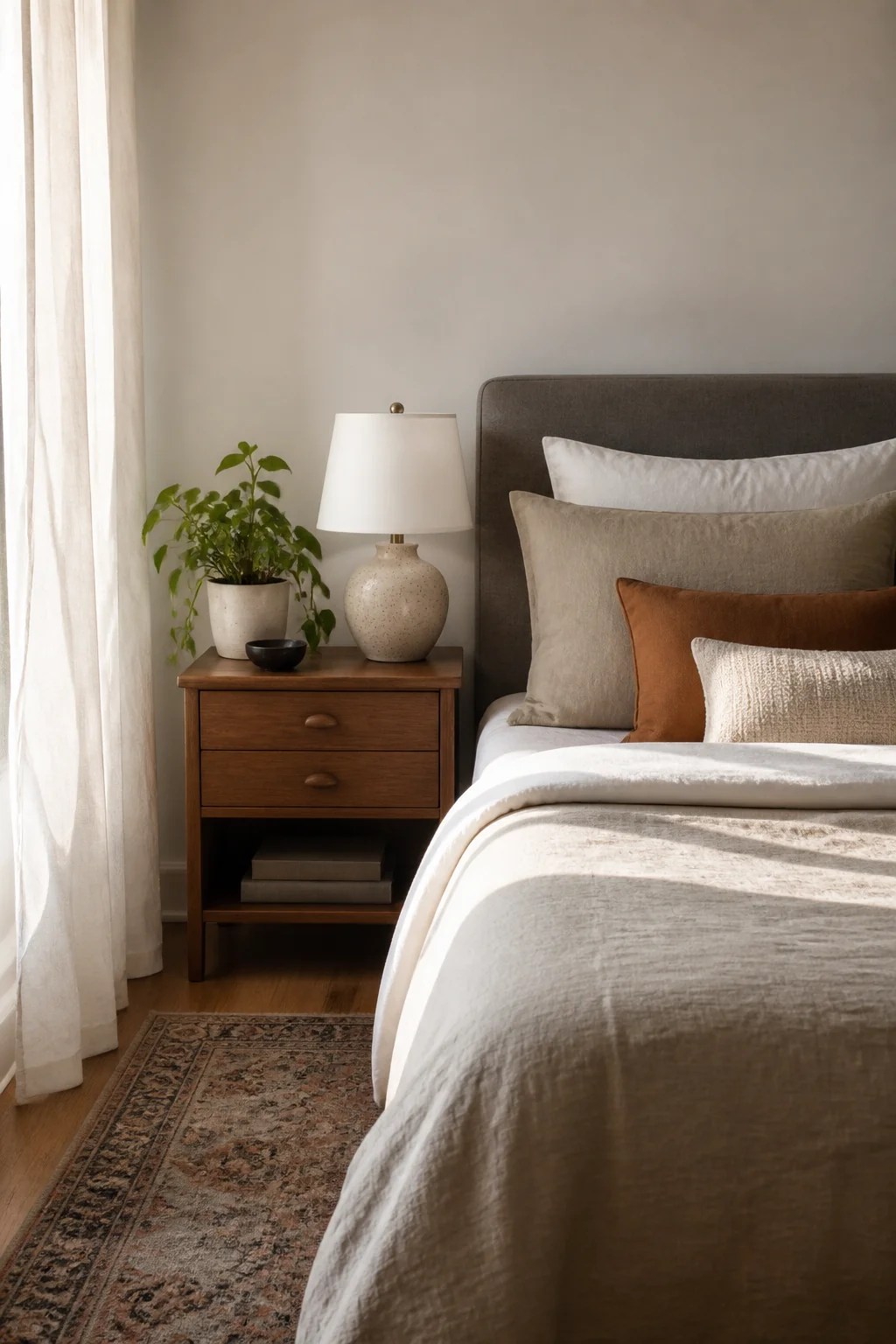
This is the layer that makes a room read as yours. A small tray on the nightstand so the loose stuff has an edge to sit inside. Four or five 4-by-6 prints of people you like, about 30 cents each from a drugstore kiosk, which costs less than one poster and means considerably more in February.
Then one plant. Pothos is the right pick: it tolerates a north window or a light well, wants water every 7 to 10 days, and costs $6 to $10 in a 4-inch pot. Set it on a saucer and tip the runoff out, because a pot standing in its own water is how most dorm plants die by October. If your window faces a brick wall, a snake plant will forgive even that.
Worth knowing before you shop: candles are prohibited in nearly every residence hall, and getting caught with one is a housing violation rather than a warning. A reed diffuser gives you the same effect legally, for $15 or so.
Check out dorm bedding ideas for more on making your bed the focal point, and if you're setting up a study area too, back to school study space ideas has practical tips for the desk side of the room.
Pin this for later
The rooms that feel finished aren't the ones with the most in them. They're the ones where the light is warm, the floor is covered, and everything on the desk has a place to go.