7 Home Library Ideas for Homes Without a Spare Room
Seven home library ideas for homes with no room to spare, with real shelf depths, safe weight limits and costs for reading corners, wall shelving and book carts.
This post contains affiliate links. As an Amazon Associate I earn from qualifying purchases. If you buy through our links, we may earn a commission at no extra cost to you.
Why Books Take Over a Room
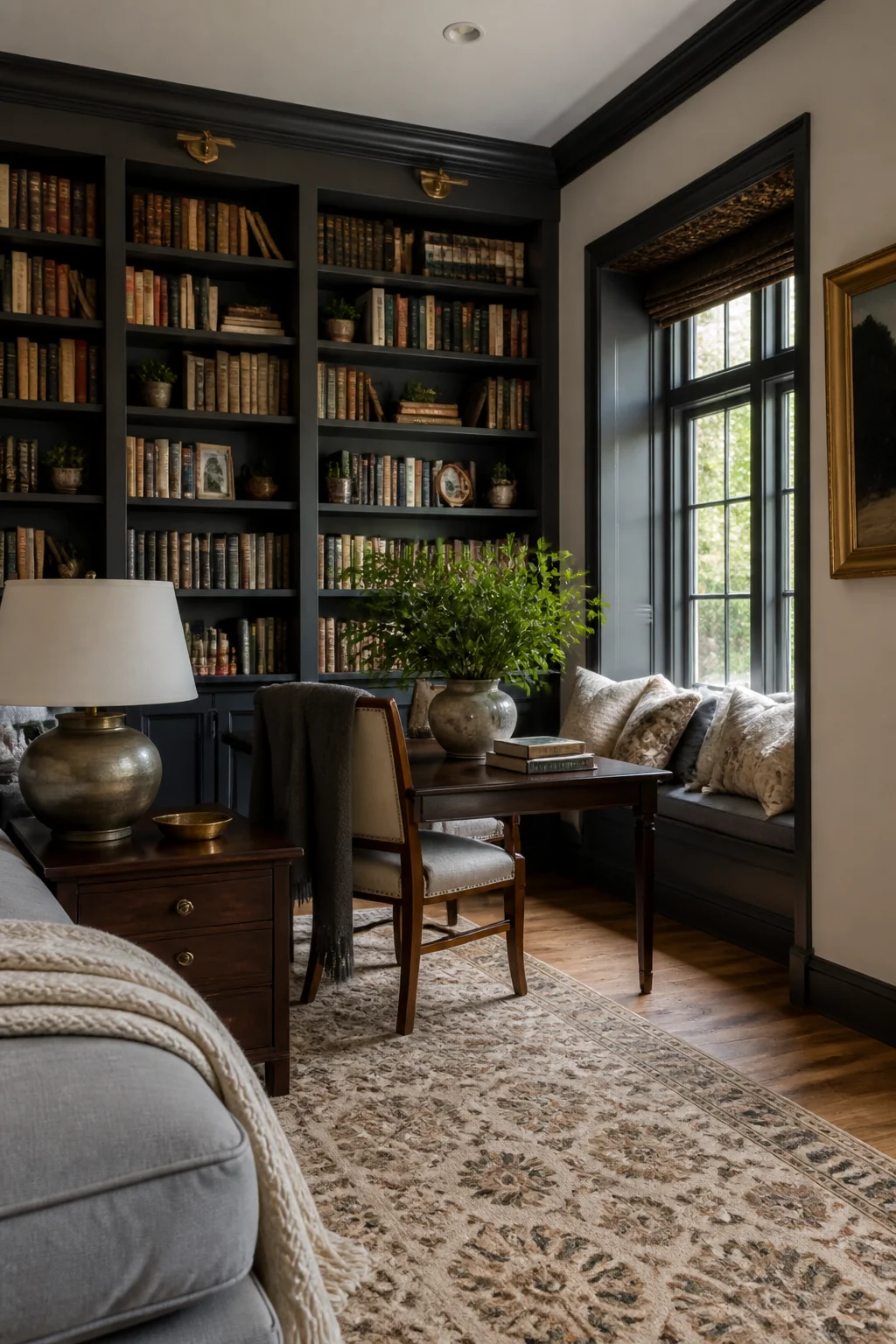
Books multiply quietly. A stack on the nightstand becomes a tower, the coffee table turns into a shelf, and one morning you're stepping over a pile by the front door. You can fix that without thinning the collection or renovating.
None of the seven ideas below need a dedicated room, built-in millwork, or a rolling ladder. What they need is a decision about where books live, so they stop colonizing every flat surface in the house. A corner, one wall, a cart, the ledge under a window: the right one is usually whichever your floor plan is already offering you.
Before any of it, one number worth carrying around. Books are heavier than people expect, roughly 20 to 25 pounds per running foot of packed hardcovers. A 36 inch shelf filled tight is holding 60 to 75 pounds, which is why the fixing into the wall matters far more than the bracket you can see. Most shelving failures at home come from ignoring that figure.
1. Create a Reading Corner in an Awkward Nook
Every home has the leftover patch: the strip between a bedroom wall and a radiator, the dead end past a doorway, the run of wall that's too short for a sofa. It's usable, just not for a sofa.
You need less floor than you'd guess. A compact armchair measures roughly 30 inches wide by 32 inches deep, and it wants about 18 inches of clearance in front so your knees and a footstool have somewhere to go. That makes a pocket of around 48 by 54 inches a genuine reading corner. Secondhand and consignment chairs in good condition run $60 to $150; a new accent chair starts near $200. Put a side table beside it that's at least 20 inches tall, so a mug sits at armrest height rather than down by your ankle.
Then face the chair so window light arrives over your shoulder. Light coming at you from the front bounces off the page as glare, and you'll be squinting by chapter three. A lidded basket underneath holds whatever you're partway through, which is the part that keeps the floor clear.
2. Use Vertical Shelving on a Single Wall
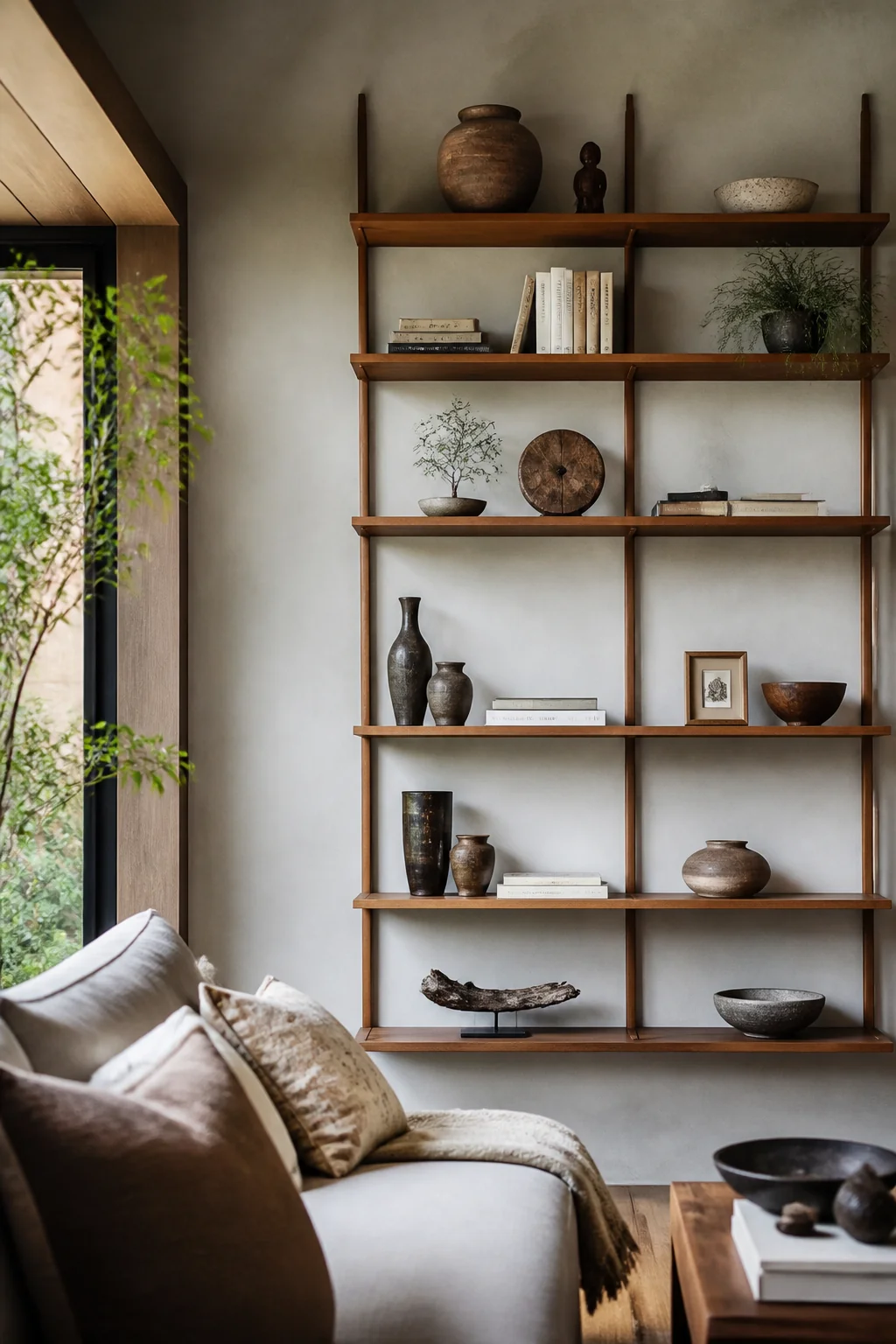
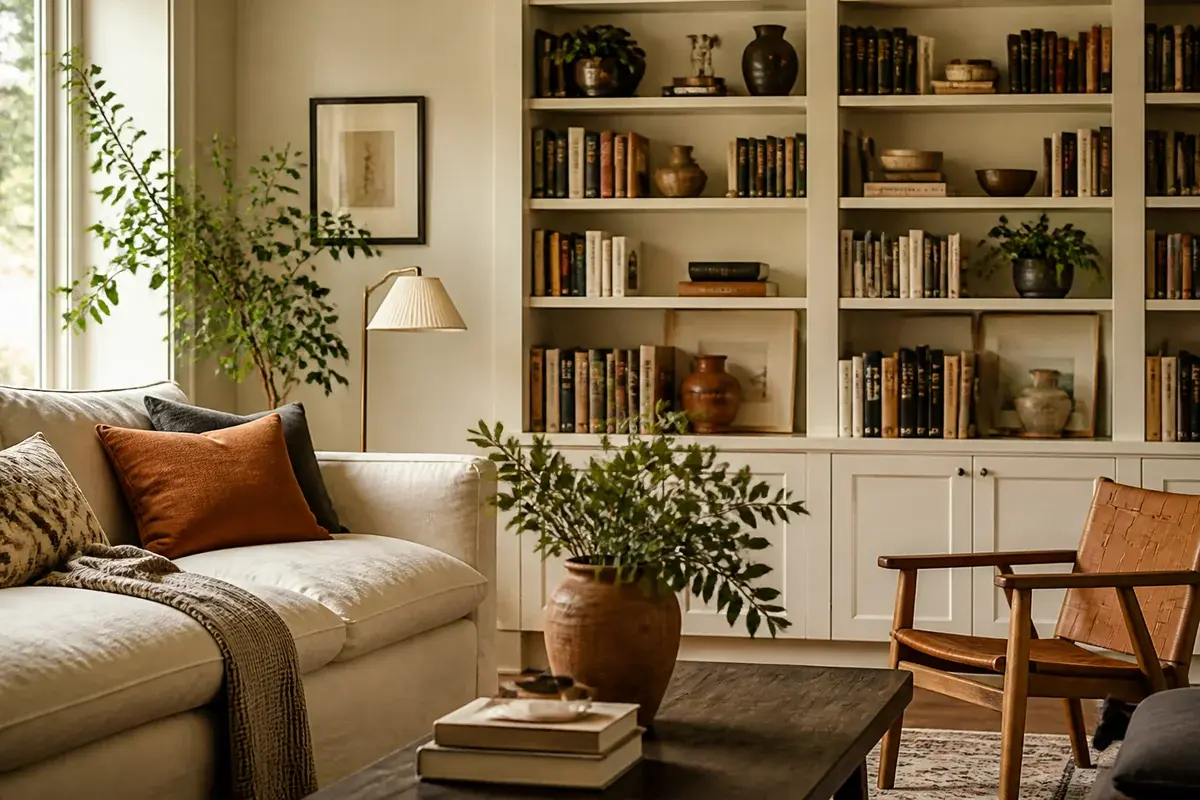
One wall done properly beats shelving scattered across four. Pick the longest uninterrupted wall in the room, ideally one with no radiator, vent or door swing in the way, and let that be the library.
The failure here is predictable: budget floating shelves fixed to drywall with the little plastic plugs that came in the packet. Drywall on its own holds almost nothing, and a loaded shelf tends to let go in the middle of the night rather than while you're watching. Find the studs, 16 inches on center in most homes and 24 in some newer builds, and get at least two brackets into solid timber. Where a stud won't line up, use toggle bolts rated for 50 pounds or more, never the expanding plugs.
Depth matters more than length. Ten to 12 inches takes a hardcover with a little air behind it; 8 inches suits paperbacks and reads lighter on the wall. Leave 12 to 13 inches of vertical space between shelves, more if you own art books. Budget roughly $300 to $500 for a full wall in pine or birch ply with decent hardware. Baskets on the bottom shelf hide the beaten-up spines nobody needs to see.
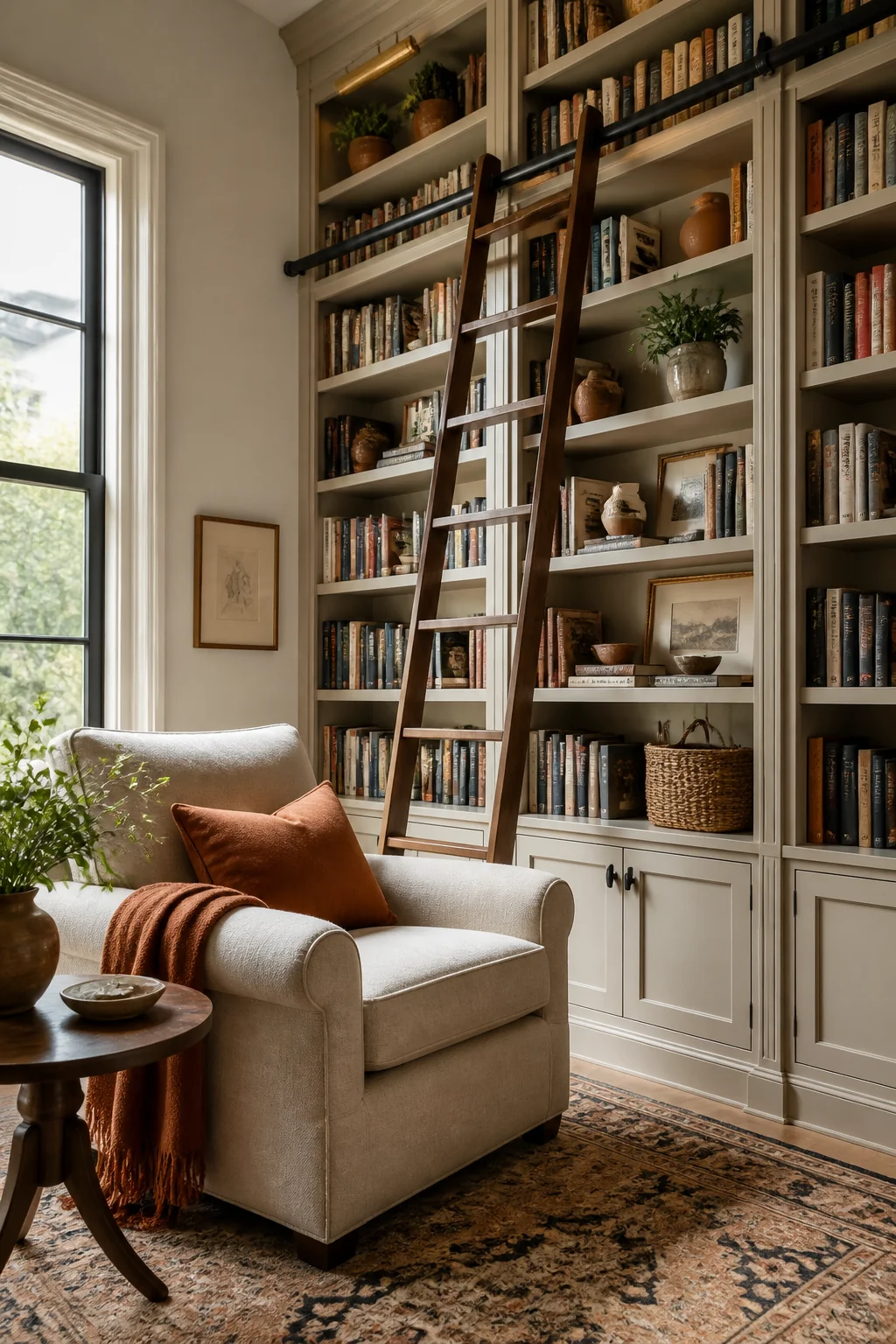
3. Go Mobile with a Book Cart
No spare wall, or no permission to drill into the one you have? A cart sidesteps both problems.
A three-tier rolling cart costs about $50 to $90 and swallows roughly 30 paperbacks or 20 hardcovers. The footprint is small, commonly around 16 by 12 inches, so it parks beside an armchair and rolls out of the way when you need the floor back. Rentals suit it perfectly: nothing goes into the wall, and it moves house in the back seat of a car.
Two things decide whether it works. Load the bottom tier heaviest, because a cart carrying its weight up high will tip when a wheel catches the edge of a rug, and thin metal frames flex once every tier is crammed. Leave the top tier a little loose so it reads as a display rather than a filing system.
The second is rotation. Thirty books is a shelf you refresh, not a whole collection, so send finished titles back to the main shelving and pull forward what you want next. Locking casters are worth the extra few dollars on hard floors, and a hallway works as well as a bedroom provided you keep 36 inches clear to walk through.
4. Add Books to Your Entryway
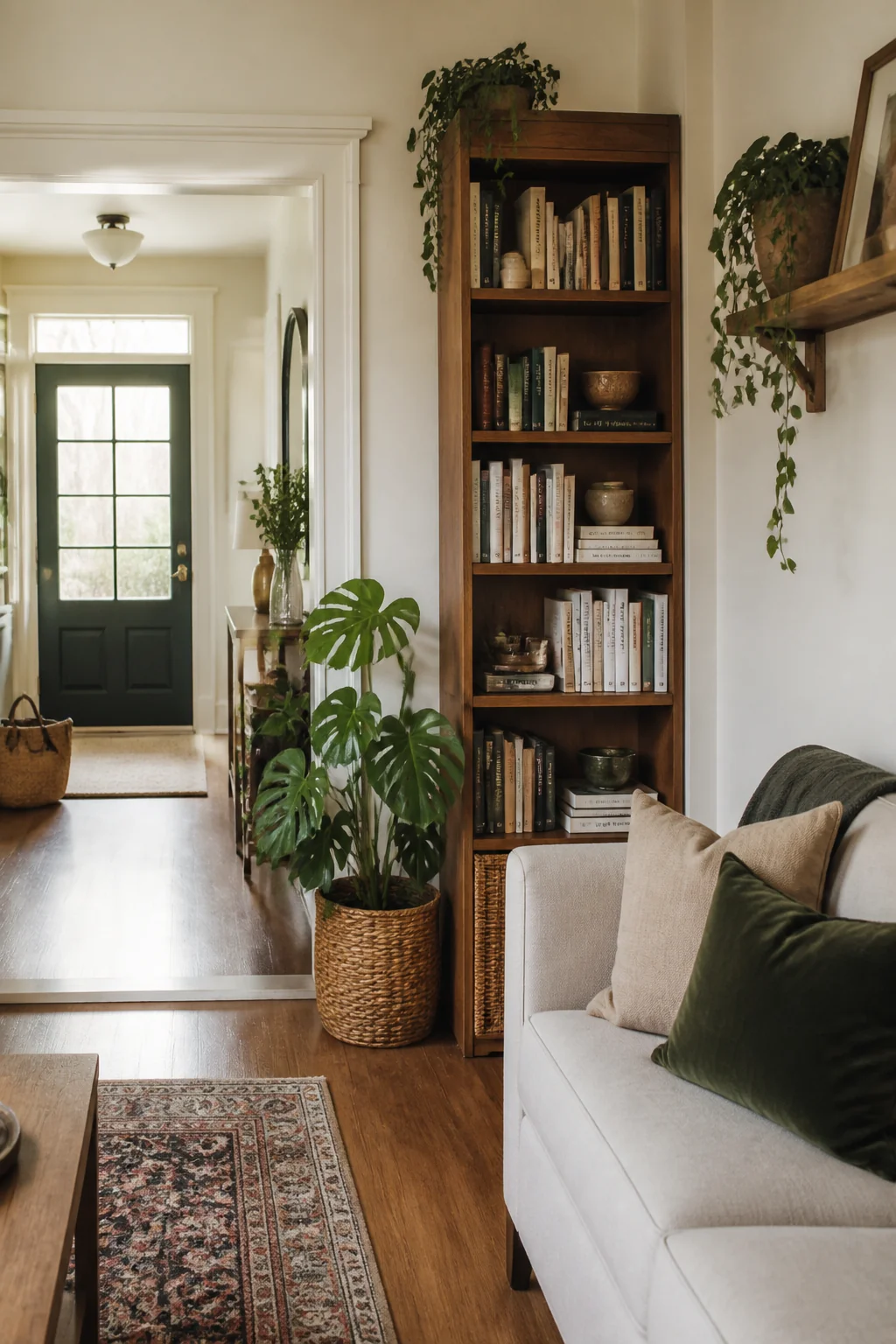
An entryway earns its keep when it does two jobs at once, and books are a good second job.
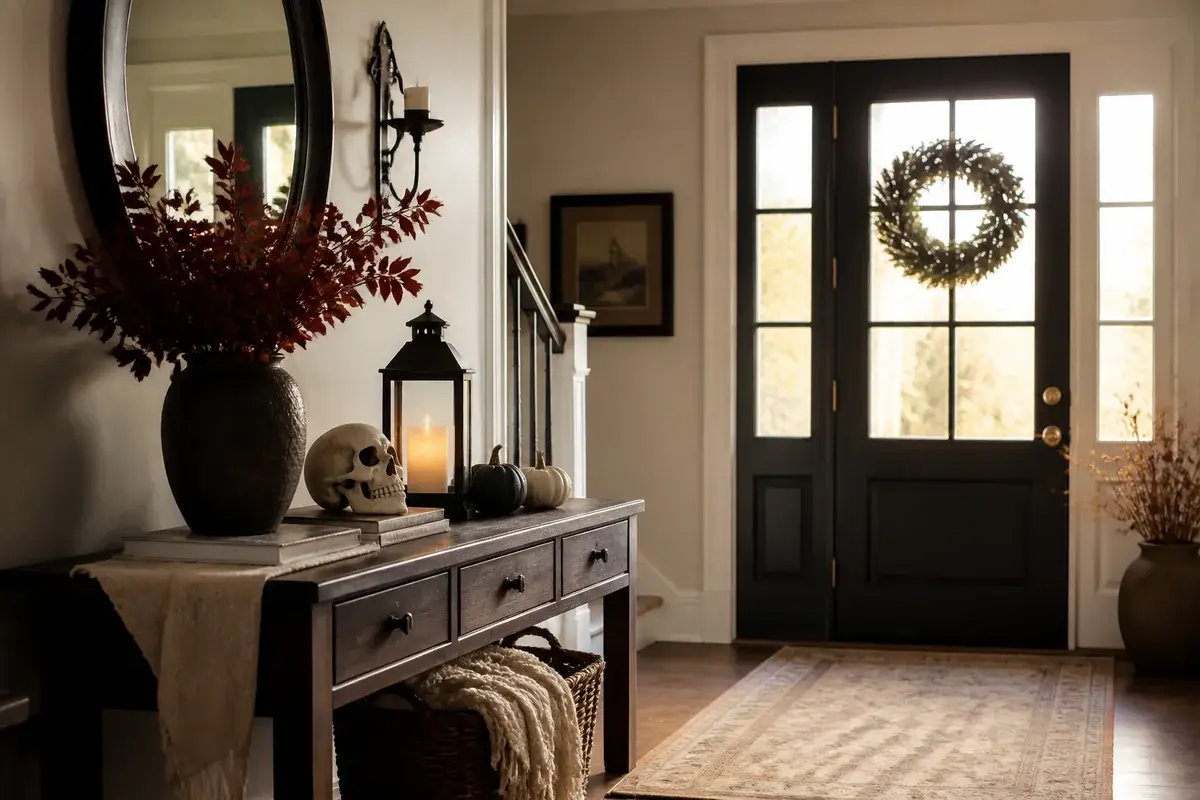
Keep it low. A bookshelf around 36 inches tall reads as a console, gives you a surface for keys and a lamp, and doesn't close the space down as you walk in. Depth is the real constraint: 10 to 12 inches is plenty for books, and you want 30 to 36 inches of walking clearance left in front so nobody edges past the coats sideways. Measure the door swing before you buy anything. A door that opens inward onto the shelf is a daily irritation you can't design your way out of afterwards.
Lay the better-looking hardcovers flat in stacks of three or four and stand the rest upright. Mixing the two orientations stops a short shelf looking like a filing cabinet. The top surface is also the natural parking spot for library books going back, which is the difference between returning them and paying the fine.
If your sitting area is tight, moving books here buys back a wall. Worth reading next to small living room furniture ideas.
5. Organize by Color (Yes, Really)
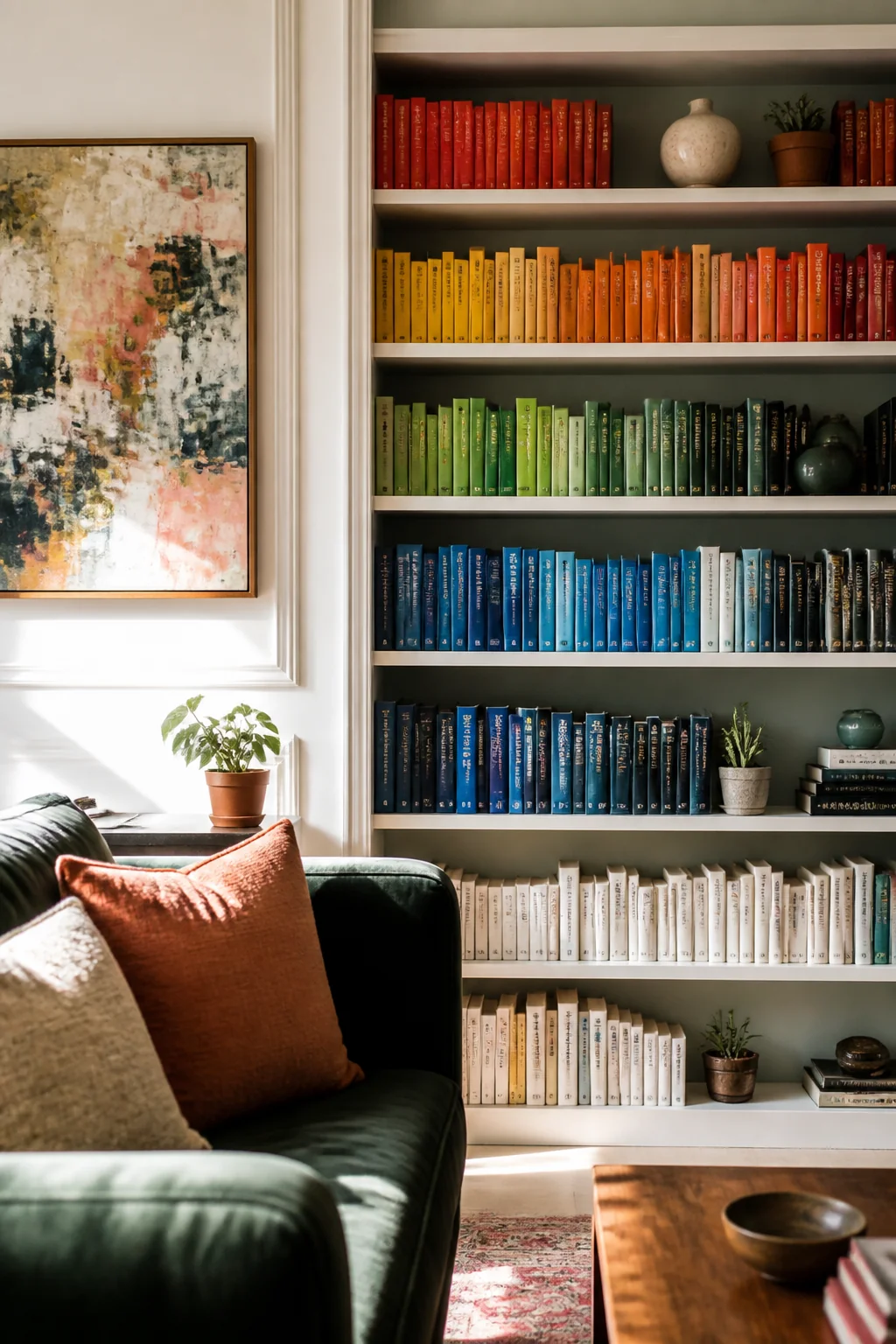
Color sorting is the arrangement people either love on sight or refuse on principle. It's worth knowing exactly what you're trading before you pull everything off the shelf.
The method is simple. Take the books down, sort them into rough piles by dominant spine color, then run those piles along the shelf in spectrum order, or split them warm on one side and cool on the other. Cream and white spines make a clean break between blocks. Black and deep navy sit better at the ends than in the middle. A 6 foot wall takes an hour or two and no tools.
What you gain is quiet. Mixed spines read as visual noise, which is why a tidy shelf can still look cluttered; blocks of color read as one object instead of two hundred. It also absorbs the decorative bits nicely, since a vase or a small frame disappears into a block of the same tone.
What you lose is retrieval. If you can't picture a book's cover, you'll hunt. That's fine for novels you've finished and genuinely bad for cookbooks, manuals or anything you use while working. We'd keep those shelves sorted by subject and save the color treatment for the wall you look at.
6. Create a Window Seat Library (If You've Got the Space)
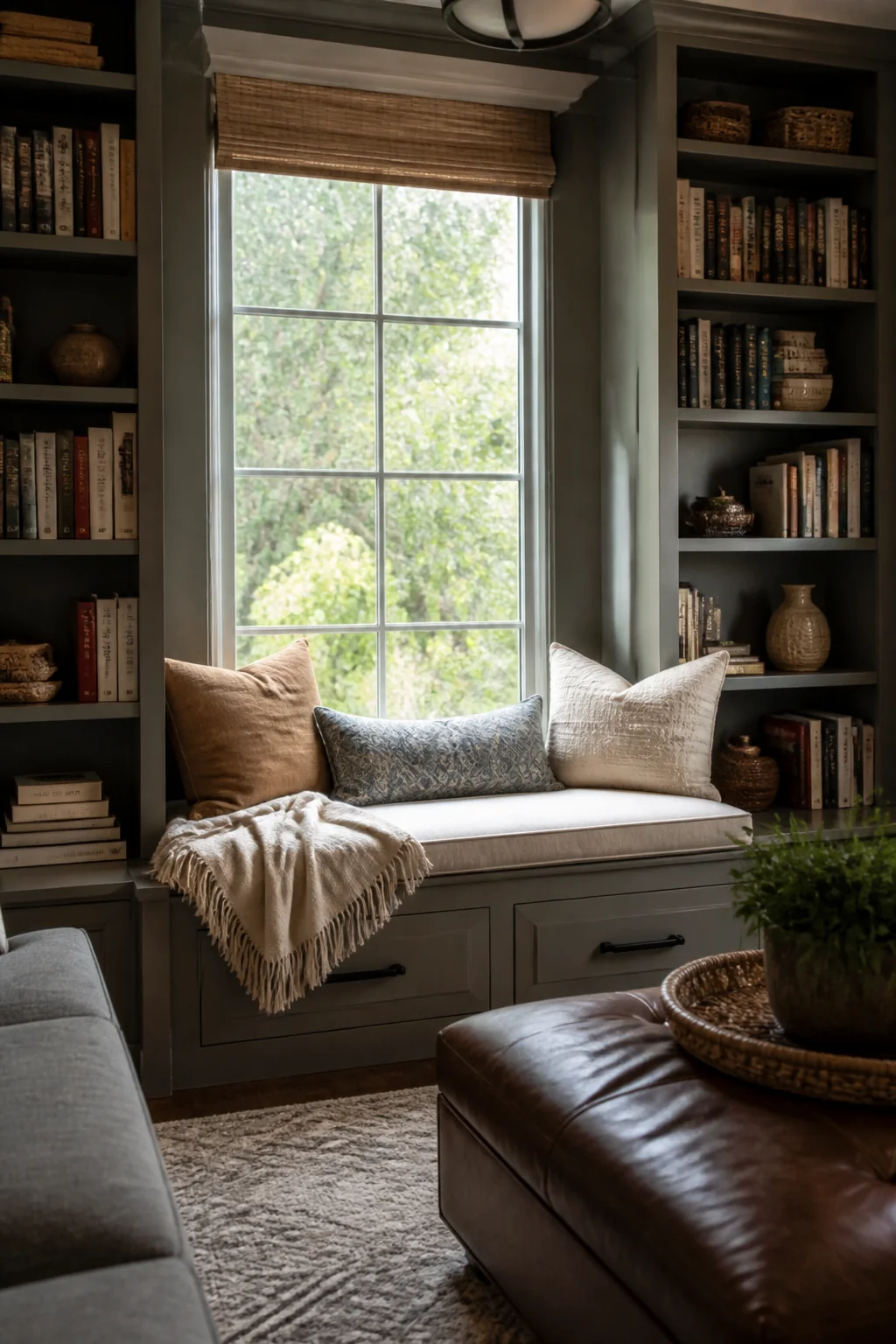
A bay window or a bump-out is already a bench. It mostly needs a cushion and a reason to sit down.
Aim for a seat depth of 18 to 24 inches and a height of about 17 to 18 inches off the floor, which is ordinary chair height and keeps your feet flat. For the cushion, specify high-density foam 2 to 3 inches thick; softer foam flattens into a dip within a season of daily use and never recovers. A cut-to-size pad with a washable cover generally runs $100 to $200 depending on the width, less if you buy a foam blank from a fabric shop and sew a simple envelope cover yourself.
The storage below is best filled with the books you reach for least. Drawers on runners beat a lift-up lid, because a lid means shifting the cushion and whoever is sitting on it every single time.
One caution that catches people out: direct sun bleaches spines and yellows paper within a year or two. Keep anything you care about off the sunniest shelf. A small lamp, around $30, covers the months when the window stops giving you much after four in the afternoon.
7. Go Vertical in Your Bedroom with a Headboard Bookshelf
The wall above a bed is usually dead space, and shallow shelving is the safest thing to put there.
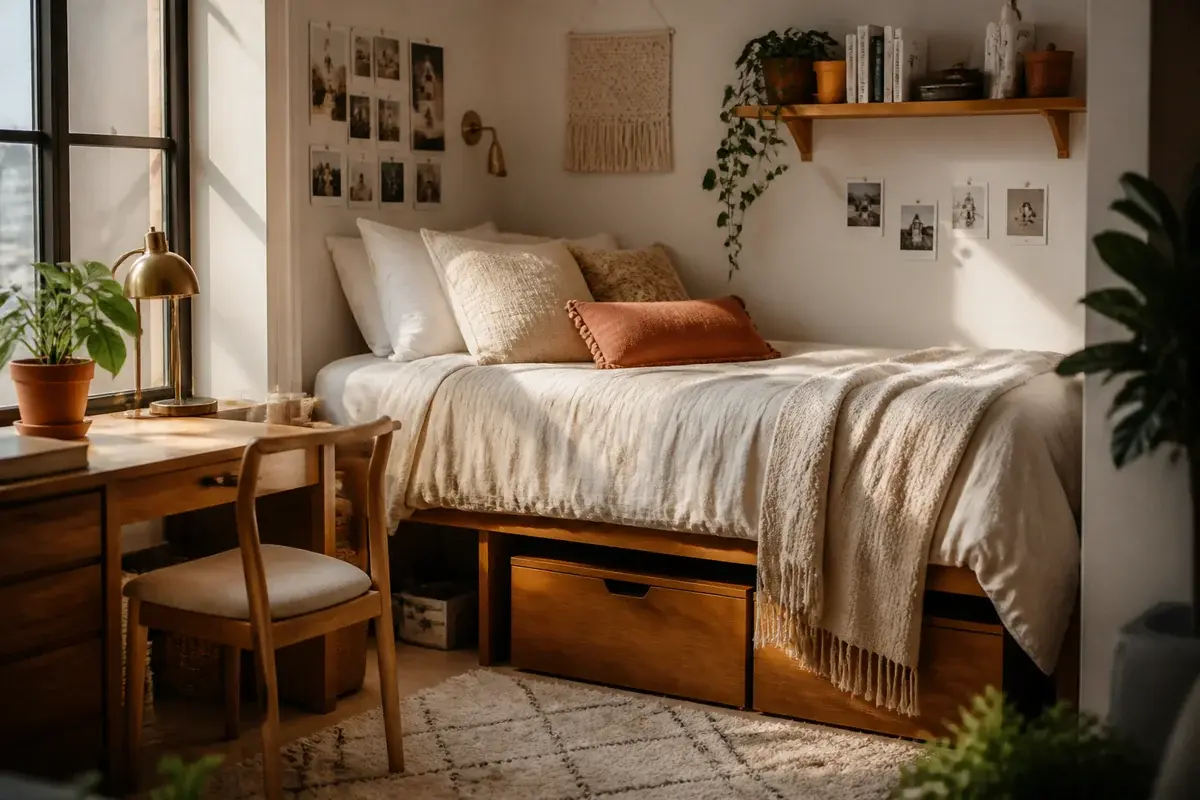
Shallow is the operative word. Eight inches deep holds a standard hardcover and won't catch your head when you sit up. Mount the lowest shelf at least 24 inches above the top of the mattress so you can lean back against the headboard properly. Every bracket goes into a stud or a toggle rated for the load, with no exceptions made because one spot is awkward, and a small lip or rail along the front edge stops a book sliding off when a door slams downstairs.
Load it light. This is the shelf for what you're reading now, a lamp and a glass of water, not the boxed hardback set that weighs 30 pounds on its own. If you live somewhere that gets tremors, skip the wall over the pillows altogether and run the shelving up the side wall beside the bed instead.
Materials for a run spanning a queen bed come in around $150 to $250 in pine with reasonable hardware, and it's an afternoon's work if you already own a drill and a level. What you get back is the nightstand.
If you get only one thing right, make it the fixing into the wall. Everything else here is reversible: a cart rolls away, a cushion gets recovered, a color-sorted shelf goes back to alphabetical in an afternoon. A loaded shelf coming off the wall takes the plaster, the books and whatever was sitting underneath with it.
Take the guide with you
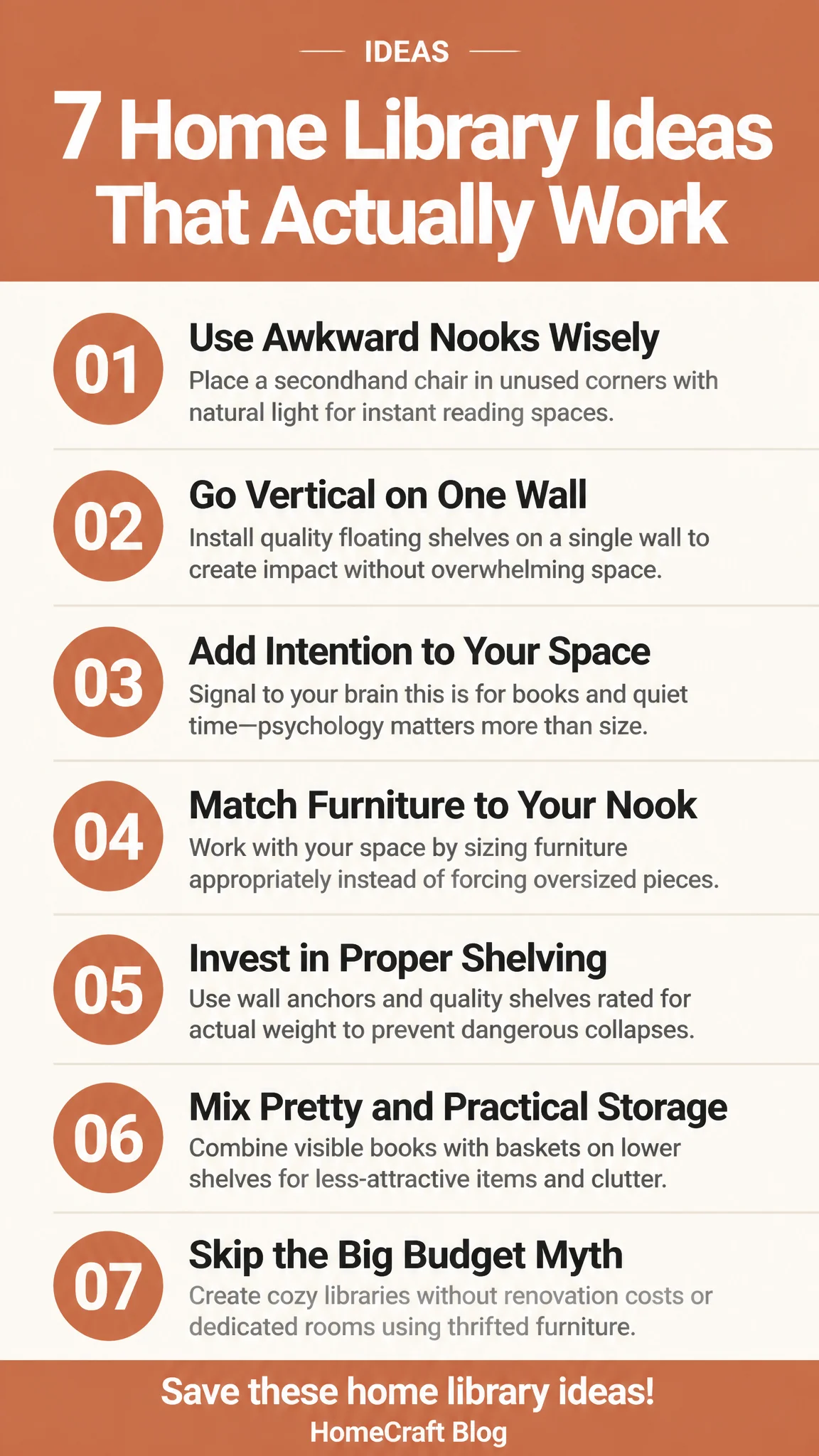
Past that, none of this is really about square footage. It's about books having an address. Once they do, the tower on the nightstand stops rebuilding itself.