14 Closet Organizing Ideas for Reach-In Closets Before the New Year
Most of a reach-in sits empty above your shirts. These 14 ideas add a second hanging level, shoe shelves, bag hooks to organize your closet for the new year.
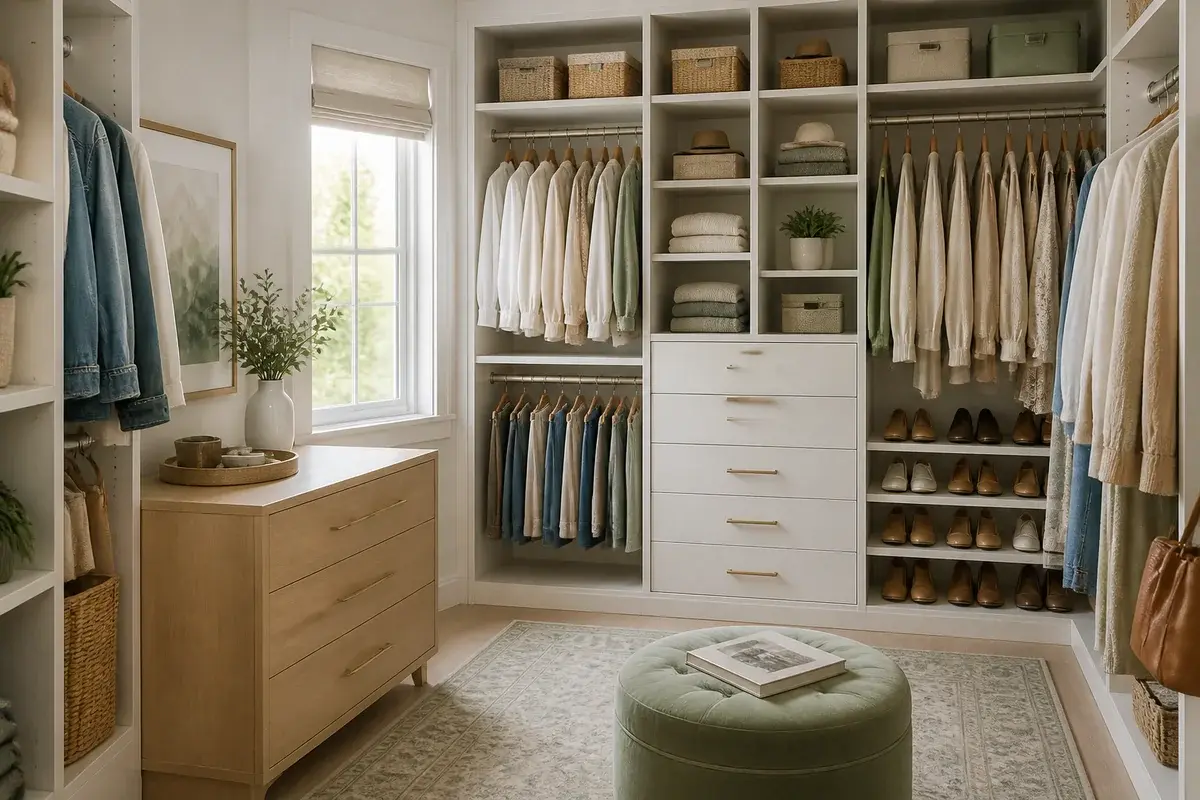
Split the hanging space into two levels. That one change does more for a reach-in closet than any bin or hook you can buy. A standard reach-in is a narrow box, usually about 24 inches deep and 60 inches wide, with one door and one rod, and most of its height sits empty above the shirts. This list is for you if you want to organize your closet for the new year and it has to hold a full season of clothes, shoes, and bags, without a renovation to make it happen. Each idea below starts with the look, then the reason it works, then how to get it in an ordinary room.

Free printable kit
Finish the wall above your bed this weekend
- 10 boho prints in terracotta and sage
- Layouts for full, queen and king beds
- Frame sizes and spacing worked out
Plus our emails with ideas and occasional shop offers. Unsubscribe anytime. Privacy
1. Double hang the rod at two heights
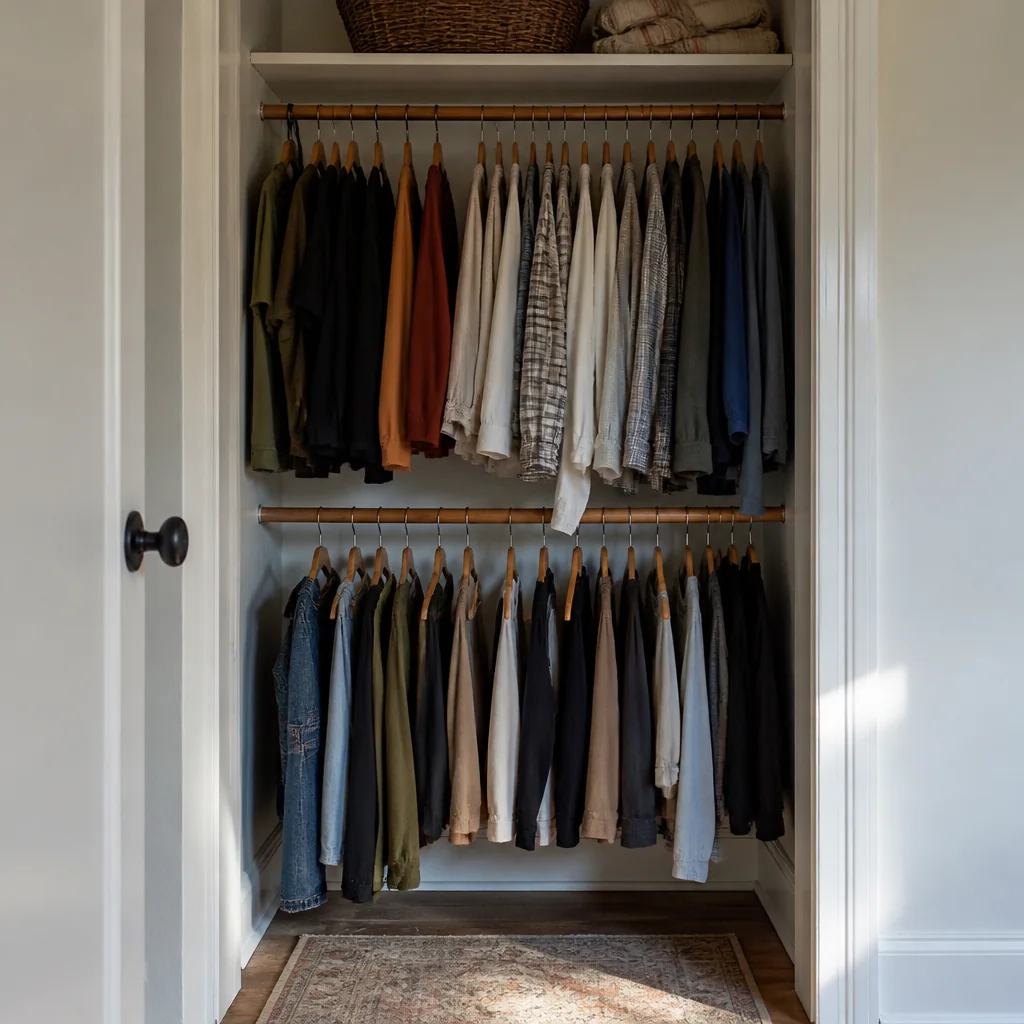
The look is two clean rows of hanging clothes, one above the other. The upper rod sits about 80 inches off the floor, and the lower rod sits around 40 inches. Blouses, shirts, and jackets go on the lower rod, while dresses and long coats stay up top where their hems have room to drop. The eye reads the closet as full and orderly instead of crammed, and the lower rod brings everyday pieces within easy reach. To get it, buy a double rod kit with adjustable brackets and measure from the floor before you drill. The common mistake is leaving one rod at 66 inches, which turns the hems of short shirts into a tangle.
2. Lidded bins on the top shelf
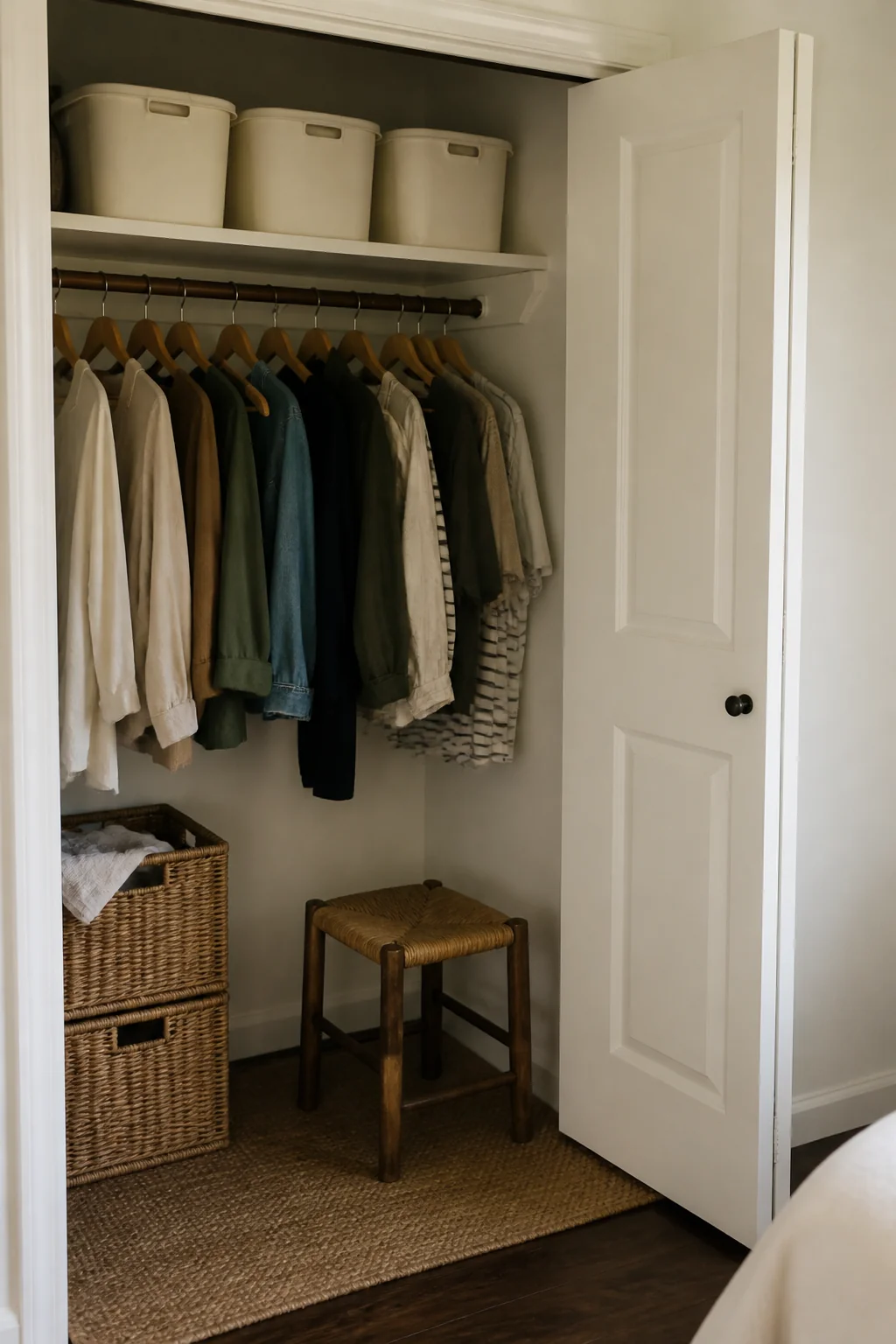
A row of matching bins with lids, all the same height and labels facing out, fills the top shelf. The look feels calm because the shelf stops looking like a dumping ground. The top shelf sits high enough that you won't reach it every day, which makes it the right home for off-season pieces you only need twice a year. Measure the shelf depth first. A shelf in a 24-inch closet runs about 23 to 24 inches deep, so a 15-inch bin fits with room to slide it out. Skip open baskets up high, since they collect dust and make winter coats look like a pile. (If a kids' step stool lives in the closet, keep the top shelf for the lightest bins only.)
3. Hang by color from light to dark
Run a single row of shirts from white to cream to pale blue to navy to black, left to right. Sorting by color is one of the quickest ways to organize your closet for the new year, and a gradient like this reads as deliberate. You can see every piece at once without pushing hangers aside. Repetition does the work here. Same-color pieces stack into bands, so the rod looks like a paint chip instead of a jumble. Sort pants and skirts on a separate section of the rod using the same light-to-dark order. The mistake to avoid is sorting only by garment type, which puts a black blouse next to a white one and breaks the band. Keep one hanger style across the whole rod so the color stays the star.
4. Matching slim velvet hangers
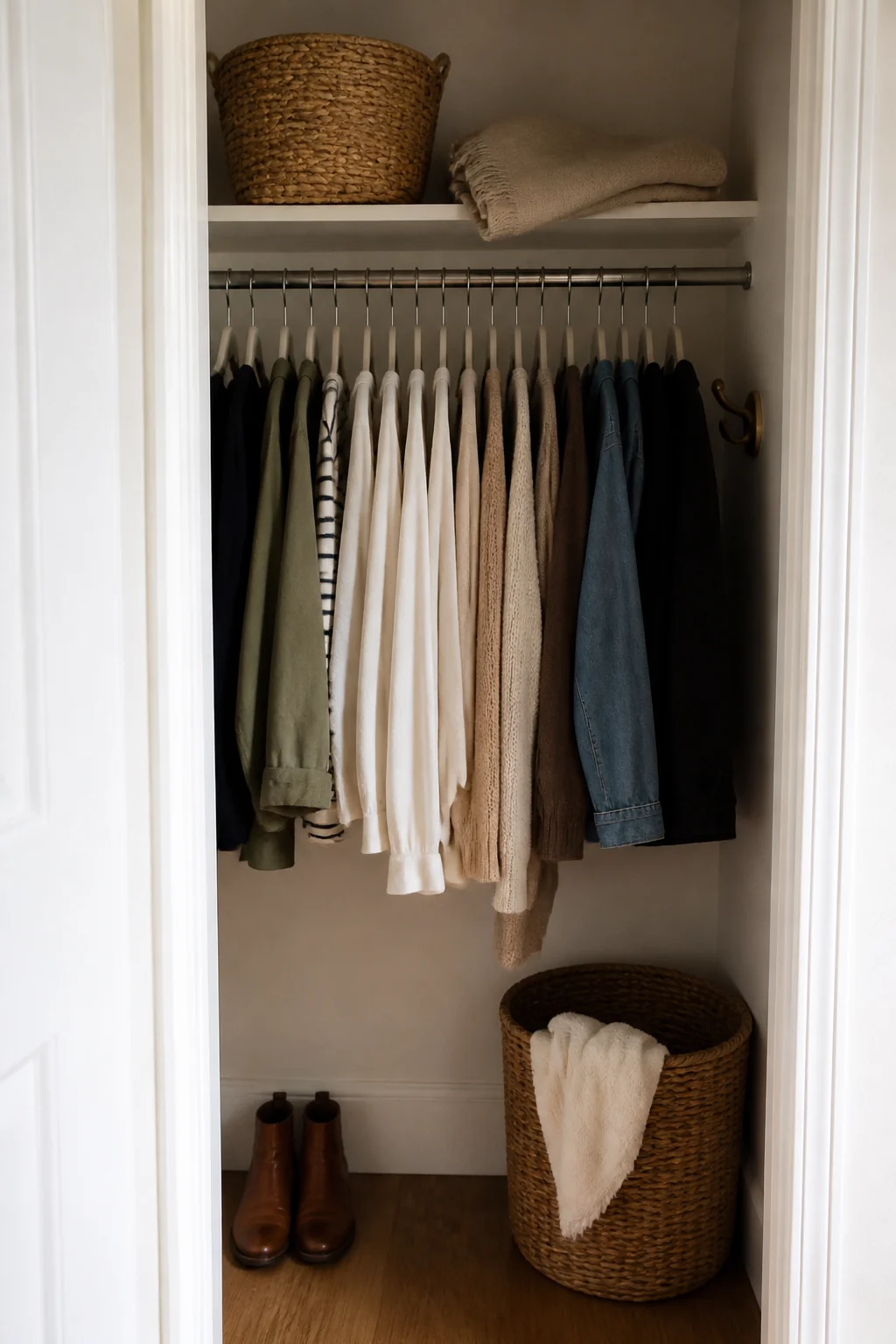
A rod full of identical hangers in charcoal, ivory, or a dusty neutral, all the same narrow profile, looks tidy from the doorway. Velvet hangers are roughly half an inch thick, while standard plastic ones run close to an inch. That difference alone can free up a surprising amount of rod length across a 60-inch closet. (Ditch the wire hangers from the dry cleaner, too. They bend and leave dents in the shoulders.) Velvet also grips knits and silky tops so they stay put instead of sliding onto the floor. Check that the hook swivels, since a fixed hook can pull a blouse off-center. Choose one color for the whole closet so the hangers blend into the back wall and the clothes do the talking.
5. Slatted shoe rack on the back of the door
Mount a tiered slatted or wire rack to the inside of the door, with shoes angled up in rows and heels alternating. The look is tidy and a little architectural, and it uses the door, which is otherwise dead space. Standard interior doors are about 1 3/8 inches thick, so most over-the-door racks sit securely on the top edge. Check that the door still closes fully with the rack loaded, since a bulky rack can catch the frame. Keep the floor clear for the shoes you wear every day and let the rack hold the rest. The mistake to avoid is piling shoes on the floor until the door won't shut.
6. A hook rail for bags and belts
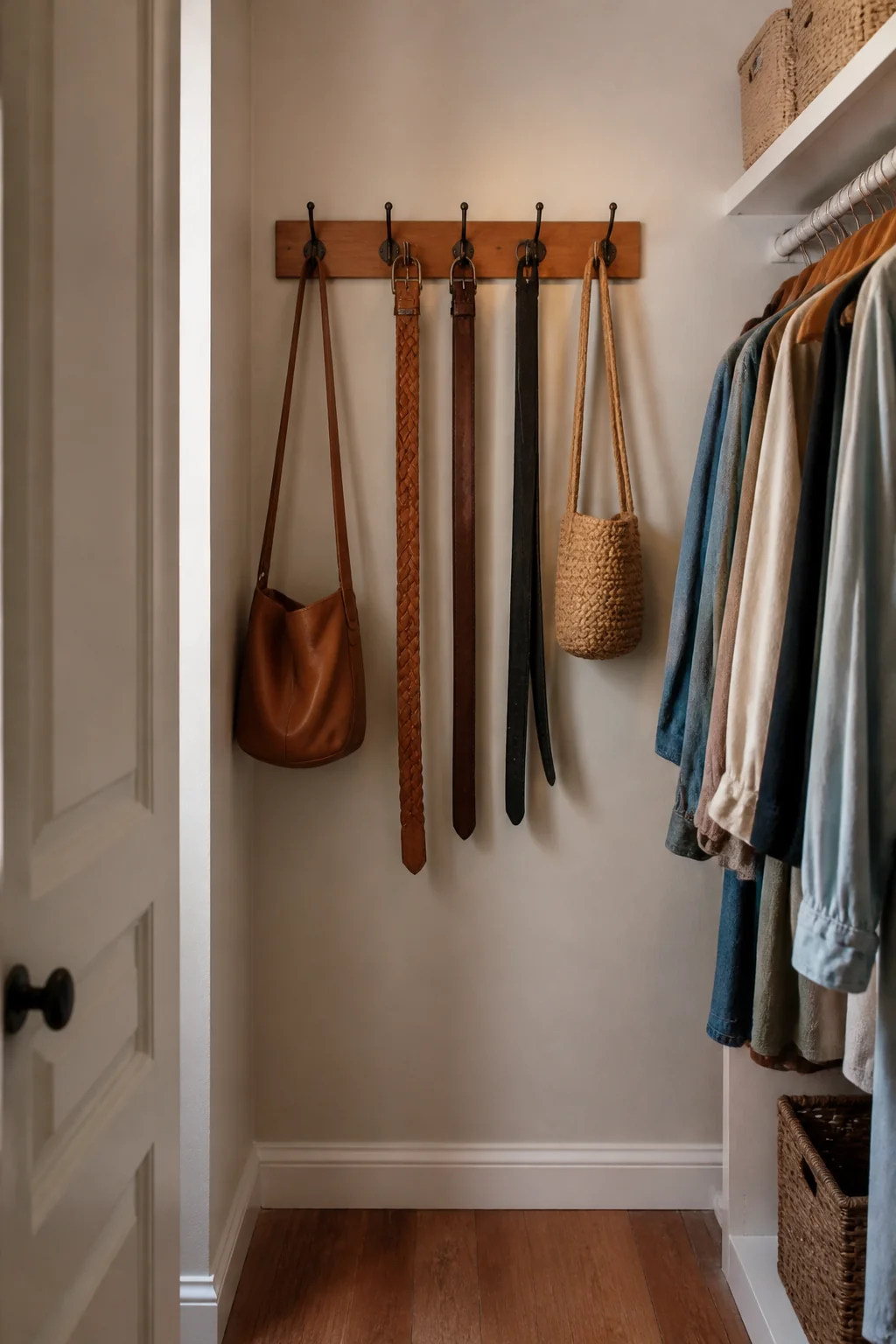
A row of matte black or brushed nickel hooks sits on the side wall at about 60 inches from the floor. Bags hang by their straps, and belts coil on the hooks in a neat stack. Vertical lines break up the horizontal rod and get handbags off the shelf, where they tend to flatten. Mount a rail with a hook system so you can move the hooks as your bags change. Heavy totes need solid support, so use studs where you can find them, or anchors rated above the bag's weight. The common mistake is screwing one hook into drywall and hanging a loaded tote from it.
7. Tall cubby tower for folded knits
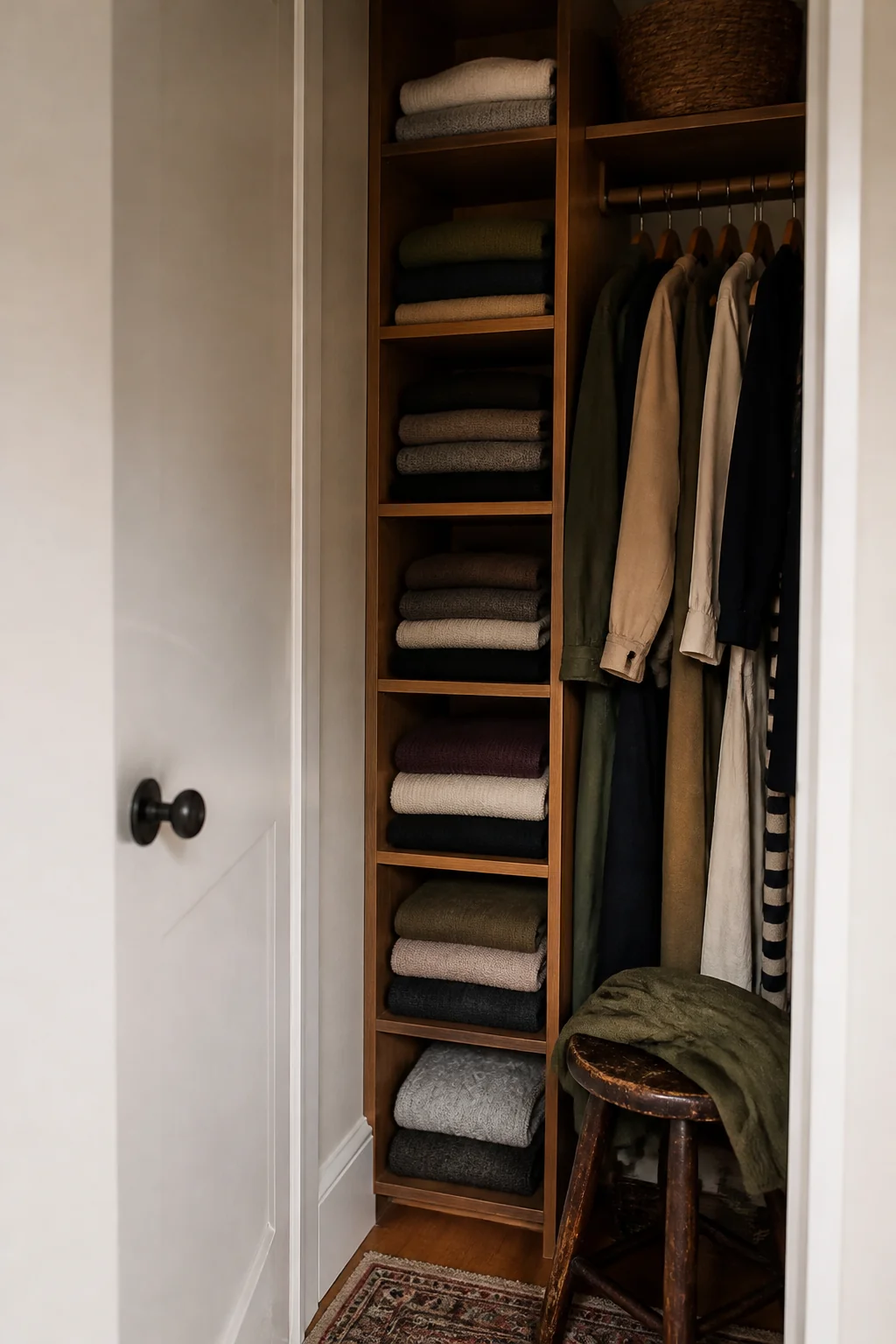
A freestanding cubby unit with five or six openings, each holding folded sweaters, stands in one corner of the closet. Stacks in different colors show from the door, which makes the whole thing look layered. Cubbies about 12 inches square fit most folded knits, and a unit around 60 inches tall keeps the top openings reachable without a stool. Leave a little clearance above it so the door can open all the way. A tower this tall and narrow can tip, so anchor it to a wall stud with the hardware that comes with it. Choose a white or natural wood finish so it reads as furniture rather than shelving.
8. Paint the back wall a warm color
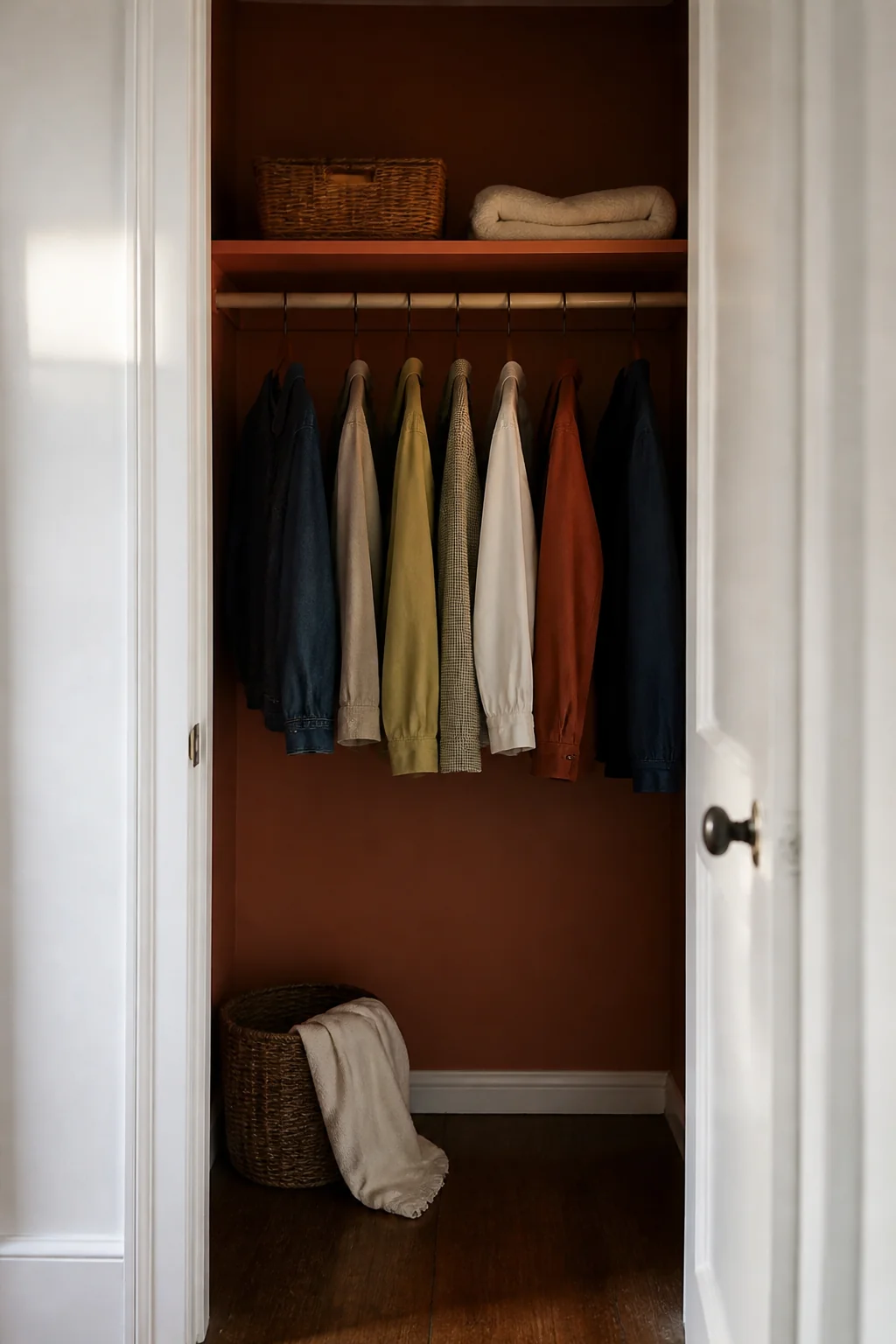
Paint the back wall in a warm clay, sage, or deep greige instead of builder white. The clothes stand out against it, and the closet starts to look like a room instead of a box. Warm walls also make colored knits look cleaner, which matters when a closet is packed. Paint one wall only, using eggshell or satin for a surface you can wipe down. Paint outdoors or with the windows open, and let the room air out before you hang anything back up. (We'd skip stark white in a reach-in, since it makes every sweater look a little grayer than it is.)
9. Battery puck lights under the top shelf
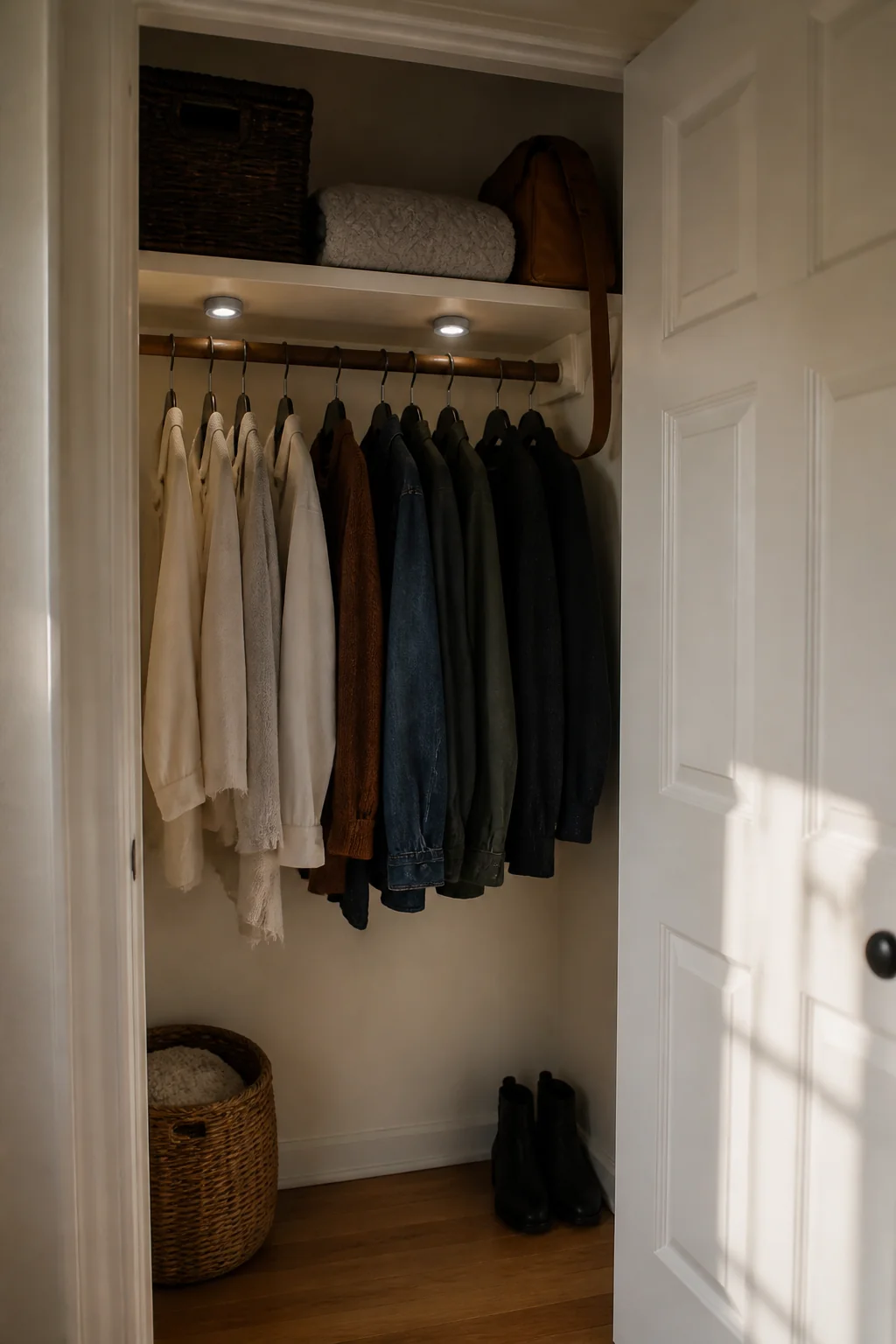
Tuck a few battery-operated puck lights under the top shelf, with a warm white color temperature around 3000K. A soft glow picks out the color of each sleeve. A reach-in often has one ceiling fixture near the door, so the back of the closet stays dim, and light placed up at shelf height reaches the rod and the walls. Stick-on pucks need no wiring, and you can place them about 12 inches apart along the shelf's underside. If you want a hardwired fixture, turn off the breaker first or bring in a licensed electrician. Mounting lights too low is the usual error, since the rod casts shadows across the shelf.
10. Labeled fabric bins on the floor
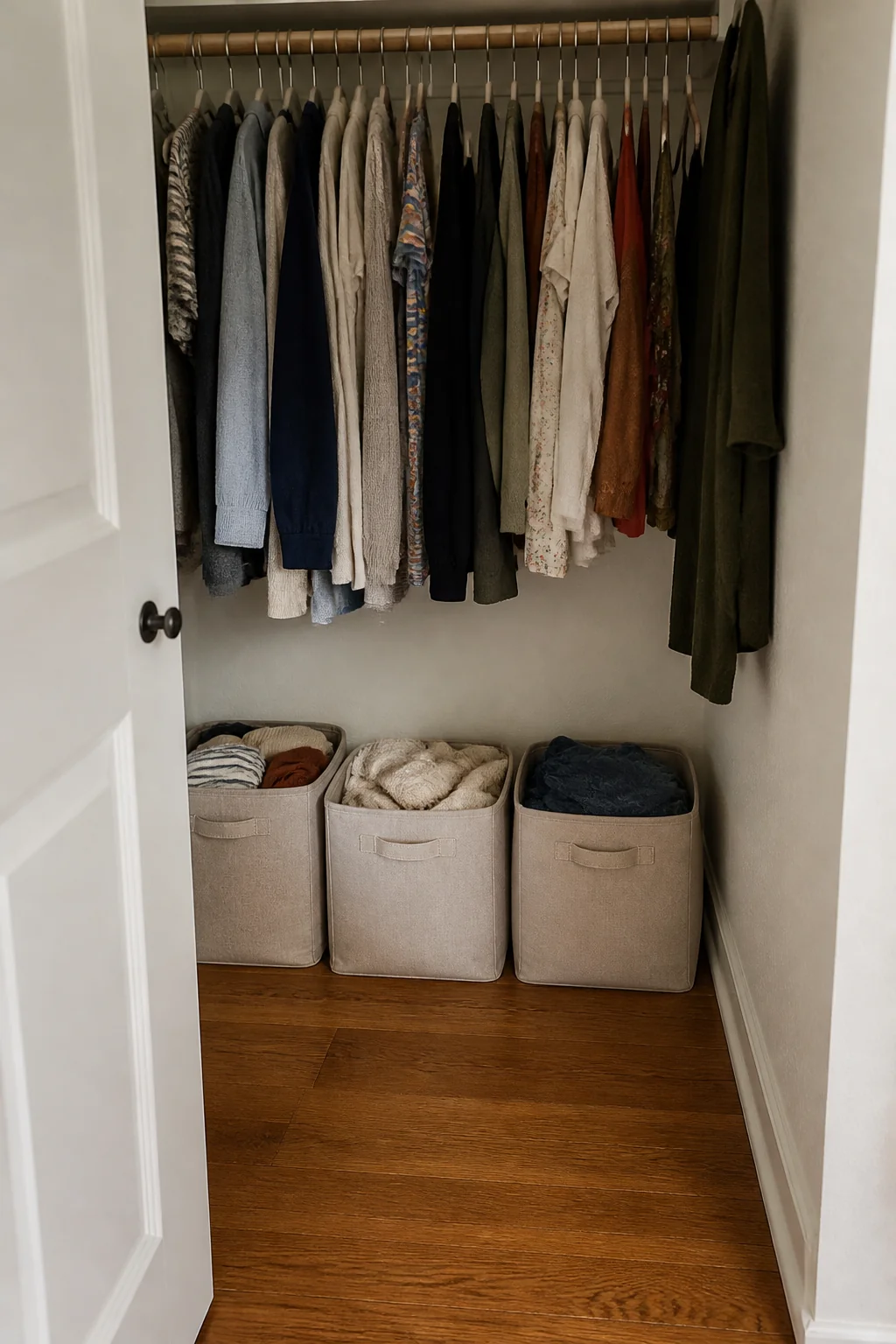
Set two or three fabric bins on the floor under the lower rod, one for workout clothes, one for pajamas, and one for accessories. Labels go on the front, facing the door, so you can read them from the hallway. Floor space is the least visible part of the closet, and bins turn it into something tidy without much effort. Choose bins around 12 by 12 inches so they fit under the rod and sit at least 6 inches from the door track. The common mistake is stacking bins two high, which pushes the top one into the lower hanging clothes.
11. A slim three-drawer unit under the rod
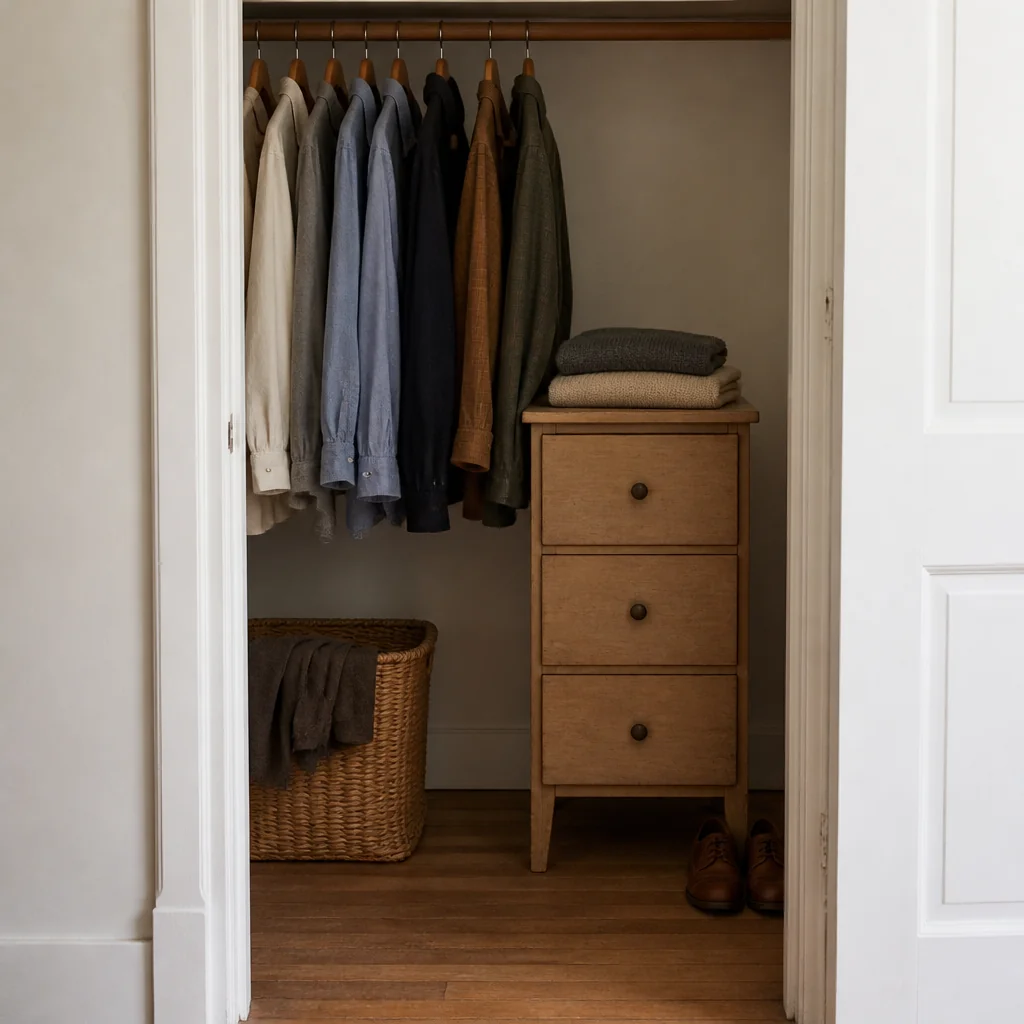
A three-drawer unit about 15 inches wide, with drawers for socks, undergarments, and belts, sits in the closet's floor space. It reads as a small, finished piece of furniture that holds the small things out of sight. Hanging clothes stay the focus because the drawers hide everything else. Check the height so the unit fits under the lower rod, since a unit around 24 inches tall clears a rod at 40 inches with room to spare. A tall drawer unit can tip when you pull a drawer out, so anchor it to a stud if it stands taller than your waist. Look for a solid wood or painted finish with metal runners.
12. A washable runner on the closet floor
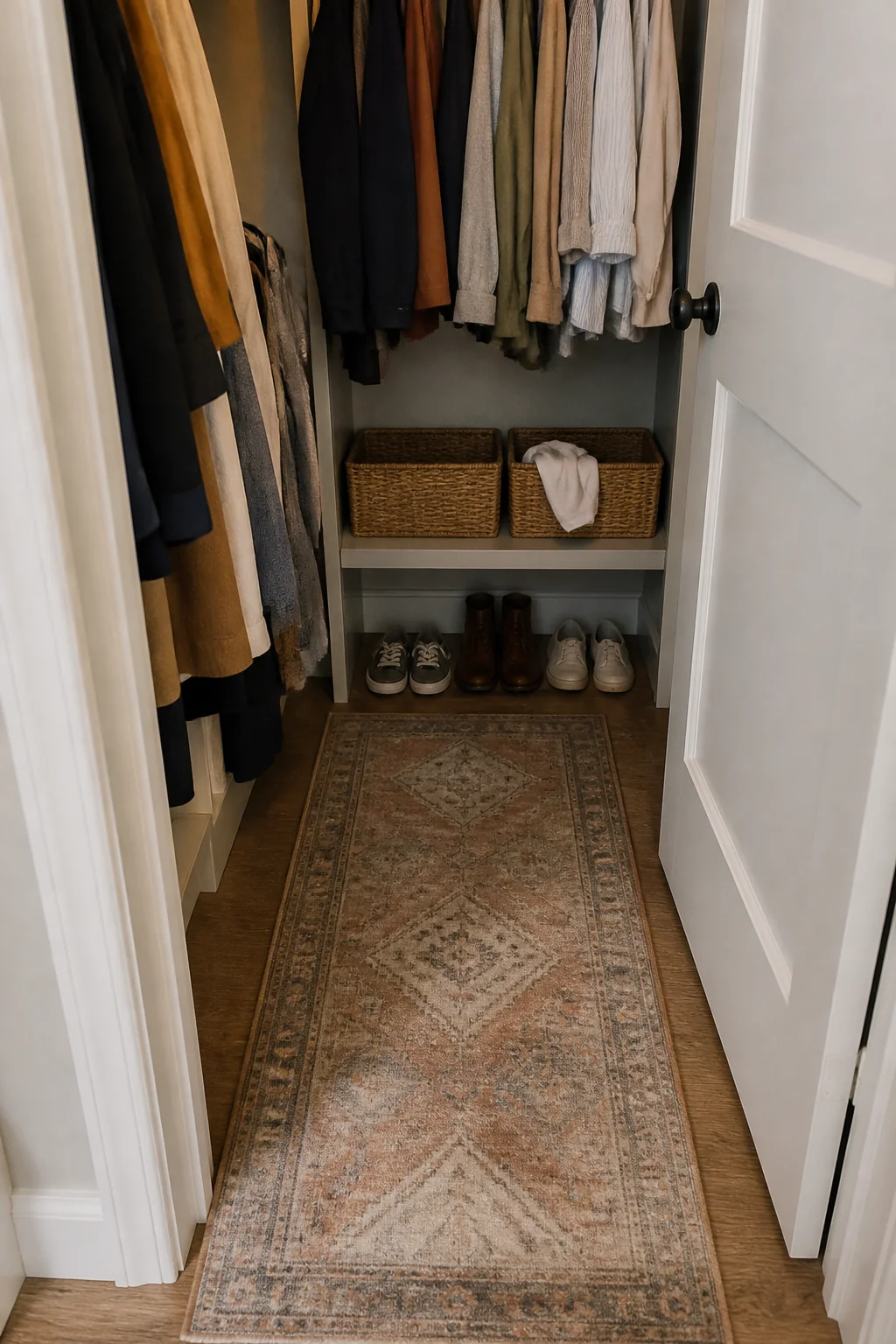
Lay a runner in a neutral like oatmeal or charcoal down the length of the closet floor. Softer than bare floorboards or carpet, it adds texture to a narrow box. A runner about 2 feet wide fits between the door track and the back wall with a little space at each end. (Pick a color that hides lint, because a pale runner will show every stray thread.) Choose a flatweave or low-pile rug, since a thick pile can catch on the door and shift when it opens. Look for one that holds up to a vacuum, so you can keep it clean through the season. Leave a gap of about 2 inches at the threshold so the door swings clear.
13. Handbags standing upright on the shelf
Stand handbags upright on the top shelf or in a shelf divider, grouped by color. A bag on its side looks lumpy, while a bag standing tall reads as a row of clean shapes. Stuff each bag with tissue or a folded shirt sleeve so the sides hold their form. Measure the height of your tallest bag from base to handle before you pick a shelf divider, and leave at least 2 inches above the tallest one. The mistake is stacking bags on top of each other, which crushes handles and bends the structure of structured totes.
14. A mirror inside the door
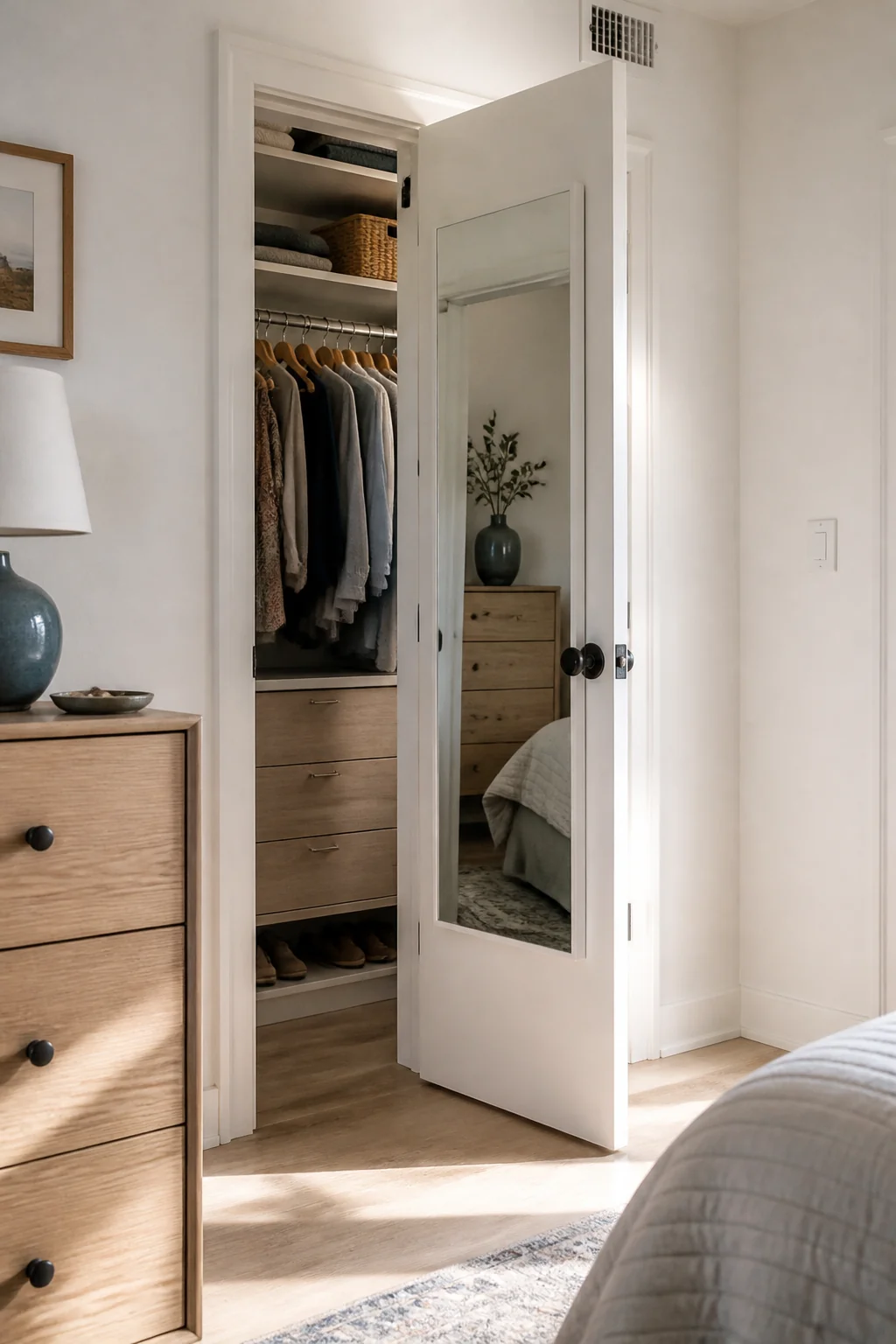
Hang a full-length mirror on the inside of the door, or a slim one on the back wall, so you can check outfits without stepping out of the closet. The reflection makes the 24-inch depth feel longer, and the mirror lights up the rod when the door is open. A mirror about 14 inches wide and 48 inches tall suits a standard door. Heavy glass needs proper support, so mount it into studs or with anchors rated above its weight. Hanging a mirror on a bifold door is where people go wrong, since the fold can crack the glass every time the door closes.
Keep this guide handy
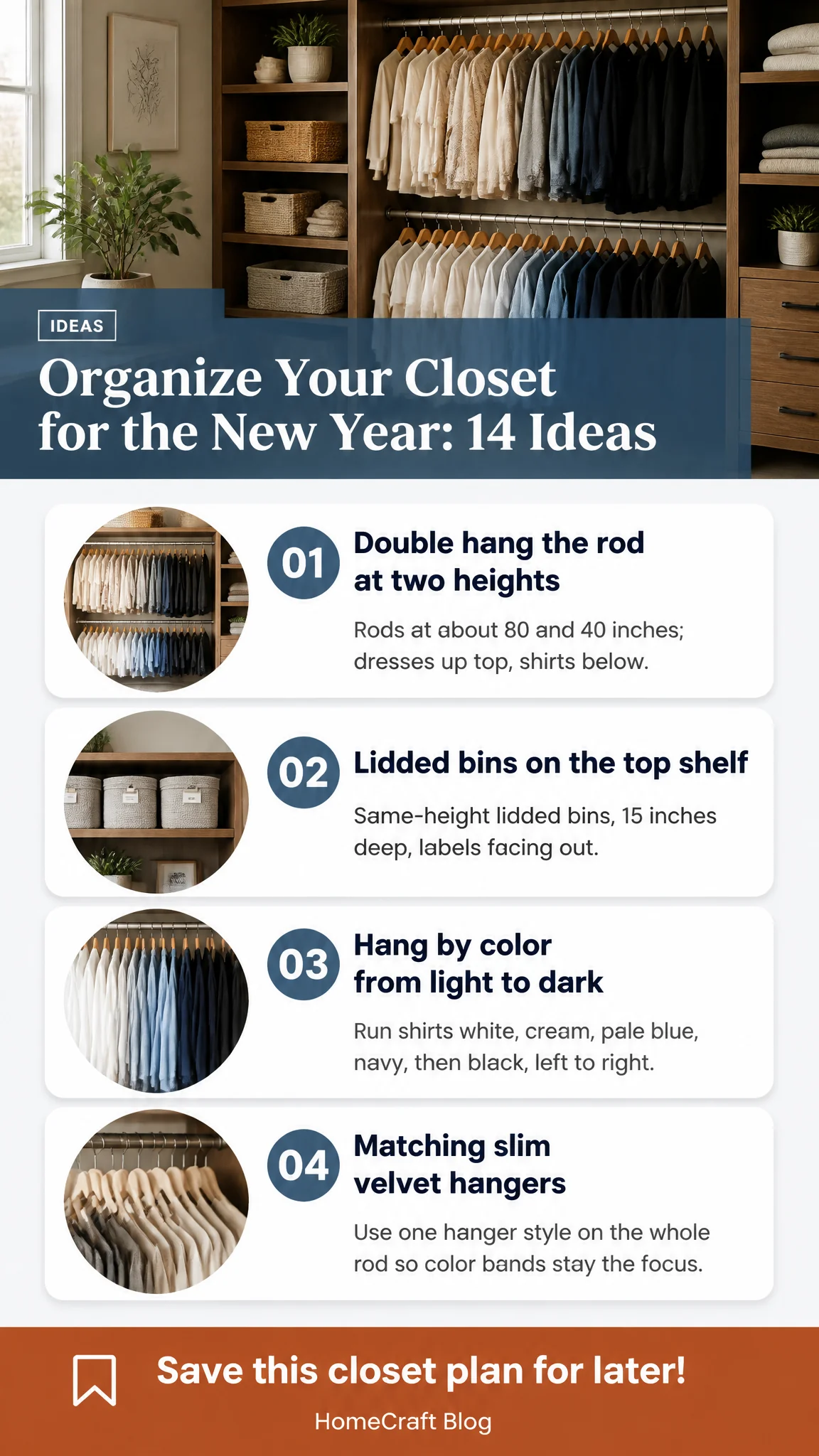
Once you organize your closet for the new year, opening the door looks different. The shirts hang in two rows, with the lighter tones running left to right and the navy pieces at the end. Shoes sit on the back of the door with their heels up, and the floor under the rod holds fabric bins with labels you can read from the hallway. Above the rod, the top shelf holds lidded bins of winter sweaters, and a warm glow from the underside of the shelf picks out the color of every sleeve. The closet is still the same narrow box, with more of it visible at once.