9 Timeless Traditional Living Room Decor Ideas With Staying Power
Build traditional living room decor ideas that look sophisticated, not dated. Layered lighting and quality furniture that age beautifully.
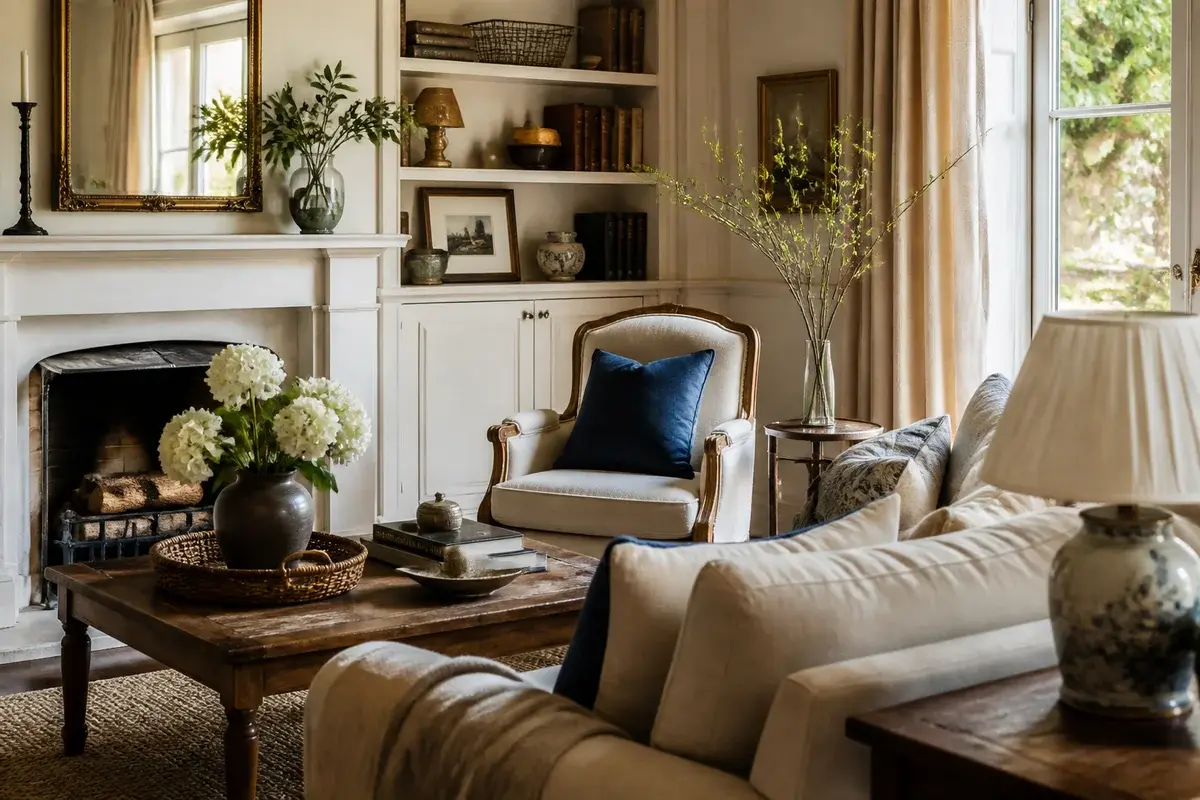
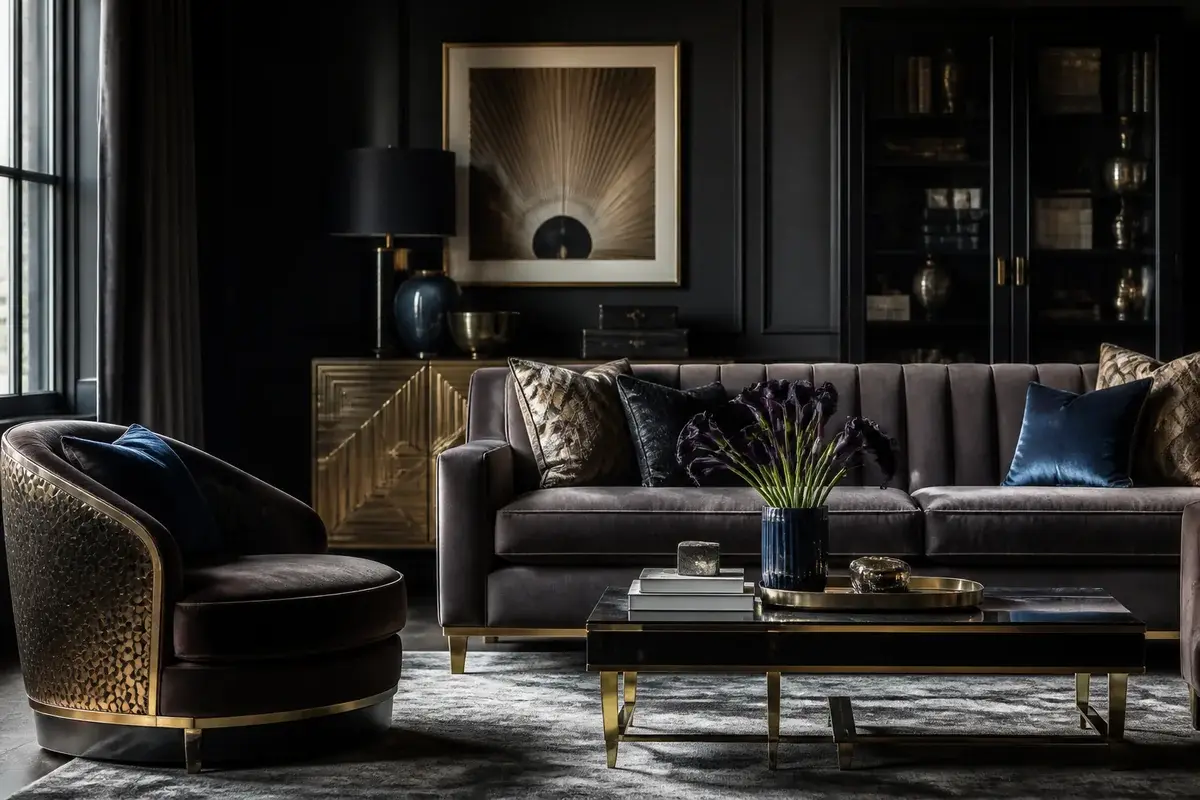
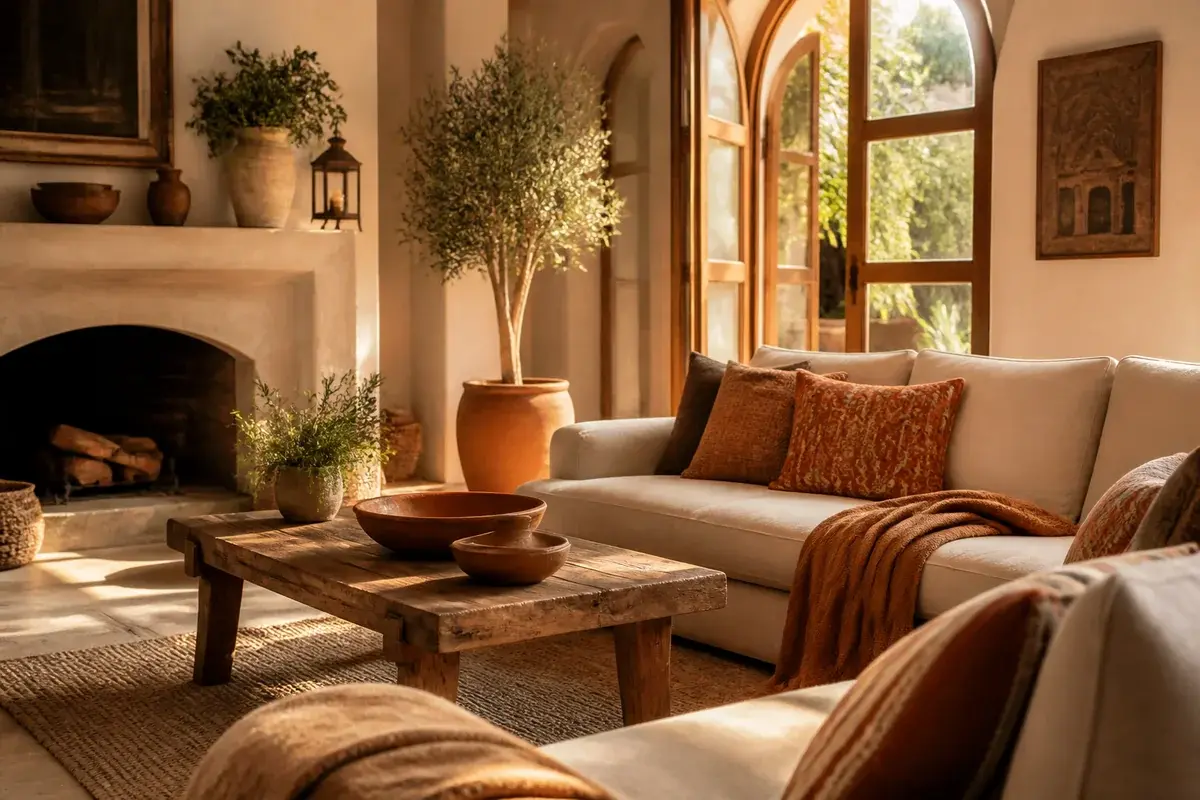
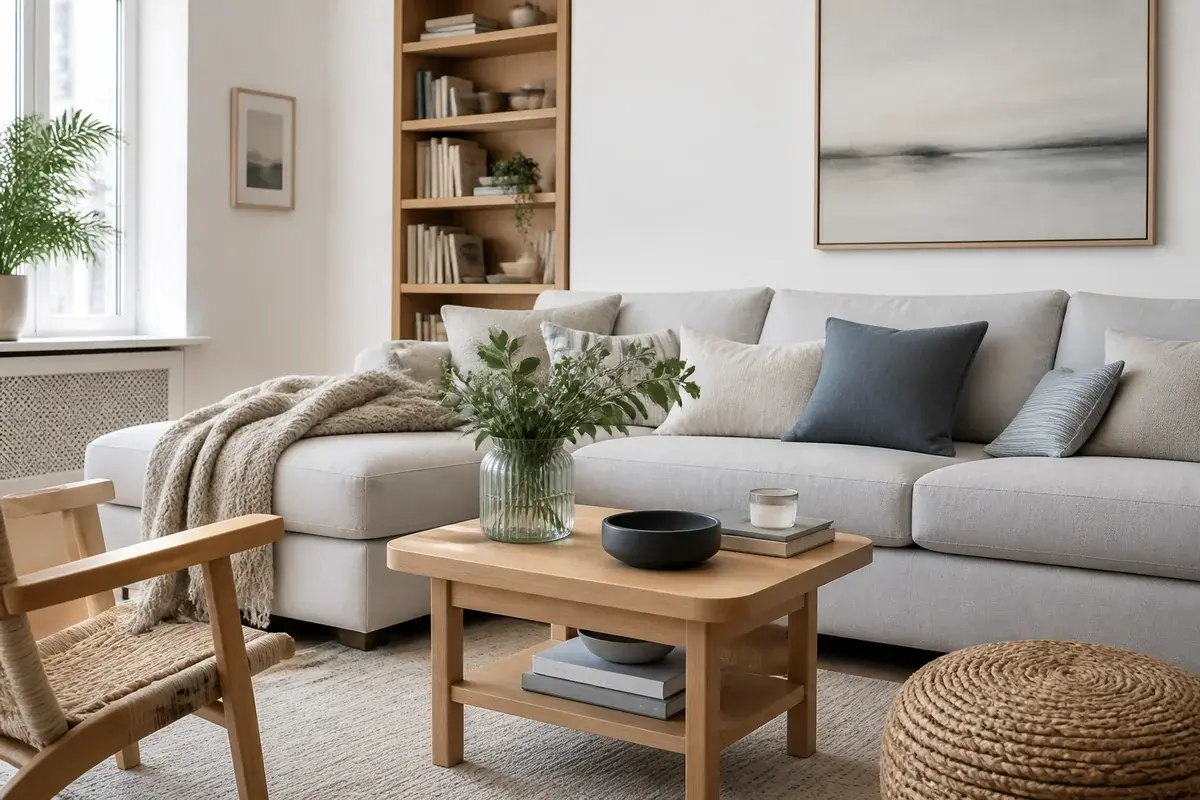
Traditional living rooms often feel either overdone or hollow. You see rooms stuffed with period furniture that looks like a showroom, or ones where the owner tried traditional but skipped the layers that actually make it feel collected and lived-in. The mistake is treating traditional as a checklist of objects instead of a way of building a room that feels substantial, warm, and like it belongs to someone with taste. These nine ideas show you what traditional actually needs to hold together and stay beautiful for years.
1. Layer your lighting so no single fixture carries the whole room
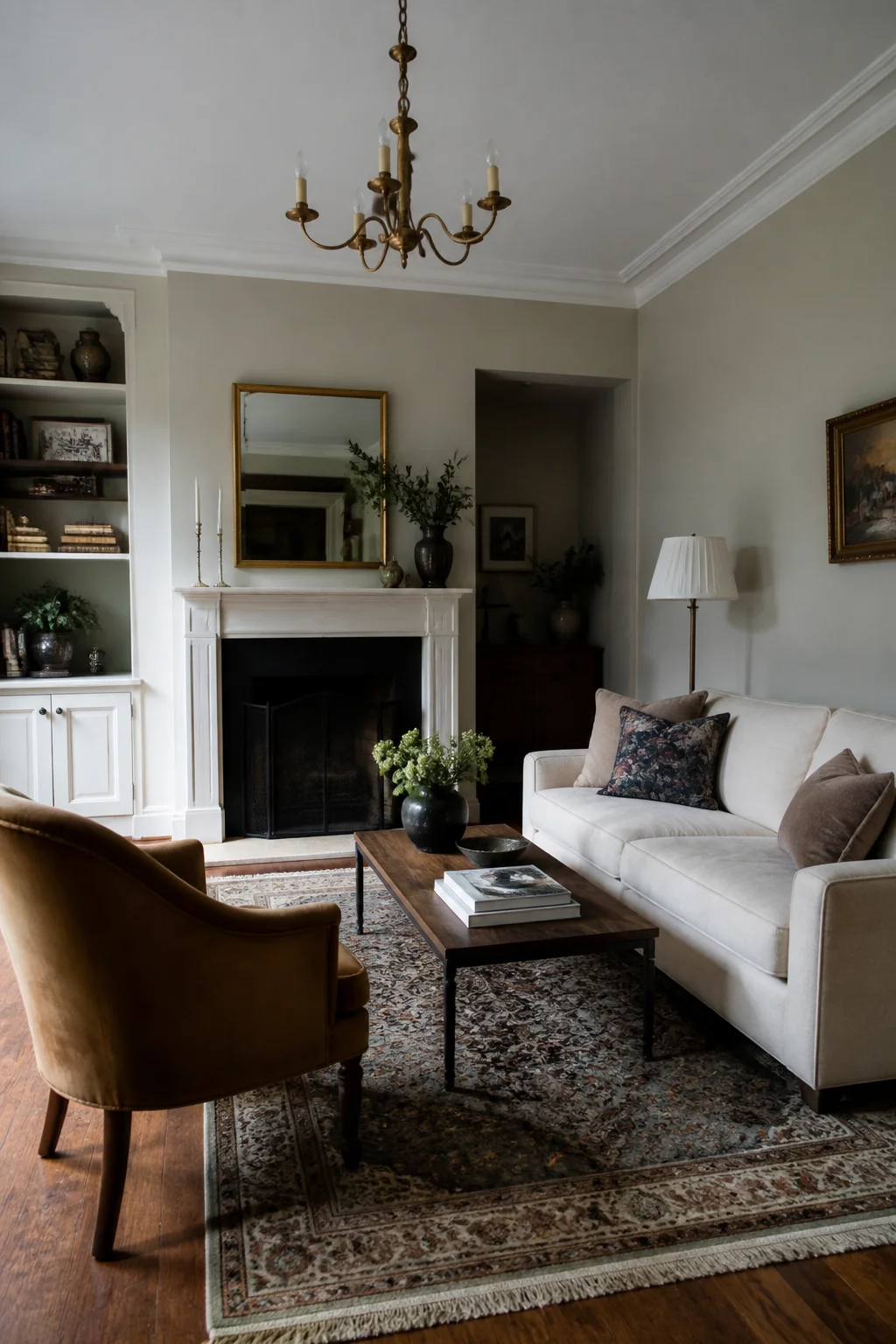
A single overhead fixture is the enemy of traditional style. Your living room needs light from at least three places: overhead (ideally a chandelier or drum shade, not recessed), a table lamp on a side table, and a floor lamp in the corner. This isn't decoration; it's the skeleton of how the room actually works at night. Brass or bronze finishes read more traditional than chrome, and the combined wattage of all three sources should be enough that you can turn off the overhead and still read comfortably. Hang the chandelier or ceiling fixture so it clears sightlines - about 7 feet from the floor in a standard room. The mistake most people make is treating overhead light as the only light, then adding a single table lamp as an afterthought. Traditional rooms need layering built in from the start.
2. Invest in one really good sofa in a neutral fabric
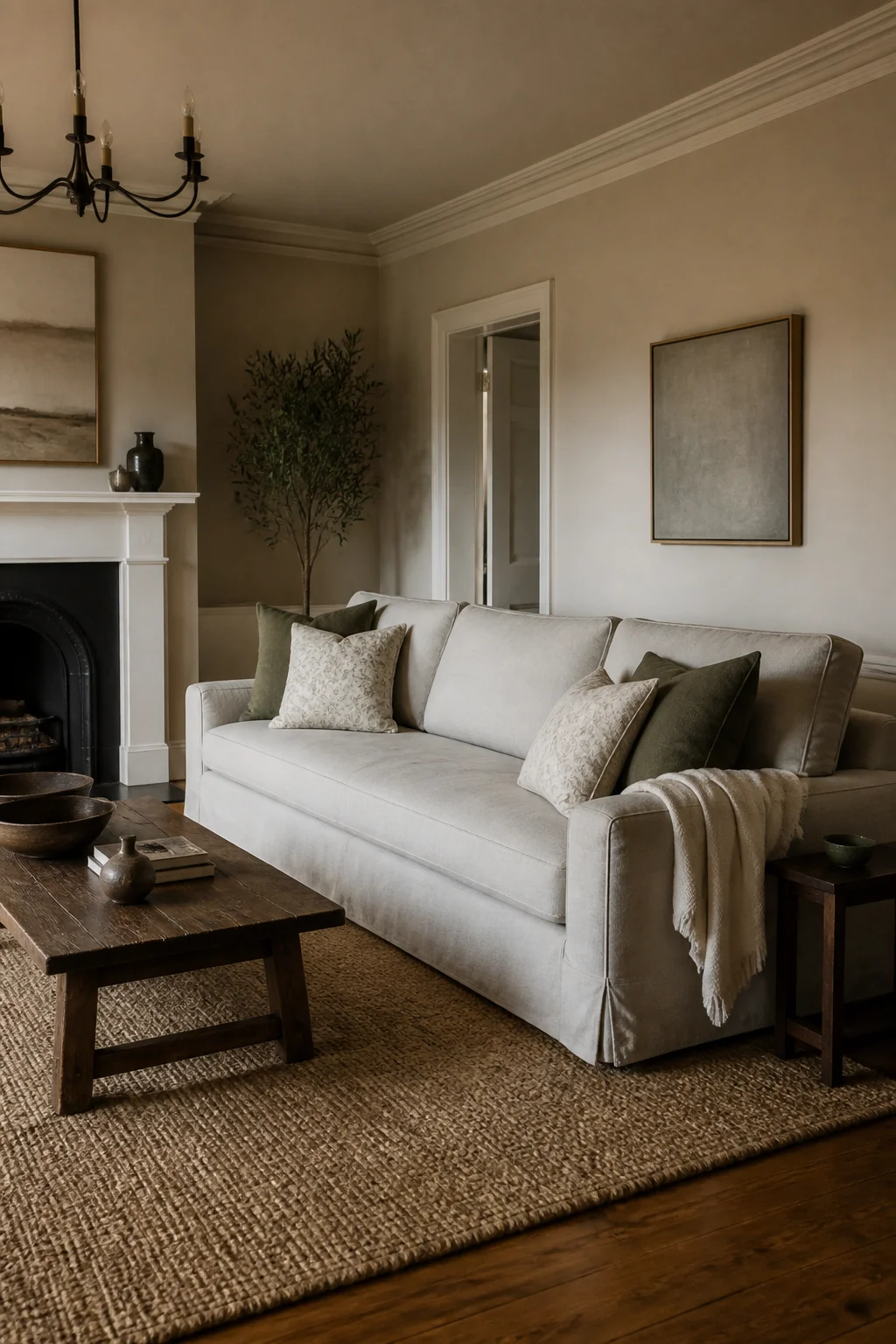
Your sofa is the anchor piece and it needs to work for at least ten years. Skip trendy colors and shapes. A rolled-arm sofa in a cream, tan, or gray performance fabric (or linen blend) is the traditional choice because it's versatile, timeless, and can handle actual living. Plan for something between 84 and 96 inches wide - large enough to seat three people comfortably but not so sprawling that it eats your room. Quality construction means eight-way hand-tied springs, a hardwood frame, and down-filled cushions (though performance fabrics make cleaning easier if you have kids or pets). A solid sofa costs between $1,500 and $3,500. Don't skip this investment thinking you'll upgrade later; the piece will outlast trends if you choose well the first time.
3. Use patterned fabric in smaller pieces, not walls or large furniture
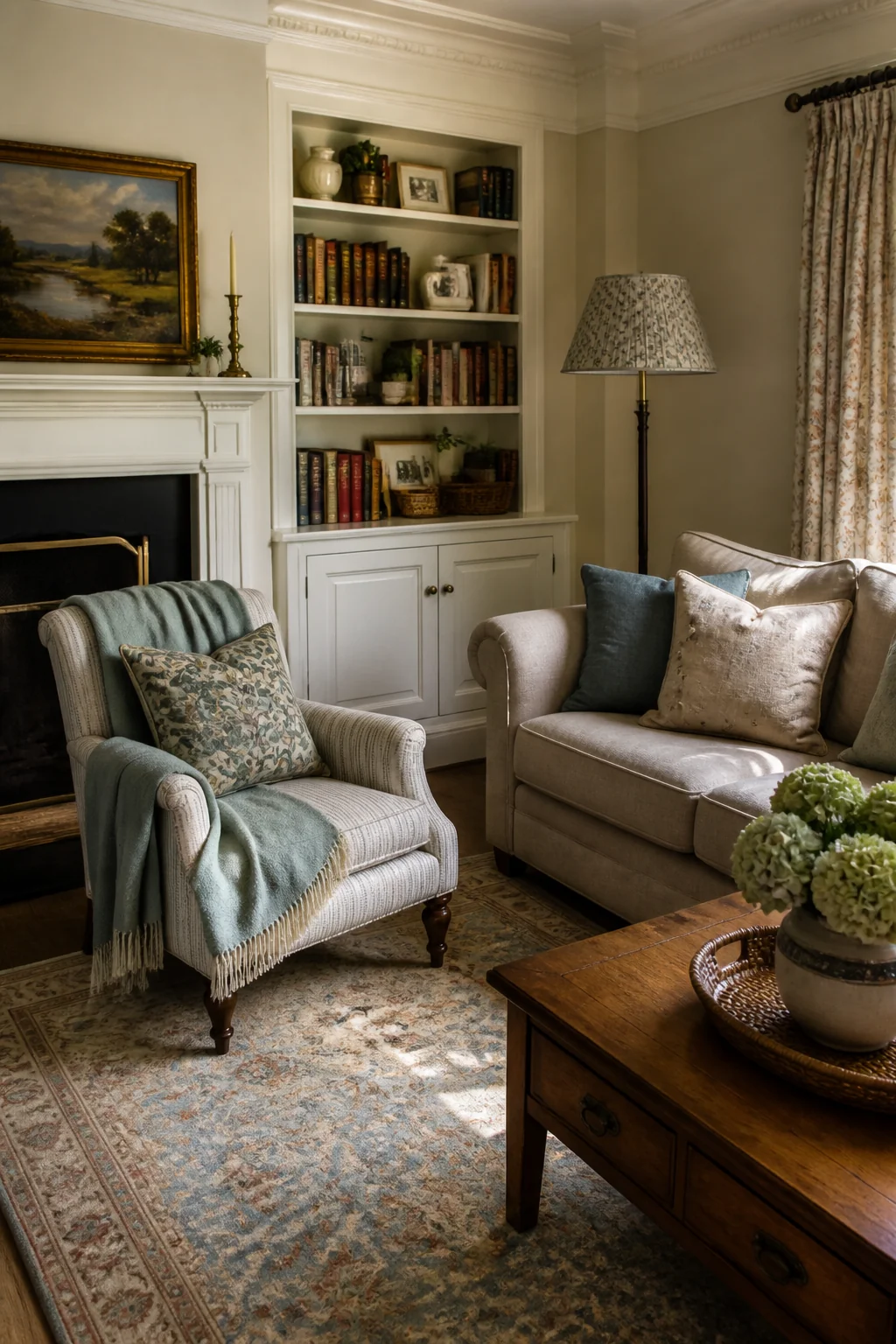
Toile, damask, or small-scale florals belong on a wingback chair, throw pillows, or curtains - not as the main upholstery of your sofa or as wallpaper everywhere. These patterns are what make traditional rooms feel styled, but they work best when they're contained and can be swapped out without replacing the whole room. A wingback chair in a classic pattern costs around $600 to $1,200 and becomes a focal point that anchors one corner. Mix two or three patterns in similar color families (say, a damask chair, a striped ottoman, and toile curtains) so they talk to each other instead of competing. The pattern should feel intentional, not like you grabbed whatever was available.
4. Hang curtains all the way to the ceiling
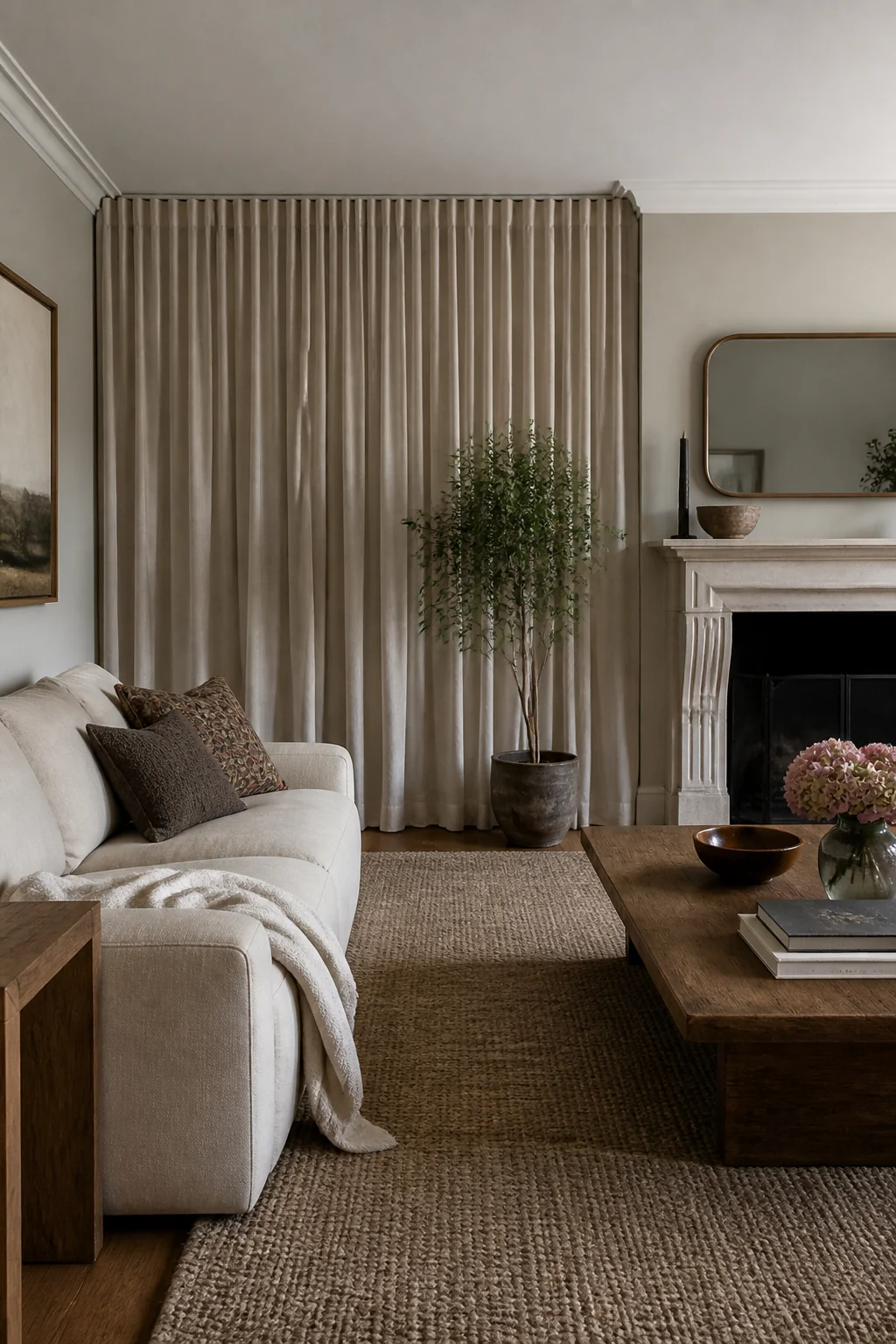
This is one of the quickest ways to make a room feel intentional and finished. Measure from the top of the window frame (or higher, if the frame is low) all the way to the floor, and add 2 inches so the curtains pool slightly. Floor-to-ceiling curtains in a solid or subtle pattern add formality and height. Hang the rod 4 to 6 inches above the window frame itself so the curtains frame the glass generously. Linen blends or cotton velvet in cream, soft gray, or a muted earth tone read traditional and won't show dust. This detail costs maybe $200 to $400 per window depending on fabric and labor, but it changes how the whole room sits. (Avoid ultra-thin sheer curtains that look insubstantial; traditional rooms need weight and opacity.)
5. Layer a patterned rug over a larger solid base
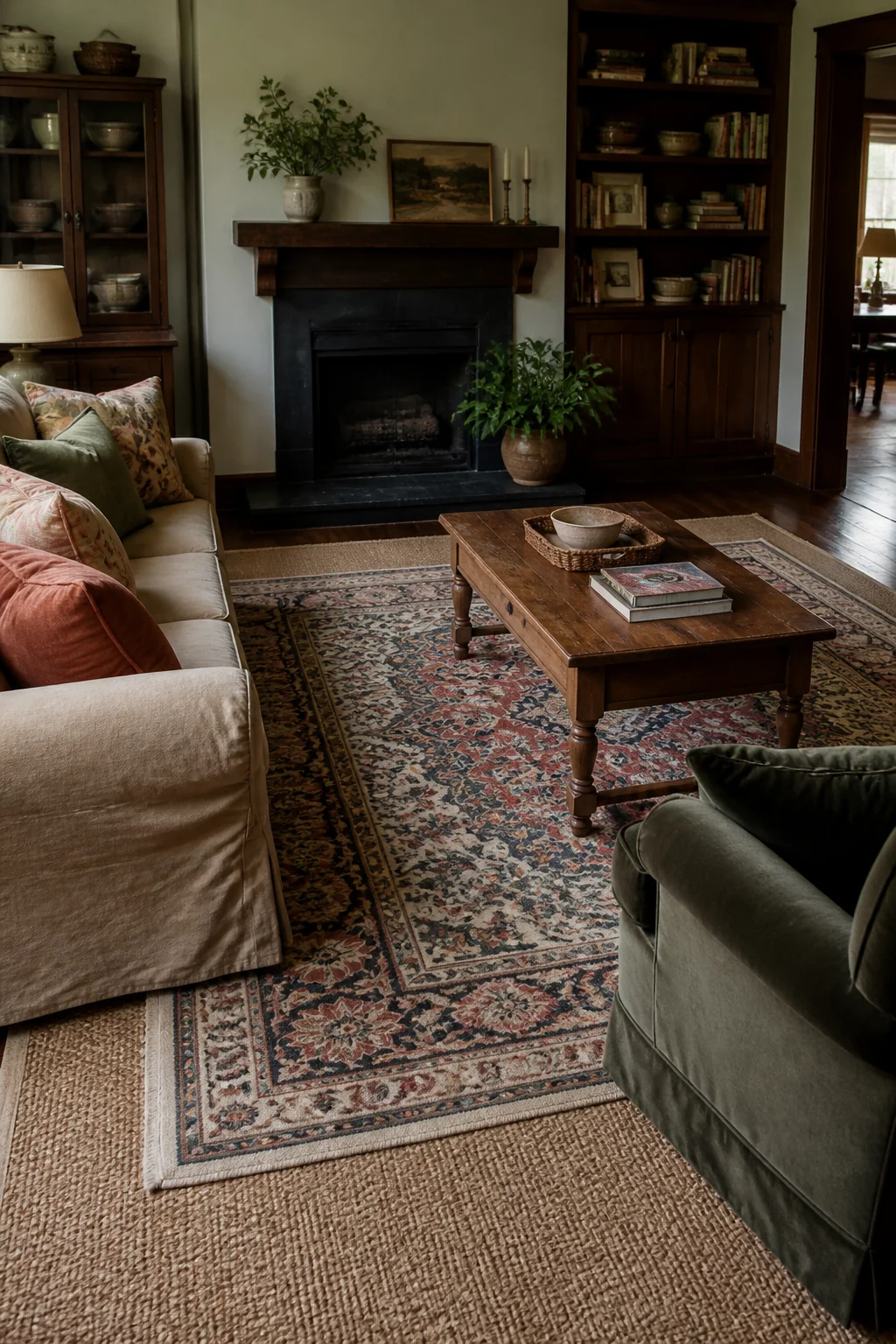
A single large rug can feel bare. Instead, layer a smaller patterned rug (8x10 or 9x12) over a larger solid rug in a neutral (10x14 or 12x15). The solid base defines the seating area and anchors the room; the patterned rug on top adds visual interest and pattern without overwhelming. Orient them so the patterned rug is centered over the solid one with visible border all around. A good quality wool rug in a traditional pattern costs between $800 and $1,800 for an 8x10, while the solid base rug underneath might be $400 to $800. This layering is what creates depth and makes the room feel considered instead of flat.
6. Display books and objects on shelves with real breathing room
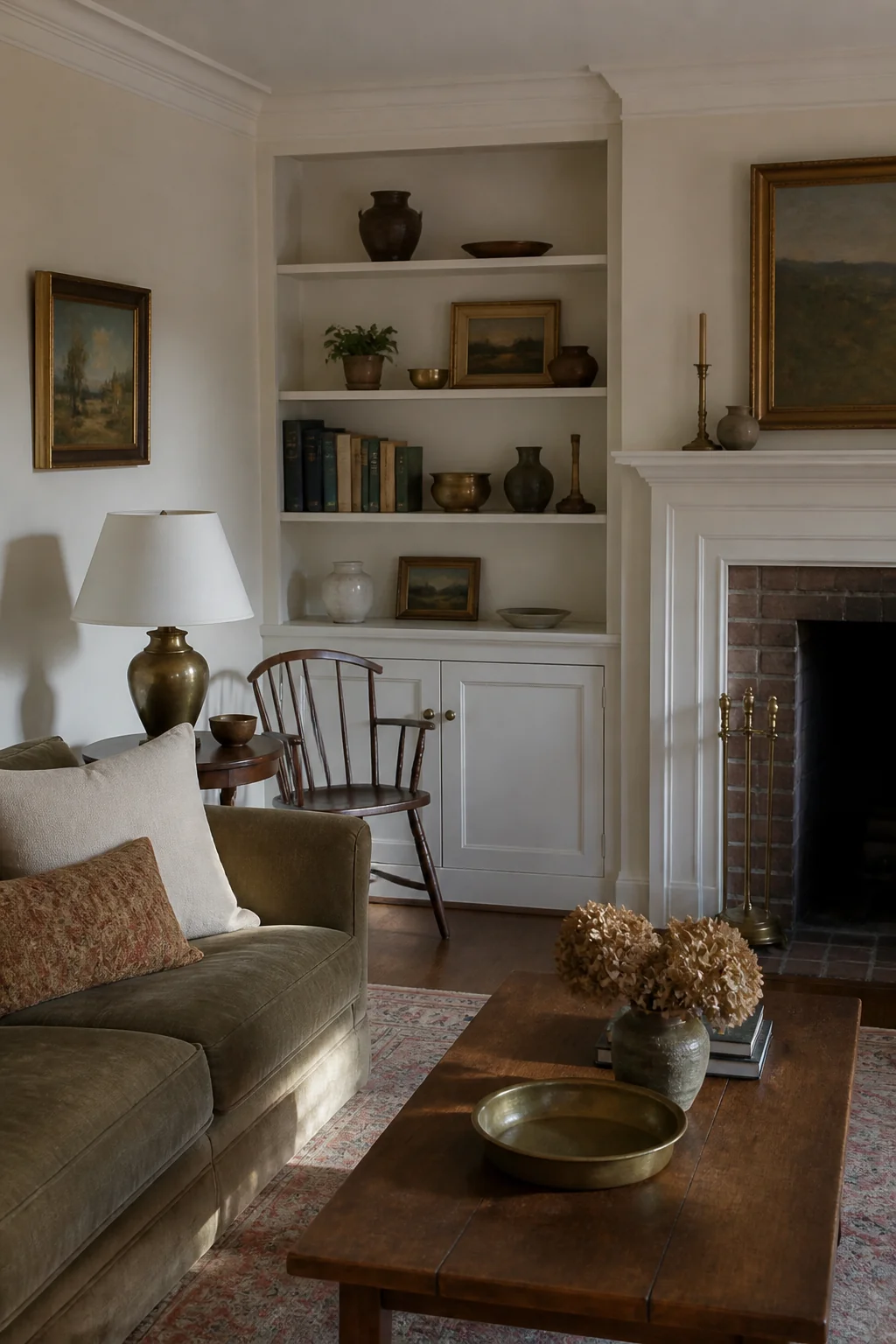
Shelves crammed edge-to-edge with objects look cluttered, not collected. In traditional rooms, shelves work best when they're maybe 60% full - books standing upright, a few stacked horizontally, then real space where your eye can rest. Group objects in odd numbers (three, five, or seven) and vary the heights. A leather-bound book collection, a framed piece of art, a small sculpture, an antique clock - these tell a story. Don't treat shelving as storage; treat it as display. Leave gaps between groupings so each cluster feels intentional rather than accidental overflow. Shelving hardware in brass or oil-rubbed bronze reads more traditional than stainless steel.
7. Anchor the room with a coffee table in wood or stone
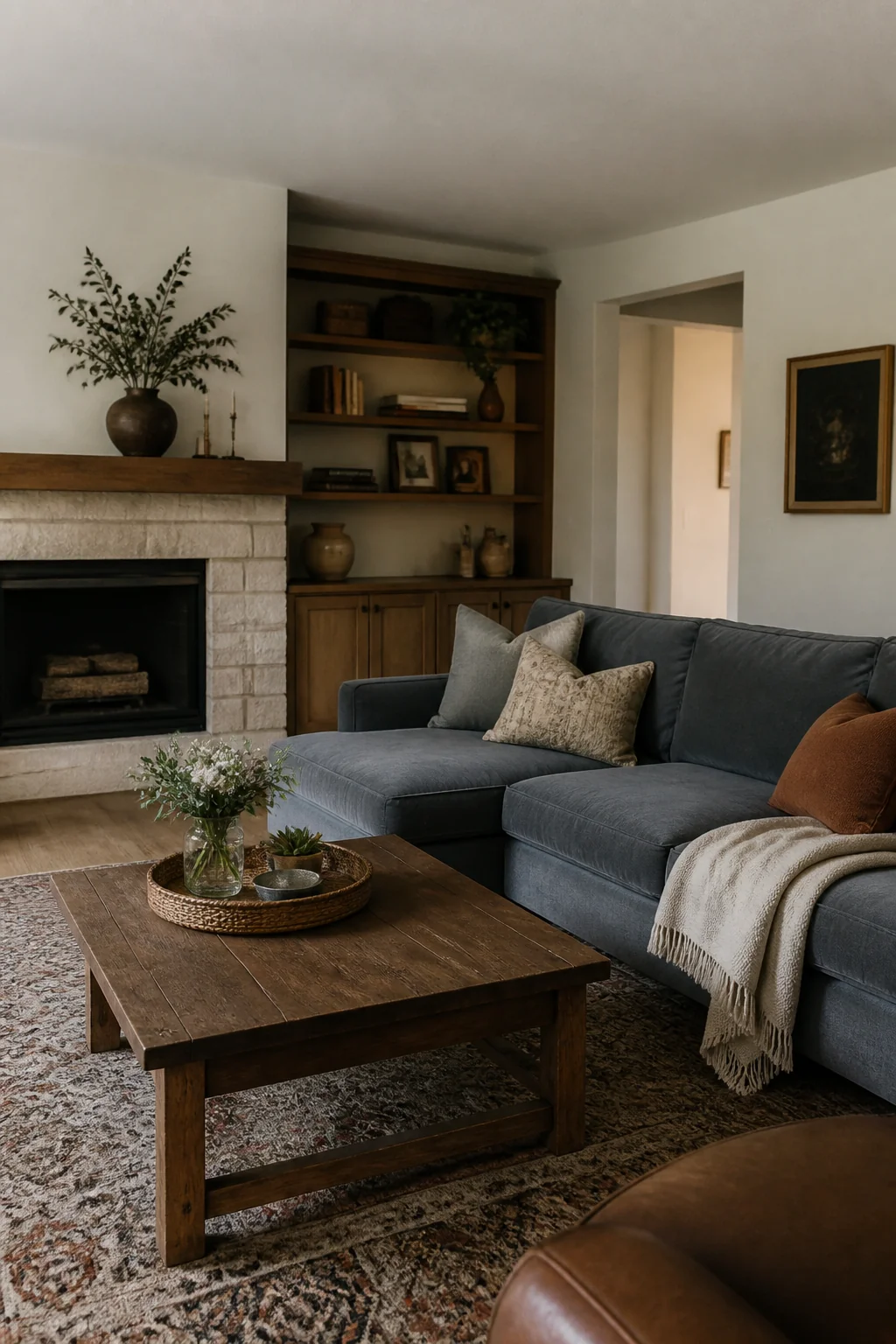
Glass coffee tables feel contemporary and break up the visual weight traditional rooms need. Choose a wood coffee table (oak, cherry, or walnut) or stone top on a wooden base, roughly 36 to 48 inches long depending on your sofa size. The table should sit about 18 inches in front of the sofa, close enough to be functional but not so close you can't cross your legs. Wood develops patina and character over years, which is exactly what traditional style rewards. A quality wood coffee table runs $500 to $1,200. It won't go out of style and it anchors the seating arrangement so the room feels grounded instead of floating.
8. Hang artwork in an intentional grouping, not scattered
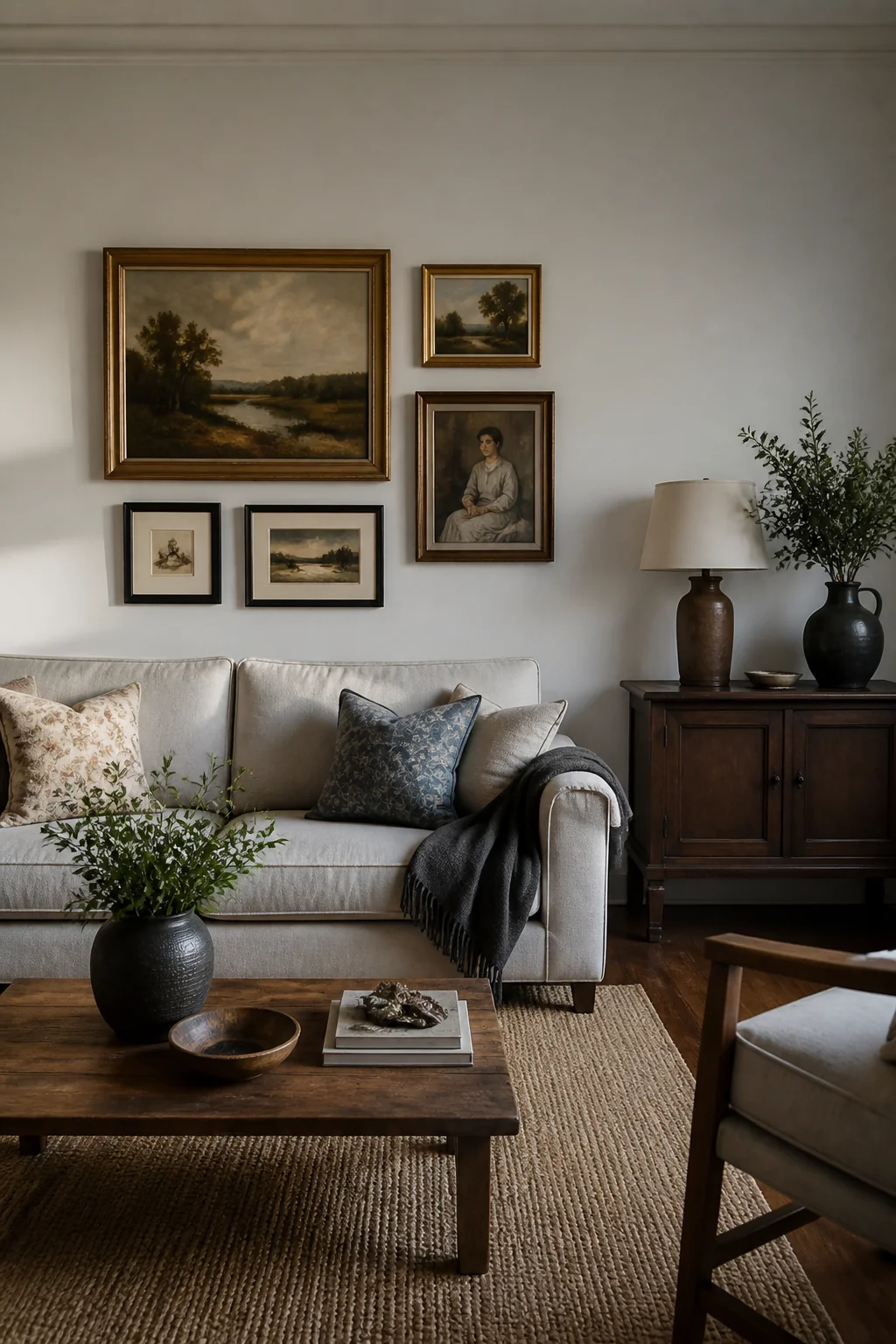
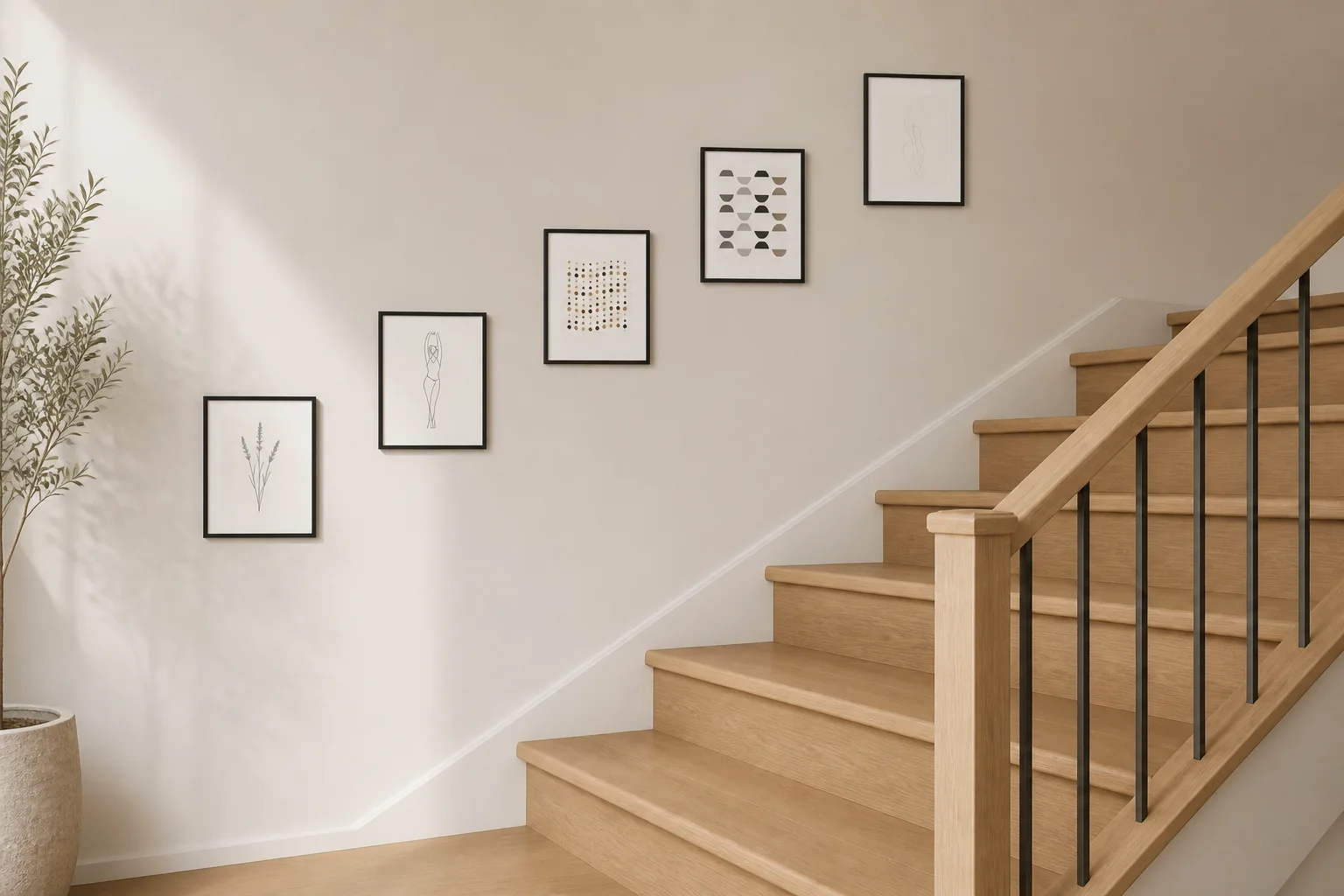
Don't scatter single paintings around the room. Instead, create a gallery wall or arrange three to five framed pieces in a grid or salon-style layout on one wall - usually the wall behind the sofa or above a console table. Frame everything consistently (same finish, similar frame style) so the grouping reads as a collection rather than random hangings. Leave 2 to 3 inches between frames so they relate to each other. Art in traditional rooms tends toward landscapes, botanical prints, or classical still life - things with staying power, not trendy subjects. This makes a strong visual statement and costs less to execute than you'd expect if you use affordable frame shops or custom framing around $50 to $150 per piece.
9. Add a console table behind the sofa or in the entry zone
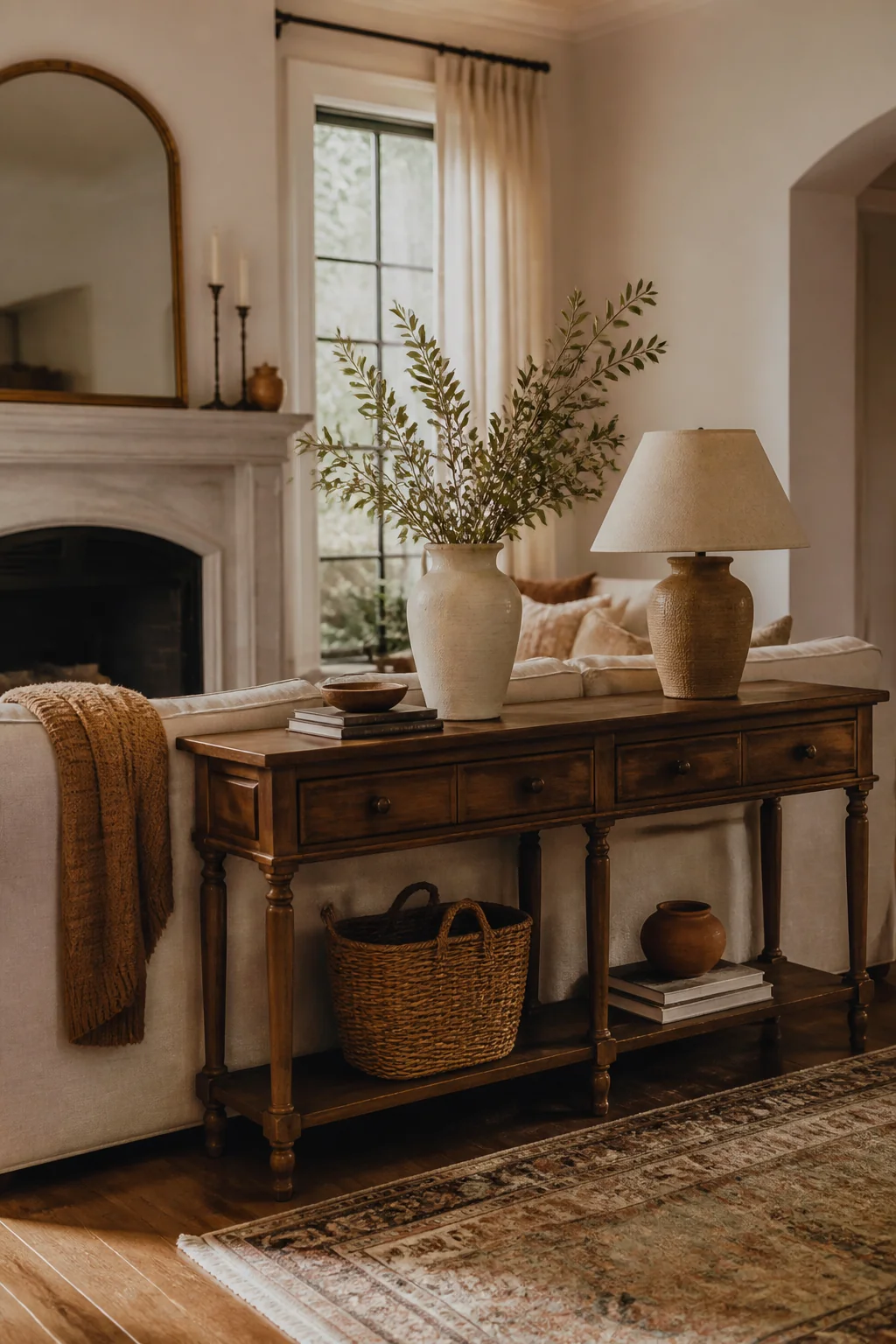
A console table in wood or stone with a mirror or framed art above it creates a buffer between the seating area and the entry if your living room is open to a hallway. This serves no function except presence - it's pure traditional form. Style it with a table lamp, a stack of books, a vase, and maybe a small tray. The console becomes a finishing detail that separates the "sitting" zone from the "passage" zone and adds another surface for layered styling. A good quality console table costs $400 to $800 and doesn't have to be massive; even 36 to 42 inches long makes an impact. (Skip this if your room truly has no wall space to spare, but if you have room, it's worth the investment.)
The whole guide in one image
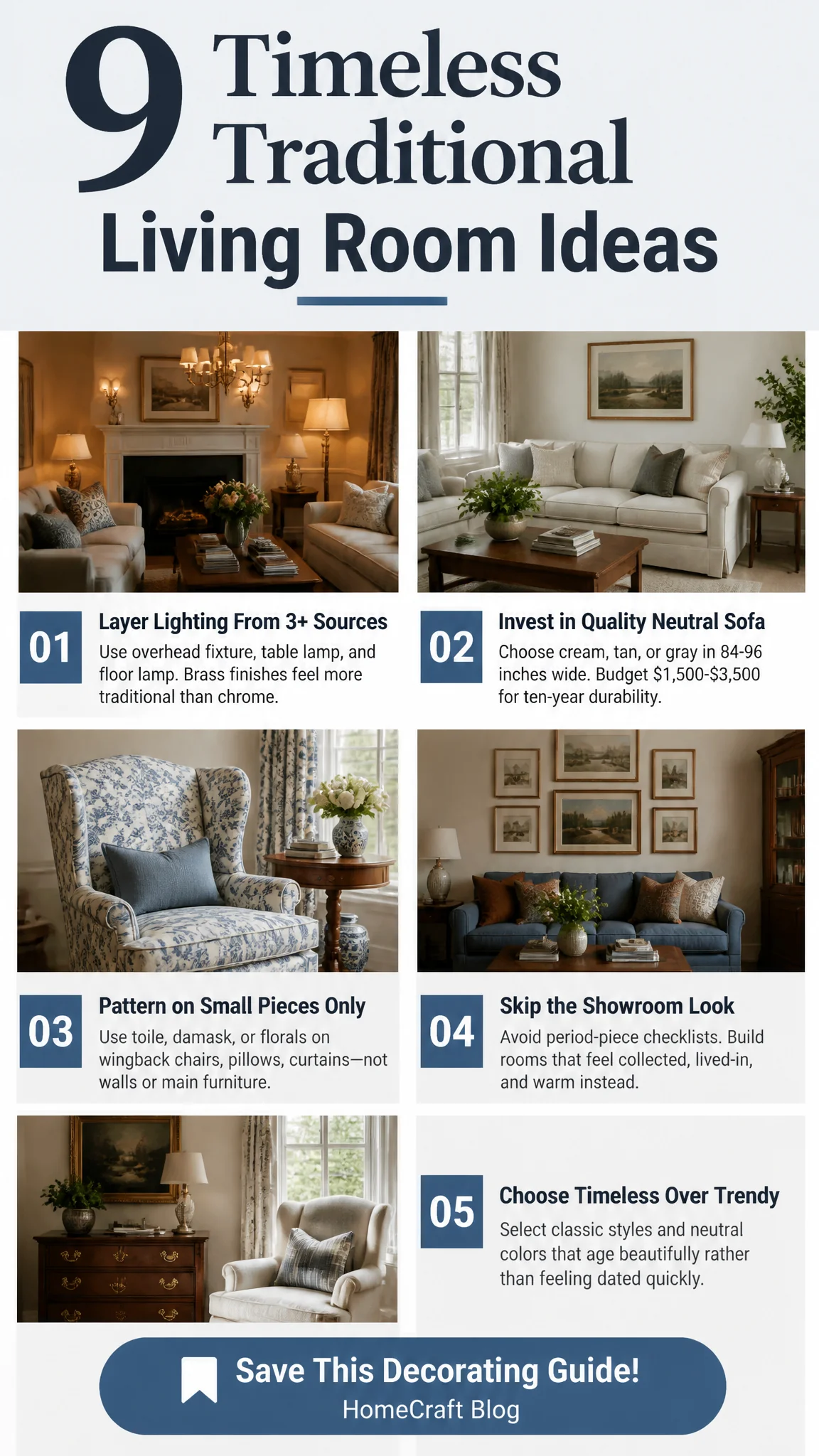
Traditional style requires you to accept that the room will take real money and real time to feel complete. You can't shortcut it with trendy accessories or a single statement piece. What you get back is a room that doesn't need refreshing every two years, that actually gets better as it ages, and that doesn't depend on what's current. You're building something that sits outside fashion - which means it costs more upfront but costs almost nothing to maintain. The patience required is the whole point.
Ideas fade by Friday. A plan finishes the room.
You just read a full guide to your living room. Saving ideas will not change it; a plan will. The Home Decor Collection is every planning tool we make, for every room in the house, in one download, so the after photos below stop being other people's rooms.
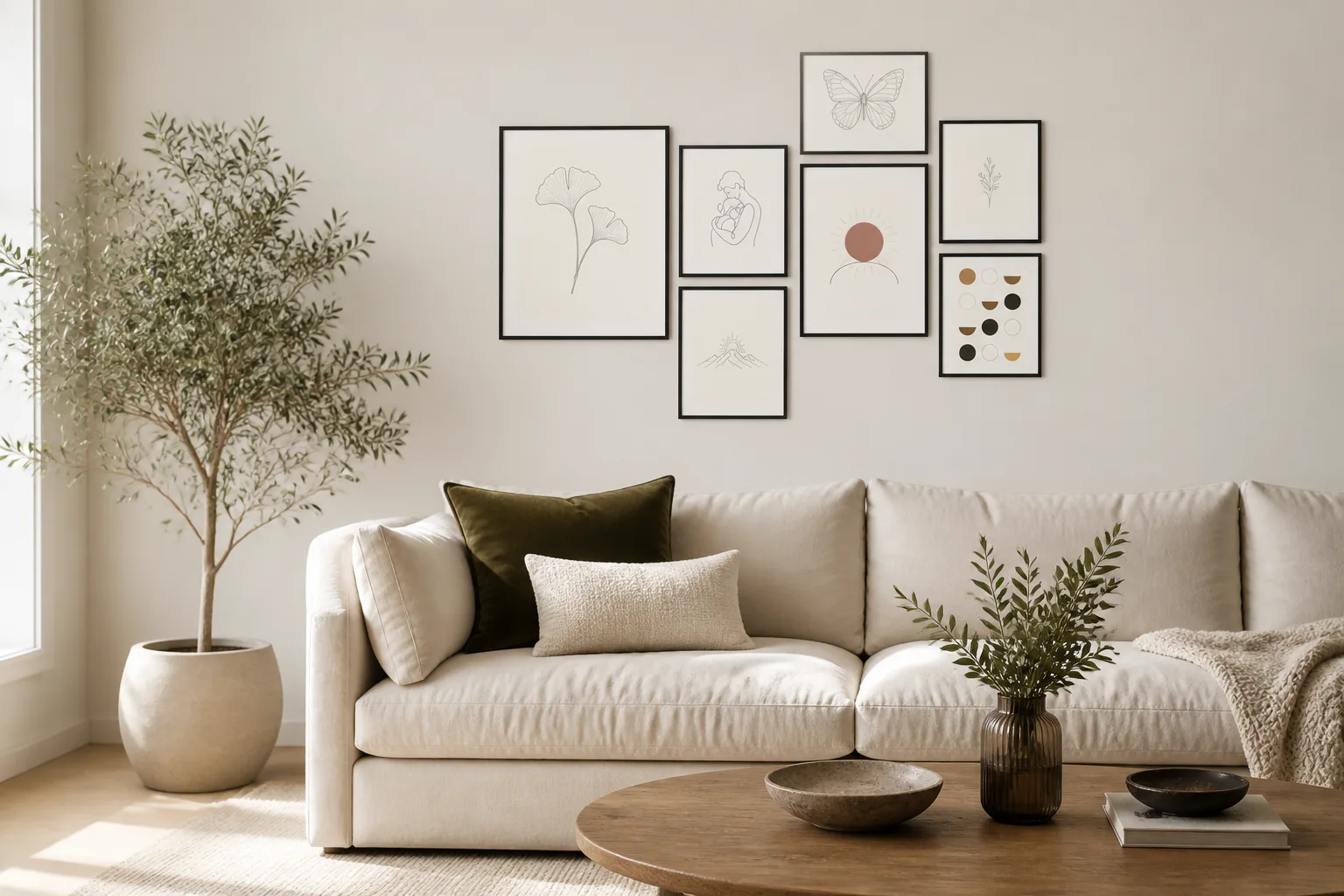
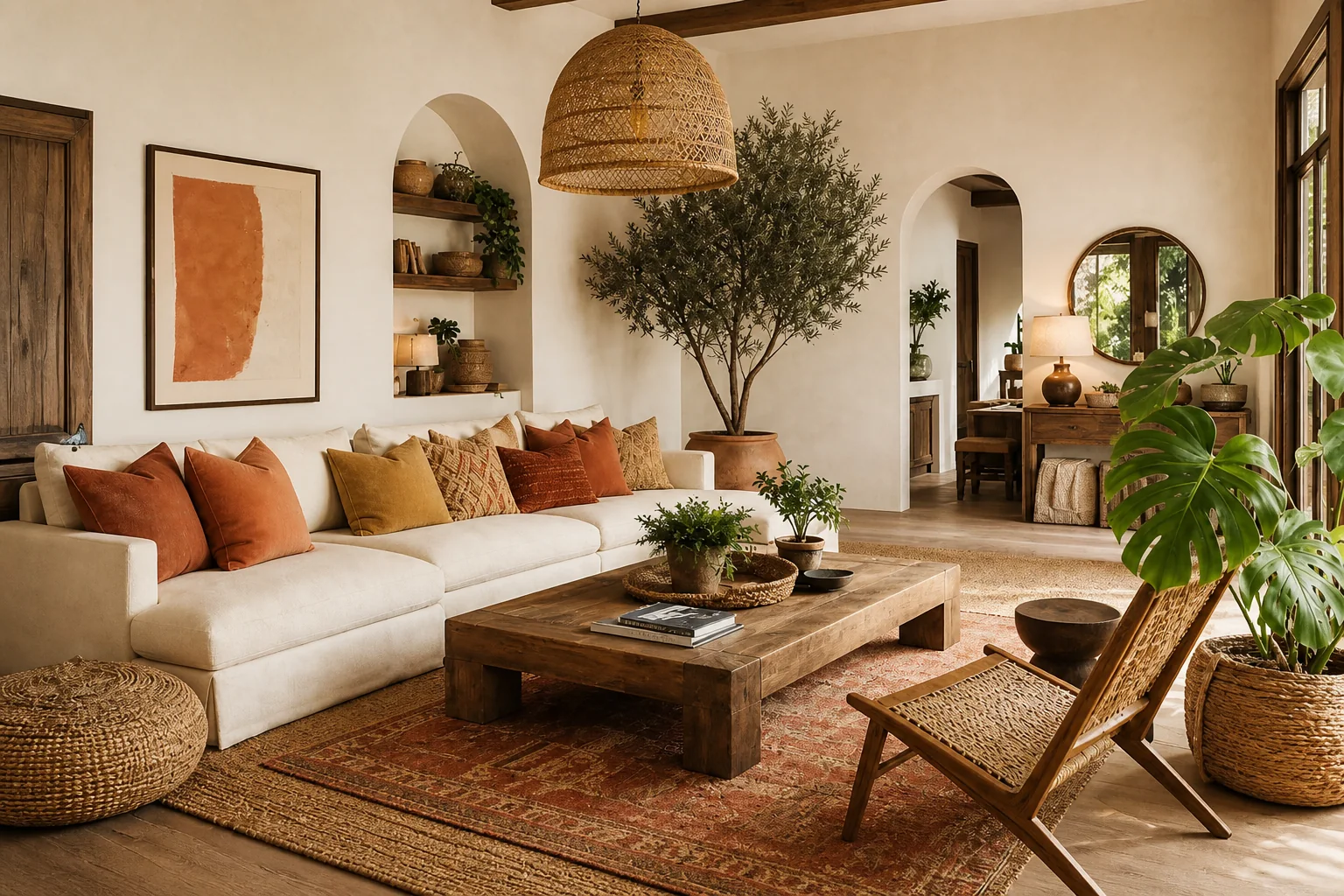
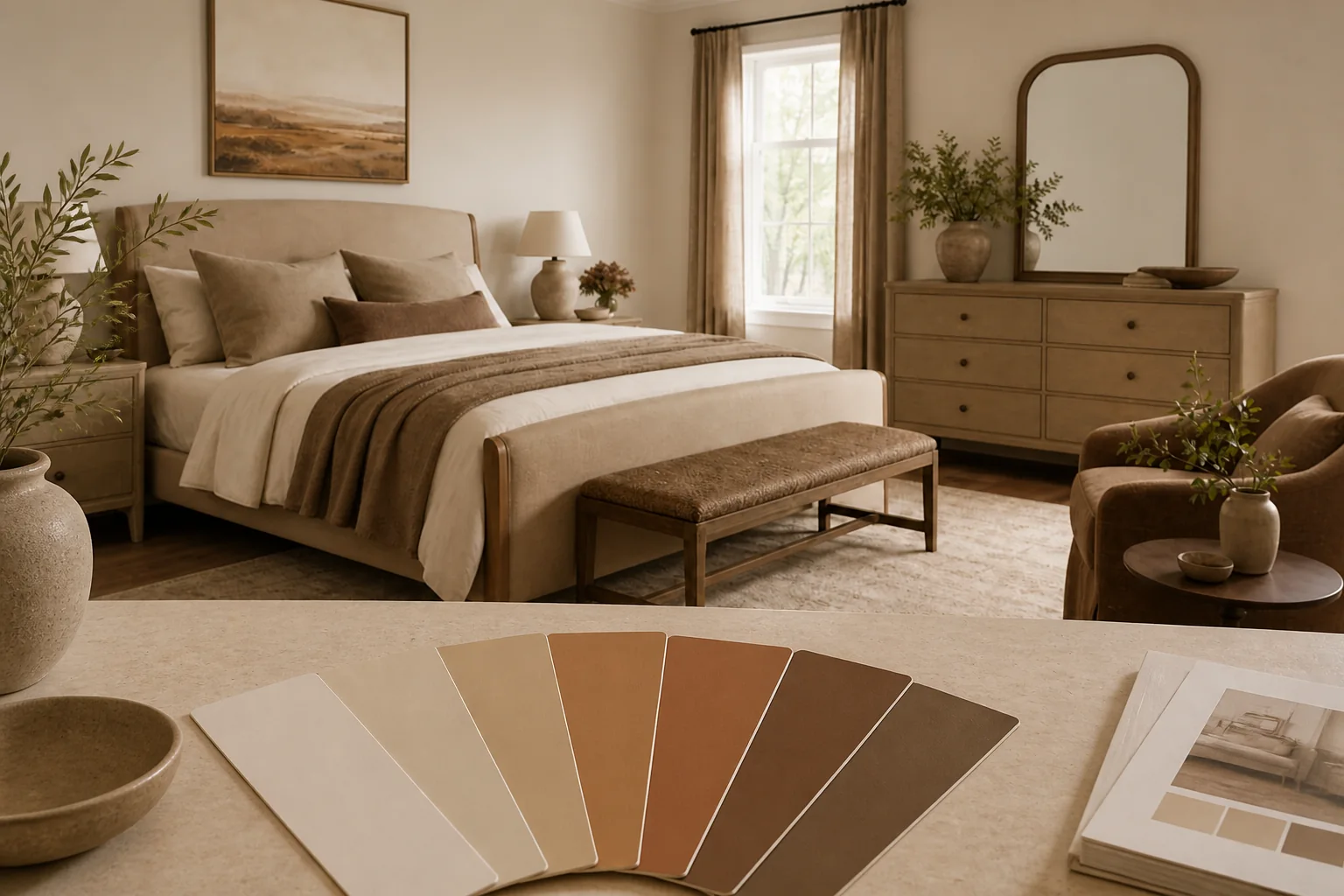
- Six room Style Kits, each with layout, palette and shopping list$114
- The Gallery Wall Studio: 200 prints + 15 measured layouts$29
- The Room Makeover System: 40 solved room layouts + workbook$29
- The Color Palette Handbook: 60 palettes shown in real rooms$19
- The Whole-Home Reset: 40 printable organizing checklists$19
- The Decorator's Cheat Sheets: the 40 measurements that matter$9
- All eleven products, bought separately
$219$97
A single hour with an interior designer costs more than the entire Collection, and this one keeps answering for every room you will ever decorate. Free updates included as the products grow. And if it is not for you, the 14 day money back promise means you simply get a refund.