How to Get a Chic Black and White Bathroom Look Without a Renovation
Black and white bathroom ideas that read as high end without a renovation: paint finishes, matte black fixtures, tile alternatives, bulb colour and styling, with what each step costs.
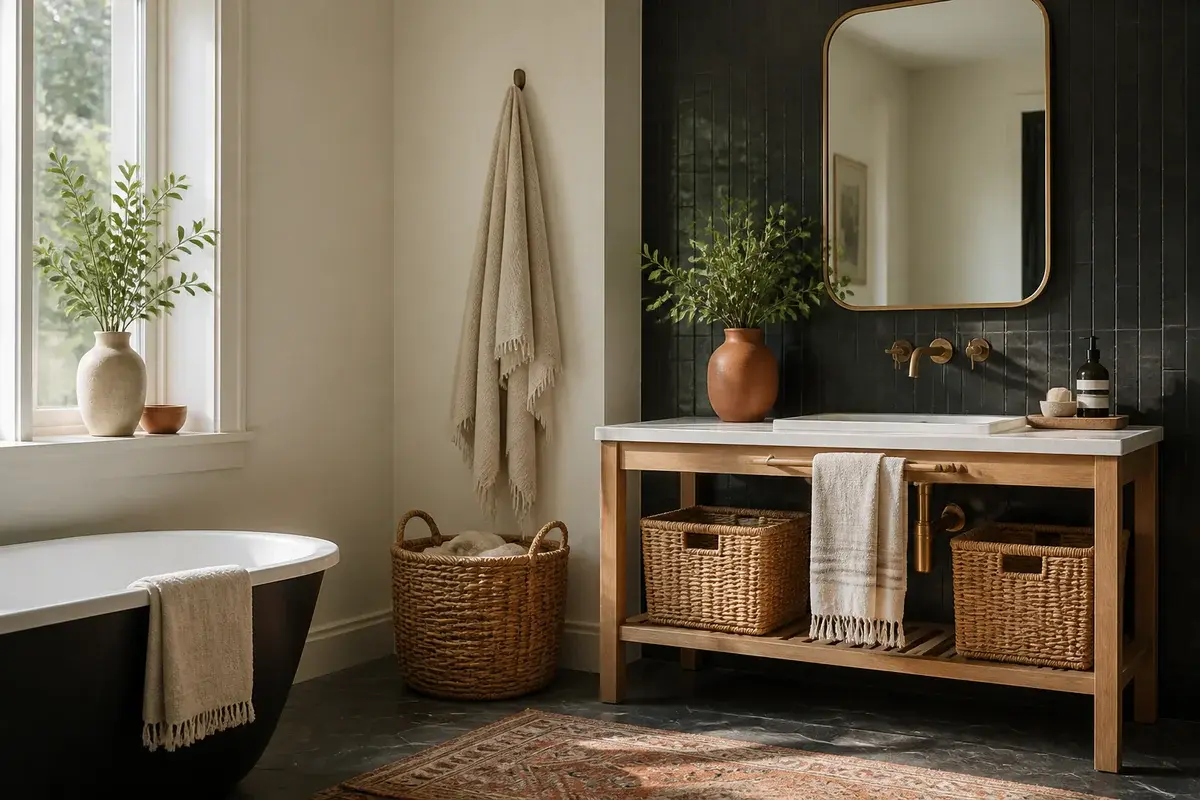
A beige bathroom isn't ugly. It's just quiet, and quiet is what makes a small room feel like a rental you never finished. Black and white is the cheapest way out of that, because the whole look runs on contrast rather than on expensive materials. The drama comes from the gap between two tones, not from the price of the tile underneath them.
That's why black and white bathroom ideas hold up on a small budget when other schemes fall apart. Paint, cabinet hardware, one length of fabric and a pair of decent bulbs will get you most of the way there for under two hundred dollars, and none of it involves opening a wall. What follows is the order we'd work in, roughly cheapest to most involved, with what each step costs and where it goes wrong.
Start with Paint (It's Cheaper Than You Think)
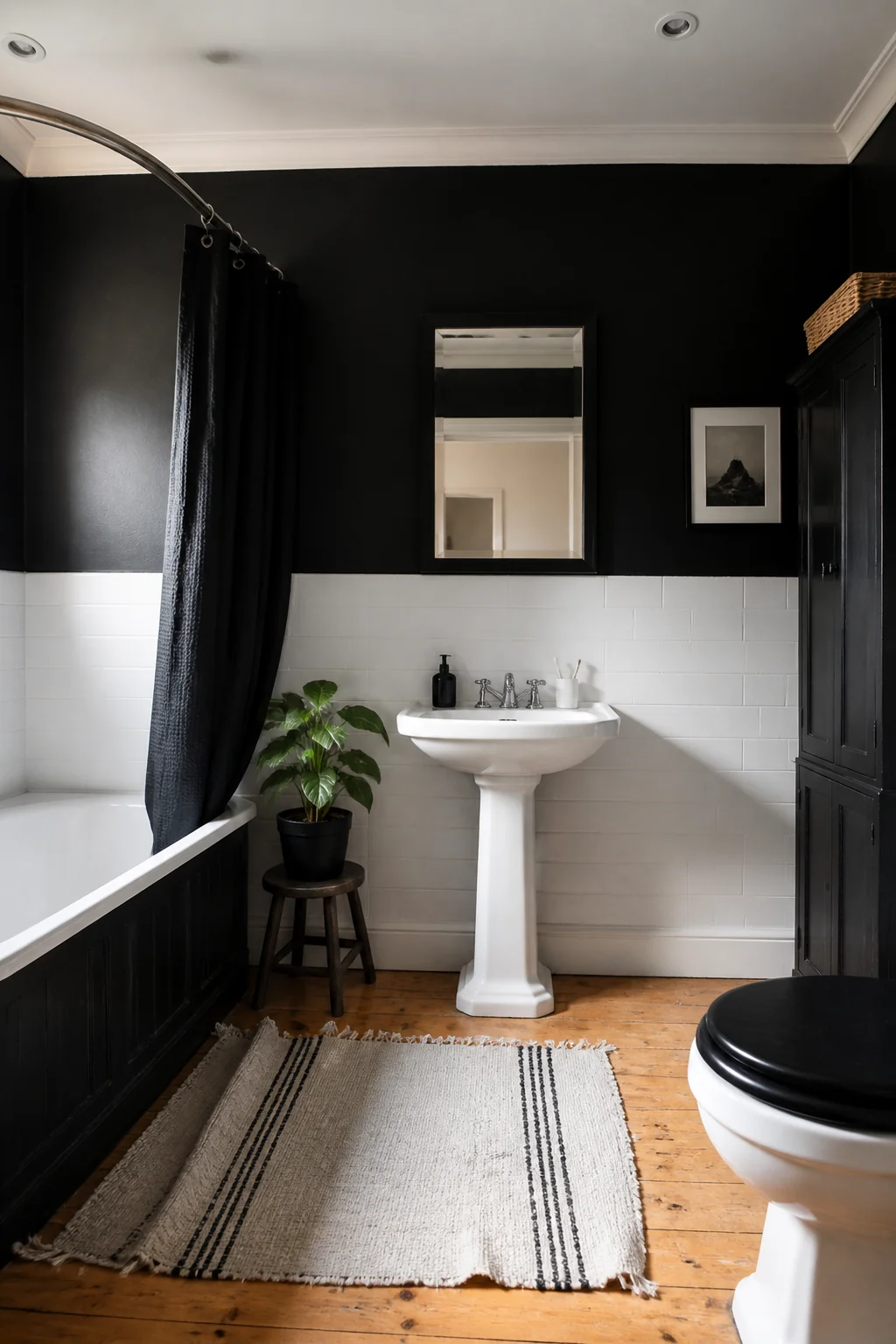 Paint gives back more per dollar than anything else in this room. A gallon of bathroom-rated paint runs about thirty to forty-five dollars and covers 350 to 400 square feet, which is more wall area than most full baths have, so one can usually does the whole job with enough left over for touch-ups.
Do the white first. Crisp white walls read as background, and that's the point: they stop competing, so the vanity edge, the mirror frame and the shower curtain become the things your eye lands on. That's the quiet mechanic behind most black and white bathroom ideas that look composed rather than busy.
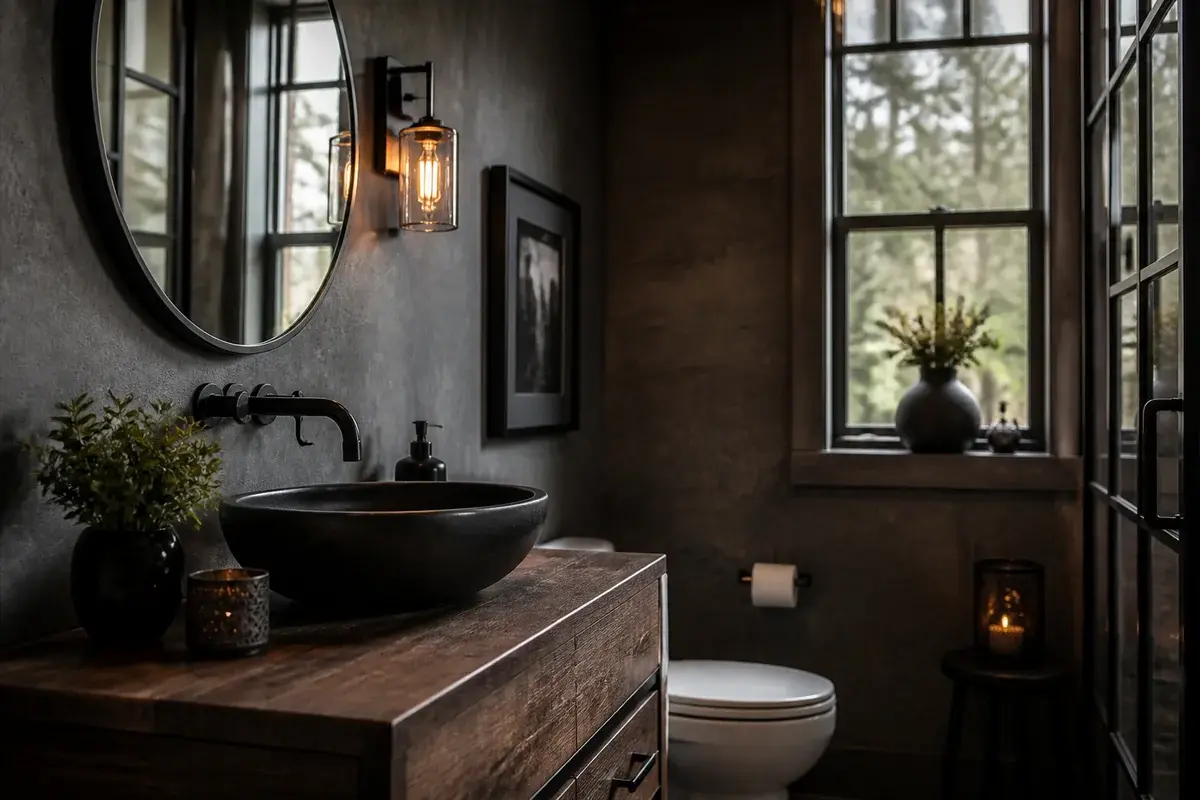
Then pick one wall for black. The wall behind the toilet is usually the right one, because you look at it rather than through it and it rarely has a window fighting it. Use matte, not gloss. A flat black absorbs light instead of bouncing your ceiling fixture straight back at you, so it reads as depth instead of as a dark mirror. Ask for a scrubbable matte rated for bathrooms; standard flat wall paint chalks off the moment you wipe a splash.
Two coats over a mid-tone beige is a two-hour afternoon. If you live with it a month and hate it, that's another thirty dollars to put it back.
Choose Fixtures That Make a Statement
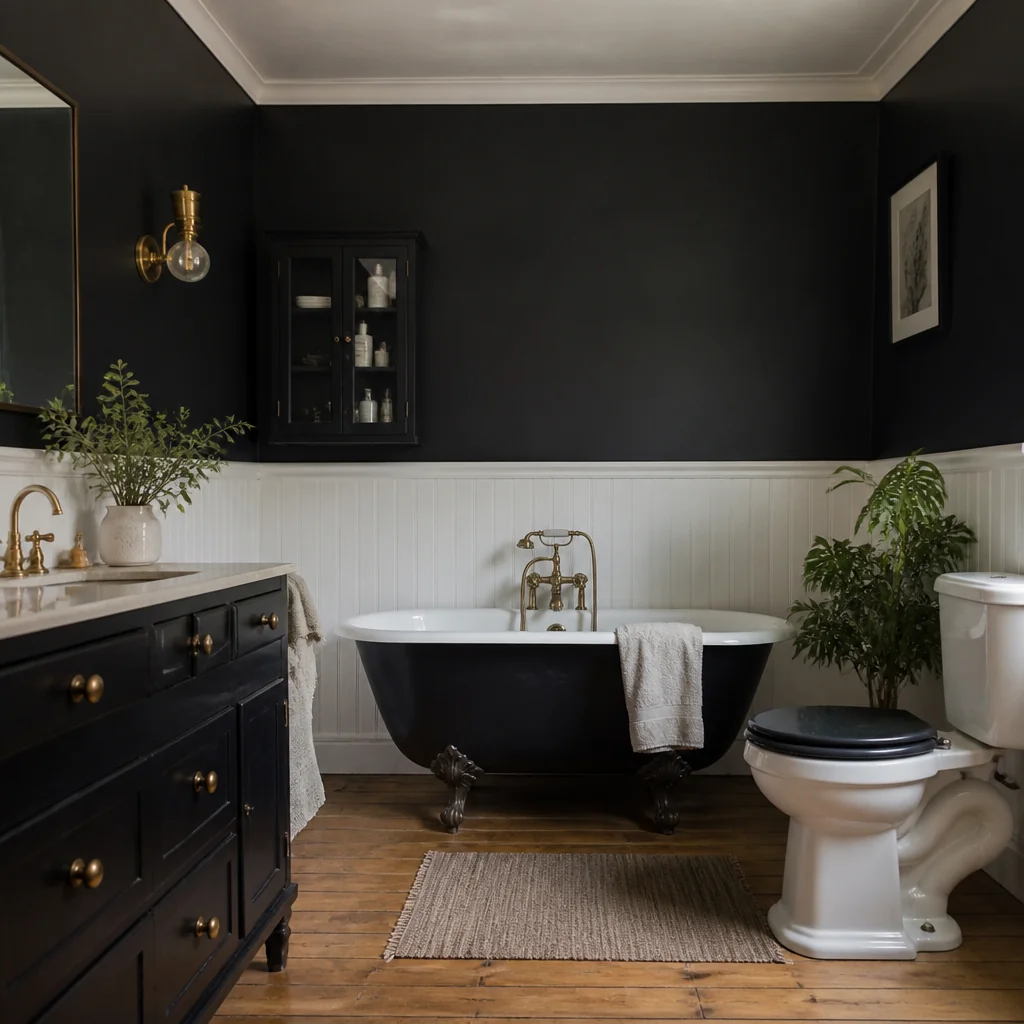 Fixtures are where people assume the four-figure bill hides. It doesn't, as long as you measure before you buy.
Faucets come in three deck configurations: single-hole, four-inch centerset and eight-inch widespread. Count the holes in your sink deck and measure centre to centre before you order anything, because the wrong spread means either a visible gap or a sink you can't use. A decent matte black faucet is sixty to ninety dollars. Swapping one takes twenty to forty minutes with a basin wrench once the supply valves under the sink are closed, and a plumber will charge roughly a hundred to a hundred and fifty to do it for you.
Cabinet pulls are the cheapest win in the room, but the same rule applies. Measure the screw centres on the pulls you already have first. Three inches and 96mm are both common, they look nearly identical on a listing, and only one of them lines up with the holes already drilled in your doors. A set of twelve black pulls is twenty to thirty dollars and about half an hour of work.
One caution on matte black: hard water leaves a chalky grey film on the powder coat. A dry cloth after cleaning keeps it looking black rather than dusty.
The Tile Situation (You Don't Have to Replace Everything)
Here's the part nobody says out loud: neutral tile isn't the problem. Busy tile is. A plain beige or grey floor stops registering the moment the walls go white and something genuinely black enters the room, and leaving it there saves you the fifteen hundred to three thousand dollars a small tiled bathroom costs to redo properly once you count demolition and disposal. Spend that money at eye level instead, where black and white bathroom ideas do their real work.
If the tile still bothers you, work in this order. Grout first. Darkening the white grout on existing tile to charcoal with a grout pen costs ten to fifteen dollars and takes an evening, and it gives you the graphic grid that carries the whole look with no demolition at all.
Peel-and-stick comes second, at roughly fifteen to twenty dollars a sheet for checkerboard. Read its limits honestly: it needs a clean, smooth, non-porous surface, so it holds behind a sink and fails on textured walls, over deep grout lines, and anywhere inside the shower's spray zone, where standing water gets under an edge and lifts it.
A narrow border of real patterned tile around the mirror or the shower opening is about eighty dollars in materials and moves the room further than the price suggests.
Accessories Make or Break the Look
Two things happen at this stage. Your budget suddenly stretches, and the scheme suddenly gets away from you.
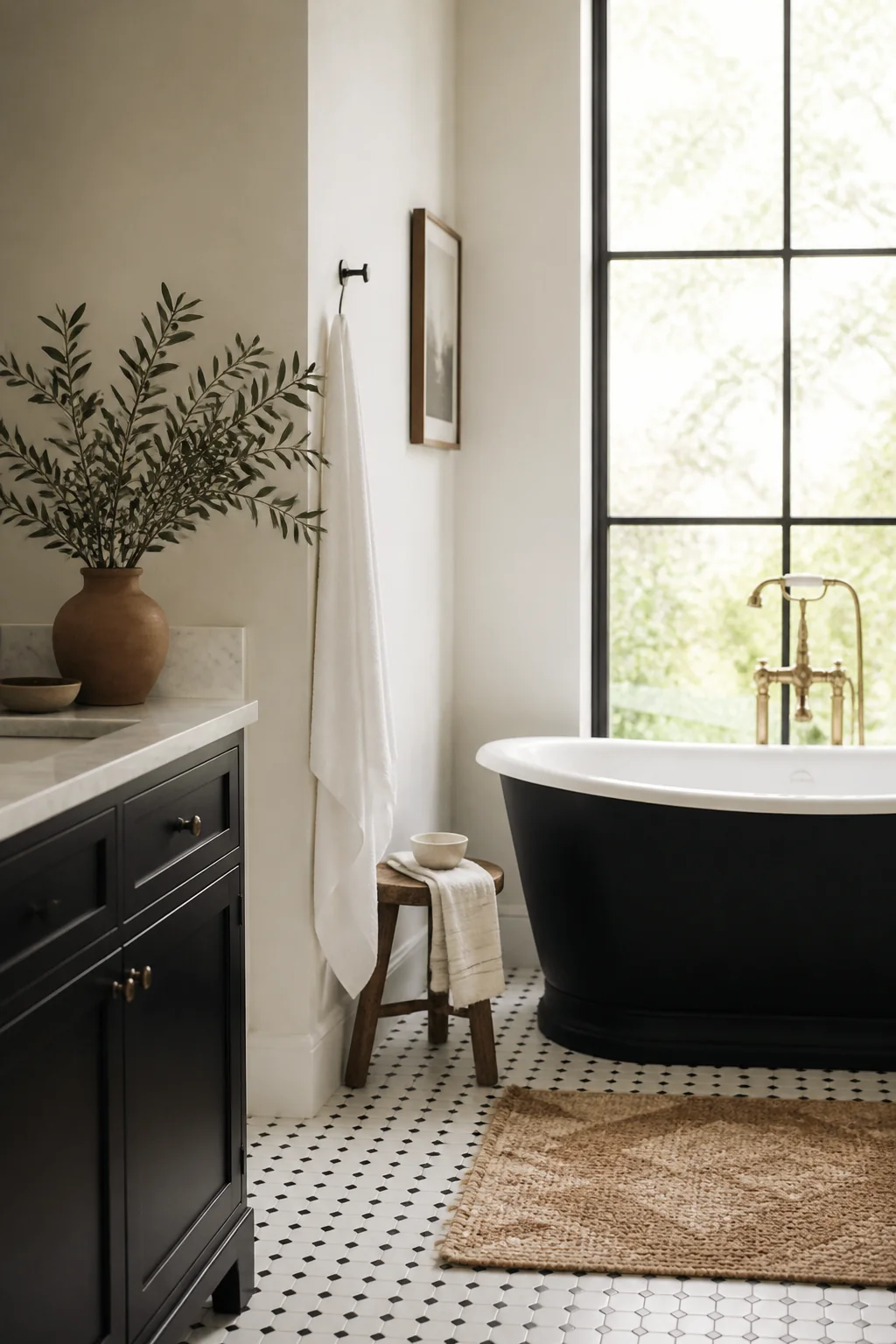
The shower curtain is the largest single piece of fabric in the room, so it sets the tone whether you meant it to or not. Standard is 72 by 72 inches at fifteen to twenty-five dollars. If your ceiling is over eight feet, buy the 72 by 84 instead and hang the rod just below the ceiling rather than at the usual six-foot mark. The taller drop reads as one continuous panel instead of a curtain with a strip of wall stranded above it.
A black-framed mirror is thirty to sixty dollars. Hang it with the centre of the glass around sixty to sixty-five inches off the floor, and keep it an inch or two narrower than the vanity underneath. A mirror wider than its vanity always looks like it wandered in from another room.
Then stop. This is where most black and white bathroom ideas come undone: three or four black objects in one sight line reads as a scheme, eight reads as confetti. White towels with black trim, one basket, one soap dispenser, and you're finished.
Lighting Is What Keeps the Contrast Crisp
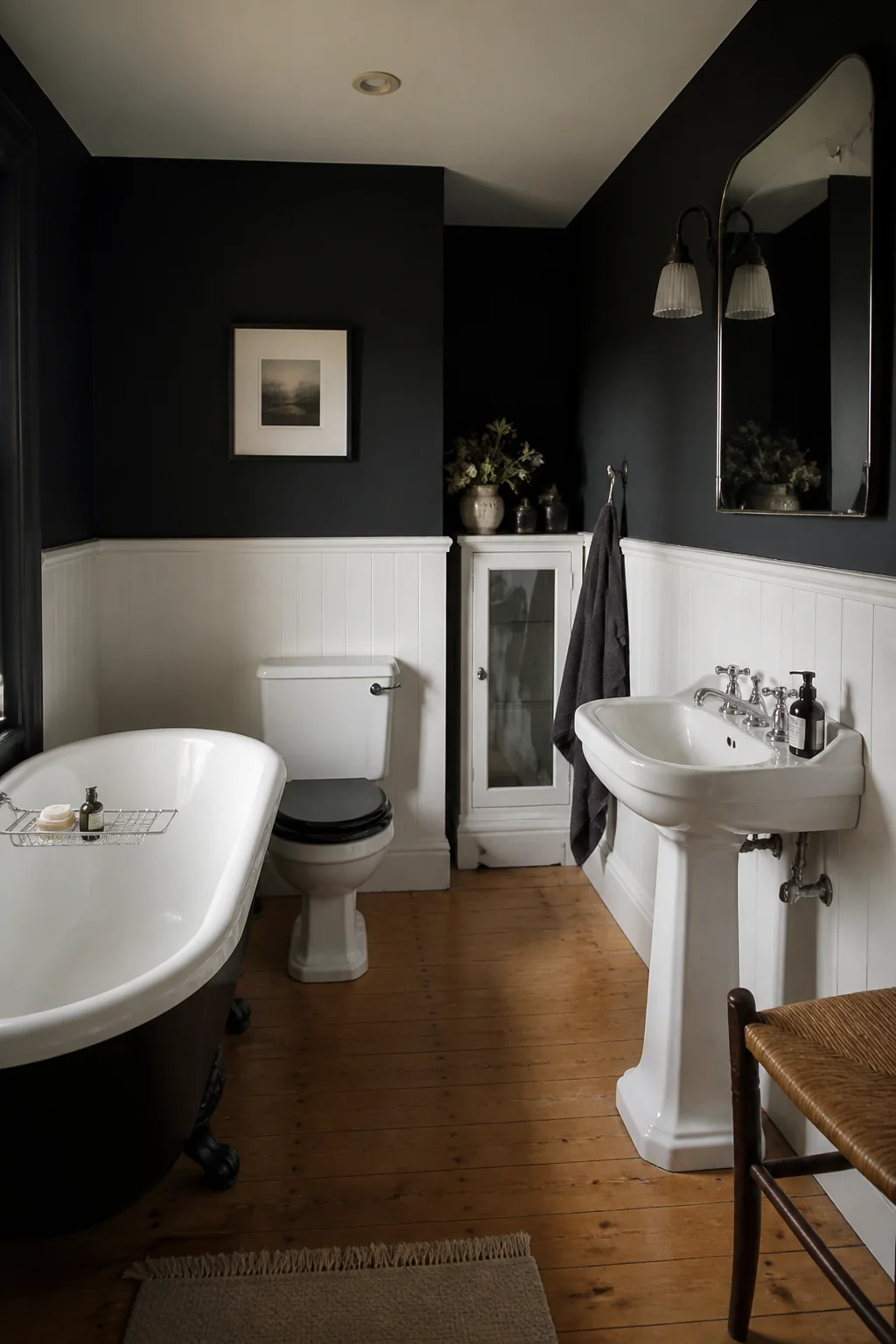 Contrast is the entire design here, and light is the thing that lets you see it. Under the wrong bulb, white goes cream and black goes brown, and the room you spent a weekend on looks like weak coffee.
Bulb colour matters more than fixture price. Aim for 3000K to 4000K. A 2700K bulb, the cosy warm white most homes default to, yellows every white surface you just painted. Anything above 5000K swings blue and clinical. Then check the CRI on the box and look for 90 or higher, because that number is what decides whether a white towel reads as white or as faintly grey. A pair of good bulbs is ten to fifteen dollars.
A matte black fixture over the mirror is forty to eighty dollars. Sconces flanking the mirror do more work: mount them roughly sixty to sixty-six inches off the floor and thirty-six to forty inches apart, so light crosses your face from both sides instead of dropping shadows down from overhead. A pair runs sixty to a hundred dollars, plus a couple hundred for an electrician if there's no junction box in the wall yet.
If you have a window, leave it uncluttered. Daylight is the only light source that renders both tones correctly for free.
Don't Underestimate the Power of Plants and White Accessories
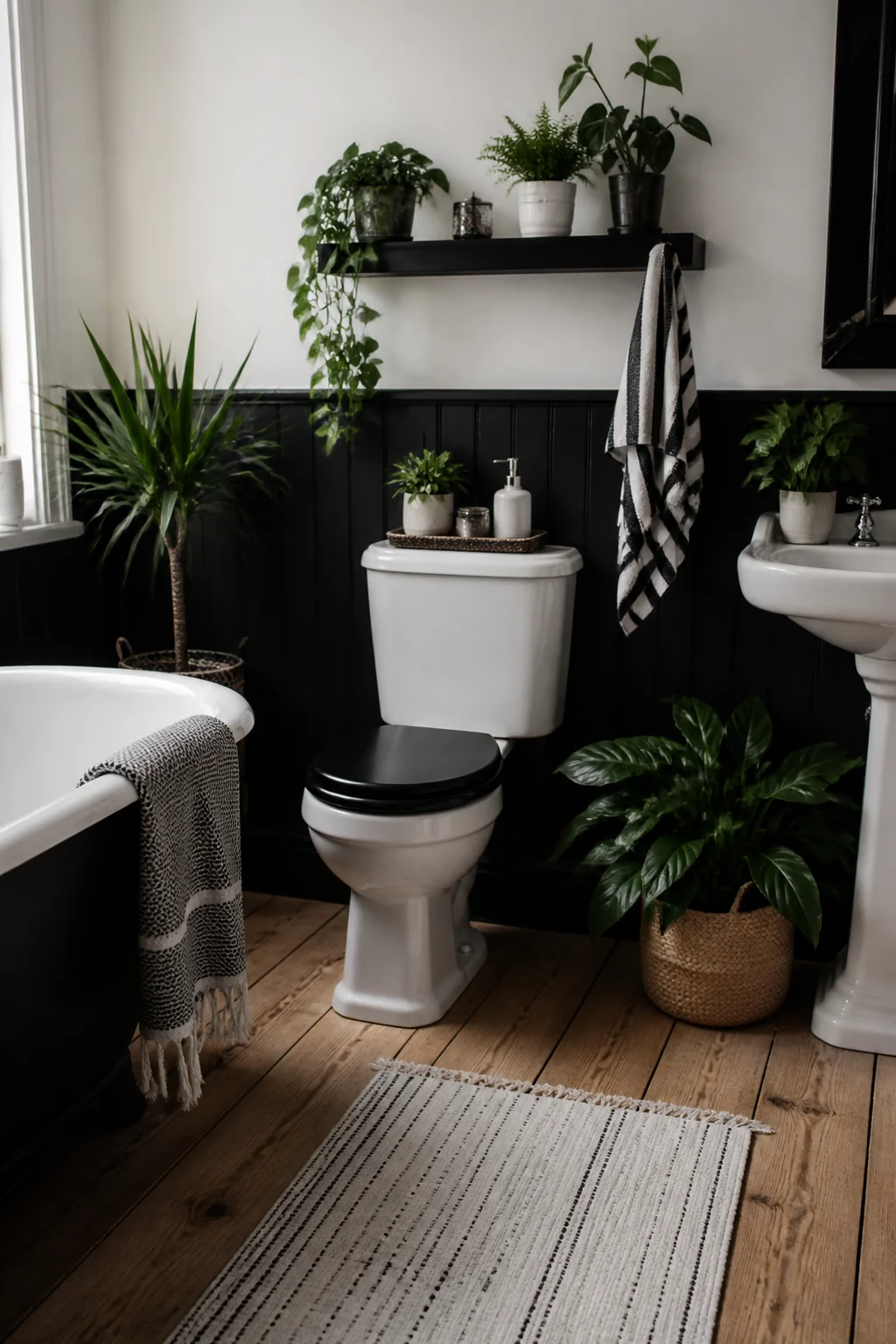 Green is the one colour that belongs in a black and white room. It behaves like a neutral against monochrome the way it does in a photograph, so a single plant softens all those hard edges without introducing a second scheme.
Choose for the light, not for the leaf shape. Most bathrooms have one small frosted window, often facing north, which is genuinely low light. Pothos, snake plant and ZZ plant all live happily in it. Ferns and calatheas love the humidity but still want brightness, and they'll go crispy in a windowless bath no matter how steamy the shower gets. If there's no window at all, buy a decent faux plant and put it in a real ceramic pot; the pot is the part people read, and a six-inch matte black one is ten to twenty dollars. The toilet tank, a floating shelf, and the far corner of the vanity are the three spots that never get in your way.
The white pieces do the opposite job. A ceramic tray, a toothbrush holder, a folded stack of towels: they give your eye somewhere to land between the dark notes. Leave roughly a third of the counter bare. Empty surface is what makes a high-contrast room look composed instead of crowded.
Your Real First Step
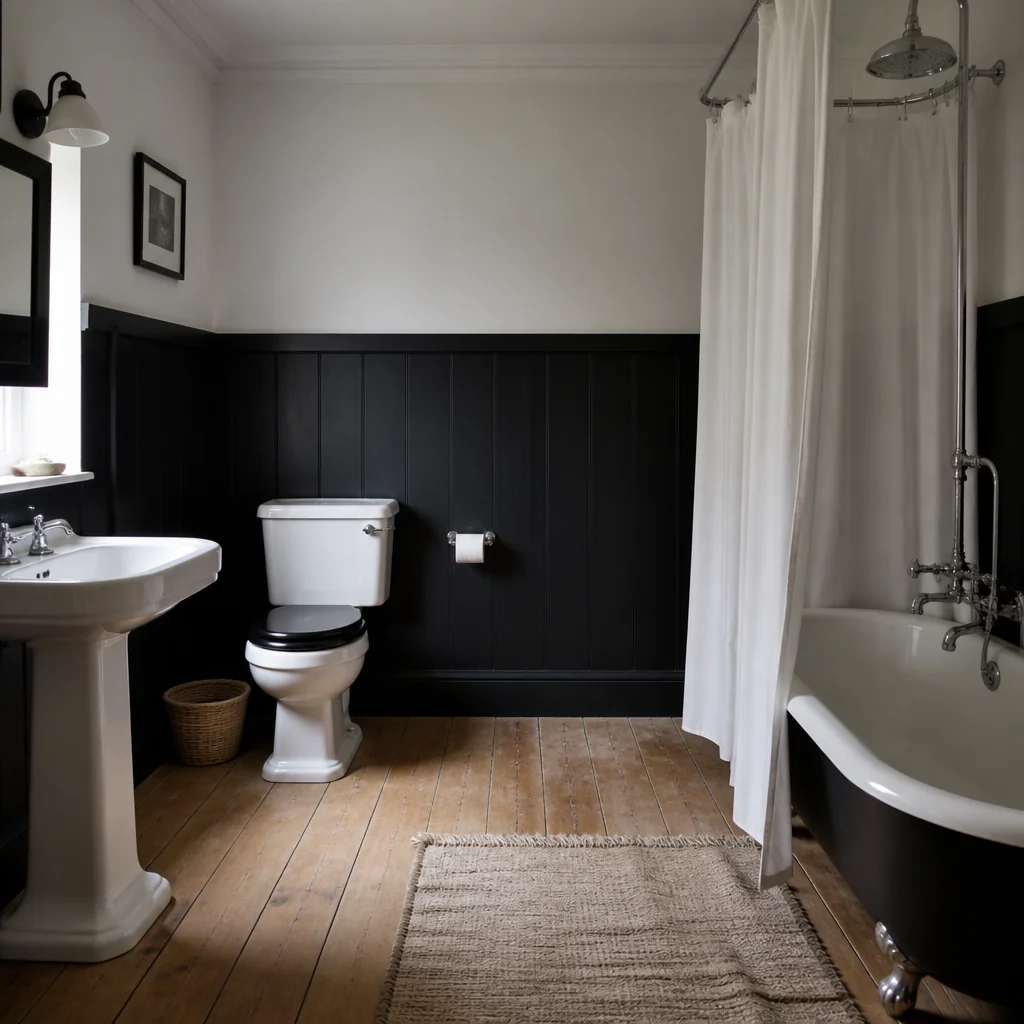 If you're rolling out black and white bathroom ideas in stages, the sequence matters more than the shopping list.
Wet and dusty work goes first: the grout pen, the faucet swap, any peel-and-stick. Paint comes second, because cutting a clean line around a fixture you're about to rip out is wasted effort, and grout dust settles into tacky paint if you do it the other way round. Hardware and textiles go last, since the screw holes left by the old pulls get filled and painted during step two.
That first pass is small money. Paint at forty dollars, a set of pulls at twenty-five, a curtain at twenty and a pair of high-CRI bulbs at twelve is under a hundred dollars, and it's the version of the room a visitor notices from the doorway. The faucet, the mirror and the sconces are the second pass, and they're the pieces worth waiting for a sale on.
Save this for your next project
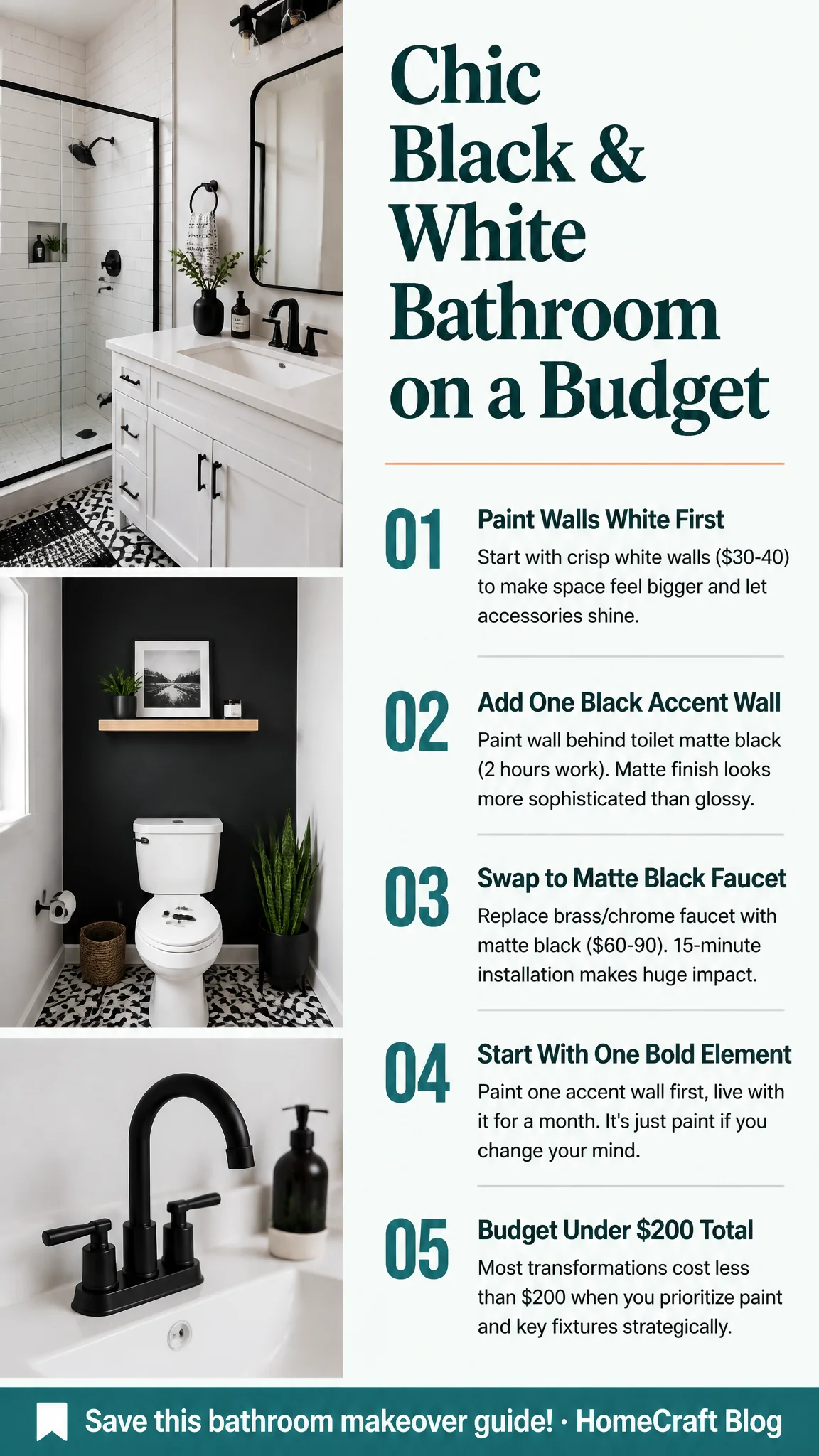
One thing worth knowing before any of it: matte black is not a single colour. Between brands it ranges from a soft charcoal to a hard blue-black, and two pieces from different suppliers sitting a foot apart on the same vanity read as a mistake rather than a layered scheme. Buy the faucet, the pulls and the towel bar in one order where you can, or at least hold them against each other in daylight before the packaging goes in the bin.
Ideas fade by Friday. A plan finishes the room.
You just read a full guide to your bathroom. Saving ideas will not change it; a plan will. The Home Decor Collection is every planning tool we make, for every room in the house, in one download, so the after photos below stop being other people's rooms.
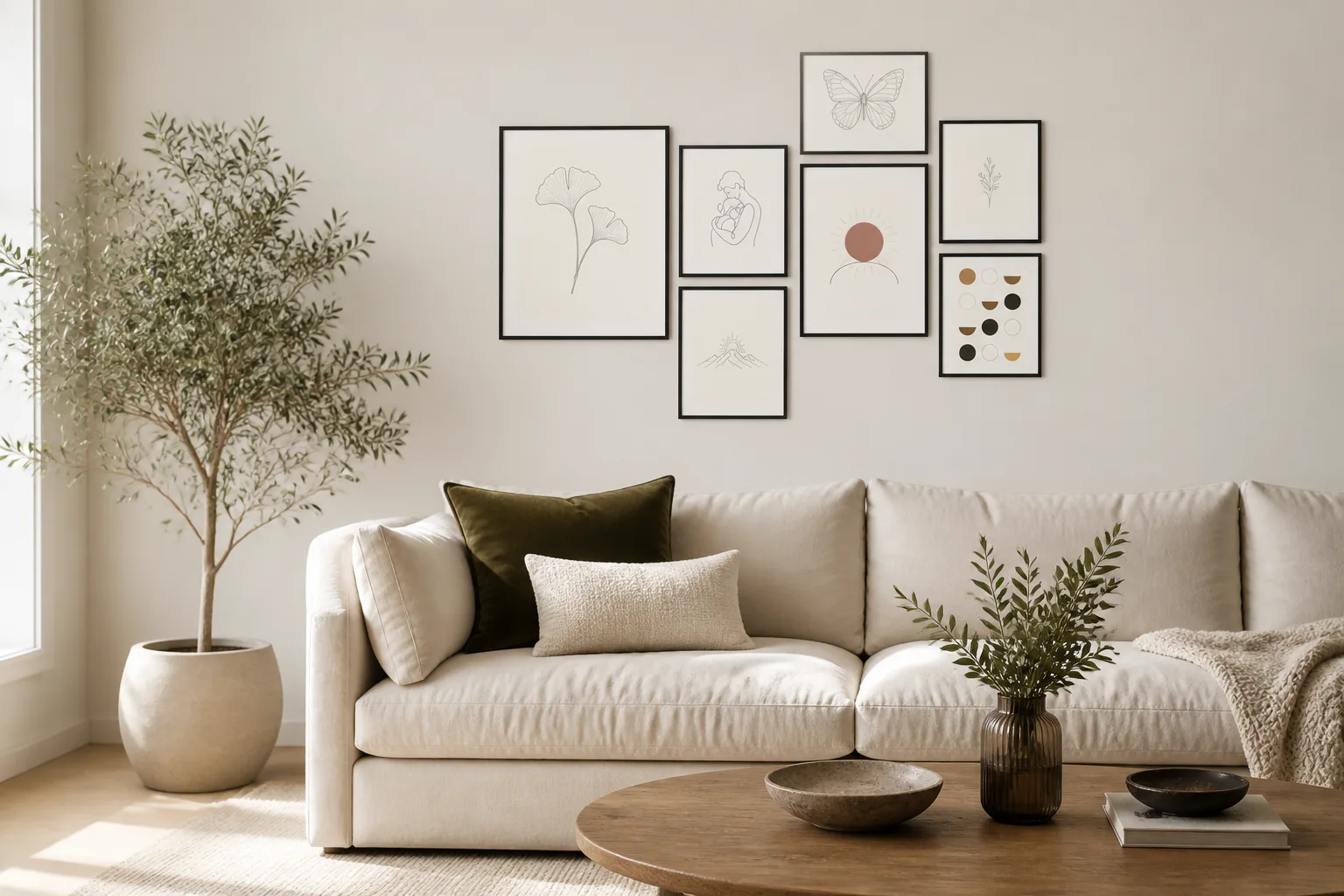
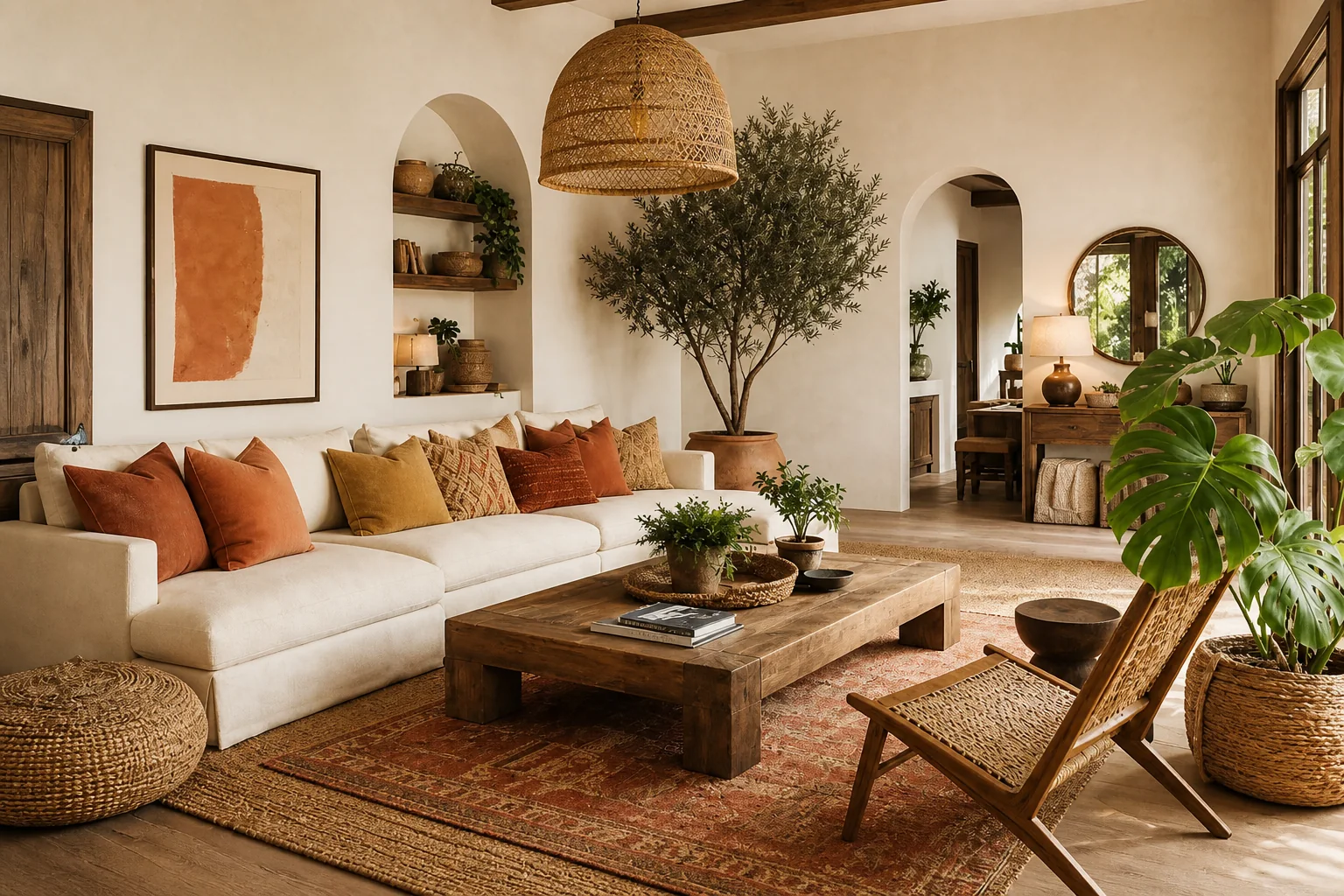
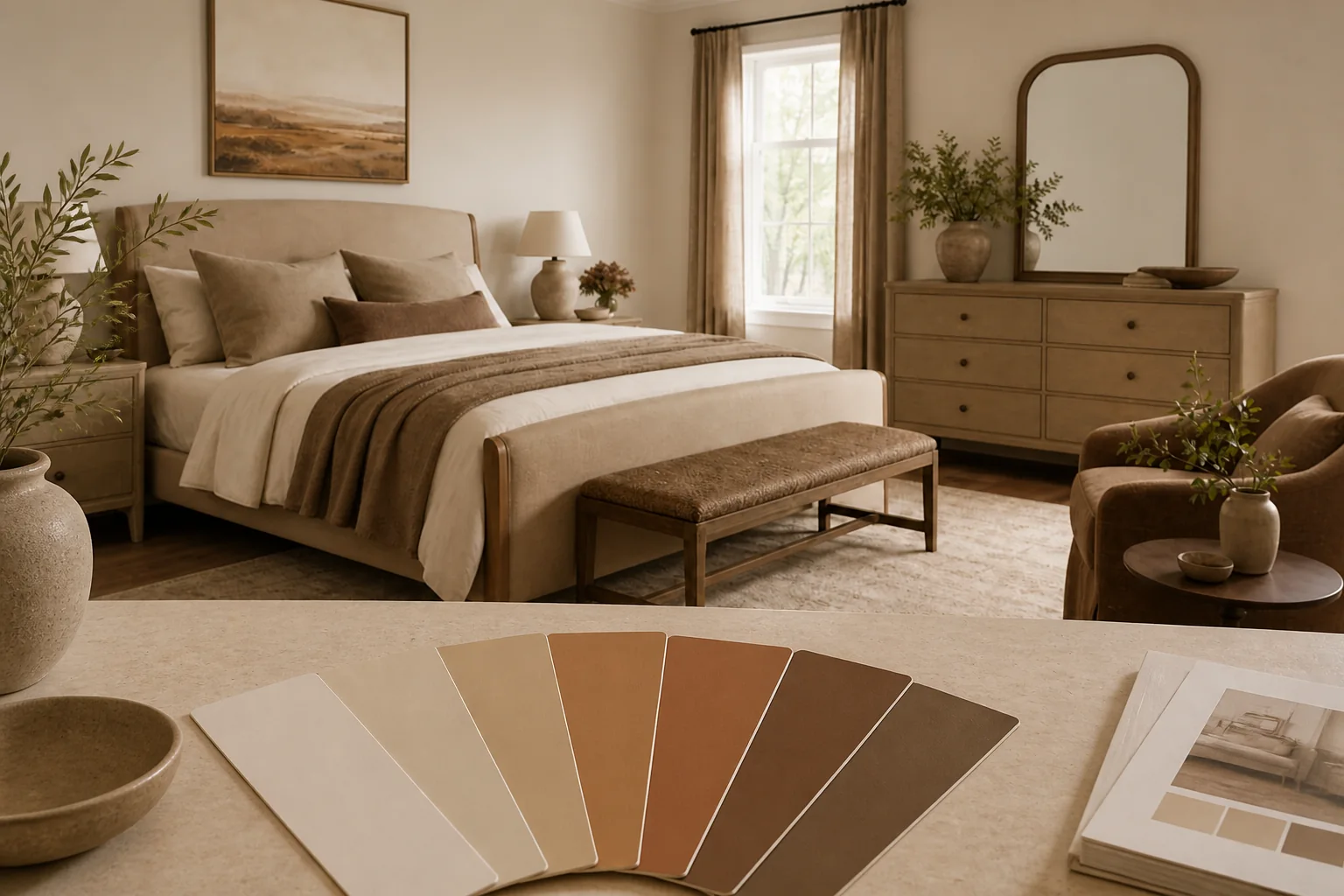
- Six room Style Kits, each with layout, palette and shopping list$114
- The Gallery Wall Studio: 200 prints + 15 measured layouts$29
- The Room Makeover System: 40 solved room layouts + workbook$29
- The Color Palette Handbook: 60 palettes shown in real rooms$19
- The Whole-Home Reset: 40 printable organizing checklists$19
- The Decorator's Cheat Sheets: the 40 measurements that matter$9
- All eleven products, bought separately
$219$97
A single hour with an interior designer costs more than the entire Collection, and this one keeps answering for every room you will ever decorate. Free updates included as the products grow. And if it is not for you, the 14 day money back promise means you simply get a refund.