How to Update a Dated Bathroom With Tile Without Ripping Anything Out
Keep your tub and vanity where they are. Here are bathroom tile ideas for new color, scale, pattern, and grout on walls and floors, no demolition needed.
This post contains affiliate links. As an Amazon Associate I earn from qualifying purchases. If you buy through our links, we may earn a commission at no extra cost to you.
Most dated bathrooms come with the same limits. The tub is in place, the vanity is bolted to the wall, and the floor runs right up to a door with maybe a quarter inch of clearance underneath. Pull all of that out and you're looking at a renovation, not an update. The question becomes what you can change while everything stays where it is. Tile is the strongest answer, because it covers the wet walls and much of the floor. You can change its color, its scale, its pattern and its grout without moving a single pipe. Bathroom tile ideas work best when they fit those limits instead of fighting them. We'd approach it wall by wall, and note where that approach stops working.

Free printable kit
Finish the wall above your bed this weekend
- 10 boho prints in terracotta and sage
- Layouts for full, queen and king beds
- Frame sizes and spacing worked out
Plus our emails with ideas and occasional shop offers. Unsubscribe anytime. Privacy
Tile Over Tile Works on Walls, Rarely on Floors
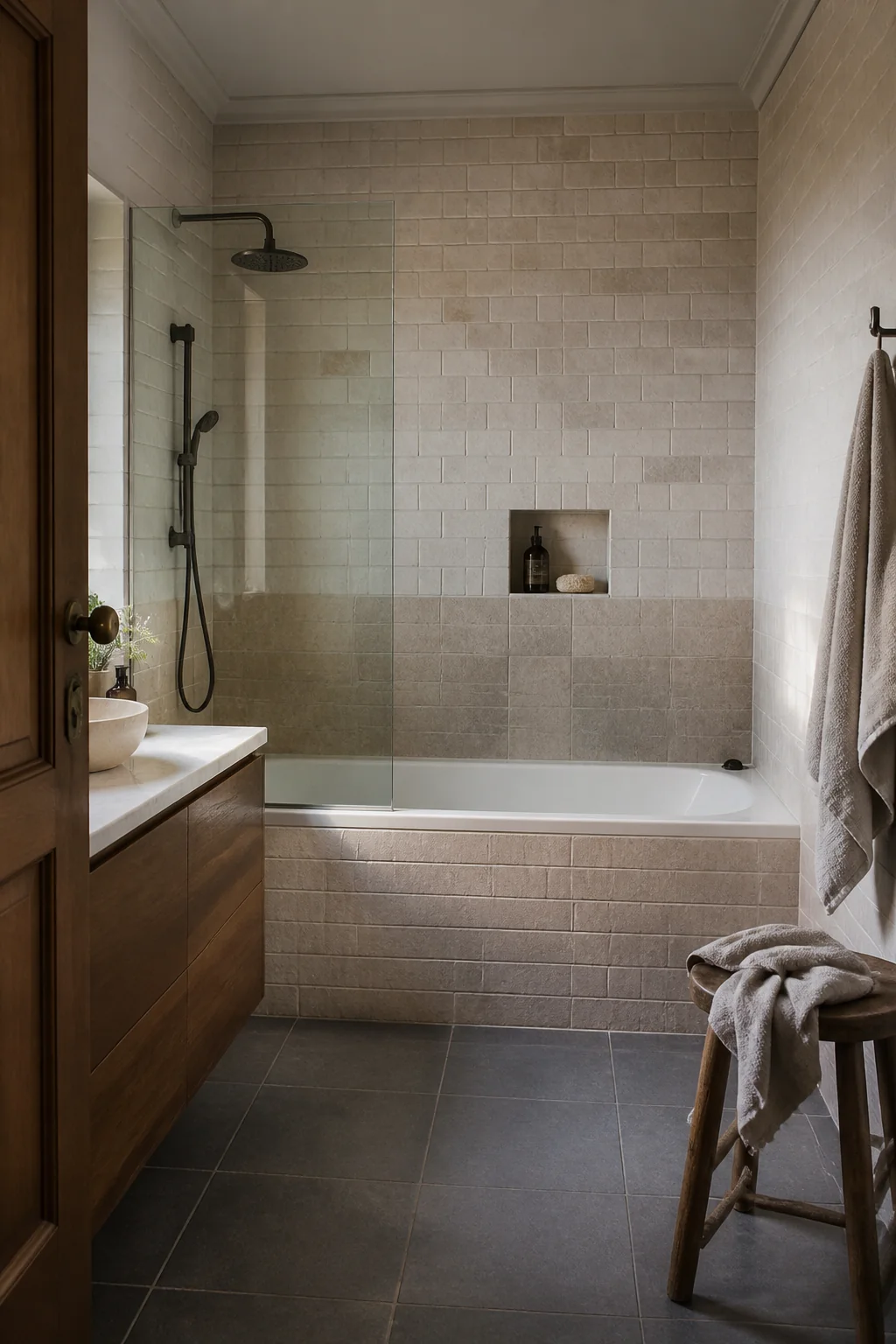
Tiling over existing tile is the move that keeps the demolition out of it. On walls, a new layer bonds to a sound, flat surface once it's scuffed and cleaned, and thin-set mortar does the rest. The catch is height. Each added layer pushes the wall out by roughly 3/8 to 1/2 inch, which matters at a tub lip, a shower valve or a toilet flange.
Floors are different. Adding a layer raises the finished floor at the threshold, and a door that already scrapes will start to drag. Unless the door can be trimmed and the transition is planned, we would leave dated floor tile alone and work with the walls first.
Tile the Wall Behind the Vanity to Change the Whole Room
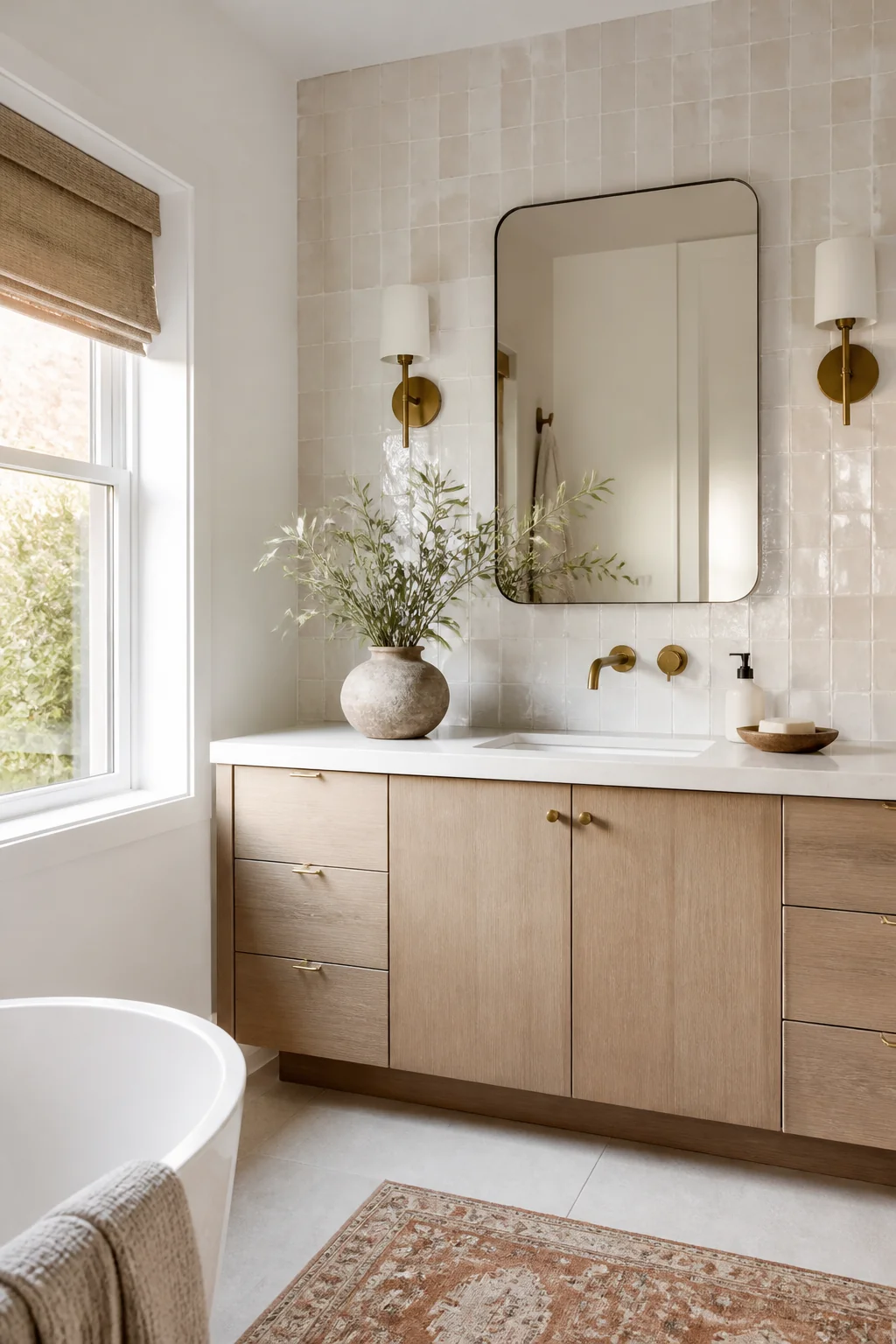
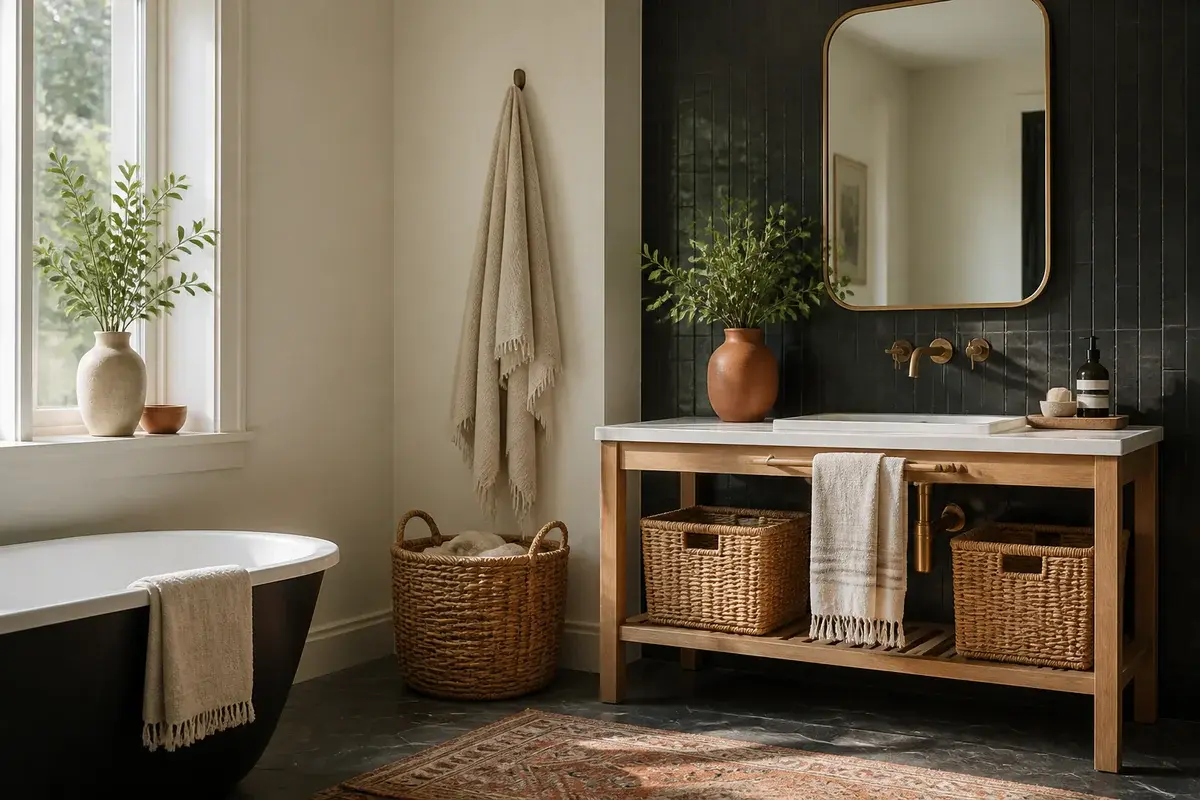
The wall behind the sink is the cheapest place to make a bathroom feel new, because it's the first thing your eye lands on. Among bathroom tile ideas, it's the easiest to test. A full-height wall of tile is more than most rooms need, though. A band of tile running from the counter up 18 to 24 inches reads as a deliberate backsplash, and it leaves the rest of the paint or wallpaper alone.
Pick a tile that's a step away from what's already there. Stark white on white looks like you ran out of ideas. A soft zellige-style glaze, a sage or a warm putty reads as a choice. Keep the field tile plain and let one element carry the interest, either a single accent color or a small mosaic strip at the top edge.
Wainscot Height Sets the Mood More Than the Tile Does
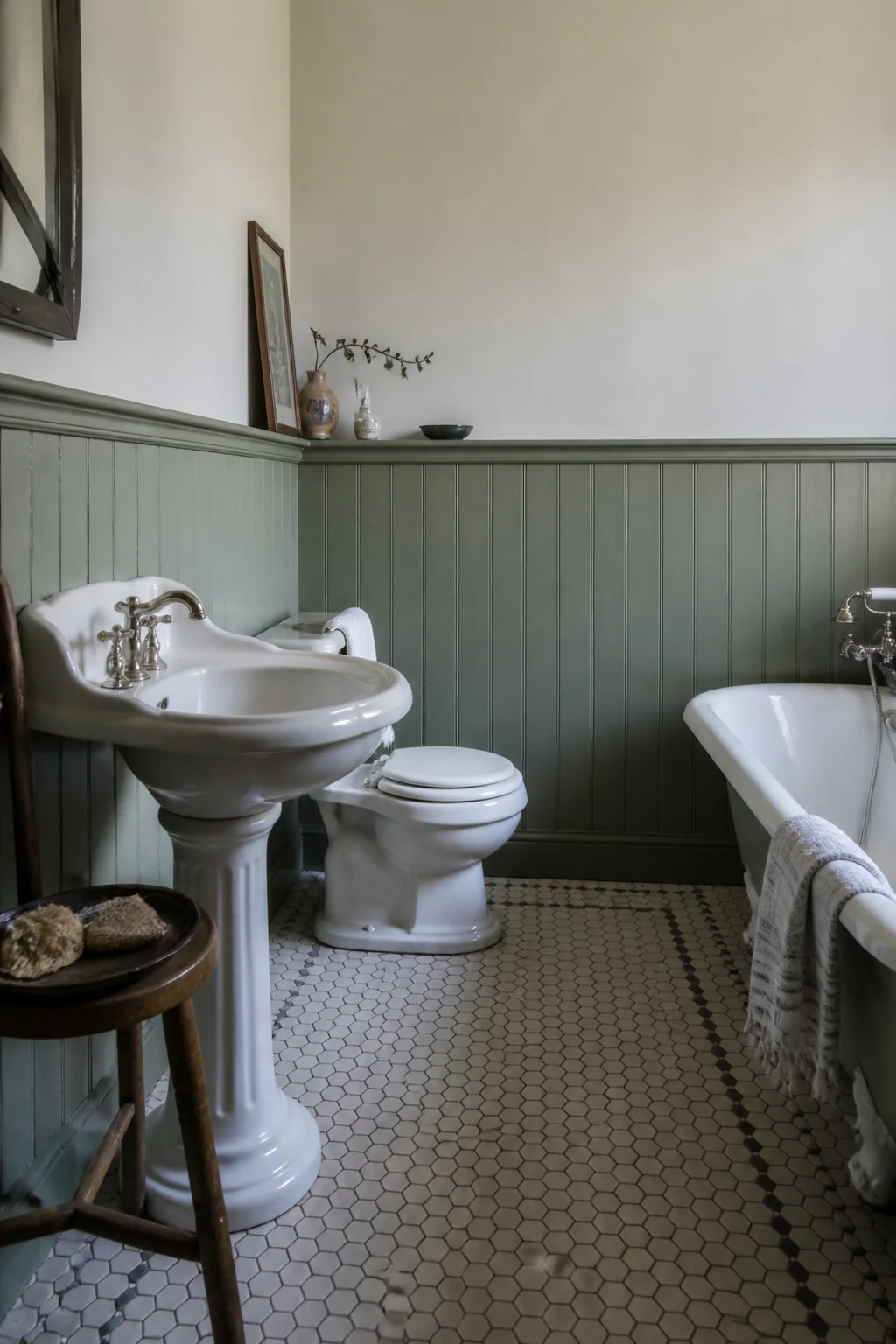
A tiled wainscot, meaning tile from the floor to about 42 to 48 inches, is one of the most effective updates for a bathroom with an old beige wall above it. The line where tile stops is what makes the room look intentional. Set it too low, around 30 inches, and it looks like a leftover from a previous decade. Set it to match the height of the vanity top or a standard window sill and the lines start to feel planned.
Two things make this work. Choose a tile with some depth of color or texture so the wall doesn't look flat. Finish the top edge with a bullnose or a metal trim, because a raw cut edge looks unfinished in a room people look at every day. (Sharp tile corners also make a fine place to bruise your hip, so round them off.)
Large-Format Tile Makes a Small Bathroom Look Calmer
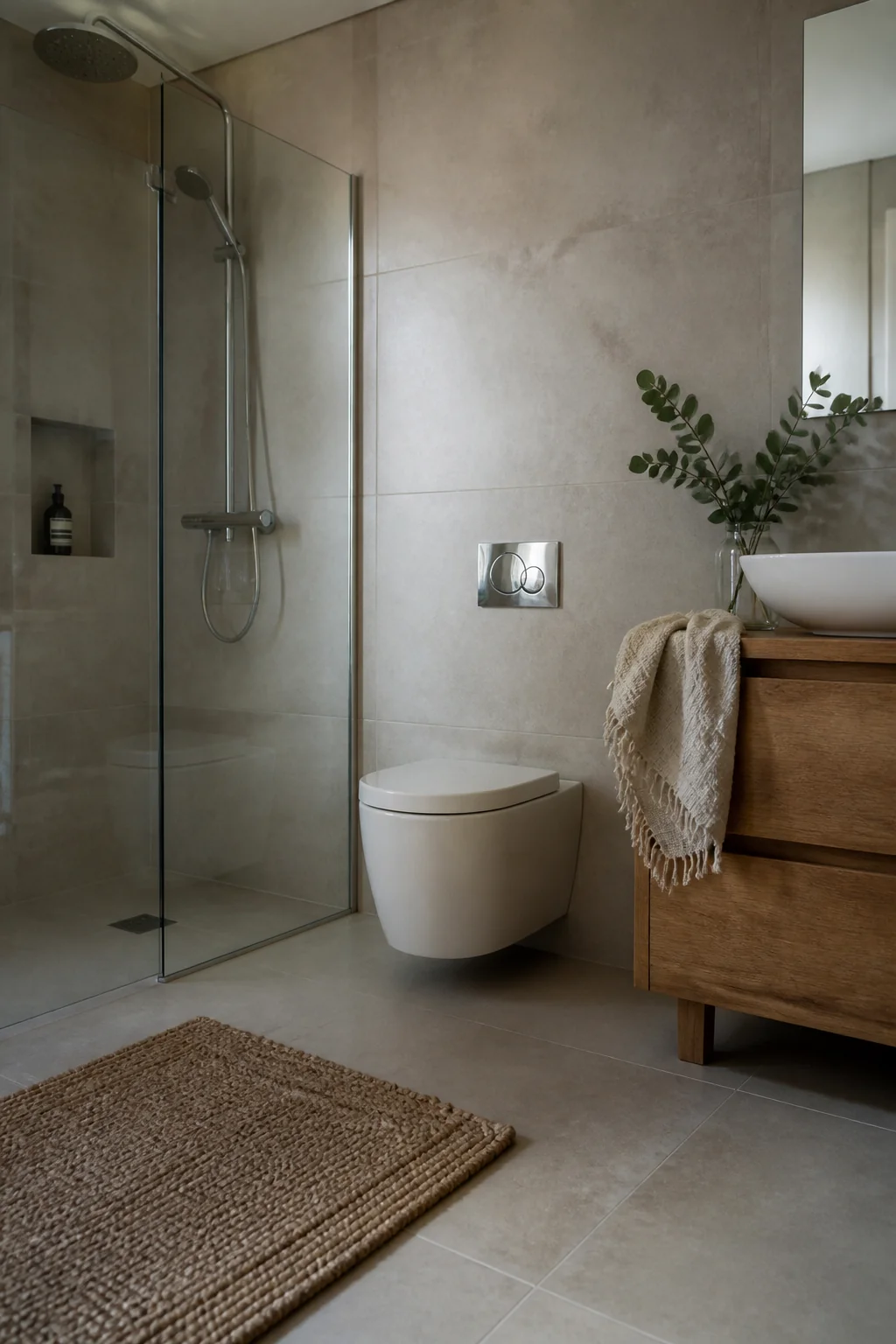
Small rooms get busy fast when the tile is small and the grout lines are close together. A 3-inch subway tile laid across a 5-foot wall produces a lot of visual noise, and the grid pulls the eye in every direction. Switching to 12-by-24-inch tile, laid vertically, removes a large share of those grout lines and makes the walls feel taller.
The downside is that large tile needs a flat wall. Any wave in the old plaster will show as a shadow under the tile, so check with a straightedge before you buy. We would skip the large format on a wall that's visibly out of plumb, and use a smaller tile there instead, like a 4-by-12 installed in a running bond pattern.
Grout Color Decides Whether the Tile Reads as Old or New
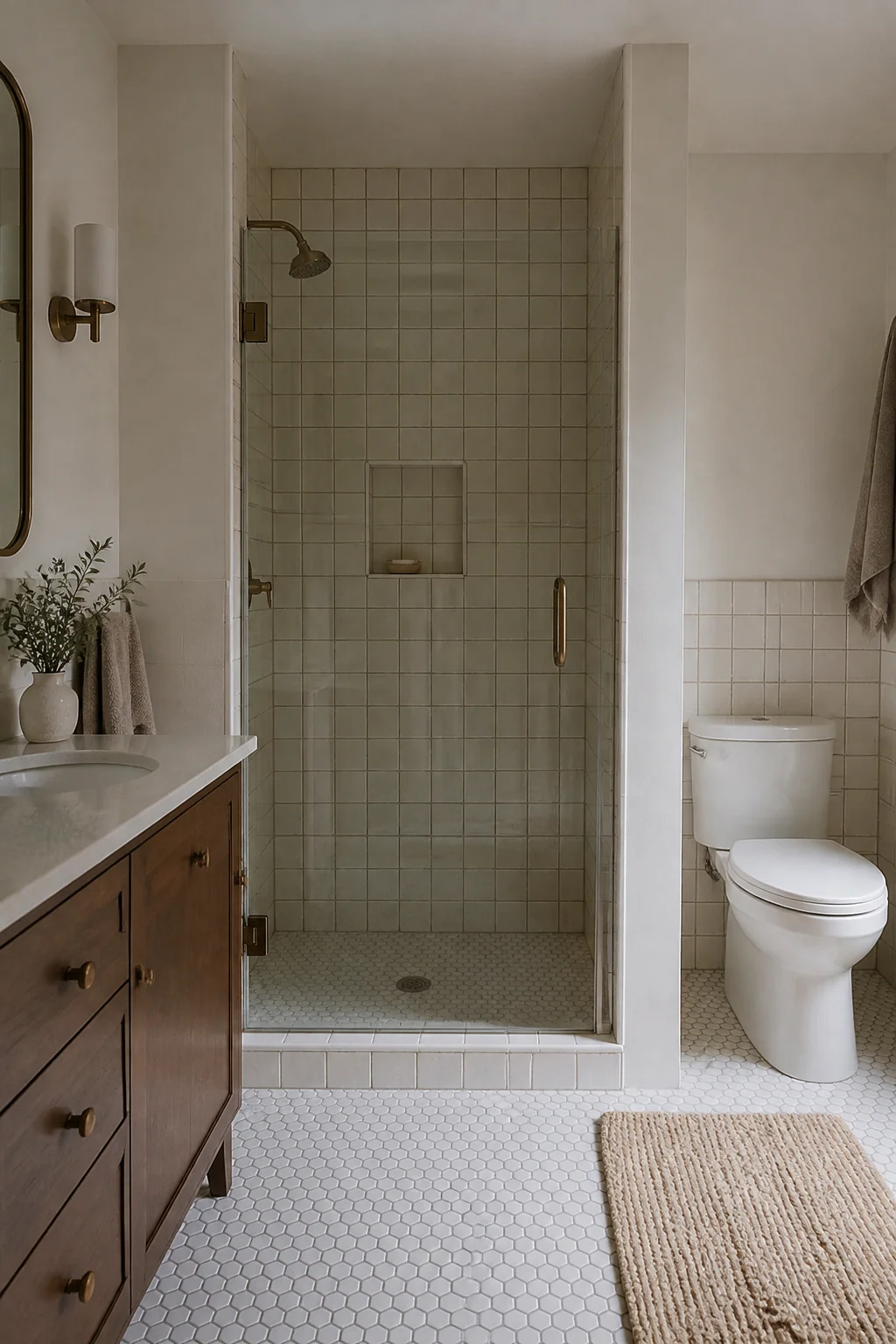
Grout is the detail that quietly sets the age of a tiled wall. Matching grout makes the tile look like one continuous surface, which suits large format and light colors. A contrasting grout turns the tile into a pattern, which suits smaller shapes like hex or subway.
Dark grout is a poor choice for most small bathrooms. On white tile it creates a grid of black lines that makes the room look smaller and busier than it is. Stay within one or two shades of the tile for a small room, and save the strong contrast for a bigger space where the pattern has room to breathe.
(Grout colors fade and stain faster in lighter shades, so a mid-gray or warm taupe usually holds up better than a pure white in a bathroom that gets daily steam.)
A Tiled Niche Looks Built In Without Any Carpentry
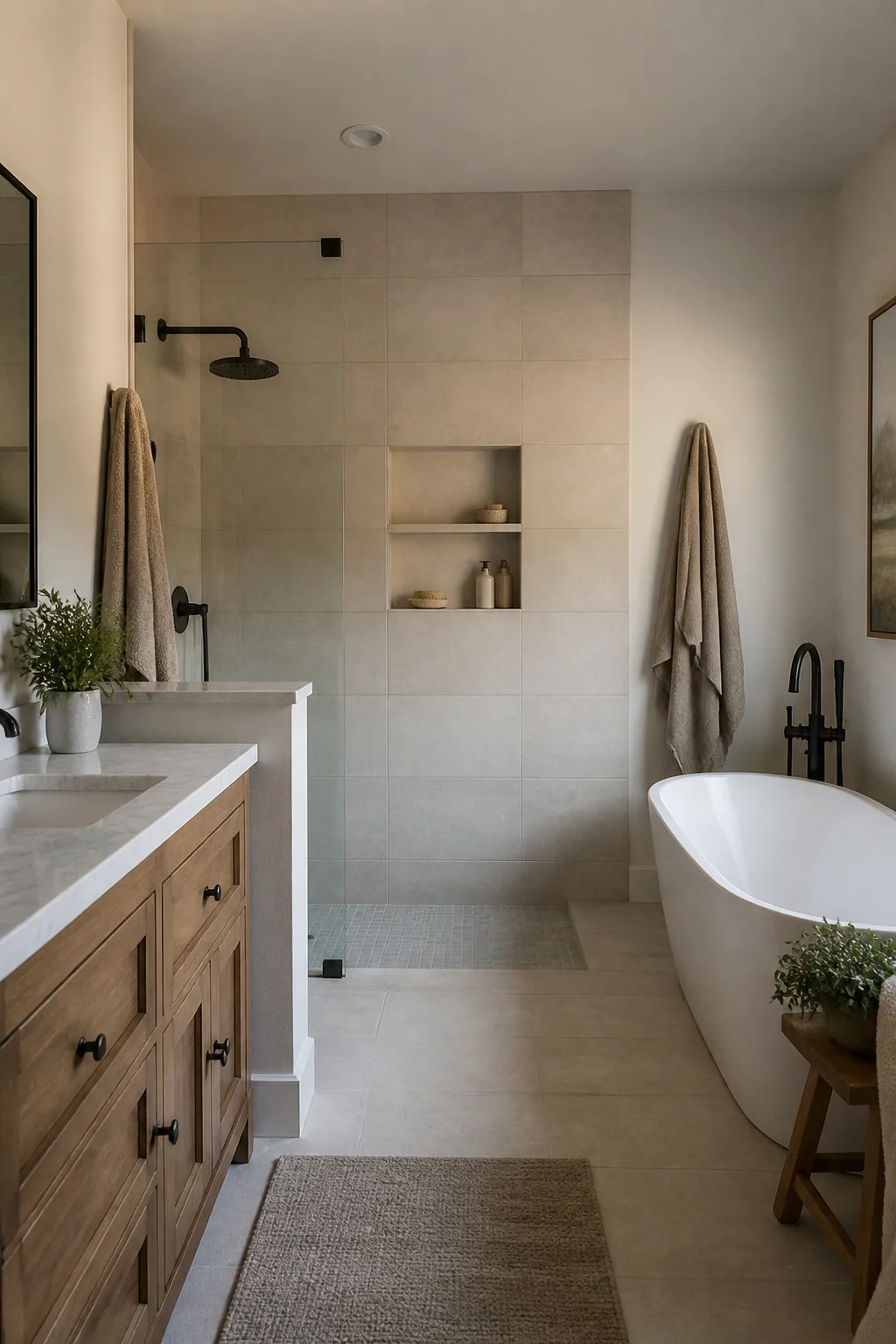
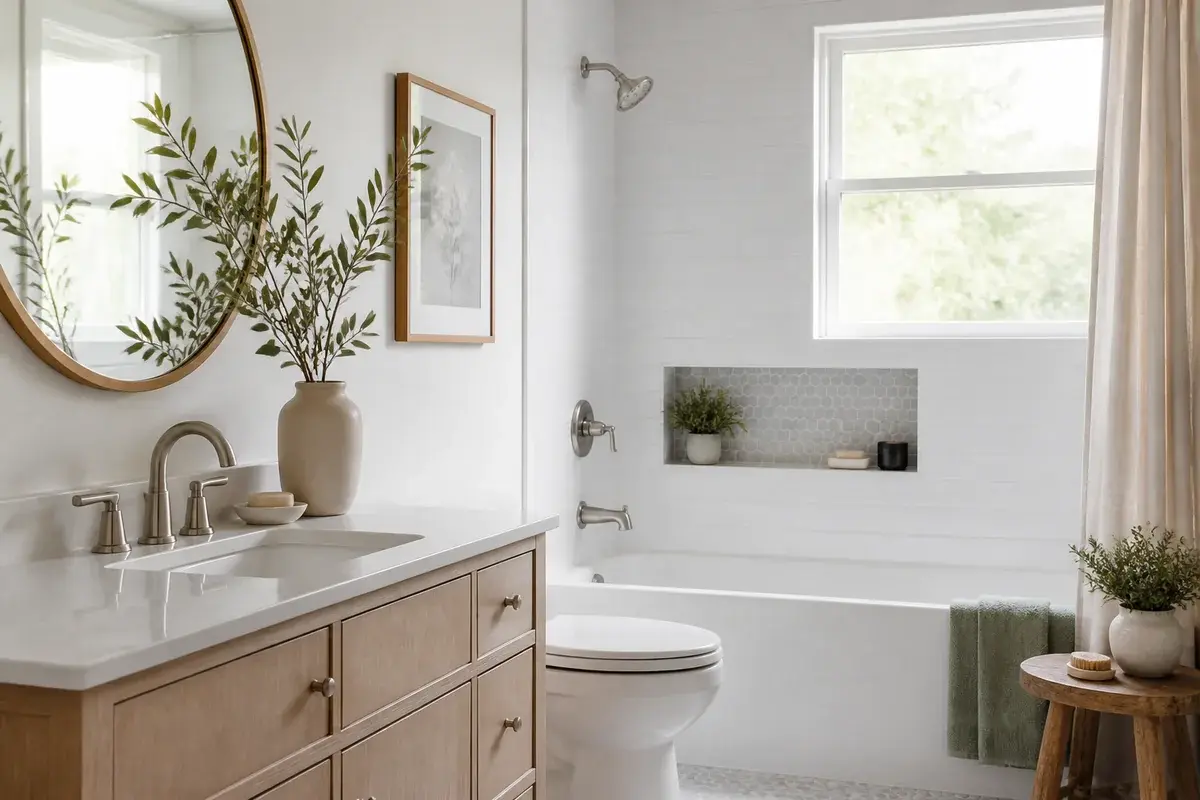
A recessed shower niche is often already there, and it's usually the most bare spot in the shower. Tiling the inside of it in a contrasting color or a different tile turns it into a feature. The niche reads as built in, even though nothing was cut into the wall to make it.
Keep the niche in proportion to the shower. A 12-by-24-inch niche set around 48 inches off the floor looks right in most standard tub-shower combos, and it's tall enough to hold a bottle without bending. If you're adding a new niche into an existing wall, that cut means a stud and wiring check first, and it's a job for a pro who handles framing and plumbing.
The Floor Is the Hard Part, So Work Around It
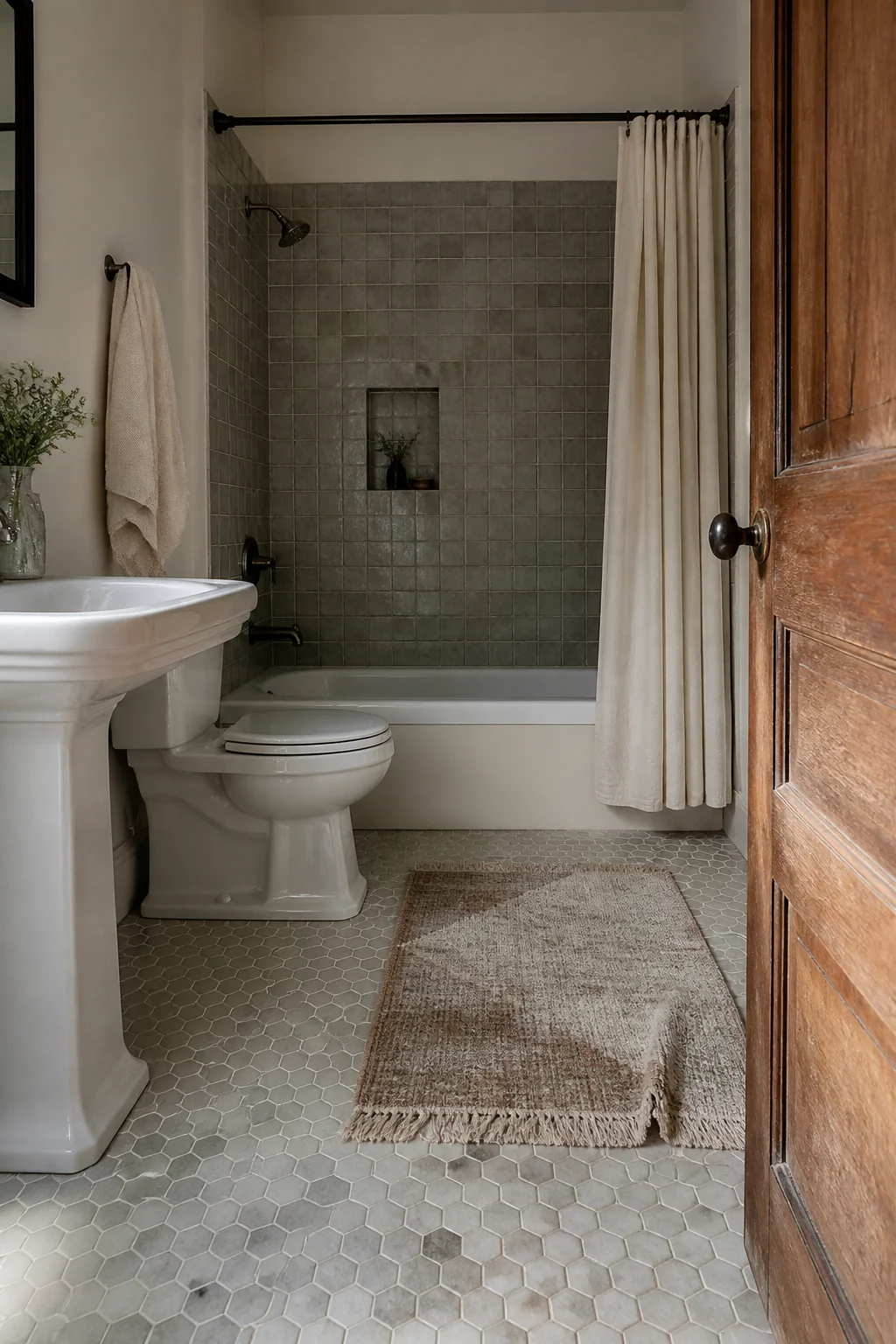
Floor tile carries the most visible wear, and it's the hardest thing to change without ripping up the old layer. The workable options are a new floor-rated tile laid over the old one only where the height change won't catch a door, or a large rug or bath mat that covers the worst of the surface.
A mat is only useful if it's the right size. In a standard 5-by-8-foot bathroom, a mat that runs only the length of the tub leaves the floor looking like a strip of carpet with bare tile on either side. A mat that stretches to the vanity and reaches at least 18 inches in front of it reads as an intentional zone. Either way, the tile underneath is still the thing you see most, so the walls and grout still matter more.
Where Tile Stops Being the Right Answer
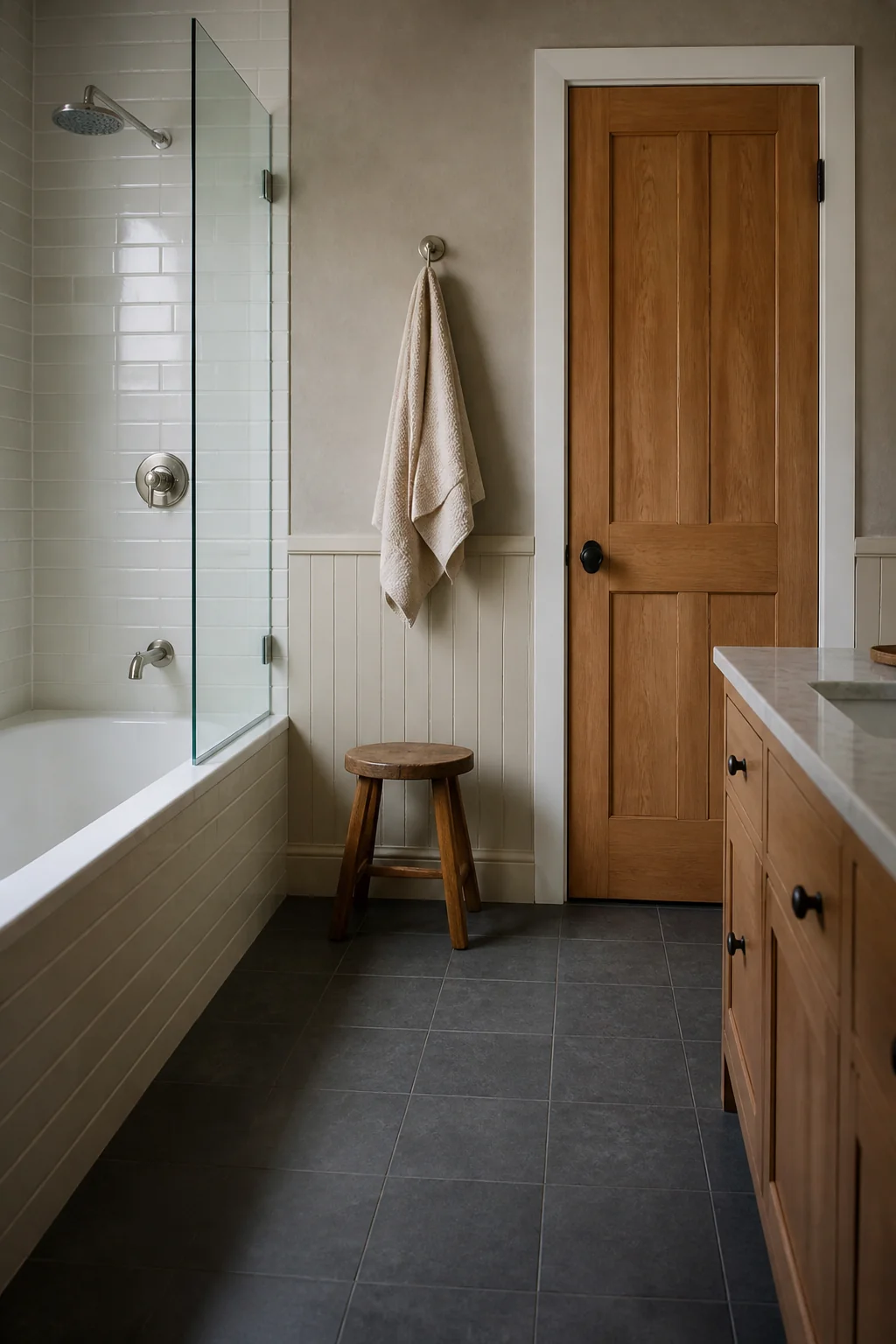
Tile is strong on walls and in showers, and weak where the wall itself is the problem. If the drywall is soft, if the plaster is cracking, or if the room has water damage behind the tub, new tile hides a repair that needs doing first. Tile over a damaged surface will fail, usually at the grout line closest to the water.
Tile also can't fix a layout that's wrong. A vanity that blocks the door or a toilet that sits too close to a wall are problems that a new surface won't solve. In those rooms, the editors would start with the layout and come back to tile after.
The Right Choice Depends on Who Lives With the Room
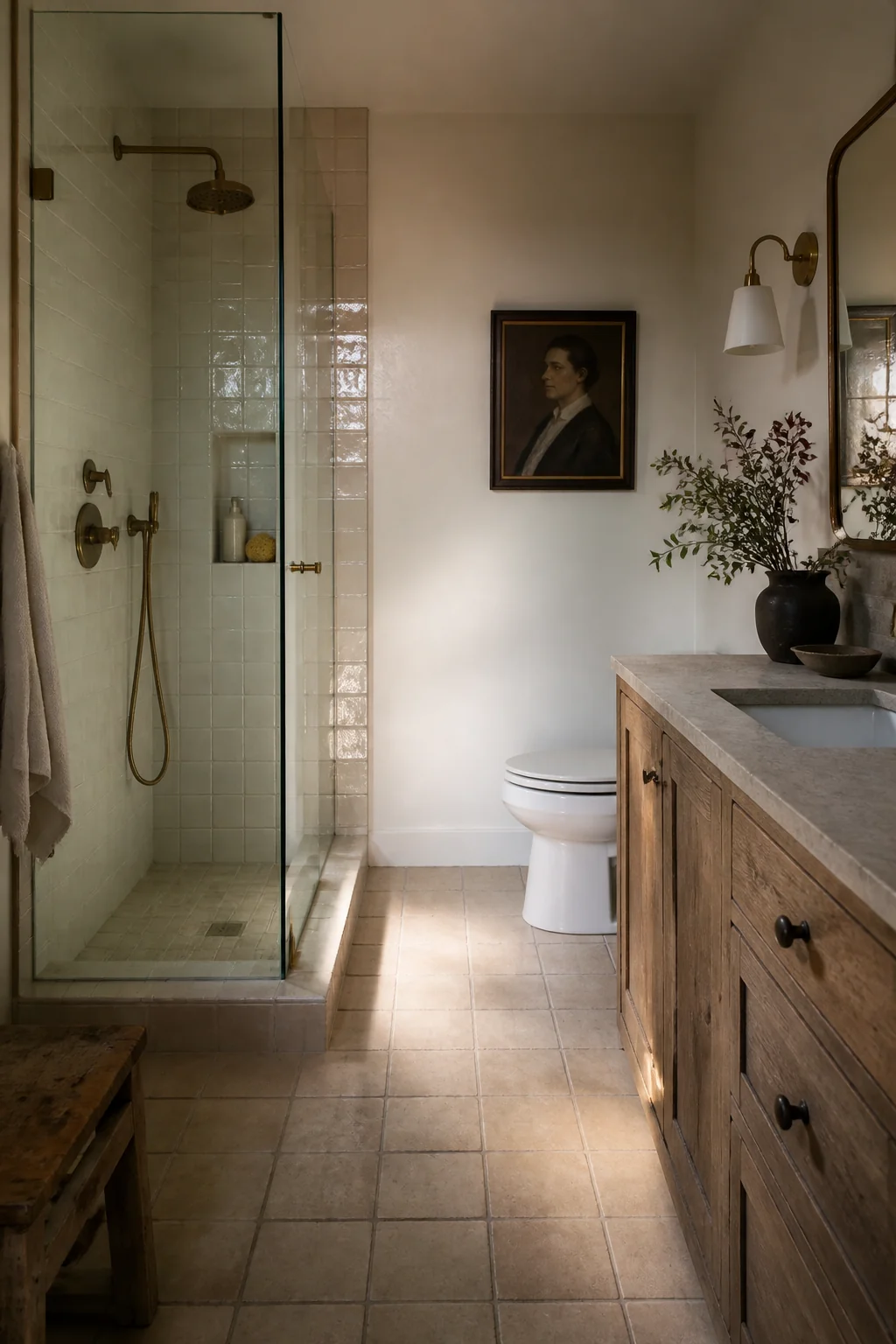
Tile fits differently depending on the room around it. In a small bathroom, the most useful moves are a vertical tile or a large format on the walls, a light grout and a tile band behind the sink, because those keep the eye moving upward and across. In a larger bathroom with a higher ceiling, a bolder wainscot or a patterned floor has room to look like a choice rather than a crowd.
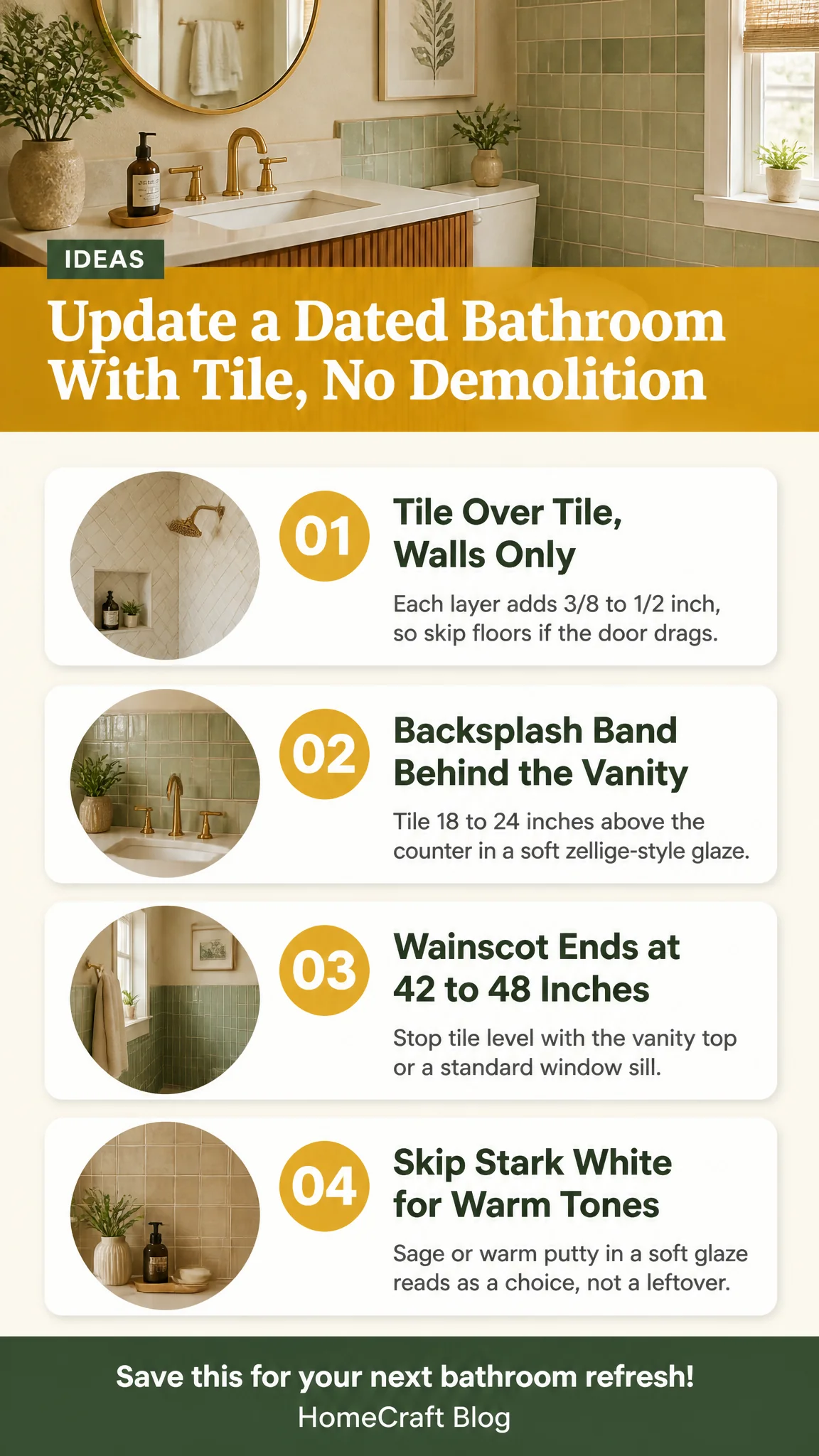
The whole guide in one image
In a rental, the question is what you can leave behind. Peel-and-stick tile is not a good idea on a shower wall, because the adhesive fails in steam, but a removable tile-look panel on a dry wall above the vanity can come down when you move out. In a house you own, the same wall can take a full tile job that lasts for decades. The look you want is the same. The method changes with how long you plan to stay.