7 Laundry Room Organization Ideas That Hold Up Day to Day
Laundry room organization without a renovation: 7 ideas with the measurements, clearances and prices that decide whether each one works in a real room.
This post contains affiliate links. As an Amazon Associate I earn from qualifying purchases. If you buy through our links, we may earn a commission at no extra cost to you.
A laundry room turns on you quietly. Three loads come out clean, they get set down on the dryer instead of carried out, and by Thursday you can't find a hand towel because it's buried under folded sheets. In a tiny 8x10 laundry room, those stacks are the entire floor plan.
When the space stops working, everything downstream gets harder. Socks lose their partners. A load sits in the washer long enough to need rewashing. You buy towels rather than run a cycle. None of that calls for a renovation or a custom closet system, and spending thousands on cabinetry won't fix a layout that fights you.
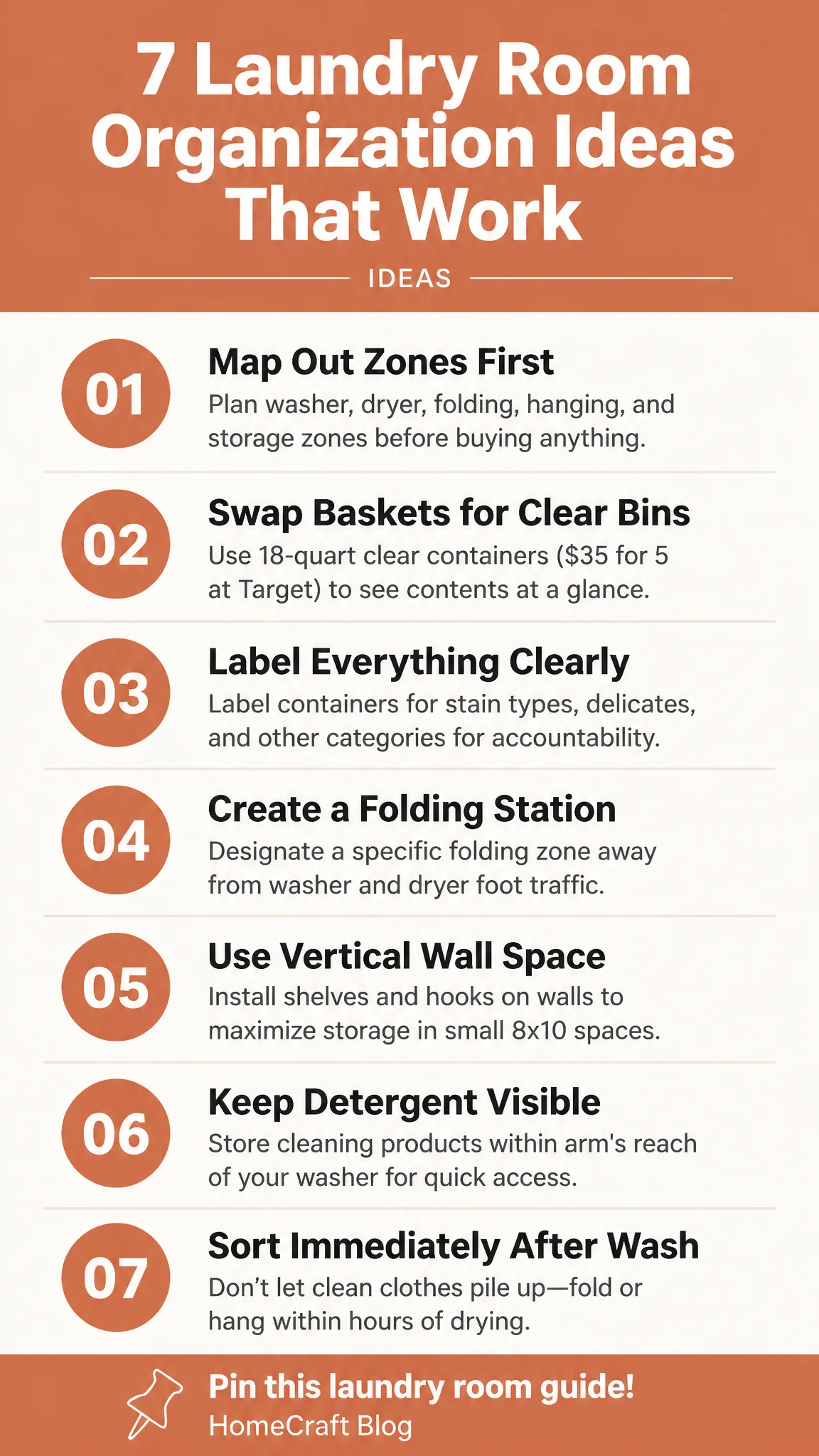
What does fix it is a plan that matches how you move through the room, plus containers you can read without opening. The seven ideas below run in the order you'd tackle them: measure and zone first, then contain, then label, then the small adjustments that keep the whole thing from sliding back.
1. Create Zones Before You Buy Anything
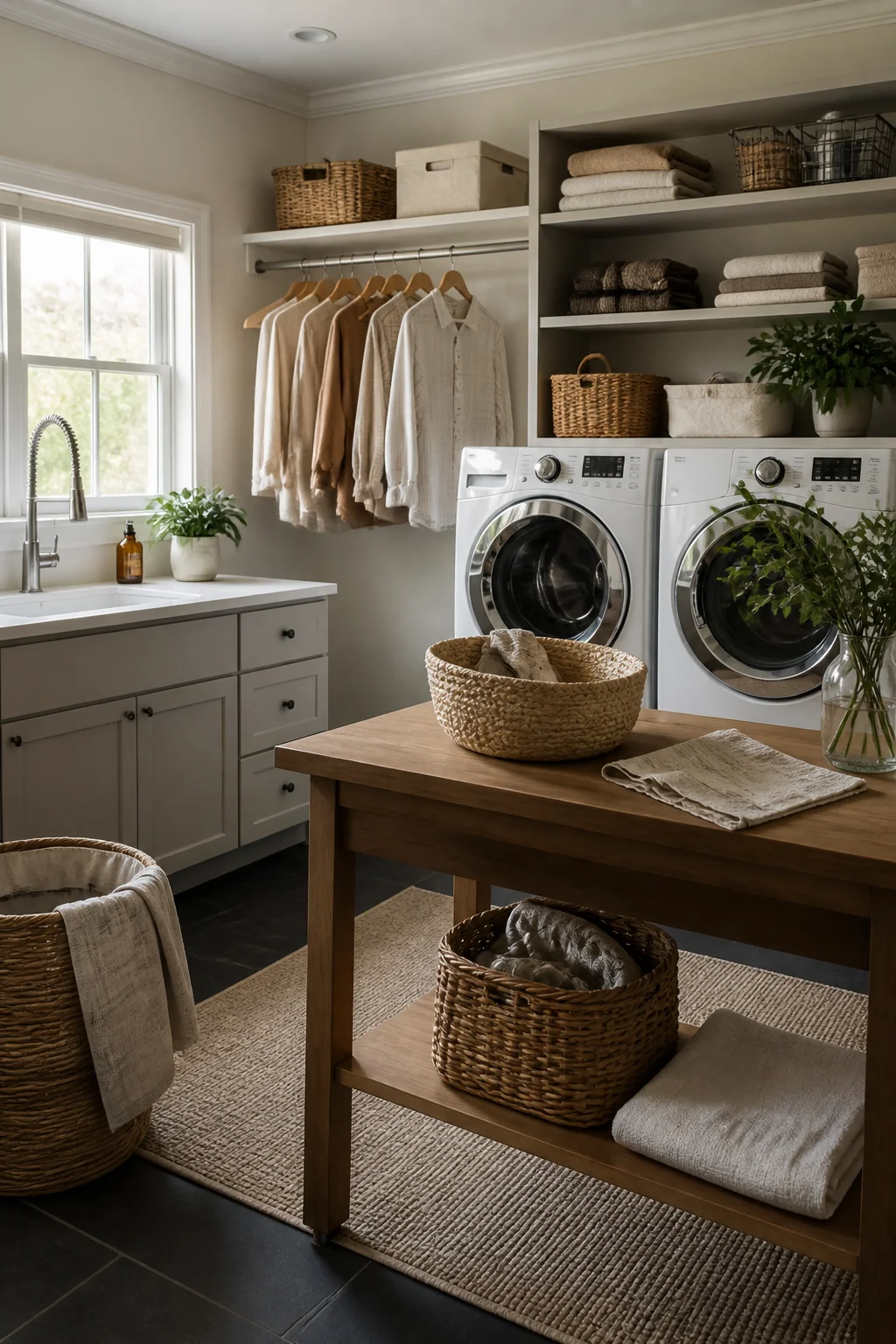
Before a single bin comes home, sketch the room on paper and give every task a place: washer, dryer, folding, hanging, supplies.
Measure before you sketch, though, because the machines set the rules. A standard washer or dryer is about 27 inches wide and 30 to 34 inches deep once the door is on, so a side-by-side pair needs roughly 56 inches of wall plus an inch of clearance between the two. Leave 4 to 6 inches behind them for hoses and the dryer vent elbow, or fit a periscope vent to bring that down to around 3. In front, protect 36 inches of clear floor: that's what it takes to set a full basket down and still swing a front-loader door, which opens about 22 inches wide.
Then tape it out. Painter's tape on the floor for three days tells you what a drawing can't, like where you stand to sort and whether that folding table lands right in front of the washer. Skipping this is the usual reason a room gets rearranged three weeks after it's organized.
2. Use Clear Containers So You Can See What's Inside
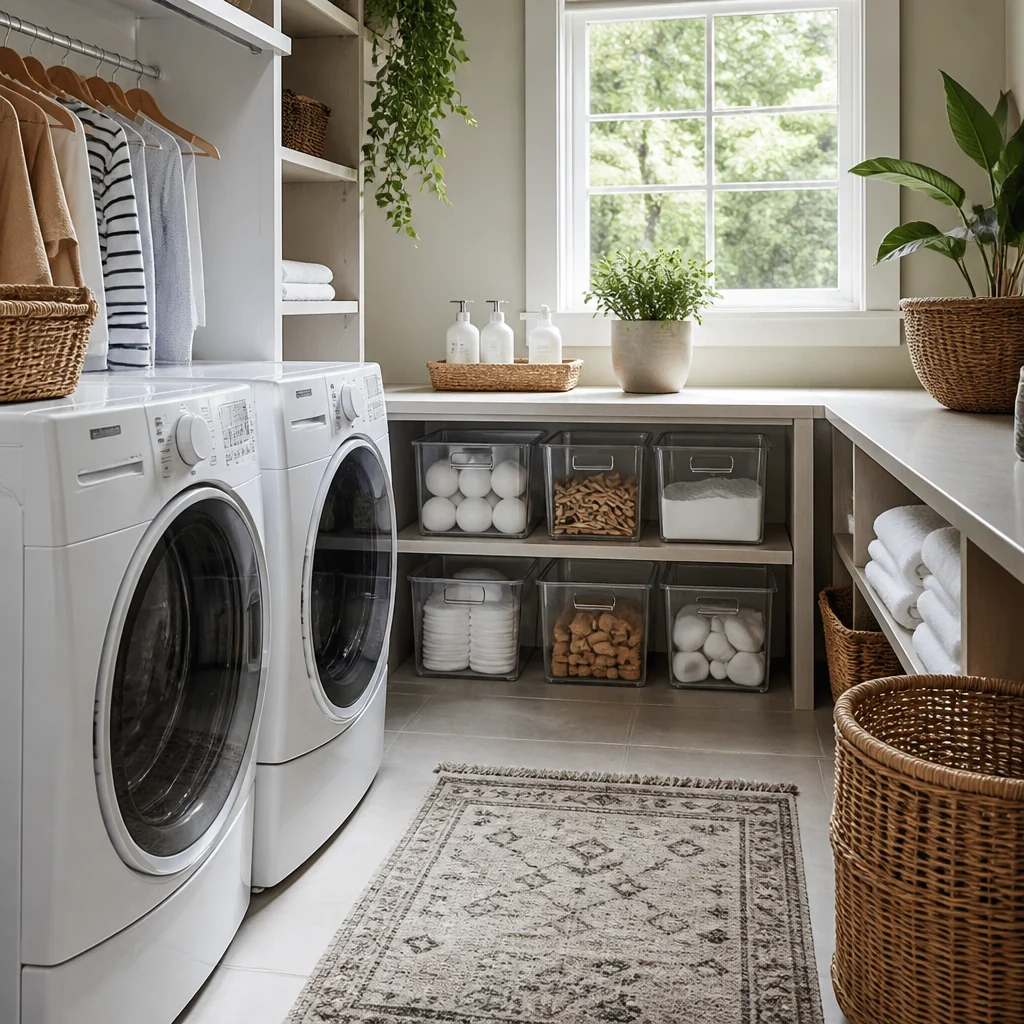
Woven baskets photograph beautifully and hide everything. A basket of whites waiting on bleach and a basket of orphaned socks look identical from across the room, so both get ignored until one of them is two months old.
Clear polypropylene bins take the guessing out of it. A set of five 18-quart bins runs about $35, and shoebox-size bins are $4 to $8 each. Buy to your shelf rather than to the photo: a 12-inch-deep wire shelf takes a bin about 11 inches deep, and anything longer overhangs the front lip and gets knocked down every time you reach past it.
Two habits keep them useful. Label the lid as well as the front, because stacked bins hide their side labels completely. And keep them out of direct sun if the room has a window, since polypropylene clouds over and turns brittle after a couple of years of UV exposure.
Three bins cover most households: stain treatment, mending, and things that belong to someone else's house.
3. Label Everything (Even If You Live Alone)
A label is a note to whoever opens that cabinet next, and half the time that person is you in six months.
Skip paper tags and masking tape. A laundry room runs humid, and both curl off within a season. Laminated tape from a handheld label maker shrugs off splashes and dryer heat; the machine runs $25 to $40 and a tape cartridge is about $12, good for dozens of labels.
Label the shelf edge as well as the bin. The bin label says what's inside; the shelf label says where the bin goes back, and that second one is what holds a system together once three people are using the room. Write contents plainly, "lint rollers", "stain supplies", "wool wash", instead of clever category names you'll have to decode later. The plain label is also what stops you buying a fourth pack of dryer sheets.
One timing note: wait two weeks before printing anything. Labels made on day one describe your plan. Labels made after two weeks describe your habits, and those are the ones that stay put.
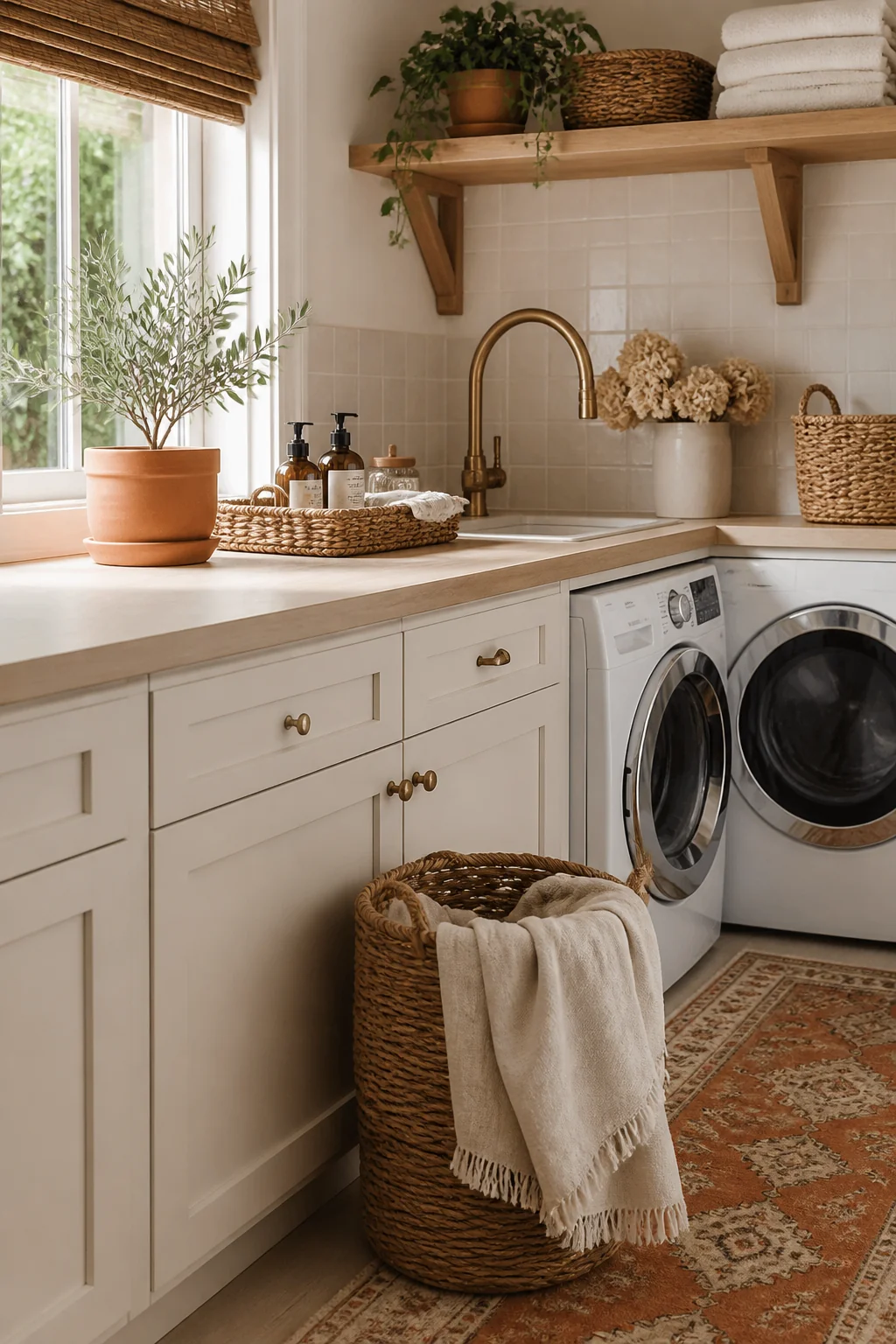
4. Hang a Rod for Air-Drying (Even in a Tiny Space)
Some things should never see a dryer: knits that stretch, anything with spandex in it, linen you want to keep the shape of. All they need is a few feet of hanging space and some patience.
Height decides whether the rod gets used. Shirts and blouses on hangers take 36 to 40 inches of drop, so a rod mounted at 66 inches off the floor keeps hems clear; dresses want closer to 72. Leave 18 inches of walking room in front of it, and don't run a rod over a top-loader lid, since you'll be reaching through damp sleeves every time you load.
Mounting matters more than the rod itself. A spring-tension rod between two walls holds shirts fine, but a wet sweater weighs 2 to 3 pounds and a fully loaded rod slips at the worst moment; stick-on brackets fail the same way. A $15 rod on $8 brackets driven into studs, or into drywall anchors rated for 20 pounds, holds anything you'd hang there. Lay a towel underneath if the floor below is wood.
5. Set Up a Folding Station That Stays Folded
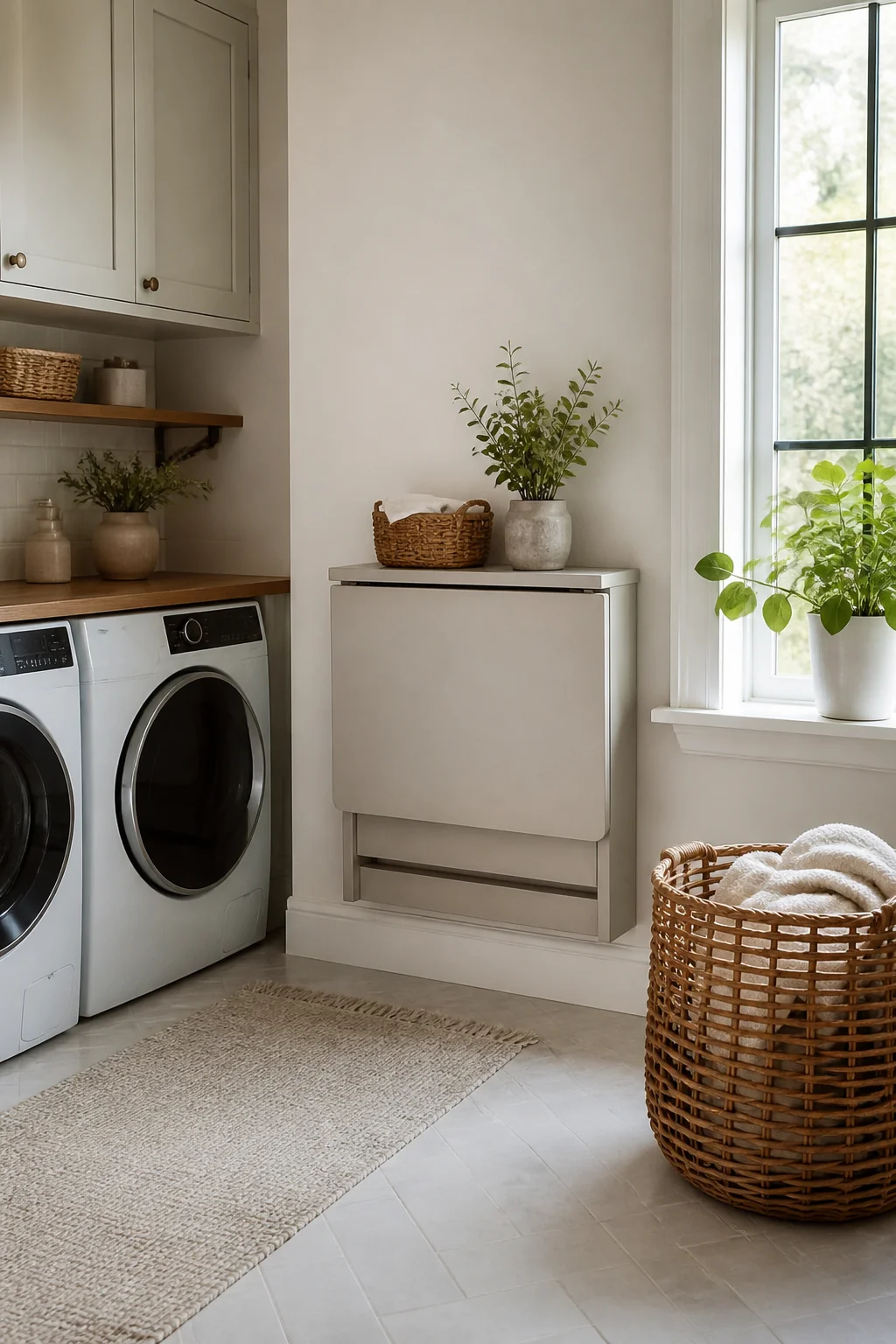
A folding surface only works when it has exactly one job.
The dimensions worth aiming for are about 36 inches high and 24 inches deep. That's counter height, and deep enough for a full basket plus two finished stacks without anything sliding off the back. A narrow console table, a countertop laid across side-by-side front-loaders, or a wall-mounted drop leaf all get you there for $40 to $150 depending on where you source it. Front-loaders usually stand 34 to 39 inches tall, so a counter spanning the pair lands close to working height on its own.
Then defend it. Fold into one stack per person, carry every stack out in the same session, and leave the top bare. The failure mode is predictable: mail, a screwdriver, a package to return, and within a week the surface is storage and folding has moved to the bed. That's the point where most laundry rooms go sideways, not when the shelving is wrong.
6. Keep a Donation Basket Right There
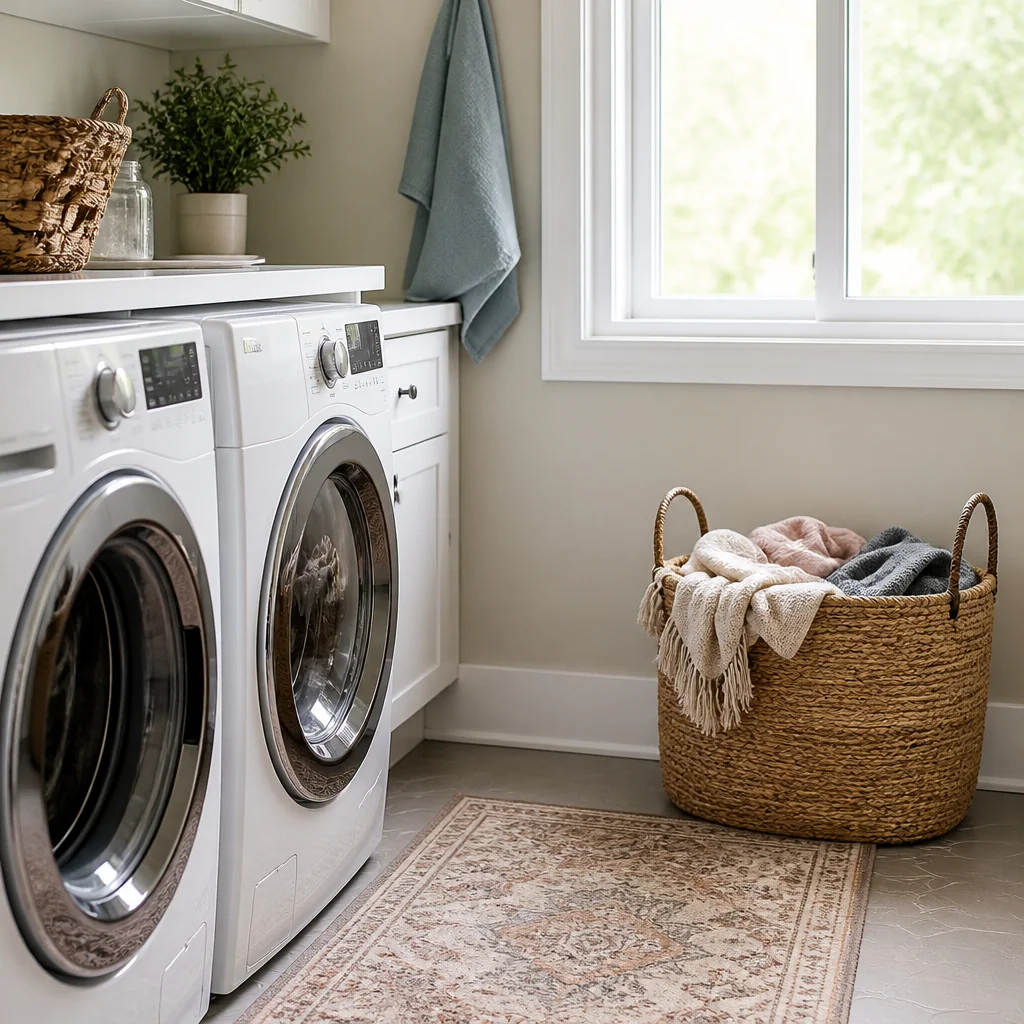
Keep a small basket in the room marked "Donate", and make the decision at the dryer instead of at the closet. Standing there holding a shirt you've just washed is the one moment you're honest about whether you wear it.
Small is the whole point. A 10 to 15 quart basket, roughly 15 by 11 inches, fills up in a few weeks and forces a trip out to the car. A big hamper just turns into another storage bin. The working rule: if something comes out warm and you wince at it, pilled, stretched at the neck, still stained after two treatments, it doesn't go back into rotation.
One caveat before you drive anywhere. Most thrift shops won't put torn or stained clothing on the floor, and some pay to dispose of what they can't sell. Bag those separately for textile recycling; several clothing retailers run take-back bins for worn fabric. Catching things here keeps them out of drawers, which makes bedroom organization a much smaller job later.
7. Store Detergent Strategically (But Not Where You Think)
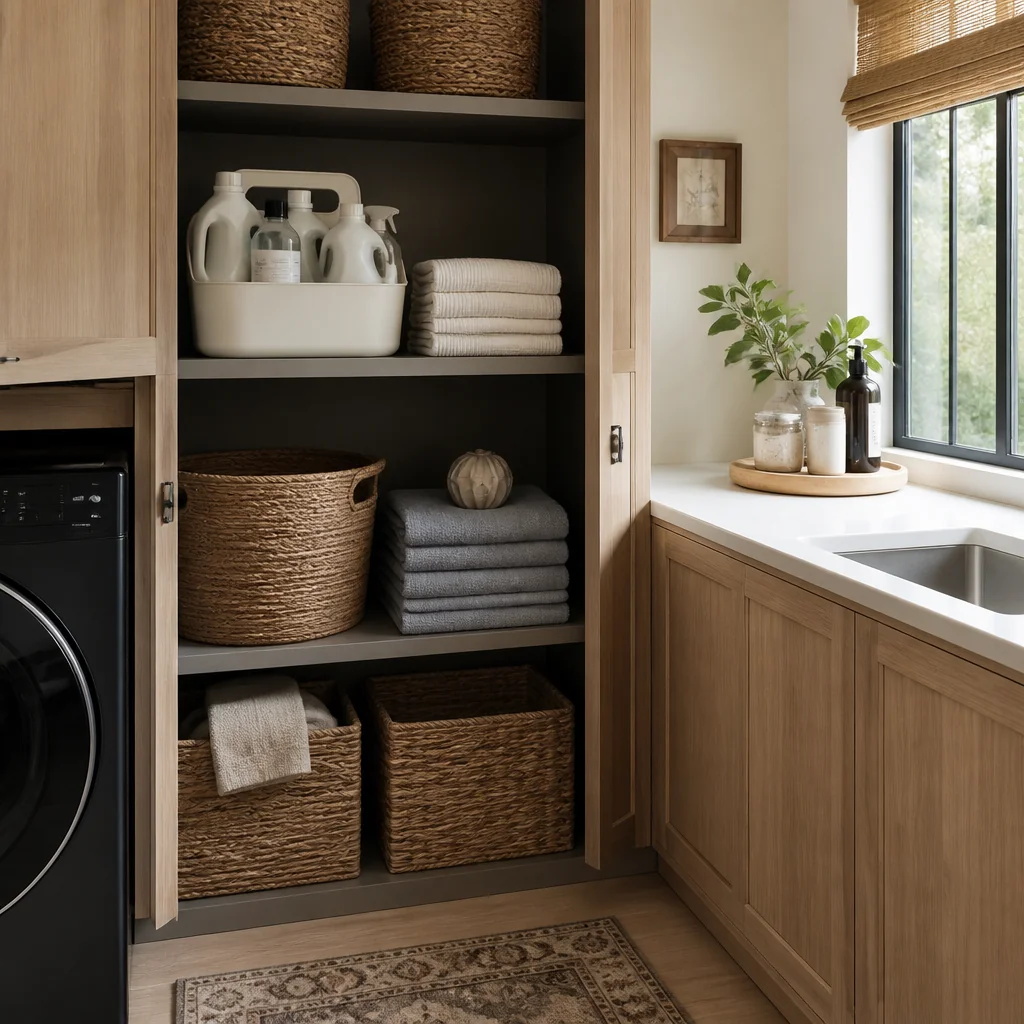
A caddy under the sink looks tidy until you notice the sink is on the opposite wall from the washer, and every load costs you a walk across the room mid-cycle.
Reach is the rule here. Keep anything you touch while a load is running within about 20 inches of the washer opening, at waist height between 30 and 40 inches, so you're never lifting an 11-pound jug down from a shelf above your head. A narrow wire shelf unit 12 to 14 inches deep runs $40 to $50 and holds detergent, stain spray, oxygen bleach, wool wash and dryer sheets in one block you can reach without turning around.
Two things to avoid. Don't park bottles on top of the machine, because a spin cycle vibrates them toward the edge and a spilled capful dries into a film you'll be scraping off later. A shallow boot tray under the bottles catches drips and lifts out for rinsing. And with kids in the house, pods go in a latched cabinet, not an open bin at knee height.
Of everything here, the taping step is the one we'd protect. Bins bought for a layout nobody has stood in tend to be the wrong depth for the shelf, and a folding table lands where you can't get in front of it with a full basket. Three days of painter's tape costs nothing and settles both questions before any money moves.
After that, the room holds because it stays dull: labels that match how you really sort, a folding top with nothing on it, detergent within arm's reach of the washer. Nothing in a working laundry room is clever. It's just close to hand.
Save the full guide
Want help organizing other spaces in your home? Check out our guides for home office organization and small apartment living.