
19 Industrial Bedroom Design Ideas, Priced and Explained
19 industrial bedroom design ideas with real prices and dimensions: black metal, raw wood, exposed bulbs and concrete texture for a warm, rugged room.
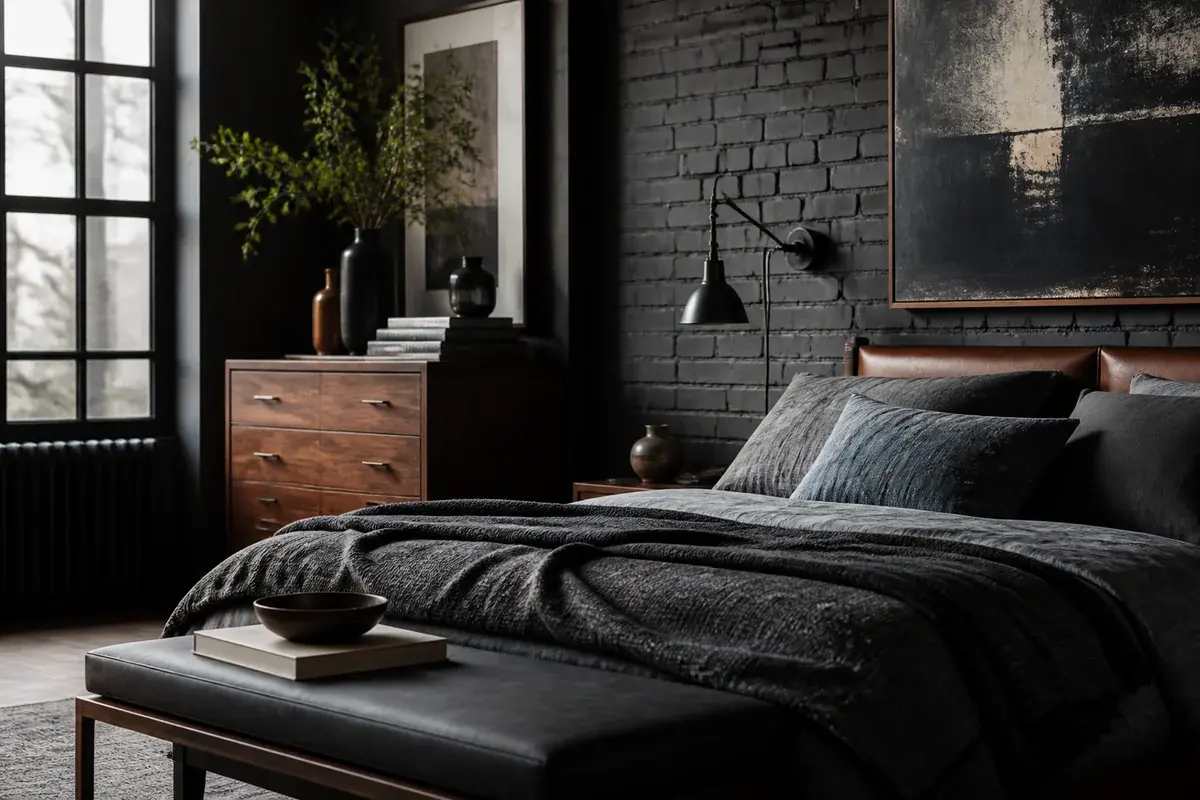
Most bedrooms feel too polished or too trendy. Industrial design fixes that. It's honest, it's affordable, and it looks better over time. The problem is knowing where to start when you're staring at four blank walls. You don't need to gut the room or spend five figures. Real industrial style is about raw materials, visible structure, and letting things look a little rough around the edges. Here are 19 ideas that work whether you're decorating for the first time or refreshing a space that feels tired.
1. Paint walls a deep charcoal or soft gray
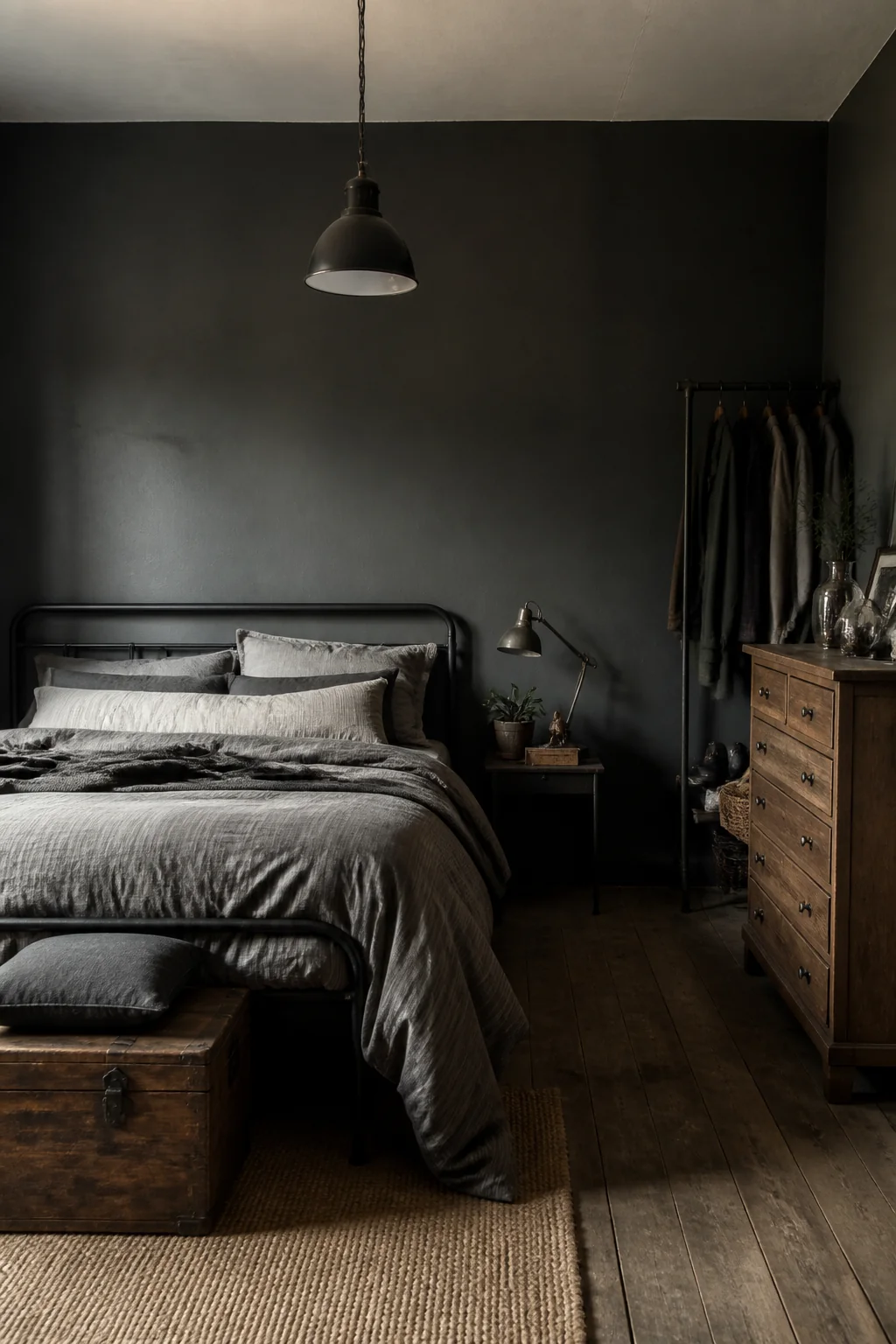
Warm gray and charcoal are the backbone of industrial rooms. They read as a finished space rather than an unfinished one, as long as you pick the undertone on purpose. Greige and warm gray stay livable. A blue-leaning gray turns chilly fast under LED light, and no amount of wood will pull it back.
Sheen matters just as much as colour. Flat and matte finishes swallow light and hide drywall seams, which is exactly what you want on a wall meant to look raw. Eggshell and anything glossier bounces light straight into every patch and roller mark.
Work the wall out before the tin gets tinted. Multiply the width of the headboard wall by its height, hold that against the 350 to 400 square feet a gallon stretches to, and on a standard bedroom wall one $30 to $60 can will cover it twice over. Going white to charcoal takes two coats over a gray-tinted primer; skip the primer and you'll be rolling four.
Before you commit to all four walls, paint a two-foot square on the headboard wall and look at it at 9am and again at 9pm. In a north-facing room with one small window, a full charcoal wrap turns into a cave by mid-afternoon.
2. Swap out the bed frame for black metal
A simple black metal frame with clean lines is the quickest industrial move you can make, because the bed is the largest object in the room and it sets the tone by itself. Iron and steel designs run $200 to $400.
What separates a good frame from a rattly one is wall thickness. Look for square or round tube in 14 to 16 gauge steel, welded corner joints instead of bolted plates, and a queen frame that weighs more than 40 pounds boxed. Much lighter than that and it's thin-walled tube, which announces every movement at night.
Check the slats before you buy. Spacing under 3 inches keeps foam and hybrid mattresses from sagging between them, and most memory foam warranties require it. If a frame turns up with wider slats, a $30 bunkie board solves it without a return.
Powder-coated matte black is the finish worth hunting for. Gloss black catches highlights along every tube and reads as budget furniture from across the room. If a joint starts squeaking later, a felt pad or rubber washer at the bolt usually ends it.

3. Hang Edison bulb pendant lights
Exposed filament bulbs hung from simple chains or cloth cords add that vintage factory feeling without any pretense. A pair costs about $50 to $80 total.
Settle the drop before you cut a cord or fix a hook. Sit up in bed the way you actually read, have someone hold the pendant beside you, and look at where the bottom of the bulb lands: 20 to 24 inches above the mattress, or 30 to 36 inches above a nightstand top, keeps the glass just under your eye line. Judged from a standing position instead, these end up a foot too high and light the wall rather than the page.
Stick to 2700K or warmer in an LED filament bulb at a 40-watt equivalent. True vintage incandescents look gorgeous and run hot enough to be a real concern within arm's reach of bedding and curtains.
Put them on a dimmer without exception. A bare filament at full output two feet from your face is glare, not atmosphere, and smoked or amber glass takes the edge off if you still find it harsh.
Renting? A swag hook and a plug-in cloth cord kit runs about $20 and leaves two small holes. Hardwiring a new ceiling box costs $120 to $200 with an electrician.
4. Install open shelving in wood and metal
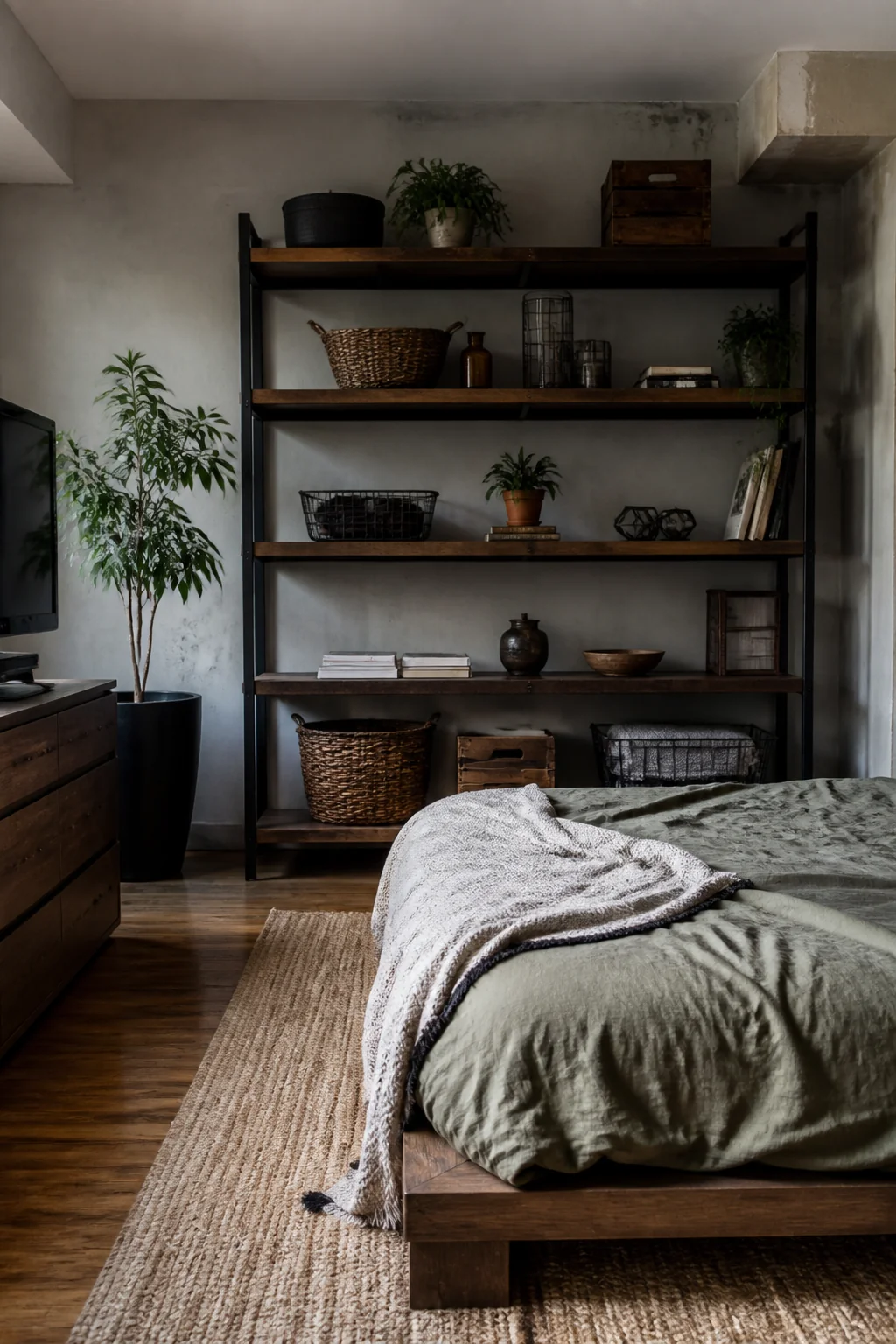
Industrial spaces don't hide storage, so put it on the wall where you can see it. Mount reclaimed or distressed boards, ideally 1.5 to 2 inches thick, on black iron brackets.
The fixing is what makes or breaks this. Keep brackets no more than 32 inches apart and drive 2.5 inch lag screws into studs, which sit 16 inches on center in most homes. Drywall anchors on their own top out around 20 pounds, and a four-foot run of hardbacks passes that easily. Find the studs first, then decide where the shelf goes, not the other way around.
Depth is a judgement call. Eight to ten inches holds books and a small lamp; six inches suits frames and pottery and keeps the shelf from crowding a narrow room.
Budget $20 to $30 for a bracket pair and $25 to $50 for a decent board. If the shelf runs above the bed, leave at least 12 inches of clearance over the mattress so nobody cracks their head sitting up. The honest trade-off is dust, so keep open shelves for things you handle regularly.
5. Lay down a concrete-look area rug
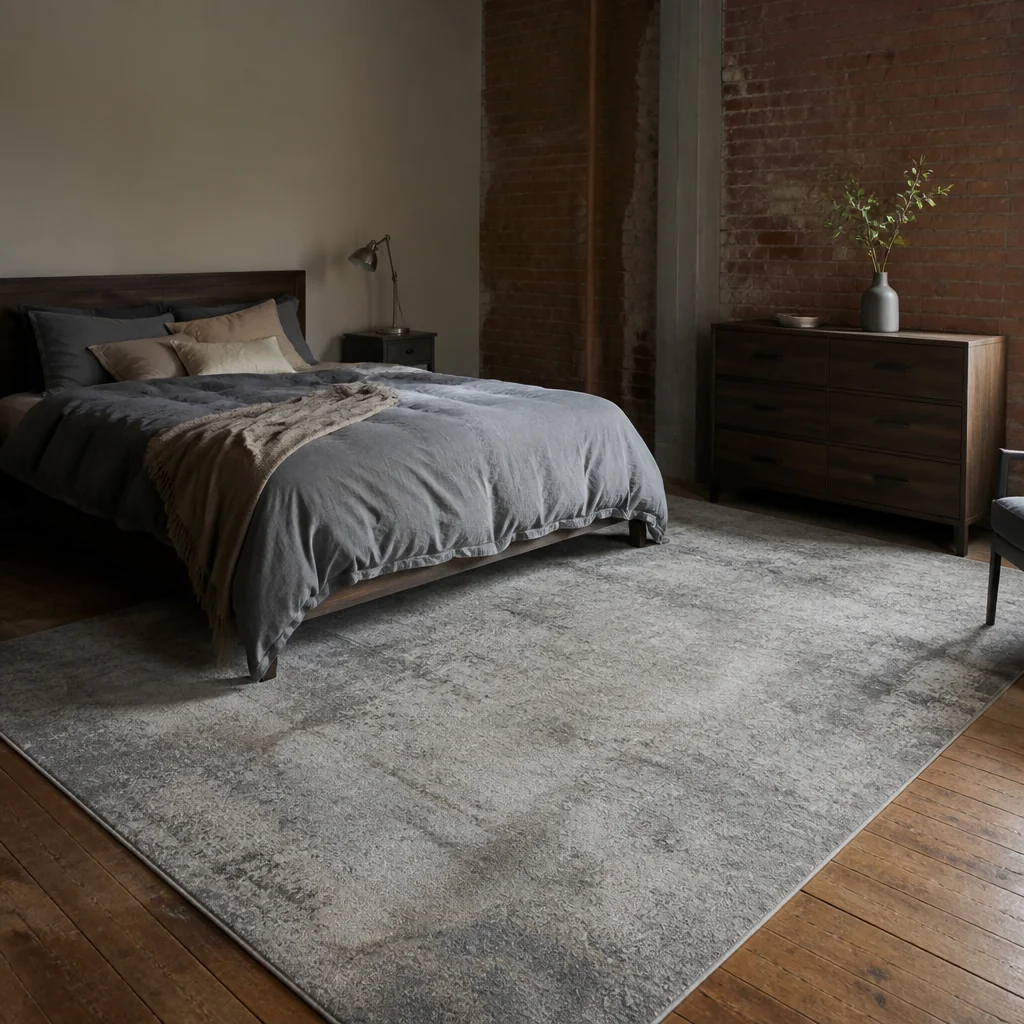
Concrete-textured rugs in gray or charcoal run about $120 for a 5x7 in polypropylene, which is the practical fibre here: low pile, easy to vacuum, and it doesn't crush permanently under bed legs. Wool versions feel far better underfoot and start closer to $300.
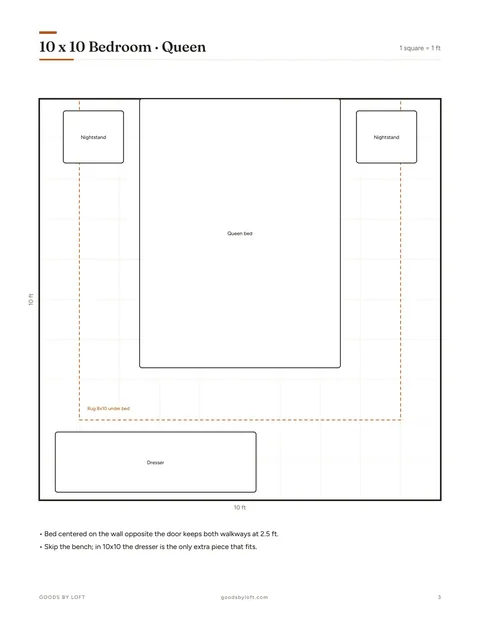
Size is where these usually go wrong. A queen mattress is 60 by 80 inches, so a 5x7 centred under the bed all but disappears and ends up looking like a bath mat marooned in the middle of the floor. Either slide the 5x7 under the bottom two-thirds of the bed so it extends past the foot, or step up to an 8x10 and let 18 to 24 inches of rug show along both sides and the end. That visible border is what makes the bed look anchored instead of parked.
Add a felt and rubber pad for about $30. It stops the rug creeping on hard floors and gives a thin flatweave enough cushion that stepping out of bed doesn't feel like stepping onto concrete for real.
6. Add a ladder shelf made of wood and steel
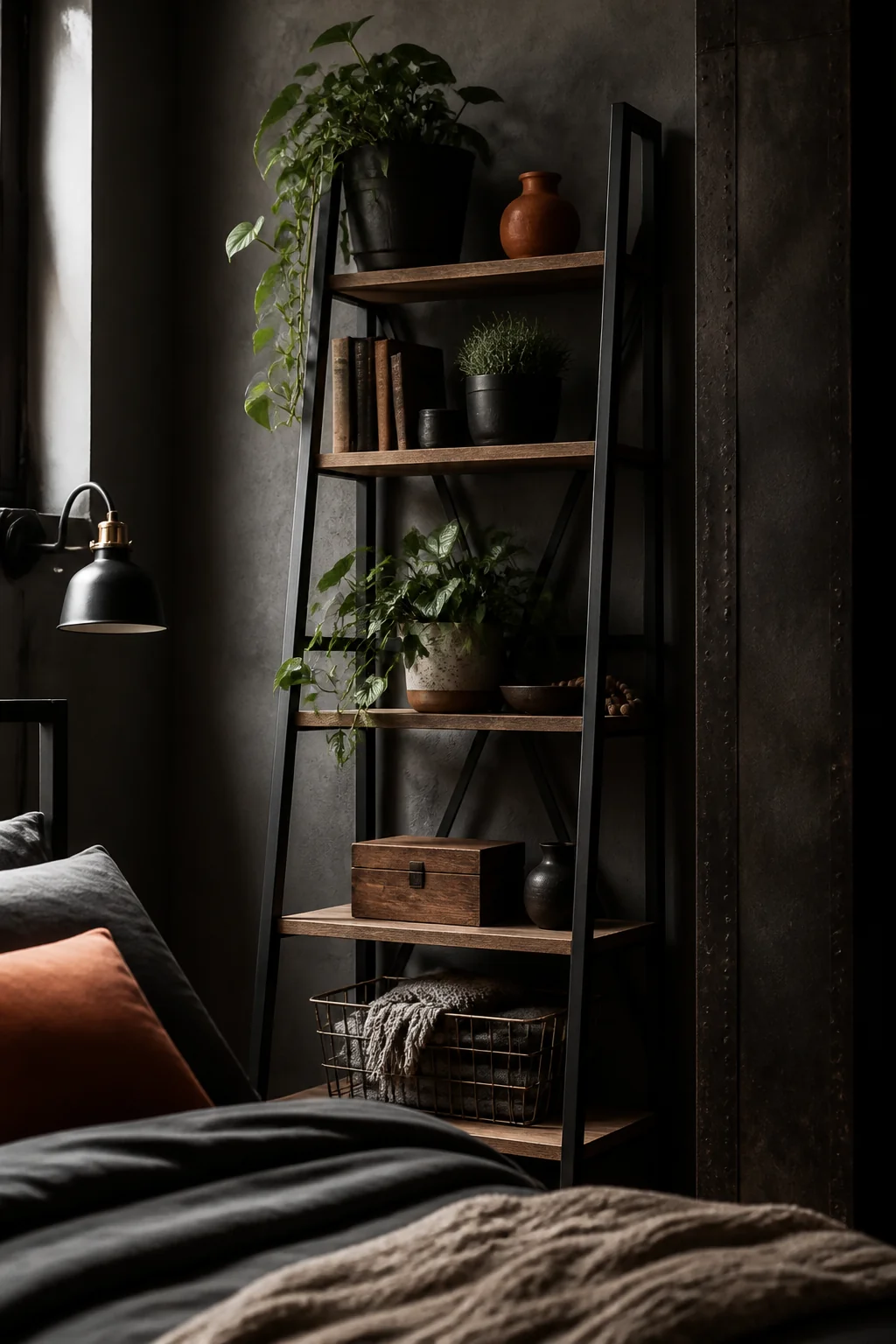
Ladder shelves lean against the wall and hold books, plants, or a folded throw without a single screw, which makes them the easiest win in a rental. Expect $60 to $100 for a wood-and-steel version around 70 inches tall.
Plan the floor space before you buy one. The lean means the base sits 12 to 15 inches out from the wall, so it takes up more room than the shelf footprint suggests, and it won't work tucked into a tight corner beside a door. Tiers taper as they rise, with the top rung often only 5 or 6 inches deep, so books go up there lying flat and anything heavy lives on the bottom two shelves.
The failure mode is carpet. On thick pile the front feet sink and the whole frame walks forward a little every time you pull a book off it. A hard shim under the back feet fixes it, or use the anti-tip strap that ships in the box and put one screw into a stud.
7. Use galvanized metal baskets for storage
Open storage in galvanized steel or wire keeps clutter visible but contained, which suits a style built on honest materials. Baskets cost $15 to $25 each.
Buy two sizes rather than a matching set. Something 12 to 14 inches across handles throws and spare pillows; an 8 to 10 inch one swallows chargers, cables, and everything else that migrates onto the nightstand by Thursday.
Galvanizing is a zinc coating over steel, and that's the reason these survive next to a window or in a humid room where bare steel would bloom rust straight into the shelf underneath. Run a hand around the rim before you commit: a rolled edge is safe, raw cut wire is not.
Wire snags knitwear badly, so line a basket with canvas or drop a cotton bag inside if sweaters are going in there. And leave a couple of inches of clearance if one is sliding under a bench or nightstand. A basket you have to wrestle out on your knees is a basket you quietly stop using after a week.
8. Hang black-framed windows or mirrors
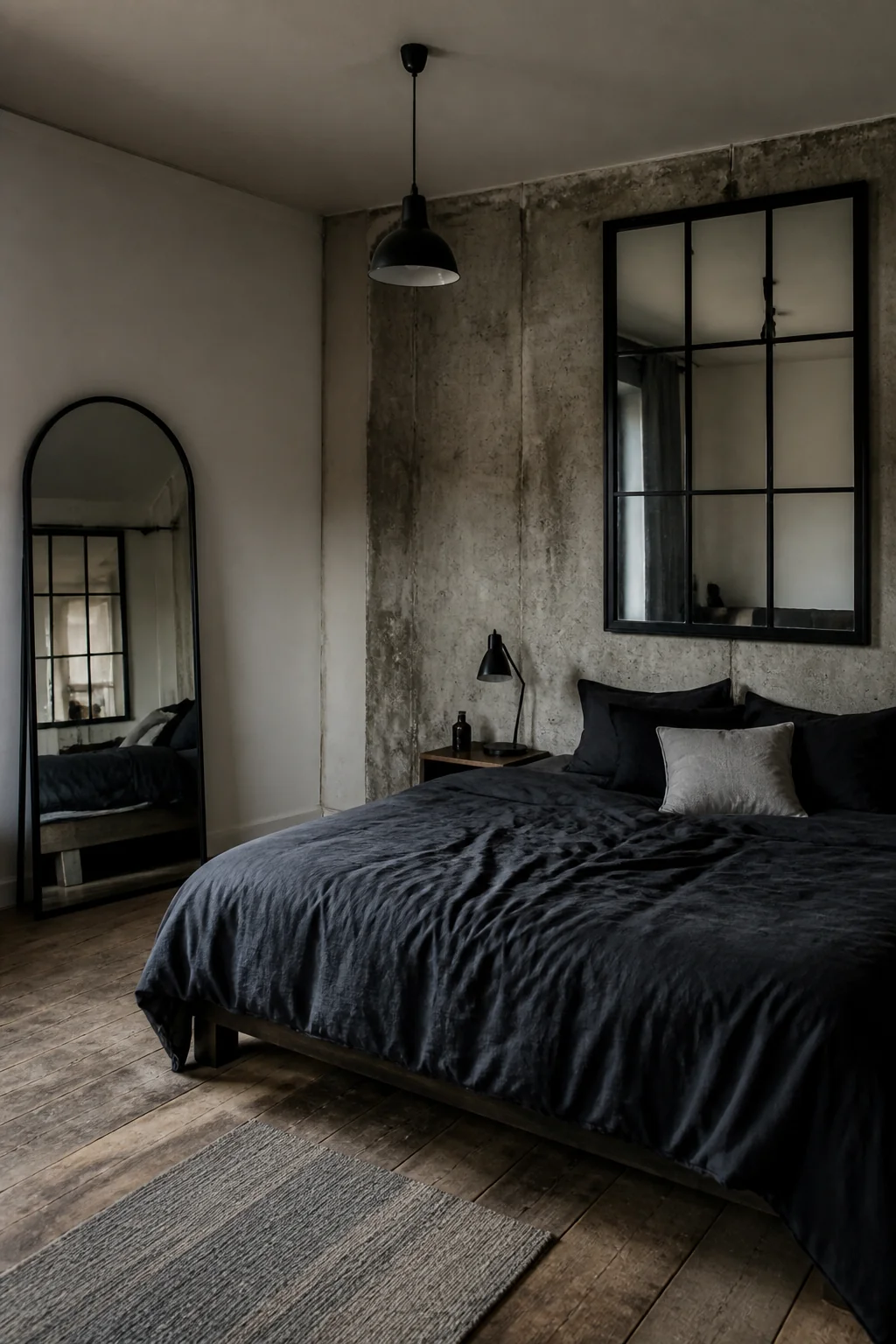
Black-frame mirrors and windowpane panels echo the steel casement work you see in old factories, at a fraction of the cost of a real window. A 24 by 30 inch black-framed mirror runs $40 to $70.
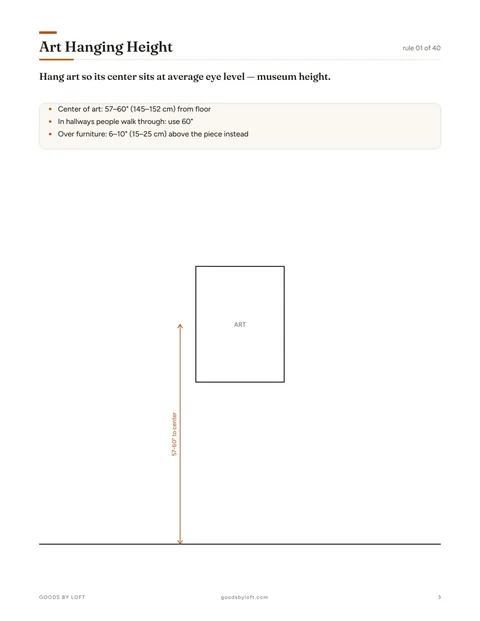
Mark the wall before the drill comes out. Measure 57 to 60 inches up from the floor, pencil a small cross there, and hang so the centre of the glass lands on it. That's roughly gallery height, and it's what reads correctly to someone standing. Over a dresser, work off the furniture instead and leave 6 to 8 inches between the dresser top and the bottom of the frame, so the two pieces group together.
Placement decides whether it earns its spot. A mirror on a wall perpendicular to the window pushes daylight deeper into the room. One hung directly opposite the window can throw a hard glare across the bed first thing in the morning, which nobody enjoys.
Weight is the part not to guess at. Real glass in a metal frame at that size runs 15 to 25 pounds, so hang it from D-rings into a stud, or use toggle bolts rated for 50 pounds. Adhesive strips are not rated for this.
The common advice is to pick one statement piece and let everything else stay quiet. Industrial bedrooms are the exception. The look comes from materials sitting next to each other: matte black metal against warm wood, rough concrete texture under soft wool, a bare filament against flat gray paint. A single factory pendant in an otherwise beige room just looks like a mistake. Three or four material families, repeated around the room, is the target.
9. Leave brick exposed or paint it matte
If you have existing brick, leave it bare. If you don't, peel-and-stick brick paper gives you the texture without damage for about $30 a roll.
Measure before you order. A roll typically covers 20 to 30 square feet, and the wall behind a queen bed is closer to 70, so plan on three rolls plus a little extra for pattern matching at the seams.
The surface underneath has to be smooth. Peel-and-stick will not hold on orange-peel or knockdown texture; it grips for a few weeks then lifts at every corner. On textured drywall you're looking at a skim coat and a sand first, or a smooth panel screwed over the top.
Matte is non-negotiable either way. Glossy printed brick catches raking light across the whole wall and shows the repeat instantly, which is exactly what makes fake brick look fake.
On genuine brick, skip shiny masonry sealers and use a matte penetrating one. It stops the constant fine dust without turning the wall into a wet-look surface.
10. Place a reclaimed wood nightstand beside the bed
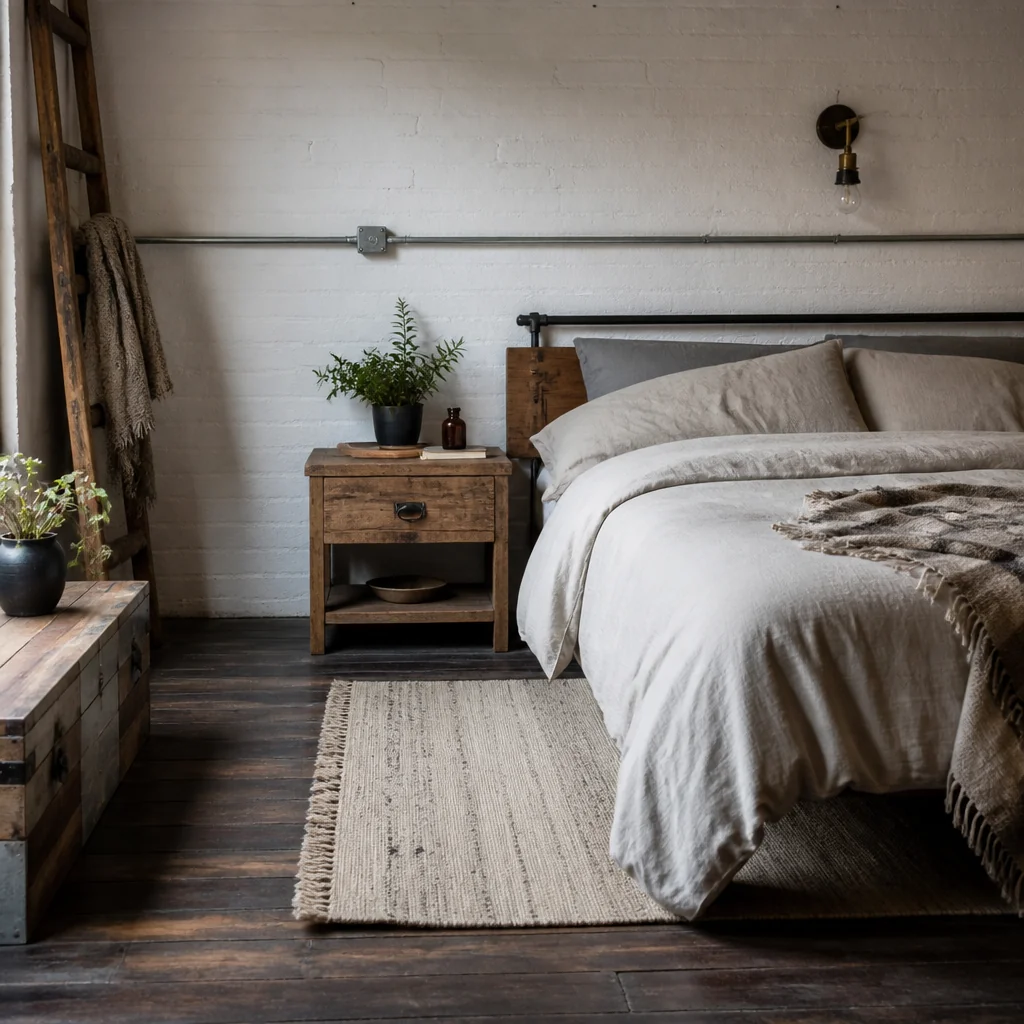
A side table in distressed or reclaimed wood on simple metal legs costs $80 to $150, and it warms a room full of steel in a way another black object never will.
Get the height right and the rest is easy. The top should land within about 2 inches of your mattress height, so a bed measuring 25 inches to the top of the mattress wants a nightstand between 24 and 27 inches tall. Six inches too low and you'll feel it every night groping for a glass of water in the dark.
Depth of 16 to 18 inches gives you a lamp, a book, and a phone without a pile-up. Anything offering less than 12 by 12 inches of clear top is a decorative object, not a nightstand.
One thing to check with genuinely reclaimed lumber: unsealed old wood holds smells and sheds splinters along the edges. A coat of matte polyurethane or hardwax oil seals it without adding the shine you're trying to avoid.
11. String industrial cage pendant lights in clusters
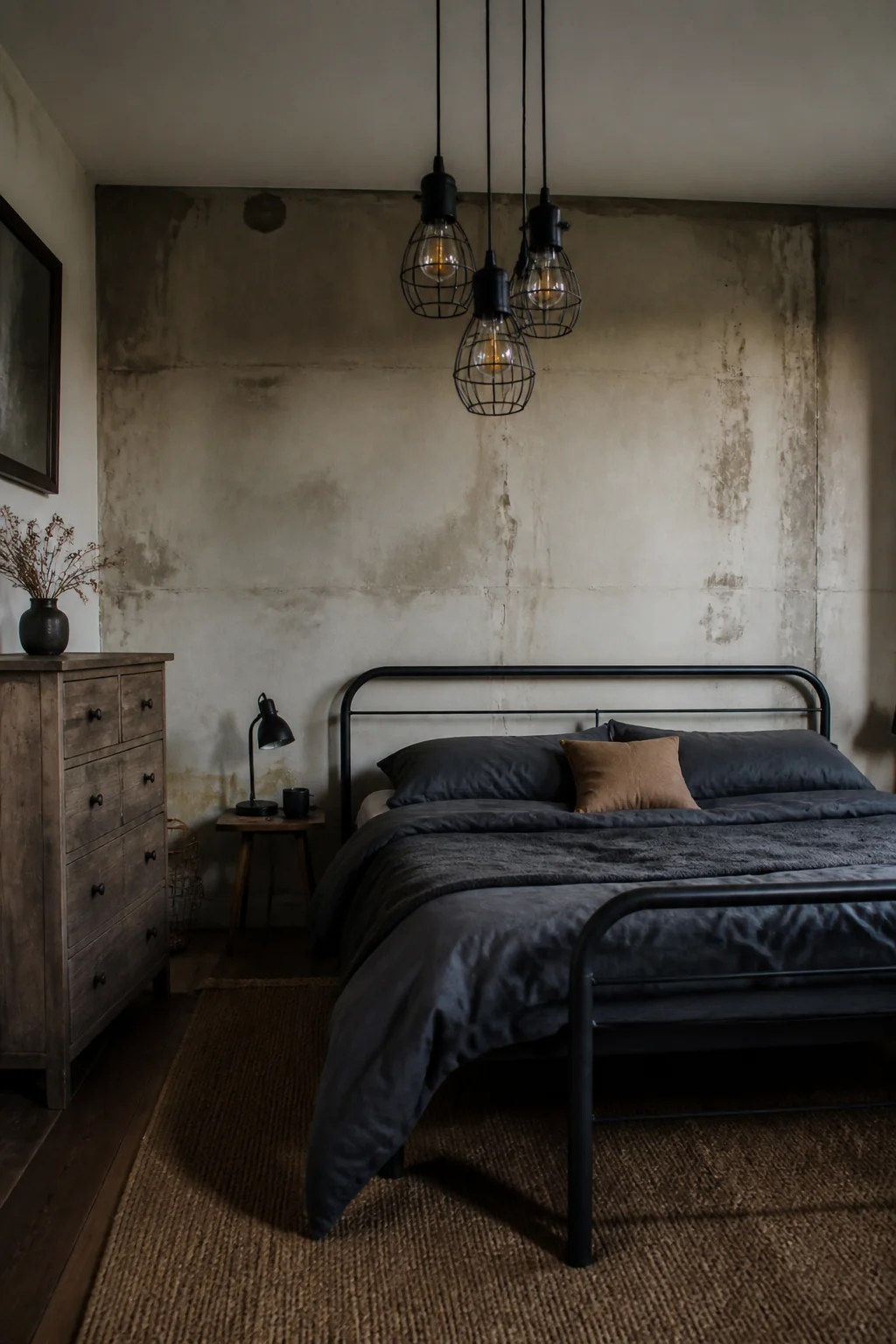
Hanging several smaller cage-style pendants together over the bed or a workspace creates a rhythm that one large fixture can't. Three fixtures at $20 to $40 each is a modest spend for a big shift in how the ceiling reads.
Stagger the drops instead of lining them up level. Cords at 12, 18, and 24 inches give you a cluster; three at the same height give you a row of streetlights. Keep them 8 to 12 inches apart, and over a desk, hold the bottom of the lowest cage 30 to 36 inches above the work surface so you're never looking straight into a filament.
Use identical bulbs in all three. Mixed colour temperatures in one cluster look like something you meant to fix later.
The practical snag is wiring. Three separate canopies means three holes in the ceiling and three junction boxes, so look for a multi-port canopy or run a short length of matte black track and feed all three from one existing box.
12. Add a statement headboard made from metal piping
A headboard built from black iron pipe and fittings is a weekend project that costs $60 to $150 in parts and looks like nothing you can buy in a showroom.
Three-quarter-inch pipe is the sweet spot. Half-inch looks spindly against a queen bed, and one-inch gets heavy and expensive quickly. Hardware stores sell pre-threaded lengths in 12, 18, 24, 36, and 48 inch cuts, along with elbows, tees, and floor flanges, so you can assemble the whole thing without cutting or threading anything yourself. For a queen, plan a frame roughly 62 inches wide and 44 to 48 inches tall from the floor.
Do not skip degreasing. New black pipe ships coated in a light oil that will transfer straight onto white bedding. Wipe every piece with mineral spirits, let it dry fully, then seal it with a matte clear coat.
Assembled, it can weigh 40 pounds or more, so bolt it to the bed frame or anchor the top rail into studs rather than leaning it against the wall.
13. Use metal shelving units for a bookcase wall
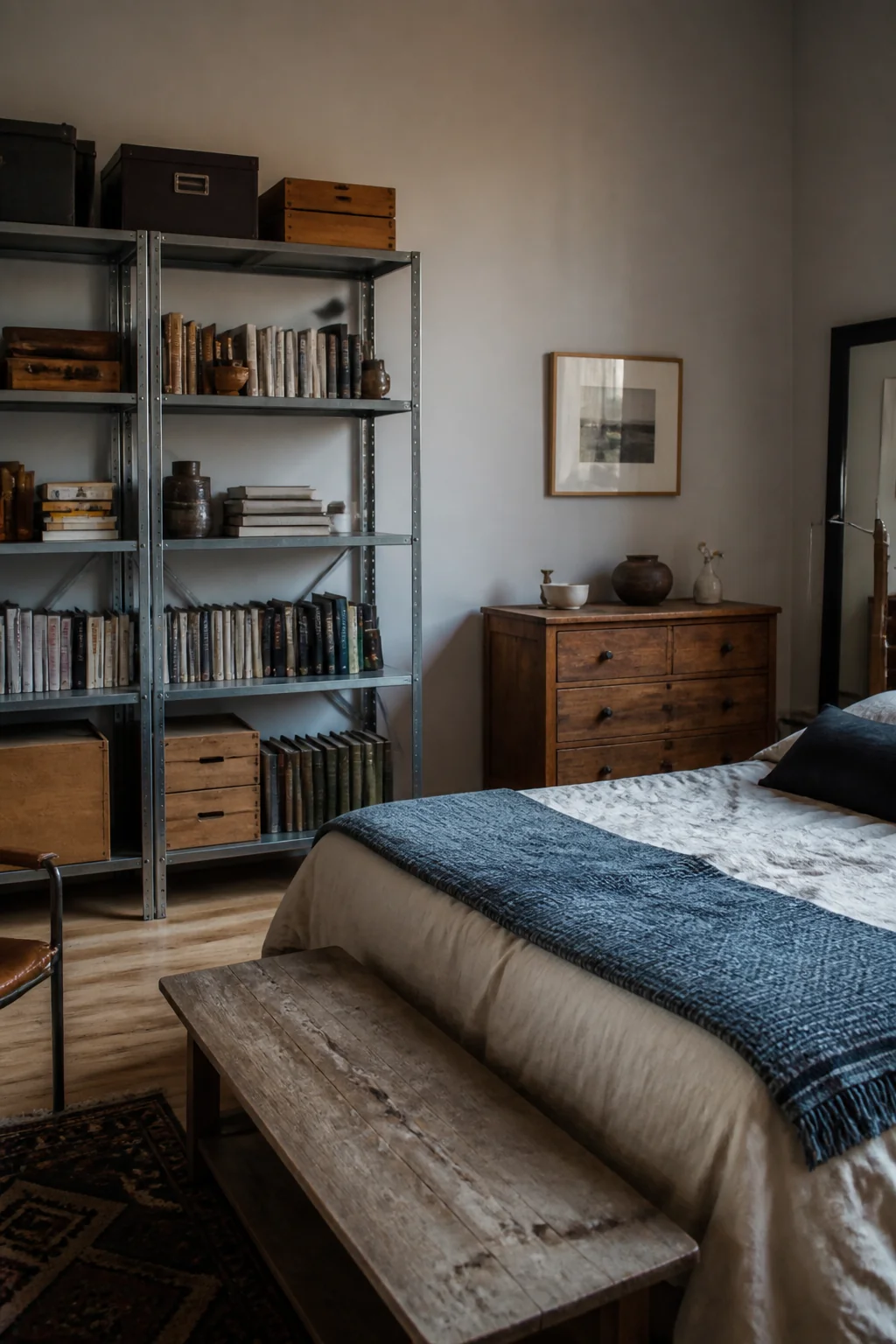
Freestanding metal shelving in five tiers, matte black, runs $80 to $200 and holds far more than a run of floating shelves while keeping that skeleton-frame look. Nothing goes into the wall, which matters if you rent.
A standard unit measures around 36 inches wide, 16 inches deep, and 72 inches tall. Boltless rivet models are rated somewhere between 200 and 350 pounds per shelf, which is more than a bedroom will ever ask of one. Shelves adjust in roughly 1.5 inch increments, so you can leave one bay tall for a laundry hamper or record crates and keep the rest short for books.
Two things to sort out. Wire decking lets small items drop through, so cut quarter-inch plywood or MDF to shelf size, about $15 worth, and lay it in. And strap the top to a stud if there's a toddler or a climbing cat in the house.
Skip chrome. Matte black is what keeps it from reading as garage shelving.
14. Hang vintage factory clocks or signage
Real or reproduction factory signs and clocks give a wall personality without turning it into a collection. A solid piece runs $25 to $60.
Scale is the whole game with a clock. Under 10 inches across it simply vanishes above a bed. Twelve to 18 inches reads from the doorway, which is the point of putting a clock on a wall at all. Hang the centre around 60 to 66 inches from the floor.
Material separates the good reproductions from the throwaways. Porcelain enamel or powder-coated steel has weight and ages properly. Printed MDF with a distressed photo finish looks convincing in a product shot and thin on your wall from three feet away.
Genuine salvage carries one caution: old painted signage can contain lead, so hang it as found and don't sand, cut, or strip it.
And check the movement before buying a clock. Standard quartz ticks, and a ticking clock in a quiet bedroom at 2am is its own small torture. Sweep movements are silent.
15. Drape a simple linen or wool throw over the bed
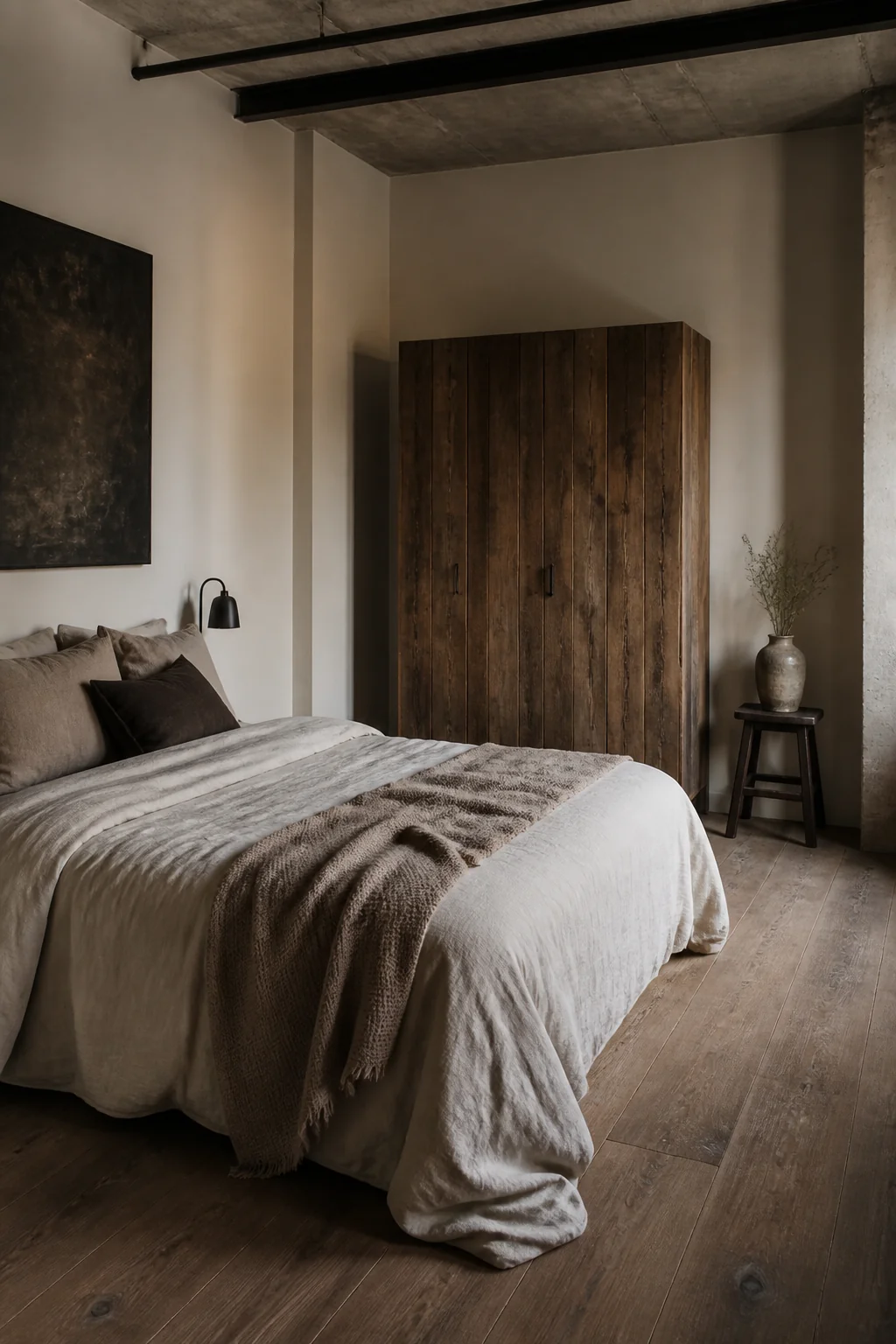
All that metal and flat paint needs something soft to argue with. A natural linen or wool throw in cream, gray, or charcoal costs about $40 and does more for the room than another black object would.
Size it by how you want it to sit. A 50 by 60 inch throw folds neatly across the foot of a queen and covers roughly the bottom third of the bed. Sixty by 80 lets it drape over both sides. Fold it in thirds and lay it about 18 to 24 inches up from the foot, then leave it slightly off-square so it looks used rather than staged.
Fibre matters more than colour here. Washed European flax linen starts crisp and softens with every wash, and wool around 200 to 300 gsm adds weight without much heat, which suits a room you keep cool.
Acrylic sold as wool-look is the one to avoid. It pills within a season and picks up a plasticky sheen under warm bulbs, which is precisely the lighting you've just installed.
16. Mount a floating desk made of wood and steel
A wooden desktop on heavy steel brackets is the right answer when a bedroom pulls double duty as an office, because nothing sits on the floor to trip over or gather dust. Materials run $100 to $180.
Set the top at 29 to 30 inches from the floor. Go 24 inches deep if a monitor is involved, 18 to 20 if it's just a laptop and a notebook. A 48 inch length fits most stretches of bedroom wall and still leaves room for a chair to tuck fully under.
The brackets decide whether this lasts. Use heavy-duty steel shelf brackets rated 150 pounds or more per pair and drive 3 inch lag screws into studs. A floating desk hung on drywall anchors sags within months and eventually tears out, usually with a laptop sitting on it.
If a 1.5 inch butcher block top still bounces when you type, add a third bracket in the middle rather than a front leg. It kills the flex and keeps the floating line intact.
17. Use steel or black metal wall hooks for clothing storage
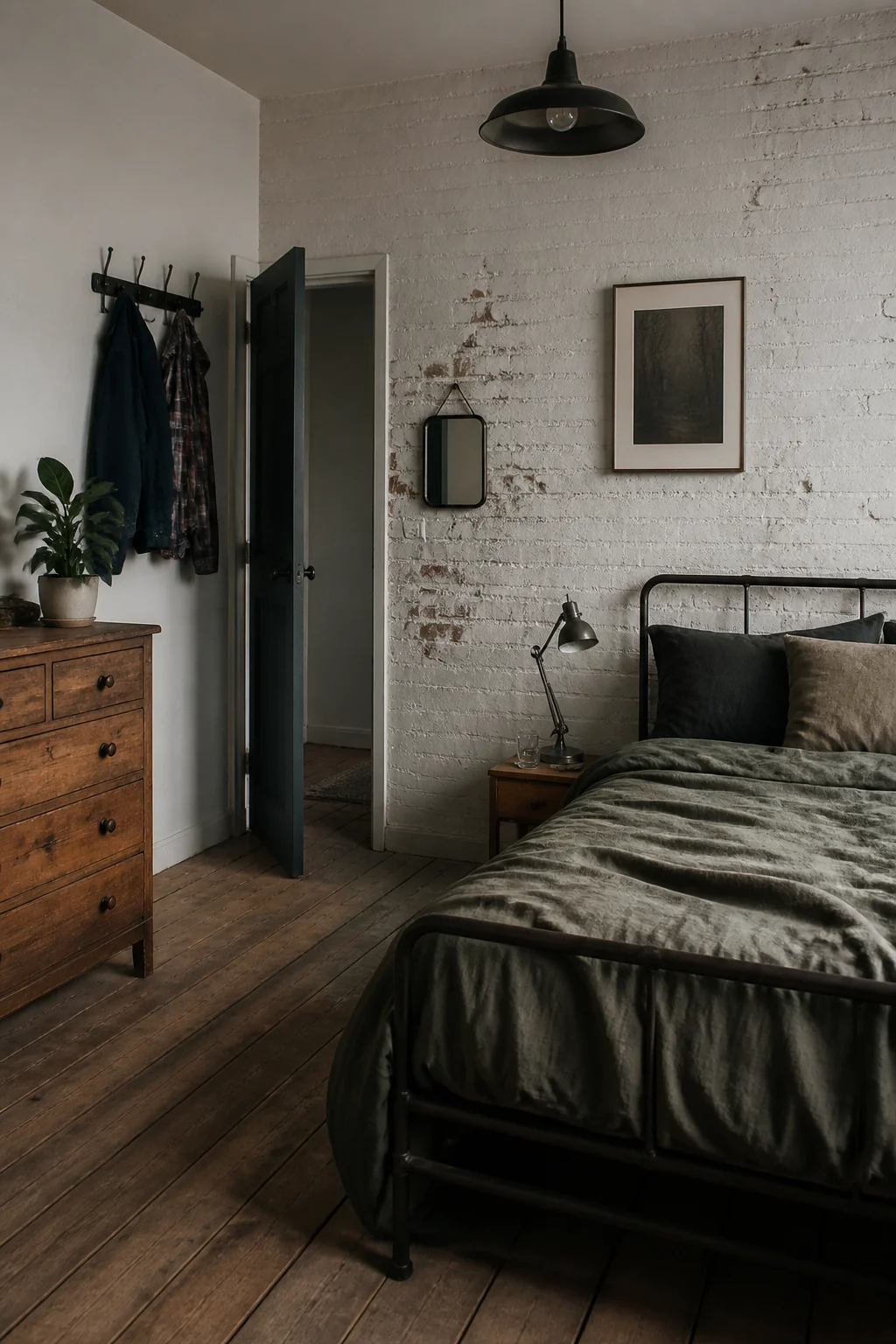
Hooks instead of a traditional coat rack keep the floor clear and put the metal somewhere it reads as part of the room. Matte black X-shaped or simple L-shaped brackets cost $8 to $15 each.
Height depends on what hangs there. Sixty to 66 inches works for adult coats, since a long wool coat needs that much clear wall below it to stay off the floor. Drop to around 48 inches in a child's room. Space hooks 8 to 12 inches apart so two jackets aren't pressed into each other.
Fixing matters more than people expect. A wet wool coat and a bag together can put 15 to 20 pounds of swinging load on one hook, so hit a stud or use a toggle bolt, never a plastic plug.
The tidiest approach is to screw a 1x4 board into two studs, paint it matte black, and mount the hooks to that: two holes instead of eight, and you can reposition later. Keep it to three or four items or it reads as laundry on display.
18. Add a low concrete or steel media console
If a TV lives in the bedroom, a low raw-looking console keeps the eye on the room rather than the screen. Concrete and steel pieces sit in the $150 to $300 range.
Size it against the TV, not the wall. A 55 inch screen is about 48 inches wide, so a console of 60 inches or more gives you a few inches of shoulder on each side and stops the whole arrangement looking top-heavy. Height of 20 to 24 inches puts the centre of the screen near eye level when you're propped on pillows, which is how you'll be watching, not sitting bolt upright.
Know what you're buying. Solid cast concrete at that size weighs 150 to 250 pounds, will not move once it's placed, stains from a single spilled glass, and needs a penetrating sealer. Concrete-look pieces in fibre cement or laminate over MDF weigh a fraction of that and hold up better in a bedroom.
Then deal with the cables. A 2 inch grommet through the back panel undoes nothing; a nest of visible cords undoes everything.
19. Layer in moody, minimal artwork with black frames
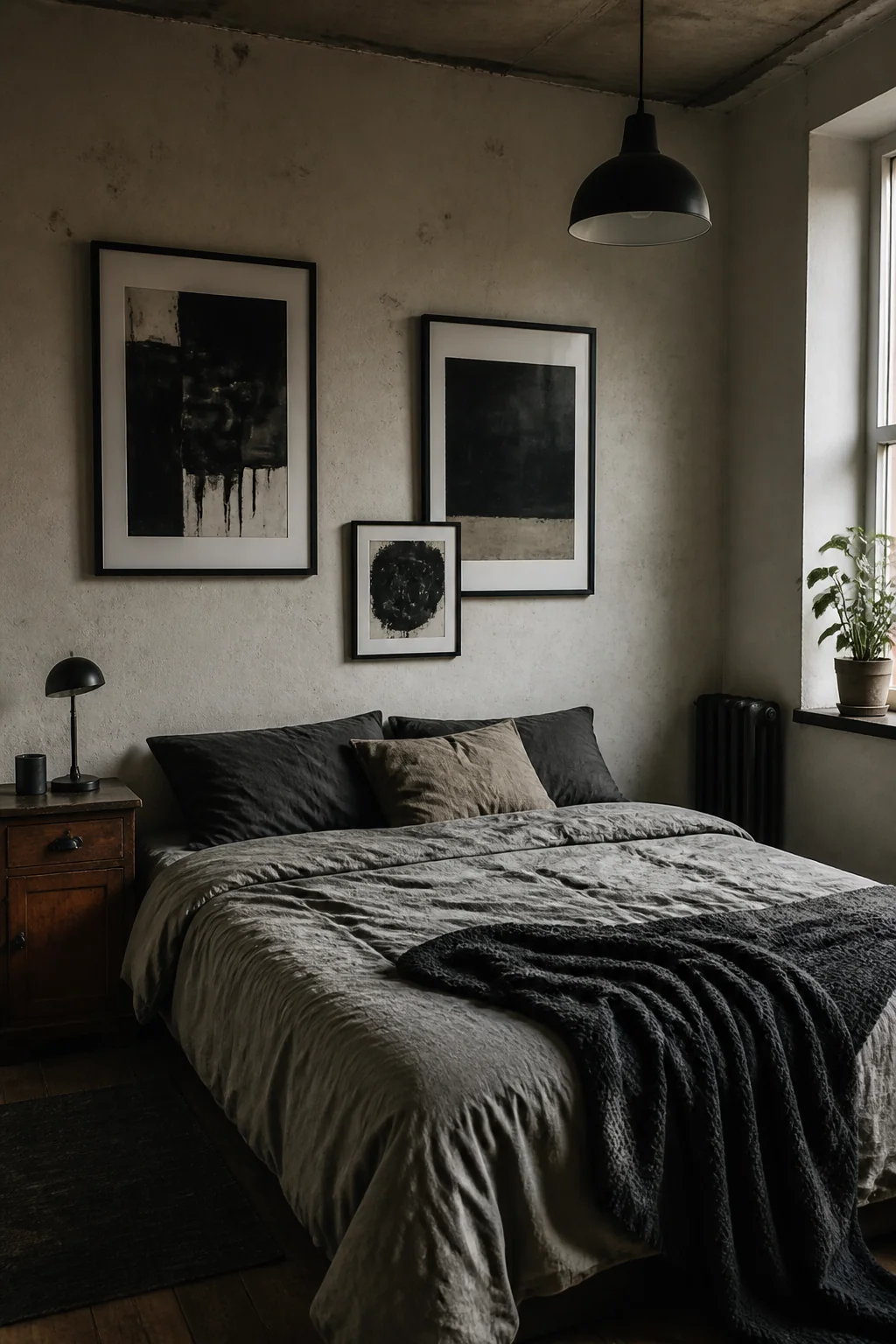
Black-framed abstract prints, architectural drawings, or black-and-white photography on bare gray walls cost $20 to $60 per frame, and they're what stops an industrial bedroom feeling unfinished.
Measure to the middle of the piece rather than to the hook: on a single frame that centre wants to land 57 to 60 inches from the floor. Above a headboard, forget the floor number entirely and leave 6 to 10 inches between the top of the headboard and the bottom of the frame so the two read as one block instead of two separate objects. For a grouping, run the tape across the bed first and take two-thirds of that width, which is 40 to 48 inches over a queen, with a consistent 2 to 3 inch gap between frames.
Two details carry most of the work. A 2 to 3 inch white mat inside a thin black frame gives the image room to breathe against a dark wall. And matching every frame in a group, same finish, same profile width, is the difference between a gallery wall and a pile of art.
If the wall faces a window, pay the small premium for non-glare glazing, and choose prints on 200 gsm paper or heavier so they don't buckle behind the glass.
Take the guide with you
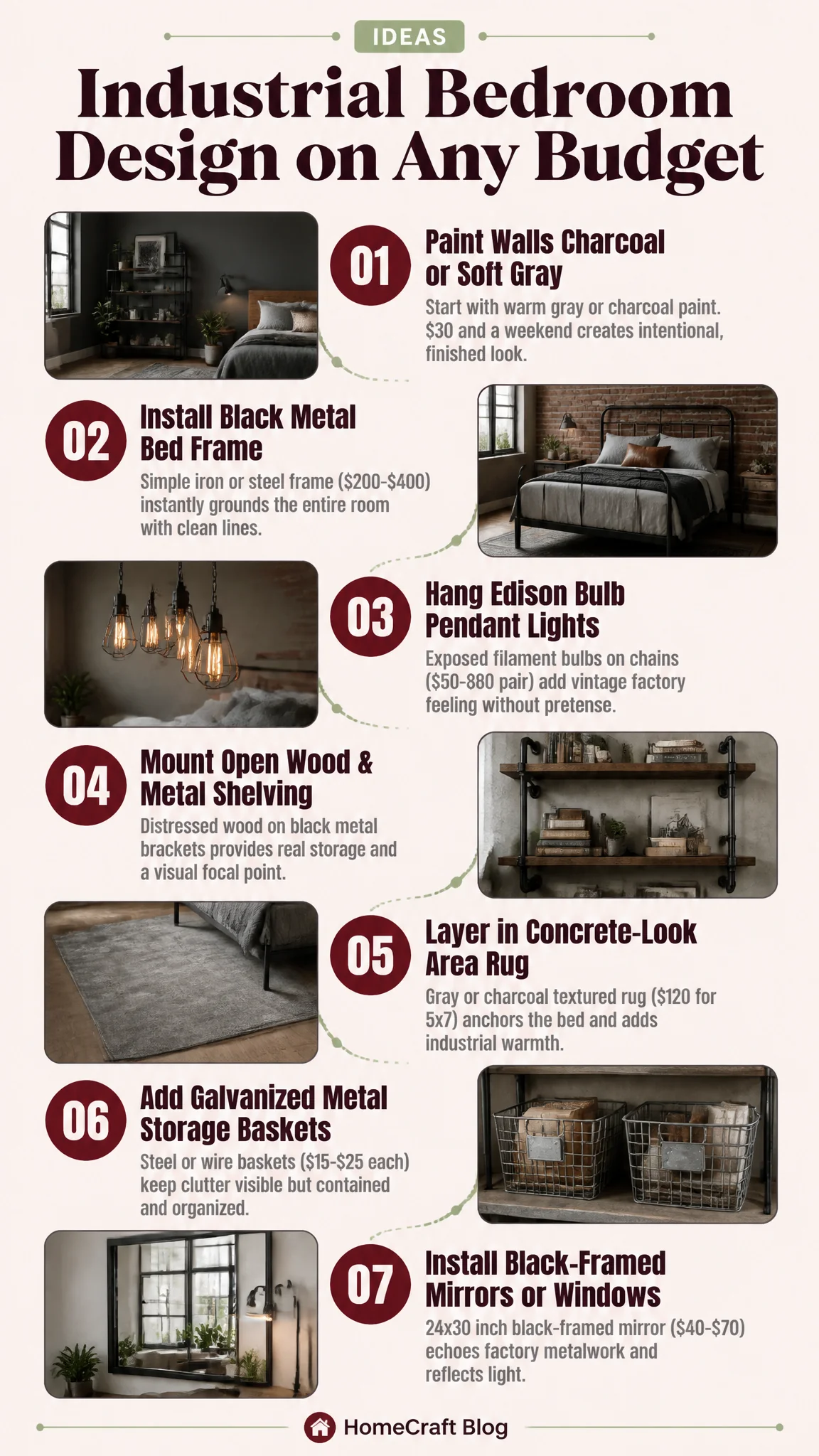
The rooms that go wrong are the ones that stop at the metal. Charcoal walls, a steel frame and a bare filament will get you to cold industrial in a weekend, and cold is where most of these bedrooms stall. The wool throw, the reclaimed nightstand, the warm bulb on a dimmer: that softer half is what turns a good set of materials into somewhere you want to fall asleep.
Ideas fade by Friday. A plan finishes the room.
You just read a full guide to your bedroom. Saving ideas will not change it; a plan will. The Home Decor Collection is every planning tool we make, for every room in the house, in one download, so the after photos below stop being other people's rooms.

- Six room Style Kits, each with layout, palette and shopping list$114
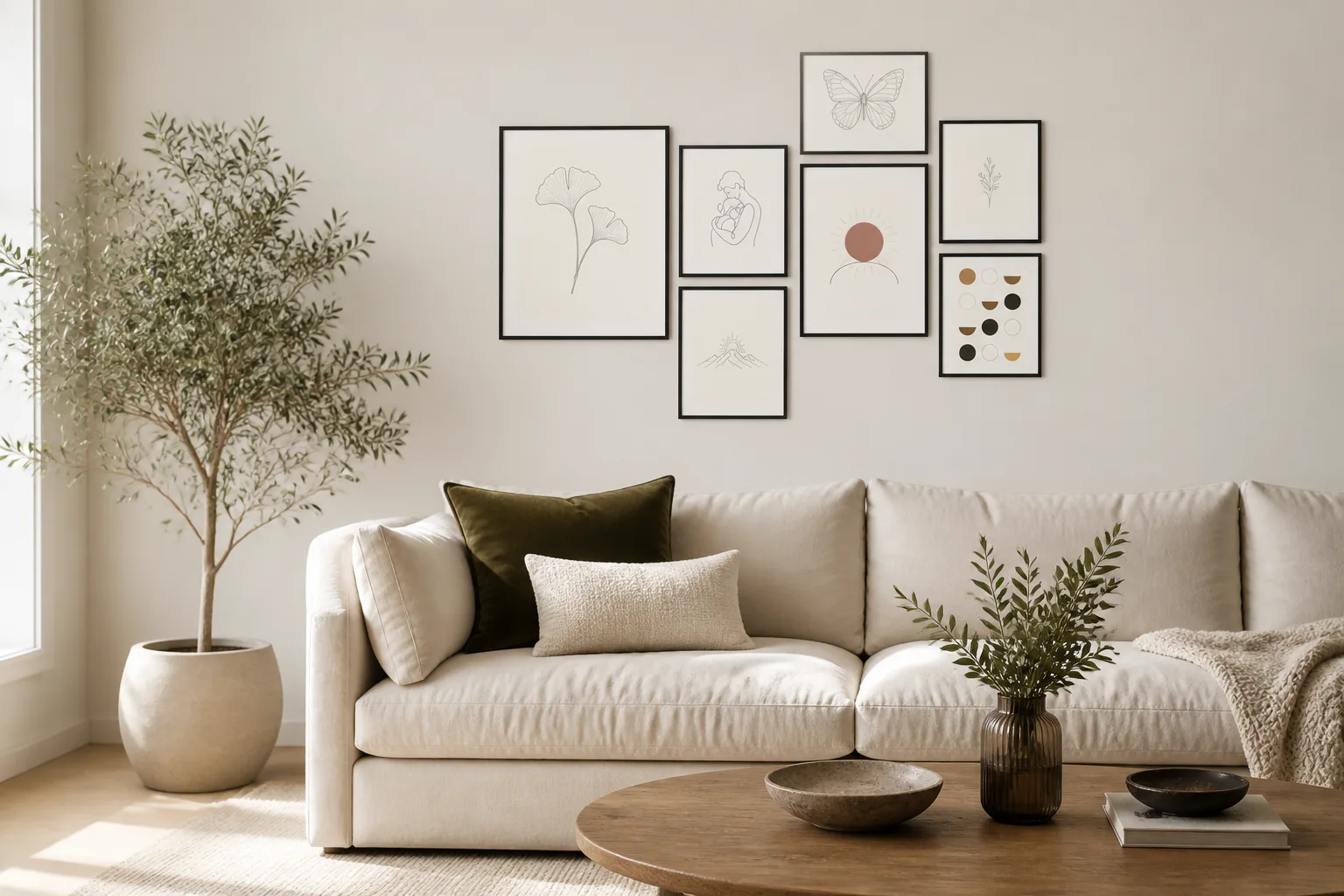
- The Gallery Wall Studio: 200 prints + 15 measured layouts$29
- The Room Makeover System: 40 solved room layouts + workbook$29
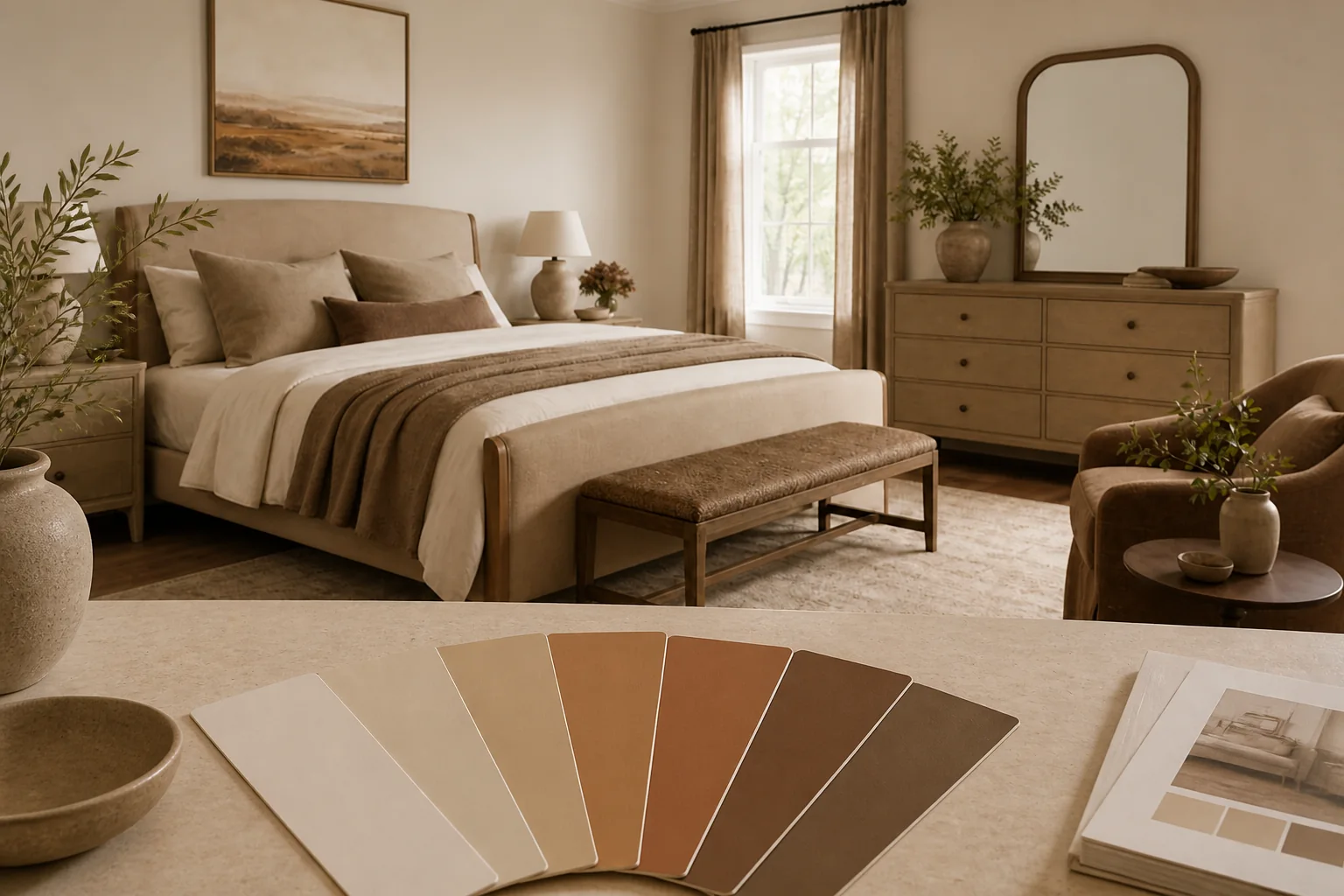
- The Color Palette Handbook: 60 palettes shown in real rooms$19
- The Whole-Home Reset: 40 printable organizing checklists$19
- The Decorator's Cheat Sheets: the 40 measurements that matter$9
- All eleven products, bought separately
$219$97
A single hour with an interior designer costs more than the entire Collection, and this one keeps answering for every room you will ever decorate. Free updates included as the products grow. And if it is not for you, the 14 day money back promise means you simply get a refund.