Contemporary Bedroom Lighting Ideas: Where to Place Each Fixture
Stop relying on one overhead light. Learn where to place each contemporary bedroom lighting fixture to eliminate shadows and dark corners.
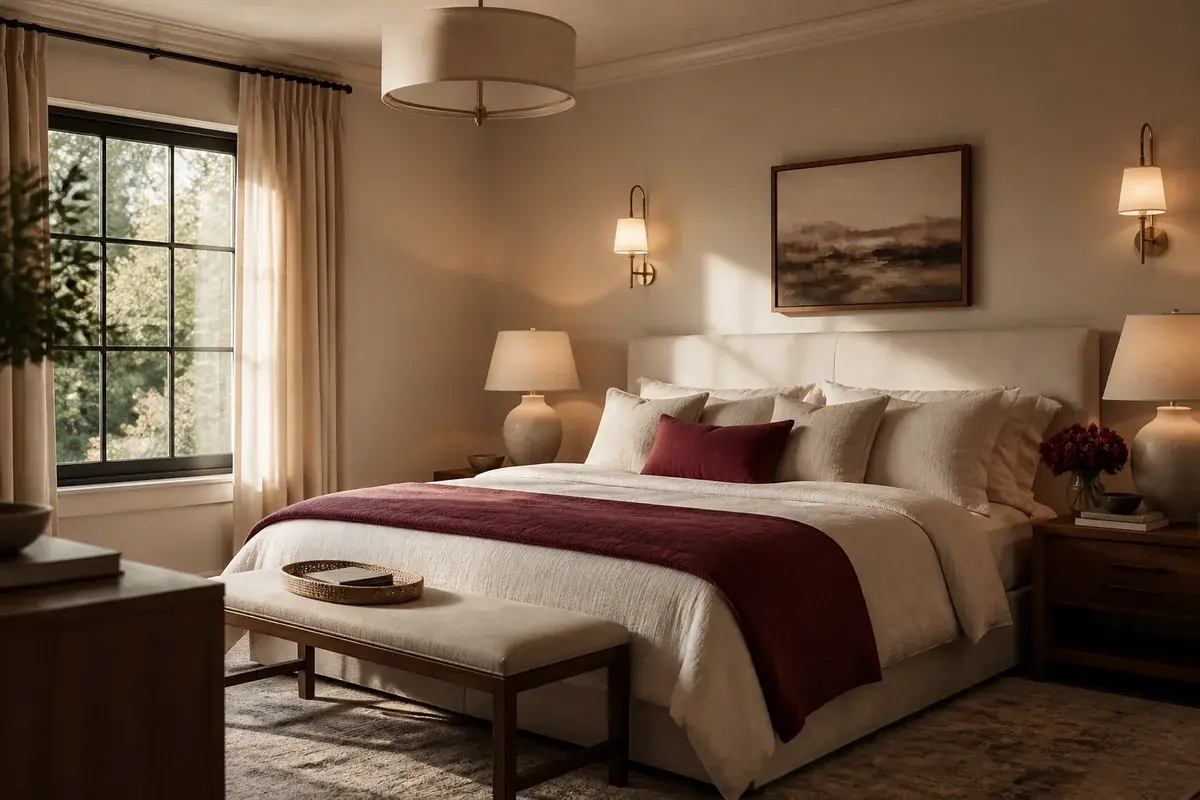
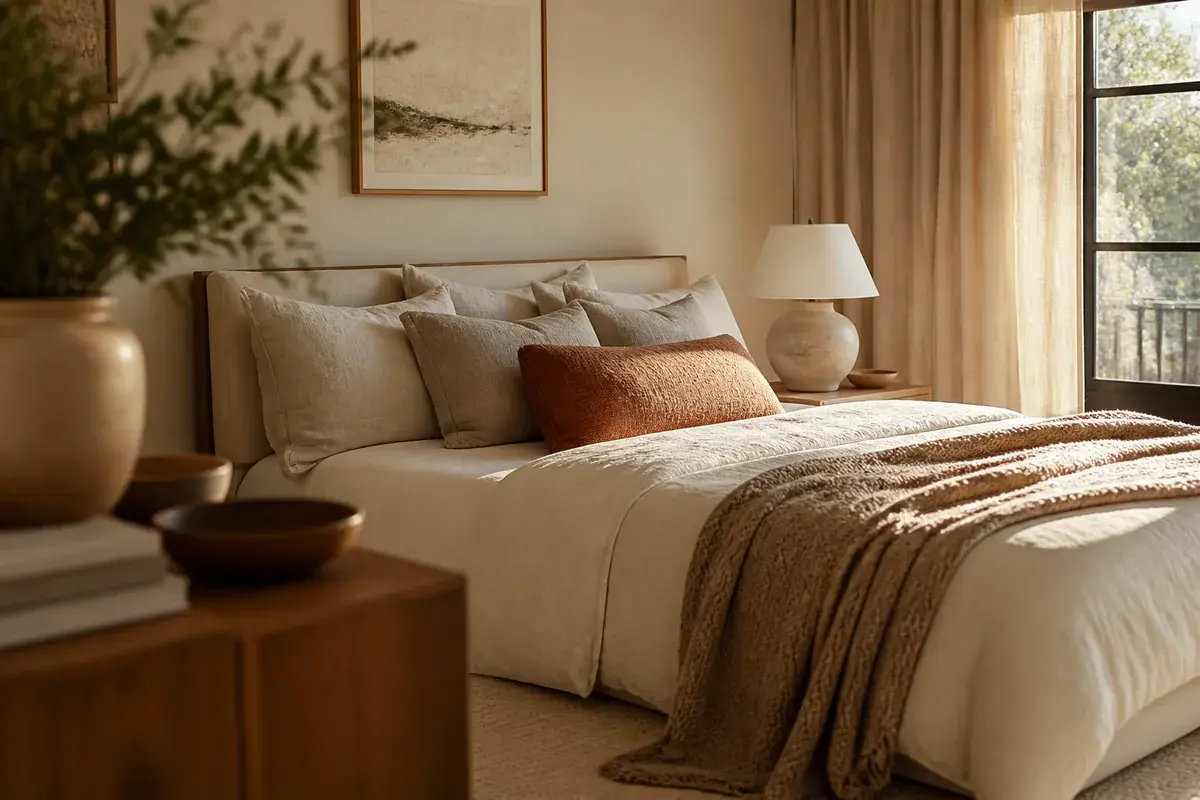
Most bedrooms rely on a single overhead fixture. It creates harsh shadows across your face when you're getting ready, casts your bed in flat, unflattering light, and leaves corners dim. Contemporary bedroom lighting works differently: it layers fixtures by what you actually do in that room. A pendant above the nightstand for reading. Wall sconces flanking the mirror for grooming. Ambient light behind a bed frame or along the baseboards for mood. Overhead fixture as backup, not the main event. The shift means your bedroom finally looks intentional instead of like a hotel room you're renting for the night.
Bedside pendants beat nightstand lamps for reading light
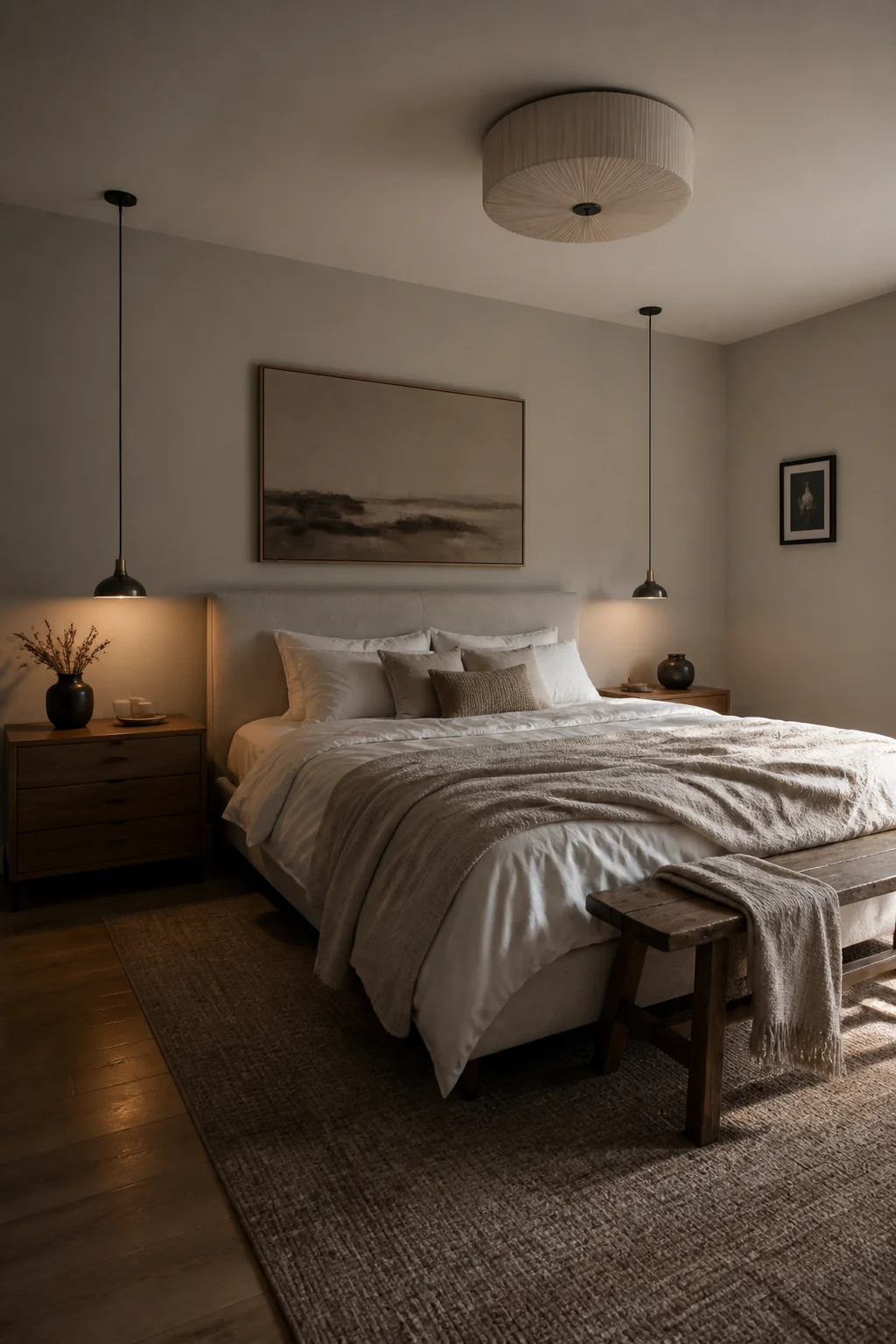
A pendant hung 18 to 24 inches above your nightstand gives you focused, directional light that lands exactly where you need it. Nightstand lamps sit on the surface, which means the shade is at eye level when you're lying down - glare in your face, and the beam spreads too wide. Pendants mount to the wall or ceiling, angled slightly inward if you want, so the light falls across your book or e-reader without heating your pillow (practical if you live somewhere warm). Look for fixtures 8 to 12 inches wide so they don't crowd a small nightstand, and choose ones with fabric or frosted glass shades rather than bare bulbs. Pendants usually cost between $60 and $180 per fixture. Pair them on both sides of the bed for balance, or use one if your bed is tight against a wall.
Mirror lighting changes how you look every single morning
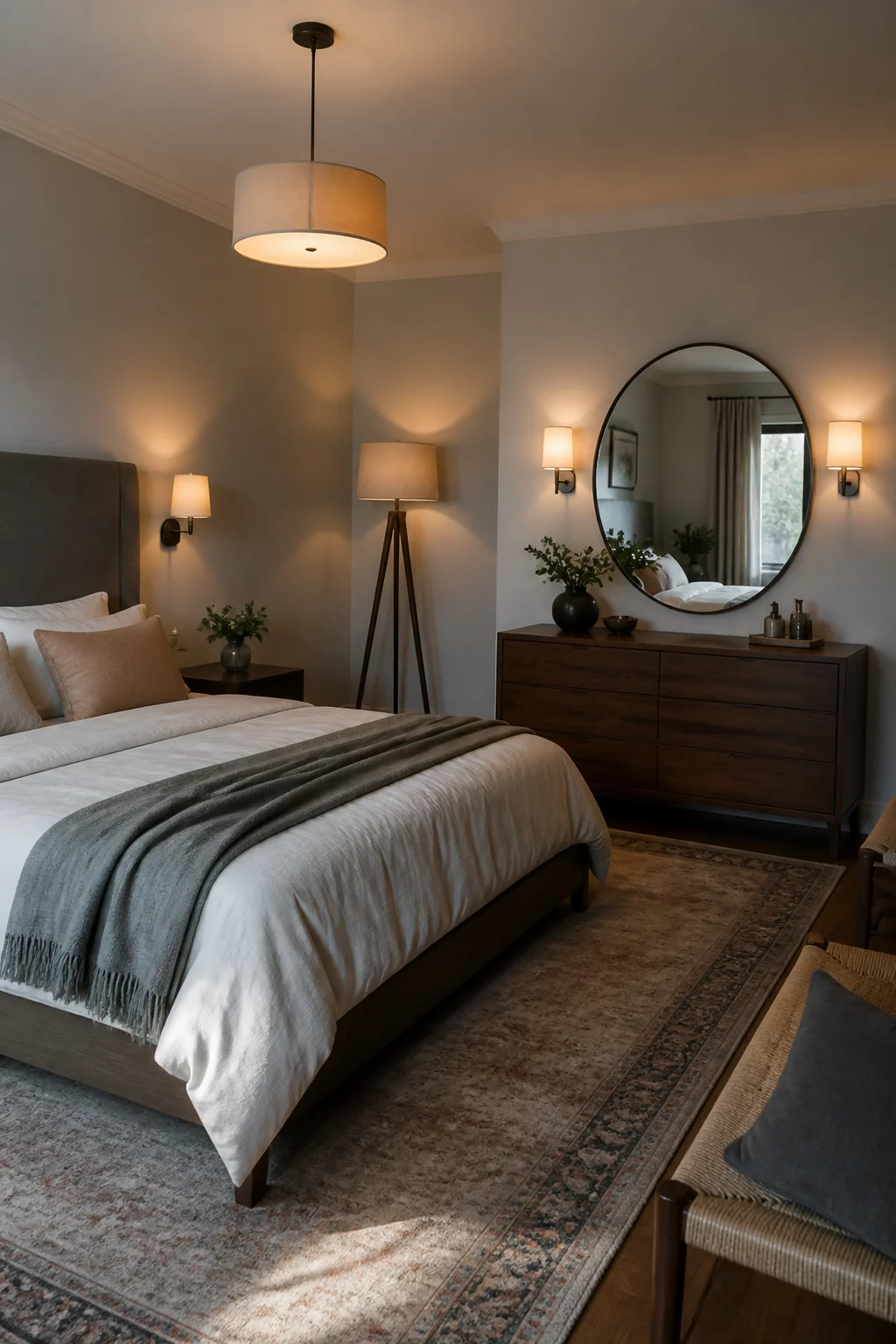
Sconces mounted 60 inches above the floor and positioned 24 to 30 inches on either side of a bedroom mirror deliver even, shadow-free light across your face. This is where people commonly fail: they hang a single fixture above the mirror, which creates a lit forehead and shadowed cheeks. Two fixtures flanking the mirror, level with your eyes when you're standing, cancel that out. Choose sconces with about 40 to 60 watts of warm light (around 2700 Kelvin if the bulb lists it) so you're not getting ready under an interrogation light. The fixtures don't need to match your bedside pendants - they're in a different zone - but they should feel part of the same contemporary moment, which usually means clean lines and minimal ornamentation. Plan to spend $40 to $120 per sconce.
Bathroom vanity lighting matters too if you're sharing a master suite. The same principle applies there.
Overhead fixtures work best as dimmer-controlled fill light
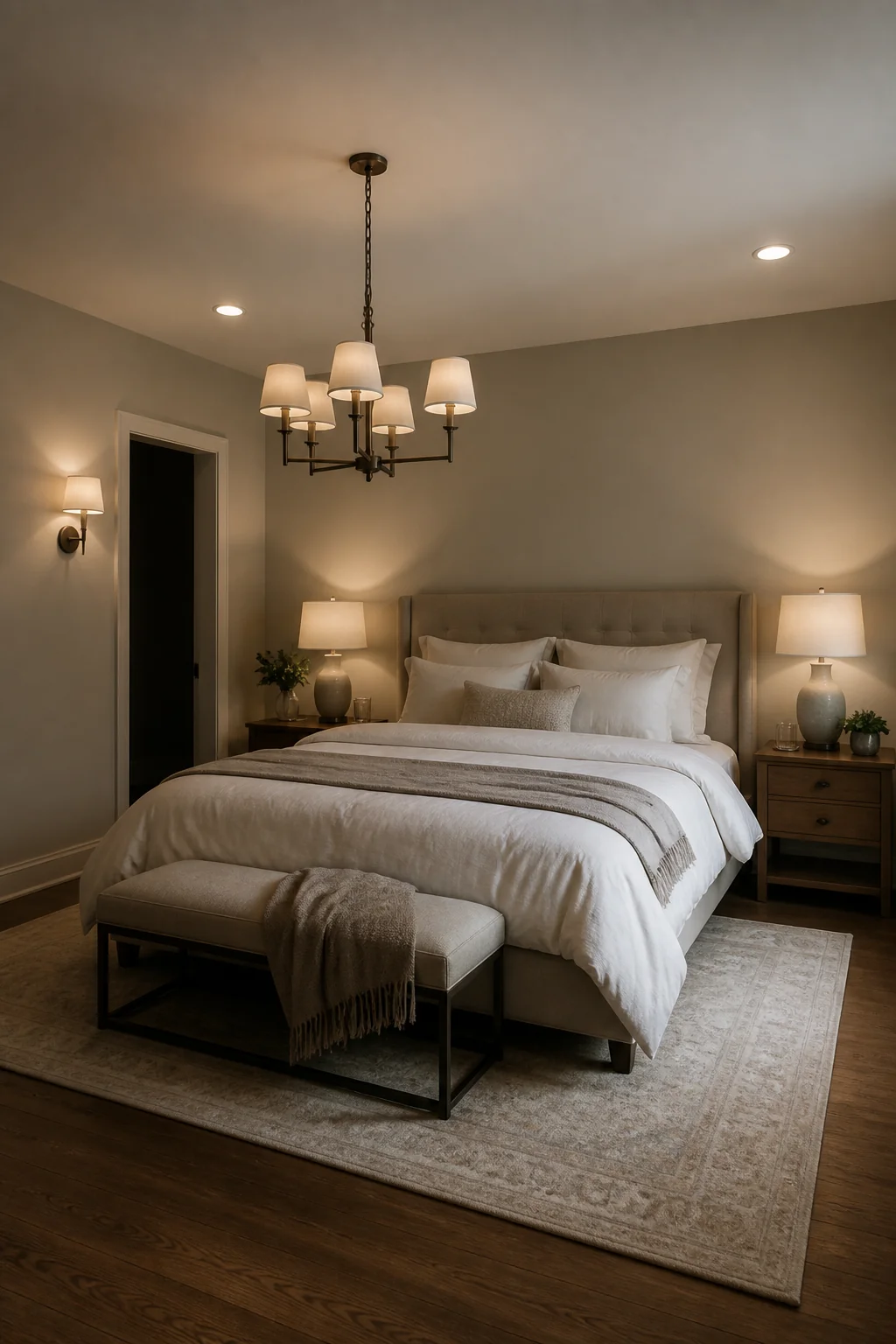
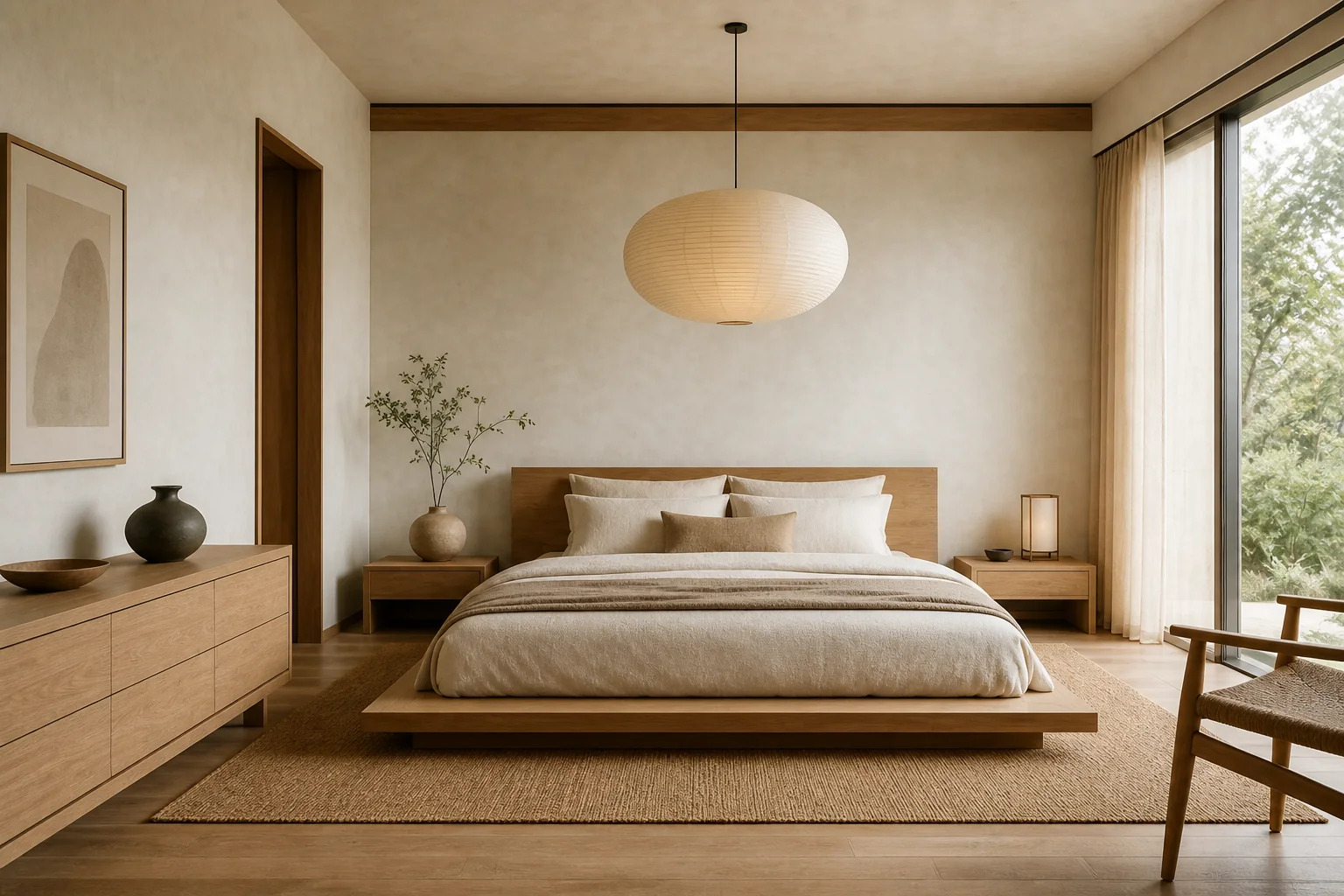
A single overhead fixture in a contemporary bedroom should be there for cleaning, packing, and the moments you need bright, even light across the whole room. Mount it as close to center as you can (or slightly toward the foot of the bed if your ceiling is small). Add a dimmer switch so you can fade it down to 30 percent once the sun is gone - this keeps the room from feeling staged and gives you control over the mood. Choose a fixture that doesn't dominate the ceiling visually. Flush mounts or low-profile pendants work better than decorative chandeliers, which feel dated next to the clean lines of contemporary styling. Plan on $80 to $200. The dimmer switch costs about $15 to $30 and takes an electrician 30 minutes if you don't have one installed already.
Accent lighting along the baseboards or behind the bed frame creates atmosphere
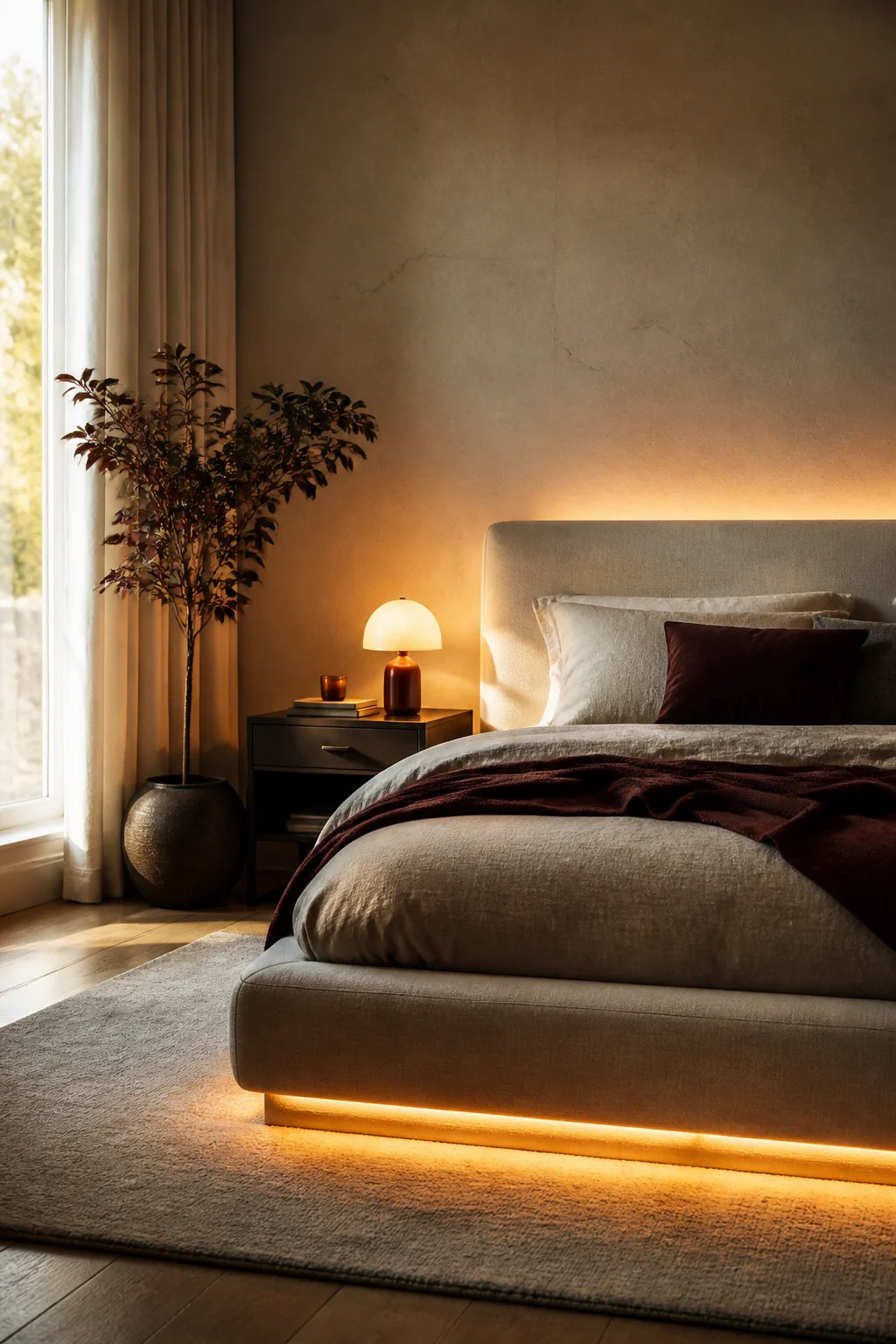
Modern bedrooms use hidden light sources to soften the room after dark. A strip of LED tape mounted along the baseboards (between floor and wall) or behind your bed frame throws warm light onto the surfaces without visible bulbs or fixtures. It looks intentional, not accidental. LED strips cost $25 to $60 for a 16-foot roll and plug into a standard outlet or battery pack, so no hardwiring needed. Run them along the wall your bed backs against, or all four walls if you want the room to feel like it's glowing from the perimeter. Set them to warm white (2700K) and use a remote dimmer to adjust the level. This light never replaces your reading or mirror fixtures - it works alongside them. When you enter the room at night, accent lighting is what you see first, and it makes the space feel deliberate and layered.
A single strip of LED tape behind a platform bed costs less than a quality wall sconce.
Task lighting at a desk or vanity has to be bright and focused
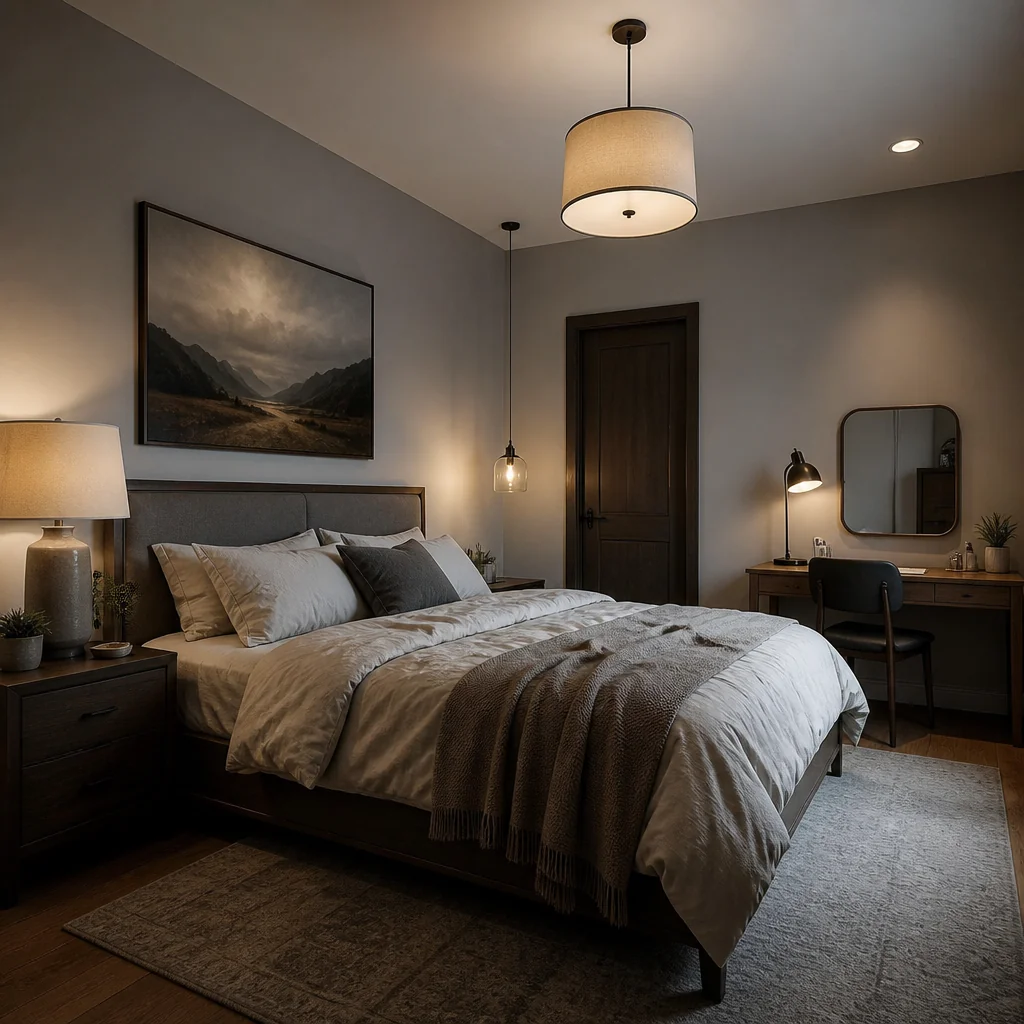
If your bedroom includes a desk or beauty station, that area needs its own fixture. A desk lamp with an adjustable arm lets you point light exactly where you're working. A pendant hung 12 to 20 inches above a vanity works the same way bedside pendants do. The light here should be brighter than ambient - aim for 70 to 100 watts equivalent if the bulb lists it, and keep the color temperature cool (3000 to 4000 Kelvin) so you see true colors while applying makeup or working. Position it to the side of your work surface, not directly overhead, so you're not casting your own shadow. Budget $50 to $150 for a quality task light that won't flicker or hum.
Window treatments and wall color matter more than most people realize
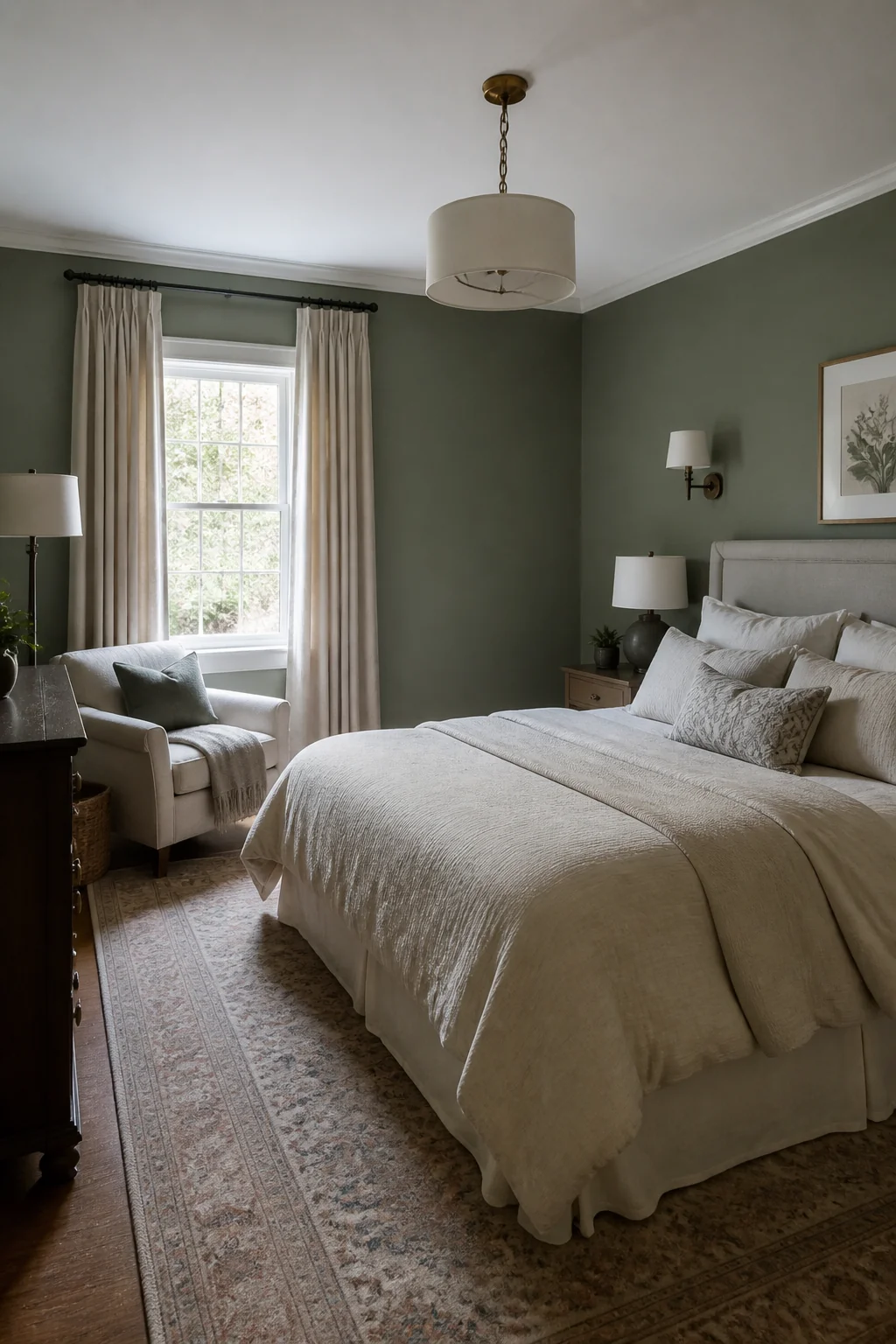
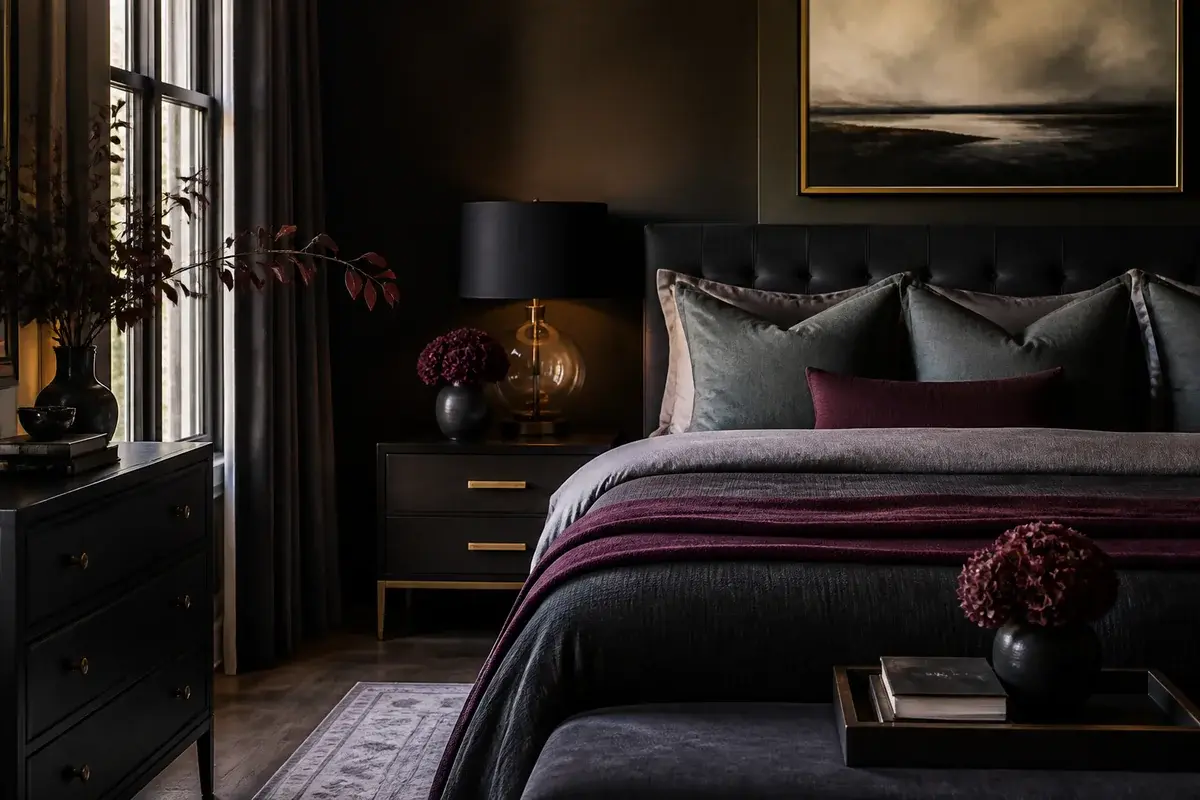
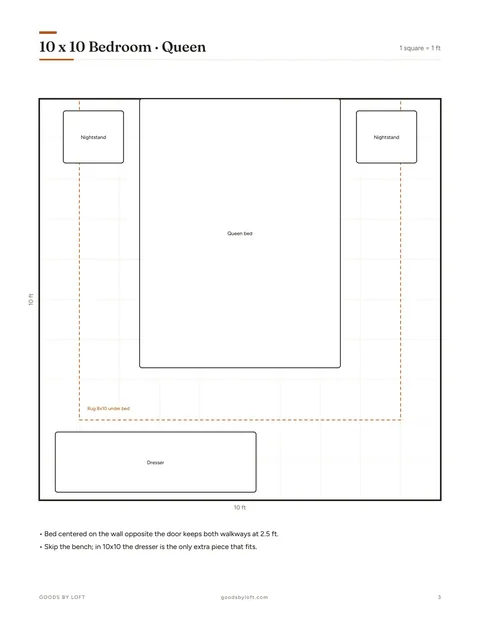
Sheer curtains filter natural light without blocking it entirely, which means your daytime reading and dressing routines stay bright without glare. Heavy blackout curtains let you control the room completely once the sun sets - helpful if you work nights or travel. A contemporary bedroom usually runs medium to light wall colors, which reflect the light your fixtures produce and make the space feel larger. Deep, dark walls swallow light, so you'd need brighter fixtures to compensate (and spend more on energy). If you want a dark accent wall, put it somewhere that doesn't interfere with your functional zones - behind the bed, or the wall opposite the windows. This keeps your reading and grooming areas bright while the dark wall adds visual weight.
Bulb temperature and dimming capability tie everything together
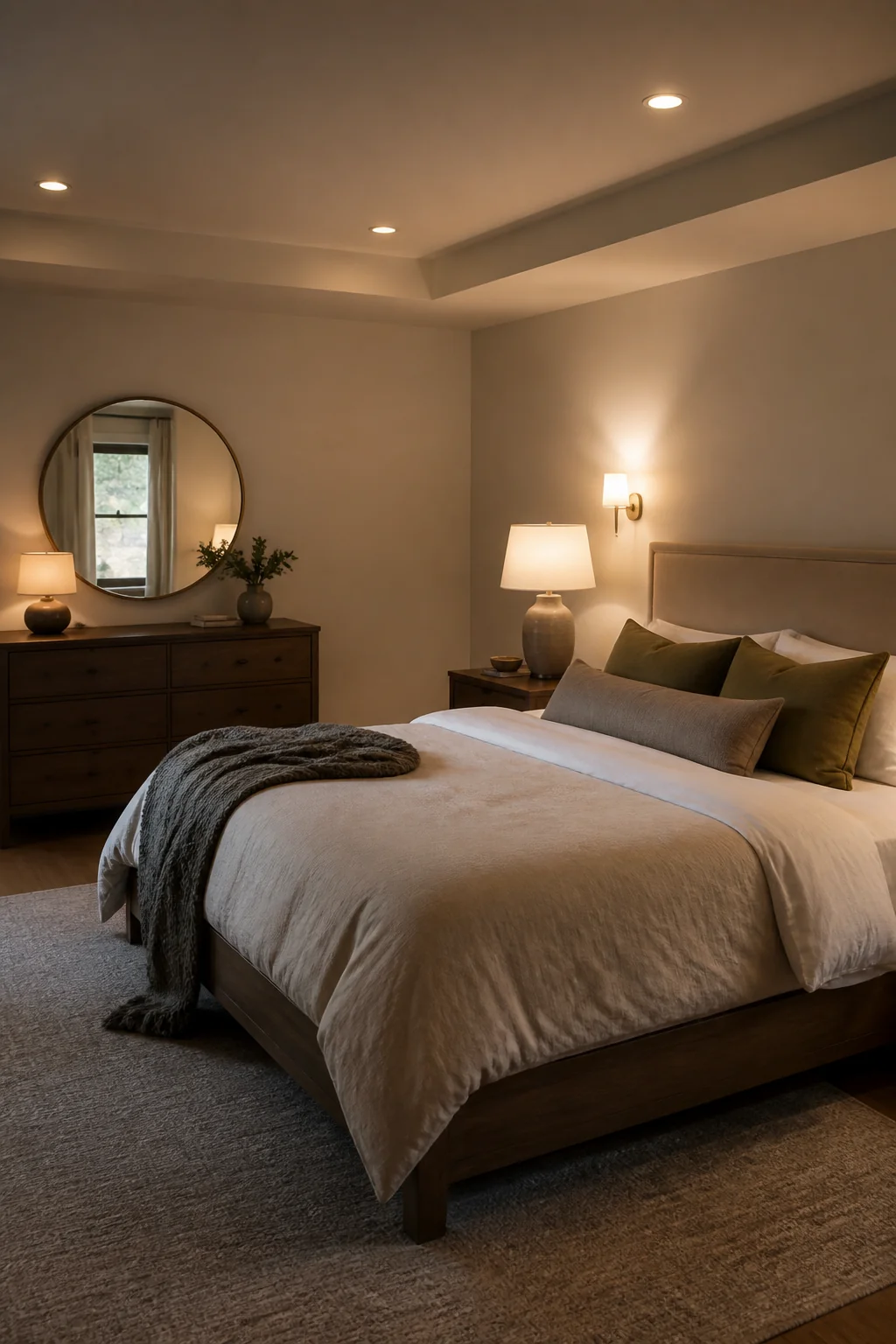
Every contemporary bedroom needs fixtures that dim. A dimmer switch lets you run the entire room at low, warm light (2700K) in the evening, then bright and cool (3500K or higher) when you need clarity for work or packing. Smart bulbs that shift color temperature automatically cost $15 to $25 each, but they're useful if you hate fussing with switches. Non-smart dimmable bulbs cost $3 to $8. Never mix dimmable and non-dimmable bulbs on the same circuit - the non-dimmable ones will flicker. Stick with warm white (2700K) for all ambient and accent light. Save the cooler, brighter temperatures for your mirror and task lighting, where you need to see true colors and details.
The whole guide in one image
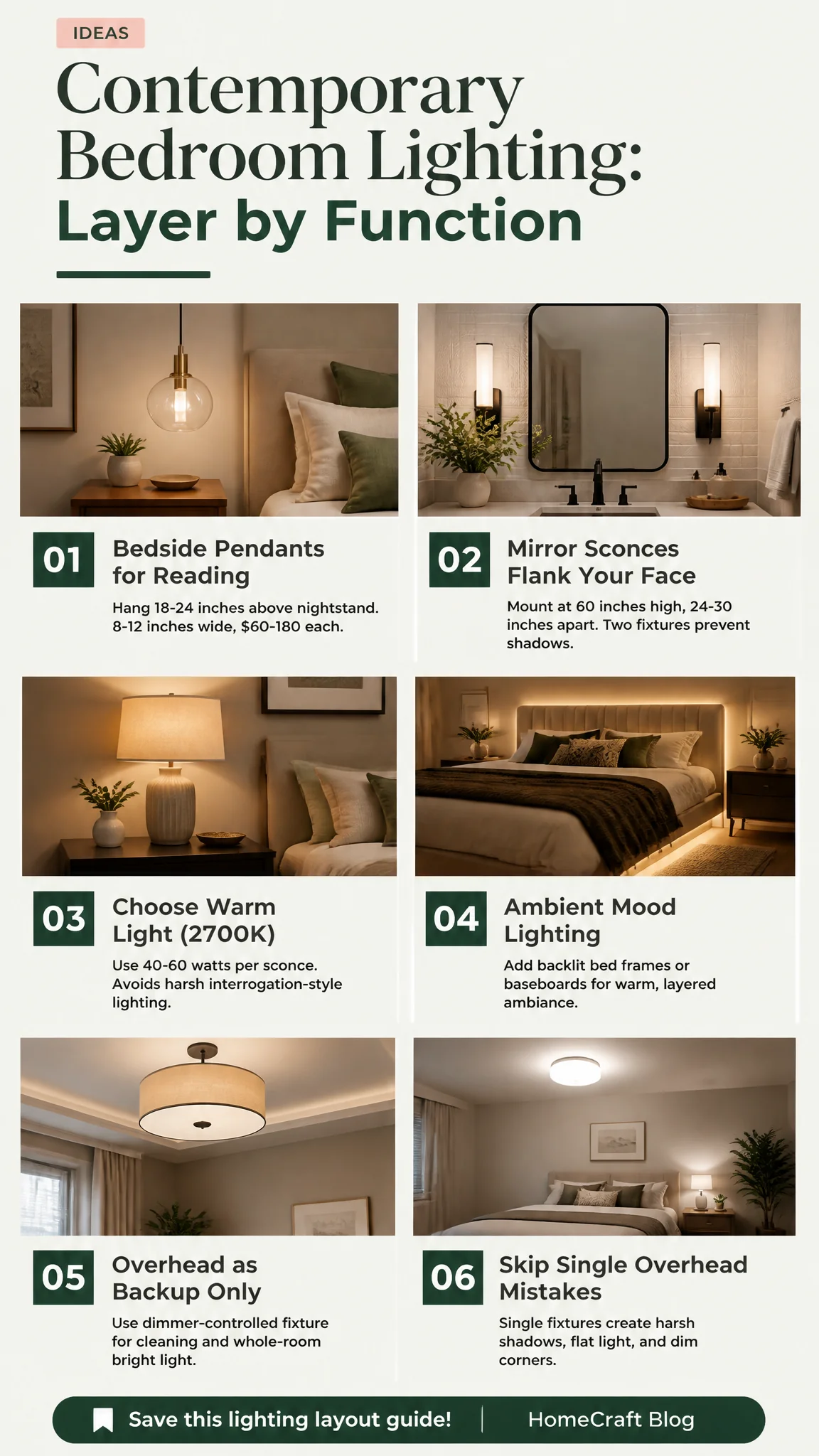
Once you layer these fixtures, your bedroom stops feeling like one flat room lit from above. Your nightstand becomes a functional reading zone. Your mirror shows you clearly without shadows. Your bed pulls focus with accent light. The overhead fades to near-invisible when you don't need it. The space becomes yours.
Ideas fade by Friday. A plan finishes the room.
You just read a full guide to your bedroom. Saving ideas will not change it; a plan will. The Home Decor Collection is every planning tool we make, for every room in the house, in one download, so the after photos below stop being other people's rooms.
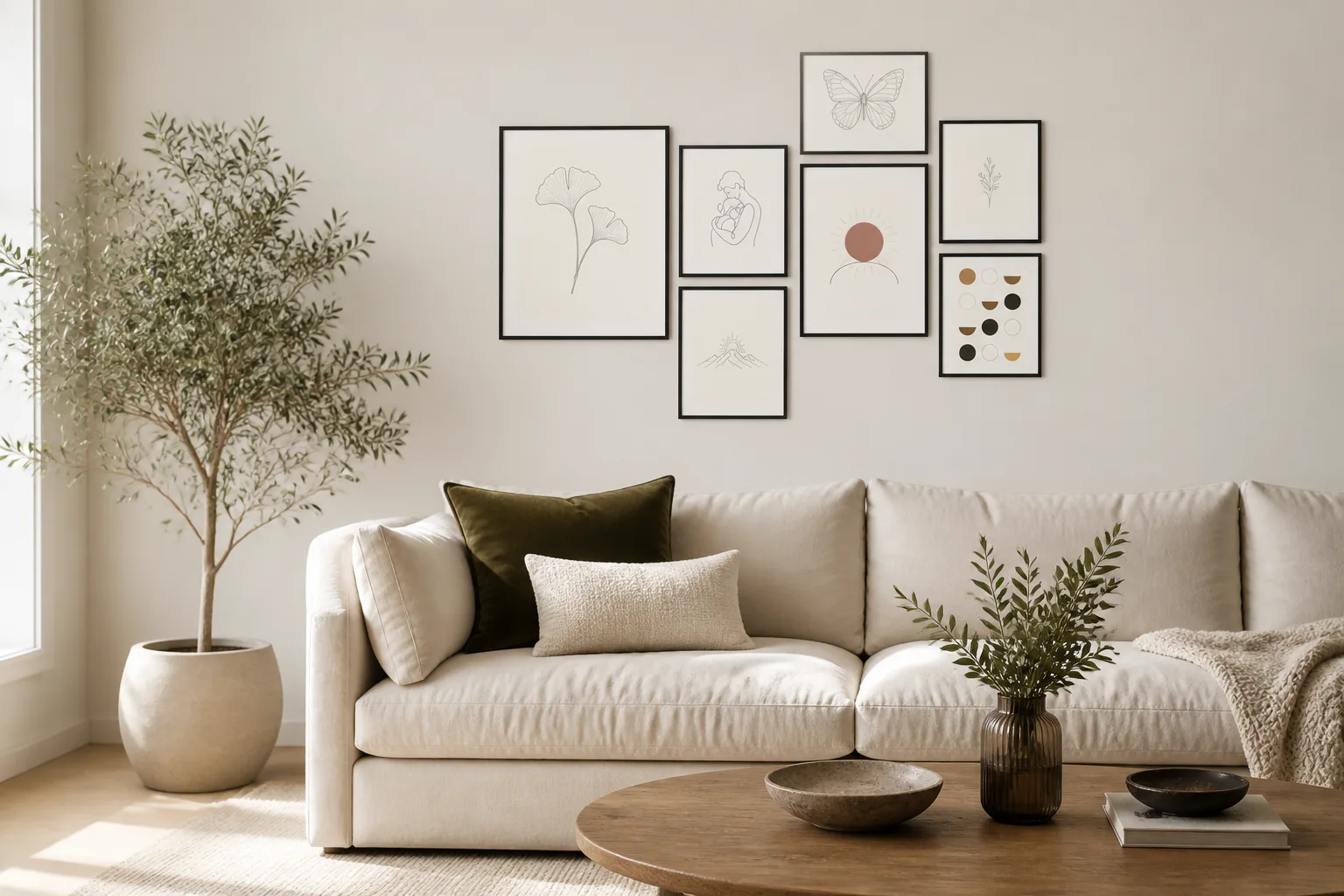
- Six room Style Kits, each with layout, palette and shopping list$114
- The Gallery Wall Studio: 200 prints + 15 measured layouts$29
- The Room Makeover System: 40 solved room layouts + workbook$29
- The Color Palette Handbook: 60 palettes shown in real rooms$19
- The Whole-Home Reset: 40 printable organizing checklists$19
- The Decorator's Cheat Sheets: the 40 measurements that matter$9
- All eleven products, bought separately
$219$97
A single hour with an interior designer costs more than the entire Collection, and this one keeps answering for every room you will ever decorate. Free updates included as the products grow. And if it is not for you, the 14 day money back promise means you simply get a refund.